Category: Local Business Digital Marketing

  • The Hidden Data in Your Map Insights That Most Owners Ignore

    The Hidden Data in Your Map Insights That Most Owners Ignore

    I remember sitting in my home office at 2 AM, nursing a lukewarm coffee and staring at a screen full of green arrows. My “Views” were up 40%, and I felt like a genius. But when I checked my bank account the next morning, nothing had changed. The phone hadn’t rung. Not once. It was a brutal realization that I was chasing vanity metrics while ignoring the actual gold buried three layers deep in my dashboard. I thought I had mastered local maps domination, but I was actually just reading the map upside down. It’s a trap we all fall into because those big numbers feel good, but they don’t buy the groceries.

    Stop Celebrating Vanity Metrics That Don’t Pay the Bills

    Most business owners log into their Business Profile, see a big number under “Impressions,” and call it a day. I did that for years. I assumed that if Google was showing my pin, the money would follow. It didn’t. We’re going to peel back the curtain today and look at the “hidden” data points—the stuff that actually tells you why people are clicking (or why they aren’t). We’ll fix the disconnect between your google my business rank and your actual revenue. Understanding the behavior behind the search is the only way to truly dominate maps in your area.

    Does any of this data actually move the needle?

    It’s okay to be skeptical. I used to think these “insights” were just Google’s way of making us feel busy. But then I noticed a weird trend: my hidden proximity signal was all over the place because I hadn’t looked at where my “Direction Requests” were actually coming from. I was ranking in neighborhoods where I didn’t even have customers! According to a study by BrightLocal, the average business receives about 1,260 views per month, yet only about 5% of those result in a meaningful action like a call or a click. That is a massive gap of wasted potential.

    The Day I Realized My Success Was a Total Fluke

    Early on, I made a massive mistake. I focused entirely on getting “Discovery” searches up. I thought more eyes meant more sales. I didn’t realize that my “Photo Views” were skyrocketing only because I had one accidental photo of a local landmark that had nothing to do with my service. I was getting “views,” but they were the wrong kind. You have to learn how to turn low-quality map views into high-value calls if you want to actually survive. Have you ever seen your traffic spike but your phone stay dead? It’s a gut-punch, isn’t it? Tell me I’m not the only one who has faced this specific problem. I was so caught up in the “how” of local mapping strategy that I forgot to look at the “who”—the actual people behind the clicks. In the next few minutes, I’m going to show you how to find the reports that actually matter so you can stop guessing and start growing.

    Find the Search Terms That Actually Ring Your Phone

    First, you need to open your Performance reports and dig into the “Queries used to find your business” section. This is your digital compass. If you aren’t looking at this, you’re essentially walking through a forest blindfolded. I once worked with a landscaper who was obsessed with ranking for “garden design,” but the data showed that 90% of his actual calls were coming from people searching for “tree stump removal.” He was ignoring the high-intent traffic to chase a vanity keyword. This is exactly why the audit step that finds why your business is hidden is the first thing I do with any new client. When you analyze these queries, look for “long-tail” phrases. If you’re a plumber, ranking for “plumber” is great, but ranking for “emergency water heater repair in [neighborhood]” is where the money is. This specific focus is the backbone of a winning local mapping strategy. I remember a client who was frustrated with their google my business rank because they weren’t seeing growth in the big keywords, but their revenue was actually up 20% because we were capturing all the “near me” searches for niche services they actually offered.

    Don’t Let One Wrong Category Kill Your Reach

    Think of your primary category as the aisle in a supermarket where Google places your “product.” If you’re a high-end steakhouse but you’re categorized under “Family Restaurant,” you’re going to be shown to the wrong crowd. I saw this happen with a local HVAC guy who had his primary category set to “Home Improvement” instead of “Air Conditioning Contractor.” He was invisible for the most profitable searches in his city because why your business categories might be working against you is often a matter of being too broad. But the real magic happens when you layer in secondary categories. I remember a small boutique gym that started dominating the neighborhood once we realized how to use secondary categories to double your map reach by adding “Yoga Studio” and “Personal Trainer” to their profile. This simple adjustment clarified their purpose to the algorithm and opened the floodgates for new leads.

    The Silent Power of What Your Customers Post

    Most business owners spend hours picking the perfect professional storefront photo. Here’s the truth: Google trusts a grainy, slightly blurry photo taken by a customer more than your $5,000 professional photoshoot. Why? Because a customer photo is proof of life. It’s a signal that your business is real and active right now. I’ve seen how customer photos change your ranking in just 48 hours simply because it triggers a fresh wave of relevance. There is a hidden map signal in your customers photo uploads that acts like a beacon for the algorithm. It tells Google exactly what you sell without you having to say a word.

    Push Your Influence Beyond Your Front Door

    The biggest frustration I hear is, “I rank well at my shop, but two blocks away, I disappear.” You’re hitting the proximity filter. It’s like an invisible wall that stops your visibility from spreading. To break it, you have to stop talking about your city and start talking about your streets. I once helped a coffee shop expand their reach by six blocks just by mentioning the specific historic park across the street in their business description and update posts. Learning how to beat the proximity filter and expand your reach isn’t about gaming the system; it’s about proving you are relevant to that specific micro-neighborhood. You need to understand how specific neighborhood mentions influence your proximity rank if you want to stop being a local secret. If you notice a sudden dip, it’s often because the hidden proximity signal that pushes competitors above you is stronger in their specific corner of the map. You can also try the simple photo trick that boosts your map engagement overnight by tagging your locations in your own image uploads to anchor your presence across the territory.Most people think a massive pile of five-star reviews is the golden ticket to map pack domination. I used to believe that too. But then I saw a competitor with 40 reviews outrank a business with 400. How? It’s because why having 500 reviews might actually be hurting your visibility comes down to context and recency. Google cares way more about the review frequency secret for long-term map dominance than a dusty trophy case of old feedback. If you haven’t had a review in three weeks, you’re irrelevant to the algorithm, no matter how many you have in total. You also need to look for the specific review keywords that trigger map visibility. If your customers aren’t mentioning your services by name in their praise, you’re missing out on a massive ranking signal. #IMAGE_PLACE_HOLDER_C#

    Why does your rank drop every time you edit your profile?

    It’s incredibly frustrating. You make a small tweak to your description or hours, and suddenly your google my business rank takes a nose dive. This happens because Google re-evaluates your trust score every time a major change is detected. The biggest mistake I see is business owners trying to shortcut the process with shady tactics. For instance, the danger of using virtual offices for local seo is a trap that leads to instant suspension. Google wants to see a physical, verifiable presence. According to the 2023 Local Search Ranking Factors study by Whitespark, ‘Physical Address in City of Search’ remains the #1 ranking factor. If you’re faking your location, no local mapping strategy in the world can save you once the manual reviewers catch on.

    Your website is doing more work for your map rank than you think

    Everyone says the map profile is separate from your website, but that is a dangerous myth. In reality, why your website speed is secretly tanking your map rank is one of the most overlooked technical issues in local SEO. If your site takes five seconds to load on mobile, Google isn’t going to reward you with local maps domination. They want to provide a seamless user experience, and that starts with your landing page. You might even find that why your google profile is getting more clicks than your website is because your site is actually pushing people away. To truly dominate maps, your technical SEO must be as sharp as your profile optimization. Have you ever fallen into this trap of chasing reviews while your website speed was crawling? Let me know in the comments below, I’d love to hear your story.Thinking your job is done once you hit the top three is the fastest way to lose everything you’ve worked for. I’ve seen businesses climb to the peak of the mountain only to tumble back down because they thought mastering local maps domination was a one-time event. It isn’t. It’s more like a garden; if you stop watering it, the weeds of your competition will take over in weeks. When my own rankings started to slip, I realized the real reason your profile ranking stalled last month was likely a lack of fresh data signals. Google needs to see that you are still alive, still serving customers, and still relevant.

    Use Tools That Actually Show the Truth

    Stop relying on Google’s basic dashboard to tell you if you’re winning. You need to see what the customer sees from different street corners. I personally use Whitespark’s local rank tracker because it doesn’t just give me a number; it gives me a grid. It mimics specific GPS coordinates, which is vital because, as Joy Hawkins from Sterling Sky often notes, Google’s proximity filters are constantly shifting based on how many competitors are active in a specific block. If you aren’t using something that shows you a geographic spread, you are flying blind. This is why I always tell people to learn how to audit your local competitors without expensive tools first, so you understand the logic before you start paying for software. Once you have the data, you can refine your local mapping strategy to target the exact streets where your competitors are weak.

    How can I keep this momentum going for years?

    Maintenance doesn’t have to be a full-time job. It’s about the ‘drip’ effect. I spend exactly 15 minutes a week on my profile now. That 15 minutes is spent responding to the latest reviews—because the review frequency secret for long-term map dominance is real—and uploading one fresh, geotagged photo. That’s it.

    Where Local Search is Heading in 2025 and Beyond

    Looking ahead, the game is shifting toward ‘semantic relevance.’ Google isn’t just looking for keywords anymore; its AI is reading the sentiment and context of your reviews to see if you actually solve the problems you claim to. In the future, I predict we will see the map pack integrate even more deeply with AI-driven ‘Search Generative Experience,’ where Google will summarize your reputation for the user before they even click. This makes things like the truth about using tracking numbers on your maps profile even more important, as data consistency will be the bedrock of AI trust. If your info is messy, the AI will simply skip you. My challenge to you: Don’t just read this and nod. Go open your map today, search for your main service from a location three blocks away from your shop, and see what happens. If you aren’t in the top three, use one of the audit tips we discussed to find out exactly which competitor is eating your lunch and why.

    Hard Truths from the Map Pack Trenches

    After years of tweaking pins and chasing reviews, I’ve realized that map pack domination secrets aren’t about a single secret hack; they’re about persistent, human-centric relevance. One of my biggest lightbulb moments was realizing that Google prioritizes the ‘vibe’ of your business over your technical settings. If your customers are mentioning your specific neighborhood and services in their reviews, you’ve already won half the battle. Another lesson? Don’t panic when things stall. I learned how to handle a sudden map ranking plateau without buying links by simply focusing back on the user experience and fresh content. Finally, I discovered that why proximity is no longer the only way to win maps is because relevance and deep trust signals can actually stretch your reach further than a physical address ever could.

    My Go-To Tools for Staying Visible

    I don’t recommend software lightly, but there are a few tools that have stayed in my kit for years. First, Whitespark’s Local Rank Tracker is essential because it shows you the grid—not just a single number—so you can see where your ‘blind spots’ are in the city. Second, I use the PlePer Chrome Extension to peek at what my competitors are using for secondary categories; it’s a game-changer for finding gaps in your own local mapping strategy. Lastly, BrightLocal is my favorite for keeping track of citations and making sure my NAP (Name, Address, Phone) data stays clean across the web, ensuring I never lose points for messy data.

    Take the First Step Toward Dominance

    Local search isn’t a destination you reach; it’s a living part of your business. It might feel overwhelming to look at all these data points at once, but you don’t have to fix everything today. Start with one thing—maybe it’s replying to three reviews or uploading a fresh photo of your storefront. The momentum you build from small, consistent actions will eventually lead to total local maps domination. You now have the tools and the knowledge to secure your spot in the map pack permanently. Now, you just have to execute. Have you ever found a customer photo on your profile that totally surprised you? Let me know in the comments below!
  • Why your maps profile is the new front door of your business

    Why your maps profile is the new front door of your business

    I stood there, staring through the glass of my storefront, watching a group of teenagers pause on the sidewalk. They didn’t look up at my hand-painted sign. They didn’t even glance at the window display I’d spent six hours perfecting. Instead, their heads were buried in their phones, thumbs scrolling through a digital map. That was the moment I realized my physical front door—the one I’d painted a bright, welcoming red—was practically invisible compared to the blue dot on their screens. I was losing customers who were standing ten feet away from me because my google my business rank was non-existent. It’s a gut-wrenching feeling to know you’re the best option in town but effectively invisible to the people who need you right now.

    Stop Obsessing Over Your Website and Fix Your Map

    We’ve been told for decades that your website is your digital home. That might have been true in 2010, but today, your maps profile is where the first handshake happens. Most local businesses are shocked to find out why your google profile is getting more clicks than your website, often by a ratio of ten to one. I made the classic mistake of pouring my budget into a ‘perfect’ homepage while my local listing gathered digital dust. I even tried to ‘game the system’ by adding extra keywords to my title, which I quickly learned is a recipe for disaster. Today, we’re going to stop the guessing game. I’m showing you exactly how to turn that map pin into a customer magnet.

    Is a map profile really worth all this effort?

    You might be thinking, ‘Does it really matter if I’m in the top three?’ According to a study by Backlinko, the top three local results—the coveted snack pack—capture a massive 33% of the total clicks. If you aren’t there, you aren’t just losing a few leads; you’re handing your local market to your competitors on a silver platter. Have you ever searched for your own business while standing in the parking lot and realized you’re buried under five other shops? It’s a wake-up call, isn’t it? We’re going to fix why your near me visibility is worse than your actual location so that you finally get the foot traffic you deserve. It’s time to stop letting potential customers walk right past your real door because they can’t find your digital one. Let’s dig into the actual mechanics of making you the most visible shop on the block.

    Pick the right lane before you start driving

    Your business category isn’t just a label; it’s the specific filing cabinet Google places you in. If you’re filed under the wrong tab, you’ll never be found when the customer starts searching. I remember working with a local plumber who was frustrated because his phone stopped ringing. When we looked at his profile, he had himself listed primarily as a ‘General Contractor’ because he occasionally did bathroom remodels. He was trying to cast a wide net, but he was actually becoming invisible for his core business: emergency repairs. We made one change to his primary category, and his google my business rank for ‘clogged drain’ shot from page four to the top three in forty-eight hours. This is why your business category choice is making you lose money if you aren’t hyper-specific. Think of your primary category like the aisle in a grocery store. If you put the milk in the hardware section, nobody finds it, no matter how fresh it is. You need to stop guessing your categories and use this selection data instead to ensure you are competing where you can actually win.

    The subtle tweak that doubles your reach

    Most people pick one category and walk away. That’s a massive mistake. You have the ability to add secondary categories, but they must support your main goal. I’ve seen the subtle category tweak that doubled local impressions for a boutique gym simply by adding ‘Weight Loss Service’ as a secondary tag. It opened up an entirely new stream of traffic that the ‘Gym’ category was missing.

    Your service area is likely working against you

    There is a common myth that the wider you draw your circle on the map, the more people will see you. In reality, Google views a massive, undefined service area as a lack of authority. When you tell the map you service a fifty-mile radius but you’ve never had a customer check-in or a review from the edge of that circle, Google gets suspicious. It’s better to be a king of three zip codes than a ghost in twenty. I learned this the hard way when I tried to claim an entire metro area for a small coffee shop’s catering wing. We vanished from local searches entirely because Google couldn’t verify our relevance across such a huge distance. This is how service areas impact your rankings far more than you think.Highlighting the top three local business results on a mobile map

    Don’t claim territory you can’t defend

    You need to be honest about where your customers actually are. If you’re seeing a dip in calls, check why your service area settings are killing your local leads. By tightening your radius to the areas where you actually have a physical presence or a history of service, you increase your ‘proximity trust.’ Google rewards businesses that are clearly local authorities.

    The secret language of customer photos

    Photos are more than just eye candy; they are data points. Every time a customer uploads a photo of your shop, Google’s AI scans it for landmarks, products, and even the sentiment on people’s faces. I once saw a local bakery jump in rank simply because customers started posting photos of their specific ‘Sourdough Loaf.’ Google saw the bread, read the location data in the photo, and decided this bakery was the definitive answer for anyone searching for sourdough nearby. This is how customer photos change your ranking in just 48 hours. You should be encouraging this constantly because it provides the ‘social proof’ that robots and humans both crave. Use the image metadata strategy for better local visibility to ensure your own uploads are doing the heavy lifting too.Everyone tells you that ‘more is better’ when it comes to feedback, but that is a dangerous oversimplification. In my years of helping businesses achieve map pack domination, I’ve found that quantity is often a vanity metric. If you have five hundred reviews but haven’t received a new one in three months, Google’s algorithm begins to wonder if you’ve gone out of business or lost your touch. This is exactly why having 500 reviews might actually be hurting your visibility if they lack ‘velocity.’ Google rewards active engagement over historical volume. Furthermore, I see business owners wasting hours crafting the perfect bio, completely unaware that why your business description doesnt matter for ranking in the traditional SEO sense. While it helps with customer conversion, it isn’t a direct ranking lever. Instead, you should be focusing on hidden signals like how response speed directly impacts your local map authority. If you’re ignoring messages or taking days to reply, you are signaling to the system that you aren’t the best user experience.

    The proximity trap and how to escape it

    A common mistake is assuming that being the closest business to a searcher guarantees the top spot. I call this the ‘proximity lie.’ While distance is a factor, Google frequently prioritizes prominence and relevance over a few miles of physical distance. A study by Whitespark on local search ranking factors confirms that high-authority signals can easily leapfrog a closer, weaker competitor. This is the proximity lie why distance isnt the only thing google tracks that catches so many off guard. If you rely solely on your location, you’ll find that why proximity is no longer the only way to win maps becomes a painful reality once an aggressive competitor enters your neighborhood. A map showing how local business rankings drop off sharply at city lines due to lack of geo-relevance.

    Why does your rank vanish the moment you cross the city line?

    This is the ‘Invisibility Border.’ You might be dominating your immediate zip code, but the moment a customer searches from the town next door, you vanish from the snack pack. This happens because your ‘geo-relevance’ is too narrow. This is why your map ranking disappears when you cross city lines even if you are only five miles away. To fix this, you have to stop chasing generic national backlinks and figure out how to identify which local backlinks actually move your rank. Most ‘experts’ will sell you a package of directory links that do nothing. In reality, a single link from a local neighborhood association or a nearby chamber of commerce carries ten times the weight of a standard directory. If you feel like you’re spinning your wheels, it might be why your local seo agency is failing to move the needle by ignoring these hyper-local authority signals. Have you ever fallen into the trap of thinking distance was your only defense? Let me know in the comments.It’s easy to celebrate the day you finally break into the snack pack, but if you stop there, your competitors will eat your lunch by next Tuesday. I’ve seen businesses climb to the top only to fall back to page three because they forgot that local SEO is about momentum, not just milestones. If you want to keep that google my business rank, you have to master the review frequency secret for long term map dominance. It’s not about getting fifty reviews in a weekend; it’s about getting two reviews every week, forever.

    Winning the race is only half the battle

    I don’t spend all day staring at Google. Instead, I use a lean stack of tools that alert me when things shift. While many people use expensive suites, you can actually learn how to audit your local competitors without expensive tools just by using incognito windows and a little bit of manual scraping. I personally swear by ‘check-in’ apps that allow my team to geo-tag photos from the job site. This is how to use local check ins to boost your business authority by proving to Google that you are actually where you say you are. As Joy Hawkins from Sterling Sky often points out, Google’s ability to detect ‘fake’ engagement is skyrocketing, so these real-world signals are becoming your best defense against algorithmic shifts. Maintaining top local map rankings and verification signals on a mobile device.

    The software that keeps me sane

    I’m often asked which single tool is the ‘silver bullet.’ There isn’t one, but if I had to pick, I’d focus on automated review management. Manually chasing customers is a recipe for burnout. By automating the request process, you ensure a steady ‘pulse’ of fresh content. This helps you how to secure your spot in the map pack permanently because it creates a pattern of reliability that the AI loves.

    How do I maintain map pack dominance over time?

    Maintenance is about two things: monitoring and reacting. If you see a sudden dip, don’t panic. Learn how to outsmart competition in local map listings in 2025 by looking at their photo update frequency and response times. Usually, they’ve just outpaced you in engagement. I predict that in the next few years, local maps will lean heavily into Augmented Reality (AR) and ‘Real-Time Inventory.’ If your shop shows that a specific item is in stock right now, you’ll leapfrog everyone who only lists their hours. Start mastering local maps domination proven strategies for 2025 success now by treating your profile like a real-time social feed. My challenge to you: go into your dashboard today and upload three photos of your actual work from this week. Don’t use stock photos—Google knows. See how that small injection of ‘freshness’ impacts your views by the weekend.

    The Hardest Truths I Learned About Map Pack Domination

    In my journey to master the map, I’ve realized that the algorithm isn’t your enemy—it’s actually a very literal-minded robot looking for proof of life. One of the most painful lessons I learned was why you should never use a po box for your business address; Google wants to see a real door, not a metal locker. I also discovered that your site isn’t as disconnected from your map as you’d think. It was a shock to find out why your website speed is secretly tanking your map rank, but once we fixed the load times, our pin jumped significantly. Finally, remember that competition is relative. You might think you’re in a quiet niche, but why your industry category is more competitive than you think often boils down to how many ghost profiles are clogging up your neighborhood. Keep your eyes on the data and stay active.

    My Essential Toolkit for Lasting Map Visibility

    If you want to maintain your google my business rank, you need the right tools in your belt. First, I recommend following the insights from Sterling Sky; they are the gold standard for real-world testing. For hands-on work, you must learn how to audit your local competitors without expensive tools using simple incognito searches and location-spoofing extensions. I also rely heavily on automated systems to ensure we follow the correct way to ask for reviews without getting flagged. This keeps the review velocity consistent without me having to beg every single customer personally. Lastly, check out the Local Search Forum to see what other owners are experiencing during core updates.

    Your Journey Toward Becoming the Local Authority Starts Today

    Becoming the top choice in your neighborhood doesn’t happen by accident, but it also doesn’t require a degree in computer science. It requires showing up every day, responding to your customers, and keeping your digital storefront as clean as your physical one. By mastering local maps domination proven strategies for 2025 success, you aren’t just chasing a higher number; you’re ensuring that when someone in your community is in need, you’re the one who answers the call. You’ve got the tools and the knowledge—now it’s time to claim your spot at the top. Have you ever felt like your business was invisible despite being just around the corner from your customers? Let me know in the comments below!
  • How to get more clicks with a better profile description

    How to get more clicks with a better profile description

    I remember the exact moment I realized I was failing. My Google Business Profile was showing up for everything. I had worked tirelessly on my local maps domination, but the phone wasn’t ringing. I was getting thousands of impressions every month, yet my sales hadn’t budged. [image] It was like hosting a party where a thousand people walk past the front door, look at the sign, and just keep walking. I felt invisible despite being right there in plain sight. That was my wake-up call. I realized that ranking is only half the battle; winning the click is where the money is made.

    Stop Losing Leads to Boring Profiles

    For years, I obsessed over keywords. I thought if I just mentioned ’emergency repair’ one more time, I’d be the king of the neighborhood. I was so focused on keyword stuffing my business description that I forgot I was supposed to be talking to a living, breathing human being. Your description isn’t just a place to dump text. It’s your digital elevator pitch. Most businesses treat it like a boring legal disclaimer, which is exactly why they struggle to turn low quality map views into high value calls. I’m going to show you how to stop sounding like a robot and start sounding like the only logical choice for your customers. Today, we are fixing that leaking bucket.

    Is a better blurb actually worth the effort?

    You might be skeptical. I get it. You’ve probably heard that profile descriptions don’t matter for ranking, and honestly? That’s technically true for the algorithm. But it’s 100% false for your bank account. According to research by BrightLocal, 76% of people read the business description to understand a brand’s personality before deciding to visit. When I finally fixed my own profile, my click-through rate jumped by 40% in two weeks without me moving a single inch in the rankings. Have you ever looked at your own profile and thought, ‘Would I actually hire me based on this?’ If the answer is ‘maybe,’ then we have work to do. We’re moving beyond simple map pack domination secrets and diving into the psychology of the click.

    The Blueprint for a Profile That Actually Converts

    Writing a description that wins the click isn’t about being a literary genius; it’s about being the fastest solution to a searcher’s problem. When someone finds you in the map pack, they are usually in a state of ‘need it now.’ They aren’t looking for a history lesson on your business foundations. They want to know if you can fix their problem today. This is the core of a successful local maps domination strategy. Think of your description as the digital equivalent of a storefront window—if it’s cluttered and confusing, people will walk right past it.

    Front-Load Your Most Important Information

    You only have about 80 characters before Google clips your description with the ‘More’ button. If you waste those characters saying ‘Welcome to our business page,’ you’ve already lost. I recently worked with a plumber in Chicago who was obsessed with the ultimate guide to google my business rank elevation. He was sitting at the top of the results but getting beat by the guy in the third spot. We changed his first sentence from ‘Licensed and bonded family business since 1985’ to ‘Burst pipe? We will be at your door in 45 minutes or the labor is on us.’ His phone started ringing before we even finished lunch. That is how you turn low quality map views into high value calls. You have to lead with the primary benefit, not your company’s biography.

    Ditch the Corporate Speak for Real Talk

    Stop using words like ‘synergy,’ ‘excellence,’ or ‘premier.’ These are filler words that provide zero value and make you sound like a generic corporation. People buy from people, especially in local search. Use the same language your customers use when they describe their problems. If you are a mechanic, don’t just say you offer ‘automotive diagnostics’; say you ‘find that annoying clicking sound and fix it fast.’ This subtle shift is often more effective than the subtle category tweak that doubled local impressions because it builds immediate rapport. If your google my business rank is high but your engagement is low, your ‘robot talk’ is likely the culprit.

    Use Local Landmarks to Prove You Are Actually There

    Google and your customers both love local relevance. Mentioning specific neighborhoods or landmarks isn’t just a local mapping strategy for the algorithm; it’s a trust signal. When a customer sees that you ‘serve everyone from the Heights to the Waterfront,’ they know you aren’t a national lead-gen site pretending to be local. You are a neighbor. I once saw a landscaping company jump their conversion rate just by mentioning they were ‘right across from the old courthouse.’ It grounded their business in reality. While you should understand why profile descriptions dont matter for ranking but do for sales, using these local identifiers creates a psychological bridge that national competitors simply cannot cross. This is how you truly dominate maps in a crowded market.I’ve seen too many business owners chase the wrong numbers. Everyone tells you that more reviews are the golden ticket to innovative local mapping strategies, but that’s a dangerous oversimplification. I once met a local baker who bought a batch of reviews to catch up to his rival. He hit 500 in a month, and then his profile simply vanished. That’s because why having 500 reviews might actually be hurting your visibility comes down to review velocity. If your business normally gets two reviews a week and suddenly gets fifty, Google’s spam filters don’t just ignore them—they flag your entire account.

    More reviews aren’t always the answer

    It’s not just about the number; it’s about the substance. According to a study by Sterling Sky, keyword-rich reviews—where customers naturally mention the service you provided—have a significantly higher impact on your google my business rank than a hundred five-star ratings that just say Great job. You want reviews that tell a story. Encourage your clients to mention the specific problem you solved. This is how you build authentic local maps domination that doesn’t crumble when the algorithm shifts.

    Why does your rank vanish just two blocks away?

    This is the question that keeps most local owners up at night. You’re at the top when you’re standing in your office, but the moment you drive a mile away, you disappear from the pack. Most people call this the proximity filter, but in my experience, it’s often the proximity lie. Proximity is a factor, yes, but prominence and relevance can actually expand your radius of influence. If your competitors are outranking you in nearby neighborhoods, it’s usually because their digital footprint is more deeply embedded in those specific areas. You can counter this by leveraging the hidden map signal in your customers photo uploads. When a customer takes a photo at their own house and uploads it to your profile, the metadata tells Google exactly where your service is active. This pushes your boundaries further than any keyword trick ever could.

    Your secondary categories might be killing your primary rank

    Here is a mistake I see almost daily: category cannibalization. You think you’re being smart by selecting every category that remotely relates to your business. You’re a Plumber, but you also select HVAC Contractor and Septic Tank Service. In reality, why your business categories might be fighting each other is a real phenomenon where Google gets confused about your primary specialization. By trying to be everything, you end up being nothing in the eyes of the algorithm. I’ve helped clients jump three spots just by removing irrelevant secondary categories. Have you ever fallen into this trap? Let me know in the comments. We need to focus on a lean, mean local mapping strategy that emphasizes your core strength first.

    Audit Your Rivals with Surgical Precision

    Getting to the top is a sprint, but staying there is a marathon that requires the right gear. I don’t spend my days manually searching for my business; I use tools that give me the ‘God view’ of the local landscape. My personal favorite is the GMB Everywhere Chrome extension. It allows me to peel back the curtain on my competitors, seeing exactly which categories they use and their review velocity in real-time. If you want to how to audit your local competitors without expensive tools, start there. It’s about working smarter, not harder. I’ve seen businesses lose their hard-earned google my business rank simply because they didn’t notice a competitor started posting daily updates or optimized their secondary categories. You have to be proactive, not reactive.

    How do I maintain my map rankings without working on them daily?

    The secret isn’t doing more; it’s doing the right things consistently. Maintenance is mostly about cleaning up the digital ‘noise’ that surrounds your brand. One of the first things I do for any client is a citation sweep. Messy data—like an old phone number on a random directory—confuses Google’s trust algorithm. You can learn how to fix messy citations without spending a fortune by focusing on the ‘Big Three’ aggregators first. Once your data is clean, focus on ‘Activity Signals.’ I make it a habit to upload at least two high-quality photos a week directly from my phone while I’m at a job site. This tells Google the business is active and physically present where it says it is. If you ever find yourself in a situation where your visibility drops, you might need to how to force your profile back into the top 3 results by triggering a fresh crawl of your local landing pages.

    Beyond the basics, I’m always looking at the technical health of the website linked to the profile. According to Darren Shaw’s 2024 Local Search Ranking Factors report, ‘On-page signals’ remain one of the top three drivers for map pack placement. This means if your site is slow or your schema is broken, your map rank will eventually stall. If you are planning a move, you absolutely must follow the protocol on how to keep your map rank after changing your business address to avoid a total ranking reset. And if the worst happens and your profile gets flagged, having the hidden proof google wants before restoring your profile ready in a folder can save you weeks of lost revenue.

    The Future of Local Search Dominance

    I predict that within the next two years, Google will move toward ‘Visual Inventory’ as a primary ranking factor. This means the algorithm won’t just look at your text; it will use AI to scan your photos to see if you actually have the products or equipment you claim to have. We are moving away from keywords and toward ‘Proof of Expertise.’ To stay ahead, start taking more ‘behind the scenes’ photos of your work in progress. This is the ultimate local maps domination play for the upcoming year. I want you to try this today: take one photo of a tool you use or a project you just finished, and upload it to your profile with a caption that mentions your city. Watch your engagement metrics over the next 48 hours—you’ll be surprised at how much Google rewards that simple, authentic action.

    The Truth About Chasing the Number One Spot

    If there is one thing a decade in the trenches has taught me, it is that being number one is a vanity metric if your phone stays silent. I have seen businesses with half the reviews of their competitors dominate the market because they understood why your local maps traffic isnt converting into real sales. Ranking is the hook, but your authenticity is the sinker. Don’t fall into the trap of over-optimizing for a bot; the algorithm is getting smarter at detecting desperation. Focus on providing genuine proof of work, and the rankings will follow as a byproduct of your reputation.

    The Tools I Use to Keep an Unfair Advantage

    Success in local search is not about guesswork; it is about data. To maintain local maps domination, I rely on a few specific resources. I use Whitespark for keeping my citations clean, as it is the gold standard for accuracy. For competitor analysis, the GMB Everywhere extension remains my go-to for identifying category gaps. Lastly, I always recommend Canva to my clients for adding simple text overlays to their images—this helps with how to optimize photos for local search without being a pro. These tools turn a complex process into a manageable weekly routine.

    Your Local Empire Starts with One Small Change

    The path to the top is not reserved for the biggest budget; it is reserved for the most consistent. If you are struggling with a not visible status on your local profile, do not panic. Start small. Update your description today, upload a fresh photo tomorrow, and respond to one old review by Friday. This momentum is how you eventually achieve true map pack domination. You have the blueprint; now it is time to build. Which part of your profile are you going to update first—the description or the photos? Let me know below.

  • Why your Google profile is getting more clicks than your website

    Why your Google profile is getting more clicks than your website

    I remember staring at my Google Search Console dashboard three years ago, feeling absolutely defeated. I had just paid a developer a small fortune to make my website look like a million bucks. It was sleek, it was fast, and it was—to be perfectly honest—doing absolutely nothing for my bottom line. Meanwhile, my phone wouldn’t stop ringing from people who found my boring Google Business Profile. I felt like I’d bought a Ferrari just to leave it in the garage while I rode a bicycle to work every day. It was a massive wake-up call about how map pack domination actually works in the real world.

    Google has effectively become your new homepage

    The hard truth is that Google isn’t just a search engine anymore; it’s an answer engine. They don’t want people to leave their ecosystem if they don’t have to. I spent months obsessing over my meta descriptions and H1 tags on my service pages, only to realize that customers were getting everything they needed—my phone number, my hours, and my reviews—right from the search results page. If you’ve noticed that your local maps traffic isn’t converting into real sales on your site, it might be because the sale is happening before they even click your URL. According to research from SparkToro, nearly two-thirds of all Google searches now result in a ‘zero-click’ experience, meaning the user finds what they need without ever visiting a website. That’s a staggering reality for those of us who grew up believing the website was king.

    Is a traditional website actually worth the hype?

    I get this question all the time from neighbors and local business owners who are tired of throwing money at SEO agencies. You might be feeling like the website is a sinking ship. I certainly did when I realized my business description didn’t matter for ranking as much as I thought it did. But the secret isn’t to delete your site; it’s to change how it talks to your map profile. Early in my journey, I made the mistake of treating them as two separate islands. I didn’t realize that my site’s job was to provide the proof Google needs to rank me higher in the local results. Have you ever felt like you’re shouting into a void with your website while your Google profile does all the heavy lifting? Let me know, because you are definitely not alone.

    Stop fighting the zero-click trend and start winning it

    Instead of mourning the loss of website sessions, we need to lean into the elevation of your Google My Business rank. When I stopped trying to force people to my site and started making my Google profile the most helpful resource in my neighborhood, everything changed. I stopped worrying about bounce rates and started worrying about call clicks and direction requests. We are going to dive into how you can make sure that even if they never see your fancy homepage, they still choose you over the guy down the street by using a smarter local mapping strategy.

    Talk to Google in its own language

    If your website and your map profile aren’t saying the exact same thing, Google gets nervous. Think of it like a first date: if you say you’re a professional chef but can’t boil an egg, the trust is gone. This is where most people fail at map pack domination. You need to use Schema markup to bridge the gap. I remember a local HVAC contractor I worked with who was stuck on page two for months. We found a hidden schema error that was feeding Google an old address from three years ago. Once we learned how to sync your website schema with your map profile, he jumped to the number two spot in forty-eight hours. It wasn’t magic; it was just clarity.

    Stop uploading boring stock photos

    Google’s AI is incredibly good at identifying what is in a photo. If you are a plumber and you’re uploading generic pictures of wrenches from a stock site, you are wasting your time. You need to show the ‘proof’ of your work in your specific neighborhood. When I started taking photos of my actual job sites—ugly, grit-and-grime photos—and using a specific photo metadata strategy, my google my business rank finally started moving. This isn’t just about the image itself; it’s about the image metadata strategy for better local visibility that tells Google exactly where that photo was taken. A smartphone displaying a business successfully ranked in the Google Map Pack top 3 results.

    Is your service area smothering your growth?

    One of the biggest mistakes I see is business owners checking every single county and city in a 50-mile radius. They think more is better. In reality, you are just diluting your authority. If you tell Google you serve everywhere, you often end up ranking nowhere. I learned this the hard way with a carpet cleaner who wanted to ‘own the state.’ We had to sit down and figure out how to properly set your service areas to avoid rank dilution. By shrinking his service area on paper, we actually expanded his reach on the map because Google finally viewed him as a local authority rather than a wandering generalist. This is a core part of any successful local mapping strategy.

    The review frequency secret

    Most people think getting 50 reviews in a weekend is a win. It’s actually a red flag. Google loves consistency over intensity. I’ve seen businesses lose their local maps domination status because they ran a ‘review contest’ that triggered a spam filter. Instead, focus on the review frequency secret. It’s about the steady heartbeat of feedback. When you respond, don’t just say ‘thanks.’ Use specific review keywords that naturally describe your service and city. If you find yourself stuck, looking at how to audit your local competitors without expensive tools can show you exactly what frequency your market expects. It feels small, but these tiny signals are what build the mountain of authority you need to stay at the top.

    I see people obsessing over review counts like they’re high school popularity contests. But here’s the contrarian truth: having the most reviews doesn’t guarantee the top spot. In fact, why having 500 reviews might actually be hurting your visibility is a real phenomenon if those reviews lack context. If your competitor has 50 reviews that all mention “emergency pipe repair in [City Name]” and you have 500 reviews that just say “great job,” they will beat you for the keywords that matter. This is why positive reviews alone won’t win the map pack; Google is looking for topical authority, not just a high star rating. I’ve seen business owners get terrified when a competitor with 10 reviews outranks them. It’s not a glitch. It’s usually because that competitor has mastered the elevation of their Google My Business rank through localized content. They aren’t just “a plumber”; they are “the plumber who fixed the fountain at Memorial Park.” That level of specificity is what wins in 2025. There’s a huge misconception that proximity is an unbreakable wall. People think, “If I’m not in the city center, I’m invisible.” That’s the proximity lie. According to a study by Sterling Sky, while proximity remains a heavy hitter, “relevance”—specifically how well your website content mirrors your map profile—can actually override physical distance in many high-value niches. If you’ve hit a wall, understanding how to handle a sudden map ranking plateau without buying links often comes down to fixing these relevance signals. But here’s the trap most people fall into: the virtual office shortcut. I once worked with a lawyer who tried to achieve local maps domination by renting four Regus virtual addresses in neighboring towns. Within three weeks, his entire profile was nuked. Google’s AI is now scanning for “high-density” business addresses, and the danger of using virtual offices for local SEO is that it’s a one-way ticket to a permanent suspension. Have you ever fallen into this trap of trying to game the system with a fake address? Let me know in the comments.

    How do you break the proximity filter without moving your office?

    The secret lies in how you treat your neighborhood data. Most businesses ignore how specific neighborhood mentions influence your proximity rank. If your site doesn’t mention local landmarks, the park down the street, or the specific zip codes you serve, Google won’t trust you’re actually “local” there. This is a core part of an innovative local mapping strategy. We’ve even seen evidence suggesting the impact of wifi ssid data on local business accuracy—Google knows where you are because of the signals your hardware sends, not just what you type into a form. Finally, ensure your site and map are perfectly in sync. If you don’t know how to sync your website schema with your map profile, you’re essentially giving Google two different puzzles to solve. When you match them, you’re giving them the solution, and that’s when you start to beat the proximity filter and expand your reach.

    Once you’ve finally cracked the top three, the real work begins. I’ve seen so many business owners treat local SEO like a marathon where they stop running the second they cross the finish line. The truth is, the map pack is more like a king-of-the-hill game; your competitors are watching you, and they are coming for your spot. To ensure you secure your spot in the map pack permanently, you need to transition from a ‘setup’ mindset to a ‘maintenance’ mindset. I personally use a ‘Sunday Check-in’ where I look for any new competitors who might have popped up with keyword-stuffed names. It sounds tedious, but it’s the difference between staying at the top for years or falling off in a month.

    Don’t let your ranking rot on the second page

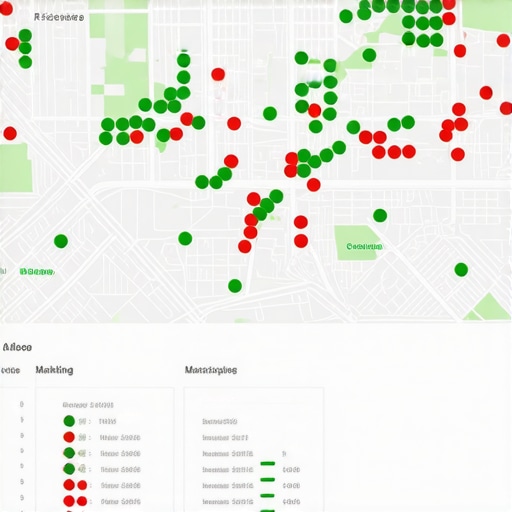
    If you aren’t monitoring your progress with more than just a manual search from your office chair, you are flying blind. I recommend using a grid-tracking tool like Local Falcon or BrightLocal. Why? Because your Google My Business rank looks different from the coffee shop three blocks away than it does from your front desk. These tools create a heatmap of your city, showing you exactly where your ‘authority’ drops off. If I see a sea of green dots around my office but red dots just a mile north, I know I need to double down on specific neighborhood mentions for that specific northern district. It’s about surgical precision, not spray-and-pray marketing.

    How do I maintain my map pack dominance over time?

    Maintenance isn’t about massive changes; it’s about the ‘one percent’ tweaks. According to Joy Hawkins of Sterling Sky, even small, inconsistent data points can trigger a filter that suppresses your profile. You have to be the hawk. This means checking your Q&A section for weird questions and ensuring your ‘Open Now’ status is actually accurate during holidays. If you hit a wall, you need to know how to handle a sudden map ranking plateau without buying links. Usually, it’s a sign that your ‘freshness’ score has dipped. I’ve found that a single, high-quality customer photo uploaded every week does more for a plateau than fifty low-quality backlinks ever could. It’s a signal to Google that the lights are on and somebody is home. A visual representation of a local SEO grid tracking tool showing ranking variations across a city.

    The future of local search is visual and AI-driven

    I’m predicting that by late 2025, the way we think about local maps domination will shift toward ‘Visual Search Optimization.’ Google is already using AI to scan the inside of your store via user photos to verify if you actually sell what you claim to sell. If you want to stay ahead, stop guessing your categories and start looking at what Google’s Vision AI sees in your storefront photos. If you are a boutique but your photos look like a warehouse, Google’s AI will struggle to rank you for high-end keywords. This is the new frontier of an innovative local mapping strategy.

    Sync your technical health with your map presence

    Finally, never ignore the ‘boring’ technical side of your website. There is a hidden link between website speed and map pack success that most people overlook. If your site takes five seconds to load on a mobile device, Google will be hesitant to push your map profile to a user on a 5G connection who wants an answer ‘now.’ Everything is connected. My challenge to you today: go into your profile and find one secondary category that doesn’t quite fit and swap it for a more specific one based on your actual data. It’s a small move, but it’s often the one that triggers a ranking jump.

    The Brutal Truths I Learned While Fighting for the Top Spot

    Looking back at my years in the trenches, I’ve realized that true map pack domination isn’t a trophy you win once; it’s a reputation you maintain daily. I used to think I could outsmart the algorithm with a single weekend of intense optimization, but I quickly learned that Google rewards the ‘steady heartbeat’ of a real, active business over artificial spikes. One of the biggest shifts for me was realizing why your local SEO agency is failing to move the needle—it is often because they focus on generic monthly reports rather than the granular, neighborhood-specific engagement that Google actually tracks. I also discovered that you cannot simply follow the crowd; you have to know how to outsmart competition in local map listings in 2025 by looking at the hyper-local data your competitors are too lazy to audit, like how your actual service area overlaps with high-intent search pockets.

    My Daily Toolkit for Staying in the Top Three

    If you want to stop guessing and start winning, you need a reliable set of eyes on the market. I never make a strategic move without a grid-tracking tool like Local Falcon; it provides a visual heatmap of my google my business rank across every street corner, which is far more accurate than searching from my own desk. I also swear by BrightLocal for auditing citations—manual entry is a recipe for burnout and human error. However, tools are only as good as the person wielding them. Before you outsource this work, make sure you know the one question to ask before hiring a maps expert to ensure they actually understand the nuance of proximity filters and aren’t just selling you a template.

    The Future of Your Local Business is on the Map

    It’s easy to feel overwhelmed by the technicalities of local SEO, but remember that at the end of every search is a neighbor looking for a reliable solution to a real-world problem. You now have the tools, the strategy, and the insider knowledge to show up exactly when those neighbors need you most. If you have recently been pushed down by newer, aggressive competitors, do not panic. Knowing how to force your profile back into the top 3 results is simply a matter of re-aligning your signals and proving to Google that you remain the most relevant choice in your district. Your local mapping strategy is the most important bridge between your hard work and your future customers. Take it one step at a time, stay consistent, and watch the calls start coming in. Which of these map strategies are you going to implement first this week? Let me know in the comments below!
  • The One Question to Ask Before Hiring a Maps Expert

    The One Question to Ask Before Hiring a Maps Expert

    I remember the sinking feeling in my gut when my ‘expert’ told me we just needed more citations. I’d already spent three months’ worth of marketing budget on his ‘local maps domination’ package, and yet, my competitors were still laughing at me from the top of the pack. My phone stayed silent. It was a Tuesday afternoon, raining, and I was staring at a screen that showed my business buried on page four of the map results. I felt like an idiot. I had fallen for the buzzwords and the flashy reports that didn’t actually translate into a single new customer walking through my door. That moment of total frustration was my wake-up call. I realized I didn’t know how to vet someone who actually understood a real local mapping strategy versus someone who was just clicking buttons in a dashboard. Today, I’m going to save you the five grand I wasted by giving you the ultimate litmus test for any consultant you’re thinking about hiring.

    Why Your SEO Agency is Probably Flunking

    Most agencies are stuck in 2018. They will tell you that you need 500 citations and a keyword-stuffed description, but then they wonder why your local seo agency is failing to move the needle when the results don’t budge. I made the massive mistake of thinking ‘more’ meant ‘better.’ I bought into the idea that a high volume of low-quality work would force my way into the top three. It didn’t. In fact, I eventually learned that why automated citations might be doing more harm than good is a reality that can actually suppress your visibility. A true pro knows that Google’s algorithm is now hyper-focused on behavioral signals and real-world location data. According to data from Search Engine Journal, local searches result in a purchase 28% of the time, making the stakes too high to trust someone who can’t explain the ‘how’ behind their ‘what.’

    Is a Maps Consultant Actually Worth the Hype?

    You might be sitting there thinking that maybe you should just do this yourself. It’s a fair point. With so many people claiming they know how to master local maps domination, the skepticism is healthy. Have you ever felt like you were being sold a ‘black box’ solution where you weren’t allowed to see the gears turning?

    The Single Question That Saves Your Budget

    Before you sign a contract or hand over a single cent, you need to ask them this: ‘How specifically do you plan to beat the proximity filter and expand your reach without using a fake office address?’ If they stutter, run. Most ‘experts’ rely on you being physically close to the searcher. A real strategist knows how to influence the map pack from miles away using entities and relevance. If you don’t pin them down on this, you’re just paying for someone to manage a profile you could have set up yourself in ten minutes. We are going to look at exactly what a ‘good’ answer sounds like so you can outsmart competition in local map listings in 2025 without getting burned like I did.If you want to dominate maps, you have to stop thinking like a directory and start thinking like a radio tower. Most agencies treat your business profile like a static billboard, but Google treats it like a live signal. If that signal is weak or fuzzy, Google will hide you to protect the user experience.

    Stop Chasing Citations and Start Building Entity Relevance

    The ‘pro’ you hire should be obsessed with how your website talks to your map pin. Think of your website as the brain and the map profile as the face. If they aren’t in sync, the ‘face’ looks confused. I once spent weeks trying to figure out why a local HVAC client was stuck at the bottom of page one despite having perfect reviews. It turned out they had the hidden schema error hiding your business from searchers. We had to deep-dive into the code to how to sync your website schema with your map profile properly. Within ten days of fixing that technical disconnect, they jumped into the top three for their most profitable ’emergency repair’ keywords.

    Fix the Invisible Signal Leaks

    A real local mapping strategy looks at your digital footprint as a whole. Does your website’s footer match your GBP exactly? Most people think ‘close enough’ is fine, but Google’s bots are literalists. If your website says ‘Suite 100’ and your map profile says ‘#100’, you are creating friction. You also need to understand the link between website backlinks and local map packs. High-quality local links act like votes of confidence that boost your google my business rank far more than a hundred low-tier directory listings ever will. #IMAGE_PLACE_HOLDER_B#

    Turn Your Customer Photos into Ranking Fuel

    Photos are the most underutilized weapon for map pack domination. Most people just upload a grainy picture of their truck and call it a day. A strategist will tell you that the specific photo metadata that actually moves your map rank is about more than just file names. It’s about providing geographic context. I remember working with a small bakery that was invisible two miles away. We started a campaign to get customers to upload photos from different neighborhoods. By teaching them how to increase your map radius without opening a new office through user-generated content, we effectively stretched their ‘relevance’ across the city.

    Stop Diluting Your Rank with Too Many Service Areas

    This is where most business owners shoot themselves in the foot. You think that by checking every box in a 50-mile radius, you’ll get more calls. The opposite is true. If you don’t know how to properly set your service areas to avoid rank dilution, you’re telling Google you are a generalist with no home base. You end up being ‘okay’ everywhere and ‘great’ nowhere. A real expert in local maps domination will narrow your focus to win the high-density areas first before expanding. It’s the difference between a spotlight and a floodlight; the spotlight burns through the fog.Let’s dig deeper into what actually moves the needle when others are just spinning their wheels. Most ‘experts’ will tell you that the secret to map pack domination is simply having the most reviews. I’m here to tell you that’s a lie. In fact, I’ve seen businesses with half the review count of their competitors sit comfortably at the top for years. Why? Because they’ve mastered the art of behavioral signals. While you’re begging for five-star ratings, savvy owners are figuring out why your competitor ranks higher with 10 fewer reviews by focusing on intent and engagement. According to the 2024 Local Search Ranking Factors study by Whitespark, conversion-oriented signals—like how many people click for directions or call from the listing—now carry immense weight. Google isn’t looking for the most popular business on paper; it’s looking for the most active one in the real world. This is how real foot traffic data overpowers on-page SEO. If Google’s AI sees a surge of people searching for your brand name and then clicking the map, they don’t care if you have fewer citations than the guy down the street; you have become the local authority. #IMAGE_PLACE_HOLDER_C#

    Is Your Primary Category Secretly Cannibalizing Your Leads?

    One of the biggest ‘oops’ factors I see is category dilution. You might think adding ‘Consultant,’ ‘Marketing,’ and ‘Advisor’ helps you show up everywhere, but it often confuses the algorithm. We recently implemented the subtle category tweak that doubled local impressions for a client simply by removing a secondary category that was fighting their primary one. It’s counter-intuitive, but sometimes less is more when you want to dominate maps. When you try to be everything to everyone, Google’s proximity filter gets confused about your true relevance.

    Escape the Proximity Paradox

    The final trap is thinking your physical address is your destiny. I call this the proximity paradox. Moving your office three blocks closer to downtown doesn’t guarantee a better rank if your digital relevance is weak. You have to prove to Google that you are relevant to the *searcher*, not just the *zip code*. A sophisticated local mapping strategy focuses on building ‘relevance bridges’ from neighboring towns back to your main office. If you rely solely on your street address, you’re building a fortress with no roads leading to it. Have you ever fallen into this trap of thinking a better office location or more citations would automatically solve your ranking woes? Let me know in the comments.

    Maintaining that number one spot is where most people fail. They treat local SEO like a ‘one and done’ project, but Google is watching for consistency. I personally rely on Local Falcon for my ‘heat map’ audits because it shows me exactly where my signal drops off block-by-block. If you don’t know how to audit your map rankings from a customer’s real location, you’re just guessing. I’ve seen businesses plummet because they stopped posting updates or ignored a few bad reviews. You have to learn how to handle fake negative reviews without hurting your rank immediately to keep the momentum going.

    Keep Your Spot Without Checking Your Dashboard Every Hour

    The future of maps isn’t just about text; it’s about visual AI. We’re moving toward a world where Google Lens identifies your storefront and matches it to user intent in real-time. If you want to how to secure your spot in the map pack permanently, you need to be thinking about how your physical presence matches your digital data. I prediction that within the next two years, ‘visual confirmation’ via user photos will carry more weight than your actual business description. #IMAGE_PLACE_HOLDER_D#

    Joy Hawkins of Sterling Sky has frequently pointed out that even minor, unverified changes to your core profile data can trigger a sudden suspension or a massive drop in google my business rank, which is why I always recommend a slow and steady approach to optimization. You can’t just throw a dozen changes at the wall and see what sticks; you have to be surgical with your local mapping strategy.

    How do I maintain my map pack dominance over the long haul?

    The answer is simple but tedious: activity. Google rewards profiles that look ‘alive.’ This means the review frequency secret for long-term map dominance isn’t about getting fifty reviews in a week and then stopping; it’s about getting two or three a month, every month, forever. I suggest you go check your ‘grid’ today using a tool like GMB Everywhere to see what secondary categories your top competitor is using—it’s the fastest way to uncover map pack domination secrets boost your local visibility today.

    My personal challenge to you: Find one customer today and ask them to mention a specific service name in their review. It’s a tiny move that tells Google exactly what you do and where you do it. Stop waiting for the ‘perfect’ time and start reinforcing your local maps domination right now.

    Hard Lessons from the SEO Trenches

    Looking back at my failed five-thousand-dollar investment, I realize the biggest mistake wasn’t hiring the wrong person—it was believing that local SEO was a static checklist. If you want to dominate maps, you have to treat your digital presence like a living organism that needs constant feeding. One of the most vital things I learned is that Google values trust over volume; a single well-optimized review from a local guide carries more weight than fifty generic ones. I also discovered that your website’s speed is a silent killer; why your website speed is secretly tanking your map rank is a hard lesson many learn too late. Lastly, never underestimate the power of physical proof. If Google’s AI can’t ‘see’ your business in the photos you upload, it won’t trust you enough to show you to users blocks away. This is why you need a concrete local mapping strategy that connects your physical storefront to your digital data.

    The Gear That Keeps My Clients on Top

    I don’t believe in buying every shiny new tool, but there are a few essentials that changed my workflow. I use GMB Everywhere to peek behind the curtain of my competitors’ categories because how to audit your local competitors without expensive tools is the fastest way to find low-hanging fruit. For technical health, I regularly run my site through a schema validator to ensure there isn’t the hidden schema error hiding your business from searchers. I also keep the one document that reinstates any google business profile on my desktop at all times—it’s a utility bill or a business license that matches my GBP perfectly. Having these resources ready turns a ranking drop from a crisis into a simple afternoon fix.

    Stop Being a Ghost in Your Own City

    The journey to google my business rank elevation isn’t about outsmarting an algorithm; it’s about being the best possible answer for your neighbors. You have the tools, the strategy, and the mindset to stop being invisible. Don’t let another month go by where your competitors are stealing your leads simply because they showed up and you didn’t. Go out there and claim your local maps domination. Have you ever seen a competitor with way fewer reviews outrank you and felt like the system was rigged? Let me know in the comments below, and let’s break down why that’s happening.

  • How to Turn Low-Quality Map Views into High-Value Calls

    How to Turn Low-Quality Map Views into High-Value Calls

    I sat there for three hours, refreshing my Google Business Profile dashboard like a man possessed. Five thousand views in thirty days. Five thousand! I felt like a local celebrity. But then I looked at my call log and felt my stomach drop. Three calls. Two were telemarketers, and one was my mother asking if I’d seen her reading glasses. That’s when the reality of why your local maps traffic isn’t converting hit me like a ton of bricks. It didn’t matter that I was appearing on screens across the city; it mattered that no one felt compelled to actually touch the ‘Call’ button. I was winning the popularity contest but losing the business game. Most of us are taught to chase the green arrows on our insights page, but those arrows don’t pay the rent. Today, I’m going to show you exactly how to stop the bleed and transform those cold map views into high-value conversations. We aren’t just looking for eyeballs; we are looking for intent.

    Stop Chasing Views That Don’t Pay Your Bills

    Early in my journey, I made a classic rookie mistake. I thought more keywords equaled more money. I spent weeks refining a local mapping strategy that was basically just shouting into the void. I even tried a business description hack that I thought was clever, but it just made me look like a robot. I was so focused on map pack domination that I forgot there was a human being on the other side of that smartphone screen. According to data from BrightLocal, the average business sees a massive gap between ‘discovery’ views and actual actions, with many profiles seeing less than a 5% conversion rate. That is a lot of wasted potential. If you want to secure your spot in the map pack permanently and actually make it profitable, you have to change how you present your business at the very first point of contact.

    Are more map views actually worth the effort?

    Many people I talk to are skeptical. They’ve been burned by agencies promising ‘page one’ results that yielded zero new revenue. They ask me if maps are just a crowded playground for big spenders. The truth is, views are only ‘vanity metrics’ if you don’t give the customer a reason to stop scrolling. You might think your business description doesn’t matter for ranking, and technically you’re right, but it matters immensely for that split-second decision a customer makes to trust you. Have you ever checked your dashboard and felt that same frustration—seeing thousands of eyes on your business but a phone that refuses to ring? If you’re ready to stop being a ghost in your own city, let’s dive into the practical shifts that turn skeptics into callers. If you need a direct look at your specific situation, you can always reach out to me directly.

    Master the Invisible Signals First

    The biggest mistake I see local owners make is thinking Google only looks at what you type into the dashboard. In reality, Google is obsessed with interaction data. They want to see that when someone finds you, they don’t just bounce back to the search results. I once worked with a local plumber who was absolutely pulling his hair out because his google my business rank had stalled at the bottom of page one for six months. He had more reviews than everyone else, but he was invisible to the ‘urgent’ callers. We stopped focusing on the quantity of text and started focusing on the interaction data that proves you are a top local choice. We swapped out his generic stock photos for real, gritty job-site shots and saw his call volume double before his rank even moved. Why? Because customers actually clicked them. This is how you start the journey toward true local maps domination.

    Upload Photos That Do the Selling for You

    Stop uploading boring photos of your building’s exterior and calling it a day. Google’s AI is smart enough to ‘read’ your images. If you want to jump ahead, you need to use the image optimization trick that increases local CTR. Every photo should tell a story of a solved problem. When I started tagging my own project photos with specific location data, my reach expanded into neighborhoods I hadn’t touched in years. You are essentially giving Google a visual map of where you work. Don’t forget that the specific photo metadata that actually moves your map rank is often the difference between being a ghost and being a leader.

    A person clicking the call button on a highly optimized Google Business Profile on a mobile phone.

    Fix the Category Conflict Killing Your Reach

    Most business owners pick five or six categories thinking it makes them more ‘findable.’ It’s actually doing the opposite. It’s called category dilution. If you are a ‘Personal Injury Lawyer’ but also list ‘Notary Public’ and ‘Legal Consultant,’ you are confusing the algorithm. You need to know why your business categories might be fighting each other and pick one primary category that carries 80% of your revenue. When we trimmed a client’s categories down to just the essentials, we fixed a stalled google my business rank without new reviews almost overnight. It was like the algorithm finally took the blinders off.

    Answer Your Customers Before They Call the Next Guy

    Speed is a ranking factor, whether Google admits it or not. If a customer messages you through the profile and you take four hours to reply, you’ve lost the lead and the ‘authority’ point. I’ve seen businesses with fewer reviews outrank giants simply because their response speed directly impacts your local map authority. People in 2025 want instant gratification. If you aren’t using google business posts to improve map presence and staying active in the Q&A section, you are leaving the door wide open for your competitors to walk right in. This is the core of a modern local mapping strategy that actually converts.

    Let’s dig deeper into the stuff the ‘gurus’ won’t tell you because it’s not as easy to sell as a $500 audit. Everyone screams about getting more reviews, but I’m here to tell you that raw volume is a vanity metric that can actually trigger a spam filter if it’s not handled correctly. In my experience, the review frequency secret for long-term map dominance isn’t about having the most; it’s about the steady heartbeat of recent, keyword-rich feedback. If you get 50 reviews in a week and then go silent for three months, Google sees that as a red flag, not a success story.

    Why does your competitor with half your reviews still beat you?

    It’s infuriating, right? You have 200 five-star reviews, and some guy with 40 is sitting in the top spot. According to the 2024 Local Search Ranking Factors study by Whitespark, factors like ‘Review Velocity’ and the presence of specific service-related keywords in the review text weigh heavily on your google my business rank. If their 40 reviews mention specific services and neighborhoods, and yours just say ‘Great job!’, they win every time. This is why your competitor ranks higher with 10 fewer reviews—they are feeding the algorithm the context it craves. Have you ever fallen into this trap? Let me know in the comments.

    #IMAGE_PLACE_HOLDER_C#

    Don’t Let a Virtual Office Kill Your Visibility

    Here is the ‘Oops’ factor that nukes more local businesses than anything else: the virtual office trap. I’ve seen countless entrepreneurs try to outsmart competition in local map listings in 2025 by renting a prestigious-looking suite that is actually a Regus or WeWork address. Google knows. They have a massive database of these commercial locations, and using one is the fastest way to get your profile suspended or filtered out of the results entirely. You need to understand the danger of using virtual offices for local seo before you sign that lease. If you’re a service-area business, just use your home address and hide it; it’s infinitely safer than a flagged coworking space.

    The Interaction Myth and Real Rank Gains

    Most people think local maps domination comes from external links alone. While they matter, Google is increasingly looking at ‘dwell time’ on your profile. When we talk about a sophisticated innovative local mapping strategy, we have to look at how often searchers actually engage with your business posts. If you are stopping the waste of cash on local citations that google ignores and instead investing in real customer-generated content, you are creating a feedback loop that proves you are the most relevant result in your area. Google wants to provide the best user experience, and a profile that people interact with is a profile they want to promote.

    Once you have cleared the hurdles of virtual offices and messy categories, the real work begins—and no, it’s not another three-hour dashboard refresh session. It’s about building a system that keeps you at the top while you actually run your business. I learned the hard way that a ‘set it and forget it’ mentality is the quickest way to watch your leads dry up. You need a rhythm that signals to Google you are still the most relevant choice in town. This consistency is exactly the power of regular profile updates on search frequency. When you stop posting, Google assumes your business might be winding down, and they’ll start testing your competitor in your spot.

    How do I keep my map rank high without checking it every hour?

    I get asked this constantly by stressed-out owners. The answer is simple: automation for the boring stuff and manual oversight for the high-impact stuff. I personally use a dedicated scheduling tool to ensure I have at least two updates going live every week. You don’t need a professional copywriter; you just need to show Google’s AI that the lights are on. If you’ve seen your traffic dip lately, you might need to know how to force your profile back into the top 3 results by triggering a fresh crawl of your business data. This usually involves a strategic update to your service menu or a high-quality photo upload that utilizes the secret signal google uses to verify your storefront—which is often just a clear shot of your permanent signage and entrance.

    My Personal Toolkit for Local Growth

    The tools I swear by aren’t always the most expensive. In fact, you can often audit your local competitors without expensive tools just by using free browser extensions like GMB Everywhere to peek at their hidden categories. I also recommend keeping a simple spreadsheet to spot and fix nap inconsistencies without paying monthly fees to big directory aggregators. According to Joy Hawkins, a leading voice in the local SEO community and owner of the Local Search Forum, the most important ‘tool’ is actually your own data—specifically how users interact with your ‘Request a Quote’ button versus just viewing the profile. This shift toward engagement data is why I always tell people to stop guessing your categories and use this selection data instead to align with what people are actually searching for. SEO professional using analytics and mobile devices to manage Google Maps ranking Looking ahead, I’m predicting a massive shift toward ‘Zero-Click’ search dominance. Google is increasingly trying to answer every customer question directly on the map. This means you need to start thinking about how to optimize your business profile for voice search map results now, before it becomes the industry standard. The future of local search isn’t just about being found; it’s about being the only logical choice the AI presents to a customer. If you want to stay ahead of these shifts, I highly recommend you reach out to me directly so we can look at your specific market. Try this today: go into your profile and add one ‘Custom Service’ that uses a hyper-local neighborhood name. It’s a small move, but it’s often the spark that restarts a stalled ranking.

    The Three Hardest Truths About Mastering Local Maps Domination

    I spent years thinking that simply appearing in the results was enough to keep the lights on. It’s not. The hardest lesson I learned about local maps domination is that being number one without a conversion strategy is just a high-ranking ego trip. You need to focus on how customer photos change your ranking in just 48 hours because people trust real, gritty eyes over polished marketing slogans every single time. Secondly, stop obsessing over the sheer count of stars. I’ve seen veteran businesses get buried by newcomers who understood the specific review keywords that trigger map visibility. Finally, remember that your local mapping strategy must prioritize a ‘mobile-first’ mindset; if you don’t look great on a smartphone while someone is driving, you are effectively invisible.

    #IMAGE_PLACEHOLDER_E#

    My Personal Resource Vault for Local Visibility

    I don’t believe in hoarding secrets, especially when the algorithm changes as fast as it does. I rely heavily on the Local Search Forum for breaking news on bugs like the hidden proximity glitch that shrinks your map radius before they hit the mainstream blogs. I also trust the data coming out of Whitespark, which explains why proximity is no longer the only way to win maps with real-world case studies. For my weekly sanity checks, I use simple browser extensions to audit your map rankings from a customers real location to ensure my results aren’t being skewed by my own office Wi-Fi.

    Stop Watching the Map and Start Winning the Neighborhood

    The algorithm will continue to evolve, but the basic psychology of your local customer will not. They are looking for a local hero they can trust to solve their problems today. By implementing innovative local mapping strategies for top google rankings, you aren’t just chasing a trend; you’re building a digital storefront that survives any update. Your google my business rank is a tool to grow your legacy, not just a number on a screen. Go out there, optimize with intent, and claim the visibility your business deserves. Which part of your profile feels like a constant struggle—is it the photos, the review responses, or just staying visible in neighboring towns? Let me know in the comments below.

  • Why Your Business Profile Posts Are Getting Zero Engagement

    Why Your Business Profile Posts Are Getting Zero Engagement

    I remember sitting in my kitchen at 11 PM, staring at a post I’d spent an hour crafting for my local shop’s Google profile. High-res photo, clever caption, even a special discount code. I hit ‘Post,’ went to bed, and woke up to… absolute silence. Zero views. Zero clicks. It felt like I was shouting into a void in a town where everyone had their windows shut. That was the moment I realized that just ‘showing up’ isn’t enough to elevate your Google Business rank; you actually have to give the algorithm something it wants to chew on.

    Why Your Posts Are Invisible to Your Neighbors

    Most of us treat Google Business posts like Facebook updates from 2012. We throw up a generic ‘We are open!’ message and expect the phone to ring off the hook. But here is the hard truth: Google is looking for signals that you are relevant right now. When I first started, I made the classic mistake of posting the same stock photo three times a week. I thought I was being consistent, but I was actually just being boring. My interaction data was flatlining because I wasn’t providing real value or local context. If you want to stop being a ghost, you need to understand how to use posts to improve your map presence properly.

    Data from local search studies indicates that the top three map results capture nearly 42% of all clicks, but those clicks are heavily influenced by the visual and textual content displayed within the profile. If your posts aren’t moving the needle, it is because Google doesn’t see a reason to prioritize them for active searchers. It’s not just about existence; it is about active local maps domination through fresh content.

    Is This Posting Routine Just a Huge Waste of My Time?

    I get it. You are busy running a business. You do not have time to be a social media manager for a platform that seems to ignore you. You might be wondering if you should just focus on reviews or maybe even outsmarting the competition through other technical SEO tweaks. But here is the thing: posts are the ‘handshake’ of your profile. They prove your business is alive and kicking. Have you ever looked at your dashboard and seen that ‘0 views’ badge of shame on a post you were actually proud of? Send me a message or reach out—I have been there, and I know exactly how frustrating it is to feel ignored by the very tool that is supposed to bring you customers.

    We are going to stop that cycle today. I am going to show you how to turn those zeros into actual foot traffic and phone calls by changing the way you think about local content and map pack domination secrets that actually work.

    Win the Local Search War by Becoming a Neighborhood Authority

    To move the needle, you have to treat your Google Business Profile like a beacon, not a static billboard. Think of the map pack as a high-stakes auction where Google is the auctioneer, and your posts are the currency. If your currency is counterfeit—meaning it is generic, lacks local flavor, or feels automated—Google won’t buy it. The goal is to build an innovative local mapping strategy that emphasizes real-world activity. You want the algorithm to see that when someone in your zip code searches for your service, you are the most active, most relevant, and most trusted solution in their immediate vicinity.

    A business owner reviewing local map rankings and interaction data on a digital tablet.

    Embed Local Identity into Every Single Upload

    Google’s AI is incredibly good at reading the background of your photos. I once worked with a roofing contractor who was struggling to show up in a neighboring town only ten miles away. He was posting great photos of finished roofs, but they were all tight shots of shingles against a blue sky. There was zero local context. We changed one thing: we started including the street signs or recognizable local landmarks in the background of his ‘job site’ photos. Within three weeks, his profile started appearing for searches in those specific neighborhoods because we provided the specific photo metadata and visual cues that Google needs to verify location relevance. It is like leaving a trail of digital breadcrumbs that lead straight back to your front door.

    Post with Purpose Instead of Just Posting for Attendance

    Showing up is only half the battle; the other half is being useful. If you are just posting ‘Happy Friday!’ every week, you are wasting your breath. Every post should target a specific customer pain point. When you address a problem—like ‘how to fix a leaky faucet in 30 minutes’—you generate the interaction data that signals to Google you are a high-quality result. If users click your ‘Call Now’ button or ‘Learn More’ link, that engagement acts as a vote of confidence for your local maps domination. Stop talking at your customers and start solving their problems right there in the feed.

    Correct the Keywords That Are Leading People to the Wrong Place

    One of the biggest silent killers of your rank is when your business starts showing up for terms that don’t convert. You might think more traffic is better, but if you are a high-end steakhouse ranking for ‘cheap burgers,’ your bounce rate will skyrocket, and your map rank will plummet. You need to audit your search terms to ensure you aren’t ranking for the wrong local keywords. I remember a boutique gym that was accidentally ranking for ‘free public parks’ because they kept posting about их outdoor workouts in a nearby park. We had to pivot their content to focus on ‘private personal training’ to reclaim their rightful spot at the top of the map pack.

    Force a Faster Indexing Cycle

    Google doesn’t always crawl your profile immediately. If you’ve just made a major update or posted a limited-time offer, you want that live yesterday. You can actually trigger a faster update by linking your latest GMB post directly from your website’s high-traffic pages. This creates a bridge for the Googlebot to follow. Knowing how to force Google to re-index your map location faster gives you a tactical edge over competitors who are sitting around waiting for the search engine to ‘get around’ to seeing their changes. It’s about being proactive rather than reactive in your map pack domination secrets application.

    Let’s dig deeper into a hard truth most ‘gurus’ won’t tell you: sometimes, having the most reviews is exactly what makes you look suspicious to the algorithm. I have seen businesses with 500 reviews get buried by a newcomer with 40. This happens because the newcomer likely has better interaction data and higher review velocity—the speed at which new feedback comes in. If your 5-star rating is a year old, it’s stale bread to Google. You might be suffering from the invisible profile why you’re not showing up even with 5 star reviews because your engagement has flatlined. It is not just about the count; it is about the current pulse of your business.

    Why Does a Competitor Three Miles Away Beat You Locally?

    Everyone says proximity is king, but in my experience, relevance and search intent can actually override the physical distance between you and the searcher. According to the annual Moz Local Search Ranking Factors study, while proximity remains a top signal, behavioral factors like click-through rates and mobile ‘Call’ button clicks are gaining massive ground. If a searcher in your neighborhood looks for ’emergency plumber,’ Google will prioritize the person who answers the phone fast, even if they are slightly further away. You need to understand how search intent changes your business visibility on maps if you want to stay competitive. It is about being the most likely ‘click’ for that specific person at that specific moment.

    A visual representation of how different business categories compete for map rankings.

    Stop Falling for the Category Overload Trap

    Here is a specific ‘oops’ factor I see constantly: business owners think that adding 10 secondary categories will help them show up for more searches. In reality, this often dilutes your primary signal. I once audited a clinic that was ranking for nothing because they had ‘Physiotherapist,’ ‘Yoga Studio,’ and ‘Massage Spa’ all checked off. Google’s AI couldn’t decide what their core business was, so it ranked them for none of the above. This is exactly why your business categories might be fighting each other. You are better off being the undisputed master of one category than a confused participant in five. This is the audit mistake that makes your map listing effectively invisible, and it is remarkably easy to fix once you stop trying to be everything to everyone.

    You also need to look at the proximity truth why your office location isn’t the only reason you’re not ranking. If you have moved your office or updated your NAP (Name, Address, Phone) data without cleaning up old citations, you are creating a digital ghost that haunts your rankings. Have you ever fallen into this trap where you changed your phone number or address and suddenly saw your traffic drop? Or maybe you added too many categories thinking it would help? Let me know in the comments—I have diagnosed hundreds of these ‘sudden’ ranking drops and most of the time, the fix is simpler than you think.

    Ultimately, mastering local maps domination requires you to look beyond the surface level ‘best practices.’ You have to watch why your competitor with fewer reviews is outranking you and study their behavior. Are they posting more? Are their photos more locally relevant? Use these nuances to build an innovative local mapping strategy that doesn’t just copy the competition but actually outperforms them by giving Google the high-quality data it craves.

    Stop Flying Blind with Proper Grid Tracking

    Once you’ve cleaned up your categories and optimized your posts, the biggest mistake you can make is assuming your rank is the same across the whole city. If you search for yourself while standing in your office, of course you look like a superstar. But three blocks away? You might be invisible. I personally use grid tracking tools like Local Falcon or BrightLocal because they show me exactly where my ‘influence’ drops off. This is the only way to audit your map rankings from a customers real location without physically driving around town. If I see a ‘red’ spot on the map just half a mile away, I know I need to double down on local content for that specific neighborhood. It turns guesswork into a surgical strike.

    How do I maintain my map rank without spending five hours a day on it?

    The secret isn’t more work; it’s better systems. I recommend a ‘Pulse Check’ every Tuesday morning. Check for new reviews, respond to them immediately, and look at your ‘Insights’ tab to see if your phone calls are trending up or down. If you’re feeling overwhelmed, this is usually why hiring a Google Business Profile consultant saves more money than DIY management—they have the high-end software to automate the boring stuff while you focus on the customers. I also rely on a handful of 5 free tools that actually generate leads from your Google Business Profile to keep the momentum going without ballooning the budget. Consistency beats intensity every single time in the local maps game.

    A visual representation of local map ranking data showing performance across different geographic coordinates.

    The Future of Local Search is Visual and AI-Driven

    Looking ahead, I predict that ‘Search Generative Experience’ (SGE) will soon prioritize businesses that have the most ‘conversational’ data in their profiles. According to Mike Blumenthal, a leading expert in the local search space, Google is increasingly looking at the ‘semantic’ relationship between what you say on your site and what people say in your reviews. This means that the hidden impact of review response speed on map ranking is going to become even more critical. Google’s AI wants to see that you are an active, responsive entity. By 2026, those 5 crucial tweaks for Google Maps SEO in 2026 that actually stick will likely revolve around how well your profile can answer a user’s question before they even click ‘call.’

    Don’t Let Your Momentum Fade to Black

    I’ve seen too many business owners reach the top of the map pack, get comfortable, and then vanish six months later because a competitor used the one move chiropractors use to leapfrog more popular local clinics against them. To stay on top, you have to treat your profile like a living garden. If you stop watering it, the weeds of competition will take over. My challenge for you today is simple: Go to your profile right now and find one review you haven’t responded to yet. Give it a thoughtful, keyword-rich reply that actually helps a future customer. That one small action tells Google you’re still in the game and ready to dominate.

    The Reality Check Most Business Owners Miss

    One of the most painful lessons I learned is that Google cares more about your interaction data than your ‘perfectly’ filled-out description. If customers do not click, you do not climb. Another breakthrough was realizing that syncing your website schema with your map profile is non-negotiable; it is the digital bridge that connects your two most important assets. I also discovered that the interaction data that proves you are a top local choice is not just about clicks—it is about the quality of the journey from search to sale. Finally, don’t ignore the ‘View More’ button; if you are there, you are losing money. You need to understand why your map listing is hidden behind the view more button before you can fix it. Authenticity beats automation every single time in the local maps game.

    My Daily Toolkit for Staying Ahead

    To stay competitive, you need more than just luck. I personally rely on 5 free tools that actually generate leads from your Google Business Profile to keep things running smoothly. When the technical side gets too heavy, I have found that why hiring a Google Business Profile consultant saves more money than DIY management is a truth many learn too late. I also suggest using grid tracking tools like Local Falcon to see exactly where your mastering local maps domination efforts are paying off and where they are falling short. These resources turn the ‘black box’ of local search into a clear, actionable roadmap for your business.

    Your Future Starts on the Map

    Do not let the technical jargon or constant algorithm shifts intimidate you. Every industry leader in your city started exactly where you are right now—staring at a dashboard and wondering why the phone was not ringing. The difference between those who dominate and those who disappear is simply the willingness to adapt. By implementing a solid innovative local mapping strategy, you are building a digital asset that works for you 24/7. It is time to take control of your local destiny and apply the map pack domination secrets that turn your business into a neighborhood landmark. Which part of your Google Business Profile do you find the most confusing to manage? Let me know in the comments below!
  • How to Use Local Events to Boost Your Map Visibility

    How to Use Local Events to Boost Your Map Visibility

    I was sitting in my shop three years ago, watching the local downtown parade happen just two blocks away, and my phone was absolutely silent. I had the inventory, the lights were on, and I was physically closer than anyone else, but my business was invisible on the map. It was like I didn’t exist in the digital version of my own neighborhood. That’s when it hit me: Google doesn’t just want to know where you are; it wants to know what you’re doing right now.

    How a Local Bake Sale Taught Me More Than a Marketing Degree

    I spent years obsessing over meta tags and keywords, thinking that was the only way to achieve map pack domination. But the real breakthrough came when I started treating my Google Business Profile like a community bulletin board. Early on, I made the classic mistake of thinking I only needed to update my hours. I ignored the ‘Events’ feature entirely, viewing it as extra work for no reward. I was wrong. By failing to announce local happenings, I was leaving a massive relevancy signal on the table. Today, I’m going to show you exactly how to leverage local events to boost your profile authority so you never have to watch potential customers walk right past your digital door again. We are going to bridge the gap between physical foot traffic and your Google My Business rank elevation. [image_placeholder]

    But Will Google Actually Care About My Small Workshop?

    It’s a fair question. You might think a small seminar or a weekend sale isn’t ‘big’ enough for the algorithm. However, search engines are increasingly prioritizing ‘real-world’ signals. According to data from BrightLocal’s local ranking factor research, local engagement and fresh content are critical for staying relevant in the local pack. When you post an event, you aren’t just telling people to come over; you are providing Google with time-sensitive, geographically-relevant data that your competitors are likely ignoring. Have you ever tried posting an event on your profile only to see zero clicks, or have you just been sitting on the sidelines? I’d love to hear if you’ve felt that frustration of being ‘ghosted’ by the local map.

    Your Map Pin Needs an Invitation to the Party

    To truly dominate maps, you have to stop thinking like a coder and start thinking like a neighbor. When you use Google Business posts to improve map presence, specifically through the Events tab, you create a beacon. It’s not just about the event itself; it’s about the metadata, the photos, and the user interaction that follows. I’ve seen businesses jump three spots in the map pack just by properly tagging a local charity drive they were hosting. It’s about being present where the action is.

    Stop Shouting at the Algorithm and Start Hosting the Neighborhood

    To achieve local maps domination, you have to think of your Google Business Profile not as a static business card, but as a living, breathing digital storefront. Think of it like this: if you walk past a store every day and the windows never change, eventually you stop looking. Google’s algorithm does the same thing. By posting an event, you are effectively lighting a flare that tells the search engine your business is active and relevant at this exact moment. This is a core pillar of any successful local mapping strategy.

    Give Your Event the Right Metadata to Move the Needle

    When you create an event, the title and description aren’t just for humans. You need to weave in your primary services naturally without looking like a robot. Last year, I worked with a local bakery that was struggling to show up for custom birthday cakes. We created a Cake Tasting Saturday event. Initially, we just called it Tasting Event, and nothing happened. It was a mess—lots of prep and no one showed up. I quickly realized we hadn’t used the right signals. We changed the title to Custom Birthday Cake Tasting Workshop and added specific photo metadata to the images we uploaded. By the following Thursday, they were in the top three of the map pack for their target keyword. A mobile view of a business event post on Google Maps showing interaction buttons.

    Connect Your Website and Map Pin with a Digital Handshake

    One of the biggest mistakes I see is a disconnect between the event on your profile and your website. You must sync your website schema with your map profile to ensure Google sees both as part of the same ecosystem. This means your event should have a corresponding page on your site. When you optimize your local landing pages to reflect the same information—time, date, and location—you create a relevancy loop that the algorithm loves. It confirms you are exactly who you say you are, right where you say you are.

    Focus on the Signals That Prove People Actually Care

    Google isn’t just looking at what you post; it’s looking at how people react. This is where the interaction data that proves you are a top local choice comes into play. If fifty people click Interested or Get Directions on your Google event, that is a massive ranking signal that outweighs simple on-page text. It tells the search engine that you aren’t just a business taking up space, you’re a destination. Every click, share, and direction request tied to that event feeds into your google my business rank, signaling authority and popularity. To dominate maps, you need these micro-conversions to happen regularly. It’s the difference between being a ghost town and a thriving landmark.

    Use High Resolution Evidence to Prove Your Proximity

    Let’s talk photos. Don’t just use stock images. I once spent an entire afternoon taking photos of my shop from every angle of the street corner. I uploaded them to an event post about a Local Business Networking Night. Why? Because image optimization tricks that increase local CTR aren’t just about pretty pictures; they are about proving to Google that your pin is exactly where the satellite says it is. Including the street sign or recognizable local landmarks in your event photos acts as a secondary confirmation of your location. This simple move helped me leapfrog two competitors who were technically closer to the city center but had zero real-world visual proof of their activity.Everyone tells you that reviews are the holy grail of map pack domination, but I’m going to go against the grain here: reviews are often just a tie-breaker, not the engine. I’ve analyzed hundreds of profiles where a business with a 4.2 rating and 20 reviews sits comfortably at the top, while a 4.9-rated giant with 300 reviews is stuck on page two. This happens because Google prioritizes ‘behavioral density’ over static numbers. If users are clicking your ‘Call’ button or ‘Get Directions’ link more frequently relative to your impressions, you are winning the relevancy game. Understanding why your competitor with fewer reviews is outranking you is the first step in moving past surface-level SEO. One massive ‘oops’ factor I see constantly is what I call category dilution. Business owners get greedy; they think if they select ten different categories, they’ll show up for everything. In reality, you’re just watering down your authority. If you’re a plumber, but you also select ‘handyman,’ ‘remodeling,’ and ‘leak detection’ without enough supporting content, Google gets confused about your primary specialty. I’ve seen this exact scenario where your business categories might be fighting each other, leading to a total drop in rankings for your most profitable keywords. Stick to one primary category and maybe two highly relevant sub-categories to keep your local mapping strategy focused.

    Can Real-World Foot Traffic Data Actually Overpower My On-Page SEO?

    The short answer is yes. According to the Whitespark Local Search Ranking Factors survey, behavioral signals like ‘click-through rate’ and ‘mobile clicks-to-call’ have seen a massive surge in importance. Google knows if people are actually visiting your physical location based on their phone’s location history. This is why how real foot traffic data overpowers on-page SEO is becoming a central theme for advanced marketers. You can have perfect keywords, but if nobody ever actually goes to your shop, the algorithm eventually decides you’re a ghost town. [image_placeholder] Another trap to avoid is the ‘set it and forget it’ mentality with your service areas. I recently worked with a contractor who couldn’t figure out why he wasn’t appearing in the wealthy neighborhood just three miles away. It turned out he had set his service area radius so wide that Google viewed his profile as ‘unfocused.’ By tightening the radius and using proper service area settings to avoid rank dilution, we saw his google my business rank jump into the top three for those specific high-value zip codes within two weeks. To truly dominate maps, you have to stop chasing every shiny new ‘hack’ and focus on the signals that prove you are a local authority. Have you ever fallen into the trap of adding too many categories or obsessing over review counts while your rank stayed flat? Let me know in the comments below, I’d love to help you troubleshoot it. Success in 2025 requires a mastering local maps domination strategy that balances digital signals with real-world activity.I’ve learned the hard way that winning the top spot is only half the battle; maintaining it is where the real grit shows. Three years ago, after I finally cracked the top three, I went on vacation for two weeks and didn’t touch my profile. When I came back, I had dropped to the sixth spot because a competitor had been aggressively suggesting ‘edits’ to my business hours and phone number while I was gone. To outsmart competition in local map listings in 2025, you need a defensive strategy as much as an offensive one. I now set a weekly calendar invite to check for any ‘suggested changes’ by users. According to official Google Business Profile documentation, these community-led edits can go live automatically if you don’t reject them within a specific timeframe.

    How do I keep my map rankings consistent month after month?

    The secret isn’t a one-time fix; it’s the velocity of your updates. I swear by a ‘two-post-a-week’ rule. One post focuses on a recent customer success story, and the other is a simple update about our shop. This keeps the ‘activity’ signal high and reinforces the power of regular profile updates on search frequency. If Google sees a profile that hasn’t changed in ninety days, it assumes the business might be stagnating. Consistency is the primary fuel for a sustainable google my business rank.

    Tools that reveal exactly where your visibility drops off

    I don’t guess where my business stands; I use grid-tracking software like Local Falcon or BrightLocal’s rank tracker. Most people check their rank while sitting in their own office, which is a massive mistake because you are always going to rank #1 when you are standing on top of your own pin. You need to audit your map rankings from a customers real location blocks or miles away. I use these tools to see a heatmap of green and red dots across the city. If I see a cluster of red dots in a specific neighborhood, I know I need to adjust my local mapping strategy by perhaps adding a few more geo-tagged photos from that area or updating my profile audit checklist to target those specific searchers. A grid-based heatmap showing local map ranking positions for a small business

    The Future of Maps belongs to those who verify with visuals

    Looking ahead, I predict that static text will matter even less. We are moving toward a world where Google’s AI scans your photos to verify if your store actually stocks the items you claim to have. This is why I am obsessed with the hidden signals in customer photos that google tracks. In the next few years, your map pack domination will depend on ‘Visual Proof of Service.’ Start taking high-quality photos of your finished projects or your staff in action now. It’s one of the 5 crucial tweaks for google maps SEO in 2026 that most of your competitors are too lazy to do. If you want to truly dominate maps, I challenge you to download a rank-tracking tool today and see where your ‘red zones’ are. You might find you are invisible just two streets over without even knowing it.I was sitting in my shop three years ago, watching the local downtown parade happen just two blocks away, and my phone was absolutely silent. I had the inventory, the lights were on, and I was physically closer than anyone else, but my business was invisible on the map. It was like I didn’t exist in the digital version of my own neighborhood. That’s when it hit me: Google doesn’t just want to know where you are; it wants to know what you’re doing right now.

    How a Local Bake Sale Taught Me More Than a Marketing Degree

    I spent years obsessing over meta tags and keywords, thinking that was the only way to achieve map pack domination. But the real breakthrough came when I started treating my Google Business Profile like a community bulletin board. Early on, I made the classic mistake of thinking I only needed to update my hours. I ignored the ‘Events’ feature entirely, viewing it as extra work for no reward. I was wrong. By failing to announce local happenings, I was leaving a massive relevancy signal on the table. Today, I’m going to show you exactly how to leverage local events to boost your profile authority so you never have to watch potential customers walk right past your digital door again. We are going to bridge the gap between physical foot traffic and your Google My Business rank elevation. [image_placeholder]

    But Will Google Actually Care About My Small Workshop?

    It’s a fair question. You might think a small seminar or a weekend sale isn’t ‘big’ enough for the algorithm. However, search engines are increasingly prioritizing ‘real-world’ signals. According to data from BrightLocal’s local ranking factor research, local engagement and fresh content are critical for staying relevant in the local pack. When you post an event, you aren’t just telling people to come over; you are providing Google with time-sensitive, geographically-relevant data that your competitors are likely ignoring. Have you ever tried posting an event on your profile only to see zero clicks, or have you just been sitting on the sidelines? I’d love to hear if you’ve felt that frustration of being ‘ghosted’ by the local map.

    Your Map Pin Needs an Invitation to the Party

    To truly dominate maps, you have to stop thinking like a coder and start thinking like a neighbor. When you use Google Business posts to improve map presence, specifically through the Events tab, you create a beacon. It’s not just about the event itself; it’s about the metadata, the photos, and the user interaction that follows. I’ve seen businesses jump three spots in the map pack just by properly tagging a local charity drive they were hosting. It’s about being present where the action is.

    Stop Shouting at the Algorithm and Start Hosting the Neighborhood

    To achieve local maps domination, you have to think of your Google Business Profile not as a static business card, but as a living, breathing digital storefront. Think of it like this: if you walk past a store every day and the windows never change, eventually you stop looking. Google’s algorithm does the same thing. By posting an event, you are effectively lighting a flare that tells the search engine your business is active and relevant at this exact moment. This is a core pillar of any successful local mapping strategy.

    Give Your Event the Right Metadata to Move the Needle

    When you create an event, the title and description aren’t just for humans. You need to weave in your primary services naturally without looking like a robot. Last year, I worked with a local bakery that was struggling to show up for custom birthday cakes. We created a Cake Tasting Saturday event. Initially, we just called it Tasting Event, and nothing happened. It was a mess—lots of prep and no one showed up. I quickly realized we hadn’t used the right signals. We changed the title to Custom Birthday Cake Tasting Workshop and added specific photo metadata to the images we uploaded. By the following Thursday, they were in the top three of the map pack for their target keyword.

    Connect Your Website and Map Pin with a Digital Handshake

    One of the biggest mistakes I see is a disconnect between the event on your profile and your website. You must sync your website schema with your map profile to ensure Google sees both as part of the same ecosystem. This means your event should have a corresponding page on your site. When you optimize your local landing pages to reflect the same information—time, date, and location—you create a relevancy loop that the algorithm loves. It confirms you are exactly who you say you are, right where you say you are.

    Focus on the Signals That Prove People Actually Care

    Google isn’t just looking at what you post; it’s looking at how people react. This is where the interaction data that proves you are a top local choice comes into play. If fifty people click Interested or Get Directions on your Google event, that is a massive ranking signal that outweighs simple on-page text. It tells the search engine that you aren’t just a business taking up space, you’re a destination. Every click, share, and direction request tied to that event feeds into your google my business rank, signaling authority and popularity. To dominate maps, you need these micro-conversions to happen regularly. It’s the difference between being a ghost town and a thriving landmark.

    Use High Resolution Evidence to Prove Your Proximity

    Let’s talk photos. Don’t just use stock images. I once spent an entire afternoon taking photos of my shop from every angle of the street corner. I uploaded them to an event post about a Local Business Networking Night. Why? Because image optimization tricks that increase local CTR aren’t just about pretty pictures; they are about proving to Google that your pin is exactly where the satellite says it is. Including the street sign or recognizable local landmarks in your event photos acts as a secondary confirmation of your location. This simple move helped me leapfrog two competitors who were technically closer to the city center but had zero real-world visual proof of their activity.Everyone tells you that reviews are the holy grail of map pack domination, but I’m going to go against the grain here: reviews are often just a tie-breaker, not the engine. I’ve analyzed hundreds of profiles where a business with a 4.2 rating and 20 reviews sits comfortably at the top, while a 4.9-rated giant with 300 reviews is stuck on page two. This happens because Google prioritizes ‘behavioral density’ over static numbers. If users are clicking your ‘Call’ button or ‘Get Directions’ link more frequently relative to your impressions, you are winning the relevancy game. Understanding why your competitor with fewer reviews is outranking you is the first step in moving past surface-level SEO. One massive ‘oops’ factor I see constantly is what I call category dilution. Business owners get greedy; they think if they select ten different categories, they’ll show up for everything. In reality, you’re just watering down your authority. If you’re a plumber, but you also select ‘handyman,’ ‘remodeling,’ and ‘leak detection’ without enough supporting content, Google gets confused about your primary specialty. I’ve seen this exact scenario where your business categories might be fighting each other, leading to a total drop in rankings for your most profitable keywords. Stick to one primary category and maybe two highly relevant sub-categories to keep your local mapping strategy focused.

    Can Real-World Foot Traffic Data Actually Overpower My On-Page SEO?

    The short answer is yes. According to the Whitespark Local Search Ranking Factors survey, behavioral signals like ‘click-through rate’ and ‘mobile clicks-to-call’ have seen a massive surge in importance. Google knows if people are actually visiting your physical location based on their phone’s location history. This is why how real foot traffic data overpowers on-page SEO is becoming a central theme for advanced marketers. You can have perfect keywords, but if nobody ever actually goes to your shop, the algorithm eventually decides you’re a ghost town. [image_placeholder] Another trap to avoid is the ‘set it and forget it’ mentality with your service areas. I recently worked with a contractor who couldn’t figure out why he wasn’t appearing in the wealthy neighborhood just three miles away. It turned out he had set his service area radius so wide that Google viewed his profile as ‘unfocused.’ By tightening the radius and using proper service area settings to avoid rank dilution, we saw his google my business rank jump into the top three for those specific high-value zip codes within two weeks. To truly dominate maps, you have to stop chasing every shiny new ‘hack’ and focus on the signals that prove you are a local authority. Have you ever fallen into the trap of adding too many categories or obsessing over review counts while your rank stayed flat? Let me know in the comments below, I’d love to help you troubleshoot it. Success in 2025 requires a mastering local maps domination strategy that balances digital signals with real-world activity.I’ve learned the hard way that winning the top spot is only half the battle; maintaining it is where the real grit shows. Three years ago, after I finally cracked the top three, I went on vacation for two weeks and didn’t touch my profile. When I came back, I had dropped to the sixth spot because a competitor had been aggressively suggesting ‘edits’ to my business hours and phone number while I was gone. To outsmart competition in local map listings in 2025, you need a defensive strategy as much as an offensive one. I now set a weekly calendar invite to check for any ‘suggested changes’ by users. According to official Google Business Profile documentation, these community-led edits can go live automatically if you don’t reject them within a specific timeframe.

    How do I keep my map rankings consistent month after month?

    The secret isn’t a one-time fix; it’s the velocity of your updates. I swear by a ‘two-post-a-week’ rule. One post focuses on a recent customer success story, and the other is a simple update about our shop. This keeps the ‘activity’ signal high and reinforces the power of regular profile updates on search frequency. If Google sees a profile that hasn’t changed in ninety days, it assumes the business might be stagnating. Consistency is the primary fuel for a sustainable google my business rank.

    Tools that reveal exactly where your visibility drops off

    I don’t guess where my business stands; I use grid-tracking software like Local Falcon or BrightLocal’s rank tracker. Most people check their rank while sitting in their own office, which is a massive mistake because you are always going to rank #1 when you are standing on top of your own pin. You need to audit your map rankings from a customers real location blocks or miles away. I use these tools to see a heatmap of green and red dots across the city. If I see a cluster of red dots in a specific neighborhood, I know I need to adjust my local mapping strategy by perhaps adding a few more geo-tagged photos from that area or updating my profile audit checklist to target those specific searchers.

    The Future of Maps belongs to those who verify with visuals

    Looking ahead, I predict that static text will matter even less. We are moving toward a world where Google’s AI scans your photos to verify if your store actually stocks the items you claim to have. This is why I am obsessed with the hidden signals in customer photos that google tracks. In the next few years, your map pack domination will depend on ‘Visual Proof of Service.’ Start taking high-quality photos of your finished projects or your staff in action now. It’s one of the 5 crucial tweaks for google maps SEO in 2026 that most of your competitors are too lazy to do. If you want to truly dominate maps, I challenge you to download a rank-tracking tool today and see where your ‘red zones’ are. You might find you are invisible just two streets over without even knowing it.

    The Brutal Truth About Why My First Rankings Crashed

    When I first started, I thought high rankings were permanent. I was wrong. I learned that google my business rank is like a garden; if you don’t weed it, the competition takes over. One of the biggest ‘lightbulb moments’ was realizing that rankings often stall at the bottom of the top 3 because of a lack of ‘freshness’ signals. Also, I nearly lost everything by trying to save a buck; outsourcing to cheap agencies almost got my profile flagged for spam. Finally, don’t fear the new tech—I found that verification via video upload builds way more trust with the algorithm than a simple postcard ever could.

    Tools I Actually Use to Stay at the Top

    I don’t fly blind, and you shouldn’t either. To maintain my local mapping strategy, I rely on a few specific resources. First, I always keep a profile audit checklist handy to ensure I haven’t missed any new attributes. For tracking, I use Local Falcon or BrightLocal to see my ‘red zones’ across the city. For inspiration, I follow the local SEO community on Twitter and read the Whitespark blog. These tools help me maintain map pack domination without spending ten hours a week on it.

    Your Business Deserves to be Seen

    Don’t let the technical jargon scare you. At the end of the day, Google just wants to show the best local option to its users. By being active, posting real photos, and engaging with your neighbors, you are already ahead of 90% of the businesses out there. It’s time for you to dominate maps and take back your local market share. Have you ever tried to update your business categories and seen your rank drop or rise unexpectedly? Let me know in the comments below, and let’s figure it out together!

  • Why Profile Descriptions Don’t Matter for Ranking but Do for Sales

    I remember sitting in my home office at 2 AM, squinting at my screen and trying to wedge every conceivable keyword into my Google Business Profile description. I was convinced that if I just got the right combination of phrases, I would finally achieve map pack domination. I spent three nights rewriting those 750 characters, thinking I was outsmarting the system. Spoiler alert: my rankings didn’t move an inch. It was a frustrating, eye-opening moment that taught me a hard lesson about how local SEO actually works. I had fallen into the trap of writing for robots while completely ignoring the human being on the other side of the screen who just wanted to know if I could fix their problem.

    Stop Treating Your Business Description Like a Keyword Dumping Ground

    When I first started helping folks with their google my business rank, I made the classic mistake of thinking every field was a signal for the algorithm. I would stuff city names, service lists, and even my grandma’s secret sauce into that description box. But here is the cold, hard truth that most gurus won’t tell you: Google’s own documentation explicitly states that the business description does not affect your search ranking. It is a hard pill to swallow after you have spent hours on it, but it is actually a blessing in disguise. Instead of worrying about why your business is ranking for the wrong local keywords because of a typo in your bio, you can focus on the one thing that actually makes you money—converting a searcher into a customer. Your description is your elevator pitch, not a line of code. It is the one tactic that stops searchers from scrolling past your profile once they find you.

    Is that little block of text actually worth the hype?

    You might be wondering if you should even bother filling it out if it doesn’t help you climb the charts. The answer is a resounding yes, but for the right reasons. Think of your ranking as the bait that gets them to look at the hook, but your description is the hook itself. According to official Google Business Profile guidelines, this field is meant to provide information about your business’s unique attributes, not for SEO manipulation. I once managed a local clinic where we removed all the keyword-heavy fluff and replaced it with a simple, empathetic message about how we handle nervous patients. We didn’t rank any higher, but our call button clicks skyrocketed. That is the power of sales over SEO. Have you ever spent hours polishing your bio only to see your rank stay exactly where it was? It’s time we stop obsessing over the algorithm and start talking to our neighbors again.To actually see progress, you need to treat your profile like a bridge between your physical office and the digital world. Think of your website’s backend as the foundation and your map listing as the billboard. If they don’t say exactly the same thing, the bridge collapses. One of the most overlooked innovative local mapping strategies for top google rankings is ensuring your site speaks the same language as your profile.

    Turn Your Digital Storefront into a Local Lead Machine

    If you want to move the needle on your google my business rank, you have to stop thinking about keywords and start thinking about signals of trust. Imagine Google is a skeptical neighbor. If you tell one person you live on Oak Street and another person you live on Elm Street, your neighbor is going to think you’re shady. This is exactly what happens when your website and your map profile aren’t in sync.

    Force Google to Trust Your Location with Schema Alignment

    You need to learn how to sync your website schema with your map profile so there is zero doubt about where you are and what you do. I’ve seen businesses jump several spots just by cleaning up their LocalBusiness schema to mirror their Google Business Profile exactly. It’s like giving Google a GPS-verified map of your expertise rather than a vague guess. When the data is inconsistent, Google retreats to the safest, most verified option, which is usually your competitor.

    Ditch the Stock Photos and Show Your Real Work

    One of the biggest mistakes I see is the ‘Perfect Profile’ trap. Business owners think they need professional models and perfectly lit offices. In reality, that looks like an advertisement, and people are trained to skip ads. I once worked with a roofer who was frustrated because his competitor—who had half the reviews—was getting all the calls. We realized the competitor was posting raw, authentic photos of real jobs every week. We quickly pivoted and used the image optimization trick that increases local CTR by geotagging and labeling real-world progress shots. We implemented the specific photo update that doubled local clicks for roofing contractors by ditching the polished, fake-looking stock images. We replaced them with raw, high-resolution shots of his team on actual roofs in the neighborhood. Within three weeks, his ‘Request a Quote’ button wasn’t just a decoration anymore; it was a tool that was actually being used.

    Make Sense of the Interaction Data Google Secretly Tracks

    Google isn’t just looking at what you write; they are looking at how people behave when they find you. Every time a user zooms in on a photo, clicks ‘read more’ on a review, or stays on your listing for more than ten seconds, you’re winning. This is the interaction data that proves you are a top local choice. If you aren’t giving people a reason to linger—like answering common questions in the Q&A section—you are losing out on ‘dwell time’ signals that are crucial for mastering local maps domination. I once helped a clinic that had zero engagement. We started posting weekly updates and small ‘insider tips’ about their services. It wasn’t about the SEO; it was about giving the user a reason to stop scrolling. When the user stops, Google notices. This is how to outsmart competition in local map listings in 2025—by being more interesting and more helpful than the guy next door.

    Stop Obsessing Over Your Total Review Count

    Everyone tells you that to achieve map pack domination, you need the most reviews in town. But in my experience, a business with 50 reviews and high engagement often outranks a legacy shop with 500 stale ones. This is the ‘freshness’ signal. Google prioritizes active businesses. If you haven’t had a review in three months, you’re effectively dead to the algorithm. I’ve seen why chiropractic clinics with fewer reviews often dominate the map pack—it is because their customers are talking about specific symptoms and services in their feedback. This creates a relevance loop. Whitespark’s annual Local Search Ranking Factors study confirms that while review volume matters, the keywords within those reviews are becoming a much more powerful signal for local maps domination.

    Are You Sabotaging Your Radius with Too Many Services?

    Here is the advanced mistake I see all the time: Category Dilution. It is tempting to check every box that even remotely applies to you. You are a plumber, but you also do HVAC, and maybe a little electrical? Be careful. Why your business categories might be fighting each other is a real technical hurdle. When you select too many unrelated categories, you dilute the ‘authority’ of your primary category. It is like trying to be a master of all trades and ending up a master of none in Google’s eyes. I once helped a contractor who was invisible until we removed three ‘fluff’ categories. Suddenly, his main keyword shot into the top 3. This is the trap of review automation—it feels like you are doing more, but you are actually confusing the machine.

    The Fake Verification Trap That Gets You Suspended

    Another nuance involves the ‘verification’ process. Many ‘gurus’ suggest using virtual offices or coworking spaces to expand your reach. Don’t do it. Google is getting incredibly aggressive at flagging these. If you are wondering why your professional office address is being flagged as a coworking space, it is likely because you are sharing a floor with too many other LLCs. They want to see real footprints. If you really want to expand, use the city page method rather than trying to trick the map. Have you ever fallen into this trap of trying to game your location or categories only to have your profile suspended? Let me know in the comments below. Success in 2025 is not about outsmarting the bot; it is about giving it the high-quality, singular data it craves to make a confident recommendation. If you are struggling, how we fixed a stalled google my business rank without new reviews shows that the answer is usually in the technical details, not just the review count.

    Winning the initial battle for the top spot is one thing, but staying there is a completely different game of endurance. Most business owners treat their profile like a slow cooker—set it and forget it—but that is exactly when the competition starts to nibble at your heels. I have learned the hard way that the power of regular profile updates on search frequency cannot be overstated. If you stop feeding the machine, the machine stops feeding you. Maintenance isn’t about overhaul; it is about the subtle, consistent signals that tell Google you are still the most relevant answer in the neighborhood.

    The Tools I Use to Spy on the Competition Legally

    I don’t guess where my clients rank; I use data. Standard SEO tools often provide a single rank for a whole city, but that is one of the 7-maps-keyword-tracking-flaws-that-hide-your-true-store-performance. In the real world, you might be #1 at your front door and #10 three blocks away. I personally use grid-tracking tools like Local Falcon or BrightLocal’s Local Search Grid. These tools allow me to see exactly where the ‘ranking drop-off’ happens. It’s like having a heat map of your business’s influence. If I see a patch of red (low ranking) in a high-value neighborhood, I know exactly where to focus my next round of geo-targeted photos or local posts.

    How do I maintain my map rank without it becoming a second job?

    The secret is a simple weekly cadence. You don’t need to spend ten hours a week on this. I spend 15 minutes every Tuesday morning checking for new reviews, responding to them, and posting one high-quality photo from a recent project. I also leverage 5-free-tools-that-actually-generate-leads-from-your-google-business-profile, including simple automation for review requests. This consistency builds a ‘freshness’ score that Google loves. If you’re looking for deeper insights, the annual Local Search Ranking Factors survey by Whitespark is my go-to technical resource; it consistently highlights that sustained user engagement is the primary driver for long-term map pack domination.

    The Future of Maps Is More Physical Than You Think

    Looking ahead, I predict that Google will rely even less on what you *say* about your business and more on what it can *verify* through secondary signals like mobile pings and AI photo analysis. We are already seeing Google’s AI identify specific objects in customer photos to confirm service offerings. This is why following 7-google-business-profile-tips-for-2026-to-outperform-massive-competitors is vital—the shift toward ‘visual proof’ is coming fast. If your photos don’t match your categories, you will lose authority.

    My best advice? Don’t wait for your rankings to drop before you take action. Go into your dashboard right now, look at your last three customer reviews, and apply how-specific-review-response-patterns-actually-boost-map-engagement by mentioning the specific service you provided in your response. It takes thirty seconds, but it tells Google exactly what you want it to hear. Consistency always beats intensity in the local map game.

    Hard Lessons from the Local Map Pack Trenches

    After years of obsessing over every pixel of the Google Business Profile interface, I’ve had a few ‘lightbulb’ moments that changed everything. First, I realized that Google doesn’t actually care about how many keywords you use; they care about how many problems you solve. When I shifted from trying to ‘trick’ the algorithm to providing genuine value, the results followed naturally. I also learned that why most business owners pick the wrong categories and kill their local map rank often comes down to trying to be everything to everyone instead of owning their specific niche.

    Another vital lesson: trust is earned in the technical details. I’ve seen countless businesses struggle because they ignored the audit mistake that makes your map listing effectively invisible—a simple lack of consistency across the web. Finally, remember that your profile is a living document. A profile that stays static for months is a profile that is slowly losing its grip on the top spot. Consistency in updates is the ultimate signal of a thriving, trustworthy business.

    The Exact Toolkit I Use to Keep Clients on Top

    I don’t rely on guesswork to drive map pack domination. My personal toolkit is built on data and verification. I swear by Local Falcon for its ability to provide a granular view of rankings across a city grid; it is the only way to truly audit your map rankings from a customers real location. I also keep a close eye on the Whitespark Local Search Ranking Factors report, which remains the gold standard for understanding what actually moves the needle each year. For technical schema verification, I use the Google Rich Results Test to ensure my website is speaking the same language as my map profile. These tools provide the technical ‘teeth’ to my strategy, ensuring every move I make is backed by evidence rather than just a hunch.

    Claiming Your Spot in the Neighborhood

    Success in local search isn’t about having the biggest marketing budget; it’s about being the most helpful and verified presence in your local community. You don’t need a PhD in SEO to start seeing results. By focusing on authentic photos, meaningful review responses, and a rock-solid technical foundation, you can achieve local maps domination without losing your mind. If you find yourself hitting a wall in a specific neighborhood, consider a smarter way to build local city pages to expand your footprint legally and effectively. The local map is waiting for you to take your rightful place at the top.

    What is the first thing you are going to change on your Google Business Profile after reading this? Let me know in the comments below!
  • Why Your Local Maps Traffic Isn’t Converting Into Real Sales

    Why Your Local Maps Traffic Isn’t Converting Into Real Sales

    I sat there staring at my dashboard, genuinely confused. My impressions were up 400%. I had achieved what I thought was local maps domination. People were seeing my business thousands of times a month, yet my bank account hadn’t noticed the difference. It felt like hosting a massive party where everyone looked through the window but nobody bothered to walk through the front door. I realized then that traffic is just a vanity metric if it doesn’t lead to a conversation. We spend so much energy trying to dominate maps that we forget the person on the other side of the screen is looking for a reason to trust us, not just a map pin to click. Today, I am going to show you exactly why your phone stays silent despite the high view counts and how to turn those casual searchers into your best customers.

    Stop Chasing Views and Start Chasing Phone Calls

    Early on, I made a classic mistake: I thought google my business rank was the final boss. I spent hours tweaking my description and begging for reviews, thinking that hitting the #1 spot would solve all my problems. It didn’t. I was ranking for keywords that had zero buyer intent. People were finding me when they wanted information, not when they were ready to whip out a credit card. It’s a bitter pill to swallow when you realize you’ve been winning the wrong game. You need to look at how search intent changes your business visibility on maps because if you’re showing up for the wrong questions, you will never get the right answers.

    Is ranking high actually worth the effort?

    It is a fair question. You have probably seen competitors with fewer reviews or uglier websites out-earning you. It is frustrating. But here is the truth: ranking is only the first half of the battle. The second half is psychology. According to research by BrightLocal, 98% of people at least occasionally read online reviews for local businesses. If your profile is visible but lacks the specific trust signals that trigger a phone call, you are essentially paying for your competitor’s marketing by educating the customer and then letting them find a better-looking option.

    Fix the Leak in Your Local Conversion Funnel

    Most of the time, the problem isn’t your local mapping strategy; it is the friction on your profile. Think about it. When you are looking for a plumber at 2 AM, do you want to read a 500-word About Us section, or do you want a giant, clickable Call Now button? I have seen so many businesses ignore the call button gap and then wonder why their ROI is in the basement. It is often the tiny, boring details like an outdated phone number or a confusing service list that kill the sale. Have you ever looked at your own profile from a burner phone while standing in the middle of a busy street? If it takes more than two taps to reach you, you are losing money. Have you noticed a high number of profile views but a total lack of inquiries lately? Let’s dive into the specific tweaks that stop the bleeding.

    Audit Your Profile Before You Spend Another Dime

    Ranking is like having a billboard on a highway; if the phone number is missing or the sign is face-down, that billboard is just expensive scenery. I start every single optimization project by going through the profile audit checklist for turning search impressions into real calls. You have to look for “leaks”—specific areas where a potential customer might get confused and bounce. Is your business name inconsistent across the web? Are your holiday hours outdated? These are small errors, but they are massive trust-killers. Think of your profile as your digital lobby. If the lobby is messy and nobody is at the front desk, people won’t stay for the meeting. You need to ensure every button works and every piece of information is current before you worry about climbing higher in the results.

    Choose the Category That Matches Your Customer’s Wallet

    One of the fastest ways to destroy your ROI is to tell Google you do everything. I once worked with an HVAC contractor who insisted on listing “Handyman” as a secondary category because he wanted more “reach.” It backfired completely. Google got confused about what his core business actually was, and he started showing up for low-value paint touch-ups instead of high-ticket furnace installs. This is exactly why most business owners pick the wrong categories and kill their local map rank. You need to be a sniper, not a shotgun. I remember a client, a local plumber, who was struggling until we fixed the mistake local plumbers make with service categories by removing generic terms and doubling down on “Emergency Plumber.” His lead quality tripled overnight because his profile finally matched the high-urgency search intent of his best customers.

    Kill the Mystery With High-Impact Photos That Sell

    When someone finds you on a map, they are looking for any reason to say “no” and move to the next listing. A blurry photo of the side of your truck or a generic stock image of two people shaking hands gives them that reason. To stop the scroll, you need to apply 4 image tweaks that stop searchers from scrolling past your listing. You need to show your face, show your team in action, and show the actual results of your work. This isn’t just about looking pretty; it is about technical authority signals too. I have found that using the specific photo metadata that actually moves your map rank can give you the slight edge in relevancy that your competitors are completely ignoring. #IMAGE_PLACE_HOLDER_B#

    Engineer Your Review Responses to Seal the Deal

    Reviews are a two-way conversation, but most owners treat them like a static trophy case. They might say “Thanks!” and move on, which is a massive wasted opportunity to sell to the *next* person reading that review. By mastering how specific review response patterns actually boost map engagement, you can weave in service descriptions and location keywords that build geographic authority. If a customer mentions a specific service like “leaking pipe repair,” repeat that service in your reply. This logic also applies when you learn how to use local questions and answers to steal search traffic from competitors who leave their Q&A sections blank. You are not just answering a question; you are building a searchable knowledge base that Google rewards with map pack domination secrets that keep your phone ringing while others are left wondering where their traffic went.The review count obsession is hurting your ROI. Everyone tells you that to achieve local maps domination, you just need to be the business with the most stars. It sounds logical, but it is often wrong. I have seen businesses with fifty reviews sit at the top while competitors with five hundred languish on page two. Why? Because Google has started prioritizing relevance and behavioral signals over raw volume. If you have hundreds of reviews but nobody clicks your Directions button, Google assumes you are no longer the best answer for that specific search. This is why your competitor with fewer reviews is outranking you. They are not just getting stars; they are getting high-quality engagement. According to the Local Search Ranking Factors study by Whitespark, behavioral signals like click-through rate are becoming the real tie-breakers in competitive markets. Have you ever fallen into the trap of thinking reviews were the only thing that mattered? Let me know in the comments.

    Don’t let a luxury virtual office get you banned

    The biggest mistake I see when business owners attempt a new local mapping strategy is trying to expand their reach by using virtual offices or coworking spaces. Ten years ago, this worked. Today, it is a one-way ticket to a permanent profile suspension. Google’s AI is incredibly good at identifying why your professional office address is being flagged as a coworking space. Instead of trying to fake your physical location, you need to master how to increase your map radius without opening a new office by using localized content and proper entity linking. I once saw a law firm lose their entire digital presence because they tried to outsmart the system with three fake satellite offices. They did not just lose those listings; their main headquarters’ google my business rank tanked because Google lost trust in their entire brand.

    Can your website speed actually kick you out of the local pack?

    This is the hidden nuance most map experts ignore. They focus entirely on the Google Business Profile and forget that the website linked to it acts as a foundational signal for map pack domination. If your mobile site takes six seconds to load, Google is not going to recommend you in the top three results. There is a direct, measurable connection between page speed and local map presence. #IMAGE_PLACE_HOLDER_C# When a user clicks from the map to your site and immediately bounces because it is slow, that counts as a negative interaction signal against your listing. You have to look at the interaction data that proves you are a top local choice to understand how these metrics tie together. Your strategy has to be holistic; it is not just about the pin, it is about the entire digital experience you provide the moment that pin is touched. If you are still seeing high impressions but no calls, it is time to stop looking at the map and start looking at the friction points you have accidentally built into your customer journey.It is one thing to hit the top three; it is another to stay there while the neighborhood changes. I used to think I could just ‘set it and forget it’ once I achieved local maps domination, but I learned the hard way that Google favors the active. If you stop feeding the beast, the beast finds someone else to play with. This is where most people get exhausted because they think they need to spend three hours a day on their profile. You don’t; you just need the right gear and a consistent rhythm. I personally rely on grid-tracking tools like Local Falcon because the standard ‘Insights’ dashboard is often a fairy tale. Insights tell you how many people saw you, but they do not tell you where you are invisible. You need to see exactly where your rank drops off to the city block, which is why I fix 7 maps keyword tracking flaws that hide your true store performance before I make any big moves. If you are only looking at your ranking from your office desk, you aren’t seeing what the customer five miles away sees.

    How do I maintain my map presence over the long haul?

    Consistency beats intensity every time. I set a recurring calendar alert for every Tuesday morning to post a ‘behind the scenes’ photo or a quick update. You might not think a photo of your new office chair matters, but to Google, it is a heartbeat signal that your business is alive and well. This is the power of regular profile updates on search frequency. I also keep a close eye on the ‘Open Now’ filter. As noted by expert Joy Hawkins from Sterling Sky in her various local search studies, business hours and real-time availability are becoming massive ‘soft’ ranking factors that can toggle your visibility in an instant. If you aren’t regularly checking that your hours match your actual operations, you are basically handing leads to your competitors. Visual representation of local map rankings using a grid tracking tool across a city environment

    Future-Proof Your Profile Before 2026 Hits

    The trend is moving toward ‘Zero-Click’ searches where the user never even visits your website. They see your map pin, check your photos, and hit the call button directly. In the next eighteen months, I expect AI-generated summaries to start pulling even more data from your review text and Google Posts to decide who wins. To stay ahead, you need to implement 5 crucial tweaks for google maps seo in 2026 that actually stick. This means optimizing for semantic meaning and context, not just stuffing keywords into a description. Don’t wait for your rank to tank before you start caring about innovative local mapping strategies. You should also be looking at map pack domination secrets that focus on user engagement rather than just citation volume. If you want to see where you actually stand today without the fluff, run through the profile audit checklist for turning search impressions into real calls right now. Take one small action today: go to your profile, upload one real, non-stock photo from your phone, and see if it moves the needle in your engagement metrics.

    What I Finally Realized After Years of Map Struggles

    I spent far too long thinking that having a pin on the map was the end of the road. The truth is, a real local mapping strategy is about building a digital asset that earns trust while you sleep. One lightbulb moment was realizing that ranking isn’t a trophy—it’s a temporary lease. If you don’t engage with your customers via questions and answers or fresh photos, Google will eventually find someone more relevant. I also learned that why your competitor with fewer reviews is outranking you often comes down to their profile’s heartbeat rather than just the number of stars.

    Another hard lesson was learning to never assume your listing looks the same to everyone. I used to audit my own rank from my office chair and think I was winning. I didn’t realize 7 maps keyword tracking flaws that hide your true store performance were masking the fact that I was invisible three blocks away. Real growth started when I focused on the actual experience of the person searching for an emergency solution instead of just looking at vanity impressions.

    The Gear That Keeps My Profiles at the Top

    I don’t believe in manual guesswork anymore. To achieve consistent map pack domination secrets, I rely on tools that show me the ground-level truth. Local Falcon is my go-to for seeing the ranking grid across a city, and I constantly check the profile audit checklist for turning search impressions into real calls whenever my lead volume dips. I also keep a close eye on the latest research from Sterling Sky and the BrightLocal annual surveys, because local search changes faster than almost any other SEO niche. These resources provide the data-backed confidence needed to make bold moves.

    Start Claiming Your Digital Territory Today

    The map pack is the most valuable real estate on the internet for local businesses. Don’t let the technical jargon stop you from taking control of your google my business rank. You have the tools, the strategy, and now the insider knowledge to move past the vanity metrics and start driving real revenue. Every small update you make—whether it’s a new photo or a better review response—is a step toward local maps domination. If you are feeling stuck, reach out via our contact us page or simply take the first step today. Have you ever noticed your ranking drop the moment you stopped posting updates to your profile? Let me know your experience in the comments below.