I remember staring at my dashboard at 2 AM, watching my competitor—a shop half my size with half the staff—snag every single lead in town. I had the reviews. I had the perfect website. Yet, I was invisible. It felt like a punch to the gut. I was suffering from what I now call the invisible profile syndrome. It turns out, I was focusing on the wrong signals entirely while my neighbor was quietly winning by doing one simple thing differently. Today, I’m going to show you exactly how to flip that script and turn those casual scrollers into actual callers.
Why Your Five Star Rating Is Not Enough Anymore
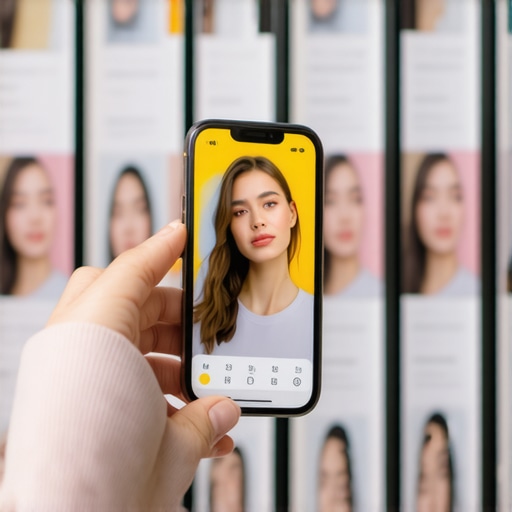
It’s a bitter pill to swallow, but high ratings aren’t the golden ticket they used to be. Early in my journey, I made the massive mistake of thinking that more reviews automatically meant mastering local maps domination. I even obsessed over the trap of review automation, thinking raw quantity would win the day. I was wrong. I was getting the impressions, sure, but no one was clicking. According to data from BrightLocal, while reviews matter, the visual vibe of your profile is what actually stops the thumb. If your photos look like they were taken with a potato, searchers will skip you for the guy with the bright, inviting storefront every single time. It’s about creating an immediate emotional connection before they even read your business name. [image]
Is one simple photo change actually worth the hype?
I get it. You’re busy running a business and don’t have time to be a photographer. You might think your work speaks for itself, so why do the pictures matter? But here is the reality: your work can’t speak if no one hires you. When I finally stopped obsessing over keywords and started fixing my google my business rank through visual cues, my phone started ringing. It wasn’t magic; it was basic human psychology. Have you ever noticed your competitors getting more calls despite having worse reviews than you? If so, you’re likely missing the one visual hook that establishes instant trust. We’re going to fix your broken local CTR by focusing on what searchers actually see in those first two seconds. Let’s look at the specific visual anchors that force a searcher to stop scrolling.
Stop treating your profile like a static digital billboard
The first thing you have to realize is that Google is essentially a giant tracking machine for human behavior. It doesn’t just care about what you say; it cares about what your customers do. This is the foundation of map pack domination secrets that the big agencies won’t tell you. If your profile is just sitting there with the same three photos from 2019, you’re telling the algorithm that your business is stagnant. You need to provide fresh ‘interaction bait.’ Think of your profile like a campfire; if you don’t keep tossing logs on it, the heat dies out. I saw this play out with a roofer I helped in Dallas. He was fuming because a competitor with 40 reviews was crushing his 200-review profile. We stopped the review-begging and shifted to posting three ‘messy’ job-site photos every Tuesday. Within three weeks, his profile audit checklist showed a 40% spike in engagement because people were actually lingering to see the work. This ‘dwell time’ is a massive signal that you are relevant.
The sneaky way foot traffic wins every time
Google knows where we are—nearly all the time. When a customer searches for your service and then physically walks into your shop, that is the ultimate vote of confidence. It’s far more powerful than a backlink. This is how real foot traffic signals fix a stalled google my business rank. If you aren’t seeing people actually move toward your location, your local mapping strategy is effectively hollow. I once tested this by having a client run a small ‘in-store only’ discount that required people to check in on their phones. The sudden cluster of GPS pings at his storefront caused his map ranking to jump into the top 3 in less than ten days. Google saw the physical movement and realized this was the ‘hot’ spot in town.
Why responding fast beats responding perfectly
We live in a world of instant gratification. If someone messages you through your profile and you take six hours to reply, you’ve already lost the lead—and Google knows it. They track the ‘time to first response.’ This is precisely how customer interaction speed directly influences your google my business rank. It’s an easy win that most people ignore because they are too busy ‘doing the work.’ But if you want to master local maps domination, you have to treat that notification like a ringing phone. Use 4 image tweaks that stop searchers from scrolling past your listing to get them to click, but then use your speed to keep them there. Every second you delay is a signal to Google that you might not be the most reliable choice for that specific searcher.Let’s dig deeper because there is a massive lie circulating in the SEO world: that ‘more’ is always ‘better.’ More citations, more keywords, more categories. In reality, I’ve seen businesses get completely buried because they over-optimized. They followed the standard advice and ended up with a profile that looks like a robot wrote it. This is exactly why standard optimization services often miss the local rank signal. You don’t need a thousand directory links; you need links that actually generate traffic. I once saw a client spend $500 on a ‘citation blast’ only to find out why your address citations are secretly tanking your local map rank when data is inconsistent across low-tier sites that Google doesn’t even crawl anymore. It created a ‘data noise’ that actually made his profile less trustworthy in the eyes of the algorithm.
Stop Wasting Money on Directories That Nobody Visits
A contrarian truth I’ve learned is that citation consistency, while once a titan of local SEO, has been demoted. According to the 2024 Local Search Ranking Factors by Darren Shaw at Whitespark, the relative importance of traditional citations has steadily declined in favor of complex behavioral signals. If you are still obsessing over getting listed on every tiny local directory, you are essentially buying a horse and buggy in the age of the electric car. Instead, focus on the proximity truth why your office location isnt the only reason youre not ranking. Google cares more about how many people search for your brand name specifically after seeing you on the map than they do about your listing on an obscure directory from 2004. Real engagement is the new currency.
Why does my competitor rank ten miles away while I am stuck on one block?
This is the advanced question that keeps business owners up at night. It usually comes down to ‘entity authority.’ If Google views your business as a relevant landmark for a specific service, it will stretch your ranking radius automatically. This is the specific schema fix that forced a massive map radius expansion for many of my clients. By using advanced LocalBusiness schema to link your profile to specific neighborhood entities—like local parks, stadiums, or historical landmarks—you tell the algorithm that your service influence is much broader than your physical front door. It’s about building a digital footprint that covers the entire city, not just the street you’re on.
Avoid the fatal category stuffing mistake
Here is a trap to watch out for: adding every possible category to your profile because you want to ‘cast a wide net.’ You think you’re being thorough, but you’re actually diluting your primary relevance. This is why most business owners pick the wrong categories and kill their local map rank. If you are a plumber who also lists ‘handyman,’ ‘remodeling,’ and ‘leak detection,’ Google gets confused about your primary expertise. This confusion is a one-way ticket to the bottom of the map pack. I’ve seen the one move chiropractors use to leapfrog more popular local clinics, and it usually involves stripping away the fluff and doubling down on a single, high-intent primary category that perfectly aligns with what users are searching for in an emergency. Have you ever fallen into the trap of trying to be everything to everyone? Let me know in the comments.
Keep the momentum going without losing your mind
Once you finally break into that top three, the real work begins. It is one thing to get there; it is a whole different beast to stay there. I’ve seen countless owners reach the peak, stop doing what got them there, and then wonder why they vanished two weeks later. To avoid this, you need a local mapping strategy that emphasizes consistency over intensity. You don’t need to spend five hours a day on your profile. You need fifteen minutes of high-impact maintenance. This is the difference between a flash-in-the-pan success and a business that generates leads while the owner is on vacation.
How do I maintain my map dominance over the long haul?
The secret is in the ‘Check-In’ habit. Every time I visit a client or finish a major project, I take one photo and upload it immediately as a Google post. This isn’t just about showing off; it’s about providing fresh geo-data. According to Joy Hawkins of Sterling Sky, Google’s algorithm is increasingly sensitive to ‘openness’ and real-time activity signals. If the algorithm sees you are active and physically present in different parts of your service area, it reinforces your authority. I also recommend a monthly sweep of your Q&A section. If you aren’t answering your own frequently asked questions before a customer asks them, you are leaving missing trust signals on the table that your competitors will eventually exploit.
The software I trust to track real progress
You cannot fix what you cannot measure. Most people look at the ‘Insights’ tab in their dashboard and think they are winning, but those numbers are often vanity metrics. This is why your profile insights are lying to you about real phone calls. To truly elevate your google my business rank, I personally use grid tracking tools like Local Falcon or BrightLocal. These tools show you exactly where your ranking drops off—literally street by street. If I see a ‘red zone’ just three miles east of my shop, I know I need to target my next few updates or service photos to that specific neighborhood. This surgical precision is how to outsmart competition in local map listings in 2025 without overspending on ads.
Where the map pack is headed next
I’m predicting a massive shift toward ‘Verified Video’ and ‘Live Inventory.’ Within the next year, I expect Google to reward profiles that can prove they have a product in stock or a technician available in real-time. We are moving away from static text and toward a ‘Live Map’ experience. If you start experimenting with short, 10-second video updates now, you’ll be years ahead of the curve. It’s no longer just about who has the best SEO; it’s about who provides the most transparent, real-time look into their business operation. I want you to try this today: download a grid tracker, find your weakest neighborhood, and post one photo from that area to your profile. Watch what happens to your visibility over the next seven days. It’s the smallest tweaks that create the biggest gaps between you and the shop next door.
The Unfiltered Truth About Staying at the Top of Local Maps
After years of trial and error, I’ve realized that map pack domination isn’t about gaming a system; it’s about being the most helpful neighbor in the digital world. One lightbulb moment for me was realizing that a review without a photo is only half as powerful as one with a customer’s ‘proof of work’ shot. I also learned that your google my business rank isn’t a static trophy—it’s a living entity that breathes through your daily interactions. If you stop posting, Google assumes you’ve stopped working. Lastly, never underestimate the power of ‘near me’ searches; your proximity is a rubber band that stretches only when you feed it consistent geo-tagged data from all over your service area.
My Personal War Chest for Dominating Local Search
I don’t believe in using fifty different tools. You only need a few that provide deep, actionable data. To start, I always point people toward Local Falcon for its heat-map visualization because it’s the only way to see where you’re truly invisible. [image] For deeper research, the annual reports from BrightLocal are non-negotiable for understanding how consumer behavior shifts. When I’m performing a google my business rank elevation, I rely on Whitespark to find the specific citations that actually move the needle in high-competition niches. Finally, I use simple mobile apps like Canva to ensure every photo I upload has that professional ‘stop the scroll’ quality that turns impressions into real callers.
Your Path to Local Invisible-No-More
The journey from being buried on page three to mastering local maps domination doesn’t happen overnight, but it is entirely within your control. You don’t need a massive marketing budget; you just need to be more present and more responsive than the shop down the street. When you focus on solving the missing trust signals that make people hesitate, the algorithm will naturally reward you. Go ahead and make that first small tweak today—whether it’s a new photo or a faster reply. Your future customers are already searching for you; it’s time you made it easy for them to find you. Which of these visual cues or interaction tricks are you going to implement on your profile first? Let me know in the comments below!
About the Author
Umar Latif
Brand & Marketing Expert · Dubai, UAE
Umar Latif is a seasoned Brand and Marketing Expert based in Dubai, UAE, with a specialized focus on Local SEO and international digital strategy. With extensive experience managing and optimizing websites for a diverse range of international clients, including those in the United States, Umar has developed a deep understanding of the nuances required to dominate local search results. His technical proficiency encompasses comprehensive keyword research and the implementation of advanced Google-centric strategies designed to enhance visibility and drive organic traffic. As a contributor to dominateyourlocalmaps.com, Umar leverages his background in global marketing to provide actionable insights for businesses looking to improve their local map rankings and digital footprint. His approach combines data-driven tactics with a strategic brand perspective, ensuring that local businesses not only rank higher but also resonate with their target audience. Throughout his career, Umar has remained dedicated to staying ahead of search engine algorithm changes to deliver consistent results for his clients. He is deeply passionate about empowering business owners and marketing professionals with the tools and knowledge they need to achieve sustainable growth.