
I’ll never forget the Tuesday afternoon I spent obsessively refreshing my phone, trying to figure out why a local shop with a fraction of my reputation was suddenly crushing me in the rankings. I had worked my tail off to get over two hundred five-star reviews, thinking that hitting a big number was the finish line. I felt untouchable. Then, out of nowhere, the ‘new guy’ in town—a business that had been open for maybe six months—slid right into that coveted number one spot. It made no sense. I had the history. I had the volume. But I was missing the one thing that actually keeps the lights on in the Google algorithm: a steady heartbeat.
The day I realized more reviews aren’t always better
In those early days, I made the classic mistake of ‘review dumping.’ I’d run a huge promotion, get forty reviews in a week, and then… nothing for three months. I thought I was being efficient. In reality, I was telling Google that my business was a flash in the pan. When I looked closer at why my competitor with fewer reviews was outranking me, the answer was staring me in the face. They were getting one or two reviews every single week like clockwork. Their profile looked alive; mine looked like a museum. It is a hard pill to swallow when you realize your hard work was actually working against you because of a lack of consistency.
Is a constant stream of reviews actually worth the effort?
You might be thinking, ‘Do I really have to babysit my customers every single day?’ It feels like a lot of work when you’re already trying to run a business. But here is the reality: why positive reviews alone won’t win the map pack comes down to freshness. Google’s job is to provide the most relevant, current information. If your last review was from 2022, how does the algorithm know you haven’t changed ownership or let your service slip? According to a study by BrightLocal, nearly 70% of consumers only care about reviews written in the last month. This data suggests that the ‘velocity’ of your feedback is a primary trust signal for both users and search engines.
Stop focusing on the finish line and start watching the clock
Today, we are going to fix the ‘feast or famine’ cycle that is killing your google my business rank. I’m going to show you how to build a review frequency strategy that doesn’t just get you to the top, but keeps you there for the long haul. We aren’t just chasing a high score anymore; we are building authority. Have you ever noticed your rankings dip right after a ‘busy’ review month ends? I’d love to hear if you’ve seen that same pattern. It’s a common trap, but once you understand the hidden impact of review response speed on map ranking combined with frequency, you become a permanent fixture in the local pack.
Build a review drip that never runs dry
I learned the hard way that manual processes always fail when life gets busy. A few years back, I managed a client who was obsessed with ‘the big push.’ We would spend hours manually emailing past clients for reviews, and we once managed to pull in sixty reviews in a single weekend. We felt like kings. Then, we did nothing for a month. By week three, his map pin had basically vanished from ‘near me’ searches, replaced by a competitor who only had twelve reviews total, but had received three of them that same week. This is where mastering local maps domination starts: you must automate the ask. If you are not using a system that triggers an invite the moment a job is closed or a product is delivered, you are playing a losing game. I once set up an automated sequence that accidentally sent review requests to people who had just filed complaints—it was a messy disaster that required a lot of damage control, but it taught me that even a flawed system is better than no system at all because it ensures your profile never goes cold.
Turn your customers into a volunteer film crew
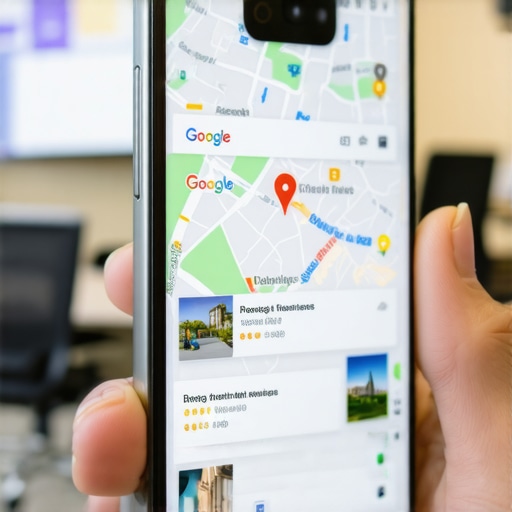
The algorithm isn’t just reading your text; it is looking at what your customers are doing. If you want to see how customer photos change your ranking in just 48 hours, you have to understand the power of user-generated content. When a customer uploads a photo of your work directly from their phone, that file often contains GPS metadata. This confirms to Google that you are exactly where you say you are and that you are actually performing services at that location. It is the interaction data that proves you are a top local choice. During a local mapping strategy session for a landscaping client, we started asking his team to simply say, ‘Hey, if you love the work, could you snap a quick photo and add it to the review?’ The result was a 40% increase in map impressions within the first month because Google started trust-matching his location data with real-world activity.
Prompt for the words that move the needle
You shouldn’t just collect generic ‘great job’ reviews; you need to feed the machine specific data. Encourage your customers to use the specific review keywords that trigger map visibility. Instead of asking for ‘a review,’ try asking them to ‘mention the specific service we performed, like the emergency leak repair or the kitchen remodel.’ This creates a natural keyword density that Google rewards because it proves your relevance for those specific search terms. It is a core pillar of how to outsmart competition in local map listings in 2025.
Seconds matter when the algorithm is watching
Once those reviews start flowing in consistently, your job isn’t finished. You have to close the loop. We have seen the hidden impact of review response speed on map ranking firsthand. Think of your Google Business Profile like a high-end restaurant; if a customer speaks to you and you ignore them for three days, it looks terrible to everyone else in the room. Google tracks how long it takes you to respond to new feedback. A response within 24 hours signals that your business is highly operational and customer-centric. I once helped a plumbing company go from the second page to the top 3 just by having the owner reply to every review within two hours using his mobile app. No new backlinks, no site changes—just pure engagement speed that forced the algorithm to recognize them as the most ‘active’ authority in the area.
Most business owners treat their Google Business Profile like a static yellow pages ad, but that is the fastest way to hit a growth ceiling. I often see people obsessing over their website meta tags while their map ranking stays flat. Here is the contrarian truth: Google cares more about how people move and interact in the physical world than almost anything written on your homepage. In fact, research from the Whitespark Local Search Ranking Factors study suggests that behavioral signals—like ‘Request Directions’ clicks and real-time foot traffic—are becoming heavier ranking factors than traditional backlinks. This is how real foot traffic data overpowers on-page SEO. If you aren’t encouraging physical interactions with your profile, you are missing the invisible engine behind map pack domination.
Why proximity isn’t the king it used to be
Then there is the proximity trap. Everyone says you need to be as close to the city center as possible to rank, but the proximity paradox shows that moving your office might actually hurt you if you lose the historical data tied to your current location. Google builds a ‘trust radius’ around your verified address over years. Resetting that for a slightly better zip code is a high-stakes gamble that rarely pays off in the way you’d expect. Instead of moving, you should focus on expanding your relevance through localized content and user interactions that prove you serve a wider area.

Can one tiny category tweak really double your calls?
The answer is a resounding yes, but there is a massive ‘oops’ factor involved. Most owners think adding ten categories makes them more visible to everyone. In reality, why your business categories might be fighting each other is a very real problem called category dilution. If you are a ‘Personal Injury Lawyer’ but you also list ‘Insurance Agency’ because you handle claims, Google gets confused about your primary intent. I once saw a general contractor lose 50% of his leads because he added ‘Handyman’ to his ‘Kitchen Remodeler’ profile. He thought he was casting a wider net; instead, he told the algorithm he wasn’t a specialist. He was essentially demoted for lack of focus.
The keyword stuffing trap that triggers suspensions
Finally, let’s talk about the name on the door. You have probably seen competitors use the business name hack that still works for map ranking, which involves adding your city or service to your official name. While it can provide a temporary boost, it is a ticking time bomb. A single competitor report or a manual review can lead to an instant suspension, which uncovers the real reason your profile was suspended after an edit. It is far better to build long-term authority through innovative local mapping strategies than to cheat a system that eventually catches up with everyone. Have you ever fallen into the trap of over-optimizing and seeing your rank drop? Let me know in the comments.
It is one thing to fight your way to the top of the local results, but it is an entirely different beast to stay there. I have seen business owners hit the number one spot and then disappear within a month because they treated their profile like a trophy rather than a living garden. If you want to know how to secure your spot in the map pack permanently, you have to transition from a ‘launch’ mindset to a ‘maintenance’ mindset. I’ve spent way too much money on software that promised a ‘push-button’ solution for map pack domination, but the truth is, most of them are junk. I keep my toolkit lean because bloated data just leads to analysis paralysis.
The tech stack that keeps my maps green
I don’t believe in paying $500 a month for fancy dashboards when you can learn how to audit your local competitors without expensive tools. I personally swear by the GMB Everywhere extension. I use it every single week to sniff out which secondary categories my competitors are testing. It is how I caught a rival plumber trying to pivot into ‘HVAC repair’ before he even updated his website. For tracking, I rely on local grid tools that show me exactly where my ‘pin’ drops off in neighboring towns. This is the only way to identify the hidden proximity glitch that shrinks your map radius. If you aren’t seeing your ranking on a literal map grid, you’re just guessing based on your own office chair, and that is a recipe for failure.
How do I maintain my map ranking over the long haul?
The secret is consistency over intensity. You need to leverage the power of regular profile updates on search frequency. Google’s own documentation on local ranking factors explicitly mentions ‘Prominence’ as a key pillar, which is partially determined by how much information Google has about a business from across the web. I make it a habit to upload one high-resolution photo every Friday—usually a ‘work in progress’ shot—because it signals to the algorithm that the business is active. If you’re just starting out, you must learn how to use local citations to build trust for new businesses. Don’t just dump them all at once; drip them out so your digital footprint grows naturally alongside your review count.
Your next big win is hidden in the photos
I’m going to make a prediction: by 2026, text-based reviews will take a backseat to visual verification. Google is already getting incredibly good at using AI to ‘read’ the objects inside the photos your customers upload. If a customer reviews a ‘pizza shop’ but the photo shows a burger, the algorithm notices the discrepancy. This is a core part of how to outsmart competition in local map listings in 2025. You should be encouraging customers to take photos of the specific results you provide. This builds a layer of ‘Visual Relevance’ that a competitor cannot fake with bought reviews. As Joy Hawkins from Sterling Sky often notes in her research on the proximity filter, Google is constantly tightening the leash on what it considers a ‘trusted’ local entity. Your job is to provide so much real-world evidence that the algorithm has no choice but to trust you. I want you to try one advanced tip today: Go into your Google Business Profile and add three ‘Product’ listings for your top services, even if you’re a service-based business. It expands your ‘real estate’ on the mobile search results and forces your competitors further down the screen. If you need help fine-tuning your long-term plan, you can always contact us for a deeper dive into innovative local mapping strategies.
The Three Hardest Lessons from My Map Pack Failures
Reflecting on years of trial and error, I’ve realized that the biggest mistakes aren’t usually technical; they are behavioral. For instance, I used to ignore the ‘View More’ button, but I eventually learned why your map listing is hidden behind the view more button and how that lack of visibility is often tied to user engagement signals rather than just proximity. I also spent way too much time on keywords without realizing how search intent changes your business visibility on maps; Google knows if a user wants a quick fix or a high-end consultation, and it filters the map pack accordingly.
Perhaps the most shocking revelation was the tech side of local SEO. I spent weeks optimizing my profile but ignored my homepage load times, until I saw the data on why your website speed is secretly tanking your map rank. A slow site makes Google think your business is inefficient, even if your office is just down the street.
My Secret Map Dominance Toolkit
I don’t gatekeep the tools that actually move the needle. If you want to scale your local mapping strategy, start with these: First, use a grid tracking tool to see if you are suffering from the hidden proximity glitch that shrinks your map radius. Second, I swear by manual citation audits; tools like WhiteSpark are great, but you need to understand why your citations are getting ignored by google maps before you throw money at automated services. Finally, get the GMB Everywhere extension—it’s the fastest way to snoop on your competitors’ categories without getting bogged down in spreadsheets.
Claim Your Crown in the Local Neighborhood
The journey to local maps domination isn’t a race; it’s an endurance event. It’s about being the most helpful, most active, and most verified entity in your specific corner of the world. Don’t let the technical jargon overwhelm you—just start by updating one photo and replying to one review today. If you need a partner to help you navigate these innovative local mapping strategies, feel free to contact us for a strategy session. Your business deserves to be the first name people see when they need help. Have you ever felt like you were doing everything right but still couldn’t break into the top 3? Let me know your experience in the comments below!
About the Author
Umar Latif
Brand & Marketing Expert · Dubai, UAE
Umar Latif is a seasoned Brand and Marketing Expert based in Dubai, UAE, with a specialized focus on Local SEO and international digital strategy. With extensive experience managing and optimizing websites for a diverse range of international clients, including those in the United States, Umar has developed a deep understanding of the nuances required to dominate local search results. His technical proficiency encompasses comprehensive keyword research and the implementation of advanced Google-centric strategies designed to enhance visibility and drive organic traffic. As a contributor to dominateyourlocalmaps.com, Umar leverages his background in global marketing to provide actionable insights for businesses looking to improve their local map rankings and digital footprint. His approach combines data-driven tactics with a strategic brand perspective, ensuring that local businesses not only rank higher but also resonate with their target audience. Throughout his career, Umar has remained dedicated to staying ahead of search engine algorithm changes to deliver consistent results for his clients. He is deeply passionate about empowering business owners and marketing professionals with the tools and knowledge they need to achieve sustainable growth.