
I remember sitting at my kitchen table, staring at my laptop screen while my ‘pending’ status on Google Business Profile mocked me for the third week in a row. I had tried the postcards—three of them, actually—and they either got lost in the mail or arrived so late the code had expired. It was infuriating. I felt like I was invisible to the very people walking past my shop. Everything changed the moment I stopped fighting the system and decided to record a simple video of my front door and my workspace. It felt awkward, and I definitely tripped over my words once, but that one move did more for my visibility than six months of ‘traditional’ tweaks. This wasn’t just a tech hurdle; it was the moment I finally grasped a real local mapping strategy that actually worked. If you want to dominate maps in your area, you have to stop looking for shortcuts and start giving Google exactly what it wants: proof that you are a real person in a real building.
Why I Finally Stopped Arguing with Google and Just Hit Record
The truth is, Google is paranoid, and for good reason. They are fighting a constant war against fake listings and ‘lead gen’ sites that don’t actually exist in the physical world. When I finally swallowed my pride and did the video upload, my listing didn’t just get verified; it felt like the heavy brakes were finally released. My google my business rank started climbing within days because the algorithm finally trusted that my office wasn’t just a random UPS mailbox or a ghost kitchen. I made a huge mistake early on by thinking that my high-quality photos were enough to prove my existence. They weren’t. I spent months waiting while my competitors—guys with half my experience—sat comfortably in the top three because they had already secured their trust signals. If you’ve ever felt like your google business profile edits are always pending forever, you know exactly how draining that limbo can be. Today, we are going to fix that. I’m going to show you why this video isn’t a chore, but a massive competitive advantage for map pack domination.
Is it actually worth the hassle of filming your office?
I get it. You are worried about privacy, or maybe your office isn’t exactly ‘Instagram-ready’ today. But here is the reality check: Google isn’t looking for a Hollywood production. According to data from Search Engine Journal, Google’s shift toward ‘real-world’ verification is a direct response to the flood of AI-generated spam hitting the web. They want to see your tools, your signage, and your street address. It is not about being pretty; it is about being authentic. Have you ever been stuck in that ‘pending’ purgatory where it feels like the search engines just don’t believe you exist? It is the worst feeling for a business owner who is ready to work. If you have ever faced the nightmare of what to do the second your google business profile gets suspended, you already know that providing video proof is often the only way back into the light. This simple act of recording your surroundings is the cornerstone of local maps domination because it builds an ironclad layer of trust that no amount of keyword stuffing can replicate. Let’s walk through how to do this right so you can stop being a ghost in your own city.The biggest mistake people make with the video verification is treating it like a commercial. It isn’t. It’s a security clearance check. Think of it like a continuous ‘proof of life’ video for your company. If the camera cuts, you fail. If you don’t show the street sign, you fail. I learned this the hard way during my first attempt when I filmed a beautiful, high-definition tour of my interior but forgot to show the actual building number. Google rejected it within hours. It was a classic example of the 4 missing trust signals keeping your business out of the top 3. To get it right, you need to follow a specific, unbroken path that bridges the gap between the digital map and the physical world.
The Exact Route Your Camera Needs to Take
To achieve local maps domination, your video must prove three things: your location, your equipment, and your management. Start by standing on the sidewalk. You want to capture the surrounding area, the street signs, and your building’s exterior in one sweeping motion. This isn’t just about showing your door; it is about anchoring your GPS coordinates to a physical landmark. If your video doesn’t clearly show how a customer would find you from the road, you are likely to find that your address citations are secretly tanking your local map rank because the visual evidence doesn’t match the data. 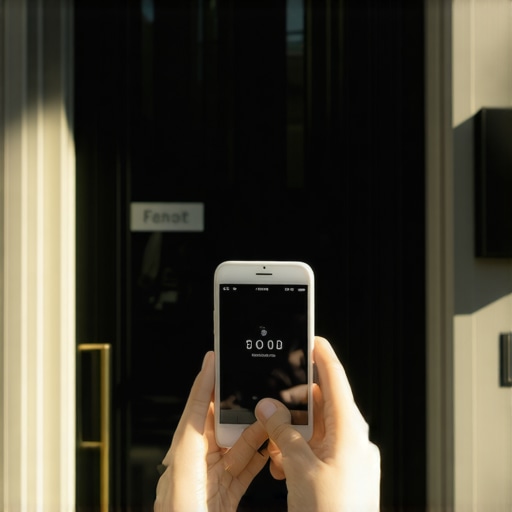
Start at the Curb and Capture Your Street Number
Before you even touch the door handle, zoom in on your house or building number. This is the ‘anchor’ for your local mapping strategy. I once helped a locksmith who was stuck in ‘pending’ for months. We realized his building didn’t have a visible number on the brickwork. We taped a temporary but professional-looking sign to the glass, filmed it, and he was verified the next morning. Google needs to see that your business isn’t a ghost. If you are a service-area business, show your branded van and the tools inside it while parked at your registered home address.
Keep the Camera Rolling When You Step Inside
Once you have established the outside, walk through the front door without stopping the recording. This proves there is no movie-magic or editing happening. Walk directly to your workspace. If you have a reception desk, show it. If you have a warehouse, show the racks. This level of transparency is what leads to map pack domination because it eliminates the ‘fraud’ flag in the algorithm. I remember a client who felt silly filming his messy desk, but that mess—the half-drunk coffee, the stacks of invoices—was exactly what convinced the manual reviewer that he was a legitimate operator.
Show the Hard Proof That You Are an Active Business
The final thirty seconds of your video are the most important. You need to prove you have access to the business’s ‘brains.’ Open a laptop and show your Google Business Profile dashboard, or unlock a door with your keys. Show a business license or a utility bill with the company name on it. This is the ultimate move to dominate maps in a competitive niche. When I started doing this, my google my business rank stabilized because I wasn’t just another digital entity; I was a verified local landmark. If your rankings have dipped recently, check if your profile ranking stalled and the 5-minute fix that restarts it involves simply refreshing these visual trust signals.Everyone tells you that reviews are the ultimate king of local search, but I have seen businesses with five hundred five-star reviews get buried by a competitor with only forty. It feels like a glitch in the matrix, right? It isn’t. The most common myth in the industry is that ‘more is always better.’ In reality, Google has shifted toward ‘interaction data’ and ‘sentiment velocity.’ This is why the shop next door outranks you with half the reviews. If your reviews are all generic ‘Great service!’ or ‘Five stars!’, they carry less weight than a review that specifically mentions your service and city. According to a study by BrightLocal, the presence of specific keywords in reviews is one of the top factors that actually move the needle for local maps domination. If you aren’t encouraging your customers to be descriptive, you are leaving your google my business rank to chance.
The virtual office trap that kills your visibility
One of the most expensive mistakes I see savvy entrepreneurs make is trying to scale by renting virtual offices or ‘coworking desks’ just to get a footprint in a new zip code. I once watched a law firm lose its entire map presence overnight because they tried to ‘hack’ their local mapping strategy with a Regus address. Google’s AI is now incredibly sophisticated at cross-referencing commercial real estate databases. If your address is flagged as a shared space without a dedicated, permanently signed suite, you are essentially building your house on a sinkhole. This is often the hidden answer to why your professional office address is being flagged as a coworking space. Instead of trying to fake a location, you are much better off perfecting your presence at your actual home base. 
Is your ‘professional’ office address actually a hidden ranking killer?
If you are currently using a coworking space, check your listing right now. Does it have a suite number? Is that suite number shared by twenty other businesses on the web? If so, you are likely suffering from ‘filtered’ results, where Google only shows the ‘most relevant’ business at that specific coordinate. This is a common reason why your map listing is hidden behind the view-more button. To achieve true map pack domination, you need to be the clear, undisputed authority at your physical location. Another nuance people miss is ‘searcher proximity.’ Google doesn’t just care where you are; they care where the customer is standing. If you try to rank for an entire city from a single corner, you will eventually hit a wall. You need to understand the proximity truth—your office location isn’t the only reason you’re not ranking, but it’s the hardest one to change. You can, however, expand your reach by leveraging the interaction data that proves you are a top local choice. This involves getting people to actually click your ‘call’ button or request directions from further away. Have you ever fallen into this trap of trying to fake a location or obsessing over review counts while your rank stayed flat? Let me know in the comments below.
How do I maintain my local map presence over the next year?
The hardest part of local maps domination isn’t getting to the top; it is staying there while every competitor in a five-mile radius tries to knock you off. I see it happen every week: a business hits the top three, stops their active updates, and then watches their lead volume crater. Consistency is the only way to protect your google my business rank. You need to treat your profile like a living billboard. This means replying to every single review, even the brief ones, because how specific review response patterns actually boost map engagement is a factor that many business owners overlook. I personally set a calendar alert for every Tuesday morning to upload two fresh photos and one update post. It takes ten minutes, but the power of regular profile updates on search frequency keeps the algorithm looking at my listing daily rather than monthly.
Grab the right gear to track your city-wide progress
If you are still checking your rankings by typing your business name into your own phone while sitting in your office, you are flying blind. You are seeing a biased result because of your proximity. To truly scale a local mapping strategy, I use grid-tracking tools like Local Falcon or BrightLocal. These tools show you a ‘heat map’ of where you rank in specific neighborhoods. It was a total game-changer for me when I realized I was number one at my front door but dropped to number ten just two blocks away. You have to learn how to audit your map rankings from a customers real location if you want to fix those dead zones. If you don’t, you might fall victim to 7 maps keyword tracking flaws that hide your true store performance, which can lead to wasted marketing spend.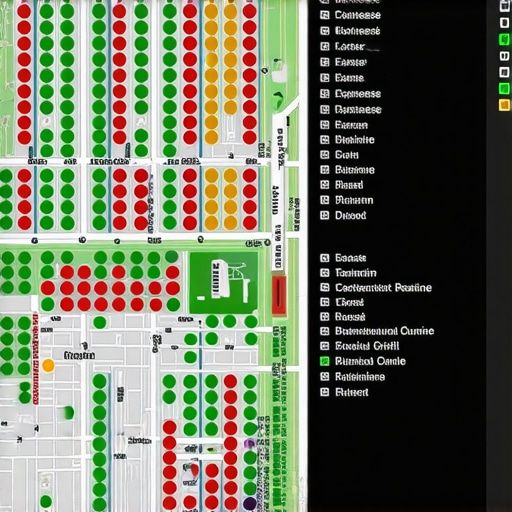
Expect Google to get even pickier about real-world activity
The future of the map pack is leaning heavily into what experts call ‘User Intent Signals.’ Joy Hawkins from Sterling Sky, a leading voice in the local SEO space, has noted that Google is increasingly prioritizing businesses that show high ‘interaction velocity.’ This means it isn’t just about your keywords; it is about how many people click your ‘Directions’ button or call you directly from the map. As we look toward 5 crucial tweaks for google maps seo in 2026 that actually stick, I predict that AI will start scanning your customer photos for specific objects to verify your services. If you want to future-proof your map pack domination, start encouraging customers to upload photos of the finished job. It provides a level of verification that no text review can match. Try this today: the next time you finish a project, don’t just ask for a review—ask the client if you can take a photo of the work together and upload it to your profile. This small change is the ultimate advanced move for staying relevant in an AI-driven search world.
I used to think that once I hit that ‘verified’ status, my job was done and the leads would just pour in forever. I was wrong. The map pack is a moving target, and staying at the top requires a mindset shift from ‘setting up a profile’ to ‘nurturing a digital asset.’ If you have been following along, you now have the blueprint for video verification and building trust, but let’s talk about the nuances that separate the winners from the businesses that vanish after a month.
The Most Expensive Mistakes I Made Chasing the Map Pack
Looking back, I wasted so much time on things that didn’t matter while ignoring the signals that actually moved the needle. One of the biggest realizations I had was that Google values consistency over intensity. I used to do a massive batch of updates once a quarter and wonder why my rankings fluctuated so wildly. Now, I know that small, weekly signals are what build true authority. I also learned that you can’t ignore the technical side of your presence; for instance, many owners don’t realize the audit mistake that makes your map listing effectively invisible until it is too late. Another hard truth: your niche matters. What works for a lawyer might not work for a contractor, and sometimes you need to look at the specific citation move that rescues hvac map rankings to see how localized strategies really function. Don’t be afraid to pivot when the data shows you are hitting a wall.
Tools That Actually Move the Needle for Me
You don’t need a thousand-dollar software suite to dominate maps, but you do need visibility into what the algorithm sees. My daily toolkit is surprisingly lean. I rely heavily on Local Falcon for those neighborhood-level heatmaps because checking your rank from your own office is the fastest way to get a false sense of security. For managing the data side of things, I always recommend BrightLocal; it’s the gold standard for tracking how your citations are performing across the web. If you are struggling with your current status, you might need to investigate why your google business profile edits are always pending using these tools to find the underlying data conflict. Finally, never underestimate the power of the Google Maps App itself—using it as a customer would is the best way to spot errors in your own listing.
Believe in Your Local Presence
The journey to local maps domination isn’t just about technical tweaks; it is about proving to your community that you are the most reliable choice in the area. It takes courage to put yourself on camera and to ask for those detailed reviews, but that effort creates a moat around your business that competitors can’t easily cross. If your momentum has slowed down, don’t panic. We have seen exactly how we fixed a stalled google my business rank without new reviews by simply focusing on user interaction and profile health. You have the tools, the strategy, and the proof. Now, it is just about showing up every day and giving the algorithm the real-world evidence it craves. Your local mapping strategy is your path to freedom from expensive ads, so stay the course. Have you ever been stuck in verification limbo for weeks or had a video rejected for a reason you couldn’t figure out? Let me know your story in the comments below.
About the Author
Umar Latif
Brand & Marketing Expert · Dubai, UAE
Umar Latif is a seasoned Brand and Marketing Expert based in Dubai, UAE, with a specialized focus on Local SEO and international digital strategy. With extensive experience managing and optimizing websites for a diverse range of international clients, including those in the United States, Umar has developed a deep understanding of the nuances required to dominate local search results. His technical proficiency encompasses comprehensive keyword research and the implementation of advanced Google-centric strategies designed to enhance visibility and drive organic traffic. As a contributor to dominateyourlocalmaps.com, Umar leverages his background in global marketing to provide actionable insights for businesses looking to improve their local map rankings and digital footprint. His approach combines data-driven tactics with a strategic brand perspective, ensuring that local businesses not only rank higher but also resonate with their target audience. Throughout his career, Umar has remained dedicated to staying ahead of search engine algorithm changes to deliver consistent results for his clients. He is deeply passionate about empowering business owners and marketing professionals with the tools and knowledge they need to achieve sustainable growth.