It was 2 AM, and I was staring at a ranking report that refused to budge. I had hired what I thought was a top-tier agency to help a friend’s landscaping business. We waited six months. Six long months of being told to ‘trust the process’ while paying a hefty monthly retainer. But when I pulled up the search results from his shop’s parking lot, he wasn’t even in the top twenty. That was my lightbulb moment: most agencies are just running a checklist from 2015 while the local algorithm has moved on to a completely different game.
Your Agency Is Probably Using a Checklist Instead of a Real Strategy
They sell you on the dream of a google my business rank that touches the clouds, but then they hand the keys to someone who has never even seen your storefront. I learned this the hard way. Early in my career, I thought volume was the only metric that mattered. I spent weeks building hundreds of links on sites nobody ever visits. It was a total waste of my client’s time and money. Real map pack domination isn’t about how many directories you’re buried in; it’s about whether Google actually trusts that you are the best answer for the person standing three blocks away. If your provider isn’t talking about proximity and entity signals, they are just blowing smoke. You need to stop wasting cash on local citations that the algorithm simply ignores.
Is local maps domination actually worth the hype in 2025?
You might be sitting there wondering if the ‘three-pack’ is even where your customers are looking anymore. According to a study by BrightLocal, nearly 90% of consumers used Google to evaluate local businesses recently. If you aren’t in those top spots, you’re basically invisible to your neighborhood. But the ‘how’ has changed drastically. If your agency is still just ‘optimizing descriptions’ and calling it a day, they are failing you. In fact, the danger of outsourcing your local content to cheap agencies is that you often end up with generic, AI-spun garbage that actually gets your profile flagged or suppressed. Have you ever looked at your monthly SEO report and felt like you were reading a foreign language that resulted in zero new phone calls? That disconnect is exactly why we need to change how we look at a local mapping strategy. It’s time to stop looking at rankings as a vanity metric and start looking at them as a proximity battle that your agency is currently losing.
The Tiny Category Tweak That Moves the Needle
Most people pick a primary category and walk away. That is like entering a marathon and forgetting to tie your shoes. I remember working with a local plumber in Chicago who was stuck on page three. He had his primary category set correctly, but he was completely missing the mark on his secondary choices. We implemented the subtle category tweak that doubled local impressions overnight by aligning his services with what people actually typed into their phones. Google’s algorithm is essentially a matching engine; if you don’t tell it exactly which buckets you fit into, it will guess—and it usually guesses wrong. You need to stop guessing your categories and use this selection data instead to ensure you aren’t fighting against your own profile.
Reviews Without These Keywords Are Just Noise
We’ve all seen the profiles with 500 five-star reviews that say ‘Great service!’ or ‘Fast response!’ While those look nice to humans, they do almost nothing for your google my business rank. Google scans your reviews for ‘justification’ snippets. If a customer mentions ’emergency water heater repair’ in their review, Google uses that as a signal that you are a relevant answer for that specific query. I once had a client who was losing to a competitor with half the reviews. Why? Because the competitor had customers mentioning the specific neighborhood and service every single time. It’s about the specific review keywords that trigger map visibility. You have to guide your customers to mention what you actually did for them. 
How to Stretch Your Local Influence Beyond Your Zip Code
Proximity is a cruel mistress. In the past, if you weren’t within two miles of the searcher, you didn’t exist. But you can actually ‘trick’ the algorithm into trusting your authority further out. This isn’t about black-hat tactics; it’s about building entity signals that prove you serve a wider area. You need to learn how to increase your map radius without opening a new office. This involves creating hyper-local content and ensuring your site has the right technical foundations. If you don’t how to sync your website schema with your map profile, you’re leaving a massive disconnect that prevents local maps domination.
Photos Are Secret Data Packets
Every time you upload a photo to your profile, you aren’t just showing off a finished job; you are handing Google a packet of data. If you aren’t using the image metadata strategy for better local visibility, you are wasting free real estate. I spent a weekend once manually tagging images for a locksmith who was ‘ghosted’ by the algorithm. Within 48 hours, his impressions spiked. It wasn’t magic; it was giving the AI the geographic proof it craves. You should also be aware that how customer photos change your ranking in just 48 hours is one of the fastest ways to see movement. Before you do anything else, you must how to audit your map rankings from a customers real location to see the truth of where you stand.But even once you know where you stand, there is a common trap most people fall into: thinking that more ‘stuff’ equals more power. Let’s dig deeper into the nuances that actually separate the leaders from the losers. One of the biggest lies in the local SEO industry is that you need hundreds of citations to see a move in your google my business rank. I’ve seen businesses spend thousands on automated services that blast their data to every corner of the web. The reality is that Google’s AI has gotten incredibly smart at filtering out low-quality noise. You should stop wasting cash on local citations that the algorithm simply ignores and focus on high-authority platforms that actually move the needle. Whitespark’s annual Local Search Ranking Factors survey consistently shows that while citations are a baseline requirement, they are no longer the primary driver for local maps domination. Instead, the algorithm is looking for real behavioral signals, such as people clicking your phone number or requesting directions.
Does having more reviews really protect you from the proximity filter?
Short answer: No. I’ve seen a locksmith with 1,200 five-star reviews get outranked by a newcomer with 15 reviews simply because the newcomer was physically closer to the searcher. This is why your competitor ranks higher with 10 fewer reviews in specific neighborhoods. You can’t just review-bomb your way out of a bad location. You need a more sophisticated local mapping strategy that builds authority beyond your front door. 
The Virtual Office Trap That Kills Profiles
One massive ‘oops’ factor I see with ambitious startups is the use of ‘prestigious’ virtual addresses. If you think a virtual suite in a downtown skyscraper is the key to how to outsmart competition in local map listings in 2025, think again. Google is aggressively purging these listings. You’ll likely find why your professional office address is being flagged as a coworking space the hard way when your profile suddenly vanishes. There is a real danger of using virtual offices for local seo that most agencies won’t mention until your account is suspended. Finally, stop stressing over the ‘perfectly keyword-optimized’ business description. While it’s great for converting a customer once they find you, why your business description doesn’t matter for ranking is a hard truth to swallow. Google doesn’t use that field for ranking weight. If you’ve been obsessing over the truth about keyword stuffing your business description, you’re wasting energy. Have you ever fallen into the trap of using a virtual address only to have your profile suspended? Let me know in the comments—I’d love to hear your story.Rankings aren’t a trophy you put on a shelf and forget about; they are more like a garden that needs constant weeding. One of the biggest mistakes I see business owners make is thinking that once they hit the top three, the job is done. I’ve watched multi-million dollar companies lose their google my business rank in a single weekend because they stopped feeding the beast. The algorithm is constantly looking for fresh signals of life. If your profile goes silent for three weeks, Google starts to wonder if you’ve gone out of business. This is why I obsess over the power of regular profile updates on search frequency. It isn’t just about the users; it’s about signaling to the AI that you are active and relevant.
Stop Guessing Where Your Leads Actually Drop Off
To stay on top, I don’t just look at a generic ranking report. I use geo-grid trackers like Local Falcon because they show me exactly where the ‘proximity wall’ is. If you’re ranking #1 in your parking lot but #10 two blocks away, you don’t have local maps domination—you have a hobby. You need to identify the exact radius where your local rankings drop off and then work on building entity signals in those specific neighborhoods. I often tell my clients that they need to how to audit your local competitors without expensive tools just by looking at their photo frequency and review velocity. If a competitor starts posting daily, you can bet your bottom dollar they are coming for your spot. 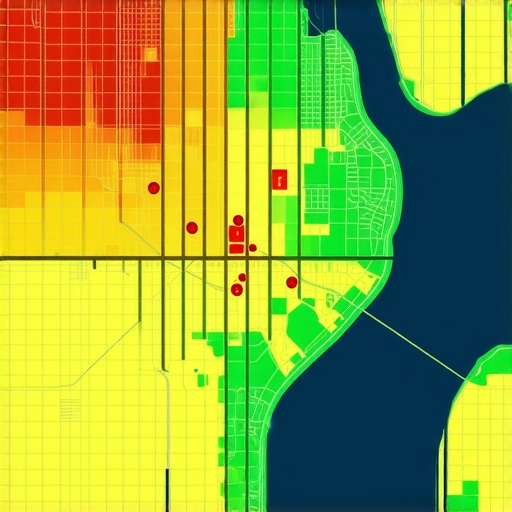
How do I keep my map rankings steady in 2025?
Maintenance comes down to three things: consistent engagement, technical health, and hyper-local content. You should be using how to use google business posts to improve map presence at least twice a week. These aren’t just ads; they are keyword-rich updates that Google’s AI uses to understand your current offerings. I also keep a close eye on technical ‘ghost’ errors. For instance, if you don’t know the hidden schema error hiding your business from searchers, your map profile might be perfectly optimized while your website is actively sabotaging your google my business rank. As Joy Hawkins from Sterling Sky often points out, the ‘Vicinity’ update made proximity a much heavier factor, but you can combat this by strengthening your ‘prominence’ through high-quality backlinks and localized landing pages. You have to learn how to optimize your local landing pages for maps traffic to ensure that your website and map profile are speaking the same language.
The Future is Conversational and AI-Driven
Looking ahead, I predict that Google’s Search Generative Experience (SGE) will rely even more on ‘justifications’ found in your reviews and Q&A sections. If you aren’t already using how to use local questions and answers to steal search traffic, you’re missing out on a massive opportunity to feed the AI precisely what it wants to hear. This is the new local mapping strategy: stop thinking like a directory and start thinking like a data provider. My best advice? Go audit your ‘Service Areas’ in your dashboard right now. If they are too broad, you’re diluting your power. Narrowing your focus is often the secret to how to outsmart competition in local map listings in 2025.
The Lessons Only a Failed Ranking Taught Me
Reflecting on years of trial and error in the local space, I’ve realized that the most common mistakes are often the most invisible. One of the biggest shocks was discovering how response speed directly impacts your local map authority. It isn’t just about being a good business owner; it is about proving to the algorithm that you are reliable in real-time. I also learned that you shouldn’t fear the occasional dip or negative comment. In fact, knowing how to handle fake negative reviews without hurting your rank is a vital skill that separates the pros from the amateurs. Most importantly, I found that when growth stops, you must investigate the real reason your profile ranking stalled last month rather than just throwing more citations at the problem. Real growth comes from precision, not volume.
The Shortlist of Tools That Actually Move the Needle
I don’t believe in using a hundred different platforms to manage one storefront. My workflow for achieving local maps domination relies on a few gold-standard resources. First, I always recommend WhiteSpark for their annual research; their data-driven approach is the only reason I stopped wasting time on useless directories. For technical precision, Local Falcon is my go-to for visualizing how proximity affects my visibility. Finally, I regularly check the Sterling Sky blog. Joy Hawkins and her team are the ones who actually test these theories, and their insights helped me develop the one tactic that stops searchers from scrolling past your profile by focusing on visual justifications and user intent.
It Is Time to Take Back Your Neighborhood
The digital landscape is crowded, but the map pack is still the most valuable piece of real estate any local business can own. This isn’t just about a google my business rank; it is about ensuring that when your neighbors need help, they find you first. Don’t let the technical jargon intimidate you. Start with one small change today—whether it’s updating a photo or refining a category—and watch how the momentum builds. Your business deserves to be seen, and with a consistent local mapping strategy, you can ensure you stay at the top long after your competitors have given up. Which part of your map profile is giving you the most trouble right now? Let me know in the comments below!
About the Author
Umar Latif
Brand & Marketing Expert · Dubai, UAE
Umar Latif is a seasoned Brand and Marketing Expert based in Dubai, UAE, with a specialized focus on Local SEO and international digital strategy. With extensive experience managing and optimizing websites for a diverse range of international clients, including those in the United States, Umar has developed a deep understanding of the nuances required to dominate local search results. His technical proficiency encompasses comprehensive keyword research and the implementation of advanced Google-centric strategies designed to enhance visibility and drive organic traffic. As a contributor to dominateyourlocalmaps.com, Umar leverages his background in global marketing to provide actionable insights for businesses looking to improve their local map rankings and digital footprint. His approach combines data-driven tactics with a strategic brand perspective, ensuring that local businesses not only rank higher but also resonate with their target audience. Throughout his career, Umar has remained dedicated to staying ahead of search engine algorithm changes to deliver consistent results for his clients. He is deeply passionate about empowering business owners and marketing professionals with the tools and knowledge they need to achieve sustainable growth.