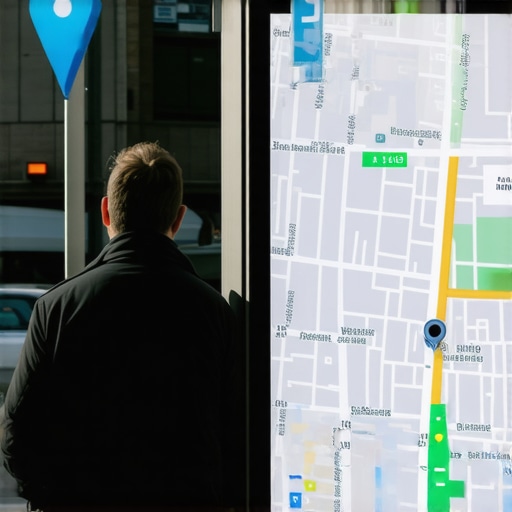
I’ll never forget the day I stood in the parking lot of my own storefront, pulled out my phone, and searched for my services only to find… absolutely nothing. I was literally leaning against my own front door, yet Google decided a guy three miles away was more ‘near me’ than I was to myself. It was a gut-punch realization. We often assume that proximity is a simple game of GPS coordinates, but the reality of map pack domination is much more complex. If you’ve ever felt like a ghost in your own zip code, I promise you aren’t crazy, and you certainly aren’t alone. Today, we are going to fix that disconnect and show you how to force Google to acknowledge your presence where it matters most.
Your Physical Address Is Only the Starting Line
In my early days, I made a massive mistake that I see almost every business owner repeat. I obsessed over my lease. I thought that by securing a spot in a busy district, I would automatically dominate maps in that neighborhood. I was wrong. The truth is that the proximity truth reveals that Google often prioritizes ‘prominence’ and ‘relevance’ over the actual distance in meters. If your digital signals are weak, you could be sitting on a goldmine location and still suffer from an invisible profile. This happens because the algorithm is trying to predict quality, not just distance.
Is this local map game actually worth your time?
It’s a fair question to ask, especially when you’re frustrated. Why not just buy ads? Well, according to a recent study by BrightLocal, over 87% of consumers used Google to evaluate local businesses last year alone. If you aren’t in that top three, you’re essentially invisible to the vast majority of your neighbors. Improving your google my business rank isn’t just about vanity; it’s about making sure the person standing on the next block can actually find you. Have you ever searched for your own business from your couch and been disappointed by what you saw? If you’re tired of being outranked by someone ten blocks away, reach out via our contact page and let’s get your visibility back on track.
Get Google to Stop Guessing What You Do
Think of your category selection like a department store directory. If a customer is looking for shoes and you’ve listed yourself under “general merchandise,” you might technically be in the right building, but you’ll never get the sale. I once worked with a local plumber who was pulling his hair out because his google my business rank was non-existent. We looked at his backend and realized he’d selected “Plumbing Supply Store” instead of “Plumber.” He didn’t sell pipes; he fixed them. That one tiny distinction meant Google was showing him to DIYers, not people with flooded basements. This is exactly why most business owners pick the wrong categories and kill their local map rank before they even start.
Dominate the Primary Category Hierarchy
Your primary category carries about 75% of the weight for your ranking. If you’re a law firm, don’t just settle for “Lawyer.” Use the most specific primary category available, like “Personal Injury Attorney.” Then, use secondary categories to fill in the gaps. It’s a delicate balance, though; if you add too many, you’ll dilute your authority. You have to be careful because your business categories might be fighting each other for prominence.
Turn Your Photos Into Digital Breadcrumbs
Google doesn’t just “see” an image; it reads the data hidden inside the file. Think of every photo you upload as a GPS signal that tells the algorithm, “Yes, I am actually here.” Most people just dump raw files from their iPhone and hope for the best. Instead, you need to leverage the specific photo metadata that actually moves your map rank by ensuring your location coordinates are baked into the file.

Post Real Work Not Glossy Stock Photos
I’ve seen a massive shift in how the local maps domination game is played. People want authenticity. A blurry photo of your team actually fixing a roof is worth ten high-resolution stock images of a smiling model in a hard hat. This is because users click on real photos more often, and the interaction data that proves you are a top local choice is what ultimately signals Google to push you higher in the pack.
Connect Your Website to the Map Like a Surgeon
Your website and your map profile should be two halves of the same coin. If your site says you’re in one town but your map profile suggests another, the algorithm gets confused and defaults to the “safe” choice (usually your competitor). You need to learn how to sync your website schema with your map profile so that there is zero friction in the data. This technical handshake is often the “missing link” that expands your reach into neighboring zip codes without needing a new physical lease. It’s a core part of any local mapping strategy that actually scales.
Leverage the Hidden Menu of Business Attributes
Attributes are the “fine print” that Google uses to filter results when a user gets specific. If someone searches for “wheelchair accessible restaurant,” and you haven’t checked that box, you’re out. These micro-signals are vital for map pack domination. Many owners ignore these because they seem trivial, but the hidden power of store attributes in map pack selection can be the deciding factor when proximity is equal between two businesses.
Let’s dig deeper into the nuances that the experts usually skip. Most people assume the secret to local maps domination is simply a numbers game—more reviews equals higher rank. But that is a surface-level strategy that often backfires. In reality, ‘Review Velocity’ and user engagement signals are far more influential than the raw number of gold stars in your profile. I’ve helped clients where we focused on response time and keyword-rich customer feedback, and they leaped over competitors with five times the reviews. This is exactly why your competitor with fewer reviews is outranking you. Google’s algorithm is looking for the interaction data that proves you are a top local choice in real-time, not just a static trophy case of old testimonials.
Review Counts Don’t Guarantee a Top Spot Anymore
If you are relying on an automated bot to post canned responses, you are walking into the trap of review automation where more stars don’t always mean more map leads. Google can tell when your engagement is artificial.
Don’t Fall for the Business Name Keyword Trap
The most common ‘Oops’ factor I see is business owners trying to learn how to outsmart competition in local map listings in 2025 by stuffing their business name with keywords. If your legal name is ‘Smith & Sons’ and you change your profile to ‘Smith & Sons Best Plumber NYC,’ you are begging for a suspension. As Darren Shaw from Whitespark highlights in his annual Local Search Ranking Factors survey, while keywords in the name are a ranking signal, they are also the fastest way to get flagged. This is why your profile edits keep getting rejected.
Can your business actually rank in a zip code five miles away?
Sophisticated business owners always ask me how to break out of their immediate physical radius. The answer isn’t in moving your office; it’s in the city page method. By building highly localized landing pages and applying the specific schema fix, you can signal relevance to the algorithm far beyond your front door. This is the only way to truly figure out how to increase your map radius without opening a new office. 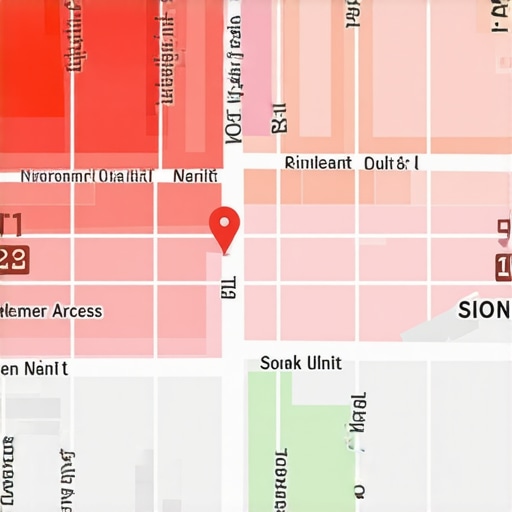 Have you ever fallen into this trap? Let me know in the comments. If you’re ready to stop guessing, our team can help through our contact page.Once you’ve cleared the hurdles of suspension and categorization, the real work starts. I see so many business owners treat their profile like a set-it-and-forget-it billboard, only to watch their lead volume crater three months later. The local landscape is hyper-competitive and shifts daily. If you aren’t actively monitoring your presence, you’re just waiting for a hungrier competitor to take your spot. Real map pack domination isn’t about a single win; it’s about building a defensive moat around your ranking through consistent data signals and the right software stack.
Stop Trusting the View from Your Office Desk
When I first started, I used to check my rank by just typing my services into Google while sitting at my desk. I thought I was winning. What I didn’t realize was that Google knew exactly where I was. To get an honest look at your local maps domination, you need tools that simulate searches from specific street corners. I personally swear by Local Falcon or BrightLocal for grid tracking. These tools show you a ‘heat map’ of where you rank in a 5-mile radius. It’s the only way to identify 7 maps keyword tracking flaws that hide your true store performance and see exactly where your visibility drops off. If you don’t know how to audit your map rankings from a customers real location, you are essentially flying blind.
Ditch the Spreadsheets for These Precision Tools
You don’t need a hundred different subscriptions, but you do need a few that do the heavy lifting. I use ‘GeoImgr’ for injecting coordinate data into my service photos before I ever upload them. This ensures every image acts as a localized ping to the algorithm. Additionally, while many agencies want to charge you hundreds a month for citation management, you should learn how to spot and fix nap inconsistencies without paying monthly fees using a simple manual audit once a quarter. As Joy Hawkins of Sterling Sky has often pointed out in her research on ‘Open Now’ filters, the algorithm is increasingly sensitive to real-time data like business hours. This means the truth about google maps open now filters and your rank is that accuracy beats volume every single time. 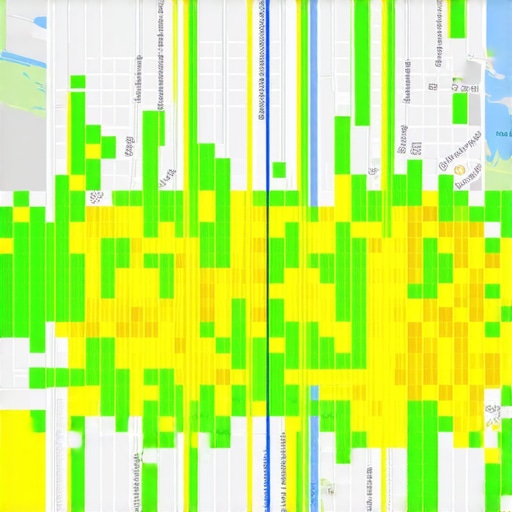
How do I maintain local map dominance over time?
Maintenance is about fresh signals. I recommend a ‘Pulse Schedule’: one high-quality photo upload per week, one response to every review within 24 hours, and a monthly audit of your local landing pages. This level of activity signals to Google that your business is thriving and relevant. If you let these signals go cold, your google my business rank will slowly drift down the results page as more active profiles get the ‘freshness’ boost. It’s a core part of any local mapping strategy that aims for longevity.
The Future of Maps Is More Conversational
Looking ahead, we are moving toward a world where AI and ‘Search Generative Experience’ (SGE) will pull directly from your profile’s Q&A section and review text to answer customer questions before they even click your site. This makes your local maps domination efforts even more critical. In 2026, the businesses that win won’t just have the most reviews; they’ll have the most *helpful* content embedded within their profile. Don’t wait for the algorithm to change—start optimizing your Q&A section today by answering the top five questions your customers ask on the phone. If you’re feeling overwhelmed by the technical side of these audits, reach out to us on our contact page and we can help you build a custom roadmap for your specific area.
Hard Lessons from the Local Search Front Lines
Over the years, I’ve realized that map pack domination isn’t a trophy you win once; it’s a garden you tend. The biggest lightbulb moment for me was discovering that Google values engagement over almost everything else. I once saw a tiny boutique coffee shop with thirty reviews outrank a massive franchise simply because the owner replied to every comment with a personal touch. Another lesson? Don’t get hung up on a single bad review. In fact, a profile with a 4.8 rating often converts better than a perfect 5.0 because it looks real to the algorithm. If you want to truly dominate maps, you must stop treating your profile as a static ad and start treating it as a living conversation with your neighborhood. You can learn more map pack domination secrets that I’ve picked up through trial and error over the last decade.
Tools That Make Local Dominance Actually Reachable
You don’t need a massive agency to win this game, but you do need the right gear. I personally rely on Local Falcon to see the reality of my reach beyond my office walls. It’s eye-opening to see where your google my business rank actually drops off. For cleaning up your data, I recommend a manual audit; you can learn how to spot and fix nap inconsistencies without paying monthly fees if you’re willing to put in an hour of work. I also suggest keeping the annual Whitespark Local Search Ranking Factors report bookmarked. It’s the closest thing we have to a roadmap for local maps domination. These tools have been my compass when the algorithm shifts without warning.
#IMAGE_PLACEHOLDER_E#
Claim Your Territory and Don’t Look Back
The digital world can feel overwhelming, but remember that you have an advantage no national chain can replicate: you are actually there, on the ground, serving your people. Every photo you upload and every question you answer strengthens your local mapping strategy. Don’t be afraid to experiment with new ways to how to outsmart competition in local map listings in 2025. The future belongs to the businesses that show up consistently and authentically. You’ve got the tools and the knowledge now—it’s time to step out of the shadows and into the top three. If you ever feel stuck, I’m always available to chat through my contact page. Have you ever tried to track your ranking from different parts of town and been surprised by the results? Let me know in the comments below!
About the Author
Umar Latif
Brand & Marketing Expert · Dubai, UAE
Umar Latif is a seasoned Brand and Marketing Expert based in Dubai, UAE, with a specialized focus on Local SEO and international digital strategy. With extensive experience managing and optimizing websites for a diverse range of international clients, including those in the United States, Umar has developed a deep understanding of the nuances required to dominate local search results. His technical proficiency encompasses comprehensive keyword research and the implementation of advanced Google-centric strategies designed to enhance visibility and drive organic traffic. As a contributor to dominateyourlocalmaps.com, Umar leverages his background in global marketing to provide actionable insights for businesses looking to improve their local map rankings and digital footprint. His approach combines data-driven tactics with a strategic brand perspective, ensuring that local businesses not only rank higher but also resonate with their target audience. Throughout his career, Umar has remained dedicated to staying ahead of search engine algorithm changes to deliver consistent results for his clients. He is deeply passionate about empowering business owners and marketing professionals with the tools and knowledge they need to achieve sustainable growth.