
I remember sitting in my home office three years ago, staring at a screen that told me I was invisible. I had a beautiful website, glowing reviews, and I was doing everything by the book. But when I searched for my service on my own phone from the coffee shop just two blocks away, I didn’t even show up in the top ten. I was a ghost in my own neighborhood. My competitor, whose website looked like it was designed in 1998, was sitting pretty at the top of the pile. I realized then that I was failing at local maps domination because I treated my landing pages like static brochures instead of active beacons for Google’s crawlers. I had built a site for the world, but I had forgotten to build it for my street.
The Massive Gap Between Your Website and Your Map Rank
My biggest early mistake was thinking that my Google Business Profile lived in a vacuum. I spent months obsessing over reviews and categories while completely ignoring the very pages my profile linked to. I learned the hard way that Google looks at your landing page to verify everything your profile claims. If your page doesn’t provide the right signals, your google my business rank will stay in the basement regardless of how many five-star reviews you stack up. Your website is the foundation of your local mapping strategy, and if that foundation is shaky, the map pack will never trust you.
Does tweaking a single page really move the needle?
You might be skeptical that a few changes to a landing page can actually influence a map listing. I used to think the same until I saw the data. According to research from BrightLocal, on-page signals are consistently ranked as a top-three factor for appearing in the local pack. When I finally stopped ignoring how most local business schema fails to communicate location to Google, my visibility didn’t just crawl up—it leaped. This isn’t about keyword stuffing; it’s about creating a bridge between your physical front door and the digital searcher.
Turn Your Landing Page Into a Proximity Powerhouse
We aren’t just building pages for people; we’re building them for the algorithm that decides who gets the phone call and who gets buried. If you’ve noticed that your map embed strategy isn’t translating into actual customer calls, it’s likely because your content doesn’t align with local search intent. Achieving true map pack domination requires your landing page to act as a local authority hub. Have you ever checked your ranking from a different zip code only to find you’ve completely vanished from the results? That “proximity ghosting” is exactly what happens when your landing pages aren’t optimized for the maps. Today, we are going to fix that once and for all.If your website and your Google Business Profile aren’t speaking the same language, you’re effectively running a lighthouse with no bulb. For true local maps domination, every element on your landing page must echo the physical reality of your business. I remember working with a local plumber in Austin who was frustrated because his google my business rank was stuck behind competitors with half his experience. We realized his website mentioned ‘Central Texas’ generally, but his profile was pinned to a very specific neighborhood. As soon as we aligned his footer data and service descriptions with that specific micro-location, he didn’t just move up; he owned the map for three surrounding zip codes. This is the ‘Mirror Effect’—Google needs to see your website reflect your map profile exactly to build the trust necessary for map pack domination.
Sync Your Site Data with Your Business Profile
Think of your landing page as the legal ID for your map listing. If the address on your license doesn’t match where you’re standing, the bouncer (Google) isn’t letting you in. You need to sync your website schema with your map profile so there is zero ambiguity. This means your Name, Address, and Phone number (NAP) must be character-for-character identical across both platforms. I’ve seen rankings drop simply because one used ‘St.’ and the other used ‘Street.’ It sounds pedantic, but when you are trying to dominate maps, precision is your best friend.
The City Page Method for Neighborhood Authority
Most people stop at the homepage, but if you want to reach beyond your front door, you have to use the city page method. This isn’t about creating thin, duplicate content. It’s about building a hyper-local resource that mentions local landmarks, nearby intersections, and neighborhood-specific news. When I applied this to a small law firm, their visibility expanded into three adjacent towns where they didn’t even have physical offices. This is a core pillar of a successful local mapping strategy because it proves to Google that your relevance extends past your parking lot.
Fix the Schema Errors Google Hates
Standard SEO plugins often spit out generic schema that tells Google you’re a ‘Business,’ but it fails to specify that you are a local entity tied to a specific map coordinate. You need to implement the specific schema fix that forces a radius expansion. This involves using ‘MainEntityOfPage’ and ‘HasMap’ properties to explicitly link your URL to your Google Maps CID.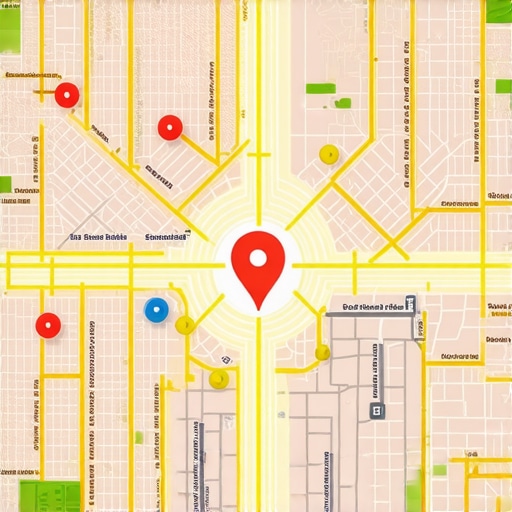
Audit Your Progress in Ten Minutes
You can’t fix what you haven’t measured accurately. Most business owners check their rank from their own office, which is a massive mistake because proximity bias gives you a false sense of victory. You need to perform the 10-minute local SEO audit to see what a customer three miles away actually sees. When I first did this for my own brand, I found out I was invisible just two blocks north. That realization was painful but necessary. By identifying these gaps, you can adjust your content to target the specific ‘proximity ghosting’ areas that are currently being handed to your competitors on a silver platter.Most gurus will tell you that the secret to map pack domination is simply asking for more reviews. I used to believe that too, until I watched a competitor with a 4.2-star rating consistently outrank a client of mine who had a perfect 5.0. It felt like I was playing a rigged game. What I eventually discovered is that Google has moved far beyond simple math. Today, local maps domination is driven by interaction data and behavioral signals rather than just raw volume. If people click your profile but immediately hit the back button because they can’t find what they need, Google takes note. According to Darren Shaw and the team at Whitespark, behavioral signals like click-through rate and mobile ‘clicks to call’ are massive influencers that many business owners completely ignore. Have you ever fallen into this trap of focusing only on the stars and ignoring the clicks? Let me know in the comments.
Stop chasing review volume and start chasing engagement
The common belief is that the person with the most reviews wins. In reality, the trap of review automation often leads to ‘dead’ profiles that look robotic to the algorithm. Google wants to see a steady pulse of activity, not just a burst of stars every three months. If your google my business rank has stalled, it might be because you aren’t feeding the machine with fresh photos, weekly posts, and varied review sentiment. I’ve seen one specific move where a business with 20 reviews outranked one with 200 simply because their reviews contained specific local keywords and the owner responded to every single one within an hour. This level of active management sends a signal of reliability that a static profile simply can’t match.
Is your map rank actually just a reflection of real-world foot traffic?
This is the advanced question most SEOs aren’t ready to answer. Google has access to more data than we like to admit, and how real foot traffic data overpowers on-page SEO is becoming a hard reality. If Google sees thousands of cell phones entering a competitor’s store but only dozens entering yours, they will rank the competitor higher because the ‘real world’ says they are more popular. This means your local mapping strategy must extend beyond the computer screen. You need to drive digital engagement that mirrors your physical presence. If you aren’t using how search intent changes your business visibility to align your online content with what people are actually coming into your store for, you’re fighting an uphill battle.
The single most common way to get your profile killed in 24 hours
The ‘oops’ factor in map pack domination is often a self-inflicted wound. Many business owners get impatient and try to change their primary category or their business name to include more keywords. This is the fastest way to trigger a hard suspension. Understanding the real reason your profile was suspended usually boils down to a lack of trust. Google is hyper-sensitive to any edits that look like ‘ranking manipulation.’ When you are trying to dominate maps, you must treat your profile like a fragile asset. One wrong move with your address formatting can lead to the proximity truth behind office locations working against you, effectively hiding you from customers who are standing right across the street. 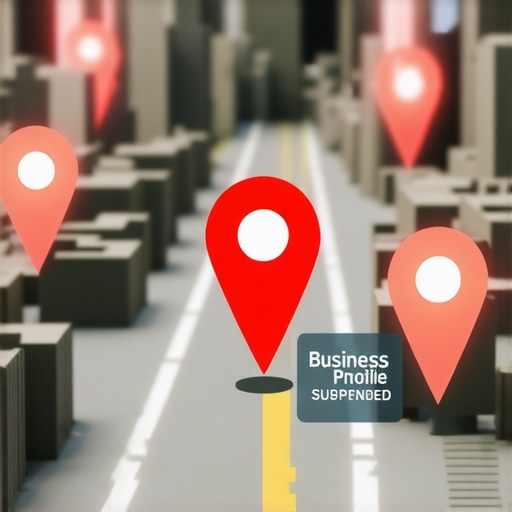 Always verify your data on the backend before hitting ‘save’ on a major profile update. Precision is the difference between a top-three spot and total digital disappearance.Achieving a top spot is only half the battle; keeping it is where most businesses fail. I’ve seen dozens of companies reach the top three only to vanish three months later because they treated their local maps domination as a ‘set it and forget it’ project. To stay on top, you need to stop guessing and start using a grid to see your true reach. Standard rank trackers will tell you that you are #1, but they usually only check from one specific coordinate. I personally rely on local grid tracking because it exposes the 7 maps keyword tracking flaws that hide your true store performance. If you don’t know exactly where your visibility drops off, you can’t possibly know where to focus your local content efforts.
How do I keep my map pack spot from slipping away?
Maintenance is about consistency, not intensity. I’ve found that a ‘steady pulse’ of activity is far more effective for maintaining your google my business rank than a massive blast of updates once a year. This means uploading at least two high-quality photos a week and responding to every review within 24 hours. When you understand the power of regular profile updates on search frequency, you realize that Google rewards businesses that prove they are still ‘open for business’ in the digital sense. I also suggest using 5 free tools that actually generate leads to automate the tedious parts of your local mapping strategy, such as scheduling posts. 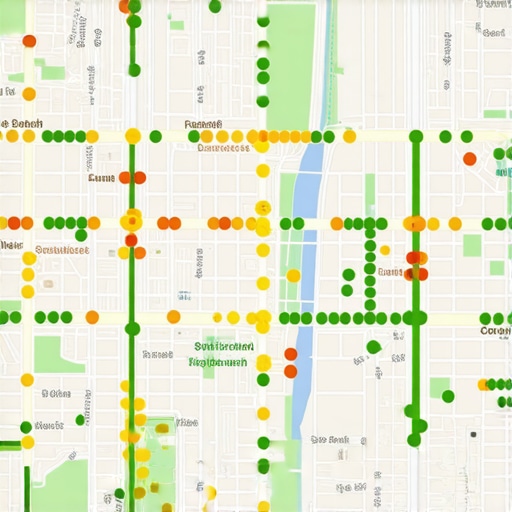 Leveraging how to use google business posts to improve map presence is a non-negotiable for anyone serious about map pack domination. In my experience, profiles that post weekly get significantly more ‘Discovery’ searches than those that stay silent.
AI is changing the search game faster than we think
We are moving toward a world where Google’s Search Generative Experience (SGE) will summarize your business for the user before they even see the map. Mike Blumenthal, a leading expert in local search, has frequently noted at Near Media that Google is increasingly using AI to scan your photos and reviews to see if you match ‘subjective’ search queries like ‘best atmosphere’ or ‘family-friendly.’ This is why your local mapping strategy must evolve to include highly descriptive, user-generated content. If you aren’t preparing for this shift, you’ll be left behind. I highly recommend looking at these 7 google business profile tips for 2026 to ensure your profile is future-proofed against these algorithm shifts. If you’ve recently made major changes to your site and your rank hasn’t moved, you might need to learn how to force google to re-index your map location faster to see the results of your hard work. My advanced tip for today: go into your profile right now and add ten ‘Store Attributes’ that your competitors have missed; it’s the easiest way to tell Google exactly what you offer without writing a single sentence of code.
The Hard Truth About Why Being ‘Good’ Isn’t Enough
I used to think that providing a stellar service was enough to guarantee a top spot, but I quickly learned that the algorithm doesn’t have a ‘moral compass.’ It has a ‘trust compass.’ I’ve seen mediocre businesses achieve local maps domination simply because they were more consistent at proving their relevance to Google. The biggest lesson I’ve learned is that proximity is a baseline, not a strategy. If you don’t audit your map rankings from a customers real location, you are flying blind. You might be king of your own office, but a ghost two miles away.
Another lightbulb moment came when I realized why your competitor with fewer reviews is outranking you. It isn’t just about the numbers; it’s about the context of those reviews and how fast you respond to them. Interaction data is the new gold. Google wants to see that your business is a living, breathing part of the community, not a digital artifact from three years ago.
The Gear That Actually Moves the Needle
I don’t believe in cluttering your workflow with every new shiny SEO tool, but a few key resources are non-negotiable for a modern local mapping strategy. First, I always keep a close eye on Mike Blumenthal’s Near Media updates to see how AI is shifting local intent. Second, you should be leveraging 5 free tools that actually generate leads to keep your profile active without burning out. #IMAGE_PLACEHOLDER_E# I also recommend moving away from standard rank trackers and using a grid-based system to avoid the 7 maps keyword tracking flaws that hide your true store performance. These tools provide the raw data you need to make surgical adjustments rather than generic guesses.
Take Back Your Local Territory
You have the keys now. Map pack domination isn’t a secret society; it’s a game of consistency and technical alignment. Don’t let the fear of a suspension or a complex algorithm keep you from showing up for the people in your neighborhood who are searching for you right now. Your google my business rank will follow your effort. Start by fixing one element today—whether it’s your schema or your post frequency—and watch how the map responds. It is time to stop being the best-kept secret in town and start being the first name people see.
Have you ever noticed your profile ranking perfectly while you’re standing in your own shop, but completely disappearing the moment you drive two miles down the road? Let me know your experience with this ‘proximity ghosting’ in the comments below.
About the Author
Umar Latif
Brand & Marketing Expert · Dubai, UAE
Umar Latif is a seasoned Brand and Marketing Expert based in Dubai, UAE, with a specialized focus on Local SEO and international digital strategy. With extensive experience managing and optimizing websites for a diverse range of international clients, including those in the United States, Umar has developed a deep understanding of the nuances required to dominate local search results. His technical proficiency encompasses comprehensive keyword research and the implementation of advanced Google-centric strategies designed to enhance visibility and drive organic traffic. As a contributor to dominateyourlocalmaps.com, Umar leverages his background in global marketing to provide actionable insights for businesses looking to improve their local map rankings and digital footprint. His approach combines data-driven tactics with a strategic brand perspective, ensuring that local businesses not only rank higher but also resonate with their target audience. Throughout his career, Umar has remained dedicated to staying ahead of search engine algorithm changes to deliver consistent results for his clients. He is deeply passionate about empowering business owners and marketing professionals with the tools and knowledge they need to achieve sustainable growth.