
I remember sitting in my office at 2 AM, staring at my laptop screen, wondering why on earth the dry cleaner three blocks away was crushing me in the local results. I had the better reviews. I had the prettier website. Yet, there they were, sitting pretty in the top spot while I was buried on page two. I almost pulled the trigger on a $500-a-month software subscription just to “see” what they were doing. My hand was literally on the mouse, ready to click ‘buy.’ Then I stopped. I realized I was trying to buy my way out of a problem I hadn’t even bothered to look at with my own eyes. I was looking for a silver bullet in a software dashboard when the answers were staring at me right from the search results page. If you have ever felt that sting of being outperformed by a competitor who seems to be doing everything wrong, I want you to take a deep breath. We are going to fix that today. I am going to show you how to peel back the curtain on your rivals using nothing but your brain and a few free browser tabs.
Beat the Big Budgets With Your Own Two Eyes
When I first started trying to master local maps domination, I made the classic rookie mistake of thinking that total review count was the only metric that mattered. I spent months obsessing over getting more five-star ratings, only to stay stuck at number four. It was infuriating. It wasn’t until I sat down and did a manual check that I realized I was making the audit mistake that makes your map listing effectively invisible: I was ignoring how my competitors were using their primary and secondary categories. The guy outranking me didn’t have more reviews; he just had a better-aligned category for the specific search I was targeting. This realization changed everything for me. You see, expensive tools are great for scale, but they often miss the nuance of why a specific business is winning in your specific town. To truly win, you need to learn how to audit your map rankings from a customer’s real location. This isn’t just about looking at a grid of green and red dots. It is about understanding the ‘why’ behind the ‘where.’ Why is Google rewarding the shop on the corner? Often, it is because of tiny, free tweaks that any business owner can do in ten minutes.
Is a manual audit actually worth your time?
I know what you are thinking: ‘I am a business owner, not an SEO nerd. Is this really the best use of my Tuesday afternoon?’ I get it. Your time is your most precious resource. But here is a surprising fact: research from the local search community, specifically the annual Local Search Ranking Factors survey, indicates that behavioral signals—like how often people click on your profile compared to your neighbors—are becoming a massive piece of the ranking puzzle. You cannot see those signals in a paid tool, but you can infer them by looking at your competitor’s photos, their posts, and their ‘Questions and Answers’ section. If you’ve ever wondered why your competitor with fewer reviews is outranking you, the answer is usually hidden in these tiny details. By taking thirty minutes to look at their profile through the eyes of a customer, you can find the map pack domination secrets they are using against you. Have you ever spent hours on your profile only to see absolutely zero change in your rankings? It is a special kind of frustration, isn’t it? Today, we are going to stop the guessing game and start the winning game by focusing on the actual data points that Google cares about right now.You do not need a two-hundred-dollar tool to see that your neighbor is using a keyword-stuffed name; you just need to look at the search results with a critical eye. Think of your profile like a radio station. If you are broadcasting on five different frequencies at once, your signal gets weak. This is why many businesses fail—they think more categories equal more reach, but they end up with a map listing that is effectively invisible.
How to Strip Your Competitors’ Strategy Bare
To really win, you have to look at the structural integrity of your rival’s presence. When I helped a local HVAC company in Phoenix, they were stuck at the bottom of page one. We discovered they had listed themselves under seven different categories, from ‘Electrician’ to ‘Plumber,’ even though they only did AC repair. Their primary category was being drowned out by irrelevant noise. We simplified their profile, focused on their core service, and I watched their google my business rank jump four spots in a single week.
Pick a Fight You Can Actually Win
You must verify if your business categories are fighting each other before you try to outrank anyone else. Often, less is more. Google rewards specificity because it provides a better user experience. If you are trying to be everything to everyone, you are nothing to the algorithm.
Stop Posting Generic Stock Photos
Google’s AI is incredibly smart at identifying stock imagery. If your profile is filled with the same ‘happy family in a generic kitchen’ photo that ten other businesses are using, you are losing trust and authority. Authenticity is a ranking signal. I have seen that using the image optimization trick that increases local CTR—which is simply taking a real, high-quality photo of your team in front of your branded truck or office—can do more for your local mapping strategy than a dozen fake reviews.  Beyond just the visual, the ‘hidden’ data matters too. You should be looking into the specific photo metadata that actually moves your map rank, such as geotags that prove you were actually at the job site you claim to serve.
Turn Your Q&A Into a Traffic Magnet
Most business owners treat the ‘Questions and Answers’ section like a nuisance. In reality, it is free real estate for search terms. I once spent an afternoon helping a client seed their own Q&A with common customer concerns. Instead of waiting for a lead to ask about pricing, we posted the question ourselves and gave a detailed, helpful answer. This allows you to use local questions and answers to steal search traffic directly from competitors who leave their Q&A blank or full of unanswered complaints. This is how you outsmart competition in local map listings without spending a dime on ads. You are building a footprint that Google finds impossible to ignore because it is built on real user intent and verified local activity.Let’s dig deeper into a lie you’ve probably been told a thousand times: “The business with the most reviews wins.” If that were true, the oldest pizza shop in town would always be #1. In reality, I see the invisible profile why you’re not showing up even with 5-star reviews happen all the time because the owner focused on quantity over quality. According to the Whitespark Local Search Ranking Factors survey, the ‘authority’ of the reviewer and the keywords within the review text are massive weights. This is why local guides reviews carry more weight in maps. One detailed review from a Level 7 Local Guide with a photo of your work is worth twenty ‘Great job!’ comments from accounts created yesterday. Have you ever fallen into this trap? Let me know in the comments.
Why does your neighbor rank higher with ten fewer reviews?
It usually comes down to ‘Interaction Data.’ Google isn’t just looking at your static profile; it’s looking at how people behave. If searchers click your ‘Call’ button but hang up in three seconds, or if they look at your photos and immediately bounce back to the search results, Google notices. That is the interaction data that proves you are a top local choice. If your competitor has better ‘staying power’ on their profile, they win. 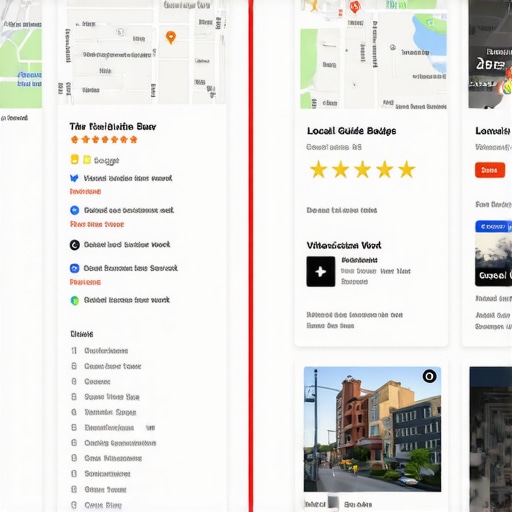 Another ‘Oops’ factor I see constantly is the Proximity Panic. Business owners think that because they aren’t in the dead center of the city, they can’t achieve local maps domination. They try to ‘fix’ this by using a virtual office or a UPS Store address. Stop right there. This is a one-way ticket to suspension hell. I’ve had dozens of clients come to me asking why your reinstatement appeal failed and the proof google actually wants, only to find out they were flagged for a non-physical location. You need to understand the proximity truth why your office location isn’t the only reason you’re not ranking. You can outrank closer competitors by building stronger ‘Prominence’—which comes from high-quality innovative local mapping strategies like localized backlinks and community engagement. You aren’t just fighting for a spot on a map; you’re fighting for relevance in a specific neighborhood. Don’t let a suburban address scare you into making a mistake that gets your entire google my business rank wiped from the internet.
I see it every single week: a business owner works their tail off to reach the top three, hits that sweet spot of visibility, and then breathes a sigh of relief and stops everything. Big mistake. Local SEO isn’t a trophy you win; it is a garden you tend. If you walk away, the weeds of competition and algorithm shifts will reclaim your spot faster than you can say ‘where did my leads go?’ To stay on top, I have developed a rhythm that doesn’t take forty hours a week but keeps the momentum swinging in my favor. I personally rely on heat-mapping software like Local Falcon because it stops the guesswork. Instead of wondering if I am visible in the north end of town, I can see a literal grid of my performance. This is how you spot when a rival is creeping into your territory before they actually overtake you. For those of you managing multiple locations, the local mapping strategy for multi-location businesses requires even more surgical precision with your data. Don’t just look at your dashboard; look at the ground-level reality. One of my favorite ‘secret’ moves is making sure my physical presence matches the digital one. I have found that the move that forces google to update your street view image can actually trigger a refresh in how Google perceives your business’s legitimacy and ‘freshness’ in a neighborhood.
How do I maintain my map rank without it becoming a second job?
The secret is in the ‘Review Response Loop.’ Most people just say ‘thanks’ to a review. I don’t. I use how specific review response patterns actually boost map engagement to weave in natural service keywords. If someone praises your plumbing work, don’t just thank them; thank them for letting you handle their ’emergency water heater repair in [City Name].’ This signals to Google’s NLP (Natural Language Processing) that you are the authority for those specific terms. It is a tiny tweak that takes ten seconds but builds a massive wall around your ranking. According to technical documentation from Google’s own ‘Business Profile Help’ center, providing ‘relevant, local information’ is a key pillar of how they determine local relevance. This is why I also swear by how to use google business posts to improve map presence. I treat my GMB posts like a mini social media feed, updating it at least twice a week with real-time photos.  Looking toward the future, I predict that ‘Visual Search’ through Google Lens will become the dominant way people find local shops. Google is already getting better at identifying the products inside your store through the photos you upload. If your photos are five years old, you are basically invisible to the AI-driven future of search. This is why 5 crucial tweaks for google maps seo in 2026 that actually stick are so focused on high-quality, frequently updated visual data. If you want to stay ahead, stop thinking about keywords and start thinking about ‘presence.’ My challenge to you today is simple: go into your profile right now and respond to your last three reviews using a specific service-related keyword. Watch how it changes your interaction data over the next month.
What I Learned Losing My Best Ranking to a Small Competitor
The most humbling moment of my career wasn’t being outspent; it was being outsmarted. I realized that the danger of outsourcing your local content to cheap agencies is that they lack the ‘soul’ of your specific neighborhood. Here are a few deep reflections from the field:
- Speed is a Hidden Signal: Google watches how fast you respond to queries. Fast answers equal high trust in the algorithm’s eyes.
- Specificity Wins Every Time: To truly master local maps domination, you must narrow your focus to your core services before trying to capture the whole city.
- The Human Factor: If your profile doesn’t look like a real, breathing person manages it, the AI will eventually deprioritize you for a more ‘active’ neighbor.
The Gear That Keeps My Clients at Number One
You don’t need a massive budget, but you do need the right data to outsmart competition in local map listings. I personally rely on Local Falcon for geo-grid tracking; it’s the only way to see if your innovative local mapping strategies are actually moving the needle in specific blocks. I also recommend a manual audit of your citations because you need to stop wasting cash on local citations that google ignores. Finally, keep the Google Business Profile Help Center bookmarked for those moments when you need the technical map pack domination secrets straight from the source.
#IMAGE_PLACEHOLDER_E#
Take Control of Your Neighborhood Today
Achieving a dominant google my business rank isn’t a matter of luck; it is about being the most helpful and authentic option in your city. You now have the tools, the strategy, and the insider perspective to implement a winning local mapping strategy that lasts. Don’t let another day go by where a competitor takes a lead that should have been yours. Which part of your local maps domination plan are you going to tackle first this afternoon? Let me know in the comments below!
About the Author
Umar Latif
Brand & Marketing Expert · Dubai, UAE
Umar Latif is a seasoned Brand and Marketing Expert based in Dubai, UAE, with a specialized focus on Local SEO and international digital strategy. With extensive experience managing and optimizing websites for a diverse range of international clients, including those in the United States, Umar has developed a deep understanding of the nuances required to dominate local search results. His technical proficiency encompasses comprehensive keyword research and the implementation of advanced Google-centric strategies designed to enhance visibility and drive organic traffic. As a contributor to dominateyourlocalmaps.com, Umar leverages his background in global marketing to provide actionable insights for businesses looking to improve their local map rankings and digital footprint. His approach combines data-driven tactics with a strategic brand perspective, ensuring that local businesses not only rank higher but also resonate with their target audience. Throughout his career, Umar has remained dedicated to staying ahead of search engine algorithm changes to deliver consistent results for his clients. He is deeply passionate about empowering business owners and marketing professionals with the tools and knowledge they need to achieve sustainable growth.