
I still remember the sinking feeling in my stomach when I realized I had broken the very thing I was trying to fix. I had spent hours “optimizing” my business description, cramming every neighborhood, zip code, and service variation into those 750 characters. I thought I was being a tactical genius. I figured if I mentioned “emergency plumber” twenty times, Google would have no choice but to put me at the top. Instead, my visibility plummeted. I had fallen into the classic trap of thinking the algorithm was dumber than it actually is. It was a painful, expensive lesson in how not to dominate your local maps. Today, I want to pull back the curtain on why this tactic backfires and show you the actual path to elevating your rank without risking a suspension. Have you ever felt the urge to “help” Google find you by repeating your city name over and over in your bio? [image-placeholder-1]
Stop Treating Your Description Like a Search Engine Playground
The hard truth is that the business description field is for humans, not robots. When I first started, I ignored this. I was so focused on map pack domination that I forgot real people actually read those snippets before they click “Call.” Google’s own documentation is surprisingly blunt about this; they explicitly state that the business description does not influence search rankings. In fact, industry research from experts like Sterling Sky has confirmed that while profile descriptions don’t matter for ranking, they matter immensely for conversion. If your bio looks like a list of spammy tags, you’re scaring away the very customers you’re trying to attract. I once saw a competitor do this so aggressively that they actually triggered a manual review and lost their entire listing. It’s just not worth it. If you’re struggling with visibility, you’re likely making the same mistake I did: focusing on the wrong signals while ignoring the things that actually fix a stalled rank.
Is Stuffing Really That Dangerous?
You might be thinking, “What’s the worst that could happen?” The worst is a hard suspension. I learned the hard way that once Google flags you for “quality issues,” it’s a mountain of paperwork to get back in their good graces. You might find that your profile was suspended after an edit as simple as adding a few too many keywords. It feels like a betrayal, but Google is just trying to protect the user experience. Instead of trying to trick the map pack, we need to focus on what makes a customer actually want to visit your shop. We’re going to look at how to build real authority that lasts, starting with why your categories matter way more than your bio text ever will.Once I stopped obsessing over those 750 characters in the bio, I turned my attention to the invisible architecture of the profile. Think of your Google Business Profile like a high-end restaurant; if the front door is locked and the sign says closed, no amount of fancy menu descriptions will get people inside. You need to perform a deep dive into the technical details that tell Google you are open and relevant. Start by using the profile audit checklist to see exactly where your data is leaking. For example, I worked with a roofer last summer who couldn’t figure out why his competitors were crushing him despite his higher review count. We found he was listed under five different secondary categories that were diluting his primary signal. When we narrowed it down to his core service, he saw a massive jump in impressions because we stopped making his categories fight each other.
Clean House Before You Build Authority
It is incredibly tempting to check every box in the category list, thinking more visibility is always better. In reality, Google’s algorithm uses your primary category as its strongest relevance anchor. If you are a plumber but you list handyman as your second category, you are essentially telling the robot that you aren’t a specialist. I have seen businesses plummet because they didn’t realize the mistake local plumbers make with service categories is universal across almost every niche. You have to be surgical. If you want map pack domination, you pick one main service and stick to it until you own that radius.
Kill the Ghost Listings Stealing Your Traffic
Another massive hurdle I encountered was the presence of old, unverified listings for the same business. These ‘ghost profiles’ act like a lead magnet for your competitors or simply confuse the algorithm enough to suppress your main listing. You need to learn how to claim ghost profiles before they sink your ship. Every duplicate is a strike against your authority. Similarly, Google is constantly cross-referencing your Name, Address, and Phone number across the web. If your old office address is still lurking on an obscure directory, trust is lost. Spend the time to learn how to spot and fix nap inconsistencies without paying monthly fees. It is boring work, but it is the foundation of a winning local mapping strategy. 
Master the Technical Signals That Move the Needle
We used to just upload any old photo and hope for the best, but the modern algorithm is much smarter. It now looks for hidden signals in customer photos to verify that you are actually performing the work you claim to do. I started telling my clients to take photos of their company trucks parked in front of recognizable street signs within their target neighborhoods. This isn’t just about showing off a clean van; it is about providing geographical proof.
Turn Static Photos Into Ranking Signals
By implementing specific photo metadata strategies, you are essentially pinning your business to the map in the eyes of the AI. It is much harder for a competitor to outrank you when you have hundreds of geotagged images proving you are active in the community. This level of innovative local mapping strategy is what separates the top 3 from the businesses that never get called. Finally, don’t let your profile go stagnant. Use google business posts to signal to the algorithm that you are an active, thriving entity. Fresh content combined with clean technical data is the only way to sustain long-term growth.Most people assume that simply having the most reviews is the golden ticket to map pack domination. I used to be one of them. I’d obsess over every single 5-star rating, thinking that number was the only thing that mattered. But here is the contrarian truth: Google cares more about how users interact with your profile than the raw number of stars. Have you ever fallen into this trap? Let me know in the comments. I’ve seen small shops with 40 reviews consistently beat franchises with 400 because they mastered how search intent changes your business visibility. If a user clicks your phone number or asks for directions, that’s a far stronger signal of authority than a static review left three years ago. According to Whitespark’s Local Search Ranking Factors study, behavioral signals are now one of the top drivers for local visibility, yet most owners ignore them entirely. 
Are You Accidentally Diluting Your Search Radius?
One of the biggest mistakes I see—and I’ve been guilty of this myself—is trying to cover too much ground. You think by setting your service area to cover three counties, you’re getting more leads. In reality, you’re suffering from rank dilution. When you tell Google you’re everywhere, you effectively tell them you’re nowhere specific. This creates a proximity paradox where your relevance drops the further you get from your verified address. If you want to elevate your rank, you need to tighten your focus. Another ‘oops’ factor is relying on automated tools that blast out low-quality citations. I’ve watched clients waste cash on local citations that Google ignores because they lacked the local nuance needed to build real trust. Instead of quantity, look for local map backlinks that actually move your rank. It’s about being a local authority, not just another entry in a database. You have to outsmart the competition by focusing on these subtle, high-impact signals that others overlook.
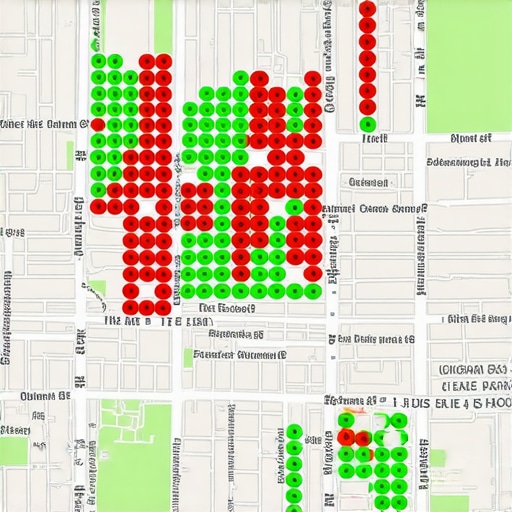
Once you’ve done the heavy lifting of cleaning up your data, the real challenge begins: staying there. I’ve seen too many business owners reach the top of the map only to disappear three months later because they treated their profile like a ‘set it and forget it’ project. To keep the momentum going, I rely on visual data rather than static reports. I stopped looking at simple spreadsheets years ago because they hide the truth of how you dominate your local maps. Instead, I use grid-based tracking tools like LocalFalcon or BrightLocal’s heatmaps. I use these specifically because they reveal your ‘ranking radius.’ You might be #1 at your front door but #10 just two blocks away. Identifying these weak spots allows you to deploy innovative local mapping strategies in the exact neighborhoods where you are losing ground. Without this visual proof, you are just guessing, and keyword tracking flaws will hide your true store performance.
How do I keep my rank steady through algorithm updates?
Consistency beats intensity every time. I personally set a calendar alert for every Tuesday to perform a mini-audit. I spend twenty minutes checking for nap inconsistencies and dropping a fresh post with a high-quality image. This isn’t just busy work; it signals to Google that the business is an active, thriving entity. According to the 2024 Local Search Ranking Factors survey by Whitespark, behavioral signals and profile activity are primary drivers for staying in the ‘Top 3.’ If you let your profile sit for a month, you’re essentially inviting a competitor to outsmart the competition. I also make it a point to engage with every single customer interaction; specific review response patterns have a measurable impact on how Google perceives your authority. I’ve found that using keywords naturally in responses—like mentioning the specific service provided—helps reinforce your relevance for those terms without looking like a spammer.
The Future of Local Search Is Already Here
In the next 18 months, I predict Google will lean even harder into real-time availability and verified expertise. We’re already seeing the truth about google maps open now filters, where your rank effectively vanishes the moment your business closes for the day. Future rank elevation will likely require some level of ‘always-on’ digital presence or AI-driven customer interaction that proves you are ready to serve the customer at that exact second. This shift means that technical SEO will take a backseat to real-world signals like foot traffic and response speed. If you want to achieve map pack domination in 2026, you need to start thinking about your profile as a live customer service portal rather than a digital yellow page listing. Take ten minutes today and run a search for your main keyword from a location three miles away from your office. If you aren’t in the top three, use the profile audit checklist to find exactly where your signal is breaking down.
The Hardest Lessons I Learned Fighting for Local Visibility
Looking back at my first few attempts at local SEO, I realize how much I over-complicated the simple stuff. I spent weeks trying to “hack” the system when I should have been focusing on the signals that actually prove I’m a real, trustworthy business. Here is what I wish I had known before I started trying to dominate your local maps:
#IMAGE_PLACEHOLDER_E#
- Patience is a ranking signal. Google’s algorithm often tests new data before fully trusting it. If you change a category and don’t see a jump in 24 hours, don’t panic and change it back. That’s how you end up with profile edits that stay pending forever.
- Interaction beats volume. I used to think 500 reviews were the goal. Now I know that ten reviews with high-quality photos and detailed text are worth fifty one-word ratings. Google looks for interaction data that proves you are a top choice, not just a popular one.
- The “Invisible” audit is real. Many owners ignore technical errors on their connected website, but that’s often the audit mistake that makes your map listing effectively invisible to the bot.
My Personal Arsenal for Beating the Local Giants
You don’t need a massive agency budget to win. I’ve managed to outrank national franchises using just a few high-leverage resources. If you are serious about a local mapping strategy, these are the tools I trust daily. First, I always keep the Whitespark Local Search Ranking Factors study bookmarked; it’s the only place I go for unbiased data on what’s actually moving the needle. Second, I rely on LocalFalcon for grid-based tracking—it’s the only way to see if you are actually winning your neighborhood or just your parking lot. Finally, I recommend checking out these 5 free tools that actually generate leads to get started without any upfront cost. These aren’t just gadgets; they are the eyes and ears of your digital presence.
The Path to Long-Term Local Authority Starts Today
The journey to the top of the map pack isn’t a sprint; it’s a series of intentional, small steps. It’s easy to get overwhelmed by the technical jargon, but at its heart, Google just wants to recommend the best local solution to its users. By staying consistent with your updates and focusing on real customer engagement, you will naturally master local maps domination and leave your competitors wondering how you did it. Don’t be afraid to experiment with your content—the algorithm rewards activity and authenticity more than perfection. Have you ever noticed your ranking radius shrinking after you made a simple change to your service area? Let me know in the comments below!
About the Author
Umar Latif
Brand & Marketing Expert · Dubai, UAE
Umar Latif is a seasoned Brand and Marketing Expert based in Dubai, UAE, with a specialized focus on Local SEO and international digital strategy. With extensive experience managing and optimizing websites for a diverse range of international clients, including those in the United States, Umar has developed a deep understanding of the nuances required to dominate local search results. His technical proficiency encompasses comprehensive keyword research and the implementation of advanced Google-centric strategies designed to enhance visibility and drive organic traffic. As a contributor to dominateyourlocalmaps.com, Umar leverages his background in global marketing to provide actionable insights for businesses looking to improve their local map rankings and digital footprint. His approach combines data-driven tactics with a strategic brand perspective, ensuring that local businesses not only rank higher but also resonate with their target audience. Throughout his career, Umar has remained dedicated to staying ahead of search engine algorithm changes to deliver consistent results for his clients. He is deeply passionate about empowering business owners and marketing professionals with the tools and knowledge they need to achieve sustainable growth.