I remember the Tuesday morning I almost threw my laptop out the second-story window of my home office. For six months, I had watched my business climb the local map pack with the steady, satisfying crawl of a determined hiker. Then, without warning, the needle stopped. I was stuck at the bottom of the top three, and nothing I did—more photos, more posts, more begging for reviews—seemed to move it an inch. It felt like hitting a glass ceiling made of pure, unyielding algorithms. If you have been staring at your dashboard wondering if the real reason your profile ranking stalled last month is some secret Google penalty, I am here to tell you: you are not alone, and it is likely not a penalty at all. Today, I am going to show you how to kickstart that growth again using nothing but strategy and sweat equity.
My Rankings Flatlined and No Amount of Citations Could Save Me
Early in my journey to map pack domination, I made a classic rookie mistake. I thought more was always better. I spent a small fortune on low-quality citation packages, thinking that if I just appeared on more obscure directories, Google would have to respect me. I was wrong. In fact, cluttering my digital footprint with inconsistent data actually made the plateau worse. The truth is, why your citations are getting ignored by Google Maps often comes down to a lack of local relevance, not a lack of volume. When the growth stops, the answer isn’t usually more links; it is better signals. According to the experts at Whitespark, behavioral signals like click-through rate and mobile interactions are becoming much more significant than simple directory counts. I had to stop focusing on quantity and start looking at how neighbors were actually interacting with my pin on the map.
Is it actually possible to win without a massive link budget?
I know what you are thinking: ‘My competitors have deep pockets and years of history. How can I possibly force my profile back into the top 3 results without buying my way in?’ It is the biggest fear every local business owner has. We worry that the map is a ‘pay to play’ game. But here is the secret: Google cares more about the user experience than your marketing budget. If you can prove you are the most relevant answer for a searcher in your specific neighborhood, you can outmaneuver the giants. If you have been stuck in the ‘view more’ abyss, have you noticed your competitors doing something specific—like posting more videos or responding to reviews faster—that you might be overlooking? I would love to hear about the specific ‘wall’ you have hit. To move past why your map ranking stalled at the bottom of the top 3, we have to look deeper at the data Google is actually tracking, like the hidden impact of review response speed and how your neighbors talk about you online.
Stop fighting for the wrong keywords
I once worked with a local plumber in Denver who was pulling his hair out because his google my business rank wouldn’t budge for ’emergency plumbing.’ When we looked under the hood, his primary category was set to a generic ‘Service Establishment.’ It was like trying to win a marathon while wearing lead boots. We realized that why your business categories might be working against you is often the first hurdle in any local mapping strategy. We switched him to ‘Plumber’ and added ‘Drain Cleaning’ as a secondary service. This subtle category tweak doubled local impressions almost instantly. If you are not using specific selection data for your categories, you are essentially invisible to the searchers who need you most.
Make your location impossible for Google to ignore
Google’s algorithm is essentially a digital private investigator. It wants to cross-reference your claims with real-world evidence. To achieve true map pack domination, you have to feed it hyper-local signals. This is where how specific neighborhood mentions influence your proximity rank becomes your secret weapon. Don’t just say you serve ‘Chicago.’ Talk about your work near the Navy Pier or the specific streets in Lincoln Park on your local landing pages. I started doing this for a small law firm, weaving in mentions of local landmarks and school districts into their profile posts. We weren’t just a ‘lawyer’ anymore; we were ‘the lawyer on 5th and Main.’ This move is how you beat the proximity filter and expand your reach beyond your immediate doorstep.
Why your phone is the best SEO tool you own
You don’t need a high-end camera to dominate maps. The metadata inside a simple smartphone photo—the GPS coordinates and timestamp—tells Google exactly where you are and that you are active. I make it a habit to take three photos of every job site and upload them directly through the app. Understanding the specific photo metadata that actually moves your map rank can be the difference between sitting on page three or owning the top spot. It’s about building a trail of breadcrumbs that proves your physical presence. 
Turn your reviews into a relevance machine
Most people think getting a five-star review is the end of the road. It’s actually just the beginning. The keywords your customers use in those reviews are pure gold for your local maps domination. When a customer mentions a specific service like ‘fast furnace repair,’ it signals to Google that you are the authority for that specific query. You should also pay attention to the specific review keywords that trigger map visibility and encourage customers to mention what you actually did for them. Furthermore, your speed of engagement matters. I’ve seen profiles jump several spots just by tightening up their response time, as the hidden impact of review response speed on map ranking is a real, measurable factor. If you respond within an hour, you are telling Google—and your future customers—that you are open for business and ready to serve.Everyone in the local SEO world screams ‘get more reviews!’ like it is a religious mantra. But here is the contrarian truth: a stagnant mountain of 500 reviews from three years ago is often less valuable than ten fresh reviews from this month. In fact, why having 500 reviews might actually be hurting your visibility comes down to what the algorithm calls ‘velocity’ and ‘recency.’ If your feedback loop has gone cold, Google assumes your service has too. You need to master the review frequency secret for long term map dominance to keep that momentum alive. Have you ever fallen into this trap? Let me know in the comments.
Don’t move your map pin until you read this
Then there is the trap that almost every ‘pro’ falls into: fiddling with the coordinates. I call it the map pin trap. You think if you just drag that little red dot closer to the high-traffic intersection, your google my business rank will skyrocket. Instead, you often trigger a manual review or a ‘suspension’ because your pin no longer matches the official postal data. This is a classic example of over-optimization that kills a perfectly good local mapping strategy before it even starts. Building a sustainable presence requires patience, not pixel-shifting. #IMAGE_PLACE_HOLDER_C#
Can you really outrank a giant with a fraction of their budget?
It feels impossible when your competitor has a decade of history and a massive marketing team, but the secret lies in ‘Topical Relevance.’ If a competitor has 1,000 reviews for ‘General Contracting’ but you have 50 reviews specifically mentioning ‘Victorian Window Restoration,’ Google will often pull you to the top for that specific niche. You can learn how to beat competitors with ten times your review count by narrowing your focus and owning the long-tail keywords. This is where you have to be careful that why your business categories might be fighting each other isn’t diluting your authority. According to a study by Joy Hawkins at Sterling Sky, improper category selection is one of the most common reasons high-authority profiles suddenly lose their local maps domination. To truly understand how to outsmart competition in local map listings in 2025, you have to look at the behavioral signals others ignore. It is about being the most relevant answer, not just the loudest. If you are struggling with a specific competitor who seems ‘unbeatable,’ tell me their niche below—I would love to help you find their weak spot.Once you finally see your business in the top three, the temptation is to sit back and watch the leads roll in. But the map is a treadmill, not a trophy case. If you stop moving, you start sliding backward. I have seen businesses achieve
map pack domination
only to lose it three months later because they forgot the fundamental rule of local SEO: consistency is the only real shortcut. To keep your spot, you need a
local mapping strategy
that focuses on maintenance rather than just initial setup. This means looking at your dashboard not as a chore, but as a living breathing part of your storefront. I personally spend about twenty minutes every Friday morning performing a ‘health check’ on my profiles, and it is the best ROI I have in my entire marketing stack.
How do I maintain my map pack dominance over the long haul?
Maintenance is really about signal frequency. I recommend setting a recurring calendar alert to upload at least two new photos every week. Remember,
the image metadata strategy for better local visibility
is not just for the first month; it is a permanent habit. You should also be looking at your service area settings. I’ve noticed that
how to properly set your service areas to avoid rank dilution
becomes more critical as you grow, because Google starts to narrow your reach if it thinks you are stretching too thin. If you are wondering about the ‘future’ of this space, I predict we are moving toward a ‘visual-first’ algorithm where AI analyzes the content of your photos to verify services, rather than just reading your text descriptions. This is why you need to know
how customer photos change your ranking in just 48 hours
and encourage your clients to snap a picture of the finished project.
The tactical toolkit that saves me hours every week
I don’t believe in over-complicating things with fifty different subscriptions. For my
google my business rank
tracking, I rely heavily on Local Falcon to see a visual grid of where I rank in specific neighborhoods. It’s one thing to know you rank in ‘Chicago,’ but quite another to see you are invisible two blocks south of your office. For auditing, I follow the
citation audit checklist for struggling storefronts
to ensure my NAP (Name, Address, Phone) data stays clean across the web. If you want to dive deeper,
the ultimate guide to google my business rank elevation
covers the software nuances in detail. Also, keep an eye on your mobile performance. Using
the mobile search trick for dominating local results
can help you stay ahead of competitors who only check their rankings from a desktop computer. 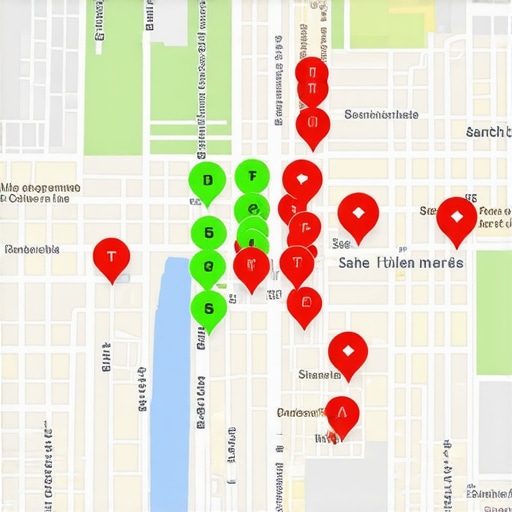
Protect your progress from the ‘Big Box’ competitors
The national chains have more money, but you have the local ‘neighborhood’ advantage. To stay ahead, you must continue
mastering local maps domination proven strategies for 2025 success
by being hyper-active in your community. Mention local events or partner with other local shops in your posts. This creates a web of relevance that a corporate office in another state simply cannot replicate. As Mike Blumenthal, a leading expert in local search, often points out, Google’s ‘Local Juiciness’ comes from real-world engagement signals that are nearly impossible to fake. If you want to
how to secure your spot in the map pack permanently
, stop trying to ‘hack’ the system and start being the most helpful business in your zip code.
Try this one advanced tactic today
If you want an immediate edge, go into your Q&A section and seed three questions that customers frequently ask. Answer them yourself using the keywords you found during your initial research. This is one of the most underrated
innovative local mapping strategies for top google rankings
because it provides Google with context that your description might miss. It is time to
how to outsmart competition in local map listings in 2025
by doing the small things that everyone else finds too tedious to maintain. Go check your Q&A section right now—is there a question from a year ago that you never answered? Fix it today and watch what happens to your engagement metrics.
The Hardest Lesson I Learned While Chasing Rankings
Reflecting on my years in the trenches, I’ve realized that the biggest barrier to success isn’t the algorithm—it’s the “set it and forget it” mindset. I spent too long chasing a perfect score while ignoring the real-world signals that actually matter. One thing no one tells you is that Google tracks how long searchers hover over your pin; it is about intent, not just the click. I learned that if you want to see google my business rank growth, you have to treat your profile like a living conversation rather than a static billboard. My “lightbulb moment” came when I stopped trying to trick the system and started focusing on how to outsmart competition in local map listings in 2025 by being the most responsive business in my zip code. Whether it’s avoiding the map pin trap or understanding that fresh signals beat old stats, consistency remains the only true shortcut.
My Personal Arsenal for Beating the Giants
To keep my local mapping strategy sharp, I rely on a tight circle of tools and resources. I personally trust Local Falcon for heatmaps because it visualizes the proximity filter in a way a simple spreadsheet never could. For cleaning up messy data, I always refer to the citation audit checklist for struggling storefronts to ensure my foundation is solid. I also keep the BrightLocal blog bookmarked for their deep-dive studies on consumer behavior. These aren’t just tools; they are the eyes and ears that help me maintain map pack domination even when the algorithm shifts overnight. #IMAGE_PLACEHOLDER_E#
Start Claiming Your Neighborhood Today
The journey to the top of the map isn’t a sprint; it’s a series of intentional, local actions that prove you are the best choice for your neighbors. You have the tools, the data, and the mastering local maps domination proven strategies for 2025 success to turn your profile into a lead-generating machine. Don’t let another week go by while your competitors take the spotlight. It’s time for you to force your profile back into the top 3 results and stay there. Have you ever noticed your ranking drop suddenly after you stopped posting updates for a few weeks? Let me know your experience in the comments below!
About the Author
Umar Latif
Brand & Marketing Expert · Dubai, UAE
Umar Latif is a seasoned Brand and Marketing Expert based in Dubai, UAE, with a specialized focus on Local SEO and international digital strategy. With extensive experience managing and optimizing websites for a diverse range of international clients, including those in the United States, Umar has developed a deep understanding of the nuances required to dominate local search results. His technical proficiency encompasses comprehensive keyword research and the implementation of advanced Google-centric strategies designed to enhance visibility and drive organic traffic. As a contributor to dominateyourlocalmaps.com, Umar leverages his background in global marketing to provide actionable insights for businesses looking to improve their local map rankings and digital footprint. His approach combines data-driven tactics with a strategic brand perspective, ensuring that local businesses not only rank higher but also resonate with their target audience. Throughout his career, Umar has remained dedicated to staying ahead of search engine algorithm changes to deliver consistent results for his clients. He is deeply passionate about empowering business owners and marketing professionals with the tools and knowledge they need to achieve sustainable growth.