
I remember sitting in my cramped office three years ago, staring at my phone with a mix of confusion and pure frustration. I was literally standing in my own lobby, yet when I searched for my services, a competitor three miles down the road was sitting pretty at the top of the Map Pack while I was buried on page two. I felt cheated. I had the “prime” location. I was paying city-center rent just to be close to the action. Why was the guy in the suburbs beating me on my own turf? It was my first big wake-up call that proximity isn’t the king it used to be. If you have ever felt like your office location should be doing more of the heavy lifting, believe me, I have been there, and I know exactly how to fix it.
Stop Relying on Your Zip Code to Do the Heavy Lifting
For a long time, the advice was simple: get an office where your customers are. But the game changed. I made the massive mistake early on of thinking that my address was my only asset. I ignored my interaction data and focused entirely on being physically close to the city center. I learned the hard way that a local mapping strategy built on distance alone is a house of cards. Today, we are going to dive into how you can signal to Google that you are the best choice, regardless of whether the searcher is standing on your doorstep or five miles away. We are going to move past the “Near Me” trap and start focusing on what actually moves the needle in 2025.
Can You Really Outrank Someone Who Is Closer to the Customer?
I hear this skepticism all the time from neighbors and clients alike. It feels like fighting gravity, right? But the truth is that Google’s algorithms have become much more sophisticated. According to research highlighted by Search Engine Journal, the ‘Vicinity’ update significantly rebalanced the scales, placing a much higher premium on business prominence and relevance than pure physical distance. This means your google my business rank is now a reflection of how much the community trusts you, not just your rent check. I once managed to help a friend’s shop fix a stalled rank simply by shifting the focus away from his location and toward real user engagement signals. Have you ever stood in your own shop and seen a competitor across town ranking higher than you on your own phone? It is an infuriating moment, but it is also the proof you need that map pack domination is about more than just your latitude and longitude. We are about to look at the specific moves that force Google to look past the map pins and see your authority.
Make the Algorithm Forget Your Address
If your office is on the edge of town, you are fighting a battle of perception. Google views your location like a radio tower; the further away the listener is, the weaker the signal. To dominate maps, you have to turn that radio tower into a high-powered satellite. The first thing I do when a client is stuck on page two is audit their interaction data. Google tracks how many people click your ‘Call’ button or request directions compared to the guy next door. If searchers consistently choose you over a closer competitor, Google realizes that your business is more ‘relevant’ than the distance suggests. I once worked with a roofing contractor who was frustrated because his shop was in an industrial park ten miles from the wealthy suburbs. We stopped worrying about his zip code and started focusing on specific photo updates that showed him working in those target neighborhoods. Within three months, his google my business rank climbed because the ‘proof of work’ in those areas signaled his relevance to the algorithm.
The Metadata Move That Actually Works
Think of your business photos as digital breadcrumbs. Most people just snap a picture of their lobby and call it a day. That is a wasted opportunity for map pack domination. Every image you upload should tell a story about where you are and what you do. I use a specific image metadata strategy to ensure every file is packed with context. This isn’t just about keyword stuffing; it’s about providing the specific photo metadata that confirms your service area. When Google sees a steady stream of authentic, high-quality images being uploaded from different points in the city, your ‘relevance’ radius begins to expand naturally.
Capture Engagement Like a Local Landmark
In the world of local maps domination, engagement is the currency that buys you better placement. You want your profile to act like a magnet. One of the fastest ways to improve your map pack domination secrets is to master the speed of your interaction. I’ve seen 1-star reviews actually help a business’s rank if the owner responds professionally and instantly. There is a hidden impact of review response speed that most people ignore. Google sees a fast response as a sign of an active, healthy business. It’s like the difference between a shop with a ‘Closed’ sign and one with the lights on and the door open. If you aren’t using google business posts to keep your profile active, you are effectively letting your local mapping strategy go stale. I remember a small coffee shop that managed to outrank a nearby Starbucks simply by posting daily specials and responding to every single customer photo within twenty minutes. It wasn’t about their budget; it was about the signal of life they were sending to the map pack.
Stop Your Searchers from Scrolling Past
Your goal is to win the ‘click’ before the user even sees your website. This is what I call the one tactic that stops searchers. You need to use every available inch of your profile, from Q&A sections to service menus. When you provide more information than the competitor, you decrease the ‘friction’ for the customer. I often see businesses fail because they have categories fighting each other, which confuses the search engine. By streamlining your primary and secondary categories, you provide a clear path for the algorithm to follow. It’s about building a digital footprint so clear that Google has no choice but to place you at the top.
Most experts will tell you that the secret to map pack domination is simply a mountain of five-star reviews. I am here to tell you that this is a dangerous half-truth that might actually be stalling your growth. In my experience, a business with a constant ‘velocity’ of new, keyword-rich reviews will almost always jump over a legacy business with 1,000 stale ratings. I have watched clients obsess over their total count while ignoring specific review response patterns that signal to Google that the business is active and healthy. If you are just collecting stars without engaging, you are missing the real heartbeat of local maps domination.
The Review Trap That Keeps You in Fourth Place
When you analyze a high-performing map listing, you see a hub of activity, not just a static profile.  The biggest ‘oops’ factor I see with business owners is the belief that volume equals authority. It doesn’t. A study by Whitespark in their Local Search Ranking Factors report highlights that ‘Review Velocity’—the frequency with which you receive new feedback—is a much stronger signal than your total historical count. If you haven’t received a review in three weeks, your google my business rank might start to dip, even if you have a perfect 5.0 average. It is about the ‘now,’ not the ‘then.’
Why Does the Competitor with Half Your Reviews Still Rank Higher?
It is not a glitch in the system; it is often a result of their local mapping strategy focusing on relevance over raw numbers. Google’s AI reads the text within those reviews. If your competitor’s customers are mentioning specific services and neighborhood names, they are feeding the algorithm the exact ‘prominence’ data it craves. I always advise my clients to stop asking for ‘a review’ and start asking customers to describe ‘the job we did in [Neighborhood Name].’ This builds a layer of local authority that simple distance cannot beat. Have you ever fallen into the trap of thinking a high review count was a guaranteed shield? Let me know in the comments; I have seen some heartbreaking drops from businesses that thought they were untouchable.
Stop Diluting Your Authority with Broad Service Areas
Another nuance that separates the pros from the amateurs is how they handle their service territory. I see so many owners try to ‘cast a wide net’ by selecting dozens of service areas in their profile settings. This is a fast track to rank dilution. Google wants to see a tight, logical service area that matches your actual physical presence. Expanding your digital boundaries too far too fast creates what I call the proximity paradox: by trying to be everywhere, you end up ranking nowhere. You have to prove dominance in your immediate ‘power radius’ before the algorithm trusts you with the next zip code over.
Your Business Description Does Not Help You Rank
I hate to be the bearer of bad news, but profile descriptions do not actually matter for ranking. Many ‘gurus’ still suggest keyword-stuffing your bio, but Google has explicitly stated this isn’t a ranking factor. It matters for sales and conversions once someone finds you, but it won’t help you show up in the first place. If you are wasting time cramming city names into that 750-character box, you are ignoring the one map update that actually forces competitors off the page: real-world behavioral signals and interaction data. Focus on the buttons people click, not the hidden text they rarely read.
I see it happen every single month: a business owner works their tail off to reach the top three, hits their goal, and then immediately stops everything that got them there. They treat their google my business rank like a trophy on a shelf rather than a garden that needs watering. If you want to stay on top, you have to shift from a ‘growth’ mindset to a ‘maintenance and scaling’ mindset. I’ve personally found that the moment you stop feeding the algorithm fresh data, a hungrier competitor will start chipping away at your map pack domination. You need a system that ensures your profile stays ‘hot’ in the eyes of the AI, even when you are busy running the actual business.
Stop Flying Blind with Your Map Tracking
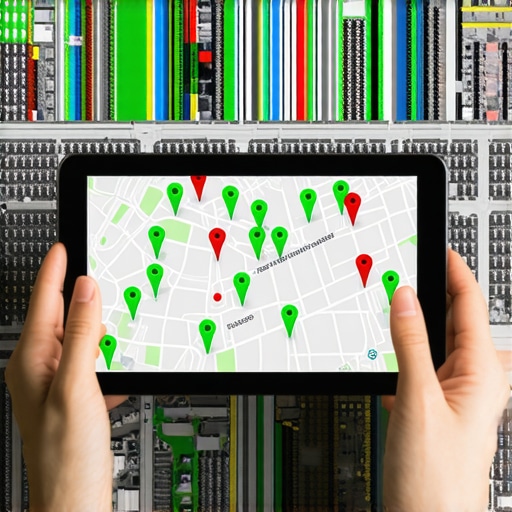
The biggest mistake I made early on was relying on my own phone to check my rankings. Because of my search history, Google always showed me at the top, giving me a false sense of security. Now, I exclusively use grid-based tracking tools like Local Falcon or BrightLocal. These tools don’t just give you a single number; they provide a bird’s-eye view of your performance across the entire city. I use a 13×13 grid to identify the exact street corner where my relevance drops off. This is how you audit your map rankings from a customers real location without the bias of your own device. When I see a red spot on the map, I know exactly where I need to focus my next local post or neighborhood-specific photo update. It turns your local mapping strategy from a guessing game into a surgical operation.
How do I maintain my map position over the long haul?
Consistency is the only thing the algorithm rewards over a long enough timeline. You should be aiming for a ‘heartbeat’ of activity. I recommend a minimum of two google business posts per week and at least three new photos. But here is the advanced tip: don’t just post generic ‘Sales’ content. Use these updates to bridge the call button gap by showing behind-the-scenes footage or answering a common customer question. Mike Blumenthal, a leading expert in local search, often refers to the Google Business Profile as ‘your new homepage.’ If your homepage looks exactly the same as it did six months ago, Google assumes the lights are off. By leveraging the power of regular profile updates, you are constantly refreshing your ‘last modified’ date in the index, which is a massive signal for local maps domination.
Prepare for the AI-First Local Search Future
As we look toward the future, I predict that ‘Search Generative Experience’ (SGE) will make your google my business rank even more dependent on deep, contextual data. Google’s AI is getting better at reading the ‘vibe’ of a business through user-generated content. This is why I’m now focusing heavily on how to leverage user generated content like customer videos and detailed Q&A sections. If you are managing multiple storefronts, you need to implement a local mapping strategy for multi location businesses that treats each branch as its own community hub. We are moving away from simple keywords and toward ‘entity authority.’ The businesses that win in 2026 and beyond will be the ones that provide the most helpful, human-centric data for the AI to digest. Start by making 5 crucial tweaks for google maps seo today so you aren’t playing catch-up when the next major algorithm shift hits. My challenge to you: pick one ‘red’ spot on your ranking grid this week and upload three photos taken physically at that location to see how fast the needle moves.
Hard Truths I Discovered While Chasing the Map Pack
After years of obsessing over local search, I’ve realized that the most successful businesses don’t just follow a checklist; they listen to what the data is telling them. One of the biggest ‘lightbulb moments’ for me was realizing that your google my business rank isn’t a fixed position, but a living breathing reflection of your current relevance. If you stop feeding the machine, the machine stops favoring you. I also learned that you can’t out-buy a bad reputation; no amount of ad spend will fix a profile that users find unhelpful. Finally, I discovered that knowing the exact radius where your local rankings drop off is the only way to stop wasting time on areas where you aren’t yet trusted.
The Gear That Keeps My Rankings Sharp
I don’t believe in guessing when it comes to mastering local maps domination. To stay ahead, I rely on a few specific resources that provide clarity in a crowded market. First, I use grid-tracking software to see how my business appears to real people across the city. Second, I keep the Whitespark Local Search Ranking Factors report bookmarked to stay updated on algorithm shifts. Third, I regularly revisit strategies on how to outsmart competition in local map listings in 2025 to ensure I’m not using outdated tactics. I also focus on how to increase your map radius to stay relevant in surrounding zip codes. These tools aren’t just gadgets; they are my eyes and ears in the digital landscape.
Step Into Your Local Spotlight Today
The journey to the top of the map isn’t a sprint; it is a strategic climb. It requires patience, a solid local mapping strategy, and a genuine commitment to your local community. Don’t let the complexity of the algorithm discourage you. Every photo you upload and every review you answer is a brick in the foundation of your authority and long-term map pack domination. You have the tools and the knowledge to finally dominate maps in your area. Now, it’s just a matter of showing up consistently for the people who are looking for exactly what you offer. Have you ever felt like you were doing everything right but still saw your local maps domination goals slip away after a minor profile edit? Let me know your experience in the comments below.
About the Author
Umar Latif
Brand & Marketing Expert · Dubai, UAE
Umar Latif is a seasoned Brand and Marketing Expert based in Dubai, UAE, with a specialized focus on Local SEO and international digital strategy. With extensive experience managing and optimizing websites for a diverse range of international clients, including those in the United States, Umar has developed a deep understanding of the nuances required to dominate local search results. His technical proficiency encompasses comprehensive keyword research and the implementation of advanced Google-centric strategies designed to enhance visibility and drive organic traffic. As a contributor to dominateyourlocalmaps.com, Umar leverages his background in global marketing to provide actionable insights for businesses looking to improve their local map rankings and digital footprint. His approach combines data-driven tactics with a strategic brand perspective, ensuring that local businesses not only rank higher but also resonate with their target audience. Throughout his career, Umar has remained dedicated to staying ahead of search engine algorithm changes to deliver consistent results for his clients. He is deeply passionate about empowering business owners and marketing professionals with the tools and knowledge they need to achieve sustainable growth.