It was a rainy Tuesday when I realized my phone wasn’t ringing for the services that actually paid my bills. I had spent weeks obsessing over my google my business rank, feeling like a king because I was top of the list for “quick fix repairs.” The problem? I don’t do quick fixes. I do high-end, custom restorations. I was the #1 choice for people who had no intention of ever hiring me. Talk about a punch to the gut. It was a classic case of winning the wrong battle.
Stop Celebrating Rankings That Don’t Pay the Bills
When I first started out, I thought any traffic was good traffic. I made the classic mistake of picking the broadest categories possible just to cast a wide net. I was getting hits, sure, but they were the wrong ones. If you are ranking for keywords that attract “tire kickers” rather than “contract signers,” your local maps domination strategy is actually working against you. According to research by BrightLocal, nearly 76% of people who search on their smartphones for something nearby visit a business within a day, but that only matters if you’re solving their immediate problem, not just appearing for a generic term. I once accidentally ranked a boutique law firm for “free legal aid” because I thought high volume was the goal; it nearly broke their receptionist’s spirit.
Is chasing the top spot actually worth the hype?
You might be worried that tightening your focus will make your total impressions drop. And honestly? It might. But I’d rather have ten calls from people ready to buy than a thousand views from people looking for a service I don’t provide. Most local SEO audits fail to catch this because they only look at the “where” and the “how,” never the “who.” I learned the hard way that a smaller, more targeted map radius is infinitely more profitable than a huge, irrelevant one. Have you ever checked your insights and realized you’re being found for something completely unrelated to your main business?
The Real Reason Your Neighbors Can’t Find You
It usually comes down to how search intent changes your business visibility. Google is trying to be a matchmaker, but if you’re giving it the wrong signals, it is going to set you up with the wrong customers. We are going to fix that today by looking at the specific levers that force the right eyes onto your profile. We’ll look at why your high impressions are leading to zero calls and how to pivot before you waste another dime on the wrong audience.
Clean Up the Category Mess Before You Spend a Dime
If your profile is a mess of conflicting signals, Google will just guess where to put you. I see this constantly: an HVAC company selects ‘Handyman’ as a secondary category because they ‘sometimes do small jobs.’ Suddenly, they are losing high-ticket furnace installs to a competitor with half their experience because they diluted their authority. You need to be surgical. When I audited a plumbing client last year, we found they were ranking for ‘clogged drains’ but missing ‘water heater replacement’ entirely. By refining their primary category and removing the fluff, we saw a significant shift in lead quality almost overnight. This isn’t about being found by everyone; it’s about being the only logical choice for the person ready to swipe their card. 
The Simple Tactic That Forces Your Signal Into New Neighborhoods
Most people think their map reach is a hard circle around their office. It’s not. It’s a flexible web that stretches based on where Google thinks you are relevant. If you find your map listing is hidden behind the view more button, it’s usually because your digital footprint doesn’t match your physical claims. I once helped a roofer who couldn’t rank three miles away from his shop. We implemented the city page method to create hyper-local relevance without opening a new office. We stopped talking about ‘roofing’ in general and started talking about ‘roofing in [Neighborhood Name]’ with photos to prove it. Within a month, his ‘invisible’ radius expanded by four miles.
Why Your Response Time Actually Outranks Your Five-Star Rating
You can have a thousand reviews, but if you take six hours to reply to a quote request, Google knows. They track everything. I’ve seen how customer interaction speed directly influences your google my business rank firsthand. A local chiropractor I worked with was getting beat by a newer clinic with 10 reviews. Why? The newer clinic had ‘Fast Responder’ badges and their dwell time—the time people spent looking at their photos and reading their posts—was double. We stopped obsessing over getting more stars and started focusing on how customer dwell time actually impacts your google my business rank. We added high-resolution project photos and updated our posts weekly. The result? Our google my business rank elevation didn’t just crawl up; it leaped. If you want local maps domination, you have to treat your profile like a living conversation, not a static billboard. You need to perform a 10-minute local SEO audit to see if your ‘response’ signals are actually reaching the servers or if they are timing out before they can help your rank.People often tell me, ‘I just need 100 more reviews and I will be number one.’ It is a lie that many SEO agencies sell because it is easy to track. In reality, the industry is obsessed with quantity, but Google’s algorithm has moved toward quality and velocity. A recent study by Whitespark on local search ranking factors confirms that while reviews are a top-tier signal, the diversity of those reviews and the keywords used within them carry more weight than the raw number. I have seen profiles get ghosted because they suddenly received 30 generic reviews in two days—it looks like a bot attack, even if it is legitimate. This is the trap of review automation where chasing stars actually kills your trust score. 
Reviews Aren’t the Holy Grail You Think They Are
Everyone says you need perfect citations across every obscure directory on the internet. In my experience, that is a massive waste of time in 2025. While consistency is a baseline, why perfect citations wont save your google my business rank anymore is a conversation we need to have more often. Google is now smart enough to know that ‘St.’ and ‘Street’ are the same thing. What it really wants to see is authentic, high-quality brand mentions from local sources. If you do not know how to identify which local map backlinks are actually moving your rank, you are just throwing darts in the dark and hoping something sticks. I once saw a plumber jump five spots just by getting a mention in a local neighborhood newsletter, which carried more weight than fifty ‘Yellow Page’ clones.
Why does the shop next door outrank you with half the reviews?
It usually comes down to contextual relevance and user behavior signals. While you are chasing directories, your competitor might be generating random brand mentions that drive more map clicks because they are active in the local community. Google sees people searching for their specific brand name followed by a location, which is the strongest signal of authority you can give. If you want map pack domination, you have to stop acting like a robot and start acting like a local pillar.
The Technical Trap That Makes Your Map Listing Invisible
One major ‘oops’ I see even advanced players make is over-optimizing their website embeds. They think putting a giant map on every single page helps ‘prove’ their location. Actually, the map embedding mistake that actually hurts your search presence is often about page load speed and broken API keys that confuse the Google crawler. If your website takes four seconds to load because of a heavy map script, your google my business rank elevation will stall regardless of how many photos you upload. Have you ever fallen into this trap? Let me know in the comments. We need to focus on a local maps domination strategy that prioritizes the user experience over rigid, outdated SEO ‘rules’ from five years ago.
Stop Watching Your Rank Slide After 90 Days
Most business owners get a rush of adrenaline when they finally break into the top 3, only to get complacent. That is exactly why most businesses fail to hold a top spot in the map pack after three months. You have to realize that the map is a dynamic environment; if you stop feeding the beast, someone else will. I personally use grid-tracking software to see how my authority bleeds into the next zip code. If I see a dip, I don’t panic—I pivot. I look at how real foot traffic data overpowers on-page seo and try to mirror that reality in my digital updates.
Why Your 2024 Strategy Won’t Survive 2026
The game is changing faster than ever. We are moving toward a world where AI doesn’t just read your text; it analyzes your business’s physical behavior. If you want to stay ahead, you need these 7 google business profile tips for 2026 to outperform massive competitors. A recent study by the experts at Sterling Sky highlights that ‘real-world entity signals’ are becoming the ultimate tiebreaker in competitive markets. If you are just a ghost on the internet with no local pulse, you’re toast.
How do I maintain map pack domination over time?
The secret is what I call ‘Signal Maintenance.’ You cannot just set it and forget it. You need the power of regular profile updates on search frequency. Every week, I make it a point to upload at least three high-quality photos and answer a question in the Q&A section. It keeps the profile ‘fresh’ in Google’s eyes. 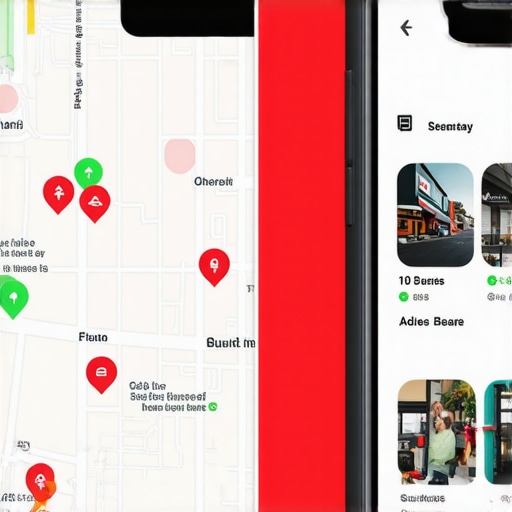
Get Personal with Your Data Tracking
I have to be honest with you: the data Google gives you in the standard dashboard is often a sanitized version of the truth. I’ve written extensively about why your profile insights are lying to you about real phone calls. If you want to truly scale, you need to use third-party tools that measure your actual visibility radius. I use Local Falcon because it shows me exactly where I’m winning and where I’m ‘hidden’ behind the competition. These map pack domination secrets only work if you are looking at the right numbers. Don’t let a ‘vanity metric’ like impressions fool you into thinking you are making money. Try this right now: Pick your most profitable service and search for it while physically standing three blocks away from your office. If you aren’t #1 there, your scaling strategy has a leak that needs plugging immediately.
The 3 Cold Truths About Dominating Local Maps
After years in the trenches, I realized that google my business rank isn’t a trophy you win; it’s a garden you tend. First, high search volume is often a vanity metric that distracts you from the real goal: conversions. I have seen countless owners celebrate a rise in views while their phones stayed silent because they were targeting the wrong intent. Second, I learned that a 3-minute fix can reverse dropping clicks more effectively than a expensive ad campaign if you focus on user behavior. Third, your biggest competitor isn’t necessarily the guy with more reviews—it’s your own technical complacency. If you aren’t evolving, you are invisible.
The Gear I Actually Use for Local Mapping
I don’t believe in using fifty different tools to manage a local mapping strategy. Instead, I stick to a few that actually move the needle and provide clarity. I rely on Local Falcon for a clear grid-view of my rank across different zip codes, as it removes the guesswork from proximity. I also recommend the book Building a StoryBrand by Donald Miller, which changed how I write profile descriptions to focus on the customer as the hero. To stay sharp, I constantly look for an innovative local mapping strategy for top google rankings to ensure I’m not using 2022 tactics in 2025. For the technical side, implementing a specific schema fix that forced a massive map radius expansion has been the single most effective way to help my clients who felt ‘trapped’ by their physical office location.
The Future of Local Search Starts Today
The road to local maps domination is paved with consistent, small actions rather than one-off miracles. You now have the blueprint to outsmart competition in local map listings in 2025 and beyond. Remember, Google wants to reward the businesses that provide the best real-world experience. If you focus on being the most helpful, responsive, and relevant option in your area, the algorithm will naturally find its way to your doorstep. It takes courage to stop chasing ‘likes’ and start chasing ‘leads,’ but the payoff is a business that grows even while you sleep. Which neighborhood is currently your ‘blind spot’ on the map where you know you should be ranking? Let me know in the comments below!
About the Author
Umar Latif
Brand & Marketing Expert · Dubai, UAE
Umar Latif is a seasoned Brand and Marketing Expert based in Dubai, UAE, with a specialized focus on Local SEO and international digital strategy. With extensive experience managing and optimizing websites for a diverse range of international clients, including those in the United States, Umar has developed a deep understanding of the nuances required to dominate local search results. His technical proficiency encompasses comprehensive keyword research and the implementation of advanced Google-centric strategies designed to enhance visibility and drive organic traffic. As a contributor to dominateyourlocalmaps.com, Umar leverages his background in global marketing to provide actionable insights for businesses looking to improve their local map rankings and digital footprint. His approach combines data-driven tactics with a strategic brand perspective, ensuring that local businesses not only rank higher but also resonate with their target audience. Throughout his career, Umar has remained dedicated to staying ahead of search engine algorithm changes to deliver consistent results for his clients. He is deeply passionate about empowering business owners and marketing professionals with the tools and knowledge they need to achieve sustainable growth.