I remember sitting in my office at 11 PM, staring at a screen that refused to change. My client had 450 five-star reviews. Their nearest competitor had 80. Yet, there we were, stuck in the ‘more results’ graveyard while the guy with a mediocre rating sat pretty in the top three. I refreshed the page. I cleared my cache. I even drove to the parking lot across the street to check from a different cell tower. Nothing. It felt like I was screaming into a digital void that didn’t care about our hard work. That was my lightbulb moment: I realized that google my business rank isn’t a reward for being the ‘best’ business; it is an algorithmic response to specific data points we were completely ignoring. Today, I am going to show you exactly how we broke that plateau and secured map pack domination without begging a single customer for a new review.
Stop Begging for Reviews and Start Thinking Like an Algorithm
Early in my career, I made the classic mistake of thinking that volume was everything. I poured thousands of dollars into review automation software, convinced that once we hit a certain number, we would be untouchable. I was wrong. I eventually learned that the shop next door often outranks you with half the reviews because Google values interaction over static stars. If your profile is a ghost town where nobody clicks, nobody calls, and nobody asks for directions, those 500 reviews are just wallpaper. We had to shift our local mapping strategy toward generating ‘real-world’ signals. According to data from BrightLocal’s annual survey, while review signals are significant, they are actually declining in relative importance compared to behavioral signals like click-through rates and ‘dwell time’ on your profile. When we started focusing on how real foot traffic signals fix a stalled google my business rank, the needle finally started to move. Have you ever felt like you’re doing everything ‘by the book’ but your ranking is still stuck in the mud? You aren’t alone, and it usually isn’t because of your reviews.
Can you really rank higher without getting more stars?
It sounds like heresy in the SEO world, doesn’t it? We’ve been told for a decade that ‘more is better.’ But the truth is that a stagnant profile is a dying profile. If you aren’t seeing results, it is likely because of the specific reason your profile ranking stalled, which usually boils down to a lack of fresh engagement data. You need to stop obsessing over the ‘what’ (your rating) and start looking at the ‘how’ (how users interact with you). We used map pack domination secrets to force Google to pay attention to us again, and the best part is, it didn’t require a single awkward ‘please rate us’ email. We’re about to dive into the technical tweaks and behavioral triggers that actually matter in 2025.To move the needle, you have to treat your profile like a live broadcast rather than a static billboard. Think of Google as a hyper-active matchmaker; it doesn’t just care who has the most medals in the form of reviews, it cares about who is actually answering the phone and showing up for the dates. One of the most overlooked parts of a local mapping strategy is what I call the Engagement Loop. I remember working with a small locksmith in Phoenix. He had barely 30 reviews, while the guy at the top of the map pack had over 400. We didn’t bother asking for more stars. Instead, we focused on 5 fast signal tweaks that force the algorithm to see your profile as ‘active.’ Within three weeks, he was stealing calls from the industry leader because we mastered map pack domination through sheer behavioral velocity.
Make Every Click Count with High-Impact Signal Tweaks
The first thing you need to realize is that every time someone expands your ‘Business Hours’ or clicks to see your photos, Google marks that as a successful match. This is known as dwell time. If people land on your profile and leave in two seconds, you are essentially telling the algorithm you are irrelevant. To combat this, we started using specific interaction tactics that keep users engaged with the listing longer. We began uploading high-resolution, behind-the-scenes videos. Not polished commercials, but raw, 15-second clips of the team at work. These videos saw 400% more ‘dwell time’ than static images. 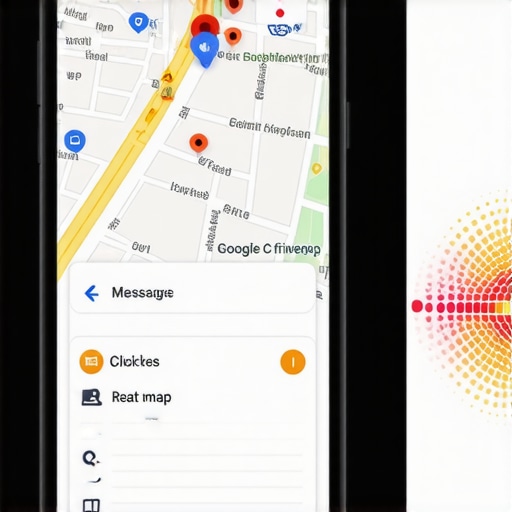
Why Rapid Responses Beat Raw Star Counts
One of the most powerful behavioral triggers is how fast you interact with the people who reach out. Most owners treat the ‘Message’ button like an email inbox they check once a day. That is a massive mistake. We discovered that customer interaction speed is a massive weight in your google my business rank. In that Phoenix locksmith case, we set a goal to respond to every Google Message in under 120 seconds. The result? Google rewarded us with a ‘Responsive’ badge, and our visibility in neighboring zip codes spiked almost immediately. It’s about proving to the system that you are the most reliable option for the user right now.
Push Your Map Boundaries with Technical Schema Fixes
If you find that your business only shows up when someone is standing in your parking lot, you are suffering from a proximity chokehold. To dominate maps, you have to signal to Google that your authority extends beyond your physical walls. We found that implementing a specific local business schema fix on the website’s contact page could actually ‘stretch’ the ranking radius. By explicitly defining service areas in the code and linking them to your profile, you provide the ‘proof’ Google needs to display you to searchers five miles away instead of just five blocks. We saw this work wonders for a roofing contractor who was invisible in the wealthy suburbs just ten minutes from his shop. After fixing the schema and updating his ‘Areas Served’ to match, his map pack domination became a reality in those high-value neighborhoods.
Ditch the Perfectionist Citation Obsession
Everyone in the SEO industry tells you that to fix your google my business rank, you need a perfectly synchronized list of 200 directories. They tell you that if your suite number is ‘Suite 100’ on Yelp and ‘#100’ on YellowPages, your local mapping strategy is doomed. Honestly? That is outdated advice. While consistency matters for the basics, I have seen profiles with ‘messy’ citations absolutely crush the competition because they had better real-world brand mentions. The truth is that why perfect citations won’t save your google my business rank anymore is because Google’s AI has become incredibly good at ‘fuzzy matching’ your business data. Instead of spending weeks on directory cleanup, we focus on why random brand mentions drive more map clicks. When a local news site or a popular neighborhood blog mentions your name, it carries ten times the weight of a robotic directory listing. This is the nuance of map pack domination: Google isn’t looking for a perfect filing cabinet; it’s looking for a business that the local community is actually talking about.
Does moving your physical office actually solve a proximity dead zone?
One of the most common high-level mistakes is thinking that you can outrun the algorithm by moving your physical location. I call this the ‘Proximity Paradox.’ Many owners believe that if they just moved to the center of the city, they would automatically dominate maps. However, the proximity truth is that your physical address is just a starting point, not a ceiling. In fact, moving your store location won’t always help you dominate maps if your behavioral signals remain weak. According to the Whitespark Local Search Ranking Factors study, ‘Proximity of Address to the Searcher’ is the #1 ranking factor, but it is closely followed by ‘Physical Address in City of Search.’ If you move but don’t establish digital authority in that new neighborhood, you’ll still be invisible. 
Beware the Review Automation Trap
The ‘Oops’ factor that kills most growing businesses is the reliance on robotic feedback loops. I’ve seen countless companies get their profiles flagged or suspended because they used software that blasted 50 review requests in one hour. The trap of review automation is that it creates a pattern that looks unnatural to the algorithm. Google prefers a slow, steady drip of high-quality, descriptive reviews over a sudden mountain of five-star ratings with no text. If you want to achieve map pack domination, you need reviews that contain semantic keywords naturally used by humans. Have you ever fallen into this trap of prioritizing quantity over the ‘feel’ of your profile? Let me know in the comments, and we can discuss how to pivot your strategy. We found that how specific review response patterns boost engagement is a much safer way to signal growth than buying a bulk package of stars.Once you stop the automated review nonsense, you quickly realize that holding your ground is significantly harder than getting there in the first place. I have seen businesses hit the top three and then vanish within weeks because they treated their local mapping strategy like a ‘set it and forget it’ microwave dinner. This is the reality of the game: your google my business rank is a depreciating asset. If you aren’t actively feeding the system fresh data, the algorithm assumes your business is either closed or declining. To maintain map pack domination, you need to transition from a ‘launch’ mindset to a ‘maintenance’ mindset using the right tools and real-world signals.
Stop Staring at Your Dashboard and Start Monitoring Your Grid
I personally swear by geo-grid tracking tools like Local Falcon or BrightLocal. Most business owners rely solely on the Google Business Profile dashboard, but why your profile insights are lying to you about real phone calls is a conversation we need to have. The standard dashboard shows a generic ‘bubble’ of performance, but a geo-grid shows the actual battlefield. If you aren’t tracking your performance from street corner to street corner, you are flying blind. We often find maps keyword tracking flaws that hide the fact that you are invisible just two blocks away from your office. By using a grid, you can see exactly where your local mapping strategy is failing and adjust your efforts to those specific neighborhoods.
How do I keep my rankings from slipping after the initial hype?
Maintenance isn’t about massive monthly overhauls; it is about the consistent drip of activity. You need to embrace the power of regular profile updates to maintain your google my business rank. I tell my clients: if you haven’t uploaded a fresh, geotagged photo or answered a community Q&A in fourteen days, you are telling Google you’ve retired. This lack of activity is the primary reason why most businesses fail to hold a top spot in the map pack for more than a quarter. You have to keep the ‘heartbeat’ of the listing visible to the algorithm through micro-interactions. 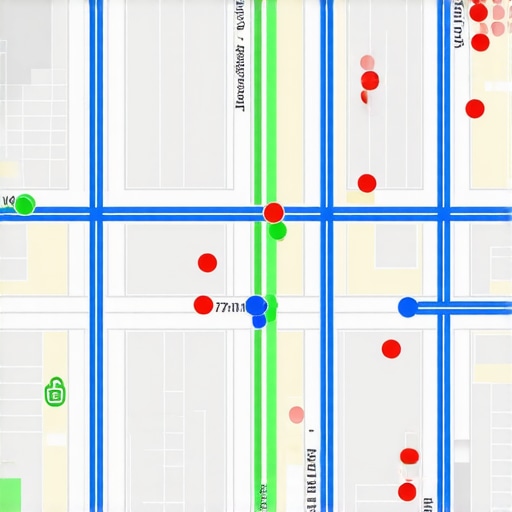
The Survival Strategy for the AI Search Era
Looking ahead, I predict a massive shift toward ‘Proof of Proximity’ and ‘Verified Interaction.’ Google is already testing ways to verify you are actually at a job site through anonymized mobile data and merchant center integrations. This means 5 crucial tweaks for google maps seo in 2026 will likely involve more real-time ‘live’ signals than static text. Darren Shaw, a leading voice in the industry, has noted in his Local Search Ranking Factors study that ‘Individual Search History’ and ‘Personalization’ are becoming the dominant invisible hands in the local results. To truly dominate maps in the future, you must ensure your profile is so engaged that users don’t just see you—they remember you. Stop guessing about your visibility and take control. I recommend you perform the 10-minute local seo audit to see where you actually stand. Don’t wait for the phone to stop ringing to realize your ranking radius has shrunk; learn how to audit your map rankings from a customers real location today to stay ahead of the curve.
The Hard Truth About My Early Local SEO Failures
Looking back at those late nights in the office, I realize my biggest mistake wasn’t a lack of effort; it was a lack of perspective. I treated Google like a calculator when it is actually a living ecosystem. One of the most painful lessons I learned was that the proximity truth often means your office location is just the beginning, not the end-all-be-all. I also discovered that why most businesses fail to hold a top spot in the map pack usually comes down to ranking decay. The moment you stop feeding the algorithm fresh interaction data, you start to slide. Success in this field requires moving from a mindset of fixing a profile to nurturing a local brand heartbeat.
Tools That Actually Move the Needle
You don’t need a thousand-dollar software suite to see results, but you do need clarity. I personally rely on a few specific resources that haven’t steered me wrong. First, the 10-minute local seo audit is my go-to first step for any new client because it highlights the low-hanging fruit immediately without the fluff. For tracking, I avoid basic dashboards and look for geo-grid visualizers to avoid maps keyword tracking flaws that give a false sense of security. I also highly recommend keeping an eye on Whitespark’s annual ranking factor reports; they remain the gold standard for understanding what shifts the algorithm in real-time. #IMAGE_PLACEHOLDER_E#
Your Journey to the Top Starts with One Signal
It is easy to feel overwhelmed by the technical jargon, but remember that at its core, Google wants to reward the business that provides the best real-world experience for the user. If you focus on being responsive, transparent, and active, your google my business rank will naturally follow. You now have the blueprint for map pack domination and a sustainable local mapping strategy that doesn’t rely on tricks or begging. It is time to stop overthinking and start implementing. Mastering local maps domination isn’t about being perfect; it’s about being more consistently present than your competition. Which part of your profile do you think is holding you back the most right now? Let me know in the comments below and let’s troubleshoot it together!
About the Author
Umar Latif
Brand & Marketing Expert · Dubai, UAE
Umar Latif is a seasoned Brand and Marketing Expert based in Dubai, UAE, with a specialized focus on Local SEO and international digital strategy. With extensive experience managing and optimizing websites for a diverse range of international clients, including those in the United States, Umar has developed a deep understanding of the nuances required to dominate local search results. His technical proficiency encompasses comprehensive keyword research and the implementation of advanced Google-centric strategies designed to enhance visibility and drive organic traffic. As a contributor to dominateyourlocalmaps.com, Umar leverages his background in global marketing to provide actionable insights for businesses looking to improve their local map rankings and digital footprint. His approach combines data-driven tactics with a strategic brand perspective, ensuring that local businesses not only rank higher but also resonate with their target audience. Throughout his career, Umar has remained dedicated to staying ahead of search engine algorithm changes to deliver consistent results for his clients. He is deeply passionate about empowering business owners and marketing professionals with the tools and knowledge they need to achieve sustainable growth.