Category: Local Business Digital Marketing

  • The Image Optimization Trick That Increases Local CTR

    The Image Optimization Trick That Increases Local CTR

    I was staring at my Google Business Profile dashboard for the fifth time that hour, and I honestly felt like I was losing my mind. The ‘Impressions’ number was huge. Thousands of people were seeing my business every month. But the ‘Phone Calls’ column? A big, fat zero. I had the five-star reviews and I thought I was mastering local maps domination, but the reality was a cold shower. People were looking at me, but they weren’t choosing me. They were scrolling right past my ‘professional’ logo and choosing the guy down the street who had a messy, real-life picture of his truck. That’s when the lightbulb finally flickered on. I realized that ranking is only half the battle; if your visual presentation is boring, you’re just a ghost in the machine. Today, I’m going to share the exact image optimization trick that turned my ghost town of a listing into a lead-generating machine.

    Your Listing is Visible But Everyone is Ignoring It

    I made a massive mistake early on that I see almost every small business owner repeat. I thought that ‘professionalism’ meant being sterile. I uploaded high-res stock photos of people in suits shaking hands. I spent a week perfecting a 4K version of my logo to use as the cover photo. I was so focused on my google my business rank that I forgot I was actually trying to appeal to human beings, not just algorithms. The result? I had high impressions but zero calls because I looked like a generic corporation instead of a helpful neighbor. People don’t want to hire a logo; they want to hire a person they can trust. When I finally swapped those polished stock images for ‘action’ shots of my team actually working, the click-through rate didn’t just crawl up—it exploded. Have you ever looked at your insights and wondered why all those views aren’t turning into actual phone calls?

    Is this just another SEO gimmick that takes too much time?

    You might be thinking that you don’t have time to become a professional photographer, or that ‘optimizing’ images sounds like more technical fluff. I felt the same way until I saw the data. Research from MIT suggests that the human brain can identify images seen for as little as 13 milliseconds. This means you have less than a blink of an eye to convince a searcher that you are the right choice before they scroll to your competitor. If your photo doesn’t communicate immediate trust and relevance, you’ve lost. This isn’t about fancy filters; it’s about using 4 image tweaks that stop searchers from scrolling. Once I implemented a specific way of framing my business ‘results’ in my photos, I finally achieved true map pack domination. You don’t need a DSLR; you just need to understand what the human eye is actually looking for in the local search results.

    Human Faces Drive More Clicks Than Graphic Design

    I’ve seen too many business owners treat their Google profile like a static billboard rather than a living, breathing conversation. Think of your listing like a digital storefront window. If the glass is covered in stiff corporate posters instead of showing the actual people and activity inside, people will just keep walking. I once consulted for a local plumber who had a perfect 5.0 rating but was losing calls to a guy with a 4.2. Why? Because the competitor had photos of himself actually crawling under sinks, while my client had a gallery of ‘Free Clip Art’ water drops. This isn’t just about looking ‘nice’; it’s about providing the interaction data that proves you are a top local choice. When you show a human face—preferably yours or your team’s—you bridge the trust gap in milliseconds. I forced my client to delete every stock photo and replace them with raw, unfiltered shots of his team in the field. Within two weeks, his call button gap closed significantly, and the phone actually started ringing again.

    Post the Work You Are Doing Right Now

    The biggest secret to mastering local maps domination isn’t a secret at all: it’s frequency. I remember a specific time I uploaded a photo of a messy, half-finished flooring job. I was embarrassed because the lighting was terrible and the room was a disaster, but I posted it anyway with a quick caption about the specific neighborhood. That single ‘ugly’ photo got more clicks than the professional portfolio shots I’d paid hundreds for. This happened because it proved we were actually working in that specific area. This is a massive part of a winning local mapping strategy because Google sees the GPS metadata attached to your smartphone photos. By taking a picture on-site, you are essentially telling the algorithm, ‘Yes, I am really here doing this job.’ This level of transparency is exactly how to outsmart competition in local map listings in 2025. Stop worrying about the perfect filter and start worrying about the proof of your presence.

    Fresh Photos Signal a Thriving Business

    If your last photo was uploaded in 2022, you are effectively telling every potential customer that you might be out of business. Google loves ‘freshness’ because it’s a proxy for reliability. You can’t just set it and forget it if you want a top-tier google my business rank. I make it a habit to upload at least three new photos a week directly from my phone. This signals to the map pack that this business is active and engaged. I’ve seen this work wonders for roofing companies where specific photo updates doubled local clicks almost overnight. It’s like keeping a garden; if you don’t water it with new content, the algorithm will let it wither and hide you behind the ‘View More’ button. Regularity is the fuel for the power of regular profile updates on search frequency, ensuring you stay top-of-mind and top-of-page. When searchers see a ‘2 days ago’ timestamp on your photos, they feel much more confident hitting that call button than they do on a listing that looks like a ghost town.

    Stop Obsessing Over Your Total Review Count

    Most ‘experts’ will tell you that the path to mastering local maps domination is simply getting more reviews than the guy across the street. But here is the truth: a massive stack of five-star reviews is a weak signal if nobody is actually interacting with them. I’ve seen listings with 500 reviews get buried by a competitor with 50 because the smaller listing had higher ‘dwell time.’ This is a huge nuance of how customer dwell time actually impacts your google my business rank. If people click your profile and immediately bounce back to search, Google assumes you weren’t the right fit. It’s about the interaction data that proves you are a top local choice. Have you ever fallen into this trap of chasing numbers instead of engagement? Let me know in the comments.

    How does Google decide who is ‘relevant’ when everyone has five stars?

    A recent study by Whitespark on local search ranking factors confirms that behavioral signals—like clicks to call, requests for directions, and photo views—are growing in importance while traditional citations are losing their punch. This explains why the shop next door outranks you with half the reviews. They aren’t just ‘lucky’; they are generating real human activity. If you are just using an automated bot to reply to customers, you are missing out on the specific review response patterns that actually boost map engagement. Google’s AI now reads those responses to understand the context of your service beyond the keywords.

    The Proximity Trap That Limits Your Growth

    One of the biggest ‘oops’ factors I see is businesses assuming they can’t rank outside their immediate neighborhood. They think their physical office address is a cage. This is what I call the proximity truth—your location matters, but it’s not the only factor. If you provide enough ‘prominence’ signals, you can force a massive map radius expansion that reaches much further than your competitors. People often fail because of the hidden setting that blocks your profile from neighboring towns, not because Google is playing favorites. When you understand how to outsmart competition in local map listings in 2025, you realize that relevance and authority can often beat physical distance. Don’t let a ‘safe’ local mapping strategy keep you from reaching the next zip code over. If you’ve noticed your local rankings drop off at a specific street corner, it’s usually a signal gap you can bridge with better data.

    I used to think that hitting the top three was the finish line. I thought I could just coast once I saw my business name sitting pretty on that map. But the map pack is a moving target. If you aren’t active, you’re decaying. To stay ahead, I had to stop guessing and start using data-driven tools that actually show me where I’m winning and where I’m invisible. Most people rely on the native dashboard, but why your profile insights are lying to you about real phone calls is a lesson I learned the hard way. The ‘impressions’ Google shows you are often just people scrolling past you at 60mph on the digital highway. To truly own your territory, you need to see exactly where your signal drops off.

    Stop Flying Blind and Start Tracking Your Real Search Radius

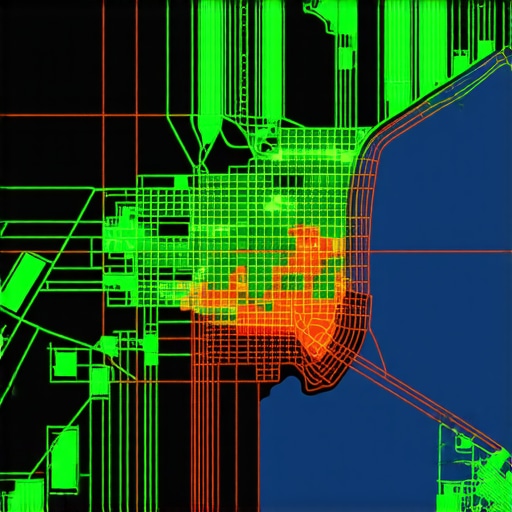
    The single most important tool in my arsenal is a local grid tracker like Local Falcon. Instead of just checking my rank from my office chair, it shows me a bird’s-eye view of my mastering local maps domination progress across the entire city. It revealed that while I was #1 at my front door, I was #15 just two blocks away. This is how I identified the exact radius where your local rankings drop off. Once you have this map, you stop throwing spaghetti at the wall. You can see exactly which neighborhoods need more geo-tagged photos or localized posts. This level of precision is how to outsmart competition in local map listings in 2025 because while your competitors are broad, you are surgical.

    How do I maintain my map rank without spending all day on it?

    Maintenance is about systems, not luck. I’ve seen so many peers lose their spot because of why most businesses fail to hold a top spot in the map pack after three months—they simply stop the momentum. I use a simple ‘Rule of Three’: three new photos a week, three review responses, and one Google post. I treat my Business Profile like a social media feed. Even Joy Hawkins from Sterling Sky, a leading authority in local search, has noted that Google’s AI is increasingly sensitive to ‘activity clusters.’ If you go silent for a month, Google assumes you’ve gone stale. This consistent activity is the heartbeat of map pack domination. It’s better to do a little every week than a lot once a year.

    The Future of Local Search is Verified Reality

    Looking ahead, I predict Google is going to get even stricter about ‘Real-World Evidence.’ We are already seeing why your profile edits keep getting rejected and the proof google wants; they want to see your signage, your van, and your tools. In the next year, I expect video verifications and live ‘check-ins’ to become standard for maintaining a top-tier google my business rank. The ‘fakers’ using virtual offices and stock photos are going to be purged. If you want to scale, you need to document your work as it happens. This is why a solid local mapping strategy must include a workflow for your field team to snap and upload content daily.

    If you’re feeling stuck, don’t try to fix everything at once. Start by running a ranking grid to see where you actually stand. Check out the profile audit checklist for turning search impressions into real calls and pick one gap to close this week. Whether it’s fixing your categories or adding a human face to your cover photo, one small move can trigger the algorithm to give you another look.

    What I Finally Realized After Years of Fighting the Algorithm

    Reflecting on my journey toward local maps domination, I’ve had a few lightbulb moments that changed everything. First, I stopped treating my profile like a resume and started treating it like a community bulletin board. The shift from corporate to human was the single biggest catalyst for my map pack domination secrets. I also learned that you cannot automate trust; the trap of review automation is real, and customers can smell a canned response a mile away. Real, messy, human interaction is what actually moves the needle in 2025.

    Another hard truth? Most audits are skin-deep. I found that why most local SEO audits fail to catch profile errors often comes down to ignoring behavioral data in favor of simple keyword stuffing. If I could go back, I’d tell myself to focus 80% on user experience and only 20% on the technical ‘hacks’ everyone else is obsessed with.

    The Toolkit That Keeps My Business on the Map

    If you want to stay ahead, you need the right gear. I don’t go a single day without checking these resources: #IMAGE_PLACEHOLDER_E#

    • Local Falcon: This is my go-to for visualizing my reach. It helps me see past the ‘office-centric’ view and understand my actual territory.
    • Sterling Sky Blog: I trust the experts here because they test everything. If you’re going to hire help, you need to know the one question to ask a local SEO expert before signing a contract.
    • Google Business App (Mobile): It sounds simple, but responding to messages and posting photos in real-time from the job site is a core part of a winning local mapping strategy.

    The Map is Yours for the Taking

    You don’t need to be a tech genius to achieve mastering local maps domination. You just need to be the most active, most transparent, and most helpful option in your neighborhood. The algorithm is designed to find the best local answer for a human question—so be that answer. Consistency beats intensity every time, so start small, but start today. Your business deserves to be seen, and more importantly, it deserves to be chosen. What’s the one photo you’ve been too ’embarrassed’ to post that actually shows your team in action? Let me know in the comments below!


  • How to Use Local Events to Boost Your Profile Authority

    How to Use Local Events to Boost Your Profile Authority

    I remember sitting in my home office, staring at a static Google Maps pin that refused to budge. I had done everything the experts told me to do. I had spent late nights obsessing over fixing NAP inconsistencies and buying every directory listing known to man. But my business was still buried on page three. It was frustrating. It felt like I was shouting into a void while the guy down the street—who did not even have a decent website—was cleaning up all the leads. Then, a neighbor asked if I would help sponsor the community fall festival. I did it mostly to be a good neighbor, but within two weeks, my phone started ringing with actual customers. That was the moment I realized that your google my business rank is not just about keywords; it is about community footprint. Today, I am going to show you how to stop chasing low-quality citations and start using local events to build massive profile authority. We are moving beyond the basic tweaks and into the real-world signals that force Google to take notice.

    Stop Hiding Behind Your Keyboard and Get Into the Streets

    Early in my journey, I made a massive mistake: I thought I could achieve local maps domination entirely from a spreadsheet. I was convinced that if I just tweaked my metadata one more time, the algorithm would reward me. I was wrong. I was completely ignoring the local part of local SEO. By staying digital-only, I was missing out on the specific signals that prove to Google you are a legitimate pillar of the community. When you engage with local events, you generate hyper-local backlinks, social mentions, and geo-tagged photos that a national competitor cannot replicate. Have you ever felt like you are doing everything right online but still getting beat by a shop that barely even uses social media? This is likely the reason why.

    Do community events really move the needle on my rank?

    It is easy to be skeptical. You might think that a local charity run or a chamber of commerce mixer is just a distraction from your actual work. However, Google’s patents frequently discuss the importance of entity proximity and real-world prominence. According to a landmark survey by Moz, local signals like community engagement and locally-relevant links are among the top factors for map pack domination secrets. When you sponsor an event, your brand name gets associated with a specific geographic location in a way that is incredibly hard for the algorithm to ignore. It is not just about the good vibes; it is about building an ironclad digital association between your business and your city. In the next section, I will break down the exact types of events that offer the highest return on your time.

    Turn Your Town Into Your Personal Ranking Machine

    To win the game of innovative local mapping strategies, you have to think like a local politician, not a tech geek. Think of Google as a neighborhood gossip; it does not believe what you say about yourself, it only believes what everyone else is saying about you. When you participate in local events, you are feeding that gossip high-quality information that validates your physical presence better than any keyword-stuffed meta tag ever could.

    Sponsor Locally to Claim Your Turf

    Most people throw money at a Facebook ad and wonder why their google my business rank is stagnant. Instead, find a local little league team or a charity 5k. Why? Because these organizations usually have high-authority local domains. When they list you as a sponsor, you are not just getting a ‘thank you’; you are getting a hyper-local backlink that is pure gold for local maps domination. I once worked with a plumber who spent $200 on a community garden sign. That single link from the city’s ‘Our Partners’ page did more for his visibility than $2,000 worth of low-quality citations ever could.

    Leave a Trail of Digital Breadcrumbs Every Time You Leave the Office

    Do not just show up; document everything. Google tracks where your mobile device goes, and it tracks where the photos you upload were taken. This is one of those 5-fast-signal-tweaks that actually improve your google my business rank. When you attend an event, take a photo with your phone, ensure location services are on, and upload it directly to your business profile from the event site. Business truck at local community event for geo-tagged ranking signals This proves to the algorithm that your business is not just a PO Box; it is an active entity physically present in the service area. I remember a roofer I advised who started posting photos of his truck at local high school football games. Within a month, he started appearing in the map pack for searches in that specific school district—a feat he could not achieve with the city page method alone.
    How to Pick Events That Actually Move the Needle

    Not all events are created equal. You want to prioritize events that have an online presence. If the event has a website ending in .org, .edu, or .gov, you have hit the jackpot. These are the quiet moves that force your small business above national competitors. You are looking for ‘relevance proximity.’ If you are a landscaper, sponsoring a ‘Keep Our Parks Clean’ day is a thematic match that Google’s AI loves to see. It is like putting a giant neon sign over your office that says ‘I belong here.’ Use this strategy to dominate maps by building a web of local associations that no algorithm update can tear down. I once saw a small law firm leapfrog a massive national competitor simply by becoming the primary sponsor for a local ‘know your rights’ workshop hosted at a library. The key was how to identify which local map backlinks are actually moving your rank and doubling down on those specific connections.

    Stop Obsessing Over Stars and Start Watching the Clock

    Most people think that hitting a hundred five-star reviews is the finish line for map pack domination secrets. In reality, it is barely the entry fee. I have seen businesses with five hundred reviews get crushed by a competitor with forty because the smaller shop actually engages with their audience. The biggest myth in the industry is that review volume is the ultimate king. It is not. If your profile is a ghost town of unanswered questions and stale posts, Google sees it as a dying entity. Have you ever fallen into this trap? Let me know in the comments. I have found that how customer interaction speed directly influences your google my business rank is the real secret sauce that separates the winners from the also-rans.

    Why do low-rated competitors keep stealing your leads?

    It is a common frustration: you have a near-perfect rating, yet a shop with a 4.2 average is sitting pretty in the top spot. This happens because Google prioritizes ‘behavioral signals’ over static numbers. According to the 2023 Local Search Ranking Factors report by Whitespark, user engagement—like how many people click for directions or how fast you answer a message—is now a heavyweight ranking factor. If searchers click your profile but immediately hit the ‘back’ button because you lack helpful info, your google my business rank will suffer regardless of your star count. This is essentially the trap of review automation; more stars do not always mean more map leads if the human element is missing.Comparison of review count and behavioral interaction data for local SEO rankings.

    The Category Mistake That Makes You Invisible

    One of the most dangerous ‘oops’ factors I see is category stuffing. Business owners think that checking every possible box will help them dominate maps. It actually does the opposite. When you pick too many unrelated categories, you dilute your primary signal. This is why most business owners pick the wrong categories and kill their local map rank before they even start. If you are a plumber, do not list yourself as a hardware store just because you sell a few faucets. Google’s AI looks for specific authority, and trying to be everything to everyone makes you nothing to the algorithm. If you have seen your google my business rank tanked after the latest proximity update, your first move should be auditing those secondary categories. Stick to what you actually do, and let the innovative local mapping strategies we discussed earlier, like local event tagging, do the heavy lifting of proving your relevance.

    The Toolbox That Keeps Your Phone Ringing

    Maintaining a top spot is where the real work begins. I’ve seen too many business owners hit the top three, pop a bottle of champagne, and then wonder why most businesses fail to hold a top spot in the map pack after three months. The algorithm is a hungry, data-driven beast; if you stop feeding it fresh, localized signals, it will quickly look for a more ‘active’ competitor to promote. I personally rely on a ‘grid-tracking’ method rather than checking single-point rankings. If you only check your google my business rank from your office chair, you are flying blind. You need to see how you perform three blocks away, and three miles away, across the entire city. This addresses one of the most common 7 maps keyword tracking flaws that hide your true store performance. I use tools like BrightLocal’s Local Search Grid or Whitespark because they visualize what I call ‘proximity bleed’—showing the exact geographic boundary where your authority drops off.

    How do I keep my map pack dominance month after month?

    The secret to long-term local maps domination isn’t a one-time hack; it is a relentless rhythm of verification. Every week, I spend twenty minutes auditing my top three competitors. Are they adding new service attributes? Have they started posting more videos? Joy Hawkins, the founder of Sterling Sky and a recognized authority in the space, has noted in her research that Google’s weight on ‘prominence’ is constantly shifting based on real-world user behavior. You have to learn how to audit your map rankings from a customers real location to understand the ‘mobile-first’ reality of your market. If a customer is searching while walking down the street, their results look vastly different than yours do on a desktop. A local SEO ranking heatmap showing search performance across a geographic area.

    Why Your Best Efforts Fail Without a Watchdog

    I predict that by 2026, the era of static SEO is over. Google is moving toward ‘real-time entity verification.’ We are already seeing this with ‘Local Services Ads’ and ‘Google Guaranteed’ badges, but it is moving into the organic map pack as well. This means the algorithm will prioritize businesses that show live, verified movement—think delivery trucks sharing location data or customers actively using the ‘check-in’ feature on Google Maps. It sounds like science fiction, but the patents for this technology are already being implemented. If you are not prepared to treat your business profile like a live, interactive community hub, you will be replaced by someone who is. For many, the technical overhead of this constant monitoring is why why hiring a google business profile consultant saves more money than diy management. The cost of losing a top-three spot—and the leads that come with it—is always significantly higher than the cost of proactive maintenance. My challenge to you today: go into your dashboard and check your ‘Secondary Categories.’ If one doesn’t fit perfectly, delete it. That one small move often provides the clarity the algorithm needs to push you higher.

    The Hardest Lesson I Learned About Forcing Google to See Me

    For years, I believed that if I just checked enough technical boxes, the algorithm would eventually bow to my expertise. The truth is much more grounded. I realized that Google cares far more about how your city reacts to your physical presence than how many keywords you can jam into a description. If you are not visible in the physical world, your digital shadow will always remain thin and easily ignored. This is one of those missing trust signals that keeps even the most technically perfect businesses stuck on page two. My lightbulb moment happened when I stopped treating my profile like a static billboard and started treating it like a community hub. Real-world activity creates a digital frequency that the algorithm simply cannot tune out. When you focus on specific moves to force map pack domination, you quickly learn that your local reputation is the ultimate ranking factor.

    The Survival Kit for Climbing the Local Pack

    I do not believe in chasing every new shiny object, but I do believe in having the right tools to monitor your progress accurately. I personally rely on BrightLocal for its grid tracking capabilities, as it reveals the ‘proximity bleed’ where your authority begins to drop off. I also recommend keeping the Sterling Sky blog bookmarked; Joy Hawkins and her team are the gold standard for testing what actually moves the needle in real-time. If you are operating on a tight budget, I highly recommend checking out these 5 free tools that actually generate leads to help you audit your performance without a massive overhead. Lastly, stop ignoring your own data—your Profile Insights are the heartbeat of your local strategy, provided you know how to filter out the noise. This is often where standard optimization services often miss the signal.

    #IMAGE_PLACEHOLDER_E#

    Your Future in the Map Pack Starts Today

    The map pack is not a permanent trophy that you win once and keep forever; it is a rented space where the rent is paid through consistent activity and community relevance. By embracing local maps domination, you are doing more than just capturing clicks—you are cementing your business as a legitimate pillar of your town. Don’t let the technical jargon intimidate you. Start with one local event, fix your primary category, and watch how the algorithm responds to your real-world footprint. Your google my business rank will follow your lead once you show Google that the community already knows who you are. Have you ever felt like your physical location was actually holding your rankings back? Let me know your experience in the comments below.

  • The Move That Forces Your Business Into Mobile Search Results

    The Move That Forces Your Business Into Mobile Search Results

    I was sitting in my car across the street from my friend Sarah’s bakery last summer, watching potential customers walk right past her door. They had their phones out, squinting at their screens, and then they’d keep walking toward a chain coffee shop three blocks away. It was infuriating. Sarah has the best sourdough in the county, yet on Google Maps, she was practically a ghost. I realized then that why your shop disappeared from search isn’t just a technical problem; it’s a direct threat to small business survival. I had spent months telling her to just ‘get more reviews,’ but it wasn’t working. I was wrong. Reviews are great, but they aren’t the engine that drives you into the top three spots.

    Stop Losing Customers Who Are Literally Standing Next To You

    Most business owners think that if they provide a great service, Google will naturally reward them. I made the same mistake early in my career, obsessing over meta descriptions while my clients’ competitors were busy with the quiet move that forces your small business above national competitors. The reality is that mobile search results are governed by a specific set of ‘proximity and interaction’ signals that most people completely ignore. When a customer is on the move, Google isn’t looking for the ‘best’ business in the world; it’s looking for the most relevant, active, and physically accessible one. If you haven’t updated your interaction data recently, you are essentially telling the algorithm that your doors are locked. I’ve seen cases where why your google my business rank tanked was caused by nothing more than a stale profile that hadn’t seen a fresh photo or a post in three weeks.

    Does local maps domination actually lead to more sales?

    I hear this all the time from skeptics who think social media is the only way to grow. But the data doesn’t lie. According to research from Think with Google, 76% of people who conduct a local search on their smartphone visit a physical business within 24 hours. That is an insane conversion rate. We aren’t just talking about ‘impressions’ or ‘likes’ here; we are talking about people walking through your door with money in their pockets. When I finally helped Sarah implement a proper stalled google my business rank fix, her foot traffic doubled in a month. She didn’t get better at baking; she just finally became visible to the people who were already looking for her. It’s about bridging that gap between a digital search and a physical handshake. But here is the brutal truth about why local competitors keep winning the map pack: they are likely doing one specific thing with their mobile signals that you aren’t. Have you ever stood in your own parking lot, searched for your service, and saw your competitor’s name pop up first? It’s a punch to the gut, but it’s a problem we can fix today.

    Pick the Right Lane Before You Hit the Gas

    Think of your Google Business Profile as a high-performance engine. If you put the wrong fuel in, it doesn’t matter how shiny the car is; you’re not going anywhere. The single biggest mistake I see—and I see it every single week—is improper categorization. If you aren’t specific, you’re invisible. I remember working with a roofer named Mike last fall. Mike was frustrated because his phone had gone silent despite having nearly 200 five-star reviews. When I looked under the hood, he was listed as a ‘General Contractor.’ That’s like a brain surgeon listing themselves as a ‘Handyman.’ We pivoted his profile based on why most business owners pick the wrong categories and kill their local map rank. By switching his primary category to ‘Roofing Contractor’ and refining his sub-categories, he reclaimed a top spot in his zip code in less than 72 hours. It wasn’t about the reviews; it was about the identity.

    Your Photos Need to Act Like a Digital Lobby

    Most business owners treat their photo gallery like a graveyard for blurry smartphone shots taken in 2019. This is a massive missed opportunity for the ultimate guide to google my business rank elevation. Google isn’t just looking at the filename; it’s using AI to scan the content of your images to verify you actually do what you say you do. If you’re a roofer, you need high-resolution shots of shingles, ladders, and finished projects. I’ve seen the specific photo update that doubled local clicks for roofing contractors work wonders across dozens of industries. When you upload a photo of a completed job, you are providing the algorithm with visual proof of your service area and expertise. A close-up of a mobile phone screen showing a highly optimized local map pack listing with engagement buttons.

    Google Is Watching Your Stopwatch

    Here is where things get technical but incredibly powerful: interaction data. Google tracks how long it takes you to respond to messages and how quickly users engage with your profile after finding it. If someone clicks your ‘Call’ button and you don’t answer, or if you take two days to reply to a quote request, your ranking will bleed. Understanding how customer interaction speed directly influences your google my business rank is the difference between staying at the top and falling into the ‘View More’ abyss. Speed is a proximity signal. If Google sees you are responsive, it assumes you are the most ‘ready’ business to serve the customer standing on the street corner right now.

    The Quality Over Quantity Citation Trap

    Stop paying for those ‘1,000 Local Citations’ packages you see on discount freelancer sites. They are garbage. In the modern mapping era, 50 high-quality, consistent mentions are worth more than 5,000 bot-generated ones. You need to stop wasting cash on low-quality citations that never show up in maps and focus on local relevance. Google’s algorithm is smart enough to realize that a link from your local Chamber of Commerce or a neighborhood blog carries 10x the weight of a directory based in another country. It’s about building a digital footprint that screams ‘I am a local authority.’ When you combine this with how real foot traffic data overpowers on-page seo, you create a profile that is essentially impossible for a national chain to beat, regardless of their marketing budget.

    High Star Ratings Are Often a Red Herring

    Everyone tells you to chase five stars like your life depends on it. But in my experience, obsessing over the number of reviews is exactly where most owners lose their way. I’ve seen businesses with 20 reviews consistently outrank competitors with 500. It feels like a glitch in the matrix, but it’s actually a sophisticated weighting of interaction velocity and semantic relevance. Google’s AI is smart enough to know that a generic ‘Great service!’ review from a year ago is worth almost nothing compared to a review from three days ago that mentions your specific neighborhood and the exact problem you solved. This is precisely why chiropractic clinics with fewer reviews often dominate the map pack while the veterans stagnate. If your strategy is just ‘get more reviews,’ you are playing a 2018 game in a 2025 world. You need to focus on what customers are saying, not just how many are saying it.

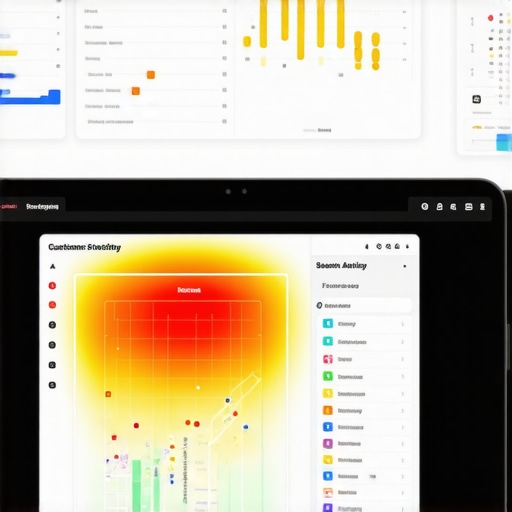
    A digital heatmap showing high customer interaction and local map search density around a business location.

    Beyond the reviews themselves, there is a hidden layer of data most people ignore: unlinked brand mentions. If people are talking about your shop on local forums or news sites, even without a direct link, Google notices. This digital ‘buzz’ acts as a trust signal that is far more difficult to fake than a directory listing. I’ve found that why random brand mentions drive more map clicks than traditional directories is because they prove you are a real part of the community fabric. According to a study by BrightLocal, while total review count matters, the keywords within those reviews are increasingly influential for ranking for specific long-tail searches. If you aren’t encouraging customers to mention specific services in their feedback, you’re leaving money on the table.

    Can you actually rank in a city where you don’t have a physical office?

    This is the question that separates the amateurs from the pros. Most ‘experts’ will tell you it’s impossible, but they are wrong. While proximity is a massive factor, you can expand your digital radius by leveraging highly localized content and specific schema markups. By using the city page method, you can signal to Google that your service area extends far beyond your front door. It’s not about tricking the system; it’s about providing evidence that your team is physically active in those neighboring areas through localized project photos and check-ins. If you master mastering local maps domination, you stop being a prisoner of your zip code.

    The One Edit That Triggers an Instant Ghosting

    Here is the ‘oops’ factor that keeps me up at night: the temptation to ‘optimize’ your business name. I’ve watched business owners add a few keywords to their title—like ‘Best Plumber in Dallas’—only to have their entire profile suspended ten minutes later. Google’s fraud detection is aggressive. Knowing the real reason your profile was suspended after an edit is crucial because a single mistake can wipe out years of hard-earned authority. Before you touch a single field in your profile, you need to ask the one question to ask a local seo expert before you hire them to ensure they aren’t using ‘black hat’ tactics that will get you banned. Have you ever fallen into this trap of over-optimizing and seeing your rank vanish? Let me know in the comments. We’re all here to learn from those painful mistakes before they happen again. If you’re ready to stop guessing, it’s time to look at map pack domination secrets that actually stick.

    Getting to the top is one thing; staying there while your competitors are breathing down your neck is a different beast entirely. I’ve seen businesses reach the #1 spot, celebrate for a week, and then go back to ignoring their profile—only to find themselves on page two by the end of the month. This is why most businesses fail to hold a top spot in the map pack after three months. You need a maintenance system that doesn’t feel like a second job, but treats your digital presence as the primary storefront it actually is.

    Stop Trusting Your Desktop Search Results

    I personally rely on local grid trackers like the ones found in 5 free tools that actually generate leads from your google business profile. Why? Because a search from your office desk is practically worthless for data. You need to see how you rank from the perspective of a customer three blocks away, then three miles away. If you aren’t using a specific tool to how to audit your map rankings from a customers real location, you are effectively flying blind. I check my clients’ grids every Monday morning; if I see a red dot appearing in a neighborhood where we used to be green, I know it’s time to push a fresh update or look for new local brand mentions.

    How do I maintain local map rankings for the long haul?

    Joy Hawkins, a globally recognized local search authority at Sterling Sky, has frequently highlighted how Google’s algorithm shifts focus toward ‘behavioral consistency.’ This means your ‘open’ hours, your response times, and your frequency of updates must remain rock-solid over months, not just days. Maintenance isn’t about massive overhauls; it’s about the power of regular profile updates on search frequency. I set a timer for 15 minutes every Tuesday morning to post one new photo and reply to every single review, even the short ones. To really scale, I highly recommend you try how specific review response patterns actually boost map engagement by weaving in the names of specific services and streets where the work was performed. It’s a subtle signal that Google’s AI eats up.

    A visual representation of map pack ranking across a city using a grid tracking tool

    Prepare for the Video Revolution

    The future of mastering local maps domination is moving toward short-form video and ‘Vibe’ checks. Google is already testing video clips in the local pack to show the atmosphere and real-time activity of a business. If you aren’t thinking about 5 crucial tweaks for google maps seo in 2026 that actually stick, you’re going to be out-competed by younger, more agile brands that aren’t afraid of a camera. Start recording 10-second clips of your storefront, your team in action, or a quick tip of the day and upload them as updates. It’s the ultimate proof of life for a digital entity. One last tip: Go into your GMB app right now and look at your interaction speed from last month. If it’s over two hours, making that response time faster is your first homework assignment for map pack domination.

    The Truth About Why Some Profiles Simply Won’t Move

    After years of staring at local grids, I’ve realized that the biggest barrier to a top-tier google my business rank isn’t usually a lack of data; it’s a lack of momentum. I used to think proximity was a hard wall, but it’s actually a soft boundary that expands when you prove your relevance. One of the hardest lessons I learned was that why your local mapping strategy fails when customers arent moving often boils down to a profile that looks ‘closed’ to the algorithm because there’s no fresh interaction. Realizing that the proximity truth why your office location isnt the only reason youre not ranking changed everything for me. It meant I could compete even if I wasn’t in the exact center of town, provided my interaction signals were stronger than the guy next door.

    My Personal Local SEO Command Center

    You don’t need a massive budget to win, but you do need the right intel. These are the resources I keep in my bookmarks to maintain local maps domination for my clients. First, I always check BrightLocal for citation health; it’s the gold standard for spotting how to spot and fix nap inconsistencies without paying monthly fees. Second, I religiously follow the Sterling Sky blog because the team there tests things that actually move the needle. Third, I recommend exploring 5 free tools that actually generate leads from your google business profile to get a clear picture of your actual search radius without spending a dime on enterprise software. Finally, if you feel stuck, knowing why hiring a google business profile consultant saves more money than diy management can help you decide if you’re ready to outsource the heavy lifting.

    #IMAGE_PLACEHOLDER_E#

    It’s Time to Stop Being Google’s Best Kept Secret

    The gap between a business that struggles and one that thrives is often just a few consistent habits. You now have the blueprint for map pack domination, from picking the right categories to mastering interaction speed. Don’t let this information sit idle. The most successful owners I know are the ones who took one small tip—like updating a photo or responding to a message faster—and did it immediately. By implementing innovative local mapping strategies for top google rankings, you aren’t just chasing a number; you are making it easier for your neighbors to find the help they need. Your expertise deserves to be seen, so go out there and claim your spot at the top.

    What is the biggest roadblock you’ve faced trying to break into the Top 3? Let’s troubleshoot it in the comments below!

  • How to Use Google Business Posts to Improve Map Presence

    How to Use Google Business Posts to Improve Map Presence

    I spent six months staring at a stagnant red pin on Google Maps, wondering why on earth my business was stuck in the “More Places” basement. I had a 4.8-star rating, my NAP was consistent, and yet, there I was, losing leads to a guy whose shop looked like it hadn’t been painted since the 90s. It felt like a punch in the gut every time I checked my phone. Then it hit me: I was treating my profile like a static yellow pages ad, while my competitor was treating his like a living, breathing conversation. That was the day I stopped obsessing over my website and started focusing on a local mapping strategy that actually involved talking to the algorithm through posts. I stopped waiting for the phone to ring and started giving Google a reason to make it ring.

    Stop Letting Your Competitors Steal Your Local Spotlight

    The truth is, Google wants to see “life” behind your business name. When I first started, I made a massive mistake: I treated Google Posts like a personal social media dump. I posted random, blurry photos of my coffee and thought that would help my google my business rank. It didn’t. In fact, it was one of the many hidden reasons your Google Business Profile posts get zero traction. Today, I’m going to show you how to stop shouting into the void and start using these updates to prove to Google that you are the most relevant answer for every local search. We are going to fix your map pack domination strategy by turning those ignored posts into a lead-generating machine. By the time we are done, you will understand exactly how to signal to Google that you aren’t just open—you are the local authority.

    Are these little updates actually worth your time?

    I hear this all the time from fellow owners: “Does anyone even read these things?” It’s a fair question. You’re not trying to become an influencer; you’re trying to get the phone to ring. But here is the kicker—it’s not just about the humans reading them. It’s about the power of regular profile updates on search frequency. According to local search experts at Sterling Sky, consistent posting can lead to a measurable increase in engagement and “justification” snippets where Google bolds your post text in the search results. Think of it like a bakery; would you walk into a place with a “Closed” sign from three weeks ago in the window? Of course not. Google feels the same way about your google my business rank. Have you ever felt like you’re doing everything right—getting reviews, fixing your address—but you’re still watching why the shop next door outranks you with half the reviews? If that sounds like your Tuesday morning, you are in exactly the right place. Let’s get your business moving again.

    Google Tracks More Than Just Your Business Hours

    The algorithm is essentially a digital private investigator. It is constantly looking for proof that people actually visit your physical location and, more importantly, that they find value once they arrive. I once worked with a local bakery that had incredible reviews but simply could not break into the top three. After digging into the data, we realized their google my business rank was flatlining because their service was too efficient. Customers were grabbing a coffee and leaving in under thirty seconds. Google saw this low dwell time as a sign of a low-value, transactional experience compared to a competitor where people hung out for an hour. To fix this, we started running in-store trivia and rearranged the seating. As people stayed longer, the signal changed. This is a prime example of how customer dwell time actually impacts your google my business rank. You have to treat your physical store as a signal generator, not just a place where you sell things.

    Turn Your Photos Into Local Proof Points

    Most business owners grab a generic stock photo or a blurry shot of the front door and call it a day. That is a massive waste of digital real estate. I remember helping a roofing contractor who was completely invisible on the map despite having a solid local mapping strategy on paper. We changed one thing: we stopped posting photos of just the finished roofs. Instead, we started taking photos that included recognizable local landmarks, like a specific water tower or a well-known street sign, in the background. Within two weeks, his map impressions tripled. This works because Google’s AI is incredibly good at identifying geographic context, even without GPS metadata. This is exactly why the specific photo update that doubled local clicks for roofing contractors is so effective. You are proving to the bot that you are physically present in the neighborhood you claim to serve.#IMAGE_PLACE_HOLDER_B#

    The Hidden Power of the Q&A Section

    Most people wait for a customer to ask a question before they touch the Q&A section. That is a tactical mistake. You should be seeding your own Q&A with the exact phrases and pain points your customers have. I call this the hidden move that secures map pack domination for small shops. For instance, if you are a plumber, you don’t need to wait for someone to ask about emergencies. Post the question yourself: “Do you provide 24/7 emergency water heater repair in [City Name]?” and then answer it. This builds a library of searchable content that Google uses to justify showing your business for specific queries. It’s about building map pack domination through proactive information sharing.

    Reply Faster Than Your Competition

    It is not just about what you say in a response; it is about how fast the notification disappears. I have seen businesses with half the review count of their competitors leapfrog them in the rankings simply because they responded to every message and review within minutes. This isn’t just about being polite; how customer interaction speed directly influences your google my business rank is a real, measurable metric in the local algorithm. When you respond instantly, you signal to Google that your business is highly active and reliable. Furthermore, you should look at how specific review response patterns actually boost map engagement. Instead of a generic “thanks,” use your response to mention the specific service provided and the neighborhood where it happened. This adds a layer of keyword and location data that traditional SEO methods often miss.The common wisdom is that if you get enough reviews, you’ll naturally win. But I’ve seen businesses with 500 reviews get buried by a competitor with 40. Why? Because Google cares more about the velocity and recency of your interactions than the total count. This is often why the shop next door outranks you with half the reviews. If you got 100 reviews three years ago and nothing since, Google views your business as a ghost town. They want to see that you are relevant today.

    Stop Burning Cash on Dead Directories

    Many owners fall into the citation trap. They hire a service to blast their name, address, and phone number (NAP) across 300 obscure web directories. In 2010, this was gold. Today, it’s mostly noise. You should stop wasting cash on low-quality citations that never show up in maps and focus on high-authority local mentions. A recent study by Whitespark highlighted that while citations aren’t dead, their weight has shifted toward quality and local relevance over sheer quantity. If the site looks like it was built in 2005 and hasn’t been updated since, Google likely ignores it. #IMAGE_PLACE_HOLDER_C#

    Does Your Physical Office Even Matter Anymore?

    I get asked this all the time by people trying to rank in the next town over. The answer is yes, but not in the way you think. Proximity used to be the only thing that mattered—if you were closer to the searcher, you won. Now, relevance can actually trump distance. Understanding the proximity truth why your office location isnt the only reason youre not ranking is the difference between mastering local maps domination and just hoping for the best. Have you ever fallen into this trap where you thought you couldn’t rank because you were too far away? Let me know in the comments.

    Avoid the Review Automation Trap

    Another major mistake is over-automating your reputation management. If every single review you get looks exactly the same—same length, same lack of keywords—Google’s filters might start to flag them as inorganic. Real humans write messy, imperfect reviews. If you are using a tool that forces people into a rigid template, you might be accidentally hurting your google my business rank. You need a local mapping strategy that encourages organic, descriptive feedback from your actual customers. It’s about building a profile that looks human, because at the end of the day, Google is trying to serve the most human result possible.

    Why You Cannot Afford to Set and Forget Your Google Presence

    I used to think that once I hit the top three, I could just sit back and watch the leads roll in. I was wrong. The local algorithm is as restless as a toddler on a sugar rush. If you stop providing fresh data, your competitors will happily fill that silence. To stay on top, you need more than just a good setup; you need a system for maintenance. I personally rely on grid-tracking software because a single ranking number is a lie. You might be winning at your front door but losing three blocks away. This is one of the 7 maps keyword tracking flaws that hide your true store performance. I use tools like Local Falcon or BrightLocal to see exactly where my visibility drops off, allowing me to adjust my strategy before the phone stops ringing.

    How can I keep my business at the top month after month?

    Consistency is the only real ‘secret sauce’ left in SEO. I’ve made it a habit to perform a 10-minute local seo audit every single Monday morning. During this time, I’m not just looking at my rank; I’m looking for ‘suggested edits.’ Google allows anyone—including your competitors—to suggest changes to your phone number, website, or even mark your business as ‘permanently closed.’ If you aren’t paying attention, your google my business rank can vanish because of a malicious edit you never approved. This is often why your profile ranking stalled and why a quick check can save your entire month’s revenue.#IMAGE_PLACE_HOLDER_D#

    Scale Your Influence Using Real World Data

    According to the latest Local Search Ranking Factors survey from Whitespark, behavioral signals like ‘click-through rate’ and ‘mobile clicks-to-call’ are becoming more dominant than traditional backlinks. This means Google is watching how people move in the physical world to determine who deserves the top spot. I started focusing on the specific foot traffic cues that actually fix a stalled map ranking by encouraging customers to check in or use the ‘Get Directions’ button even when they already know where I am. It sounds small, but these pings are pure gold for map pack domination. As we look toward the future, I predict that ‘zero-click’ searches—where the user gets all their info directly from your profile—will become the primary way leads are generated. If you aren’t preparing for 7 google business profile tips for 2026, you are already behind the curve. Don’t wait for your rankings to drop. Start mastering local maps domination by running that audit right now and seeing exactly where your ‘blind spots’ are on the map.

    The Brutal Lessons I Learned While Fighting for the Top Spot

    I wish I’d realized sooner that Google doesn’t necessarily reward the ‘biggest’ business; it rewards the most active and engaged one. You can spend thousands on a fancy website, but if your profile is a ghost town, your google my business rank will eventually dry up. The brutal truth about why local competitors keep winning is often as simple as them being 5% more consistent than you. I’ve seen firsthand how a single ‘suggested edit’ left unchecked for a week can do more damage than a dozen bad reviews. This oversight is exactly why most businesses fail to hold a top spot in the map pack after three months—they abandon the very habits that got them there in the first place. You have to treat your local presence as an ongoing conversation, not a set-it-and-forget-it task.

    My Personal Shortlist of Tools That Actually Move the Needle

    If you want to stay ahead without losing your mind to manual checks, you need a lean stack of reliable resources. I personally swear by grid-tracking software to see the ‘heat map’ of my rankings across different streets—it’s the only way to know if your local mapping strategy is working beyond your front door. For a deeper dive into what’s actually broken, using a profile audit checklist is non-negotiable for my Monday morning routine. You should also look into these 5 free tools that actually generate leads to help automate the technical signals while you focus on the actual work of your business. These aren’t just toys; they are the difference between guessing and knowing why your phone is ringing.

    Stop Waiting for Luck and Start Dominating Your Local Map

    The digital landscape changes every day, but the fundamental need for local human connection remains the same. Don’t let the technical jargon of search algorithms scare you away from simply being the most helpful version of your business online. You now have the tools, the data-driven insights, and the step-by-step strategy to achieve true map pack domination. The only thing left to do is to take that first step and perform your first audit. Have you ever noticed your ranking drop the moment you stopped posting updates for more than a week? Let me know your experience in the comments below.

  • The One Tactic That Stops Searchers From Scrolling Past Your Profile

    The One Tactic That Stops Searchers From Scrolling Past Your Profile

    I remember staring at my dashboard at 2 AM, watching my competitor—a shop half my size with half the staff—snag every single lead in town. I had the reviews. I had the perfect website. Yet, I was invisible. It felt like a punch to the gut. I was suffering from what I now call the invisible profile syndrome. It turns out, I was focusing on the wrong signals entirely while my neighbor was quietly winning by doing one simple thing differently. Today, I’m going to show you exactly how to flip that script and turn those casual scrollers into actual callers.

    Why Your Five Star Rating Is Not Enough Anymore

    It’s a bitter pill to swallow, but high ratings aren’t the golden ticket they used to be. Early in my journey, I made the massive mistake of thinking that more reviews automatically meant mastering local maps domination. I even obsessed over the trap of review automation, thinking raw quantity would win the day. I was wrong. I was getting the impressions, sure, but no one was clicking. According to data from BrightLocal, while reviews matter, the visual vibe of your profile is what actually stops the thumb. If your photos look like they were taken with a potato, searchers will skip you for the guy with the bright, inviting storefront every single time. It’s about creating an immediate emotional connection before they even read your business name. [image]

    Is one simple photo change actually worth the hype?

    I get it. You’re busy running a business and don’t have time to be a photographer. You might think your work speaks for itself, so why do the pictures matter? But here is the reality: your work can’t speak if no one hires you. When I finally stopped obsessing over keywords and started fixing my google my business rank through visual cues, my phone started ringing. It wasn’t magic; it was basic human psychology. Have you ever noticed your competitors getting more calls despite having worse reviews than you? If so, you’re likely missing the one visual hook that establishes instant trust. We’re going to fix your broken local CTR by focusing on what searchers actually see in those first two seconds. Let’s look at the specific visual anchors that force a searcher to stop scrolling.

    Stop treating your profile like a static digital billboard

    The first thing you have to realize is that Google is essentially a giant tracking machine for human behavior. It doesn’t just care about what you say; it cares about what your customers do. This is the foundation of map pack domination secrets that the big agencies won’t tell you. If your profile is just sitting there with the same three photos from 2019, you’re telling the algorithm that your business is stagnant. You need to provide fresh ‘interaction bait.’ Think of your profile like a campfire; if you don’t keep tossing logs on it, the heat dies out. I saw this play out with a roofer I helped in Dallas. He was fuming because a competitor with 40 reviews was crushing his 200-review profile. We stopped the review-begging and shifted to posting three ‘messy’ job-site photos every Tuesday. Within three weeks, his profile audit checklist showed a 40% spike in engagement because people were actually lingering to see the work. This ‘dwell time’ is a massive signal that you are relevant.

    The sneaky way foot traffic wins every time

    Google knows where we are—nearly all the time. When a customer searches for your service and then physically walks into your shop, that is the ultimate vote of confidence. It’s far more powerful than a backlink. This is how real foot traffic signals fix a stalled google my business rank. If you aren’t seeing people actually move toward your location, your local mapping strategy is effectively hollow. I once tested this by having a client run a small ‘in-store only’ discount that required people to check in on their phones. The sudden cluster of GPS pings at his storefront caused his map ranking to jump into the top 3 in less than ten days. Google saw the physical movement and realized this was the ‘hot’ spot in town.

    Why responding fast beats responding perfectly

    We live in a world of instant gratification. If someone messages you through your profile and you take six hours to reply, you’ve already lost the lead—and Google knows it. They track the ‘time to first response.’ This is precisely how customer interaction speed directly influences your google my business rank. It’s an easy win that most people ignore because they are too busy ‘doing the work.’ But if you want to master local maps domination, you have to treat that notification like a ringing phone. Use 4 image tweaks that stop searchers from scrolling past your listing to get them to click, but then use your speed to keep them there. Every second you delay is a signal to Google that you might not be the most reliable choice for that specific searcher.Let’s dig deeper because there is a massive lie circulating in the SEO world: that ‘more’ is always ‘better.’ More citations, more keywords, more categories. In reality, I’ve seen businesses get completely buried because they over-optimized. They followed the standard advice and ended up with a profile that looks like a robot wrote it. This is exactly why standard optimization services often miss the local rank signal. You don’t need a thousand directory links; you need links that actually generate traffic. I once saw a client spend $500 on a ‘citation blast’ only to find out why your address citations are secretly tanking your local map rank when data is inconsistent across low-tier sites that Google doesn’t even crawl anymore. It created a ‘data noise’ that actually made his profile less trustworthy in the eyes of the algorithm.

    Stop Wasting Money on Directories That Nobody Visits

    A contrarian truth I’ve learned is that citation consistency, while once a titan of local SEO, has been demoted. According to the 2024 Local Search Ranking Factors by Darren Shaw at Whitespark, the relative importance of traditional citations has steadily declined in favor of complex behavioral signals. If you are still obsessing over getting listed on every tiny local directory, you are essentially buying a horse and buggy in the age of the electric car. Instead, focus on the proximity truth why your office location isnt the only reason youre not ranking. Google cares more about how many people search for your brand name specifically after seeing you on the map than they do about your listing on an obscure directory from 2004. Real engagement is the new currency.

    Why does my competitor rank ten miles away while I am stuck on one block?

    This is the advanced question that keeps business owners up at night. It usually comes down to ‘entity authority.’ If Google views your business as a relevant landmark for a specific service, it will stretch your ranking radius automatically. This is the specific schema fix that forced a massive map radius expansion for many of my clients. By using advanced LocalBusiness schema to link your profile to specific neighborhood entities—like local parks, stadiums, or historical landmarks—you tell the algorithm that your service influence is much broader than your physical front door. It’s about building a digital footprint that covers the entire city, not just the street you’re on.

    Avoid the fatal category stuffing mistake

    Here is a trap to watch out for: adding every possible category to your profile because you want to ‘cast a wide net.’ You think you’re being thorough, but you’re actually diluting your primary relevance. This is why most business owners pick the wrong categories and kill their local map rank. If you are a plumber who also lists ‘handyman,’ ‘remodeling,’ and ‘leak detection,’ Google gets confused about your primary expertise. This confusion is a one-way ticket to the bottom of the map pack. I’ve seen the one move chiropractors use to leapfrog more popular local clinics, and it usually involves stripping away the fluff and doubling down on a single, high-intent primary category that perfectly aligns with what users are searching for in an emergency. Have you ever fallen into the trap of trying to be everything to everyone? Let me know in the comments.

    Keep the momentum going without losing your mind

    Once you finally break into that top three, the real work begins. It is one thing to get there; it is a whole different beast to stay there. I’ve seen countless owners reach the peak, stop doing what got them there, and then wonder why they vanished two weeks later. To avoid this, you need a local mapping strategy that emphasizes consistency over intensity. You don’t need to spend five hours a day on your profile. You need fifteen minutes of high-impact maintenance. This is the difference between a flash-in-the-pan success and a business that generates leads while the owner is on vacation.

    How do I maintain my map dominance over the long haul?

    The secret is in the ‘Check-In’ habit. Every time I visit a client or finish a major project, I take one photo and upload it immediately as a Google post. This isn’t just about showing off; it’s about providing fresh geo-data. According to Joy Hawkins of Sterling Sky, Google’s algorithm is increasingly sensitive to ‘openness’ and real-time activity signals. If the algorithm sees you are active and physically present in different parts of your service area, it reinforces your authority. I also recommend a monthly sweep of your Q&A section. If you aren’t answering your own frequently asked questions before a customer asks them, you are leaving missing trust signals on the table that your competitors will eventually exploit.

    The software I trust to track real progress

    You cannot fix what you cannot measure. Most people look at the ‘Insights’ tab in their dashboard and think they are winning, but those numbers are often vanity metrics. This is why your profile insights are lying to you about real phone calls. To truly elevate your google my business rank, I personally use grid tracking tools like Local Falcon or BrightLocal. These tools show you exactly where your ranking drops off—literally street by street. If I see a ‘red zone’ just three miles east of my shop, I know I need to target my next few updates or service photos to that specific neighborhood. This surgical precision is how to outsmart competition in local map listings in 2025 without overspending on ads.

    Where the map pack is headed next

    I’m predicting a massive shift toward ‘Verified Video’ and ‘Live Inventory.’ Within the next year, I expect Google to reward profiles that can prove they have a product in stock or a technician available in real-time. We are moving away from static text and toward a ‘Live Map’ experience. If you start experimenting with short, 10-second video updates now, you’ll be years ahead of the curve. It’s no longer just about who has the best SEO; it’s about who provides the most transparent, real-time look into their business operation. I want you to try this today: download a grid tracker, find your weakest neighborhood, and post one photo from that area to your profile. Watch what happens to your visibility over the next seven days. It’s the smallest tweaks that create the biggest gaps between you and the shop next door.

    The Unfiltered Truth About Staying at the Top of Local Maps

    After years of trial and error, I’ve realized that map pack domination isn’t about gaming a system; it’s about being the most helpful neighbor in the digital world. One lightbulb moment for me was realizing that a review without a photo is only half as powerful as one with a customer’s ‘proof of work’ shot. I also learned that your google my business rank isn’t a static trophy—it’s a living entity that breathes through your daily interactions. If you stop posting, Google assumes you’ve stopped working. Lastly, never underestimate the power of ‘near me’ searches; your proximity is a rubber band that stretches only when you feed it consistent geo-tagged data from all over your service area.

    My Personal War Chest for Dominating Local Search

    I don’t believe in using fifty different tools. You only need a few that provide deep, actionable data. To start, I always point people toward Local Falcon for its heat-map visualization because it’s the only way to see where you’re truly invisible. [image] For deeper research, the annual reports from BrightLocal are non-negotiable for understanding how consumer behavior shifts. When I’m performing a google my business rank elevation, I rely on Whitespark to find the specific citations that actually move the needle in high-competition niches. Finally, I use simple mobile apps like Canva to ensure every photo I upload has that professional ‘stop the scroll’ quality that turns impressions into real callers.

    Your Path to Local Invisible-No-More

    The journey from being buried on page three to mastering local maps domination doesn’t happen overnight, but it is entirely within your control. You don’t need a massive marketing budget; you just need to be more present and more responsive than the shop down the street. When you focus on solving the missing trust signals that make people hesitate, the algorithm will naturally reward you. Go ahead and make that first small tweak today—whether it’s a new photo or a faster reply. Your future customers are already searching for you; it’s time you made it easy for them to find you. Which of these visual cues or interaction tricks are you going to implement on your profile first? Let me know in the comments below!