
I still remember the smell of fresh paint in my new office three years ago. I’d just signed a lease that cost 40% more than my previous one, solely because I was convinced being closer to the city center was the magic bullet for my disappearing Google My Business rank. I moved three blocks, waited for the verification postcard like a kid at Christmas, and then… nothing. My phone stayed silent. In fact, my competitors who were miles away in the cheap parts of town were still eating my lunch in the local maps domination game. It was a gut-punch realization that physical distance is only a tiny slice of the pie. [image_placeholder]
Why a New Address Rarely Fixes a Broken Ranking
We’ve been told for a decade that proximity is king. While it’s true that Google looks at where a user is standing, many of us fall into the trap of thinking a better zip code equals a better local mapping strategy. I made the massive mistake of thinking a physical move would override my messy citations and lack of engagement. It didn’t. I spent thousands only to realize the proximity truth is much more complex than a pin on a map. The hard reality is that moving your office often resets your local authority rather than boosting it. You end up fighting a whole new set of neighbors without the years of localized signals you had at your old spot. Today, I’m going to show you why you should stop looking at commercial real estate listings and start looking at how to increase your map radius without opening a new office. We are going to solve the visibility problem by fixing your digital footprint, not your physical one.
Does physical location even matter anymore?
You might be skeptical. You’ve seen the map pack shift as you drive down the street, so you know proximity is a factor. But did you know that according to research by Moz, on-page signals and link authority together carry significantly more weight than just the physical distance from the searcher? If your profile is weak, being next door to the customer won’t help. This is often because of a hidden setting that blocks your profile from neighboring towns or simply because your competitors have better relevance signals. Have you ever felt like your business is a ghost in your own neighborhood? Have you considered moving just to get a better spot on the map? If you’re tired of seeing lower-rated businesses beat you just because of their street address, you’re in the right place. We’re going to dive into how google my business rank elevation actually works when you focus on what Google really cares about: local trust and relevance.
Fix the Digital Foundation First
Before you spend another dime on ads, you have to realize that Google is essentially a giant filing cabinet. If your folders are mislabeled, the system won’t show you to the right people. Most business owners ignore the basics, resulting in the audit mistake that makes your map listing effectively invisible. You need to verify that your Name, Address, and Phone number (NAP) are identical everywhere from Yelp to the footers of your own website.
Clean Up Your Citation Mess
I once worked with a local locksmith who couldn’t figure out why he was stuck on page three despite having perfect five-star reviews. When we looked under the hood, we found he had three different variations of his suite number across the web. To Google, those looked like three different businesses, effectively diluting his authority. We had to fix NAP inconsistencies without paying monthly fees to consolidate his power. Within weeks, his profile stabilized and his visibility shot up because the algorithm finally trusted his location data. Stop wasting cash on low-quality citations that never show up in maps and focus on the high-authority directories that actually pass trust signals. 
Stop Playing Category Roulette
One of the most common ways I see businesses sabotage their own local maps domination is by picking too many categories. It feels intuitive to list every single thing you do, but this often causes your primary category to lose its punch. You end up in a situation where your business categories are fighting each other for dominance. For example, if you are a plumber, focus on that as your primary. Don’t add ‘Kitchen Remodeler’ or ‘General Contractor’ unless that is actually 50% of your business. The mistake local plumbers make is trying to be everything to everyone, which actually makes them invisible to someone specifically searching for a pipe repair.
The Impact of Real Engagement Signals
Proximity is a baseline, but engagement is the multiplier. I remember a chiropractor who was frustrated because a clinic three miles further away was outranking him. It turned out the competitor was using specific review response patterns that included local keywords naturally. They weren’t just saying ‘Thanks!’; they were saying ‘Glad we could help with your adjustment in North Phoenix!’ This context tells Google exactly what you do and where you do it. This is exactly how chiropractors leapfrog more popular clinics. You can achieve similar results by making this one change to your review request text to encourage customers to mention specific services. It’s about turning passive signals into active proof that you are the most relevant choice for the searcher’s intent.
It is easy to get caught up in the numbers game, assuming that hitting a specific review milestone will magically grant you map pack domination. But here is the hard truth: I have seen businesses with 50 reviews beat out those with 500 every single day. This happens because Google is looking at the quality and source of that engagement. We often forget that why chiropractic clinics with fewer reviews often dominate the map pack usually comes down to the authority of the reviewers themselves. If a ‘Local Guide’ with hundreds of high-quality contributions leaves you a detailed review, it carries significantly more weight than ten generic ‘Great service!’ comments from brand-new accounts. Furthermore, the trap of review automation why more stars dont always mean more map leads is that it can look like spam to an algorithm designed to detect unnatural patterns. 
Why More Reviews Won’t Always Save a Sinking Rank
Most people believe that the more five-star ratings they have, the higher they will climb. However, Whitespark’s Local Search Ranking Factors study consistently highlights that ‘Review Velocity’ and ‘Review Diversity’ are just as important as the raw count. If you get 20 reviews in one week and then zero for three months, Google sees that as a red flag. You need a steady drip of authentic feedback to maintain a healthy google my business rank. Have you ever fallen into this trap? Let me know in the comments.
The Keyword Trap That Ends in Ghosting
Another nuance that experts know—and beginners ignore—is the danger of over-optimization. I’ve seen business owners try to ‘game’ the system by adding keywords to their business name, like ‘John Doe Plumbing – Best Plumber in Seattle.’ While this might give you a temporary boost, it is a high-risk gamble. Google’s suspension filters are more aggressive than ever. If you are not careful, why your business profile suddenly vanished and how to get it back will be the only thing on your mind as your leads dry up overnight. Stick to your legal business name and let your local mapping strategy rely on on-page SEO and real local authority instead.
Does user behavior actually override your SEO efforts?
Sophisticated marketers understand that ‘signals’ extend far beyond what you type into your profile. Google tracks how many people click your ‘Call’ button versus how many immediately click back to the search results. They even track physical store visits via location history. Understanding how real foot traffic data overpowers on-page seo is the real secret to long-term local maps domination. If Google sees that searchers are consistently choosing your listing and actually visiting your storefront, they will prioritize you over a competitor who has perfect technical SEO but zero real-world engagement. Focus on being the best local answer, not just the most optimized one.
Watching your traffic climb feels great, but the real challenge is staying at the top. I’ve seen too many business owners reach the number one spot, take their foot off the gas, and then wonder why they’re buried on page two within a month. Google Maps isn’t a trophy you win once; it’s a living leaderboard that rewards consistency. To stay ahead, you need to look past the surface-level metrics and use the same tools the pros use to monitor their local maps domination results.
The Grid Tracker That Exposed My Invisible Competitors
For a long time, I used standard rank trackers that gave me a single number for my city. It was a total lie. You might be number one if you’re standing in your lobby, but three blocks away, you’re number ten. This is why I switched to grid-based tracking tools like Local Falcon or BrightLocal. These tools show you exactly where your coverage drops off, helping you identify 7 maps keyword tracking flaws that hide your true store performance. Seeing a red dot on a map where a competitor is winning is much more actionable than a generic ‘average rank’ report. It allows you to see exactly where you need to bolster your local signals. 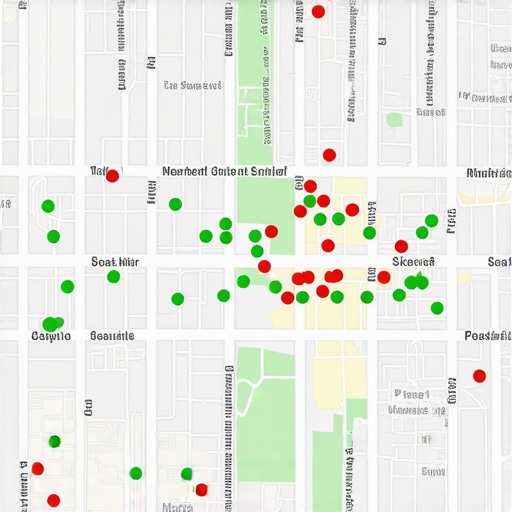
How can I maintain my local map dominance for the long haul?
Maintenance doesn’t have to take hours. I spend about 15 minutes a week on what I call ‘the pulse check.’ I post one high-quality photo—usually a behind-the-scenes shot or a finished project—and answer any new questions in the Q&A section. This activity proves to Google that the business is operational and engaged. If you see your numbers dip, don’t panic. Often, it’s just a temporary algorithm shift, or perhaps your profile ranking stalled and the 5-minute fix is all you need to get things moving again. The key is the power of regular profile updates on search frequency; Google rewards the ‘freshness’ of your data almost as much as the data itself.
Prepare for the Visual Search Era
If you want to stay relevant through 2026, you have to look at where the technology is heading. Google is leaning heavily into AI-driven visual search. They are no longer just looking at your text; they are using computer vision to ‘read’ the photos your customers upload. According to technical research by Joy Hawkins at Sterling Sky, even the ‘Open Now’ filter can radically change who appears in the map pack based on your stated hours and real-world traffic. This means your 5 crucial tweaks for google maps seo in 2026 must include high-resolution, context-rich imagery that proves you provide the service people are searching for. Stop using stock photos; they are an instant signal to Google that you aren’t the real deal.
The next step for you is simple but vital. Don’t let your profile go stale. I want you to go to your dashboard right now and check your ‘Insights’ for the last 30 days. If your clicks are down, use the profile audit checklist for turning search impressions into real calls to find the leak. Consistency beats intensity every single time in the local SEO world.
Hard Truths I Learned While Fighting for the Top 3
Looking back at that expensive, empty office from my early days, I realized I was trying to buy my way into the map pack instead of earning it. The first big lesson? Real authority comes from people Google already trusts. This is why local guides reviews carry more weight in maps than a hundred random, generic comments. You can’t fake a genuine community connection, and the algorithm is getting better at spotting the difference every single day.
Another lightbulb moment was realizing that ‘perfect’ isn’t the goal—authenticity is. I used to spend hours worrying about a single bad review, but then I discovered map-pack domination secrets that prove a diverse, honest profile outperforms a sterile, ‘too good to be true’ one every time. Don’t be afraid of the occasional four-star; it makes your five-star wins look legitimate and trustworthy.
The Gear That Keeps My Clients Visible
You don’t need a massive budget, but you do need the right data to learn how to outsmart competition in local map listings in 2025. Here is what I keep in my own toolkit to stay ahead of the curve:
- Local Falcon: If you aren’t seeing your rank as a grid, you’re flying blind. This tool changed how I view my true reach across different neighborhoods.
- Whitespark: This is my go-to for finding where the high-value citations are hiding. It’s always about quality and industry relevance over raw quantity.
- Sterling Sky: I follow the work of local search experts religiously. When the algorithm shifts, their real-world testing provides the data I need to adjust my strategy before the competition even notices a change.
[image_placeholder]
Claim Your Spot on the Neighborhood Map
The journey to local maps domination isn’t a sprint; it’s a series of smart, consistent moves. You don’t have to change your zip code to change your fortune. By focusing on relevance, trust, and real engagement, you can force the algorithm to take notice of your business, no matter where your office is located. If you find yourself stuck or your profile is acting up, don’t hesitate to reach out for a professional look at your current setup. The digital map is constantly changing, but the principles of being a great local business remain the same. Go out there and start showing up for the customers who are already looking for you. Have you ever seen a competitor with fewer reviews outrank you? Let me know your most frustrating map moment in the comments below!
About the Author
Umar Latif
Brand & Marketing Expert · Dubai, UAE
Umar Latif is a seasoned Brand and Marketing Expert based in Dubai, UAE, with a specialized focus on Local SEO and international digital strategy. With extensive experience managing and optimizing websites for a diverse range of international clients, including those in the United States, Umar has developed a deep understanding of the nuances required to dominate local search results. His technical proficiency encompasses comprehensive keyword research and the implementation of advanced Google-centric strategies designed to enhance visibility and drive organic traffic. As a contributor to dominateyourlocalmaps.com, Umar leverages his background in global marketing to provide actionable insights for businesses looking to improve their local map rankings and digital footprint. His approach combines data-driven tactics with a strategic brand perspective, ensuring that local businesses not only rank higher but also resonate with their target audience. Throughout his career, Umar has remained dedicated to staying ahead of search engine algorithm changes to deliver consistent results for his clients. He is deeply passionate about empowering business owners and marketing professionals with the tools and knowledge they need to achieve sustainable growth.