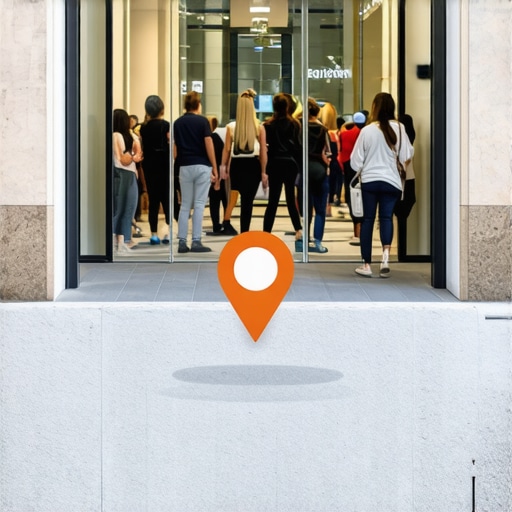
I sat there staring at my dashboard, genuinely confused. My impressions were up 400%. I had achieved what I thought was local maps domination. People were seeing my business thousands of times a month, yet my bank account hadn’t noticed the difference. It felt like hosting a massive party where everyone looked through the window but nobody bothered to walk through the front door. I realized then that traffic is just a vanity metric if it doesn’t lead to a conversation. We spend so much energy trying to dominate maps that we forget the person on the other side of the screen is looking for a reason to trust us, not just a map pin to click. Today, I am going to show you exactly why your phone stays silent despite the high view counts and how to turn those casual searchers into your best customers.
Stop Chasing Views and Start Chasing Phone Calls
Early on, I made a classic mistake: I thought google my business rank was the final boss. I spent hours tweaking my description and begging for reviews, thinking that hitting the #1 spot would solve all my problems. It didn’t. I was ranking for keywords that had zero buyer intent. People were finding me when they wanted information, not when they were ready to whip out a credit card. It’s a bitter pill to swallow when you realize you’ve been winning the wrong game. You need to look at how search intent changes your business visibility on maps because if you’re showing up for the wrong questions, you will never get the right answers.
Is ranking high actually worth the effort?
It is a fair question. You have probably seen competitors with fewer reviews or uglier websites out-earning you. It is frustrating. But here is the truth: ranking is only the first half of the battle. The second half is psychology. According to research by BrightLocal, 98% of people at least occasionally read online reviews for local businesses. If your profile is visible but lacks the specific trust signals that trigger a phone call, you are essentially paying for your competitor’s marketing by educating the customer and then letting them find a better-looking option.
Fix the Leak in Your Local Conversion Funnel
Most of the time, the problem isn’t your local mapping strategy; it is the friction on your profile. Think about it. When you are looking for a plumber at 2 AM, do you want to read a 500-word About Us section, or do you want a giant, clickable Call Now button? I have seen so many businesses ignore the call button gap and then wonder why their ROI is in the basement. It is often the tiny, boring details like an outdated phone number or a confusing service list that kill the sale. Have you ever looked at your own profile from a burner phone while standing in the middle of a busy street? If it takes more than two taps to reach you, you are losing money. Have you noticed a high number of profile views but a total lack of inquiries lately? Let’s dive into the specific tweaks that stop the bleeding.
Audit Your Profile Before You Spend Another Dime
Ranking is like having a billboard on a highway; if the phone number is missing or the sign is face-down, that billboard is just expensive scenery. I start every single optimization project by going through the profile audit checklist for turning search impressions into real calls. You have to look for “leaks”—specific areas where a potential customer might get confused and bounce. Is your business name inconsistent across the web? Are your holiday hours outdated? These are small errors, but they are massive trust-killers. Think of your profile as your digital lobby. If the lobby is messy and nobody is at the front desk, people won’t stay for the meeting. You need to ensure every button works and every piece of information is current before you worry about climbing higher in the results.
Choose the Category That Matches Your Customer’s Wallet
One of the fastest ways to destroy your ROI is to tell Google you do everything. I once worked with an HVAC contractor who insisted on listing “Handyman” as a secondary category because he wanted more “reach.” It backfired completely. Google got confused about what his core business actually was, and he started showing up for low-value paint touch-ups instead of high-ticket furnace installs. This is exactly why most business owners pick the wrong categories and kill their local map rank. You need to be a sniper, not a shotgun. I remember a client, a local plumber, who was struggling until we fixed the mistake local plumbers make with service categories by removing generic terms and doubling down on “Emergency Plumber.” His lead quality tripled overnight because his profile finally matched the high-urgency search intent of his best customers.
Kill the Mystery With High-Impact Photos That Sell
When someone finds you on a map, they are looking for any reason to say “no” and move to the next listing. A blurry photo of the side of your truck or a generic stock image of two people shaking hands gives them that reason. To stop the scroll, you need to apply 4 image tweaks that stop searchers from scrolling past your listing. You need to show your face, show your team in action, and show the actual results of your work. This isn’t just about looking pretty; it is about technical authority signals too. I have found that using the specific photo metadata that actually moves your map rank can give you the slight edge in relevancy that your competitors are completely ignoring. #IMAGE_PLACE_HOLDER_B#
Engineer Your Review Responses to Seal the Deal
Reviews are a two-way conversation, but most owners treat them like a static trophy case. They might say “Thanks!” and move on, which is a massive wasted opportunity to sell to the *next* person reading that review. By mastering how specific review response patterns actually boost map engagement, you can weave in service descriptions and location keywords that build geographic authority. If a customer mentions a specific service like “leaking pipe repair,” repeat that service in your reply. This logic also applies when you learn how to use local questions and answers to steal search traffic from competitors who leave their Q&A sections blank. You are not just answering a question; you are building a searchable knowledge base that Google rewards with map pack domination secrets that keep your phone ringing while others are left wondering where their traffic went.The review count obsession is hurting your ROI. Everyone tells you that to achieve local maps domination, you just need to be the business with the most stars. It sounds logical, but it is often wrong. I have seen businesses with fifty reviews sit at the top while competitors with five hundred languish on page two. Why? Because Google has started prioritizing relevance and behavioral signals over raw volume. If you have hundreds of reviews but nobody clicks your Directions button, Google assumes you are no longer the best answer for that specific search. This is why your competitor with fewer reviews is outranking you. They are not just getting stars; they are getting high-quality engagement. According to the Local Search Ranking Factors study by Whitespark, behavioral signals like click-through rate are becoming the real tie-breakers in competitive markets. Have you ever fallen into the trap of thinking reviews were the only thing that mattered? Let me know in the comments.
Don’t let a luxury virtual office get you banned
The biggest mistake I see when business owners attempt a new local mapping strategy is trying to expand their reach by using virtual offices or coworking spaces. Ten years ago, this worked. Today, it is a one-way ticket to a permanent profile suspension. Google’s AI is incredibly good at identifying why your professional office address is being flagged as a coworking space. Instead of trying to fake your physical location, you need to master how to increase your map radius without opening a new office by using localized content and proper entity linking. I once saw a law firm lose their entire digital presence because they tried to outsmart the system with three fake satellite offices. They did not just lose those listings; their main headquarters’ google my business rank tanked because Google lost trust in their entire brand.
Can your website speed actually kick you out of the local pack?
This is the hidden nuance most map experts ignore. They focus entirely on the Google Business Profile and forget that the website linked to it acts as a foundational signal for map pack domination. If your mobile site takes six seconds to load, Google is not going to recommend you in the top three results. There is a direct, measurable connection between page speed and local map presence. #IMAGE_PLACE_HOLDER_C# When a user clicks from the map to your site and immediately bounces because it is slow, that counts as a negative interaction signal against your listing. You have to look at the interaction data that proves you are a top local choice to understand how these metrics tie together. Your strategy has to be holistic; it is not just about the pin, it is about the entire digital experience you provide the moment that pin is touched. If you are still seeing high impressions but no calls, it is time to stop looking at the map and start looking at the friction points you have accidentally built into your customer journey.It is one thing to hit the top three; it is another to stay there while the neighborhood changes. I used to think I could just ‘set it and forget it’ once I achieved local maps domination, but I learned the hard way that Google favors the active. If you stop feeding the beast, the beast finds someone else to play with. This is where most people get exhausted because they think they need to spend three hours a day on their profile. You don’t; you just need the right gear and a consistent rhythm. I personally rely on grid-tracking tools like Local Falcon because the standard ‘Insights’ dashboard is often a fairy tale. Insights tell you how many people saw you, but they do not tell you where you are invisible. You need to see exactly where your rank drops off to the city block, which is why I fix 7 maps keyword tracking flaws that hide your true store performance before I make any big moves. If you are only looking at your ranking from your office desk, you aren’t seeing what the customer five miles away sees.
How do I maintain my map presence over the long haul?
Consistency beats intensity every time. I set a recurring calendar alert for every Tuesday morning to post a ‘behind the scenes’ photo or a quick update. You might not think a photo of your new office chair matters, but to Google, it is a heartbeat signal that your business is alive and well. This is the power of regular profile updates on search frequency. I also keep a close eye on the ‘Open Now’ filter. As noted by expert Joy Hawkins from Sterling Sky in her various local search studies, business hours and real-time availability are becoming massive ‘soft’ ranking factors that can toggle your visibility in an instant. If you aren’t regularly checking that your hours match your actual operations, you are basically handing leads to your competitors. 
Future-Proof Your Profile Before 2026 Hits
The trend is moving toward ‘Zero-Click’ searches where the user never even visits your website. They see your map pin, check your photos, and hit the call button directly. In the next eighteen months, I expect AI-generated summaries to start pulling even more data from your review text and Google Posts to decide who wins. To stay ahead, you need to implement 5 crucial tweaks for google maps seo in 2026 that actually stick. This means optimizing for semantic meaning and context, not just stuffing keywords into a description. Don’t wait for your rank to tank before you start caring about innovative local mapping strategies. You should also be looking at map pack domination secrets that focus on user engagement rather than just citation volume. If you want to see where you actually stand today without the fluff, run through the profile audit checklist for turning search impressions into real calls right now. Take one small action today: go to your profile, upload one real, non-stock photo from your phone, and see if it moves the needle in your engagement metrics.
What I Finally Realized After Years of Map Struggles
I spent far too long thinking that having a pin on the map was the end of the road. The truth is, a real local mapping strategy is about building a digital asset that earns trust while you sleep. One lightbulb moment was realizing that ranking isn’t a trophy—it’s a temporary lease. If you don’t engage with your customers via questions and answers or fresh photos, Google will eventually find someone more relevant. I also learned that why your competitor with fewer reviews is outranking you often comes down to their profile’s heartbeat rather than just the number of stars.
Another hard lesson was learning to never assume your listing looks the same to everyone. I used to audit my own rank from my office chair and think I was winning. I didn’t realize 7 maps keyword tracking flaws that hide your true store performance were masking the fact that I was invisible three blocks away. Real growth started when I focused on the actual experience of the person searching for an emergency solution instead of just looking at vanity impressions.
The Gear That Keeps My Profiles at the Top
I don’t believe in manual guesswork anymore. To achieve consistent map pack domination secrets, I rely on tools that show me the ground-level truth. Local Falcon is my go-to for seeing the ranking grid across a city, and I constantly check the profile audit checklist for turning search impressions into real calls whenever my lead volume dips. I also keep a close eye on the latest research from Sterling Sky and the BrightLocal annual surveys, because local search changes faster than almost any other SEO niche. These resources provide the data-backed confidence needed to make bold moves.
Start Claiming Your Digital Territory Today
The map pack is the most valuable real estate on the internet for local businesses. Don’t let the technical jargon stop you from taking control of your google my business rank. You have the tools, the strategy, and now the insider knowledge to move past the vanity metrics and start driving real revenue. Every small update you make—whether it’s a new photo or a better review response—is a step toward local maps domination. If you are feeling stuck, reach out via our contact us page or simply take the first step today. Have you ever noticed your ranking drop the moment you stopped posting updates to your profile? Let me know your experience in the comments below.
About the Author
Umar Latif
Brand & Marketing Expert · Dubai, UAE
Umar Latif is a seasoned Brand and Marketing Expert based in Dubai, UAE, with a specialized focus on Local SEO and international digital strategy. With extensive experience managing and optimizing websites for a diverse range of international clients, including those in the United States, Umar has developed a deep understanding of the nuances required to dominate local search results. His technical proficiency encompasses comprehensive keyword research and the implementation of advanced Google-centric strategies designed to enhance visibility and drive organic traffic. As a contributor to dominateyourlocalmaps.com, Umar leverages his background in global marketing to provide actionable insights for businesses looking to improve their local map rankings and digital footprint. His approach combines data-driven tactics with a strategic brand perspective, ensuring that local businesses not only rank higher but also resonate with their target audience. Throughout his career, Umar has remained dedicated to staying ahead of search engine algorithm changes to deliver consistent results for his clients. He is deeply passionate about empowering business owners and marketing professionals with the tools and knowledge they need to achieve sustainable growth.