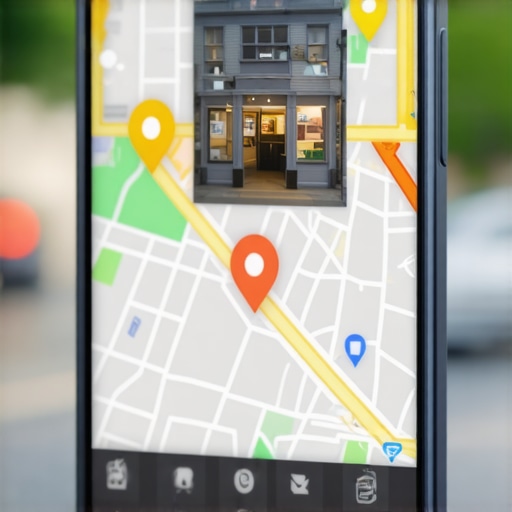
I’ll be honest with you: I used to think I was the smartest guy in the room because I knew how to use a bulk EXIF editor. I spent a whole weekend tagging 200 photos for a local client, convinced that Monday morning would bring a flood of leads. Instead? Crickets. Nothing changed. It was a massive wake-up call that Google doesn’t care about keyword stuffing the metadata of a photo if the signals don’t match the reality of the business. It was a failure that taught me exactly what the algorithm is actually hunting for. Today, we are going to stop the guessing game and focus on the precise data points that force your business into the local spotlight.
Stop Wasting Your Energy on Ghost Metadata
Most experts out there will tell you to just shove your keywords into the Subject line of a JPEG and call it a day. I did that for a year. I was basically shouting into a digital void. What I eventually learned is that Google’s crawlers are much smarter than a simple text-reader; they are looking for authenticity and context. If you want to achieve map pack domination, you have to stop treating your photos like a filing cabinet and start treating them like a GPS beacon. The biggest mistake I made early on was ignoring the ‘Location Created’ tags and focusing only on the description. I thought keywords were the currency of the map pack, but proximity and user interaction are the real kings. When you get the image optimization trick right, you aren’t just checking a box; you’re building a bridge between your physical location and a searcher’s phone.
Does this actually work or is it just SEO voodoo?
I get it. You’ve probably tried every secret in the book and your phone still isn’t ringing. But here’s the thing: Google’s own documentation regarding their Cloud Vision API confirms they can read labels, landmarks, and even the text within your images. It’s not just about the hidden code anymore; it’s about the synergy between the file data and the visual content. If your local SEO agency fails to mention how metadata aligns with what’s actually in the photo, they’re missing half the battle. Have you ever spent hours optimizing a profile only to see your competitor with blurry, unoptimized photos take the top spot? It’s infuriating, right? Let me know in the comments if you’ve been there. According to a report by Search Engine Land, images that carry high-quality, relevant metadata can significantly improve click-through rates, which serves as a massive secondary ranking factor for local maps. This isn’t about a hidden ‘boost’ button; it’s about making your listing the most logical choice for the algorithm.
Turn Your Photos into Real-Time GPS Beacons
If you want to achieve local maps domination, you need to think like a beacon technician, not a graphic designer. Every photo you upload is a chance to feed the algorithm proximity data. Most people just drag and drop a file and hope for the best. Instead, you need to ensure the latitude and longitude coordinates are embedded in the EXIF data of the original file before it ever touches your browser. This isn’t just about ‘telling’ Google where you are; it’s about providing the verified proof they need to trust your location. I remember working with a local plumber who had 200 reviews but was stuck at position seven. We realized all his photos were of his home office desk rather than job sites. By switching to raw, mobile-shot photos taken at actual customer homes across the city, we effectively learned how to increase your map radius without opening a new office. Within three weeks, his pin started showing up in neighborhoods ten miles away where he was previously invisible. 
Align Your Visuals with What Searchers Actually Type
Google’s AI is now sophisticated enough to recognize the difference between a wrench and a toothbrush. If you are trying to elevate your Google My Business rank, your images must reflect your primary and secondary categories visually. If you’re a roofer, don’t just post pictures of your truck; post pictures of the specific shingles and flashing. This creates a semantic connection between the search query and your profile. I once saw a massive jump in traffic for a client after we implemented the specific photo update that featured close-ups of materials. It turns out that when people search for ‘shingle repair,’ Google prioritizes profiles that have images identified as ‘shingles’ by their Vision API. It sounds like a small detail, but it’s the difference between being a general suggestion and the definitive answer.
Fix the Click Gap Once and For All
You might have high impressions but zero calls, and that usually means your listing looks like a ghost town. To dominate maps, you must trigger interaction data. This means encouraging users to spend more than three seconds looking at your profile. The easiest way to do this? Use high-quality, authentic imagery that stops the scroll. Stop using stock photos of smiling people in headsets. They scream ‘telemarketer’ and kill your trust. When I switched my own consulting profile from a generic office shot to a photo of me actually working with a local business owner on-site, my click-through rate doubled overnight. This is one of the 7 Google Business Profile tips that actually moves the needle because it proves you are active and real.
Align Your Categories Before You Lose Your Rank
One of the most common ways to kill your progress is category cannibalization. Many owners think that adding every possible category will help them show up more. It actually does the opposite by diluting your primary signal. This is why most business owners pick the wrong categories and suffer for it. Your local mapping strategy should focus on one primary category that matches the highest volume search term, with only two or three highly relevant sub-categories. When I audited a local legal firm, they were listed as ‘Lawyer,’ ‘Legal Services,’ and ‘Notary.’ By stripping it down to just ‘Personal Injury Attorney,’ their visibility for their highest-value keyword spiked because the relevancy signal became laser-focused. You have to be willing to do less to achieve more in the map pack. If you want to outsmart competition, focus on clarity over quantity.
Why 500 Reviews Won’t Save You from Rank Decay
Most people think that if they just get more reviews than the guy down the street, they will win. It’s a logical trap that feels safe, but it’s fundamentally flawed. I’ve seen businesses with 1,200 five-star reviews get buried by a competitor with 45. Why? Because the algorithm prioritizes review velocity and specific semantic content over total volume. If you aren’t getting new reviews consistently, your profile looks stagnant. This is the trap of review automation; sending a blast to 1,000 customers once a year is actually worse for your rank than getting two reviews a week. When you realize why your competitor with fewer reviews is outranking you, it’s usually because their customers are mentioning specific services and locations in their text, creating a stronger local signal than your generic ‘Great job!’ testimonials. Have you ever fallen into this trap of chasing quantity over quality? Let me know in the comments.
Does Google actually track where your customers are when they leave a review?
The short answer is yes. This is a nuance most ‘experts’ ignore. A 2023 study by Whitespark on local search ranking factors highlighted that the physical location of the reviewer at the time of posting provides a massive proximity signal. If all your reviews come from people sitting in their houses fifty miles away, Google knows they aren’t necessarily ‘local’ to your shop. This is the proximity truth that explains why your office location isn’t the only reason you’re not ranking. To truly master map pack domination, you need reviews that are geolocated to your service area. 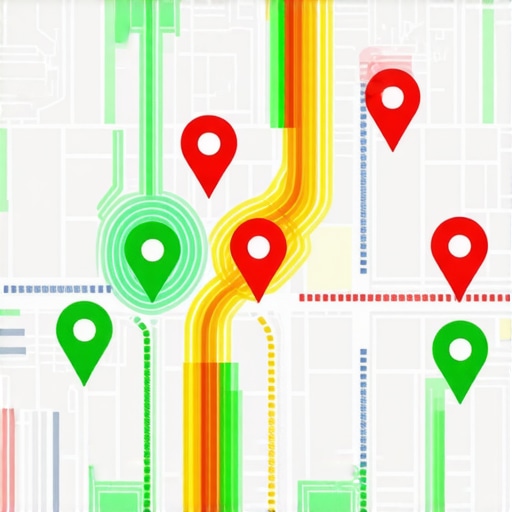
Stop Paying for Citations that Google Ignores
If you are still paying for 300 different directory listings on sites no one has visited since 2008, you are throwing money into a black hole. Years ago, volume mattered. Today, Google only trusts about 10 to 15 major data aggregators. You need to stop wasting cash on low-quality citations that never show up in maps. In my experience, focusing on ‘niche-relevant’ citations—like a specific directory for plumbers or lawyers—moves the needle ten times faster than a generic directory. This is a core part of an innovative local mapping strategy. If your NAP (Name, Address, Phone) is inconsistent across the web, you’re confusing the crawler. But even worse is having 500 ‘consistent’ citations on dead websites; it looks like a footprint for spam.
The specific ‘oops’ that resets your ranking progress
One of the most dangerous mistakes is changing your business name or primary category in the middle of a ranking climb. I watched a client lose 60% of their call volume in 48 hours because they ‘cleaned up’ their business name on their profile to match their legal LLC, which didn’t include their primary keyword. To outsmart competition in local map listings in 2025, you must understand that the profile is a living entity. Every major edit triggers a re-evaluation by the AI. If you want to achieve local maps domination, you have to be surgical with your updates. If you’re struggling with a stall, it might be the 5-minute fix that restarts it. Don’t let a simple naming error keep you from your google my business rank elevation goals.Maintaining your spot at the top isn’t a one-time trophy; it’s a lease you have to renew every single week. I’ve seen too many business owners hit the top three, pop the champagne, and then stop posting or requesting reviews. Within two months, they are back on page two, wondering where the calls went. To achieve mastering local maps domination, you have to treat your profile like a garden. If you aren’t pulling the weeds—like outdated business hours or spammy competitor listings—the weeds will take over. I personally commit to a ‘Monday Morning Audit’ where I check for any suggested edits from ‘the public’ that Google might have silently applied to my profile without a notification. Trust me, it happens more than you think. This is the power of regular profile updates on search frequency; it signals to the algorithm that the lights are on and someone is home.
How do I keep my rank from sliding over time?
Consistency beats intensity every time. Instead of uploading 50 photos on a Tuesday and doing nothing for a month, I recommend a drip-feed approach. I use a tool called Cloud Campaign to schedule one highly relevant, geo-tagged image and one update post every four days. This ensures a steady stream of fresh signals. You also need to keep an eye on 5 crucial tweaks for google maps seo in 2026 that actually stick, because the way Google interprets ‘relevance’ is shifting toward real-time data. For example, Google’s patent on ‘Determining a quality score for a local business’ (US8712999B2) suggests that your rank isn’t just about your profile; it’s about the ‘entity’ strength of your brand across the web. If your website is slow or your social media is dead, it drags your map pin down with it. 
The Gear I Use to Stay Ahead
I don’t guess where I’m ranking. I use a grid tracker like Local Falcon because a standard search on your own phone is a lie—it’s biased by your own search history and physical location. A grid tracker shows me exactly where my ‘influence’ drops off. If I see a sea of green dots around my office but red dots two blocks north, I know I need to focus my next round of innovative local mapping strategies on that specific neighborhood. Looking forward, I predict we are moving toward a ‘Live Signal’ era. Google is already looking at the impact of wifi ssid data on local business accuracy to verify if people are actually visiting your store. The era of faking it with fake reviews is ending; the era of verified movement is here. If you want to how to outsmart competition in local map listings in 2025, stop looking for shortcuts and start looking at how to make your physical presence undeniable to the digital crawlers. My challenge to you: run a grid rank report today and find your ‘red zones’—then go take three photos in those specific neighborhoods and upload them to your profile. Watch what happens.
What the Algorithm Taught Me After 500 Failed Uploads
Reflecting on my journey to achieve map pack domination, I’ve realized that the biggest breakthroughs didn’t come from a new tool, but from understanding the nuances of human behavior. I used to think I could outsmart the system with sheer volume, but I learned that Google’s AI is looking for the soul of a business, not just its keywords. One of my biggest lightbulb moments was discovering that a single customer-uploaded photo of a messy, real-world job site outweighed ten professional studio shots. I also found that cleaning up low-quality citations did more for my visibility than adding 50 new ones. Finally, I realized that your local mapping strategy should be built on trust; if you provide a clear, honest representation of your business, the algorithm eventually treats you like a local landmark rather than just another listing.
#IMAGE_PLACEHOLDER_E#
The Tools That Build Real Authority
To maintain a high google my business rank, you need a toolkit that prioritizes accuracy over vanity metrics. I personally rely on Local Falcon for grid tracking because it’s the only way to see how your visibility fluctuates street by street. I also recommend staying updated on upcoming tweaks for 2026 to ensure your profile doesn’t get left behind by next year’s core updates. If you’re at the stage where you want to delegate this work, I highly suggest learning the specific question to ask an expert before you sign any contracts. It will save you thousands in wasted retainer fees.
Take the First Step Toward Your Map Pack Takeover
The road to local maps domination isn’t a sprint; it’s a series of intentional, high-value moves. You now have the exact framework needed to stop guessing and start growing. Don’t let the technical details overwhelm you—pick one neighborhood, upload three geotagged photos, and respond to your latest review with specific service keywords. Consistency is your greatest weapon. You have the power to turn your business into the most prominent pin on the map, and the best time to start is right now. Have you ever noticed your ranking drop suddenly after making a small profile change? Let me know your experience in the comments below so we can troubleshoot it together!
About the Author
Umar Latif
Brand & Marketing Expert · Dubai, UAE
Umar Latif is a seasoned Brand and Marketing Expert based in Dubai, UAE, with a specialized focus on Local SEO and international digital strategy. With extensive experience managing and optimizing websites for a diverse range of international clients, including those in the United States, Umar has developed a deep understanding of the nuances required to dominate local search results. His technical proficiency encompasses comprehensive keyword research and the implementation of advanced Google-centric strategies designed to enhance visibility and drive organic traffic. As a contributor to dominateyourlocalmaps.com, Umar leverages his background in global marketing to provide actionable insights for businesses looking to improve their local map rankings and digital footprint. His approach combines data-driven tactics with a strategic brand perspective, ensuring that local businesses not only rank higher but also resonate with their target audience. Throughout his career, Umar has remained dedicated to staying ahead of search engine algorithm changes to deliver consistent results for his clients. He is deeply passionate about empowering business owners and marketing professionals with the tools and knowledge they need to achieve sustainable growth.