
I’ll never forget the Tuesday afternoon my heart sank into my stomach. I was sitting in a coffee shop, literally three doors down from a client I was ‘helping,’ and when I pulled up my phone to check their google my business rank, they were nowhere to be found. A competitor from two towns over was sitting in that coveted top spot instead. I felt like a failure. We had the reviews. We had the fancy photos. Yet, we were invisible. That day, I stopped trusting the ‘guru’ advice and started digging into the data myself. I realized that most of us are shouting into a void because we haven’t done the one audit step that actually uncovers why Google is filtering us out.
Stop Guessing and Start Seeing What Google Sees
The truth is, Google doesn’t hate your business. It just doesn’t trust your data yet. I spent months reclaiming profiles and tweaking descriptions, thinking that was the magic bullet. It wasn’t. My biggest mistake early on was focusing on the ‘surface’ stuff—the things that look good to humans but mean nothing to the algorithm. I wasted thousands on automated citations that actually made my client look like a spammer. If you feel like you’re doing everything right but still aren’t seeing the calls, you’re likely falling victim to a hidden ‘proximity glitch’ or a data mismatch you can’t see on the surface. We are going to walk through the exact process to audit your local competitors and find the ‘invisible’ blockers. According to a study by Moz, local results are increasingly influenced by ‘prominence’—which goes far beyond just your business name or proximity. We’re going to find where your prominence is leaking.
Is all this extra effort actually worth the headache?
I get it. You’re busy running a shop, not an IT department. You might think, ‘Can’t I just buy more reviews?’ I tried that too, and let me tell you, having 500 reviews can actually hurt you if they aren’t coming in the right way. The effort is worth it because map pack domination isn’t about being the biggest; it’s about being the most ‘verifiable’ in Google’s eyes. Have you ever felt like you’re playing a game where the rules change every time you start winning? That’s what we’re fixing today.
Find the Hidden Red Flags in Your Map Data
Before you change another word on your website, we need to look at your ‘Service Area’ settings. This is where 90% of my students fail. They try to cover the whole state and end up diluting their rank until they disappear entirely. I’ve seen businesses move one block over and lose everything because they didn’t understand the proximity paradox. We aren’t just looking for errors; we are looking for the ‘rejection signals’ that tell Google to hide you from customers who are standing right in front of your door. [IMAGE_PLACEHOLDER]
Shrink Your Radius to Grow Your Reach
Most business owners treat their service area settings like a fishing net, trying to cast it as wide as possible to catch every lead in a fifty-mile radius. This is the fastest way to trigger the hidden proximity glitch that shrinks your map radius. Think of your ranking power like a single gallon of paint; you can either paint one room perfectly or try to cover an entire warehouse and end up with a transparent, useless coat. I remember working with a local locksmith in Phoenix who was desperate for more calls. He had checked every single suburb in the valley within his dashboard. He was ranking on page four everywhere. We sat down and ruthlessly cut his service area to just five core zip codes surrounding his home base. By focusing his ‘relevance’ on a smaller target, Google finally felt confident enough to put him in the top three for his immediate neighborhood. This is exactly how to properly set your service areas to avoid rank dilution and regain your local authority. 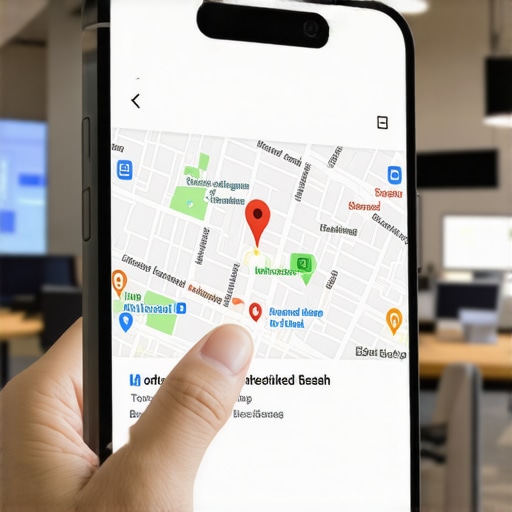
Match Your Digital Paperwork Perfectly
Google acts like a hyper-fixated auditor. If your website says you are located at ‘123 Main St. Suite B’ but your map profile says ‘123 Main Street, #B’, that tiny discrepancy creates a seed of doubt in the algorithm. To fix this, you must how to sync your website schema with your map profile so that every byte of data is identical. I once spent three days hunting down why a high-end dental clinic couldn’t break the top 5 despite having 200 five-star reviews. It turned out their footer on the ‘Contact Us’ page had an old tracking number that didn’t match the map profile. We fixed that one number, and the profile jumped two spots overnight. This is why you must the hidden schema error hiding your business from searchers before spending a dime on ads.
Stop Your Categories From Fighting Each Other
One of the biggest silent killers of a google my business rank is category confusion. You might think adding ‘Handyman,’ ‘Plumber,’ and ‘Electrician’ all at once makes you look versatile, but it actually makes you look like a ‘jack of all trades, master of none’ to the bot. You need to understand why your business categories might be fighting each other. When you choose a primary category, every other sub-category must support it, not compete with it. I saw a massive shift for a remodeling client when we moved ‘Kitchen Remodeler’ to the primary slot and dropped the generic ‘General Contractor’ tag. That the subtle category tweak that doubled local impressions worked because it narrowed the focus for Google’s indexing.
Force Google to Trust Your Physical Presence
High-resolution photos are great for humans, but Google wants ‘proof of life.’ This means uploading raw, unedited photos taken from a smartphone with location services turned on. These photos contain GPS metadata that tells Google, ‘Yes, this business actually operates here.’ It’s a huge part of a successful local mapping strategy. Don’t just post them yourself; encourage customers to do it. You will be shocked at how customer photos change your ranking in just 48 hours compared to professional studio shots. I once had a client take a photo of their new branded van parked right in front of their office sign, and that single image did more for their map pack domination than a month of social media posts.Everyone says reviews are the only thing that matters, but I’ve seen businesses with half the review count absolutely crush their competitors. Why? Because quality and keywords within those reviews act as a ranking multiplier. It’s a common trap to buy a batch of five-star ratings, but why having 500 reviews might actually be hurting your visibility is because Google’s AI is now trained to spot ‘unnatural’ velocity. If you get 50 reviews in a week and then zero for three months, you’re flagged. Instead, focus on the specific review keywords that trigger map visibility, like mentioning the specific service or city name, which provides the ‘proof’ the algorithm craves. Have you ever fallen into this trap of chasing quantity over quality? Let me know in the comments.
Stop Hiding Behind a Virtual Desk
Another massive mistake I see is trying to game the system with a virtual office. It seems like a smart way to expand, but the danger of using virtual offices for local SEO is that Google is incredibly good at cross-referencing USPS data and commercial lease registries. You might find why your professional office address is being flagged as a coworking space, which leads to an instant shadow-ban or a total suspension that takes months to fix. Google wants to see a real door, real signage, and a real human presence.
Can you actually outrank a competitor who is physically closer to the searcher?
Yes, you absolutely can. The old-school ‘proximity is king’ rule has been heavily modified. According to the Whitespark Local Search Ranking Factors study, ‘Prominence’ and ‘Relevance’ are now weighted heavily enough to override physical distance. This is why you need to understand the proximity lie why distance isnt the only thing google tracks. If your website has stronger local signals, you can learn how to beat the proximity filter and expand your reach by three to five miles just by cleaning up your off-page data. One of the strongest levers you have is the link between website backlinks and local map packs; Google sees those links as votes of confidence from the local community.  By focusing on mastering local maps domination proven strategies for 2025 success, you stop being a victim of your zip code and start becoming the authority for your entire city.Getting to the top is a rush, but staying there is a chess match. I’ve seen businesses hit the #1 spot, celebrate with a steak dinner, and then ignore their profile for a month. By the time they check again, they’ve slipped to #4. To prevent this, you need a local mapping strategy that prioritizes consistency over intensity. I personally use a tool called BrightLocal because their Local Search Grid shows me exactly where my ‘bubbles’ of influence are popping. It’s not enough to know you rank; you need to know exactly where you stop ranking.
How do I maintain my map rank without working on it daily?
The secret is in the ‘Review Velocity.’ As highlighted by Joy Hawkins at Sterling Sky, high-frequency, steady interaction tells Google the business is still relevant. If your reviews dry up, your visibility follows. This is the review frequency secret for long-term map dominance. I set a calendar reminder every Friday to spend exactly 15 minutes responding to new reviews and posting one ‘Update’ with a fresh photo. 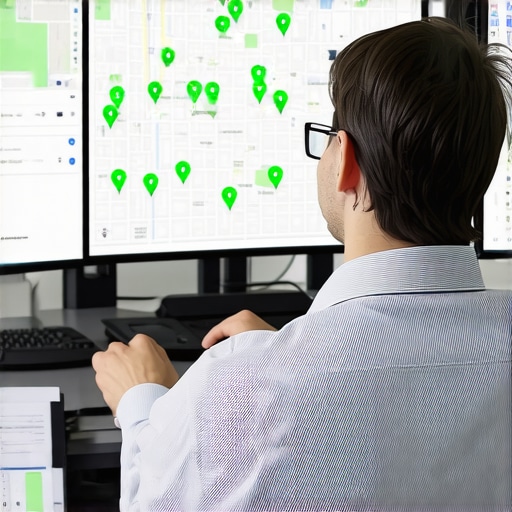
Build a Wall Around Your Top Spot
If you want to outsmart competition in local map listings in 2025, you have to look at what’s coming next. I predict we are moving toward a ‘Visual First’ search world. Google’s AI is already scanning your photos for objects, text, and even the ‘vibe’ of your store. In the near future, map pack domination will depend on how well your images match the user’s specific visual intent. If you aren’t already using an image metadata strategy, you’re leaving money on the table. When you truly dominate maps, you aren’t just getting clicks; you’re owning the local digital real estate. My advanced tip for today: Go into your Google Business dashboard right now, find your most popular service, and upload a 30-second video of you actually performing that service. It’s the ultimate ‘proof of life’ that the real benefit of verification via video upload provides. It stops the ‘ghost profile’ hunters in their tracks and cements your google my business rank for the long haul.
The Hardest Lesson I Learned About Ranking While My Competitors Slept
One of the biggest eye-openers for me was realizing that your google my business rank isn’t a static trophy; it’s more like a living organism that needs constant feeding. I used to think I could set it and forget it, but I quickly learned that Google values activity over history. If you aren’t posting updates or responding to reviews, the algorithm assumes you’ve closed up shop. I also discovered that the real reason your profile ranking stalled last month usually isn’t because you did something wrong, but because you stopped doing what was right. Consistency beats intensity every single time in the world of local maps domination. I spent far too long chasing shiny objects when the real secret was just showing up for my profile every single week without fail.
Tools That Actually Moved the Needle for Me
When you are ready to take your local mapping strategy seriously, you need better data than just searching for yourself on your own phone. I personally rely on BrightLocal because their grid view shows me exactly where my proximity drops off, which is vital for anyone trying to force your profile back into the top 3 results. I also highly recommend keeping Whitespark’s annual research bookmarked to stay ahead of algorithm shifts; they provide the data that the gurus usually try to charge you for. Finally, never underestimate the power of the raw Google Business app on your phone for uploading geo-tagged photos—it’s the most underrated tool in your kit if you want to outsmart competition in local map listings in 2025.
Claim Your Spot on the Digital Map Today
The journey to map pack domination can feel like an uphill battle, especially when you feel invisible to the customers right down the street. But remember, every major player in your city started exactly where you are. By focusing on these small, verifiable signals of trust, you are building a foundation that no algorithm update can shake. You have the tools and the knowledge to dominate maps and grow your business sustainably. Before you dive into the technical audits, is there one question to ask before hiring a maps expert that you’re still stuck on? Have you ever felt like you were doing everything right but still couldn’t break the top 3? Let me know in the comments below!
About the Author
Umar Latif
Brand & Marketing Expert · Dubai, UAE
Umar Latif is a seasoned Brand and Marketing Expert based in Dubai, UAE, with a specialized focus on Local SEO and international digital strategy. With extensive experience managing and optimizing websites for a diverse range of international clients, including those in the United States, Umar has developed a deep understanding of the nuances required to dominate local search results. His technical proficiency encompasses comprehensive keyword research and the implementation of advanced Google-centric strategies designed to enhance visibility and drive organic traffic. As a contributor to dominateyourlocalmaps.com, Umar leverages his background in global marketing to provide actionable insights for businesses looking to improve their local map rankings and digital footprint. His approach combines data-driven tactics with a strategic brand perspective, ensuring that local businesses not only rank higher but also resonate with their target audience. Throughout his career, Umar has remained dedicated to staying ahead of search engine algorithm changes to deliver consistent results for his clients. He is deeply passionate about empowering business owners and marketing professionals with the tools and knowledge they need to achieve sustainable growth.