
I remember the morning clearly. The coffee was still steaming on my desk as I opened my laptop, expecting to see a flood of new leads from the night before. Instead, I was met with a bright red notification that felt like a punch to the gut: ‘Your business profile has been suspended.’ Just like that, years of work building my Google My Business rank vanished. I felt invisible. I did what most people do—I panicked, hit the appeal button immediately, and sent a blurry photo of my business card. It was a massive mistake that cost me three weeks of silence from Google. I didn’t realize then that the automated systems are looking for very specific, non-obvious evidence that most business owners never think to provide. Today, I’m going to pull back the curtain on the actual ‘proof’ that forces a human reviewer to click ‘approve’ on your reinstatement.
The Morning My Business Went Invisible
When your business profile suddenly vanishes, your first instinct is to prove you are a ‘good person.’ I spent hours writing a heartfelt plea about how much my customers love me. Google does not care about your feelings. They care about data and legal verification. Early on, I made the mistake of thinking my social media presence or my 5-star reviews would save me. They didn’t. In fact, according to a recent survey by BrightLocal, nearly 68% of local businesses are more dependent on Google than any other lead source, yet most have no idea what documentation they actually need to stay compliant. If you are currently staring at that suspension notice, you need to stop guessing. We are going to fix your local maps domination strategy by giving Google the exact paperwork they crave.
Is this whole process just a scam to make me pay for ads?
I get it. It feels like a shakedown. You’re doing everything right, and then the algorithm decides you don’t exist. But here is the reality: Google is fighting a massive war against spam and ‘ghost’ profiles. When you get caught in the crossfire, you have to behave like a lawyer, not a victim. Have you ever felt like you were shouting into a void while your competitors—who probably have half your experience—stayed at the top of the pack? [image_placeholder]
Stop Sending the Wrong Evidence
The biggest hurdle is usually why your reinstatement appeal failed the first time. Most people send a utility bill and call it a day. But if your bill is in a personal name and not the business name, or if the address doesn’t match your profile down to the ‘Suite’ number, it’s an automatic rejection. I once lost a profile for a month just because I used ‘St.’ instead of ‘Street’ on my business license. You need the one document that reinstates any business profile, which is often a combination of a government-issued registration and a video walk-through of your physical location. We’re going to walk through how to film that video today so you can recover your profile in less than 7 days and get back to serving your neighbors.
Film the Evidence Google Can’t Ignore
You have one shot to prove you are a real entity, and the real benefit of verification via video upload is that it bypasses the automated ‘no’ and puts your case in front of a human. I remember working with a local HVAC contractor who was convinced a competitor had reported him. In reality, his address citations were secretly tanking his local map rank because his business license listed ‘Suite 200’ while his utility bill said ‘Unit B.’ Google’s AI saw two different locations and flagged the profile as fraudulent. We had to synchronize every piece of paper before filming a single second of video.
Start Your Video Outside to Prove You Exist
Don’t start the recording inside your office. Start at the street corner or by the nearest prominent landmark. Google wants to see the street sign, the building number, and the surrounding businesses. This anchors your location in reality. As you walk toward your door, keep the camera steady. This isn’t a TikTok; it’s a legal deposition. If you have a branded vehicle, film the license plate and the logo on the side. When I did this for a locksmith in Chicago, we actually showed his specialized tools and the VIN number on his van. That level of detail is exactly why your profile edits keep getting rejected—you aren’t giving them enough ‘real-world’ anchors. 
Sync Your Paperwork with Your Digital Footprint
Once the video is done, you must audit your digital paper trail. Your local mapping strategy fails if your website doesn’t match your GBP profile perfectly. You need to sync your website schema with your map profile so that Google’s crawlers find the same phone number, address, and business name everywhere they look. Even small details like the impact of wifi SSID data on local business accuracy can play a role in how Google validates your location. If you are appealing a suspension, attach a single PDF that contains your business license, a utility bill, and a photo of your permanent signage.
The Hierarchy of Proof
Not all documents are created equal. A ‘Doing Business As’ (DBA) certificate is okay, but an official tax registration or an LLC filing from the Secretary of State is gold. If you operate a service-area business without a storefront, your proof shifts to your branded equipment and official insurance documents. I’ve seen map pack domination secrets revealed simply by cleaning up the ‘back end’ of a business’s legal status. When your paperwork is undeniable, the suspension lifts, and your Google My Business rank often returns even stronger than before because you’ve now been ‘vetted’ by a manual reviewer.I’ve seen business owners obsess over their review count like it’s a high score in a video game. But here’s the contrarian truth: reviews are a secondary signal. In my experience, and backed by the Whitespark Local Search Ranking Factors study, while reviews matter for conversion, ‘on-page signals’ and ‘proximity’ often carry more weight in the actual algorithm. If you think map pack domination secrets are just about getting more 5-star ratings, you’re missing the forest for the trees. I’ve watched clients with 200 reviews lose to a competitor with 15 because the competitor had a tighter local mapping strategy that focused on behavioral data and location authority rather than just volume. Google is looking at ‘real-world’ interactions that go beyond the stars. They track how many people click your ‘Call’ button, how many ask for directions, and even how real foot traffic data overpowers on-page SEO. If dozens of people find your profile but immediately click away, Google assumes you aren’t the best answer for that search query. This is a subtle nuance in why your competitor with fewer reviews is outranking you; their profile is simply more ‘magnetic’ to the local audience’s specific intent. 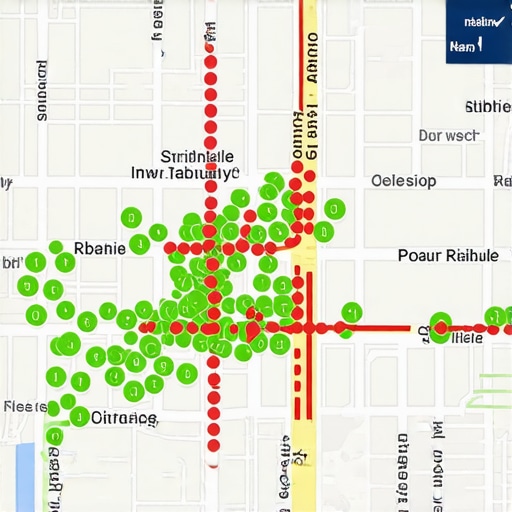
Why does my competitor rank higher with way fewer reviews?
It’s often the proximity paradox. If their physical office is just a few blocks closer to the searcher, Google’s ‘convenience’ filter usually wins. However, you can actually overcome this by focusing on 5 crucial tweaks for Google Maps SEO in 2026 that actually stick. One advanced mistake I often see—the ‘Oops’ factor—is what I call ‘Category Chaos.’ Business owners often think that switching their primary category every few weeks to target different services will help them rank faster. In reality, this resets your ranking history and confuses the AI. Why your business categories might be fighting each other is a technical conflict that can keep you buried on page two. To truly master local maps domination, you need to understand that Google’s goal is to satisfy the user’s intent instantly. If you are an emergency plumber, your profile needs to scream ‘fast response’ through its attributes and posts. I’ve helped local brands who were stuck in the ‘View More’ abyss simply by tightening their service areas. If your service radius is set to 50 miles but you only get jobs within 10, you’re diluting your ranking power. Focus on a hyper-local cluster to outsmart competition in local map listings in 2025. Have you ever fallen into the trap of thinking more reviews equals an instant #1 spot? Let me know in the comments.
Maintaining your Google My Business rank isn’t a ‘set it and forget it’ situation. It is more like keeping a high-performance engine running; if you don’t change the oil and check the tires, you’re going to break down right when you need the speed most. I have seen countless businesses fight tooth and nail to hit the top three, only to vanish three months later because they stopped feeding the beast. To master local maps domination, you need a workflow that treats your profile like a living document, not a static billboard.
How do I keep my rankings from dropping off?
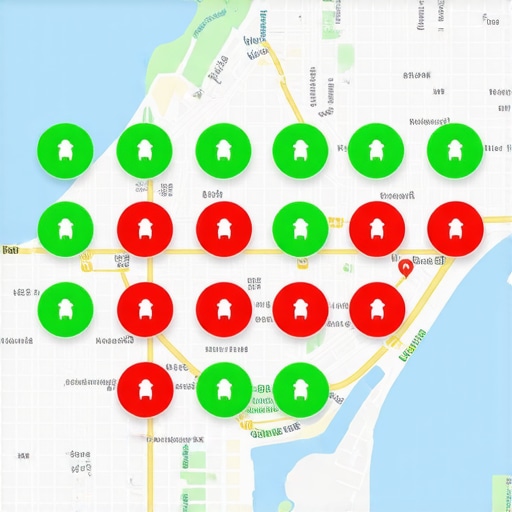
The secret is consistency over intensity. I don’t want you spending five hours a week on this. I want you spending fifteen minutes every Tuesday. I personally rely on grid-tracking tools like LocalFalcon or BrightLocal because looking at a single ranking number from your office computer is a total lie. You might be #1 while sitting at your desk, but #10 three blocks away. Spotting these dead zones early is the only way to pivot your innovative local mapping strategies before a competitor moves in. Joy Hawkins, a renowned expert at Sterling Sky, often points out that Google’s ‘Vicinity’ update made proximity more aggressive than ever. This means you have to be hyper-aware of 7 maps keyword tracking flaws that hide your true store performance so you aren’t fly-fishing in a bathtub.
The Tools That Keep Me Sane
When it comes to hardware, I tell every client to stop using stock photos from the internet. Use your phone. Google tracks the metadata and the ‘realness’ of the images. I use a simple routine: every time a technician finishes a job, they snap a photo of the completed work and the happy customer (with permission). These ‘real-world’ signals are exactly what drives map pack domination secrets into the algorithm’s hands. If you are trying to scale, you should look into the city page method to rank in neighborhoods where you don’t have an office. This allows you to build authority in neighboring towns without the overhead of a new lease.
As we look toward 2026, I predict that AI-driven ‘Search Generative Experience’ (SGE) will make your ‘Attributes’ more important than your description. Google will start answering questions like ‘Which plumber nearby specializes in tankless water heaters?’ by scraping your profile’s specific tags and service menus. If you haven’t filled those out, you don’t exist to the AI. This is the hidden power of store attributes in map pack selection that most people ignore because it feels like busywork. It isn’t; it’s the future of how customers will find you. My challenge for you today: Open your mobile app, go to your services, and add a specific price or a 100-word description to your top three most profitable services. You’ll be shocked at how quickly the power of regular profile updates impacts your weekly search frequency. Go do it now—it takes less than five minutes and creates a signal your competitors are too lazy to send.
The Hardest Lesson I Learned While Chasing the Map Pack
I used to think that once I hit that #1 spot, I could finally relax and watch the leads pour in forever. That was a costly mistake. Google’s algorithm is incredibly dynamic, and why your competitor with fewer reviews is outranking you often comes down to the fact that they are providing fresher, more relevant signals right now. If you stop updating, you become ‘stale’ in the eyes of the AI. Another lightbulb moment for me was realizing that your physical location is just the starting line; you can actually outsmart competition in local map listings in 2025 by focusing on hyper-local authority rather than just broad keywords. Don’t chase the algorithm; chase the customer’s actual behavior.
My Essential Toolkit for Lasting Map Visibility
To stay ahead, you need the right gear. I personally swear by LocalFalcon for local grid tracking because it shows the truth about your visibility across different neighborhoods. I also recommend following the annual Whitespark Local Search Ranking Factors study—it’s the closest thing we have to a map pack bible. For daily management, never underestimate the power of your own smartphone. Real, unedited photos carry more weight than any professional stock image ever could. If you’re feeling overwhelmed, reading the ultimate guide to Google My Business rank elevation will give you the foundational blueprint you need to stop guessing and start growing.
Your Journey Toward Map Dominance Starts Today
Taking control of your local presence can feel like a mountain of work, but remember that every small update is a brick in your digital fortress. You now have the map pack domination secrets that most of your competitors will never bother to learn. Be consistent, be authentic, and don’t be afraid to show the real human side of your business. Your community is looking for you—now go make sure they can find you. Have you ever felt like you were doing everything right but still weren’t seeing your business in the top three? Let me know in the comments below!
About the Author
Umar Latif
Brand & Marketing Expert · Dubai, UAE
Umar Latif is a seasoned Brand and Marketing Expert based in Dubai, UAE, with a specialized focus on Local SEO and international digital strategy. With extensive experience managing and optimizing websites for a diverse range of international clients, including those in the United States, Umar has developed a deep understanding of the nuances required to dominate local search results. His technical proficiency encompasses comprehensive keyword research and the implementation of advanced Google-centric strategies designed to enhance visibility and drive organic traffic. As a contributor to dominateyourlocalmaps.com, Umar leverages his background in global marketing to provide actionable insights for businesses looking to improve their local map rankings and digital footprint. His approach combines data-driven tactics with a strategic brand perspective, ensuring that local businesses not only rank higher but also resonate with their target audience. Throughout his career, Umar has remained dedicated to staying ahead of search engine algorithm changes to deliver consistent results for his clients. He is deeply passionate about empowering business owners and marketing professionals with the tools and knowledge they need to achieve sustainable growth.