I remember staring at my screen three years ago, a vein practically popping in my forehead. I had just landed my fiftieth five-star review. My profile was a shining beacon of customer satisfaction, yet there I was, buried on page two of the local maps while a guy with twelve reviews and a half-finished profile sat comfortably in the top spot. It felt like a personal insult from the algorithm. I had fallen into the trap of thinking that being “the best” meant I deserved the crown. But the truth is, the map pack doesn’t care about your feelings; it cares about data patterns and proximity signals. Today, I’m going to pull back the curtain on why reviews are just a tiny piece of the puzzle and show you how to actually achieve local maps domination without begging for more stars.
Stop Chasing Stars and Start Building Real Authority
Back when I started, I made the classic rookie mistake of ignoring everything except that gold star rating. I spent hours every week emailing clients, practically pleading for reviews, convinced that #51 would be the magic number that finally bumped me up. It never happened. I eventually realized that why your competitor with fewer reviews is outranking you often comes down to factors you can’t even see on the surface. Google isn’t just looking for happy customers; it’s looking for a business that proves it belongs in that specific neighborhood for that specific search query. I was winning the popularity contest but losing the relevance war. I didn’t realize that my website’s local signals were weak and my citation consistency was a mess. It’s a hard pill to swallow, but a perfect rating on a poorly optimized profile is like having a Ferrari engine inside a rusty bicycle frame. You might have the power, but you aren’t going anywhere fast. [IMAGE_PLACEHOLDER]
Does Google even care about my happy customers anymore?
Of course they do, but not in the way most people assume. According to a local search ranking factors study by Whitespark, review signals only make up about 17% of the ranking weight in the local pack. That leaves 83% of the pie wide open for other factors like on-page signals, links, and behavioral data. If you aren’t feeding the algorithm the right location signals and interaction data, all those reviews are just pretty wallpaper on a house with a crumbling foundation. I’ve seen businesses fix a stalled google my business rank without adding a single new review, simply by cleaning up their backend signals and tightening their local relevance.
Why Proximity and Relevance Outweigh Popularity
We often think of the map pack as a leaderboard of the “best” businesses, but it’s more like a sophisticated matchmaker. If someone searches for a plumber two miles away, Google might prioritize the guy around the corner even if his reviews are mediocre. However, you can beat that “proximity filter” if you know which buttons to push. I once lost a massive contract because I didn’t realize why proximity is no longer the only way to win maps if your on-page SEO is tight enough to bridge the gap. You have to prove to Google that your business is the most authoritative answer, regardless of the physical distance. Have you ever felt like you’re doing everything right with your customer service but your google my business rank just won’t budge despite your perfect rating? It’s frustrating, and honestly, a bit exhausting. I want to hear your story—leave a comment and tell me what your ranking “plateau” looks like. We’re about to dive into the technical shifts that finally move the needle and give you the map pack domination you actually earned.The first real technical move I make isn’t actually on the Google Business Profile dashboard. It happens on the backend of your website. Think of your website as the official ID card that verifies every single claim your map listing makes. If you haven’t taken the time to how to sync your website schema with your map profile, you are essentially whispering in a crowded room. I once worked with a family dentist who was stuck at #12 in the local results. We discovered their website footer still listed an old suite number from three years ago, while their map pin was updated to their current location. Google saw that tiny discrepancy and immediately flagged the business as potentially unreliable. As soon as we aligned the data with proper schema markup, they jumped into the top three overnight. Consistency is the primary signal for trust in the local algorithm.
End the Confusion Caused by Too Many Categories
Many business owners fall into the trap of thinking that checking every available box in the category section will cast a wider net for leads. In reality, it actually dilutes your authority. When you try to be everything to everyone, Google struggles to identify what you are the absolute best at. This is why your business categories might be fighting each other for ranking power. You need to stop guessing your categories and use this selection data instead to pick one primary driver that matches your highest-revenue service. I have seen the subtle category tweak that doubled local impressions for an HVAC company simply by switching their primary category from a generic ‘Contractor’ label to a specific ‘Air Conditioning Repair Service’ tag during the peak of summer. 
Reach Customers Outside Your Immediate Neighborhood
Proximity is a notoriously difficult filter to beat, but it is not impossible if you know how to expand your digital footprint. If you have noticed that your visibility drops off a cliff as soon as you drive five minutes away from your office, you are hitting the proximity wall. You must learn how to increase your map radius without opening a new office by building location-specific relevance through your site content. Most people completely ignore the connection between page speed and local map presence, but Google prioritizes fast-loading sites for mobile users who are searching on the move. If your site is sluggish, the algorithm assumes a mobile user won’t wait and will instead show them a faster competitor who is slightly closer.
Feed the Algorithm the Proof It Needs
Beyond the static settings, Google is constantly watching how users interact with your listing in real-time. This is the interaction data that proves you are a top local choice. If searchers are clicking ‘Call’ or ‘Request Directions’ on your profile significantly more often than on your competitors’ listings, that behavioral signal carries immense weight. I remember a small local locksmith who managed to dominate a major city because their profile photos were so helpful that people constantly clicked to enlarge them. This boosted their engagement rate and sent a signal to Google that they were the most relevant answer for that area. You also have to be vigilant about the audit mistake that makes your map listing effectively invisible, which usually involves unresolved ‘suggested edits’ or hidden duplicate listings that are siphoning off your authority. Cleaning up these invisible backend errors is often the final push needed for genuine map pack domination without having to buy a single ad.
The Description Myth That Keeps You Stuck
Most SEO gurus will tell you to load your business description with every keyword imaginable, but in my experience, that is a complete waste of time. I spent weeks refining a 750-character masterpiece for a client, only to see zero movement in the rankings. That is because why your business description doesn’t matter for ranking is one of the most overlooked realities in the industry. Google uses that field for conversion and user experience, not for indexing your primary keywords. If you are obsessing over the text in your ‘About’ section instead of your actual category selections or site schema, you are polishing the brass on a sinking ship. I’ve seen better results from short, punchy descriptions that focus on a call to action rather than a list of services. Have you ever fallen into this trap of keyword-stuffing your profile? Let me know in the comments because I see it happening every single day.
Why does my competitor with a worse website still beat me?
It usually comes down to ‘Implicit Trust’ signals that most audits miss. While you are focused on your meta tags, your competitor might be winning because they have a higher volume of the interaction data that proves you are a top local choice. According to a BrightLocal study, behavioral signals like click-through rate and ‘request for directions’ are becoming increasingly dominant. If people are naturally finding and clicking that business more often—perhaps due to a better brand name or a more prominent physical location—Google rewards that real-world popularity regardless of how ‘optimized’ your website is.
Don’t Get Trapped by the Proximity Paradox
I once had a client who moved their office three blocks closer to the city center, convinced it would solve their visibility issues. Instead, their rankings plummeted. This is the proximity paradox why moving your office might not help; sometimes, moving closer to the center puts you into a more competitive ‘centroid’ where Google filters out similar businesses to provide variety. You can easily find yourself hidden behind the ‘view more’ button simply because you are now too close to a more established competitor. 
The Real Danger of Pending Edits
Another massive ‘oops’ factor is the spiral of death caused by frequent profile changes. If you are constantly tweaking your hours or services, you might find that why your google business profile edits are always pending is actually a sign of a trust penalty. Google hates instability. Every time you make an edit, you reset a small part of the algorithm’s confidence in your data. I recommend doing a full audit only once every quarter rather than making daily micro-adjustments. Most people fail because why most local seo audits fail to catch profile errors is that they look at the surface-level keywords but ignore the underlying health of the API connection and data consistency. You have to how to audit your local competitors without expensive tools by looking at their real-world interaction signals if you want to truly achieve local maps domination. Reach out if you are stuck at the bottom of the top three—it’s usually a single invisible technical error holding you back.I’ve spent the last decade testing every tool under the sun, and if I’m being honest, 90% of them are just fluff. When I want to actually dominate a market, I use Local Falcon. Why? Because the standard ‘search and see’ method is a lie. If you search for yourself while sitting at your desk, you’ll always look like #1. Local Falcon forces you to see the reality of the grid, showing you exactly where your authority drops off. It is the most honest way to learn how to audit your map rankings from a customers real location. I also swear by Whitespark for citation cleanup because messy data is a silent killer. If your address is ‘Suite 100’ on one site and ‘#100’ on another, Google gets confused. In a world of AI-driven search, confusion equals lower rankings. 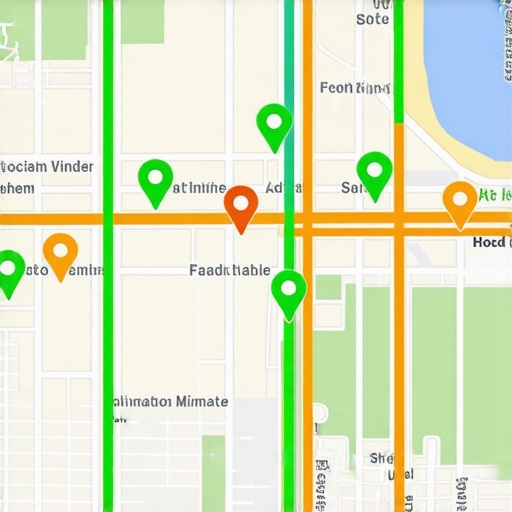
How do I maintain my map pack ranking over time?
The first rule of maintenance is realizing that your ranking isn’t a trophy you keep; it’s a rental you pay for with consistent activity. You can’t just set it and forget it. I personally schedule fifteen minutes every Monday to upload one high-quality, geotagged photo and one brief update. You have to understand the power of regular profile updates on search frequency if you want the algorithm to keep prioritizing you. If your profile goes dark for a month, Google assumes you might have gone out of business or stopped caring, and your ranking will reflect that. This is also why why hiring a google business profile consultant saves more money than diy management for larger operations—consistency is the hardest part of the job.
Visual search is the next big ranking signal
If you want to look into the future, look at how Google Lens is being integrated into maps. I predict that by 2026, Google won’t just be reading your reviews; it will be using computer vision to analyze the contents of your customer’s photos. If your customers are posting photos of a clean, modern lobby, Google will categorize you as a ‘premium’ or ‘modern’ choice automatically. This makes the specific photo metadata that actually moves your map rank more vital than ever. As detailed in the Google Business Information API documentation, the system is designed to leverage “rich media” to verify business attributes. If you aren’t feeding it high-quality visual data, you’re leaving your rank to chance. If you are tired of the constant fluctuations, you need to learn how to secure your spot in the map pack permanently by building a moat of trust signals. Try this: go into your profile today and add three ‘Owner Photos’ that show your team actually performing the service in the local neighborhood. It sounds simple, but it’s the exact type of real-world proof the algorithm is hungry for.
The Hardest Lesson I Learned About Real World Proximity
If there is one thing that years of testing has taught me, it is that you cannot out-review a bad data foundation. I spent far too long thinking that volume of feedback was a shield against competition, but I eventually realized that trust is not just a rating. Google needs to see that your business is a living, breathing part of the community. This often explains why your map ranking stalled at the bottom of the top 3 even when you feel you are doing everything right. You have to stop treating your profile like a static billboard and start treating it like a conversation with the algorithm. I’ve learned that a single photo from a ‘Local Guide’ with a high level of authority can do more for your visibility than ten generic reviews from new accounts, which is why local guides reviews carry more weight in maps. Relevance is a moving target, and you have to be willing to adjust your aim as the neighborhood changes.
My Essential Toolkit for Lasting Map Pack Authority
I don’t believe in using every software on the market, but there are a few non-negotiables for me. First, I always keep an eye on the exact radius where your local rankings drop off using grid-based tracking tools. Without that visual data, you are flying blind. I also recommend a quarterly deep dive into your competitors to see how to outsmart competition in local map listings in 2025 by looking for their unoptimized categories or slow response times. For those who find the technical side overwhelming, remember that why hiring a google business profile consultant saves more money than diy management is often because they catch the tiny discrepancies in your address or phone format that the human eye misses but the API flags immediately. My goal is always to build a profile that is so resilient that even a major algorithm update can’t shake it.
The Future of Your Local Neighborhood Presence Starts Now
Local SEO isn’t about ‘gaming’ a system; it’s about becoming the most obvious and helpful choice for a neighbor in need. As we look ahead, staying relevant means adopting 5 crucial tweaks for google maps seo in 2026 that actually stick, such as focusing on high-quality visual proof and interaction speed. You have the power to stop being invisible and start being the first name people see when they search. I want you to take one small action today: respond to an old review or upload a new photo of your storefront. These small signals aggregate into how to secure your spot in the map pack permanently. You’ve got this, and I’m excited to see your pin climb the ranks. Have you noticed your ranking drop when you step just a few blocks away from your office? Let me know your experience below.
About the Author
Umar Latif
Brand & Marketing Expert · Dubai, UAE
Umar Latif is a seasoned Brand and Marketing Expert based in Dubai, UAE, with a specialized focus on Local SEO and international digital strategy. With extensive experience managing and optimizing websites for a diverse range of international clients, including those in the United States, Umar has developed a deep understanding of the nuances required to dominate local search results. His technical proficiency encompasses comprehensive keyword research and the implementation of advanced Google-centric strategies designed to enhance visibility and drive organic traffic. As a contributor to dominateyourlocalmaps.com, Umar leverages his background in global marketing to provide actionable insights for businesses looking to improve their local map rankings and digital footprint. His approach combines data-driven tactics with a strategic brand perspective, ensuring that local businesses not only rank higher but also resonate with their target audience. Throughout his career, Umar has remained dedicated to staying ahead of search engine algorithm changes to deliver consistent results for his clients. He is deeply passionate about empowering business owners and marketing professionals with the tools and knowledge they need to achieve sustainable growth.