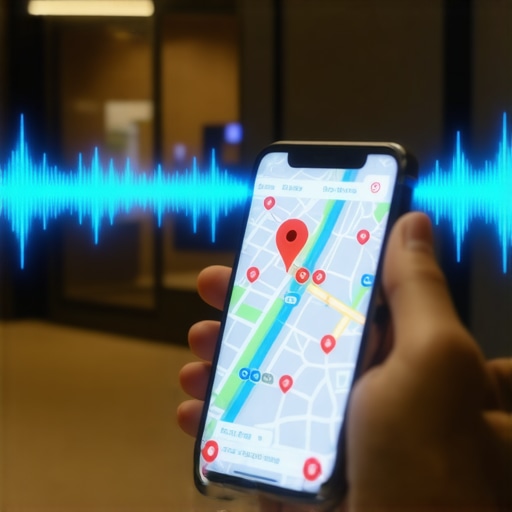
I was sitting in my driveway, shouting at my dashboard, and that’s when it hit me: my business was practically invisible to the very people standing right outside my door. I had asked Siri to find the nearest coffee shop with outdoor seating, and despite my own cafe being less than three blocks away, she recommended a place two miles down the road. It was a frustrating wake-up call. I realized then that my neighbors—and probably your most loyal potential customers—are being redirected because of a silent gap in their local mapping strategy. We spend so much time worrying about what people type into a search bar that we completely forget how they actually talk to their devices when their hands are full or they are on the move.
Make Your Business the Only Answer Siri Gives
I’ll be honest with you; I used to think that winning at local SEO was just a matter of having the most reviews. I fell into the trap of review automation early on, thinking that a high star count was a silver bullet for everything. It wasn’t. While reviews matter, voice search operates on a completely different frequency. It’s about conversational intent and hyper-local accuracy. Today, we are going to fix that. I’m going to show you exactly how to tweak your profile so that when someone asks a smart speaker for help, your name is the one that gets spoken aloud. We’re moving beyond just appearing on a list; we’re aiming for map pack domination in a world where screens are becoming optional. Have you ever tried to voice-search your own services while standing in a different neighborhood and felt that sinking feeling when you didn’t show up? It’s a common hurdle, but it’s one we can clear together.
Does Anyone Actually Use Voice Search for Real Purchases?
You might be skeptical. I was too. But the numbers don’t lie. According to research by BrightLocal, roughly 58% of consumers used voice search to find local business information in the last year alone. This isn’t just a trend for tech-savvy kids; it’s how busy parents find a plumber and how drivers find a place to eat without taking their eyes off the road. One major mistake I made back in the day was ignoring how search intent changes when someone speaks versus when they type. People use more words, they ask questions, and they expect immediate, relevant answers. If your profile isn’t set up to handle those long-tail, conversational queries, you’re essentially leaving money on the table. We need to focus on your google my business rank through the lens of a conversation, not just a keyword list. Let’s dive into the practical shifts you need to make right now to stay ahead of the curve.
Turn Conversations into Customers by Mastering Your Digital Profile
To win at voice search, you have to stop thinking like a computer and start thinking like a neighbor. When someone says, “Hey Siri, find me a reliable roofer,” they aren’t just looking for a name; they are looking for a solution that feels personal and immediate. The first step in a winning local mapping strategy is to populate your own Q&A section. Don’t wait for customers to ask questions; post the most common inquiries yourself and answer them in a natural, conversational tone. I remember working with a local HVAC specialist who only showed up for very specific technical terms. We realized his customers weren’t searching for “BTU specifications”; they were shouting “why is my AC blowing hot air?” into their phones. By pivoting his content to answer those exact phrases, we solved the mystery of why your hvac business only shows up in one specific zip code and expanded his reach to three neighboring towns. You can do the same by learning how to use local questions and answers to steal search traffic from competitors who are too lazy to fill them out.
Claim the Small Details that Big Competitors Ignore
Voice assistants thrive on specific data points called attributes. If a customer asks for a “dog-friendly cafe with free wifi,” and you haven’t checked those boxes in your profile, you are invisible. It’s that simple. Big national chains often overlook these hyper-local markers, which is exactly the quiet move that forces your small business above national competitors. Dive into your dashboard and select every relevant attribute, from “women-led” to “wheelchair accessible entrance.” These aren’t just badges; they are the filters voice assistants use to narrow down the “best” answer. 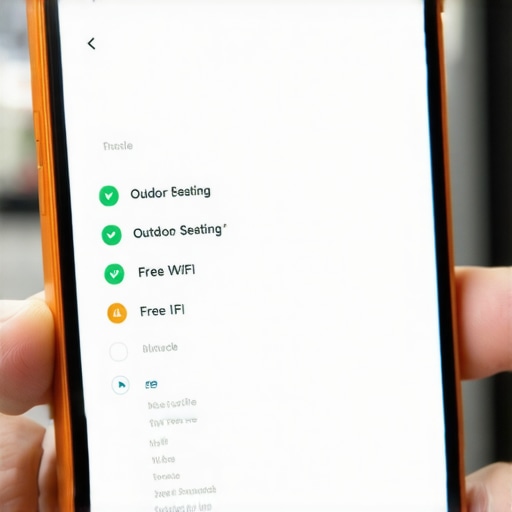
Fix Your Digital Breadcrumbs Before They Lead People Away
If your business name is “Main Street Plumbing” on your website but “Main St. Plumbers” on Google Maps, you’re confusing the algorithm. Think of your NAP (Name, Address, Phone) data as digital breadcrumbs. If they don’t match perfectly, the trail goes cold. You need to know how to spot and fix nap inconsistencies without paying monthly fees to ensure that every mention of your business reinforces your authority. I once saw a law firm lose its spot in the map pack simply because they moved offices and forgot to update an old directory listing. This small error created a conflict that signaled to Google the business might not be legitimate. To avoid this, you must learn how to sync your website schema with your map profile so that the data on your site and the data on the map speak the same language.
Break Through the Invisible Boundary of Your Service Area
Many business owners don’t realize there is a literal wall around their visibility. You might be the best in the city, but if your profile isn’t optimized for range, you’ll hit the exact radius where your local rankings drop off. To combat this, focus on adding geo-tagged photos and mentions of specific neighborhoods you serve. This creates a stronger signal of your actual physical presence in those areas, helping you how to increase your map radius without opening a new office. It’s not about tricking the system; it’s about providing enough proof of service that the voice assistant feels confident recommending you to someone ten miles away. Every photo you upload with the specific photo metadata that actually moves your map rank acts as a lighthouse, guiding local traffic directly to your door.
Let’s dig deeper into the actual mechanics of the algorithm because once you have your NAP sorted, the real battle begins in the subtle data layers. One of the biggest myths I see passed around in local SEO circles is the idea that stuffing your business description with keywords will skyrocket your rank. It’s a classic rookie mistake. In reality, why profile descriptions don’t matter for ranking but do for sales is a concept many fail to grasp. Joy Hawkins of Sterling Sky, a leading authority in the field, has proven through extensive testing that the description field has zero direct impact on your actual position in the map pack. If you are spending hours obsessing over the perfect keyword density in that paragraph, you are wasting your time. Use that space to build trust and close the deal, not to appease a robot that isn’t even looking there.
The Business Name Trap That Triggers Suspensions
I’ve seen business owners get a temporary boost by adding their city or service to their official business name—something like “Main Street Plumbing – Best Emergency Plumbers in Austin.” It works for a week, and they think they’ve discovered a secret local mapping strategy. Then, the inevitable happens: the profile gets flagged. Understanding the real reason your profile was suspended after an edit is crucial here. Google’s AI is incredibly sensitive to “name spam,” and once you are suspended, getting back in is a nightmare that can cost you weeks of revenue. Have you ever fallen into this trap? Let me know in the comments. It’s better to stay clean and focus on the interaction data that proves you are a top local choice rather than trying to game the system with risky naming conventions.

Why do competitors with fewer reviews often take the lead?
This is the question that keeps most business owners up at night. You have 200 five-star reviews, and some guy with 40 reviews is sitting at the number one spot. It feels unfair, but it’s usually due to category diluting or “keyword cannibalization” within your own profile. If you select too many secondary categories that don’t perfectly align with your primary service, you confuse Google’s confidence in your specialization. I’ve analyzed dozens of cases where why your business categories might be fighting each other was the primary cause of a ranking plateau. When your categories conflict, your google my business rank suffers because the algorithm doesn’t know whether to show you for “Plumbing Contractor” or “Hardware Store.”
Furthermore, why your competitor with fewer reviews is outranking you often comes down to the quality of the engagement. A few reviews from “Local Guides” who include photos and detailed descriptions carry significantly more weight than fifty generic “Great job!” reviews from brand-new accounts. To truly achieve map pack domination, you need to stop chasing volume and start chasing authority and relevance. Focus on getting your most loyal customers to mention specific services and neighborhoods in their feedback. This creates a hyper-relevant signal that no amount of automated review-botting can replicate.
I’ve spent years obsessing over these maps, and if there is one thing I’ve learned, it’s that a “rank 1” status is never permanent. It’s more like a lease than an ownership. To keep your spot, you need the right tools to see through the algorithm’s smoke and mirrors. I don’t waste my time with generic keyword trackers that give you a single average number for a whole city. That’s how you end up with 7 maps keyword tracking flaws that hide your true store performance. Instead, I rely on grid-based tracking like Local Falcon or BrightLocal. It allows me to see exactly where my visibility dies at a specific street corner. You need to learn how to audit your map rankings from a customers real location because the results change every few hundred feet. If you aren’t looking at a grid, you’re flying blind.
How do I maintain my map pack dominance over the long haul?
Maintenance isn’t about doing a big overhaul once a year; it’s about the “drip” of activity. I make it a habit to upload one high-quality photo every week and post a quick update via Google Posts. This consistency is the power of regular profile updates on search frequency. When Google sees that you are constantly feeding the machine new data, it trusts your business is active and relevant. You should also be looking at how to use google business posts to improve map presence to highlight seasonal offers or new services. 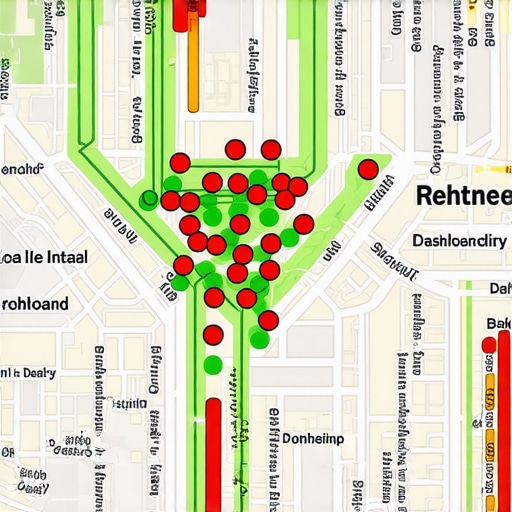
The Coming Shift Toward AI-Generated Local Answers
Looking ahead, the game is shifting toward SGE (Search Generative Experience). Google is no longer just showing a list; it’s summarizing who you are. This means 5 crucial tweaks for google maps seo in 2026 that actually stick will revolve around how well your website’s data matches your profile. As Darren Shaw of Whitespark recently pointed out in his analysis of local ranking factors, the “behavioral signals”—like how many people click your “call” button or ask for directions—are becoming the new currency of trust. If you want to scale, you have to stop thinking about keywords and start thinking about user actions. My prediction? In two years, the map pack won’t just be about where you are, but about how quickly you respond to the person asking. Don’t let your profile go stale. I want you to go into your dashboard right now, look at your last three reviews, and respond to them with a specific mention of a service you provided. It’s a small move, but it’s the exact kind of the interaction data that proves you are a top local choice to the algorithm.
What the Algorithm Taught Me About Being Human
Over the years, I’ve realized that mastering local maps domination isn’t about outsmarting a machine; it’s about out-caring your competition. I spent way too long thinking a software fix could replace actual community engagement. Here is what I finally understood:
- Reviews aren’t just stars: They are proof of life. When I stopped looking at them as metrics and started seeing them as conversations, my engagement shot up.
- Hyper-local beats hyper-optimized: A photo of your team at a local park often does more for your google my business rank than ten keyword-stuffed posts ever could.
- Speed is the ultimate trust signal: If you respond to a message in five minutes, you’ve already won half the battle before the customer even sees your price.
The Tools That Keep My Business on the Map
I don’t believe in guessing. If you want to know why you’re invisible, you need a the profile audit checklist for turning search impressions into real calls. To get there, I rely on a few specific resources:
- Local Falcon: This is my go-to for grid tracking. It shows you the ‘invisible walls’ where your ranking drops off, street by street.
- BrightLocal: I use this for citation health. It’s essential for finding those pesky NAP errors that hide in old directories.
- Whitespark: I follow Darren Shaw’s research religiously. He cuts through the SEO noise with actual data on what moves the needle.
- Professional Guidance: Sometimes, the DIY route hits a ceiling. That is why hiring a google business profile consultant saves more money than diy management in the long run.
Stop Being a Ghost in Your Own Neighborhood
You’ve put in the hard work to build a real-world business; don’t let a messy digital profile keep you hidden from the people who need you most. Your local mapping strategy should be a living, breathing part of your day, not a chore you do once a year. Go claim your space, answer that pending question, and show the world you are open for business. Have you ever noticed your rankings drop off just a few blocks away from your shop? Let me know your experience in the comments below!
About the Author
Umar Latif
Brand & Marketing Expert · Dubai, UAE
Umar Latif is a seasoned Brand and Marketing Expert based in Dubai, UAE, with a specialized focus on Local SEO and international digital strategy. With extensive experience managing and optimizing websites for a diverse range of international clients, including those in the United States, Umar has developed a deep understanding of the nuances required to dominate local search results. His technical proficiency encompasses comprehensive keyword research and the implementation of advanced Google-centric strategies designed to enhance visibility and drive organic traffic. As a contributor to dominateyourlocalmaps.com, Umar leverages his background in global marketing to provide actionable insights for businesses looking to improve their local map rankings and digital footprint. His approach combines data-driven tactics with a strategic brand perspective, ensuring that local businesses not only rank higher but also resonate with their target audience. Throughout his career, Umar has remained dedicated to staying ahead of search engine algorithm changes to deliver consistent results for his clients. He is deeply passionate about empowering business owners and marketing professionals with the tools and knowledge they need to achieve sustainable growth.