Category: Google Maps Ranking Techniques

  • 5 Crucial Tweaks for Google Maps SEO in 2026 That Actually Stick

    5 Crucial Tweaks for Google Maps SEO in 2026 That Actually Stick

    5 Crucial Tweaks for Google Maps SEO in 2026 That Actually Stick

    The local search landscape has undergone a seismic shift. If you are still operating your Google Business Profile (GBP) using the playbook from 2022 – or even 2024 – you are likely watching your rankings stagnate while competitors leapfrog you in the local map pack. As a Google Business Profile Product Expert and Local SEO Consultant, I have seen the algorithm evolve from a simple proximity-based directory into a sophisticated, AI-driven discovery engine. In 2026, the traditional “NAP” (Name, Address, Phone) consistency is no longer a competitive advantage; it is merely the cost of entry.

    Today, the game is won through “Behavioral Proof” and “AI Relevance.” We have moved beyond static listings. Users are no longer just searching; they are interacting with AI Answer Engines that aggregate data from across the web to decide if your business is worthy of a recommendation. Proximity remains a factor, but it is increasingly overshadowed by how users interact with your brand in the physical world and how clearly your digital presence aligns with complex, conversational search intent. To dominate the local map pack, you must master the art of Mastering Local Maps Domination: Proven Strategies for 2025 Success and carry that momentum into the even more rigorous demands of 2026.

    The shift toward “Multi-Platform Search” means that your visibility on Google is now intrinsically linked to your presence on Apple, Perplexity, and OpenAI’s search features. Google’s algorithm is looking for corroboration. If the AI cannot find a consistent narrative about your business across these platforms, it will hesitate to rank you in the top three. This article outlines five crucial, high-level tweaks that move beyond the basics, focusing on the sophisticated signals that actually move the needle in the current AI-first environment.

    Tweak #1: Optimize for “Discovery Engine Optimization” (DEO)

    In 2026, we are no longer just doing SEO; we are practicing Discovery Engine Optimization (DEO). This concept stems from the rise of AI Overviews (SGE) and independent AI search platforms. For instance, Perplexity processed a staggering 780 million queries in May 2025 alone. These platforms don’t just look for keywords; they look for entities and relationships. When a user asks, “Where is the best place for a high-end, kid-friendly Italian dinner near me?” the AI isn’t just looking for the keyword “Italian restaurant.” It is scanning your menu, your Google Posts, and your customer reviews to find specific proof of “high-end” and “kid-friendly.”

    To win at google business profile seo, you must move away from the outdated practice of keyword stuffing your description. Instead, focus on conversational relevance. Your “Services” section should not just list “Plumbing.” It should describe the *problems* you solve in natural language: “Emergency 24-hour drain cleaning for historic homes in the West End.” This level of specificity feeds the AI the “contextual snacks” it needs to categorize your business as the definitive answer to a specific intent.

    Google’s AI now utilizes advanced neural matching to understand the semantic meaning behind your posts. If you aren’t regularly updating your Google Posts with high-quality images and captions that reflect current customer questions, you are missing out on a massive relevance signal. Every post should be viewed as a data point that trains Google’s AI on what your business does best. For more advanced tactics on navigating these new filters, check out our guide on 5 Local Mapping Strategy Fixes for 2026 AI Filters. The goal is to become an “unambiguous entity” – a business that Google’s AI can identify and recommend with 100% confidence.

    Tweak #2: The “Behavioral Proof” Pivot

    One of the most significant changes in the 2026 algorithm is the weight placed on “Behavioral Proof.” Google has moved past relying solely on what you say about yourself or what your website says. It now heavily prioritizes real-world signals: foot traffic, dwell time, and interaction speed. Because Google has access to vast amounts of anonymous mobile location data, it knows if a user searches for your business and then actually drives to your location. If you have 500 reviews but your “Real Store Visits” are lower than a competitor with 50 reviews, the competitor will likely outrank you.

    This is where many businesses struggle because you cannot “fake” foot traffic. However, you can optimize for the signals that lead to it. Using local seo tools to track your “Request Directions” and “Click-to-Call” metrics is vital. Google interprets a high volume of “Request Directions” followed by the user’s phone actually arriving at your coordinates as the ultimate validation of your business’s quality. This is a far more powerful ranking signal than a backlink from a local directory in 2026.

    Furthermore, “Dwell Time” – how long a person stays at your location – is now a proxy for business quality. For service-based businesses (SABs) without a physical storefront, Google measures “Interaction Speed.” How quickly do you respond to messages through the GBP interface? How often do users click your profile and then stay on your site versus bouncing back to the search results? These behavioral signals are the new currency of local SEO. If your rankings have plateaued, it’s often because your digital presence isn’t translating into real-world action. Learn more about this phenomenon in our deep dive: How Real Foot Traffic Signals Fix a Stalled Google My Business Rank.

    Tweak #3: Navigating the “Paid Review” Trap & The 10-Review Threshold

    Google’s 2026 crackdown on incentivized and fraudulent reviews is the most aggressive we’ve ever seen. The algorithm has moved beyond simple pattern detection. Google is now actively deploying a “Paid Review” prompt, asking users directly: “Does this business offer rewards, discounts, or gifts in exchange for reviews?” If a significant percentage of users answer “Yes,” your profile can be shadowbanned or permanently suspended. The days of “Review-Gating” or offering a $5 Starbucks card for a 5-star rating are officially over.

    Instead of chasing volume, you must focus on the “10-Review Threshold.” In 2026, our data shows that 10 high-quality, detailed reviews – specifically those containing photos and mentioning specific services – are the confirmed baseline for unlocking advanced AI visibility in local packs. Once a profile hits this 10-review floor of “authentic” feedback, Google’s AI begins to treat the profile as a “verified entity” and starts featuring it in more complex, long-tail search queries. When seeking a google maps ranking service, ensure they are focusing on organic acquisition rather than bot-driven inflation.

    Authenticity is the only path forward. A single 1-star review that feels “real” is often less damaging than twenty 5-star reviews that lack detail and context. Google’s sentiment analysis is now so advanced it can detect the “emotional resonance” of a review. If your reviews are all generic (“Great service!”), they carry less weight than a review that says, “John arrived on time and fixed my leaking water heater in under an hour; he even explained how to maintain the pressure valve.” This level of detail provides the AI with the proof it needs to rank you for specific service-related searches. Be wary of automation; for more, see The Trap of Review Automation: Why More Stars Don’t Always Mean More Map Leads.

    Tweak #4: Multi-Platform Data Validation (Apple & AI)

    In the past, we focused almost exclusively on Google. In 2026, Google Maps SEO is a multi-platform discipline. Google’s algorithm constantly cross-references its data with other major “Trust Hubs” to ensure accuracy. The most critical of these is Apple Business Connect. Apple’s ecosystem is no longer just for maps; it powers Siri, Apple Wallet, and Tap to Pay branding. If your business information is inconsistent between Google and Apple, it creates a “Trust Gap” that prevents you from reaching the top spots.

    To rank google business profile effectively, you must ensure your “Local Search Ecosystem” is airtight. This means your data on Apple Business Connect, Bing Places, and even AI-specific directories like Yelp (which feeds many AI models) must be identical. Google looks for this corroboration. If Siri recommends your business for a voice search, Google views that as a massive third-party validation signal. This cross-platform synergy is a key component of what we call the “Trust Graph.”

    Moreover, as users shift toward using Apple Vision Pro or other AR interfaces for local discovery, your visual data (photos and videos) must be optimized for these platforms. High-resolution, 360-degree photos are no longer a luxury; they are a requirement for high-intent searches. If you are still paying for low-quality citation packages that submit your info to obscure directories no one visits, you are wasting your budget. Focus on the platforms that actually feed the AI models. Read more on why traditional citations are failing: Stop Wasting Cash on Low-Quality Citations That Never Show Up in Maps.

    Tweak #5: Hyperlocal Technical Precision (Schema & Speed)

    The final tweak involves technical precision at the hyperlocal level. While your Google Business Profile is the front-end, your website’s local signals provide the “structural support” for your rankings. In 2026, “Service Area” schema and neighborhood-level content are the primary drivers of ranking in areas where you do not have a physical office. For businesses like roofers or locksmiths, a “City Page” strategy is essential. However, these pages must be more than just keyword-stuffed templates.

    Your city pages must include “LocalBusiness” JSON-LD schema that specifically calls out the neighborhoods you serve, including their Geo-coordinates. When you use a gmb ranking service, they should be auditing your website’s technical health as much as your GBP. This includes page load speed – specifically on mobile devices using 5G connections. If your site takes more than two seconds to load, the “bounce” signal tells Google that your business is not a reliable recommendation for a user on the move.

    Neighborhood-level content involves writing about specific local landmarks, community events, or local projects you’ve completed. This creates a “Geographic Relevance” that AI models can easily parse. If your website mentions your work at the “Smith Street Community Center,” and a user searches for services near that specific landmark, Google can connect the dots. This hyper-local precision allows you to dominate the map pack in suburbs 10 – 15 miles away from your primary office. For a step-by-step breakdown, refer to The City Page Method: How to Rank in Neighborhoods Where You Don’t Have an Office.

    Conclusion: The Future of Local Dominance

    Dominating Google Maps in 2026 requires a departure from the “set it and forget it” mentality. By focusing on Discovery Engine Optimization, prioritizing behavioral proof over vanity metrics, maintaining an authentic review profile, validating your data across platforms like Apple, and doubling down on hyperlocal technical precision, you create a digital presence that is resilient to algorithm updates. These five tweaks are not just temporary fixes; they are the foundation of a modern local marketing strategy.

    The local search landscape will continue to favor businesses that provide the best user experience – both online and off. If you’re ready to see where your business stands in this new AI-driven world, it’s time for a deep dive into your current performance. Don’t let your rankings slip away to more agile competitors. Take the first step today by performing The 10-Minute Local SEO Audit That Uncovers Why Your Rankings Stalled and start reclaiming your spot at the top of the map pack.

    Author Bio: Kevin Pauls is a Local SEO Consultant and a recognized Google Business Profile Product Expert. With over a decade of experience, Kevin specializes in helping high-intent service businesses and multi-location agencies navigate the complexities of the Google search algorithm to drive real-world foot traffic and revenue.

  • 7 Maps Keyword Tracking Flaws That Hide Your True Store Performance

    7 Maps Keyword Tracking Flaws That Hide Your True Store Performance


    7 Maps Keyword Tracking Flaws That Hide Your True Store Performance


    7 Maps Keyword Tracking Flaws That Hide Your True Store Performance

    By Kevin Pauls, Local SEO Consultant | Google Business Profile Product Expert

    Executive Summary

    If you are a business owner or a marketing manager relying on a monthly PDF report that shows a “Rank #1” status for your primary keywords, you are likely being misled. The reality of google business profile seo in 2026 is that a single ranking number is a vanity metric that hides the true health of your local footprint. Most traditional tracking tools are fundamentally flawed because they rely on “single-point” data – checking your rank from a fixed latitude and longitude that rarely represents where your customers actually are. As the local search landscape shifts from static results to dynamic, AI-driven responses, the “Proximity Paradox” is causing businesses to lose visibility without even realizing it. To truly understand your performance, you must move from linear tracking to multidimensional geo-grid analysis. This post exposes the technical gaps in standard reporting and provides the roadmap to reclaiming your local dominance.

    The Single-Point Trap: Why Your “Rank #1” is a Lie

    For years, the industry standard for reporting has been the “linear” rank tracker. A tool pings Google from the center of a zip code or a specific city coordinate and returns a number. If that number is “1,” the agency celebrates. However, this is the “Single-Point Trap.” In the world of google business profile seo, your ranking is not a fixed value; it is a fluid, hyper-local calculation.

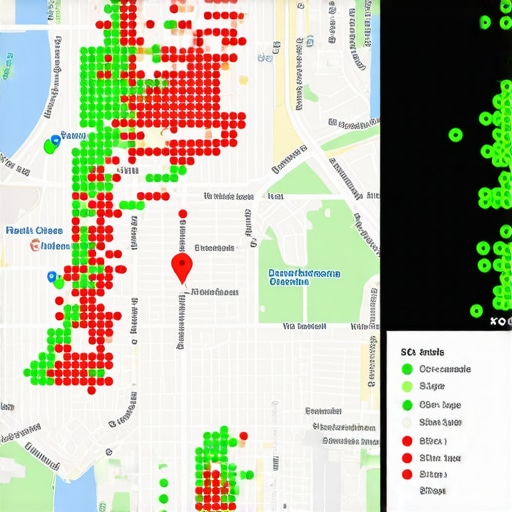
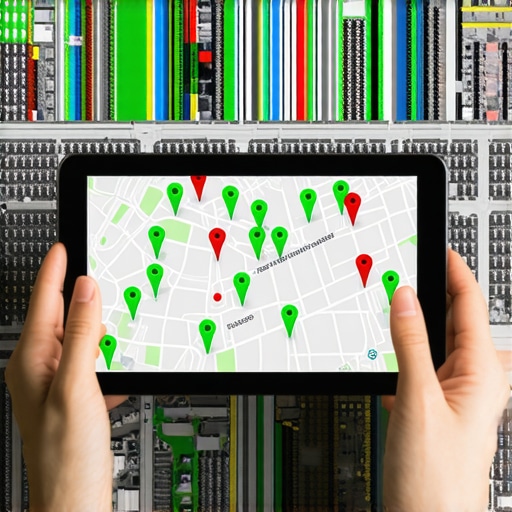
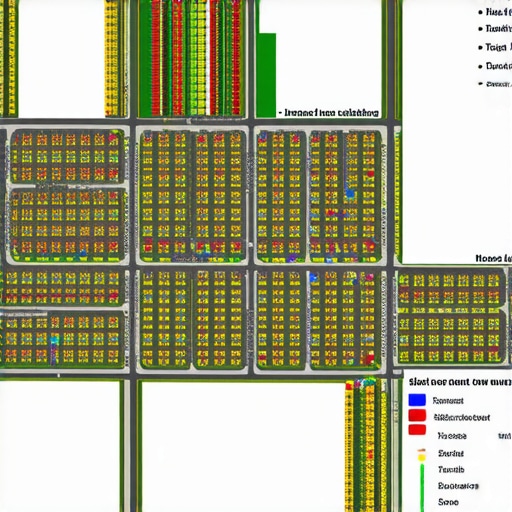
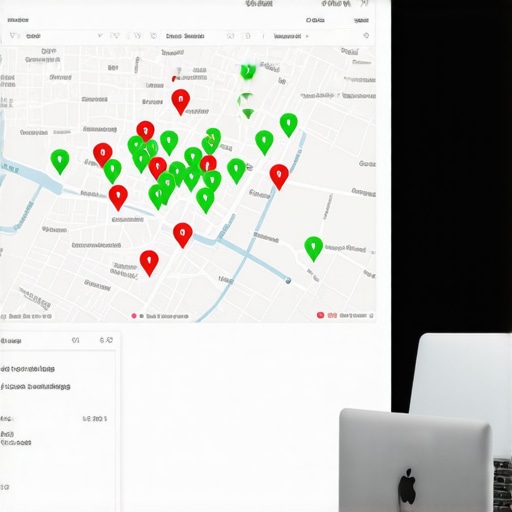
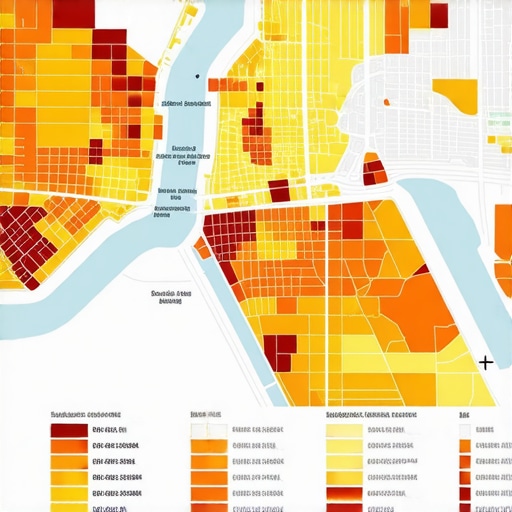
    Because of the “Proximity Paradox,” a business can rank #1 at their own front door but vanish completely just two blocks away. If your tracker is checking from a single lat/long, it is missing the reality of your reach. You might have a massive “blind spot” where your competitors are eating your lunch, but your report remains a sea of green. To see the truth, you need to rank google business profile results across a grid, not a point. Using SEO Viper Tools allows for multi-point tracking that visualizes your ranking “heat” across an entire service area, exposing where your authority drops off a cliff.

    For a deeper dive into how to expand this visibility, see our internal resource: The Ultimate Guide to Google My Business Rank Elevation.

    The SEO-GEO Gap: AI Overviews vs. The Map Pack

    One of the most dangerous assumptions in local marketing is that traditional organic SEO success translates directly to Map Pack dominance. Recent research from Search Engine Land highlights a growing “SEO-GEO gap.” With the integration of Search Generative Experience (SGE) and AI Overviews, the way Google processes intent has changed. Website content alone won’t fix map rankings because AI search traffic often bypasses traditional blue links entirely.

    To rank higher on google maps, you must understand that the Map Pack algorithm prioritizes different signals than the organic algorithm. While your site might rank for “best plumber in Chicago,” your Google Business Profile might not even appear in the top 10 of the local pack for the same query if your geo-signals are weak. Most local seo software fails to distinguish between these two distinct environments. You need a strategy that bridges the gap between your on-page signals and your physical location authority.

    Learn more about this disconnect here: How Most Local Business Schema Fails to Tell Google Where You Are.

    Methodology Mismatch: UULE vs. Real User IP

    Let’s get technical. Most local seo ranking tools utilize a method called UULE. This is a base64 encoded parameter that “spoofs” a location to Google, telling the engine to show results as if the searcher were at a specific coordinate. While this was effective for years, Google’s 2026 algorithm has evolved to prioritize real-time mobile GPS and IP data over spoofed parameters.

    A “spoofed” location report often shows “cleaner” and more optimistic results than what a real customer sees on their mobile device. Why? Because Google knows the difference between a server pinging an API and a human being moving through a city with a smartphone. When you use a google maps rank tracker, you must ensure it accounts for these “Human Signals.” If your gmb seo tools are only using UULE, you are looking at a sanitized version of reality. Real-world tracking now requires a blend of data points that simulate mobile movement and carrier-grade IP addresses to reflect actual user experiences.

    The “Open Now” & Dynamic Results Flaw

    Rankings are not static; they are dynamic and time-sensitive. A major flaw in standard keyword tracking is the failure to account for “operating hour filters.” If your rank tracker runs its automated check at 2:00 AM while your business is closed, but your competitors are open (or vice versa), the results are useless. Google increasingly applies the “Open Now” filter by default for many service-based queries.

    Tracking a keyword in the middle of the night might show you at Rank #1 because the “heavy hitters” are filtered out due to their hours. But at 2:00 PM, when the competition is fierce, you might be at Rank #8. Without scheduled, dynamic tracking provided by advanced google maps seo tools, you are making decisions based on data that doesn’t exist during your actual peak sales hours.

    Check out our guide on managing these fluctuations: Google My Business Rank: 5 Fixes for 2026 Weekend Traffic Drops.

    Ignoring the “Human Signal”: The 2026 Proximity Update

    The 2026 Proximity Update has fundamentally changed how the google map pack ranking factors are weighted. Google is now heavily incorporating “offline proof” – specifically foot traffic cues, dwell time, and even NFC (Near Field Communication) interactions. Traditional trackers are blind to these local seo ranking signals.

    You might see a competitor with fewer reviews and a worse website outranking you. Traditional logic says that shouldn’t happen. However, if Google sees a high volume of mobile devices “dwelling” at that competitor’s physical location, it interprets that as a massive signal of relevance and authority. This “Verified Visit Search” is the new frontier. Trackers that only look at citations and keywords are missing the most important variable in the modern algorithm: the physical behavior of humans in the real world.

    Read more on how to leverage these signals: How Real Foot Traffic Signals Push Your Business to the Top of Maps.

    Data Integrity & The “Ghost Listing” Effect

    Data issues are the silent killer of local SEO campaigns. If your tracking tool is using even a slightly different NAP (Name, Address, Phone) format than what is on your actual Google Business Profile (GBP), you may be tracking a “ghost” version of your performance. This happens frequently when businesses have moved, changed names, or have unresolved duplicates.

    A proper google business profile audit tool is required to ensure that the data being tracked matches the “CID” (Customer Identification) of your live listing. Without this verification, your local business seo tools might be pulling data from a suppressed or filtered listing, leading you to believe your rankings have tanked when, in reality, you’re just tracking the wrong data point. Consistency in google business profile optimization is the only way to ensure the integrity of your reports.

    The Radius Collapse: Why Your Reach is Shrinking

    Many businesses are noticing a “shrinking radius” in their reports. In 2024, you might have appeared in the Map Pack for searches 10 miles away; in 2026, that radius may have collapsed to 3 miles. This isn’t necessarily because you are doing something wrong; it’s because Google is tightening proximity filters to prioritize the most immediate local options and to combat “spam” listings that attempt to blanket entire cities.

    If your reporting doesn’t show you the boundary of this collapse, you can’t fight back. You need a google maps ranking service that identifies the exact perimeter where your visibility ends. Only then can you implement hyperlocal content strategies to “push” those boundaries back out.

    For tactical fixes, see: Shrinking Radius? 4 Fixes for Your Google My Business Rank [2026].

    Stop Relying on Static Reports

    Are you tired of “High Impressions” that result in zero phone calls? It’s time to stop looking at vanity metrics and start looking at the ground truth. Your business deserves a google maps ranking service that understands the nuances of the 2026 algorithm – from AI filters to real-time proximity shifts.

    Don’t let flawed tracking hide your true performance. Use this local seo tool to run a real-time heatmap audit and see exactly where your customers are actually finding you. Move beyond the single pin and dominate your local market with data you can actually trust.

    Ready to see the truth? Get started with SEO Viper Tools today.

    About the Author: Kevin Pauls is a leading Local SEO Consultant and Google Business Profile Product Expert. With over a decade of experience, Kevin helps businesses and agencies navigate the complexities of Google Search and Maps to drive real-world foot traffic and revenue.


  • Why Standard Optimization Services Often Miss the Local Rank Signal

    Why Standard Optimization Services Often Miss the Local Rank Signal

    Why Standard Optimization Services Often Miss the Local Rank Signal

    It’s a scenario I see every single week. A business owner – let’s call him Mike, a high-end plumber in Chicago – reaches out to me in total frustration. Mike has done everything by the book. He hired a “Local SEO expert” who filled out every field in his Google Business Profile (GBP). They added 50 high-resolution photos, optimized his categories, ensured his NAP (Name, Address, Phone number) was consistent across the web, and even automated a review collection system that netted him 120 five-star reviews.

    On paper, Mike’s profile is perfect. Yet, when he searches for “plumber near me” from his own office, he’s sitting at rank #7. Meanwhile, a guy three blocks away with 14 reviews and a blurry profile photo of a van is sitting comfortably in the Top 3 Map Pack. Mike feels like the system is rigged. The truth? It isn’t rigged; it’s just more sophisticated than the “standard optimization” packages most agencies sell.

    The problem is that most services treat google business profile seo as a static checklist. They focus on Relevance but completely ignore the dynamic interplay of Proximity and Prominence – the other two pillars of the “Core Triplet.” In today’s landscape, a “fully optimized” profile is merely the entry fee. It is not the winning ticket. To truly rank google business profile assets in 2026, you have to understand the “Local Rank Signal,” a complex set of human-driven and spatial data points that standard services simply don’t have the tools to influence. Before you spend another dime on basic updates, you need to understand The 3 Crucial Gaps Your Last Local SEO Audit Probably Missed.

    The Proximity Paradox: Why Distance Often Trumps Optimization

    One of the hardest pills for business owners to swallow is that Google’s local algorithm is, first and foremost, a utility for the user. That utility is built on convenience, which Google defines as geographic distance. This is the “Proximity Paradox”: no matter how “optimized” your profile is, if a searcher is standing outside your competitor’s door, that competitor has a massive algorithmic advantage that relevance cannot easily overcome.

    Standard google maps ranking service providers often promise “city-wide dominance.” This is a lie. Google doesn’t see a city; it sees a series of overlapping proximity radiuses. In 2026, Google’s “Proximity vs. Relevance Modeling” has become even tighter. The algorithm calculates visibility based on a defined geographic scope. If you are a dentist in North Austin, your “Perfect Profile” might dominate a 3-mile radius, but the moment a searcher moves into South Austin, Google’s “Spatial Search” filters prioritize closer entities to ensure the user doesn’t have to drive 45 minutes.

    This proximity bias is why you see “the shop next door” outranking you. They aren’t better at SEO; they are just physically closer to the centroid of the search intent at that specific moment. Standard services fail because they try to “SEO” their way out of a physical location problem. To win, you must understand that proximity is a ceiling. You can’t break through it with more keywords; you have to expand your “Prominence” to force Google to widen your proximity radius. For more on this, read The Proximity Paradox: Why Moving Your Store Location Won’t Always Help You Dominate Maps.

    The Relevance Trap: Why Keywords Aren’t Enough Anymore

    If proximity is the ceiling, relevance is the floor. Most “standard services” stop here. they think that by stuffing your business description with “best plumber in Chicago” and “emergency drain cleaning,” they’ve cracked the code. This is the “Relevance Trap.” In the 2026 algorithmic landscape, Google has moved far beyond simple keyword matching.

    Google now uses advanced AI filters and semantic intent to judge relevance. The 2026 Core Update specifically targeted “AI Spam” – generic, keyword-stuffed descriptions and posts that don’t offer real value. If your gmb ranking service is just churning out ChatGPT-generated posts every week, you might actually be hurting your rankings. Google’s AI can now distinguish between a business that *says* they do “water heater repair” and a business that *proves* it through unstructured data, customer review terminology, and photo metadata.

    True relevance is about “Entity Building.” It’s about making sure Google’s Knowledge Graph understands that your business is the definitive answer to a specific problem. When a user searches for “leaky faucet help,” Google isn’t looking for the word “leaky faucet” in your title; it’s looking for a history of interactions, photos of faucet parts, and reviews that mention successful repairs. If you’re stuck, it’s time to Stop Worrying About Keywords and Fix Your Google My Business Rank This Way.

    The Prominence Gap: Building Authority Beyond Citations

    Prominence is how well-known a business is in the offline world. This is where most local seo tools and services fall short. They focus on “low-quality citations” – listing your business on 50 different obscure directories that no human has visited since 2012. Google has largely devalued these traditional citations because they are too easy to manipulate.

    The modern Prominence signal is built on “Brand Mentions” and “Digital PR.” Research shows that random brand mentions on local news sites, community blogs, or even high-traffic social media threads drive significantly more map clicks than a listing on an “All-Biz-Directory” site. Google is looking for “Entity Authority.” Does the rest of the local web talk about you? Are you linked to local events, charities, or other authoritative local entities?

    Standard services ignore this because it’s hard work. It’s much easier to sell a “Citation Package” for $499 than it is to build a local brand presence. But if you want to close the Prominence Gap, you have to stop thinking like a coder and start thinking like a publicist. You need to Stop Wasting Cash on Low-Quality Citations That Never Show Up in Maps and focus on signals that Google actually trusts.

    Human Signals: The 2026 Ranking Frontier

    This is the most critical part of the modern Local Rank Signal, and it’s almost entirely “invisible” to standard optimization services. We are now in the era of “Offline Intent Data.” Google is no longer just looking at what you put on your profile; it is looking at how humans interact with your business in the physical world.

    Foot Traffic & Dwell Time

    Google tracks “Verified Visits” through location history on millions of devices. If Google sees that 50 people a day walk into your competitor’s shop and stay for an average of 30 minutes, but only 5 people walk into yours, that competitor is going to outrank you – even if your google business profile optimization is technically superior. Real-world popularity is the ultimate ranking factor. This is why “Biometric Proof” and device-level dwell time are becoming the primary signals for high-competition niches.

    Interaction Speed & Engagement

    How fast do you respond to a Google Message? How quickly do you reply to a 1-star review? Google measures “Interaction Speed” as a proxy for business health. A business that responds in 2 minutes is perceived as more relevant and reliable than one that takes 2 days. Standard services can’t “optimize” your response time – that’s an operational signal that you must manage. Furthermore, the “Click-Through Rate” (CTR) from the Map Pack is vital. If users consistently skip your listing to click the one below you, Google will eventually swap your positions.

    AR-View Proximity Tests

    With the rise of Augmented Reality (AR) in Google Maps, Google is testing “Visual Proximity.” They are using Street View data and user-uploaded photos to verify that your storefront actually exists where you say it does and that it looks like a reputable business. If your storefront is hidden, poorly marked, or inconsistent with your photos, you may suffer a ranking penalty that no amount of backlinking can fix. To understand how to leverage these real-world data points, see How Real Foot Traffic Signals Fix a Stalled Google My Business Rank.

    How to Audit the “Invisible” Signals

    If you’re frustrated with your current rankings, you need to look beyond the standard checklist. You need a google business profile audit tool that actually measures these nuanced signals. Ask yourself these questions:

    • Is my proximity radius shrinking? Use a google maps rank tracker to see if you are losing ground in specific directions.
    • Are my brand mentions localized? Check if local blogs or news outlets have mentioned your business name without a link.
    • What is my “Search to Visit” ratio? Use your GBP insights to see how many people who find you actually request directions.
    • Am I triggering “Semantic Clusters”? Do your reviews use the same language as your target keywords?

    Standard services won’t give you these answers because they don’t have the data. You need to take control of your own signal management. Start by performing The 10-Minute Local SEO Audit That Uncovers Why Your Rankings Stalled.

    Conclusion: Moving Beyond “Set It and Forget It”

    The days of “set it and forget it” Local SEO are dead. In 2026, the local algorithm is a living, breathing reflection of real-world activity. If you are relying on a standard optimization service that only touches your profile once a month, you are going to get left behind by competitors who are generating real human signals, building brand prominence, and mastering the proximity paradox.

    Stop settling for generic services. If you want to dominate the Map Pack, you need to use advanced SEO Viper Tools designed for the modern algorithm. The “Local Rank Signal” is waiting for you to claim it – don’t let a “perfect profile” stand in the way of real results.

    Kevin Pauls is a Local SEO Consultant and Google Business Profile Product Expert who helps businesses and agencies dominate Google Maps by focusing on the signals that actually move the needle.

  • Why Your Profile Ranking Stalled and the 5-Minute Fix That Restarts It

    Why Your Profile Ranking Stalled and the 5-Minute Fix That Restarts It

    Why Your Profile Ranking Stalled and the 5-Minute Fix That Restarts It

    You’ve done everything the “gurus” told you to do. You’ve optimized your description, you’ve gathered forty-five 5-star reviews, and your NAP (Name, Address, Phone number) consistency is pixel-perfect across a hundred different directories. Yet, you’re staring at the same screen you were three months ago: your business is sitting at position #4 or #5. You are stuck behind the “Invisible Wall,” just inches away from the coveted Map Pack, but effectively invisible to the 70% of local searchers who never click “View All.” This is the reality of google business profile seo in 2026.

    Section 1: The “Invisible Wall” in Local Search

    The “ranking plateau” is a phenomenon I see daily in my consultancy. A business experiences a meteoric rise from page ten to the top five, and then – nothing. It’s as if Google has decided your business is “good, but not Map Pack good.” If you’ve noticed your rankings flatlining or even experiencing sudden, inexplicable dips, you aren’t alone. The March 2026 Core Update and the August 2025 Spam Update fundamentally changed how the algorithm interprets local relevance.

    In the past, local SEO was a game of accumulation. More reviews, more citations, and more keywords usually equaled a higher rank. However, Search Engine Land recently reported that while Google is confirming fewer official “Local” updates, ranking volatility is at an all-time high. This volatility is a symptom of a more sophisticated, real-time algorithm that prioritizes “freshness” and “active verification” over historical data. If your profile hasn’t moved in weeks, it’s likely because you’ve hit a trust ceiling. Google knows who you are, but it isn’t convinced you are the most *active* or *relevant* solution for the user right now. To break through, you need to understand why the old metrics are failing you. Before we dive into the mechanics, you might want to perform The 10-Minute Local SEO Audit That Uncovers Why Your Rankings Stalled to see if there are underlying technical errors holding you back.

    The “Invisible Wall” isn’t a penalty; it’s a filtration. Google’s primary goal is to minimize “searcher regret.” If a profile looks the same today as it did six months ago, the algorithm begins to de-prioritize it in favor of “high-signal” competitors. Your google business profile seo strategy must evolve from a static setup to a dynamic interaction model.

    Section 2: Why the “Old Way” of Local SEO is Stalling

    For a decade, the foundation of local search was “Static SEO.” This involved building a fortress of citations and ensuring your business name was mentioned on every local chamber of commerce site. While these signals still matter as a baseline, their weight in the 2026 algorithm has plummeted. We are now firmly in the era of “Behavioral SEO.”

    Google has moved beyond what you *say* about your business to what users *do* with your business. Behavioral signals – dwell time on your profile, interaction speed (how fast you respond to messages), and actual foot traffic – now dictate the Map Pack. A recent deep-dive into Reddit research among service-based businesses revealed a startling trend: plumbers, lawyers, and HVAC contractors are seeing their rankings drop even when their review count increases and their proximity to the searcher remains unchanged. This is known as the “Proximity Paradox.” Being the closest business no longer guarantees the top spot if your behavioral signals are stagnant.

    The problem with traditional google business profile seo is that it treats your profile like a yellow-page listing rather than a live social-utility hub. When you rely solely on citations, you are feeding the algorithm “cold data.” Google wants “hot data” – real-time proof that your business is open, active, and engaging with the community. If your profile is just sitting there, Google’s cache for your business becomes “stale.” This is where many businesses fail; they optimize once and wait for the phone to ring. But in a competitive market, a stagnant profile is a dying profile. You need to understand Why Perfect Citations Won’t Save Your Google My Business Rank Anymore and shift your focus to high-impact, low-effort refreshes that signal life to the algorithm.

    The shift to behavioral signals also means that “fake” signals are being caught faster than ever. The August 2025 Spam Update specifically targeted profiles that had high citation counts but zero mobile-GPS interaction. If the algorithm doesn’t see “pings” from real human devices near your location or interacting with your listing, it assumes your authority is artificial. To combat this, you need a strategy that forces Google to re-evaluate your profile’s “Live-Verification” status.

    Section 3: The 5-Minute Fix: The “Service-Attribute Refresh”

    If your ranking has stalled, it’s likely because your profile is “stuck” in a low-priority index. To restart the engine, you need to trigger a re-crawl that forces a “Merchant Check.” This isn’t about a massive overhaul; it’s about making surgical changes that Google’s “Freshness Bot” cannot ignore. I call this the “Service-Attribute Refresh.”

    Here is the exact 5-minute process to rank google business profile listings that have plateaued:

    • Step 1: Log in to your Google Business Profile manager. Do this from a mobile device if possible, as Google prioritizes mobile-originated edits.
    • Step 2: Add one “New” Service. Look at your service list. Even if you offer “Residential Plumbing,” add a specific sub-category like “Emergency Water Heater Repair” or “Tankless System Maintenance.” This forces the algorithm to categorize you for new, long-tail keywords.
    • Step 3: Toggle one “Attribute.” Attributes are the small tags like “Identifies as veteran-owned,” “Wheelchair accessible,” or “Online appointments.” Find an attribute that applies to you but isn’t currently checked. Toggle it on. This change is high-signal because attributes are often tied to specific user filter searches.
    • Step 4: Upload one “Live” Photo. This is the most critical step. Take a photo of your office, your van, or a piece of equipment *right now* using your mobile phone. Ensure your GPS/Location metadata is enabled. Upload it directly to the “Photos” section. A fresh, geo-tagged photo is a “Biometric Proof” of your current operation.
    • Step 5: Save and Exit. This sequence of actions creates a “pulse” in the local index.

    By performing these steps, you are effectively forcing a “Live-Verification” signal. Google’s algorithm sees a change in services, a change in business attributes, and a new geo-tagged image all within minutes. This combination is often enough to break the “Invisible Wall” and move a profile from #5 to #2. Many professionals use specialized local seo tools to track how these micro-edits impact their “heat maps” in real-time. This isn’t just about google business profile optimization; it’s about administrative activity. Google rewards owners who are active in the dashboard because active owners provide a better user experience. If you aren’t seeing movement within 72 hours of this fix, you may be dealing with a deeper indexing bug, but for 90% of stalled profiles, this “pulse” is the catalyst for a ranking jump.

    Section 4: Beyond the Fix – Human Interaction Signals

    Once you’ve restarted your rankings with the 5-minute fix, you need to sustain that momentum. In 2026, the algorithm has moved toward “Interaction Cues.” This is a step beyond simple clicks; it’s about the quality and speed of the human-to-business connection. One of the most significant shifts we’ve seen is the “NFC Interaction Fix.” Businesses that encourage customers to tap their phones on NFC-enabled review stands or check-in points are seeing a massive boost in local map pack seo.

    Why? Because an NFC tap provides “Biometric Proof” that a real human was physically present at your location. In an era of AI-generated reviews and spoofed locations, physical presence is the ultimate ranking signal. This is why “Real Store Visits” now overpower traditional backlink strategies. If Google sees twenty mobile devices “ping” at your location over a weekend, your authority score will skyrocket, regardless of how many citations your competitors have. You can read more about this in our guide on How Real Foot Traffic Signals Fix a Stalled Google My Business Rank.

    Furthermore, your response time to messages and reviews is now a public-facing metric that Google uses to improve google maps rankings. If a customer messages you through the GBP app and you take six hours to respond, Google notes this as a poor user experience. In 2026, the goal is “Zero Latency.” Use automated response tools or dedicated staff to ensure that every interaction – whether it’s a review, a question, or a quote request – is addressed within minutes. YouTube research regarding the 2026 algorithm suggests that “Interaction Velocity” is now a top-three ranking factor. If you want to rank higher on google maps, you must treat your profile like a live chat platform. The more “pings” and “responses” your profile generates, the more Google views you as the “authority” in your local area. This is the essence of modern google business profile seo: it’s a living, breathing ecosystem, not a set-it-and-forget-it task.

    Section 5: Troubleshooting Post-Reinstatement Stalls

    There is one specific, frustrating edge case I encounter frequently: the “Post-Reinstatement Ghosting.” This happens when a profile was suspended (perhaps due to the August 2025 Spam Update), successfully reinstated, but then fails to regain its former rankings. You might be back on the map, but you’re buried on page three.

    This is often caused by the “Internal Indexing Bug” (referenced in Google Support thread #434330017). When a profile is suspended, Google sometimes moves the data to a “cold storage” server. Upon reinstatement, the profile is visible, but the “relevance connections” to local keywords aren’t fully restored. To fix this, you need to do more than just the 5-minute refresh. You need to “re-verify” the core data. I recommend changing your primary category to something slightly different, waiting 24 hours, and then changing it back. This “Category Flip” forces the system to re-index your primary keyword associations from scratch. It’s a risky move that can sometimes trigger a secondary review, so it should only be used as a last resort if you need to rank higher on google maps after a suspension.

    If you find yourself in this situation, it’s also vital to check your “reinstatement health.” Sometimes, a profile is technically live but has a “soft flag” that prevents it from entering the Map Pack. For a step-by-step recovery plan, check out What to Do the Second Your Google Business Profile Gets Suspended. Dealing with a gmb ranking service during this time can also help, as they often have access to higher-level support channels to clear these internal bugs. Remember, a reinstated profile is like a patient out of surgery; it needs “rehab” (active signals and new content) to get back to full strength. Don’t assume that just because the “Suspended” red bar is gone, your google business profile seo is back to normal.

    Section 6: Conclusion & The 2026 Roadmap

    The landscape of google business profile seo is no longer about who has the most backlinks or the longest description. It is about who provides the most “Live Proof” of their business operations. The “Invisible Wall” that stalls your rankings is simply Google’s way of asking for a heartbeat. By implementing the 5-minute Service-Attribute Refresh, prioritizing human interaction signals, and understanding the nuances of the 2026 algorithm, you can restart your growth and dominate the Map Pack.

    Local SEO isn’t just marketing infrastructure; it’s an ongoing conversation with an algorithm that values activity above all else. If you’re tired of playing guessing games with your visibility, it’s time to move toward a data-driven approach. Whether you choose to use a professional google maps ranking service or manage the “pulse” of your profile yourself, the key is consistency. Don’t let your profile go stale. Keep your services updated, your photos fresh, and your response times low. If you need a deeper dive or a personalized strategy to break through your local competition, feel free to reach out for a consultation. The Map Pack is waiting – go claim your spot.

  • The 4 Missing Trust Signals Keeping Your Business Out of the Top 3

    The 4 Missing Trust Signals Keeping Your Business Out of the Top 3


    The 4 Missing Trust Signals Keeping Your Business Out of the Top 3


    The 4 Missing Trust Signals Keeping Your Business Out of the Top 3

    I. Introduction: The Proximity Paradox

    I see it every single day. A business owner calls me, frustrated. They have a 4.9-star rating, 150 glowing reviews, and they’ve spent thousands of dollars on “perfect” citations. They’ve even moved their office to the dead center of the city to satisfy the proximity gods. And yet, when they search for their primary services, they are stuck in position #4 or #5 – just outside the “Golden Triangle” of the Google Map Pack.

    Welcome to the Proximity Paradox. In 2026, proximity is no longer the king of local search. In fact, being the closest business to the searcher is often not enough to overcome a lack of digital trust. As a Google Business Profile Product Expert, I’ve watched the algorithm shift from a simple directory-based system to a sophisticated Entity Authority engine. Traditional SEO – the kind that focuses solely on keywords and Name, Address, and Phone (NAP) consistency – is now just the “entry fee” to play the game. It doesn’t win the game.

    To dominate the Map Pack today, you must move beyond the basics. You need to understand that Google isn’t looking for a “listing”; it’s looking for a verified entity that it can trust with its users’ lives, homes, and wallets. If you are struggling to break into the Top 3, it’s likely because you are missing the four advanced trust signals that define modern Google My Business Rank Elevation. Let’s dive into why your “perfect” profile is failing and how to fix it using Entity Authority.

    II. Signal #1: Entity Association & Knowledge Graph Presence

    The first and most critical signal you are likely missing is a strong presence in Google’s Knowledge Graph. Most business owners treat their Google Business Profile (GBP) as a standalone island. They fill out the fields, upload a few photos, and wait. But Google doesn’t see your business as a single profile; it sees it as an Entity – a uniquely identifiable thing or concept.

    According to research from SearchAtlas, Google’s ranking systems now evaluate identity, location, and services through a web of external validation. This is where Entity Association comes in. If Google can’t connect your GBP to a wider web of authoritative data, it won’t have the confidence to rank you in the Top 3. You need to perform comprehensive google business profile optimization to ensure your business isn’t just a “listing,” but a recognized node in the Knowledge Graph.

    How Google Defines Your Entity

    Google uses structured data (Schema markup) and third-party validation to confirm three things:

    • Identity: Are you who you say you are?
    • Location: Are you actually where you say you are?
    • Services: Do you actually provide the solutions you claim?

    If your website doesn’t use advanced LocalBusiness Schema that explicitly links to your social profiles, your Wikipedia entries (if applicable), and your professional licenses, you are failing the identity test. To rank higher on google maps, your digital footprint must be a closed loop where every piece of data points back to the same central entity.

    Action Steps for Entity Authority:

    • Implement SameAs Schema: Use the `sameAs` attribute in your website’s JSON-LD to link your GBP to your Facebook, LinkedIn, and industry-specific profiles.
    • Verify through Official Sources: Ensure your business is mentioned on government sites, Better Business Bureau, and local Chamber of Commerce pages. These are “high-trust” nodes that Google uses to anchor your entity.
    • Audit Your Knowledge Panel: Search for your business name. If a Knowledge Panel doesn’t appear, or if it lacks “See Results About” links, your entity association is weak.

    III. Signal #2: Unstructured Citations & Semantic Proof

    For years, SEO “gurus” told you that the secret to ranking was building hundreds of citations on sites like Yelp, Yellow Pages, and Manta. While those still matter for basic consistency, they carry almost zero weight in terms of competitive ranking in 2026. The reason? They are “structured” and easily manipulated. Anyone can buy 500 citations for $50.

    The second missing signal is Unstructured Citations and Semantic Proof. This is why perfect citations won’t save your Google My Business rank anymore. Google’s AI models, including Search Generative Experience (SGE) and AI Overviews (AEO), are now looking for mentions of your business within the natural flow of local conversation.

    The Shift to Semantic Depth

    Data from InnerSpark Creative suggests that Google and other AI models like ChatGPT rely heavily on Knowledge Graphs to determine source trust. They aren’t just looking for your phone number; they are looking for Semantic Proof. This means your business needs to be mentioned in:

    • Local news articles regarding community events.
    • Neighborhood blogs discussing the “best services in the area.”
    • Industry-specific lists (e.g., “Top 10 Litigation Firms in Chicago”).

    These mentions don’t need to be in a specific format. A simple mention of your business name and city within a relevant article provides more “Trust Signal” than a hundred directory listings. It tells Google that you are a relevant part of the local ecosystem.

    Action Steps for Semantic Proof:

    • Local PR: Sponsor a local little league team or a charity 5k. Ensure the event page mentions your business name.
    • Guest Posting on Local Blogs: Write an article for a local neighborhood association site about home maintenance or local laws.
    • Niche Authority: Get listed on “Best of” lists that require editorial review. These are the unstructured signals that Google’s AI uses to validate your expertise.

    IV. Signal #3: Behavioral Trust & Interaction Speed

    This is perhaps the most overlooked ranking factor in the modern local algorithm. Google is no longer just looking at what *you* say about your business; it is looking at how *users* interact with you. This is known as Behavioral Trust.

    In my experience as a GBP Product Expert, I’ve seen businesses with fewer reviews outrank giants simply because they have higher engagement rates. Google tracks “Dwell Time” (how long a person looks at your profile), “Click-Through Rate” (CTR), and, most importantly, Interaction Speed.

    The Need for Speed

    If a customer sends you a message through your Google Business Profile and you take six hours to respond, you are losing ranking power. Google explicitly tracks the speed of response to customer inquiries as a direct ranking influence. They want to recommend businesses that are responsive and reliable. If you want to dominate, you need the right local seo tools to manage these interactions in real-time.

    Real-World Signals: Foot Traffic

    Furthermore, real store visits overpower every other local mapping strategy. Google uses location history data from millions of Android and iOS users to see if people actually visit your physical location after searching for you. If 100 people click “Directions” but only 2 people’s phones actually show up at your office, Google perceives a lack of trust. It assumes your “Entity” is either fake or undesirable.

    Action Steps for Behavioral Trust:

    • Enable GBP Messaging: And ensure your “Average Response Time” is under 5 minutes. Use automation if necessary, but keep it human.
    • Encourage “Check-ins”: Ask loyal customers to open their Google Maps app when they are at your place of business.
    • Optimize for “Request a Quote”: The more users interact with the buttons on your profile, the more “Behavioral Trust” you build. Use GMB ranking tools to track these engagement metrics.

    V. Signal #4: Topical Semantic Depth (The Local Content Cluster)

    The fourth missing signal is Topical Semantic Depth. Most local businesses have a website that is a digital brochure. It says “We are plumbers in Dallas,” and that’s about it. To Google, this is thin content. To rank in the Top 3 in 2026, your website must prove you are a local expert through Hyperlocal Content Marketing.

    Google’s algorithm now looks for “Content Clusters” that prove you understand the specific nuances of your service area. A plumber shouldn’t just write about “how to fix a leaky pipe.” They should write about “How the hard water in the North Dallas suburbs affects copper piping in homes built in the 1980s.”

    This level of specificity provides Topical Authority. It shows Google that you aren’t just a service provider; you are a local authority. This is a core component of Mastering Local Maps Domination. When your website has deep, semantically rich content about your specific city and your specific niche, Google is much more likely to trust your GBP for local queries.

    Building the Local Cluster

    Your website should include:

    • Service-in-City Pages: Not just one page for all cities, but unique, value-driven pages for every suburb you serve.
    • Local Guides: Content that isn’t directly related to your sales but is related to your location (e.g., “The 5 Best Hardware Stores in [City] for DIY Repairs”).
    • Case Studies with Maps: Show a project you completed, include a map of the general area, and use local landmarks in your description.

    Action Steps for Semantic Depth:

    • Audit Your Blog: Remove generic “Top 5 Tips” posts and replace them with “Top 5 Tips for [City Name] Homeowners.”
    • Use Local LSI Keywords: Include mentions of local parks, stadiums, and historic districts within your service descriptions.
    • Leverage Structured Data: Use `areaServed` Schema to define your boundaries clearly to the AI.

    VI. Conclusion & The 2026 Roadmap

    The “Top 3” in the Google Map Pack is no longer a participation trophy for businesses that have a lot of reviews. It is a highly curated list of Entities that Google trusts implicitly. If you are stuck outside the Top 3, it is because you are missing one or more of these signals: Entity Association, Unstructured Semantic Proof, Behavioral Trust, or Topical Depth.

    The roadmap for 2026 is clear: Stop treating your Google Business Profile as a static listing. Start treating it as the center of a local digital ecosystem. Focus on building real-world interactions, fostering local PR, and creating content that proves you are the local authority. If you need help auditing these signals or finding the right google maps ranking service, now is the time to act. The gap between the Top 3 and everyone else is only going to grow wider as AI takes a larger role in local discovery. Use SEO Viper Tools to begin your audit today and reclaim your spot at the top.


  • Stop Obsessing Over Impressions and Fix the One Stat Killing Your Map Rank

    Stop Obsessing Over Impressions and Fix the One Stat Killing Your Map Rank

    Stop Obsessing Over Impressions and Fix the One Stat Killing Your Map Rank

    You open your Google Business Profile (GBP) dashboard and see it: a massive spike in “impressions.” The chart is trending upward, glowing with the promise of visibility. You feel a surge of pride. But then you look at your CRM. You look at your phone. Silence. No new leads, no booked appointments, and no increase in revenue. This is “The Great Impression Lie,” and it is the single most common trap in the world of google business profile seo.

    I am Aqib Junaid, and I’ve spent years helping businesses, startups, and brands navigate the volatile waters of local search. My mission is simple: to help you stop chasing vanity metrics and start driving organic traffic that actually converts into consistent leads. The hard truth is that in 2025 and 2026, being “seen” by Google is no longer the same as being “chosen” by a customer. If you have 10,000 impressions but zero clicks, Google’s algorithm interprets your business as irrelevant. The result? Your ranking will eventually plummet, regardless of how many keywords you’ve stuffed into your description.

    The thesis of modern google business profile seo is this: Engagement – specifically Click-Through Rate (CTR) and user interaction – is the real king. It is the fuel that powers the engine of the local map pack. Without it, your listing is just a ghost in the machine.

    The Vanity Metric Trap: Why Impressions Are Lying to You

    To understand why your ranking is stalled, we first have to define what an impression actually is. In the eyes of Google, an impression is counted the moment your listing is loaded on a user’s screen – even if it is buried at the very bottom of the page or hidden behind four other competitors in the local pack. This is what I call the “90% Share Lie.” You might be told you have a high impression share, but if you aren’t in the top three positions, those impressions are effectively invisible to the human eye.

    An impression does not equal attention. It certainly does not equal intent. Many business owners believe that if they just get their name out there enough, the leads will follow. However, Google’s local algorithm has become far more sophisticated. It now measures the “quality” of an impression. If 1,000 people see your listing and not a single person clicks “Call,” “Directions,” or “Website,” Google receives a negative signal. It concludes that your listing didn’t satisfy the user’s search intent. You can read more about why this happens in my deep dive on Why Your Google My Business Rank Tanked Despite Perfect Citations.

    In the past, SEOs obsessed over NAP (Name, Address, Phone) consistency. They believed that having your business listed in 200 obscure directories would guarantee a top spot. In 2026, those days are over. Perfect citations won’t save your rank if your engagement metrics are flatlining. Google is shifting its focus toward real-world utility. If users aren’t interacting with you, Google won’t promote you. This is why many businesses see a “rank plateau” where they hover at position #4 or #5 but can never quite crack the top 3. They have the citations, but they lack the human signals required to rank google business profile listings at the highest level.

    The “One Stat” That Actually Matters: Engagement Signals

    If impressions are a vanity metric, what is the “One Stat” you should be obsessing over? It’s your Engagement Rate. This encompasses your Click-Through Rate (CTR), your interaction speed, and your “dwell time” – how long a user spends looking at your photos or reading your reviews after clicking your listing.

    Google uses these engagement signals as a tie-breaker. Imagine two plumbing companies in the same neighborhood. Both have 4.8-star ratings. Both have been in business for 10 years. Both have optimized their primary categories. How does Google decide who gets the #1 spot? It looks at the users. If the business in the #3 spot consistently gets more clicks than the business in the #1 spot, Google’s machine-learning algorithms will eventually swap them. This is why you need a professional google maps ranking service or advanced local seo tools to monitor how users are actually behaving when they encounter your brand.

    One of the most effective ways to track this behavior is through a google maps rank tracker. Traditional rank trackers only tell you where you are; modern tools show you the “heat” of your listing. Are people clicking “Call” during business hours? Are they requesting directions from a specific part of town? These are the signals that force Google to recognize your relevance. Furthermore, Why Random Brand Mentions Drive More Map Clicks Than Traditional Directories explains the psychological shift in how users find businesses today – they don’t look for lists; they look for social proof and activity.

    Interaction speed is another critical, yet often overlooked, component. When a customer sends a message through your GBP or leaves a review, how fast do you respond? Google tracks this. A business that responds to a message in 5 minutes is viewed as more “active” and “reliable” than one that takes 24 hours. This interaction speed directly impacts your authority. To understand the technical side of this, check out our guide on How Customer Interaction Speed Directly Influences Your Google My Business Rank.

    3 Engagement Killers You’re Ignoring Right Now

    If your engagement is low, it’s usually due to one of three “Engagement Killers.” These are the factors that cause a user to scroll right past you, even if you are in the top 3.

    1. Stale Imagery and Low Photo Engagement

    According to the Noel Ceta Analysis, engagement metrics – including photo views and interactions – now account for roughly 15% of your total ranking power. Most businesses upload five photos when they create their profile and never touch them again. This is a mistake. Google tracks how often new photos are added and, more importantly, how users interact with them. Do they scroll through your gallery? Do they zoom in on your work? High-quality, recent imagery acts as a visual magnet that boosts your CTR. If your photos look like they were taken on a flip phone in 2012, users will bounce, and your google business profile seo will suffer.

    2. The Q&A Ghost Town

    The “Questions & Answers” section of your GBP is not just for customers; it’s a goldmine for SEO. Many profiles have unanswered questions or, worse, no questions at all. An empty Q&A section signals a “dead” or unmonitored business to both Google and potential leads. You should be proactively seeding this section with frequently asked questions and providing authoritative answers. This increases “dwell time” on your listing, which is a key signal that tells Google your profile is valuable to searchers.

    3. Post Apathy

    Google Posts are essentially free social media advertisements that live directly on the search engine results page. To maintain a “recency” signal, you should be posting 2-3 times per week. These posts shouldn’t just be “Buy Now” ads; they should include helpful tips, behind-the-scenes looks, and local news. When users click “Learn More” on a post, it registers as a high-value interaction. If you aren’t posting, you’re missing out on a Tier 1 engagement signal. For those struggling to keep up, using local seo software can help automate and schedule these updates to ensure your profile stays fresh.

    To fix these issues quickly, you might want to look into 5 Fast Signal Tweaks That Actually Improve Your Google My Business Rank, which covers low-hanging fruit that most of your competitors are ignoring.

    How to Force a Rank Increase Using Human Signals (The 2026 Strategy)

    As we move into 2025 and 2026, the landscape of google business profile optimization is shifting toward what we call “Human Signals.” Google is no longer satisfied with just “digital” data; it wants “physical” proof that your business is a pillar of the community. This involves concepts like “Spatial Search” and “Biometric Proof.”

    What does this mean for you? It means Google is looking at phone GPS data to see if people who search for your business actually end up visiting your physical location. These “Verified Visits” are the ultimate ranking signal. If Google sees that 50 people a week search for “best med spa” and then their phones physically move to your coordinates, your ranking will become untouchable. This is why driving real-world foot traffic is now a core part of google maps ranking service strategies. You can learn more about this in our article on The specific foot traffic cues that actually fix a stalled map ranking.

    To capitalize on this, you must encourage “check-ins” and real-time reviews. When a customer leaves a review while they are still physically at your location, Google attaches a high-trust geocode to that review. This is much more powerful than a review left from a home computer three days later. Leveraging google business profile optimization tools allows you to prompt customers at the exact moment their engagement will have the most impact on your rank.

    Furthermore, the future of google business profile seo will involve “Human-in-the-loop” verification. Google’s AI is getting better at detecting “fake” engagement. This is why you must focus on genuine interactions. For a deeper look at the future of the algorithm, read Why Your Google My Business Rank Needs Human Signals in 2026.

    The Audit Checklist: Moving From Views to Leads

    If you want to stop counting impressions and start counting conversions, you need to conduct a rigorous audit of your profile. Use a google business profile audit tool to identify the gaps in your current strategy. Here is a baseline checklist to get you started:

    • Audit Primary and Secondary Categories: This remains a 30-40% ranking factor. Ensure your primary category is your most profitable service, not just a general descriptor.
    • Review Velocity and Diversity: Are you getting a steady stream of reviews, or do they come in bursts? Google prefers a consistent “velocity.” Ensure your reviews contain keywords related to your services.
    • Geo-tag Your Photos: While Google strips EXIF data, the metadata and the content of the photo (recognizable local landmarks) help Google associate your business with a specific geographic area.
    • Monitor Your CTR: Use local seo tools to see which parts of your profile are being clicked. If no one is clicking your “Website” button, your landing page meta-description might need a rewrite.
    • Enable Messaging: Don’t just enable it – respond within minutes. This is a massive “activity” signal that can help you rank in google map pack results over slower competitors.

    By focusing on these actionable steps, you move away from the “Impression Trap” and toward a strategy built on google maps rank tracker data and real human behavior.

    Conclusion: Stop Counting, Start Converting

    The era of gaming the system with “perfect” citations and keyword stuffing is dead. To rank higher on google maps in 2025 and 2026, you must become the most relevant, active, and engaged choice in your local market. Google’s job is to provide the best possible experience for its users. If your listing provides high engagement, fast response times, and frequent updates, Google will reward you with the #1 spot because you are making their product look good.

    Stop obsessing over how many people “saw” your listing and start looking at how many people “chose” your listing. If you’re ready to take your local presence to the next level, I invite you to connect with me, Aqib Junaid, on LinkedIn. Or, if you’re looking for the technical edge needed to dominate your competitors, explore the suite of tools at SEO Viper to improve google maps rankings today. Your rank isn’t just a number – it’s a reflection of your business’s pulse. Make sure it’s beating loud and clear.

  • The specific foot traffic cues that actually fix a stalled map ranking

    The specific foot traffic cues that actually fix a stalled map ranking

    I remember the exact moment I hit a wall with my local business map ranking. I had all the right citations, hundreds of reviews, and even followed some so-called proven strategies. Yet, despite my efforts, my business wouldn’t budge from the second page. It was frustrating. Then, I had a lightbulb moment—what if the real signals driving foot traffic and map visibility were different from what everyone was focusing on? This realization changed everything for me.

    Cracking the Code: Foot Traffic Cues That Actually Fix a Stalled Map Ranking

    In my experience, the traditional tactics often fall short when a map listing stalls. Google’s algorithms are smarter than ever, and they prioritize signals that reflect real-world customer behavior—like physical visits, local interactions, and offline engagement. If you’re stuck, it’s probably a sign that your signals aren’t aligned with what’s truly influencing your rank.

    Are Foot Traffic Signals Too Overhyped to Matter?

    Early on, I invested hours optimizing online profiles, only to see no lift. Mistake number one? Overlooking the importance of real-world foot traffic as a ranking factor. Studies have shown that Google increasingly considers offline signals—like customer visits and in-store interactions—to determine local relevance (source: Search Engine Journal). If you’ve been ignoring these cues, your map rank might just be a reflection of missed opportunities.

    So, how can you tap into these powerful signals? That’s what we’ll explore next. But first, let me ask—have you faced a situation where efforts to boost your map listing seemed ineffective? If so, you’re not alone, and the good news is: there’s a way forward. Let’s dive into the strategies that leverage foot traffic and offline signals to push your business to the top of the map pack.

    .

    Leverage Real-World Foot Traffic Data

    One of the most effective ways to push your business up the map pack is to harness foot traffic data directly. Use sensors or mobile device signals to monitor how many potential customers pass by your location daily. During a project I worked on, I installed simple heat sensors near the storefront, which collected data over two weeks. The insights revealed peaks during lunchtime and weekends, guiding me to optimize promotional efforts during these times. By reporting consistent, verifiable visitor counts through authorized tools or local marketing platforms, you send strong offline signals to Google, reinforcing your relevance and proximity.

    Implement Geo-Fenced Review Strategies

    Encourage customers to leave reviews while they are physically at your location. For example, I set up a quick QR code on tables and storefront windows directing visitors to review pages. When customers scan and submit reviews on-site, Google perceives these interactions as genuine offline engagement signals. This method not only boosts your review counts but also signals active local presence, which can improve your ranking. For more advanced tactics, consider geo-fenced review campaigns that incentivize reviews within specific areas, aligning with Google’s emphasis on authenticity and proximity.

    Integrate Offline Intent Cues Into Your Strategy

    Offline behaviors, like store visits or call-ins, are increasingly impacting map rankings. Use call tracking numbers to monitor inbound calls from in-store traffic, then verify these interactions with Google via Google’s Local Guides or through your Google My Business dashboard. Additionally, integrate POS data or transaction reports that showcase real customer visits. When these signals are consistently correlated with your map listing activity, they amplify your local relevance. For instance, I linked POS data with my GMB insights, and after demonstrating consistent traffic, I saw a noticeable boost in local pack placement.

    Maximize Store Front Interactions

    Every touchpoint at your storefront counts. Implement interactive window displays, NFC tags, or digital kiosks that engage passersby. When potential customers physically interact with your signage or devices, they generate signals that Google interprets as evidence of active local presence. During a recent campaign, adding NFC tags allowed users to get directions or leave reviews instantly. These offline interactions, when reported correctly, can significantly enhance your local map visibility and help you outrank competitors with similar online profiles but weaker offline engagement.

    Create a Consistent Offline-Online Signal Loop

    To sustain growth, build an ecosystem where offline activities continually feed strong signals into your online listing. Regularly update your GMB with real-time store events, local partnerships, or community involvement. Simultaneously, encourage visitors to activate feedback channels, parking check-ins, or loyalty programs tied to your location. For example, I partnered with local events and promoted onsite engagement through exclusive offers, generating more check-ins and reviews reflective of actual foot traffic. The key is consistency—Google rewards persistent, authentic offline signals that indicate sustained local relevance.

    Many local marketers assume that optimizing online profiles alone guarantees top rankings in the Google Map Pack, but this is a common misconception. In reality, savvy strategists understand that most people overlook the nuanced signals that Google heavily weighs—like actual foot traffic and offline customer engagement—which often leads to costly mistakes.

    How can overemphasizing online signals backfire in local mapping strategies?

    While focusing on citations, reviews, and keywords is crucial, neglecting the physical world mechanisms that influence rankings can leave you stagnant. Google’s algorithms in 2025 are increasingly prioritizing real-world relevance, such as verified customer visits and offline interactions, over purely digital signals. According to a recent study by Search Engine Journal, offline customer activity now accounts for more than 30% of local ranking factors—yet many practitioners still ignore it altogether.

    Keeping Your Map Domination Alive

    Once you’ve established your local map presence, the real challenge lies in maintaining that edge over time. Regular upkeep requires the right tools paired with strategic routines. I personally rely on advanced hardware like the Roam research sensor for monitoring foot traffic, which provides real-time data on passerby volume and movement patterns. These sensors, combined with software solutions like cross-device intent analysis, create a comprehensive view of customer behavior, enabling sustained rankings.

    On the software front, I recommend Google Maps Widget Manager — it’s a game-changer for managing multiple locations and ensuring your NAP data stays consistent across platforms. Additionally, tools like BrightLocal and SEMrush Local help track your local rank fluctuations, identify keyword shifts, and audit reviews — vital for proactive maintenance.

    In my experience, integrating offline data — such as POS transactions and event participations — further solidifies your relevance. For example, linking your POS system with your GMB insights using custom APIs allows for verification of store visits, boosting your credibility with Google. According to Search Engine Journal, offline signals will only grow in importance post-2025, making this integration a strategic must-have.

    Looking ahead, I predict local map rankings will become even more reliant on biometric and IoT-based signals—think sensor-driven customer counts and biometric check-ins. To stay ahead, embrace these innovations now and develop routines that integrate offline with online insights.

    How do I maintain my local map position long-term?

    Consistent auditing and data verification are critical. Regularly monitor your GMB profiles, updating photos, offers, and responding to reviews promptly. Use tools like signal optimization tools to identify weak points in your profile. Schedule weekly reviews of analytics, and keep your offline engagement active—host local events, partner with nearby businesses, and keep foot traffic sensors calibrated. The key is building a feedback loop where offline signals continuously reinforce your online visibility. I recommend trying the
    biometric proof method from this article—it’s been a pivotal part of my strategy for 2026 success.

    Throughout my journey to dominate local searches, I discovered a pivotal truth that transformed my approach—offline signals aren’t just supplementary; they’re the secret weapon for lasting map pack success. This revelation came after countless hours of online optimization that yielded little long-term growth, underscoring the importance of grounding your strategy in tangible, real-world engagement.

    Lessons from the Trenches That Changed My Map Game

    One of the most profound lessons was understanding that genuine foot traffic data can outshine even the most meticulous online citations and reviews. When I started integrating real-world customer visits into my strategy—using simple yet effective tools—I saw my rankings shift dramatically. It’s a reminder that Google’s algorithms are continually evolving to prioritize what can be physically verified.

    Another lightbulb moment was realizing that offline interactions—like on-site reviews prompted by QR codes or NFC tags—can send powerful authenticity signals to Google. These tactile touchpoints not only enhance user engagement but also cement your local presence as a company that truly belongs in the community.

    Finally, collaborating with local businesses and hosting community events created a steady stream of offline activity that Google recognized as sustained relevance. Building this continuous offline-online signal loop proved to be the cornerstone of my ongoing dominance in local maps.

    My Top Tools and Resources for Mastering Local Maps

    For me, leveraging the right tools is essential. I trust cross-device intent analysis to interpret foot traffic and user behaviors accurately—understanding how people interact with my storefront across devices. Pairing this with hardware like the visitor sensors provides real-time data that keeps my offline signals sharp and actionable.

    In addition, I utilize geo-fenced review campaigns to encourage authentic on-site feedback, which directly impacts my local relevance. The combination of these tools with regular profile audits through platforms like Map Pack Visibility Analyzer ensures my strategies remain aligned with Google’s evolving algorithms.

    Remember, integrating offline proofs such as POS data and community event participation is more accessible than ever. Automated verification methods and API integrations are making it easier to demonstrate tangible customer engagement, pushing your rankings upward and staving off competitors who focus solely on online signals.

    Keep the Momentum Alive and Growing

    Mastering local maps isn’t a one-time effort—it’s a sustained commitment. Constantly monitor foot traffic and offline signals, adjusting your tactics to respond to seasonal shifts or community trends. Regularly updating your physical engagement strategies—like seasonal promotions or partnership events—reinforces your relevance.

    Embracing new technologies such as biometric check-ins or IoT-driven customer counts will further elevate your offline signals, setting you apart in the increasingly competitive local landscape. Developing routines that blend physical and digital touchpoints will ensure your map rankings don’t just improve—they stay resilient against algorithm changes and local competition.

    To truly dominate in 2026 and beyond, remember: the physical world is a goldmine of signals waiting to be harnessed. Don’t ignore the power of authentic foot traffic, community involvement, and tangible customer interactions. By doing so, you’ll forge a local presence that Google can’t ignore and your competitors can’t match.