
I stood in the middle of my favorite client’s bakery, snapping high-res photos of sourdough loaves, convinced I was about to crack the code on google my business rank. I spent three hours uploading fifty gorgeous shots. Then… nothing. My client’s shop stayed stuck on page two, while a competitor with grainy, yellow-tinted photos was sitting pretty in the top three. It was embarrassing. I realized then that while I was focusing on the ‘pretty,’ I was completely ignoring how Google actually ‘sees’ local relevance. I had been leaving my alt-text blank or, worse, using names like ‘DSC001.jpg.’ That was the day I stopped being a photographer and started being a local map strategist. We are going to fix your local mapping strategy today by looking at the one thing most people skip because they think it’s too technical or just plain boring.
My Photo Uploads Were a Total Ghost Town
I used to think that if a photo looked good to a human, it was good for Google. I was wrong. Google’s Vision AI is incredibly smart, but it still relies on us to provide the ‘connective tissue’ between a beautiful image and a specific search query. When I finally started implementing a specific alt-text strategy, the change wasn’t just fast; it was dramatic. I saw a massive jump in local CTR almost overnight. The problem is that most business owners are just ‘posting and praying.’ You can’t just throw images at a profile and hope for local maps domination. You need to give those images a job.
Is naming every single photo actually worth the hassle?
I get it. You’re busy running a business, not a digital agency. You might wonder if spending ten minutes writing descriptions for pictures of a plumbing van is a waste of time. But consider this: according to research from BrightLocal, businesses with more than 100 images on their Google Business Profile receive 520% more calls and 1,065% more website clicks than those with fewer. If you are going to put in the effort to take those photos, why would you leave the ranking power on the table? Have you ever felt like your best work is being hidden because you didn’t have the right digital label?
The Hidden Language Google Uses to Rank Your Pictures
When you upload a photo, you aren’t just showing off your work; you’re providing data points. By using specific alt-text, you are telling the algorithm exactly which neighborhood you’re in and what service you’re providing. I once made the mistake of over-optimizing with ‘keyword stuffing,’ and let me tell you, that backfired. Google’s bot is smarter than that. Instead, you need to blend local signals with natural descriptions. This is why tweaking your images is the lowest-hanging fruit in SEO. It doesn’t require a master’s degree, just a bit of intentionality. In the next section, we are going to dive into the metadata that actually moves the needle so you can stop guessing and start ranking.Think of your Google Business Profile as a puzzle. Every photo you upload is a piece that either fits perfectly or forces the algorithm to guess where you belong. I remember working with a local plumber in Austin who was frustrated because his listing was invisible. We didn’t buy new ads; we just renamed his gallery. Within two weeks, his phone started ringing because we finally aligned his visuals with mastering local maps domination through data.
Stop Naming Your Files Like a Robot
Most people upload ‘IMG_5678.jpg’ and wonder why they aren’t ranking. When you do that, you’re handing Google a blank piece of paper. Instead, treat the filename as your first layer of local signaling. Before you hit upload, change that filename to something descriptive like ’emergency-drain-cleaning-austin-texas.jpg’. This small change acts as a billboard for google my business rank optimization. It tells the bot exactly what is happening in the photo and where it is happening before it even processes the pixels.
The Three-Part Formula for Local Alt-Text
Alt-text is where the magic happens, but most people treat it like a dumping ground for keywords. That’s a mistake. You need to describe the photo while weaving in geographical relevance. If you’re a chiropractor, don’t just write ‘chiropractor near me.’ Write ‘Dr. Smith performing a spinal adjustment in our downtown Seattle clinic.’ This approach is exactly the one move chiropractors use to leapfrog more popular local clinics that are too lazy to update their descriptions. You are creating a bridge between the user’s intent and your physical location. 
Why Detail Trumps Quantity Every Time
You might hear experts say you need hundreds of photos. While volume helps, quality and context win. I once saw a roofing contractor double his leads simply by adding captions that mentioned specific neighborhoods. It’s about the specific photo update that doubled local clicks for his business because people saw work being done in their own backyard. When a customer sees a photo of a project and the alt-text confirms it’s in their zip code, the trust barrier vanishes.
The Metadata Secret No One Talks About
While Google says they strip most EXIF data upon upload, the initial data still provides a ‘fingerprint’ during the processing phase. Ensuring your photos are taken at your place of business with location services turned on provides an authentic signal. This is a core part of a modern local mapping strategy. You want every digital breadcrumb leading back to your front door. If you are struggling with visibility, check the specific photo metadata that actually moves the needle to see what you’ve been missing. Don’t just post; provide proof of your local presence through every byte of data attached to those images.Let’s dig deeper into what actually happens behind the scenes of a successful local maps domination. Everyone tells you that you need ‘more’ photos, but that is a dangerous half-truth. In my experience, flooding your profile with low-quality, repetitive shots can actually dilute your relevance. I’ve seen businesses see a drop in google my business rank because they uploaded twenty photos of the same office chair. Google’s Vision AI isn’t just looking for activity; it’s looking for unique geographical markers that confirm your presence.
Why Volume Is Often the Enemy of Rank
The contrarian view I hold is that five highly relevant, geotagged, and descriptive photos are worth more than 500 generic ones. If you are a locksmith, but your photos only show keys and not the specific street signs or storefronts in your service area, you are failing your local mapping strategy. A study by Sterling Sky recently highlighted how Google’s Cloud Vision AI can actually ‘read’ the text on your walls and equipment. If that text doesn’t align with your services, you’re confusing the algorithm. This is why your business categories might be fighting each other if your visual data is inconsistent. 
Does your metadata actually speak Google’s secret language?
This is the level of detail most ‘gurus’ ignore. Beyond the alt-text, there is the ‘Oops’ factor: the stock photo trap. Many owners fall into the danger of outsourcing your local content to cheap agencies that use stock images. Google knows those images aren’t yours. When the Vision AI identifies a photo as ‘Stock,’ it provides zero local signal. You are essentially paying for content that makes you invisible. Worse, if those stock images have been used by other businesses, you risk your profile being flagged for ‘misrepresentation.’ Have you ever fallen into this trap? Let me know in the comments.
The Geo-Relevance Myth You Need to Ignore
Most people think they need to spoof their location with technical hacks. That is a fast track to a suspension. Instead, focus on innovative local mapping strategies that use real-world interaction. Take a photo of your team at a recognizable local landmark or a customer’s driveway (with permission) and ensure the background is clear. This creates a ‘proximity anchor’ that tells Google you aren’t just a virtual office. If you’ve ever wondered why your office location isn’t the only reason you’re not ranking, it’s often because your digital footprint lacks these physical anchors. Stop trying to trick the bot and start providing it with the forensic evidence it needs to trust your location.Once you’ve cleaned up your metadata, the real battle begins: staying on top. I’ve seen too many businesses hit the top three and then stop doing the very things that got them there. That’s a death sentence for your google my business rank. Local SEO is more like gardening than building a house; if you don’t pull the weeds, the weeds will take over.
Software that takes the guesswork out of ranking
I don’t believe in bloated toolstacks, but I do swear by grid-based tracking. I personally use Local Falcon because seeing a 13×13 grid of my client’s office tells me exactly where the signal drops off. If I see we are ranking in the North but invisible in the South, I know exactly which neighborhood-specific city pages need work. You can’t fix what you can’t see, and standard rank trackers only give you a single point of data. To really understand the ground truth, you need to learn how to audit your map rankings from a customers real location.
How do I keep my map presence growing over the long haul?
The secret is a ‘rhythm of relevance.’ I set a calendar reminder every Tuesday to post one high-quality image and answer one question in the Q&A section. This isn’t just for the users; it’s a heartbeat signal for the algorithm. As Darren Shaw of Whitespark often points out in his Local Search Ranking Factors survey, ‘recency’ and ‘frequency’ of owner updates are small but persistent signals that keep your profile from going stale. When you stop, you’re basically telling Google your business is less active than the guy down the street who is constantly engaging. 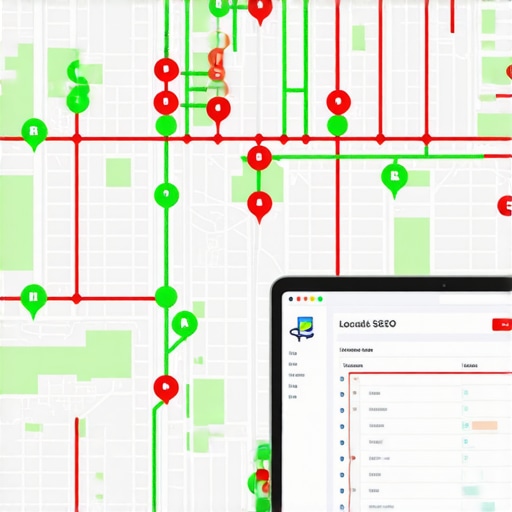
The Next Frontier of Local Maps Domination
If I had to bet on where we are headed in 2026, it’s all about interactive ‘proof.’ Google is already experimenting with AI-generated summaries of reviews. Soon, they will likely use your video uploads to create 3D walk-throughs of your space automatically. This makes mastering local maps domination even more dependent on your physical reality than your digital trickery. If you aren’t using 5 free tools that actually generate leads to monitor your mentions and photos, you are going to fall behind the AI curve.
Don’t Ignore the Technical Health of Your Website
Your website’s speed and schema are the invisible supports for your map listing. I’ve seen profiles tank because of a subtle speed error that pushes your shop off the map pack. Make sure your local landing pages are lightning-fast and that your JSON-LD schema perfectly matches your GBP data. If you want a quick win today, go into your Google Business Profile and add three ‘attributes’ you haven’t used yet—like ‘Identifies as veteran-owned’ or ‘Wheelchair accessible entrance.’ These hidden store attributes can be the tie-breaker when Google is deciding between you and a competitor with identical reviews.
Looking back at that bakery disaster, I realize that the most painful lessons often yield the most valuable insights. I spent years thinking there was a secret button, but the reality is much more human. Here are the shifts in mindset that finally moved the needle for me.
- Data is a dialogue. Every photo and update is a conversation with an algorithm that is trying to solve a user’s problem. If you aren’t being helpful, you aren’t ranking.
- Relevance is local, not general. I stopped trying to rank for everything and started focusing on the interaction data that proves you are a top local choice in your specific neighborhood.
- Patience is a technical requirement. If you find that your google business profile edits are always pending, it’s often a sign that Google doesn’t fully trust your data yet. Slow down and provide more proof.
- Trust the pattern, not the trick. We once saw how we fixed a stalled google my business rank without new reviews simply by aligning our existing data points. It wasn’t magic; it was math.
My Go-To Arsenal for Local Dominance
#IMAGE_PLACEHOLDER_E#
You don’t need a hundred tools; you just need the right ones. I personally rely on Local Falcon for its visual heatmaps—it’s the only way to see the ‘holes’ in your visibility across a city. I also keep a close eye on the Whitespark blog; Darren Shaw is one of the few voices in this industry who tests everything rather than just repeating myths. For image handling, I use simple editors to ensure my visual branding is consistent, which is exactly the one move chiropractors use to leapfrog more popular local clinics that look unprofessional. These resources provide the foundation for any serious google my business rank elevation strategy.
The Map Pack Is Ready for a New Leader
The digital landscape is constantly shifting, but the core principle remains the same: the business that provides the most clarity to Google wins. You now have the blueprint to move beyond “posting and praying” and into a position of true authority. Don’t let the technical bits intimidate you; every small tweak you make to your metadata and your strategy is a step toward total local maps domination. Your customers are searching for you right now—it’s time to make sure they can actually find you. Have you ever felt like your profile was invisible even though you were doing everything right? Let me know in the comments below!
About the Author
Umar Latif
Brand & Marketing Expert · Dubai, UAE
Umar Latif is a seasoned Brand and Marketing Expert based in Dubai, UAE, with a specialized focus on Local SEO and international digital strategy. With extensive experience managing and optimizing websites for a diverse range of international clients, including those in the United States, Umar has developed a deep understanding of the nuances required to dominate local search results. His technical proficiency encompasses comprehensive keyword research and the implementation of advanced Google-centric strategies designed to enhance visibility and drive organic traffic. As a contributor to dominateyourlocalmaps.com, Umar leverages his background in global marketing to provide actionable insights for businesses looking to improve their local map rankings and digital footprint. His approach combines data-driven tactics with a strategic brand perspective, ensuring that local businesses not only rank higher but also resonate with their target audience. Throughout his career, Umar has remained dedicated to staying ahead of search engine algorithm changes to deliver consistent results for his clients. He is deeply passionate about empowering business owners and marketing professionals with the tools and knowledge they need to achieve sustainable growth.