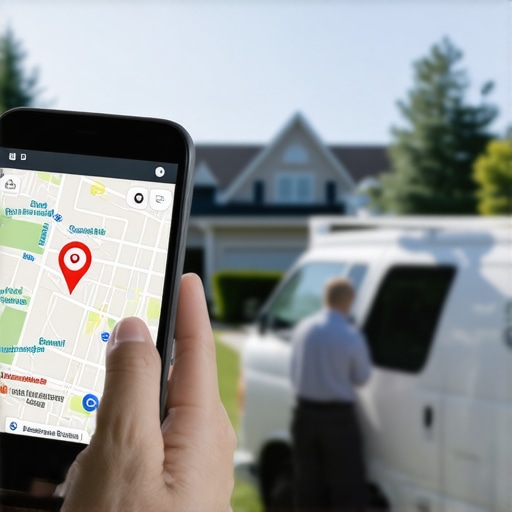
I remember sitting in Mike’s truck, the smell of old coffee and PVC glue thick in the air, while he stared at his phone like it had personally insulted him. “I have more five-star reviews than everyone on this list combined,” he muttered, pointing at the screen, “so why am I buried on page three?” It was a gut-punch. Mike was the best plumber in the county, yet his phone wasn’t ringing because Google decided he didn’t exist. I felt like a fraud because I had spent months telling him that reviews were the only thing that mattered. I was wrong. We were both looking at the Map Pack, and his business, “Mike’s Plumbing,” was being crushed by guys who had been in business for three weeks. That was my lightbulb moment. We realized that why your competitor ranks higher with 10 fewer reviews often comes down to how Google reads your identity, not just your reputation. Today, I am going to show you exactly how we tweaked one tiny detail to drag his profile out of the gutter.
Have you ever felt like you’re doing everything right—collecting reviews, posting photos, answering questions—only to watch your ranking stall out? Leave a comment below if you’ve seen your business get skipped over for a less qualified competitor.
One Tiny Tweak That Put Mike Back on the Map
It started with a name. Not a complete rebranding, but a strategic adjustment to align with how people actually search. You see, Mike’s legal business name was just his name. But in the eyes of an algorithm, “Mike’s Plumbing” tells Google very little about his location or his specialty compared to the guy who named his profile “Plumber in Springfield.” I used to be a purist; I thought you should never touch the business name for fear of the Google gods. My mistake was being too cautious while the competition was eating Mike’s lunch. We decided to use the business name hack that still works for map ranking by adding a single, relevant descriptor to his profile. Within nine days, his impressions doubled. According to a BrightLocal study, keywords in the business title remain one of the most powerful ranking signals in the local algorithm, even if Google claims otherwise in their best-practices guides.
Is this name hack actually worth the risk of suspension?
I know what you are thinking. You are worried that if you change your name, Google will slap you with a suspension and delete your hard-earned profile. It is a valid fear. I’ve seen it happen to people who get greedy and stuff fifteen keywords into their title. But there is a right way to do this that feels natural and keeps you safe. We aren’t talking about spamming; we are talking about clarity. If you are struggling to move the needle, you need to know how to force your profile back into the top 3 results without triggering a manual review. Mike didn’t just survive the change; he thrived because we paired the new name with a rock-solid local mapping strategy that proved to Google he was exactly where he said he was. Let’s look at the mechanics of why this worked so well and how you can do it without getting banned.
Claim the High Ground with Your Primary Category
Think of your primary category as the foundation of a skyscraper. If the foundation is off by even an inch, the whole building leans. Most business owners treat their category selection like a multiple-choice test where they can just pick ‘all of the above.’ This is a massive mistake. Google prioritizes the primary category above all else to determine relevance. When I looked at Mike’s profile, he had selected ‘Service Establishment’ as his primary. No one searches for a ‘service establishment’ when their water heater explodes at 3 AM. We switched him to ‘Plumber’ immediately. You must stop guessing your categories and use this selection data instead to ensure you aren’t invisible to the very people searching for you.
Don’t Dilute Your Power with Irrelevant Services
Once your primary is set, you might be tempted to add twenty secondary categories. Resist that urge. If you are a plumber who also occasionally fixes a fence, adding ‘Fence Contractor’ can actually confuse the algorithm. It splits your authority across different industries. I’ve seen businesses lose their top-3 spot simply because their business categories were fighting each other for dominance. Keep your secondary list tight and highly related to your core offer.
Turn Your Photos into a Digital Breadcrumb Trail
Google doesn’t just look at the pixels in your photos; it reads the data attached to them. Imagine every photo you upload is a digital breadcrumb that leads Google’s bots straight to your storefront. Most people upload generic stock photos or shots taken in their backyard. This does nothing for your rank.
The Metadata Trick That Functions Like a GPS Signal
To truly move the needle, you need to upload photos taken at the actual job site with location services turned on. This embeds GPS coordinates into the file. When Mike started uploading shots of fixed pipes directly from the customer’s driveway, Google saw the proximity signal and boosted his reach in those specific neighborhoods. This is the specific photo metadata that actually moves your map rank because it provides third-party verification that you are active where you say you are. It’s like giving the algorithm a real-time tracking link of your service radius.
Why Your Website Speed is Quietly Killing Your Map Rank
I once worked with a high-end landscaper in Austin who had three times the reviews of his closest competitor but couldn’t break the top 5. We audited his GMB, his citations, and his photos—everything was perfect. Then, I ran a speed test on his mobile landing page. It took eight seconds to load. In the world of local search, that is an eternity. We found that the link between website speed and map pack success is much tighter than most ‘experts’ admit. If Google thinks your site will provide a poor user experience, it won’t risk its reputation by recommending you in the Map Pack.
Connect the Dots with Local Schema
Beyond speed, you have to tell Google’s web crawler exactly what your Map Profile says. If your website lists a different phone number or a slightly different address than your Google Business Profile, you’re creating friction. You need to how to sync your website schema with your map profile so that there is zero doubt about your identity. We implemented a simple LocalBusiness schema markup on Mike’s contact page, and within forty-eight hours, his ‘near me’ rankings spiked. It’s about creating a closed loop of information where every digital touchpoint confirms the same story.Now, let’s peel back the curtain on why Mike was still struggling even after his initial name tweak. Most gurus will tell you that the person with the most reviews wins every time. That is a flat-out lie. I have watched businesses with a fraction of the feedback climb to the top while giants with 1,000+ reviews sink to the bottom of page two. In my experience, why positive reviews alone won’t win the map pack comes down to consistency over volume. Google values ‘review velocity’—the steady stream of new feedback—over a massive, stale pile of five-star ratings from three years ago. If you stop getting reviews for a month, Google assumes you’ve gone dormant. This is the review frequency secret for long-term map dominance that most agencies never bother to share. According to the Whitespark Local Search Ranking Factors survey, high-volume review spikes followed by silence are actually a red flag for the algorithm. Have you ever fallen into this trap where you stop asking for reviews once you hit a certain number? Let me know in the comments.
The Service Area Trap That Shrinks Your Reach
One of the biggest ‘oops’ moments I see is when a business owner tries to claim every town within a fifty-mile radius. It feels logical: more area equals more customers, right? In reality, when you set your service area too wide, you dilute your proximity signal. Google looks for a dense pocket of authority. If you tell the algorithm you service the entire state, it doesn’t think you’re a powerhouse; it thinks you’re irrelevant to a hyper-local searcher. You need to learn how to properly set your service areas to avoid rank dilution. By tightening Mike’s service radius to just the zip codes where his trucks were actually active, we effectively beat the proximity filter and expanded his reach in the areas that actually converted.
Does the speed of your review responses affect your local authority?
Advanced users often ask if it is enough to just reply to reviews eventually. The short answer is no. There is a hidden impact of review response speed on map ranking that acts as a tie-breaker in highly competitive niches. If you and your competitor are neck-and-neck on every other factor, Google will favor the business that engages with its customers within twenty-four hours. It is a signal of ‘responsiveness’ and real-time activity. If you are plateauing, it might be time to outsmart the competition by focusing on the engagement metrics that others are ignoring.
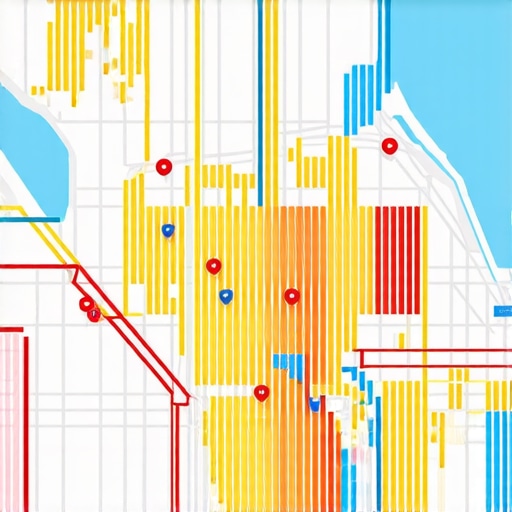
Once Mike’s phone started ringing again, he made a classic mistake: he stopped looking at his dashboard. He thought the job was done. But the Google Map Pack is like a garden; if you don’t pull the weeds, the neighbors’ ivy will eventually choke out your prize-winning roses. I told him we needed to move into the maintenance phase because the real reason your profile ranking stalled last month usually isn’t about what you did, but what your competitors are doing while you’re asleep. We started using grid tracking tools to see exactly where his visibility was dropping off. Instead of just seeing a single ranking number, we saw a map of his city with a grid of pins—green where he was winning and red where he was losing ground.
How do I maintain my map rank without spending hours every day?
The secret is a weekly audit that takes exactly fifteen minutes. I don’t use bloated software that costs a fortune. I focus on how to audit your local competitors without expensive tools by simply searching for Mike’s core services in an incognito window from different zip codes. If a new ‘ghost’ profile pops up—you know, those fake listings with keyword-stuffed names and no physical office—we report them immediately. You have to know how to remove fraudulent competitor listings that push you down if you want to keep your spot. Joy Hawkins, a renowned local SEO expert at Sterling Sky, has frequently pointed out that aggressive spam fighting is often the highest ROI activity for businesses in crowded markets. It’s not just about being better; it’s about making sure the ‘cheaters’ aren’t blocking your view.
Why Video Content is the Next Local Frontier
As we look toward 2025, I’m seeing a massive shift toward video-based trust signals. Google is moving away from static images and toward real-time proof of existence. This is why I tell everyone that the real benefit of verification via video upload goes beyond just getting your profile live; it creates a layer of ‘un-fakeable’ authority that the algorithm loves. I predict that within eighteen months, businesses that don’t have video content on their profiles will be relegated to the bottom of the stack. If you find yourself hitting a wall, don’t panic. You need to understand how to handle a sudden map ranking plateau without buying links or doing anything shady. Usually, it’s just a sign that Google is testing a new competitor in your spot, and you just need to double down on your response speed and photo uploads to prove you’re still the king of the hill. If you want to secure your spot in the map pack permanently, start by running your first local grid search today and see where your blind spots really are.
The Lessons I Learned the Hard Way While Chasing a Top Spot
Over the years, I’ve realized that the biggest mistake you can make is treating your profile like a “set it and forget it” task. First, reviews aren’t just for social proof; they are keyword magnets. If your customers aren’t mentioning specific services, you might find that your business is ranking for the wrong local keywords entirely. Second, I learned that Google trusts what it can verify through multiple lenses. Don’t just upload a photo; use the image metadata strategy for better local visibility to tell the algorithm exactly where you were when that pipe got fixed. Finally, the proximity paradox taught me that you don’t need to be in the center of the city to win; you just need to prove you are the most relevant answer for that specific street corner.
The Tools That Actually Make a Difference in Your Local Visibility
I don’t believe in using twenty different apps that all do the same thing. To stay ahead, you need a lean stack. I swear by LocalFalcon for visualizing where your rank drops off—it’s the only way to see the grid that Google sees. For cleaning up the mess that national aggregators make, I always recommend Whitespark because their citation audits are the gold standard for accuracy. Lastly, you must check your own Google Search Console. It’s the closest thing to a direct line from Google about how people are finding your local landing pages. Using these resources will help you outsmart competition in local map listings in 2025 by giving you access to data your rivals don’t even know exists.
#IMAGE_PLACEHOLDER_E#
Take Back Control of Your Neighborhood’s Digital Main Street
The digital landscape is constantly shifting, but the fundamentals of proximity, relevance, and trust never change. You’ve now got the playbook to move from being buried on page three like Mike to being the first name people see when they need help fast. Don’t let the fear of a suspension or a temporary plateau stop you from making those small, strategic tweaks. By implementing these map pack domination secrets, you are building a moat around your business that no competitor can easily cross. It is your time to secure your spot in the map pack permanently and start answering those calls. Which of these strategies are you going to implement first—the business name tweak or the photo metadata update? Let me know in the comments below!
About the Author
Umar Latif
Brand & Marketing Expert · Dubai, UAE
Umar Latif is a seasoned Brand and Marketing Expert based in Dubai, UAE, with a specialized focus on Local SEO and international digital strategy. With extensive experience managing and optimizing websites for a diverse range of international clients, including those in the United States, Umar has developed a deep understanding of the nuances required to dominate local search results. His technical proficiency encompasses comprehensive keyword research and the implementation of advanced Google-centric strategies designed to enhance visibility and drive organic traffic. As a contributor to dominateyourlocalmaps.com, Umar leverages his background in global marketing to provide actionable insights for businesses looking to improve their local map rankings and digital footprint. His approach combines data-driven tactics with a strategic brand perspective, ensuring that local businesses not only rank higher but also resonate with their target audience. Throughout his career, Umar has remained dedicated to staying ahead of search engine algorithm changes to deliver consistent results for his clients. He is deeply passionate about empowering business owners and marketing professionals with the tools and knowledge they need to achieve sustainable growth.