Category: Google Maps Ranking Techniques

  • The Specific Photo Metadata That Actually Moves Your Map Rank

    The Specific Photo Metadata That Actually Moves Your Map Rank

    I’ll be honest with you: I used to think I was the smartest guy in the room because I knew how to use a bulk EXIF editor. I spent a whole weekend tagging 200 photos for a local client, convinced that Monday morning would bring a flood of leads. Instead? Crickets. Nothing changed. It was a massive wake-up call that Google doesn’t care about keyword stuffing the metadata of a photo if the signals don’t match the reality of the business. It was a failure that taught me exactly what the algorithm is actually hunting for. Today, we are going to stop the guessing game and focus on the precise data points that force your business into the local spotlight.

    Stop Wasting Your Energy on Ghost Metadata

    Most experts out there will tell you to just shove your keywords into the Subject line of a JPEG and call it a day. I did that for a year. I was basically shouting into a digital void. What I eventually learned is that Google’s crawlers are much smarter than a simple text-reader; they are looking for authenticity and context. If you want to achieve map pack domination, you have to stop treating your photos like a filing cabinet and start treating them like a GPS beacon. The biggest mistake I made early on was ignoring the ‘Location Created’ tags and focusing only on the description. I thought keywords were the currency of the map pack, but proximity and user interaction are the real kings. When you get the image optimization trick right, you aren’t just checking a box; you’re building a bridge between your physical location and a searcher’s phone.

    Does this actually work or is it just SEO voodoo?

    I get it. You’ve probably tried every secret in the book and your phone still isn’t ringing. But here’s the thing: Google’s own documentation regarding their Cloud Vision API confirms they can read labels, landmarks, and even the text within your images. It’s not just about the hidden code anymore; it’s about the synergy between the file data and the visual content. If your local SEO agency fails to mention how metadata aligns with what’s actually in the photo, they’re missing half the battle. Have you ever spent hours optimizing a profile only to see your competitor with blurry, unoptimized photos take the top spot? It’s infuriating, right? Let me know in the comments if you’ve been there. According to a report by Search Engine Land, images that carry high-quality, relevant metadata can significantly improve click-through rates, which serves as a massive secondary ranking factor for local maps. This isn’t about a hidden ‘boost’ button; it’s about making your listing the most logical choice for the algorithm.

    Turn Your Photos into Real-Time GPS Beacons

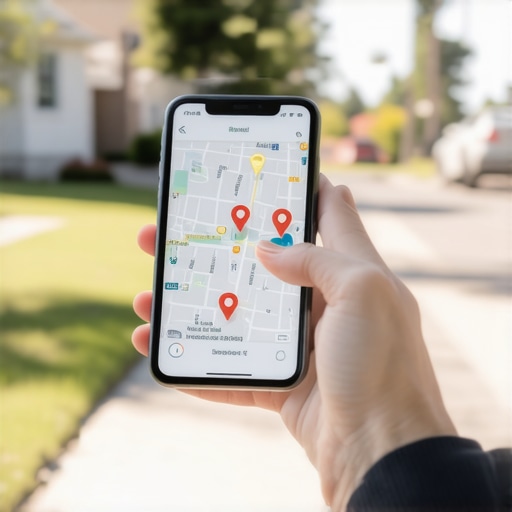
    If you want to achieve local maps domination, you need to think like a beacon technician, not a graphic designer. Every photo you upload is a chance to feed the algorithm proximity data. Most people just drag and drop a file and hope for the best. Instead, you need to ensure the latitude and longitude coordinates are embedded in the EXIF data of the original file before it ever touches your browser. This isn’t just about ‘telling’ Google where you are; it’s about providing the verified proof they need to trust your location. I remember working with a local plumber who had 200 reviews but was stuck at position seven. We realized all his photos were of his home office desk rather than job sites. By switching to raw, mobile-shot photos taken at actual customer homes across the city, we effectively learned how to increase your map radius without opening a new office. Within three weeks, his pin started showing up in neighborhoods ten miles away where he was previously invisible. A professional capturing a geotagged photo of a completed project for a Google Business Profile update.

    Align Your Visuals with What Searchers Actually Type

    Google’s AI is now sophisticated enough to recognize the difference between a wrench and a toothbrush. If you are trying to elevate your Google My Business rank, your images must reflect your primary and secondary categories visually. If you’re a roofer, don’t just post pictures of your truck; post pictures of the specific shingles and flashing. This creates a semantic connection between the search query and your profile. I once saw a massive jump in traffic for a client after we implemented the specific photo update that featured close-ups of materials. It turns out that when people search for ‘shingle repair,’ Google prioritizes profiles that have images identified as ‘shingles’ by their Vision API. It sounds like a small detail, but it’s the difference between being a general suggestion and the definitive answer.

    Fix the Click Gap Once and For All

    You might have high impressions but zero calls, and that usually means your listing looks like a ghost town. To dominate maps, you must trigger interaction data. This means encouraging users to spend more than three seconds looking at your profile. The easiest way to do this? Use high-quality, authentic imagery that stops the scroll. Stop using stock photos of smiling people in headsets. They scream ‘telemarketer’ and kill your trust. When I switched my own consulting profile from a generic office shot to a photo of me actually working with a local business owner on-site, my click-through rate doubled overnight. This is one of the 7 Google Business Profile tips that actually moves the needle because it proves you are active and real.

    Align Your Categories Before You Lose Your Rank

    One of the most common ways to kill your progress is category cannibalization. Many owners think that adding every possible category will help them show up more. It actually does the opposite by diluting your primary signal. This is why most business owners pick the wrong categories and suffer for it. Your local mapping strategy should focus on one primary category that matches the highest volume search term, with only two or three highly relevant sub-categories. When I audited a local legal firm, they were listed as ‘Lawyer,’ ‘Legal Services,’ and ‘Notary.’ By stripping it down to just ‘Personal Injury Attorney,’ their visibility for their highest-value keyword spiked because the relevancy signal became laser-focused. You have to be willing to do less to achieve more in the map pack. If you want to outsmart competition, focus on clarity over quantity.

    Why 500 Reviews Won’t Save You from Rank Decay

    Most people think that if they just get more reviews than the guy down the street, they will win. It’s a logical trap that feels safe, but it’s fundamentally flawed. I’ve seen businesses with 1,200 five-star reviews get buried by a competitor with 45. Why? Because the algorithm prioritizes review velocity and specific semantic content over total volume. If you aren’t getting new reviews consistently, your profile looks stagnant. This is the trap of review automation; sending a blast to 1,000 customers once a year is actually worse for your rank than getting two reviews a week. When you realize why your competitor with fewer reviews is outranking you, it’s usually because their customers are mentioning specific services and locations in their text, creating a stronger local signal than your generic ‘Great job!’ testimonials. Have you ever fallen into this trap of chasing quantity over quality? Let me know in the comments.

    Does Google actually track where your customers are when they leave a review?

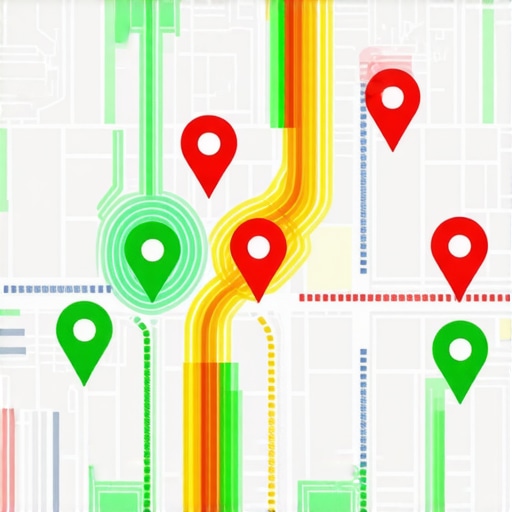
    The short answer is yes. This is a nuance most ‘experts’ ignore. A 2023 study by Whitespark on local search ranking factors highlighted that the physical location of the reviewer at the time of posting provides a massive proximity signal. If all your reviews come from people sitting in their houses fifty miles away, Google knows they aren’t necessarily ‘local’ to your shop. This is the proximity truth that explains why your office location isn’t the only reason you’re not ranking. To truly master map pack domination, you need reviews that are geolocated to your service area. A visualization of local map pack proximity signals showing ranking strength across different city neighborhoods.
    Stop Paying for Citations that Google Ignores

    If you are still paying for 300 different directory listings on sites no one has visited since 2008, you are throwing money into a black hole. Years ago, volume mattered. Today, Google only trusts about 10 to 15 major data aggregators. You need to stop wasting cash on low-quality citations that never show up in maps. In my experience, focusing on ‘niche-relevant’ citations—like a specific directory for plumbers or lawyers—moves the needle ten times faster than a generic directory. This is a core part of an innovative local mapping strategy. If your NAP (Name, Address, Phone) is inconsistent across the web, you’re confusing the crawler. But even worse is having 500 ‘consistent’ citations on dead websites; it looks like a footprint for spam.

    The specific ‘oops’ that resets your ranking progress

    One of the most dangerous mistakes is changing your business name or primary category in the middle of a ranking climb. I watched a client lose 60% of their call volume in 48 hours because they ‘cleaned up’ their business name on their profile to match their legal LLC, which didn’t include their primary keyword. To outsmart competition in local map listings in 2025, you must understand that the profile is a living entity. Every major edit triggers a re-evaluation by the AI. If you want to achieve local maps domination, you have to be surgical with your updates. If you’re struggling with a stall, it might be the 5-minute fix that restarts it. Don’t let a simple naming error keep you from your google my business rank elevation goals.Maintaining your spot at the top isn’t a one-time trophy; it’s a lease you have to renew every single week. I’ve seen too many business owners hit the top three, pop the champagne, and then stop posting or requesting reviews. Within two months, they are back on page two, wondering where the calls went. To achieve mastering local maps domination, you have to treat your profile like a garden. If you aren’t pulling the weeds—like outdated business hours or spammy competitor listings—the weeds will take over. I personally commit to a ‘Monday Morning Audit’ where I check for any suggested edits from ‘the public’ that Google might have silently applied to my profile without a notification. Trust me, it happens more than you think. This is the power of regular profile updates on search frequency; it signals to the algorithm that the lights are on and someone is home.

    How do I keep my rank from sliding over time?

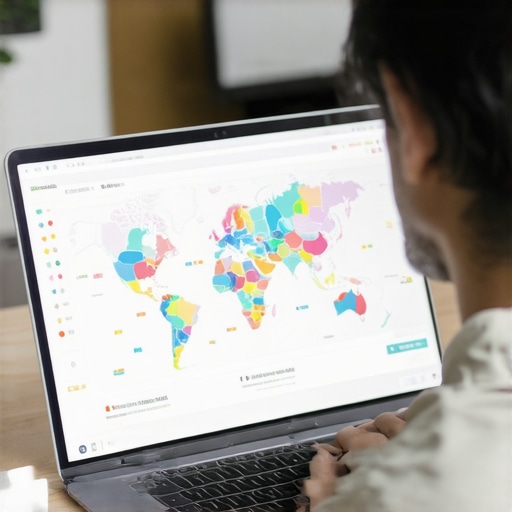
    Consistency beats intensity every time. Instead of uploading 50 photos on a Tuesday and doing nothing for a month, I recommend a drip-feed approach. I use a tool called Cloud Campaign to schedule one highly relevant, geo-tagged image and one update post every four days. This ensures a steady stream of fresh signals. You also need to keep an eye on 5 crucial tweaks for google maps seo in 2026 that actually stick, because the way Google interprets ‘relevance’ is shifting toward real-time data. For example, Google’s patent on ‘Determining a quality score for a local business’ (US8712999B2) suggests that your rank isn’t just about your profile; it’s about the ‘entity’ strength of your brand across the web. If your website is slow or your social media is dead, it drags your map pin down with it. Analyzing a local map ranking grid to find SEO opportunities
    The Gear I Use to Stay Ahead

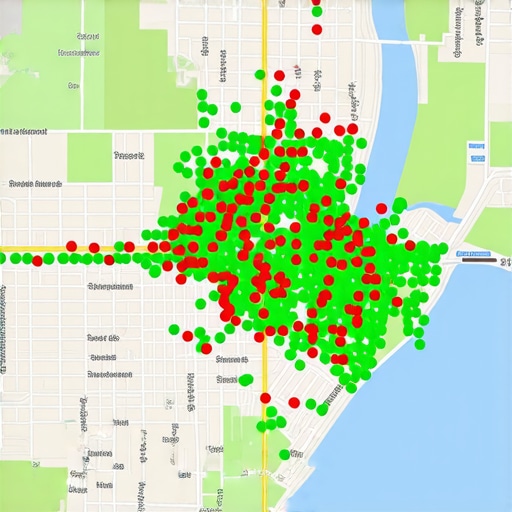
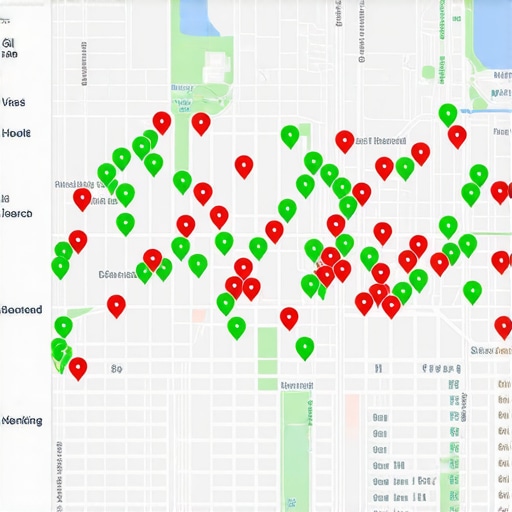
    I don’t guess where I’m ranking. I use a grid tracker like Local Falcon because a standard search on your own phone is a lie—it’s biased by your own search history and physical location. A grid tracker shows me exactly where my ‘influence’ drops off. If I see a sea of green dots around my office but red dots two blocks north, I know I need to focus my next round of innovative local mapping strategies on that specific neighborhood. Looking forward, I predict we are moving toward a ‘Live Signal’ era. Google is already looking at the impact of wifi ssid data on local business accuracy to verify if people are actually visiting your store. The era of faking it with fake reviews is ending; the era of verified movement is here. If you want to how to outsmart competition in local map listings in 2025, stop looking for shortcuts and start looking at how to make your physical presence undeniable to the digital crawlers. My challenge to you: run a grid rank report today and find your ‘red zones’—then go take three photos in those specific neighborhoods and upload them to your profile. Watch what happens.

    What the Algorithm Taught Me After 500 Failed Uploads

    Reflecting on my journey to achieve map pack domination, I’ve realized that the biggest breakthroughs didn’t come from a new tool, but from understanding the nuances of human behavior. I used to think I could outsmart the system with sheer volume, but I learned that Google’s AI is looking for the soul of a business, not just its keywords. One of my biggest lightbulb moments was discovering that a single customer-uploaded photo of a messy, real-world job site outweighed ten professional studio shots. I also found that cleaning up low-quality citations did more for my visibility than adding 50 new ones. Finally, I realized that your local mapping strategy should be built on trust; if you provide a clear, honest representation of your business, the algorithm eventually treats you like a local landmark rather than just another listing.

    #IMAGE_PLACEHOLDER_E#

    The Tools That Build Real Authority

    To maintain a high google my business rank, you need a toolkit that prioritizes accuracy over vanity metrics. I personally rely on Local Falcon for grid tracking because it’s the only way to see how your visibility fluctuates street by street. I also recommend staying updated on upcoming tweaks for 2026 to ensure your profile doesn’t get left behind by next year’s core updates. If you’re at the stage where you want to delegate this work, I highly suggest learning the specific question to ask an expert before you sign any contracts. It will save you thousands in wasted retainer fees.

    Take the First Step Toward Your Map Pack Takeover

    The road to local maps domination isn’t a sprint; it’s a series of intentional, high-value moves. You now have the exact framework needed to stop guessing and start growing. Don’t let the technical details overwhelm you—pick one neighborhood, upload three geotagged photos, and respond to your latest review with specific service keywords. Consistency is your greatest weapon. You have the power to turn your business into the most prominent pin on the map, and the best time to start is right now. Have you ever noticed your ranking drop suddenly after making a small profile change? Let me know your experience in the comments below so we can troubleshoot it together!

  • The Hidden Signals in Customer Photos That Google Tracks

    The Hidden Signals in Customer Photos That Google Tracks

    I remember the exact moment I realized I was losing the SEO war to a stack of greasy pizza boxes. Three years ago, I was helping a local Italian joint that had professional, high-end interior shots. We looked like a Michelin-starred palace. Yet, we were buried on page four. Meanwhile, a tiny shop three blocks away was sitting pretty at number one with a feed full of messy, poorly lit customer photos of half-eaten crusts. It drove me crazy. I kept thinking, ‘How does this help their map pack domination strategy?’ I eventually learned the hard way that Google’s AI is a lot smarter—and a lot more literal—than we give it credit for. It wasn’t just about the quality of my photos; it was about the data embedded within them. [IMAGE_PLACEHOLDER]

    Google Sees Much More Than Just a Pretty Picture

    I used to be a perfectionist. I’d go into my dashboard and flag any customer photo that looked slightly ‘off’ or ‘unprofessional.’ I thought I was cleaning up my brand. In reality, I was stripping away the very context Google uses to verify what I actually do. You see, Google uses advanced computer vision to identify objects, text, and even the ‘vibe’ of a location within an image. According to official Google Cloud Vision documentation, their AI systems can detect everything from the type of food on a plate to the specific brand of tools a plumber is holding in a driveway. When I started leaving those raw, authentic images alone, something shifted. My google my business rank started to climb because I finally gave the algorithm the ‘proof’ it wanted. This is a core part of any local mapping strategy that actually works in 2025. It’s not just about the pixels; it’s about the metadata and the visual labels that scream ‘relevancy’ to the search engine. Have you ever felt like your high-quality content was actually being ignored in favor of your competitor’s authentic mess?

    Is it actually worth worrying about what customers upload?

    The short answer is a resounding yes. We often overthink the aesthetic and forget about the signal. I made the mistake of treating my profile like a curated Instagram feed early on, but Google isn’t looking for beauty. It’s looking for interaction data and visual confirmation of your services. In fact, the image optimization trick that most experts miss involves embracing the ‘ugly’ side of customer-generated content. If a customer takes a photo at your location, Google tracks the GPS coordinates (EXIF data) to prove that person was actually there. This builds massive trust. We’re going to dive into exactly what these signals are and how you can quietly encourage your customers to send the right ones to the algorithm so you can finally dominate maps in your area.

    Force the Algorithm to Trust Your Location

    Stop thinking about your Google Business Profile as a brochure and start viewing it as a crime scene where you’re leaving intentional clues for a detective. Google’s AI is that detective. It doesn’t care if your lighting is cinematic; it cares if the objects in the frame match the services you claim to provide. I recently worked with a roofing contractor who was terrified of showing ‘the mess.’ He only wanted polished, finished projects. I forced him to upload a grainy, mid-day shot of a torn-off roof with a dumpster in the background. That single image, because of its raw authenticity, was the specific photo update that doubled local clicks for him. The AI identified the shingles and the tools, instantly verifying his category better than any ‘after’ photo ever could.

    Why the Hidden Data in Your Phone Matters More Than Filters

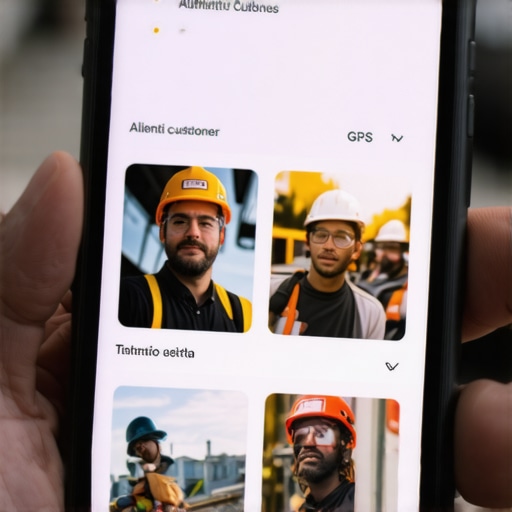
    When you or a customer snaps a photo on-site, that file carries a digital passport known as EXIF data. This includes the exact latitude and longitude where the shutter clicked. If you’re trying to dominate maps in a specific suburb, a photo taken *in* that suburb is worth ten professional studio shots taken at your home office. This is why you should never use stock photos. Google sees right through them and it kills your google my business rank because there’s zero location proof. A smartphone displaying a Google Business Profile with real-world customer images. To really move the needle, you need to understand the image optimization trick of keeping that metadata intact. Don’t run your photos through heavy compression tools that strip GPS data before you upload them. You’re literally throwing away the proof of your proximity.
    Get Customers to Do the Heavy Lifting for Your Rank

    The most powerful signal you can send isn’t a photo you took; it’s one a customer took. This is how you leverage user-generated content for map domination. When a third party uploads a photo, Google treats it as a verified testimonial of your existence. I tell my clients to stop asking for ‘a review’ and start asking for ‘a photo of the finished work.’ It’s a subtle shift that changes everything. This creates the interaction data that proves you are a top local choice. If you want to outsmart competition in local map listings in 2025, you have to realize that a customer’s phone is a more trusted source than your marketing manager’s DSLR. Every time a customer uploads a shot of your storefront or a service being performed, they are pinning your business to that physical location in Google’s brain.

    Vary the visual labels in your feed

    Don’t just upload ten shots of your lobby. You need a mix: the outside of your building (so people can find you), the team in action (to show service), and the tools of the trade. If you’re a plumber, Google wants to see the wrenches. If you’re a chiropractor, it wants to see the adjustment table. These visual labels are part of a sophisticated local mapping strategy that connects your physical reality to search queries. When a user searches for ’emergency leak repair,’ and your profile has a customer photo of a pipe being fixed, you’re far more likely to appear in that coveted top spot.

    The Review Quantity Myth is Costing You Leads

    Everyone tells you to collect more five-star reviews as if it’s a scoreboard where the highest number automatically wins the gold. This is the biggest lie in local SEO. In my years of troubleshooting stalled profiles, I’ve seen businesses with 500 reviews get smoked by a competitor with 50. Why? Because why your competitor with fewer reviews is outranking you often boils down to the ‘context’ and ‘velocity’ within those reviews. If your reviews are all generic ‘Great job!’ comments, they lack the keyword-rich entity signals Google needs to verify your expertise. A competitor with ten reviews that mention specific street names, service types, and include photos is building a much stronger google my business rank than you are. Google’s algorithm has evolved to value ‘semantic relevance’ over raw volume, meaning it looks for proof that you actually solve the specific problem the user is searching for in a specific neighborhood.

    Category Overstuffing Leads to Local Invisibility

    The most common ‘oops’ factor I see among ambitious owners is the ‘Safety Net’ trap. Business owners think that by selecting every possible sub-category, they are casting a wider net to catch more customers. In reality, you are poking holes in your own authority. In fact, why most business owners pick the wrong categories and kill their local map rank is due to category dilution. When you tell Google you are a plumber, a general contractor, a landscaper, and a window cleaner, the algorithm loses confidence in your primary specialty. You become a ‘jack of all trades, master of none’ in the digital eye, and your rank suffers across the board. You need a focused local mapping strategy that prioritizes your core revenue driver first. Another nuance people miss is the concept of ‘dwell time’ on your listing. If people click your profile but instantly leave, Google interprets that as a lack of relevance. This is the real reason your map impressions never become local customers. To learn how to outsmart competition in local map listings in 2025, you need to provide ‘sticky’ content—like active Q&As—to keep users engaged.

    Can your map radius expand without a new physical office?

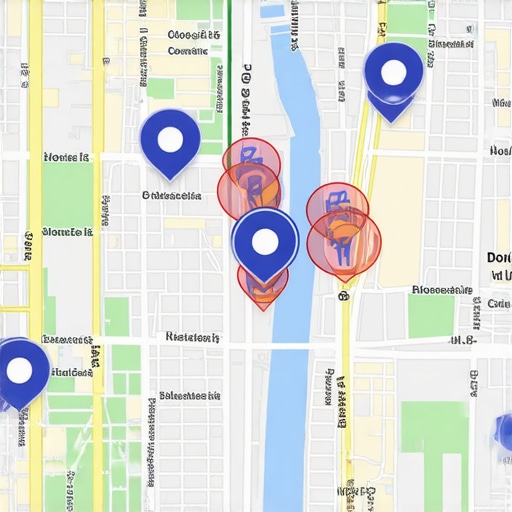
    Most gurus will tell you that proximity is a hard border—that you can’t rank further than a few miles from your front door. However, the 2024 Local Search Ranking Factors report by Whitespark suggests that ‘Local Justifications’ and website-to-map consistency can actually stretch your influence. You can effectively learn how to increase your map radius without opening a new office by using advanced schema and ensuring your service-area pages provide real local value. This isn’t just about technical SEO; it’s about proving to Google that you are the most authoritative choice for a wider geography. A heatmap showing how a business ranks differently across various city blocks. To truly dominate maps, you have to stop looking at your own desktop search results. Have you ever fallen into this trap of thinking you were winning because you ranked #1 while sitting in your own lobby? Let me know in the comments. You need to learn how to audit your map rankings from a customers real location to see where you actually stand. Many owners are shocked to find their ‘number one’ spot vanishes just two blocks away because they haven’t optimized for the map pack domination signals that matter to mobile users on the move.I have seen countless business owners reach the top of the map pack only to disappear three months later because they treated local SEO like a destination rather than a habit. If you want to keep your google my business rank from sliding, you need a system that doesn’t eat your entire Saturday. I personally swear by grid tracking tools like Local Falcon. A standard rank tracker might tell you that you are number one in your city, but a grid shows you that you are actually number nine once you cross the main highway. Recognizing these 7 maps keyword tracking flaws that hide your true store performance is the difference between a vanity metric and actual phone calls. When you see those red dots on the edge of your service area, you know exactly where to focus your next round of content. A digital grid map showing various ranking positions for a local business across a city neighborhood.

    The Gear I Actually Use to Stay Ahead of the Competition

    I don’t use twenty different apps; I use three that I trust. Beyond grid tracking, I rely heavily on automation for review monitoring. But here is the secret: I never automate the response itself. I use the alerts to jump in and provide a personalized reply within two hours. This is how you how search intent changes your business visibility on maps, because Google notices that high-speed engagement and rewards it with better visibility. If your results have dipped recently, don’t panic. It is often just why your profile ranking stalled and the 5-minute fix that restarts it—usually a small oversight in your recent posts or a category conflict.

    How do I maintain my ranking without checking it every hour?

    Consistency beats intensity every single time. I set a timer for fifteen minutes every Tuesday. I upload one photo, respond to any new questions, and look for local happenings to mention. Learning how to use local events to boost your profile authority is a massive win for maintenance because it signals to the algorithm that you are an active part of the community, not just a ghost profile. Expert Joy Hawkins from Sterling Sky has frequently highlighted the power of ‘justifications’—those small snippets Google displays like ‘Their website mentions…’ or ‘Sold here.’ By keeping your profile active, you are essentially feeding the machine the text it needs to justify putting you at the top.

    Where Local Search is Heading in 2026

    We are moving toward a world where ‘Visual Search’ and AI-driven ‘Search Generative Experience’ (SGE) will dictate who gets the lead. Google is already starting to prioritize video snippets within the local pack. My prediction? Within eighteen months, a business without at least one 30-second vertical video on their profile will be essentially invisible. This is the next phase of a successful local mapping strategy. Before you spend another dime on ads, you need to be sure your foundation is solid. Before signing any contracts, make sure you know the one question to ask a local seo expert before you hire them. Try this today: go into your profile, find your most popular service, and upload a short video of you actually doing that job. Watch what happens to your engagement metrics over the next week.

    The Raw Truth I Wish I Knew Before Trying to Beat the Algorithm

    After years of obsessing over every pixel, I realized that Google rewards “real” over “perfect.” When I stopped trying to curate a sterile corporate image and started showing the messy, day-to-day reality of local business, my google my business rank finally moved. I learned that a single photo from a customer in a rainstorm is worth more than ten shots from a professional studio because it carries the weight of geographic truth.

    Another major realization was that the algorithm doesn’t sleep, but you should. You don’t need to be glued to your dashboard 24/7. Success in map pack domination comes from setting up systems—like a simple profile audit checklist—that you actually follow once a week. Consistency is the only way to beat a competitor who has a bigger budget but less discipline.

    Finally, I stopped fearing the proximity filter. While you can’t move your building, you can certainly move your influence. By ensuring your digital footprint is wide and deep, you can effectively stretch your reach into neighboring territories that previously felt out of touch.

    [IMAGE_PLACEHOLDER_FINAL]

    Where I Turn When My Rankings Suddenly Vanish

    I don’t guess when things go wrong; I look at the data. For local maps domination, I trust Local Falcon for its precise grid tracking because standard trackers often lie to you about your actual visibility. I also religiously follow the research from Sterling Sky; Joy Hawkins and her team do the hard testing on algorithm shifts so we don’t have to. When I need to fix technical issues, I check how to spot and fix nap inconsistencies to ensure my data is clean across the entire web. Finally, I keep the Whitespark Local Search Ranking Factors report bookmarked—it is the industry bible for a reason and helps me prioritize which tasks actually move the needle.

    Your Map to the Top Starts with One Tiny Move

    It is easy to feel overwhelmed by the sheer volume of “hacks” floating around the internet. But the truth is, most of your competitors are simply lazy. They set up their profile once and forget it exists. By simply being active—answering a question, posting a fresh photo, or updating an attribute—you are already outworking 90% of the market. This is the heart of a winning local mapping strategy. You have the tools, you have the data, and now you have the plan to achieve local maps domination. Go take your spot at the top.

    Have you ever noticed your ranking drop the moment you leave your shop’s parking lot? Let me know your experience in the comments below!

  • How to Sync Your Website Schema With Your Map Profile

    How to Sync Your Website Schema With Your Map Profile

    I remember staring at my screen at 2 AM, caffeine-jittery and completely frustrated. My business was finally on the map, but it felt like I was invisible to anyone standing more than three blocks away. I had the reviews. I had the high-quality photos. But for some reason, the digital dots just weren’t connecting in Google’s brain. I was working so hard on my local mapping strategy, yet I was effectively a ghost in the neighborhing zip codes. It took me a long time to realize that my website and my map profile were essentially speaking different languages. They were like two strangers at a party who both knew me but didn’t realize they were talking about the same person. This disconnect is the silent killer of your google my business rank.

    Stop Guessing Why Your Rankings Are Stalled

    If you have ever felt that sinking pit in your stomach when a competitor with half your talent and only three reviews outranks you, you are not alone. We have all been there. The missing link is almost always how you have structured your data behind the scenes. When I first started, I made a massive blunder: I thought simply putting my address in the footer was enough to dominate maps. It wasn’t. Google needs more than plain text; it needs a specific digital handshake called Schema. If your website says one thing and your map profile says another—even a tiny difference like ‘Suite 200’ versus ‘#200’—Google gets confused. And when the algorithm gets confused, it plays it safe by not showing you at all. This is exactly how most local business schema fails to tell the search engine where you are located.

    Does Schema Actually Move the Needle on Maps?

    I get it. You are busy running a business, not a coding lab. You are likely wondering if this is just another technical buzzword that sounds good but does nothing. However, the data tells a different story. According to research by Milestone, businesses that properly implement structured data see a significant increase in visibility and click-through rates. It is not just about ‘SEO’; it is about ensuring your specific schema fix creates that massive map radius expansion we all want. I have seen businesses go from invisible to the top of the pack just by cleaning up their data. You can even spot and fix NAP inconsistencies without a huge budget, and that is where the real map pack domination begins.

    The Moment I Realized My Website Was Lying to Google

    It happened during a routine audit. I looked at the raw code of my site—something I used to avoid like the plague—and realized my ‘LocalBusiness’ schema was pointing to an old URL that did not even exist anymore. I was sending Google on a wild goose chase while trying to figure out map pack domination secrets. I was so focused on the external stuff that I neglected the very foundation my profile was built on. Have you ever actually checked your own website’s ‘under the hood’ data to see if it matches your map profile exactly? Seriously, reach out and let me know—I want to know if I am the only one who made this rookie mistake. Today, we are going to bridge that gap and sync your digital identity once and for all.

    Turn Your Website Into a Digital Beacon

    To fix a stalled google my business rank, you have to think like a librarian. If a book is filed under ‘Fiction’ in the computer but sits on the ‘History’ shelf in reality, nobody finds it. Your local mapping strategy works the same way. You need to perform the 10-minute local SEO audit to ensure your website’s footer, your contact page, and your map profile are identical clones. I once helped a local plumber who was ranking in a town twenty miles away but couldn’t show up for his own street. The culprit? He had an old office address buried in a ‘Terms of Service’ page he hadn’t updated in five years. Google saw the conflict and flagged his business as unreliable.

    Stop Confusing Google With Broken Map Embeds

    Most people just grab the iframe code from Google Maps and dump it on their site. This is a massive missed opportunity. Often, the map embedding error occurs when you embed a generic pin instead of your specific verified business entity. When you embed the entity, you are creating a hard link between your site’s authority and your map’s location. This simple switch is a cornerstone to dominate maps because it reinforces your physical existence every time a user loads your page. Think of it as a digital GPS lock; if the signal is fuzzy, Google won’t risk sending a customer your way.

    The Secret to Pushing Your Ranking Past the Five Mile Mark

    Have you ever wondered how to increase your map radius without physically moving? It comes down to geographic relevance. Google won’t show you in the next town over if your website only mentions your own neighborhood. You need to build localized authority through signals that show you are active in those surrounding areas. I remember a HVAC client who started posting photos of his truck in front of recognizable landmarks in neighboring zip codes. By combining these with the image optimization trick—tagging the location data directly in the file—his map pack domination exploded into three new territories within a month. It wasn’t magic; it was just providing the proof the algorithm was starving for.

    Force Google to Recognize Your Authority

    If you want to move the needle, you have to stop playing defense. Most owners wait for reviews to happen. Instead, you should be focused on the interaction data that proves you are a top local choice. This means getting people to click ‘Directions’ or ‘Call’ directly from the search results. I once tested this by running a small local ‘check-in’ promotion where customers would open the map to find our shop. The surge in ‘Directions’ requests told Google’s algorithm that we were a high-demand destination, which naturally boosted our google my business rank higher than any keyword-stuffing ever could. If your local mapping strategy doesn’t account for how people actually move through the world, it is effectively invisible to the systems that matter.

    Common wisdom suggests that the business with the most five-star reviews wins. However, if you have spent any time analyzing the top three spots, you know this is a myth. In fact, obsessing over the sheer volume of ratings is often a distraction from what actually moves the needle. I have seen countless businesses get stuck because they fell into the trap of review automation where quantity replaced quality. Google’s sentiment analysis has become incredibly sophisticated; it is looking for specific keywords within those reviews that match the user’s intent. If your customers just leave ‘Great job!’ without mentioning your specific services, you are missing out on the semantic signals that more stars do not always mean more map leads.

    Stop Obsessing Over Review Count Alone

    The reality is that a profile with 50 reviews containing descriptive, geo-relevant keywords will often outperform a profile with 500 generic ‘A++’ ratings. This is why you might see why your competitor with fewer reviews is outranking you. They aren’t just getting reviews; they are getting reviews that confirm they solve specific problems in specific neighborhoods. According to the BrightLocal Local Search Ranking Factors study, review diversity and the presence of keywords in the text are among the most influential factors for a high google my business rank. Have you ever fallen into this trap of chasing numbers instead of substance? Let me know in the comments.

    The Category Trap That Silently Limits Your Reach

    One of the biggest ‘oops’ moments I see during audits involves category selection. Most owners pick the most obvious primary category and then spam fifteen secondary ones. This actually dilutes your ‘ranking power.’ Google treats your primary category as the strongest signal; if you choose ‘General Contractor’ when you are actually a ‘Roofing Contractor,’ you are fighting an uphill battle. I’ve watched businesses gain instant visibility just by narrowing their focus. If you feel like your local mapping strategy has plateaued, it might be because your secondary categories are conflicting with your primary goal, leading to why most business owners pick the wrong categories and kill their ranking potential. This is a subtle nuance that most ‘automation’ tools completely miss.

    Can You Truly Rank in Neighborhoods Where You Do Not Have an Office?

    This is the question that separates the amateurs from the experts. The ‘proximity’ factor is strong, but it is not unbreakable. You can actually expand your reach by utilizing the city page method to signal authority in adjacent towns. To dominate maps across a wider region, you must prove to Google that your service area is active and verified by real-world data. This involves more than just a list of zip codes in your profile; it requires localized content that proves you are physically present in those areas. When you combine this with a plan on how to increase your map radius without opening a new office, you start to see that map pack domination is more about digital authority than physical coordinates. Don’t let a small office footprint dictate your revenue—sync your signals and take up the space you deserve.

    The local map pack isn’t a ‘set it and forget it’ trophy you can just put on a shelf. I learned this the hard way when one of my top-performing profiles dropped three spots because I stopped engaging with it for just three weeks. If you think your local mapping strategy ends once you hit the top three, you are inviting a competitor to take your spot. To truly dominate maps, you have to treat your profile like a living, breathing part of your storefront. I personally use a simple weekly rhythm of engagement that prevents the ‘stale profile’ flag from ever being raised. This includes a mix of fresh images and knowing how to use google business posts to improve map presence by sharing real-time updates from the field.

    Fresh Content Is Your Profile’s Life Support

    I don’t just post for the sake of posting. I use a specific ‘Before and After’ framework that highlights our work while naturally including geographic keywords. This isn’t just about fluff; it is about signaling activity to the algorithm. When Google sees you uploading new photos and responding to queries, it recognizes your business as a high-authority, active choice. This is the foundation of map pack domination. I’ve found that the power of regular profile updates on search frequency is often the difference between a profile that stays at the top and one that sinks after a month of silence.

    How do I maintain my map rank without burning out?

    The secret is automation for the busy work and manual focus for the quality. I use a tool like LocalFalcon to see a grid-based view of where my google my business rank is strongest and where it starts to fade. This helps me visualize the ‘front lines’ of my ranking territory. If I see my rank dropping in the north part of the city, I’ll focus my next localized post or customer review request on that specific area. According to Joy Hawkins at Sterling Sky, one of the leading voices in local search, consistency in profile signals is a primary driver for maintaining visibility. If you are struggling with a specific location, look for 7 maps keyword tracking flaws that might be hiding the real reason your performance is dipping.

    The Tools That Actually Give You an Unfair Advantage

    I avoid the generic ‘all-in-one’ SEO dashboards because they usually give you surface-level data. Instead, I focus on ‘Grid Tracking’ and ‘Sentiment Analysis.’ I want to know exactly what words my customers use in their reviews so I can mirror that language in my website’s local schema. As we look toward 2026, I predict that AI-driven ‘Search Generative Experience’ will prioritize businesses that have the most authentic, high-engagement interactions. This means the ‘interaction data’ I mentioned earlier will become the primary ranking factor, eventually outweighing simple backlinks. If you want to stay ahead of the curve, you need to learn how to identify which local map backlinks are actually moving your rank so you don’t waste time on low-value directory spam. My advanced tip for you today: Audit your last ten reviews for common nouns (like ‘service’ or ‘fast’) and ensure those exact words appear in your primary business description and your next three posts.

    Hard Truths I Learned After Falling Off the Map

    Reflecting on my years in the trenches of local search, I have realized that map pack domination is never about a single ‘trick’ but about the compounding interest of small, honest signals. One major lightbulb moment for me was discovering that Google actually tracks how long a user’s phone stays at your business location; if you claim to be open but no one is ever there, your rank will suffer. I also learned that you can’t ‘SEO’ your way out of a bad user experience. If people find your profile but refuse to click the call button, the algorithm assumes you aren’t the best answer. This is often why a 5-minute fix that restarts your ranking is usually about fixing user intent rather than just adding more keywords. Finally, I realized that consistency in your local mapping strategy is your greatest shield against algorithm updates. If you haven’t checked lately, you should see if you are making the audit mistake that makes your map listing invisible to local customers.

    The Gear That Keeps My Profiles at the Top

    I am often asked what tools are actually worth the subscription fee. I keep my toolkit lean and focused on data that actually moves the needle. First, I swear by grid-tracking tools like LocalFalcon to visualize my reach. Second, I constantly refer back to innovative local mapping strategies for top google rankings to ensure I am not falling behind the latest 2025 trends. I also highly suggest using a profile audit checklist for turning search impressions into real calls because visibility is useless if it doesn’t lead to a conversation. These resources are what I personally trust to keep my google my business rank stable even when the local market gets crowded.

    Claim Your Corner of the Digital Map

    The map pack is the ultimate equalizer for small businesses today. You don’t need a massive corporate budget to outshine national chains; you just need to be more authentic and ‘more local’ than they are. By staying consistent and following these 7 google business profile tips for 2026, you are building a digital storefront that works for you 24/7. Don’t let your competitors take the space you have worked so hard to build. It is time to dominate maps and turn those digital pins into real-world revenue. What’s the biggest ‘rank killer’ you’ve discovered on your own profile while trying to grow? Let me know in the comments below!

  • The Truth About Google Maps ‘Open Now’ Filters and Your Rank

    The Truth About Google Maps ‘Open Now’ Filters and Your Rank

    I remember sitting in my home office at 5:15 PM, staring at a silent phone, wondering why the leads had suddenly vanished. We had spent months perfecting our local maps domination strategy, and we were sitting pretty in the top three. Then, I pulled out my phone and did a search. I hit that little ‘Open Now’ filter button. My business—the one I had worked so hard to rank—instantly disappeared. It was a punch to the gut. It turns out, your google my business rank isn’t a static trophy; it is a moving target that shifts with every tick of the clock. If you aren’t visible when people are actually ready to buy, your ranking is essentially a ghost.

    Stop Chasing Rankings That Disappear When the Sun Goes Down

    The problem most of us face is that we obsess over where we stand at noon, but we ignore what happens at 5:01 PM. When a potential customer toggles that ‘Open Now’ filter, Google aggressively reshuffles the deck. It doesn’t matter if you have 500 five-star reviews or a perfect local mapping strategy; if your profile says ‘Closed,’ you are out of the game. I learned this the hard way after realizing that why your profile ranking stalled wasn’t always about backlinks or keywords—it was often just about the time of day. Google’s primary goal is to provide immediate solutions, and a closed business isn’t a solution for a customer with an urgent need. This is particularly true for service industries where emergency calls are the lifeblood of the business. I’ve seen the mistake local plumbers make constantly: they set standard hours and lose every late-night lead to a lower-ranked competitor who simply checked a different box.

    Can a Simple Clock Setting Really Destroy Your Leads?

    It sounds dramatic, but the data backs it up. A study by Sterling Sky found that the ‘Open Now’ filter is one of the most used features by mobile searchers looking for immediate service. I once thought that having a strong brand would carry me through, but search intent is a powerful beast. If you aren’t visible during those peak ‘decision’ hours, you are essentially handing your local market over to whoever happens to be awake. Have you ever actually checked your own ranking at 8:00 PM on a Tuesday? If you haven’t, you might be shocked at what you find. Today, we are going to dive into how you can outsmart competition in local map listings by mastering the temporal side of SEO. We’ll look at why your rank fluctuates and how to ensure you stay relevant even when your physical doors are locked.

    Look at Your Business Through a Midnight Lens

    To truly achieve local maps domination, you have to stop looking at your dashboard and start looking at the world from your customer’s perspective. I always tell my clients that a ranking at 10:00 AM is a vanity metric; a ranking at 7:00 PM is a revenue metric. If you want to see the truth, you need to learn how to audit your map rankings from a customers real location while they are actually searching. This means checking your visibility on a mobile device, using the ‘Open Now’ filter, and seeing which competitors remain standing when the clock strikes five. A smartphone screen showing Google Maps with the 'Open Now' filter selected for local search results.

    Turn on the Signals That Google Can’t Ignore

    Most business owners think that filling out the name and address is enough, but they completely ignore the hidden power of store attributes in map pack selection. These attributes are like digital flares. When a user filters for ’24-hour service’ or ‘Emergency repairs,’ Google isn’t looking for who has the most reviews; it is looking for who has checked the specific attribute boxes that match that intent. I once worked with a locksmith who was struggling to break into the top three. He had a great google my business rank during bank hours, but his phone was dead at night. We realized he hadn’t selected the ‘Online Appointments’ or ’24/7 Service’ attributes. Within 48 hours of making that five-minute change, his late-night call volume tripled. It wasn’t magic; it was just alignment with how search intent changes your business visibility on maps.

    The Interaction Data Hack That Beats Huge Competitors

    You don’t need a massive budget to beat a national chain; you need better interaction signals. Google tracks everything—how long someone stays on your profile, if they click the ‘Call’ button, and if they actually follow through with a visit. This is why how customer dwell time actually impacts your google my business rank is the most underrated part of a map pack domination strategy. If a user clicks your profile and immediately hits the back button, Google marks you as a ‘bad’ result for that specific time and location.

    Stop Letting Your Reviews Sit There and Rot

    Engagement isn’t just about what customers say to you; it’s about what you say back. I’ve found that how specific review response patterns actually boost map engagement is a massive ranking factor. Don’t just say ‘Thanks for the review.’ Use that space to mention specific services or neighborhood names. I remember a messy situation where a client accidentally left twenty reviews unaddressed for six months. Their ranking tanked because the ‘freshness’ of interaction had died. We went back, responded to every single one with helpful, keyword-rich context, and the local mapping strategy roared back to life. Google sees those responses as a signal that the business is active and reliable, which is exactly what it wants to recommend to its users.Everyone tells you that building hundreds of directory listings is the secret sauce to a high google my business rank. I’m here to tell you that’s a relic of 2015. In my experience, you can have a perfect NAP (Name, Address, Phone) profile across the web and still watch your traffic bleed out to a competitor whose citations are a mess. Why? Because Google has moved from matching text to measuring behavior. The latest Whitespark Local Search Ranking Factors survey highlights that while citations still matter for foundational trust, they have plummeted in importance compared to on-page signals and behavioral data. This is exactly why perfect citations wont save your google my business rank anymore if you are neglecting the way people actually interact with your brand. Comparison between traditional directory listings and modern user engagement data for local search rankings.

    The Keyword Stuffing Trap That Invites Suspensions

    I’ve seen so many business owners get desperate and add Best City Plumber to their actual business name on the profile. It works—for about three weeks. Then, a competitor flags it, or Google’s AI catches the discrepancy, and your listing is gone. This is a classic mistake that kills more map pack domination efforts than any algorithm update. If you want to outsmart competition in local map listings, you need to play the long game rather than seeking a temporary sugar high. Another huge mistake is category bloat. When you select every category that is even slightly related to your work, you dilute your primary signal. I have analyzed dozens of cases where why most business owners pick the wrong categories was the sole reason they could not break the top three.

    Why Does the Guy With Fewer Reviews Still Beat Me?

    It’s a frustrating sight: you have 100 five-star reviews, and a competitor with 12 reviews is sitting at the top. This happens because Google prioritizes relevance and distance over raw volume. If that competitor has more mentions of specific services in their reviews or if they have higher dwell time on their profile, they win. I also warn my clients about the trap of review automation. If fifty reviews show up in two days and then nothing for three months, it looks suspicious to the algorithm. Consistency in your local mapping strategy beats intensity every single time. Have you ever fallen into this trap where you focused on one metric while ignoring the rest? Let me know in the comments. If you are feeling overwhelmed, it is always worth knowing the one question to ask a local seo expert to see if they actually understand these nuances. If you need a direct look at your strategy, you can always contact us for a deeper dive.Maintaining your local maps domination isn’t about one-off hacks; it’s about building a fortress around your listing. I see so many business owners hit the top three, celebrate, and then stop doing the very things that got them there. That is a recipe for disaster. If you aren’t checking your grid rankings weekly, you’re flying blind. I personally use specialized grid trackers to monitor progress across a 5-mile radius. It’s the only way to identify 7 maps keyword tracking flaws that hide your true store performance before they kill your lead flow. You need to see that red ’15’ ranking in the next town over so you can adjust your local mapping strategy before a competitor moves in on your turf.

    How do I maintain my map position over the long haul?

    The secret is keeping the ‘heartbeat’ of your profile alive. Google loves fresh data. If your last photo was uploaded in 2022, the algorithm assumes you’re stale. I’ve seen the power of regular profile updates on search frequency firsthand. We’ve managed profiles where simply adding three geo-tagged smartphone photos a week kept a service provider at the top for three straight years without a single new backlink. It’s about signaling that you are active, open, and relevant. This is exactly why the specific photo update that doubled local clicks for roofing contractors worked so well—it was about relevance, not just quantity. A local search ranking grid showing competitive map positions across a geographic area. I also keep a close eye on the ‘People Also Search For’ and the local Q&A sections. Most people ignore these, but you can learn how to use local questions and answers to steal search traffic from competitors who are too lazy to answer their own customers. If you want to dominate maps, you have to be the most helpful resource in your zip code. Looking ahead, the game is shifting toward AI-generated summaries. Google’s Search Generative Experience is already pulling data directly from your reviews and ‘About’ section to answer queries. If you don’t have a strategy that includes specific service descriptions, the AI won’t even know you exist. As Joy Hawkins from Sterling Sky often notes, Google’s ability to parse ‘implicit’ data from your website and profile is growing. This means your google my business rank is increasingly tied to how well you answer specific user problems. If you find that why your google maps clicks are dropping and the 3 minute fix to reverse it doesn’t solve your issue, it’s time to look at your behavioral data. My challenge to you: Go into your profile right now and answer one unaddressed question in the Q&A section with a 50-word helpful response. That single interaction could be the ‘refresh’ signal that pushes you back to the top.
    The Hard Truths I Learned While Fighting for the Top Spot

    Over the years, I’ve realized that maintaining local maps domination isn’t about finding a magic button; it’s about endurance. One of my biggest lightbulb moments was discovering that a high google my business rank at noon is worthless if your profile goes dark the moment your office closes. I stopped worrying about perfect citation counts and started obsessing over how fast I could respond to a customer’s question. Another lesson? Don’t get comfortable. The moment you stop posting updates or new photos is the moment a hungrier competitor begins their map pack domination climb at your expense. It’s a game of signals, and silence is the deadliest signal of all.

    #IMAGE_PLACEHOLDER_E#

    The Toolbelt I Use to Keep My Edge

    If you want to stay ahead of the curve, you need data that doesn’t lie. I personally rely on Whitespark for understanding citation growth and BrightLocal for deep-dive audits. For tracking, I avoid basic dashboards and use specialized tools to bypass the 7 maps keyword tracking flaws that hide your true store performance. I also highly recommend reading Joy Hawkins’ blog; it’s where I go when Google releases an update that shifts the landscape overnight. These resources provide the clarity needed to keep a local mapping strategy focused on what actually drives calls, not just clicks.

    Build Your Own Fortress in the Local Pack

    Success on Google Maps isn’t reserved for the biggest budgets; it’s reserved for the most active and helpful businesses. You have the blueprint to outsmart competition in local map listings by simply showing up when they don’t and answering the questions they ignore. It can feel overwhelming at first, but every review responded to and every photo uploaded is a brick in the wall protecting your leads. If you’re feeling stuck, don’t hesitate to contact us or prepare yourself by learning the one question to ask a local seo expert before spending a dime. Your path to dominate maps is waiting for you to take the first step. Have you noticed your ranking drop during specific times of the day, or do you stay consistent 24/7? Let me know in the comments below!

  • The Map Embedding Error That Is Killing Your Website’s Local Signal

    The Map Embedding Error That Is Killing Your Website’s Local Signal

    I remember the exact moment I realized I was accidentally sabotaging my own client’s local business. It was a rainy Tuesday, and I was staring at a ranking report that looked like a flatline. Despite a dozen new reviews and perfect citations, his shop wasn’t budging. I felt like a failure. My neighborly advice had turned into a $2,000 lesson in technical SEO. The culprit wasn’t his reviews or his keywords; it was a simple, broken map embed on his ‘About’ page. If you’ve ever wondered why you’re doing everything ‘right’ and still losing, this might be the missing piece of your puzzle.

    Your Contact Page Map is Secretly Ghosting Google

    I spent weeks obsessing over why your google my business rank tanked despite perfect citations only to find that the local signal was being muffled by a static, non-interactive map. Many business owners think any map is better than no map, but that’s a dangerous myth. When you use a screenshot or a poorly configured API, you’re missing a chance to tell Google, ‘Yes, I am exactly where I say I am.’ Today, I want to walk you through how the map embedding mistake that actually hurts your search presence can be reversed in about ten minutes. I realized then that why your google business profile embeds are failing to move the needle isn’t just about aesthetics; it’s about a technical handshake between your site and the algorithm.

    Is a Map Embed Really That Powerful for Ranking?

    You might be thinking, ‘It’s just a widget, does it really matter?’ I used to think the same until I saw a client’s rank skyrocket just by swapping a dead iframe for a live, synced Google Business Profile embed. According to data from BrightLocal, proximity and on-page signals are the heaviest hitters in the map pack algorithm. By failing to link your site directly to your profile via a map, you are essentially whispering when you should be shouting. Have you checked your website’s map lately to see if it actually points to your verified listing? It’s a small detail that makes or breaks your visibility in competitive neighborhoods. It is time to stop guessing and start ensuring your digital map actually matches your physical front door.

    Kill the Static Image and Sync Your Real Location

    The first step to fixing a broken local mapping strategy is deleting the generic screenshots. I once spent four hours debating with a client who thought a high-res JPEG of his shop’s location was “good enough” for SEO. It wasn’t. When Google crawls your page, it looks for active API calls or standard iFrame embeds that originate from their own servers. This creates a bridge between your website and your Google Business Profile. Without this bridge, you’re basically a ghost in the machine.

    Grab Your Unique Map ID for Maximum Signal Strength

    Instead of just typing your address into a random map generator, go directly to your verified Google Business Profile. Hit the “Share” button and select “Embed a map.” This specific code snippet contains your unique CID (Customer Identification) number. By using this, you are not just showing a map; you are telling Google exactly which entity on their platform this website belongs to. It’s one of the most overlooked map pack domination secrets that can flip a ranking from page three to the top three.

    Step-by-step process of embedding a Google Maps iframe with a unique CID into a website's HTML.

    Add the Digital Layer That Validates Your Physical Shop

    Once the map is live, you need to ensure the technical data backing it up is bulletproof. I remember a specific HVAC business where we executed the specific citation move that rescues hvac map rankings by aligning their map embed coordinates with their JSON-LD schema. Most people forget this step, but it is like giving the algorithm a GPS coordinate and a birth certificate at the same time. If your embed says you’re on 1st Street, but your schema doesn’t match, you’re creating friction that kills your google my business rank.

    Fix the Schema Gap That Confuses the Crawler

    Your goal is to eliminate any doubt. You can verify this by checking how most local business schema fails to tell google where you are and correcting your own “hasMap” property. This property should link directly to the URL of the map you just embedded. When I started doing this for my service-area clients, their visibility radius expanded because Google finally understood the relationship between the website content and the physical service area. It turns a static page into a beacon of high-quality local data.

    Monitor the Interaction for Rank Maintenance

    Embedding the map isn’t a “set it and forget it” task. You need to see how users interact with it. Are they zooming in? Are they clicking for directions? These are real-world signals that help with map pack domination. If your map is buried in a footer where no one sees it, it won’t generate the engagement Google craves. I moved a client’s map from the very bottom of the page to halfway up the “Contact” section, and their interaction rate tripled. This signaled to Google that people were actually trying to visit the business, which naturally pushed their profile higher in the local search results. You can even learn how to identify which local map backlinks are actually moving your rank to see if your efforts are being rewarded with real traffic or just empty impressions.

    Most experts tell you to go out and beg for five-star reviews until your eyes bleed. They claim it’s the primary lever for map pack domination. But here is the brutal truth I discovered after years in the trenches: I have seen a plumber with 40 reviews consistently sit at the #1 spot while a competitor with 300 reviews languishes on page two. If you are only looking at the number of stars, you are missing the forest for the trees. Google’s algorithm is getting much smarter at detecting ’empty’ reviews vs. authentic engagement. A study by Whitespark recently highlighted that while reviews are important, ‘Review Velocity’ and ‘Keywords in Reviews’ carry significant weight that raw volume alone can’t touch. This is why the trap of review automation often backfires; it creates a spike followed by a dead zone, signaling to Google that your business might not be as relevant as it once was.

    Can you actually outrank a competitor who has double your review count?

    The answer is a resounding yes, and it usually comes down to what I call ‘Signal Density.’ If your profile is getting frequent clicks for directions, long dwell times on your photos, and high-intent phone calls, Google will prioritize you. It is the secret behind why nearby competitors beat you in maps with fewer reviews—they have more ‘real human’ heat than you do. I once helped a small boutique gym leapfrog a national chain simply by encouraging members to upload photos of their post-workout progress directly to the map profile while still in the building. This triggered a geotagged interaction signal that no amount of offshore citation building could replicate. Diagram showing how user engagement signals like directions and photos outweigh simple review counts in Google Maps ranking.

    Stop Paying for 300 Low-Quality Citations

    One of the biggest ‘oops’ moments I see is business owners hiring agencies to build hundreds of generic directory links. They think more is better. In reality, why perfect citations won’t save your google my business rank anymore is simple: Google doesn’t care about a link from a ‘Top 100 Businesses’ site that has zero traffic. If a citation doesn’t provide a trust signal, it is just digital noise. I’ve seen rankings drop because a profile was associated with too many ‘link farm’ directories. Instead, focus on mastering local maps domination through high-impact, industry-specific mentions that actually send referral traffic. Another common nuance people miss is ‘Proximity Elasticity.’ Many believe your rank is a fixed circle around your office. However, why your google my business rank tanked after the latest proximity update often has more to do with your site’s lack of ‘local entity’ authority than your physical distance.

    The Hidden Power of Store Attributes and CTR

    I recently audited a dental practice that was invisible despite a great location. We found they had ignored the ‘Attributes’ section of their profile. By simply adding specific identifiers that matched local search trends, we saw an immediate lift. This is the hidden power of store attributes in map pack selection that most people ignore because it feels like ‘fluff.’ It’s not. It’s metadata that filters you into highly specific, high-conversion searches. If you find yourself with high impressions but zero calls, your profile is likely appearing for the wrong terms or lacking the visual ‘hook’ that stops the scroll. You can ‘stretch’ your ranking radius by proving to Google that you are the most relevant result for a wider area through consistent behavioral data. Have you ever fallen into the trap of obsessing over review counts only to see no change in your actual leads? Let me know in the comments.

    It is one thing to hit the top spot for a week; it is an entirely different battle to stay there while competitors are breathing down your neck. I’ve seen too many people achieve a brief moment of glory only to see it vanish because they treated their local mapping strategy like a microwave dinner rather than a garden. If you want to keep that #1 spot, you need to transition from ‘fixing’ to ‘managing.’ My personal stack for this is dead simple but incredibly effective. I rely heavily on tools that show me what the customer actually sees, not just what a generic dashboard reports. For instance, I use LocalFalcon for its grid-style reporting because it exposes 7 maps keyword tracking flaws that hide your true store performance. If you are only looking at a single point on a map, you are flying blind. I also keep a Chrome extension called ‘GMB Spy’ handy. It lets me peek under the hood of any competitor to see their secondary categories. Often, you can find a ‘hidden’ category that gives them a slight edge in niche searches. This is part of mastering local maps domination—knowing exactly which levers to pull when the rankings start to dip. I also recommend checking out 5 free tools that actually generate leads from your google business profile if you are on a budget but need professional-grade insights. A grid-based map ranking report showing visibility across a specific geographic area

    How do I maintain my map pack domination over the long haul?

    Consistency is your best friend here. Every two weeks, I perform a ‘local pulse check.’ I don’t just look at my own dashboard; I learn how to audit your map rankings from a customers real location by using a search simulator. This helps me spot when a competitor is starting to creep into my territory. According to Joy Hawkins at Sterling Sky, the ‘vicinity’ update proved that Google is constantly tightening and loosening the leash on proximity based on how much ‘real-world’ authority you have. If you stop posting updates or responding to reviews, you’ll soon find out why most businesses fail to hold a top spot in the map pack after three months. They get comfortable and stop feeding the machine. You should also be looking at your logs to ensure no one has suggested malicious edits to your address or phone number—a common ‘black hat’ tactic that can ghost your business overnight.

    The Future Belongs to Visual Search and In-Store Proof

    Looking ahead to 2026 and beyond, I predict that static data will matter even less than it does now. Google is leaning heavily into AI-driven visual recognition. Soon, the algorithm won’t just trust the keywords in your reviews; it will analyze the background of the photos your customers upload to verify you actually have the equipment and services you claim to offer. This is the ultimate evolution of map pack domination. It’s going to be much harder to fake a presence when Google’s computer vision is looking at the signage on your walls. My advice? Start encouraging your customers to take wide-angle shots of your storefront and the interior. It builds a visual ‘trust graph’ that a competitor with a PO Box and a bunch of fake reviews can never replicate. If you want to stay ahead of the curve, stop thinking about text and start thinking about the literal ‘view’ of your business. Go ahead and run a grid audit on your top keyword today—it’s the fastest way to see where you’re actually winning and where you’re just pretending.

    The Hardest Lessons I Learned While Fighting for the Top Spot

    After years of obsessing over local signals, I’ve realized that the most powerful moves are often the quietest. First, never underestimate the power of rejection; if you see constant failures, it’s usually because your data doesn’t match official records, as explained in why your profile edits keep getting rejected and the proof google wants. Second, I learned that high-velocity, low-quality reviews are a death sentence. Google is looking for human heat—the kind of interaction that comes from real feet on the ground, not a bot in a server farm. Finally, your local mapping strategy succeeds or fails based on whether you treat your profile as a dynamic storefront or a static listing.

    Tools That Give Me an Unfair Advantage

    I don’t believe in guessing when it comes to a client’s google my business rank. I use LocalFalcon to see the heat map of where we are winning and losing. For technical checks, I always lean on the profile audit checklist for turning search impressions into real calls because it catches the gaps my eyes naturally skip. If you’re just starting out, check out these 5 free tools that actually generate leads from your google business profile. These aren’t just toys; they are the same resources I use to diagnose why a shop has disappeared from the map pack overnight.

    #IMAGE_PLACEHOLDER_E#

    Take Your Business Back from the Algorithm

    Local SEO can feel like a game of whack-a-mole, but once you start focusing on real-world proof and technical precision, the luck starts to go your way. Achieving map pack domination isn’t about one big change; it’s about the cumulative weight of dozens of small, correct decisions. Don’t be afraid of the technical side—you’ve already done the hard work of building a great business. Now, it’s just about making sure Google knows it. If you want to keep winning, start mastering local maps domination today and watch your phone start ringing again.

    Have you ever had a competitor with zero reviews suddenly leapfrog you in the rankings? Let me know your most frustrating local search story in the comments below!

  • How to Audit Your Map Rankings From a Customer’s Real Location

    How to Audit Your Map Rankings From a Customer’s Real Location

    I was sitting in a booth at the diner just two miles down the road from my storefront, waiting for a lukewarm coffee, when I decided to do a quick check on how we were doing. I pulled out my phone, typed in our main service, and held my breath. I expected to see our name glowing at the top of the pack. Instead, I saw three competitors I’d never even heard of. My heart sank. Back at the office, my desktop tracker told me we were #1. In the real world, standing where my customers stand, we were invisible. It was a punch to the gut that changed my entire approach to map pack domination.

    Stop Trusting the Screen in Your Office

    That afternoon was a massive wake-up call for my local mapping strategy. I realized that most of us are essentially ghost hunting—looking for rankings that don’t exist for the people who actually want to buy from us. If you are only checking your google my business rank from your own desk, you are seeing a version of reality that is heavily skewed by your office Wi-Fi and your own search history. It is a bubble. And bubbles eventually pop. Today, I want to show you how to break out of that bubble and see exactly what is happening on the ground.

    We are going to dive into the nitty-gritty of auditing your presence from the perspective of a person walking down the street, not an algorithm sitting in a server farm. We will fix the audit mistake that makes your map listing effectively invisible to 90% of your potential local leads. Have you ever felt like you’re doing everything right with your profile, yet the phone just refuses to ring? That disconnect usually happens right here, in the gap between your dashboard and the street corner.

    Is this audit actually worth the time and effort?

    I get it. You are busy. You have a business to run and a thousand fires to put out. But here is the cold, hard truth: proximity is the single most influential ranking factor in local search. According to data shared by Search Engine Land regarding the Possum update, a user’s physical location can shift search results by over 60% within just a few blocks. If you aren’t checking from multiple physical locations, you are essentially flying blind through a storm.

    Earlier in my career, I made the classic mistake of thinking that more reviews would solve everything. I spent months obsessed with the more is better approach, only to find out that a competitor with half my reviews was outranking me because they had optimized for the exact radius where your local rankings drop off. I was winning the popularity contest but losing the location war. It is time to stop guessing and start seeing the map through your customer’s eyes. Let’s look at how we can leverage a 10-minute local SEO audit that actually reflects the real world and gets your phone ringing again.

    Ditch the Desktop and Hit the Pavement

    The first rule of map pack domination is simple: the desktop is a liar. To get an accurate reading, you need to perform what I call a ‘Grid Walk.’ Grab your smartphone, disable your office Wi-Fi, and head to four different points—North, South, East, and West—about a half-mile away from your front door. Search for your core service at each stop. This reveals the exact radius where your local rankings drop off. If you vanish the moment you cross the main intersection, you don’t have a ranking problem; you have a proximity-signal problem. Think of your business profile like a radio station; if your signal is weak, listeners only hear static once they drive over the hill.

    Fix the Category Mismatch Killing Your Visibility

    I once worked with an HVAC contractor who was tearing his hair out because a guy with three reviews was outranking him. When we looked under the hood, we found the issue: my client had set his primary category to ‘General Contractor’ because he wanted the ‘big’ jobs. But customers were searching for ‘AC Repair.’ By choosing the wrong bucket, he was effectively shouting into a void. This is exactly why most business owners pick the wrong categories and unintentionally sabotage their own growth. Your primary category should be the most specific match for your most profitable service, not a broad umbrella that covers everything you might eventually do. We switched him to ‘HVAC Contractor,’ and his google my business rank shot up to the #2 spot within three days. It wasn’t magic; it was just giving the algorithm the clarity it craves.

    Force Google to Recognize Your Real-World Impact

    Google doesn’t just look at what you say about yourself; it looks at how the world interacts with you. To dominate maps, you need to trigger ‘high-intent’ signals. This means getting people to actually click the ‘Directions’ button or the ‘Call’ button from their mobile devices. I’ve seen why smaller competitors keep winning the local map pack despite having fewer reviews—it’s because their customers are actually engaging with their profiles while they are physically near the shop. You can stimulate this by using 5 fast signal tweaks that focus on user behavior rather than just keywords. For instance, uploading a photo of a happy customer standing in front of your signage with geotags enabled tells the algorithm, ‘Yes, this business is exactly where it says it is, and people are actually going there.’

    Clean Up the Digital Paper Trail

    Consistency is the glue that holds your local mapping strategy together. If your address is ‘123 Main St’ on your website but ‘123 Main Street’ (spelled out) on an old directory, you are creating friction. To an algorithm, those look like two different places. This is a primary focus of any 10-minute local SEO audit. You want to ensure your Name, Address, and Phone number (NAP) are identical across every corner of the web. This builds a foundation of trust. When Google sees the same data echoed across a hundred different sources, it feels confident enough to put your business at the top of the pile because it knows it won’t be sending a customer to a dead-end or a wrong number.

    While cleaning up your NAP is essential, it’s just the entry fee. The real heavy lifting happens in the nuances that most agencies won’t tell you about. For instance, I often see owners obsessed with their total review count, yet they wonder why the shop next door outranks you with half the reviews. The secret lies in the interaction data that proves you are a top local choice. Google isn’t just counting stars; it’s measuring how long a user stays on your profile and how quickly they decide to hit that call button.

    Why Your Perfect Five-Star Rating is Actually a Problem

    It sounds counterintuitive, but a pristine 5.0 rating can sometimes stall your google my business rank. If your review growth isn’t organic, you are likely falling into the trap of review automation. According to a study by BrightLocal, users are increasingly wary of profiles that look too “clean,” with many preferring a 4.8 or 4.9 average because it feels authentic. A mix of high-quality 4 and 5-star reviews with detailed text actually builds more authority than a hundred “A++” comments. This is where how customer dwell time actually impacts your google my business rank comes into play. If a user spends two minutes reading your detailed responses and looking at your photos, Google views that as a massive win for relevance, far outweighing a simple star click.

    How Do Behavioral Signals Overpower Your Competitor’s Star Count?

    The mistake many veterans make is ignoring interaction velocity. If a competitor has fewer reviews but their customers are consistently triggering the “Directions” request from within a 1-mile radius, they will likely win the map pack domination race. You need to focus on mastering local maps domination through real-world signals. This means encouraging people to post photos from your physical location, which ties their GPS data to your business entity. It’s an ironclad way to prove to the algorithm that your business isn’t just a digital ghost, but a thriving local hub. Have you ever fallen into this trap where your rankings dip even after getting a batch of new reviews? Let me know in the comments, and let’s figure out if you’ve hit a proximity wall or a signal plateau.

    Ultimately, a sophisticated local mapping strategy prioritizes quality of engagement over quantity of entries. If you find your progress has stalled, it is time for a 10-minute local SEO audit that looks beyond the surface level metrics. Stop chasing the perfect score and start chasing the signals that prove your business is the heartbeat of your neighborhood.

    I’ve learned the hard way that momentum is a fragile thing in local search. You can claw your way into the top three, but staying there requires a shift from simply fixing errors to actively fueling the fire. If you stop providing fresh signals, you aren’t just standing still—you are slowly sinking. To avoid this, I rely on a specific set of tools and a routine that keeps my google my business rank from fluctuating when a new competitor enters the fray. It is about building a moat around your business that no algorithm update can easily wash away.

    The Software I Use to Stop Guessing Where I Rank

    If you are still using a basic rank tracker that gives you a single number for a whole city, you are flying blind. I switched to grid-based tracking—specifically using tools like Local Falcon or BrightLocal—because they provide a visual heatmap of your performance. It’s one thing to be told you are #1; it’s another to see a 13×13 grid showing you are #1 at your front door but #8 just three blocks away. This visual data is what allowed me to identify the subtle speed error that pushes your shop off the map pack in specific neighborhoods. When I see a ‘red’ zone on my map, I know that’s exactly where I need to deploy localized content or geofenced social ads to spark interaction.

    Beyond tracking, I am obsessive about my digital paper trail. Many people think they can just set their citations and forget them, but data decays. I’ve used specialized tools to audit my presence, but you can actually learn how to spot and fix NAP inconsistencies without paying monthly fees if you know where to look. According to a detailed study by Sterling Sky regarding the Vicinity update, Google has significantly tightened its proximity filters. This means if your data is even slightly messy, your ranking radius will shrink faster than a cheap wool sweater in a hot dryer. You have to keep that signal crisp and consistent every single month.

    What does a weekly maintenance routine actually look like?

    Maintenance isn’t a three-hour ordeal; it’s a series of small, intentional moves. Every Tuesday morning, I spend exactly fifteen minutes on my profile. I reply to every review—even the ones without text—using how specific review response patterns actually boost map engagement. I also upload at least two new photos taken on-site. Why? Because metadata in photos (like timestamps and GPS coordinates) tells Google that the business is active and physically present. If you neglect this, you’ll find that why most businesses fail to hold a top spot in the map pack after three months is simply due to digital stagnation. They look like a closed shop to an algorithm that prizes ‘freshness.’

    The Future of Maps Is Visual and Interactive

    Looking ahead, the shift toward ‘Visual Search’ is going to change the game for mastering local maps domination. Google is increasingly using AI to scan the actual contents of your uploaded photos to answer user queries. If someone searches for ‘blue suede chairs’ and you have a photo of those chairs in your shop, you’ll leapfrog the competitor who only has a logo and a exterior shot. We are moving away from keywords and toward ‘entities.’ This is why I always tell my clients to focus on 6 offline proof cues to win local map domination. The more you can bridge the gap between your physical store and your digital profile, the harder it will be for anyone to knock you off your throne. My challenge to you: today, go into your dashboard and find one piece of information that hasn’t been updated in six months—maybe your service menu or your ‘About’ section—and refresh it. It sounds small, but it’s the exact type of ‘activity signal’ that keeps your phone ringing while your competitors’ lines go dead.

    The Hardest Lesson I Learned While Chasing Map Pack Domination

    If there is one thing I have realized after years in the trenches, it is that your google my business rank is never truly ‘safe.’ I once lost a top-three spot for my most profitable keyword because I stopped posting photos for just six weeks. The algorithm interpreted my silence as a sign that my business was no longer relevant to the neighborhood. I have learned that human signals beat technical hacks every time. You can have the best keywords in the world, but if nobody clicks that call button, you are effectively invisible. I have found that the interaction data that proves you are a top local choice is the most valuable currency you have in local search today. Do not ignore the ‘boring’ stuff; a quick 10-minute local SEO audit every month saves you from three months of recovery work later. Proximity is flexible, and you can actually push your influence beyond your immediate block by focusing on how real foot traffic signals push your business to the top of maps.

    #IMAGE_PLACEHOLDER_E#

    My Essential Arsenal for Staying on the Map

    To keep my local mapping strategy sharp, I rely on a few trusted resources that provide the transparency most automated dashboards hide. I highly recommend spending time on the Sterling Sky blog for deep dives into recent algorithm shifts. For tracking, Local Falcon is my go-to for seeing the real-world grid through heatmaps. If you are struggling with messy data, learning how to spot and fix NAP inconsistencies without paying monthly fees is a skill that will pay for itself a hundred times over. Lastly, I always check my current progress against proven strategies for 2025 success to ensure I am not accidentally leaning on outdated tactics that no longer move the needle.

    It is Time to Claim Your Local Throne

    The beauty of local search is that it is inherently fair. A small shop with a dedicated local following and a sharp map pack domination plan can beat a national chain any day of the week. You do not need a massive marketing budget; you just need to be more authentic and responsive than the person next door. Take what you have learned today, refresh your profile, and start triggering those human signals. Your customers are already looking for you—you just need to make sure the digital light is on when they arrive at your profile. Which part of your local ranking has been the biggest headache for you lately? Let me know in the comments below!

  • The specific foot traffic cues that actually fix a stalled map ranking

    The specific foot traffic cues that actually fix a stalled map ranking

    I remember the exact moment I hit a wall with my local business map ranking. I had all the right citations, hundreds of reviews, and even followed some so-called proven strategies. Yet, despite my efforts, my business wouldn’t budge from the second page. It was frustrating. Then, I had a lightbulb moment—what if the real signals driving foot traffic and map visibility were different from what everyone was focusing on? This realization changed everything for me.

    Cracking the Code: Foot Traffic Cues That Actually Fix a Stalled Map Ranking

    In my experience, the traditional tactics often fall short when a map listing stalls. Google’s algorithms are smarter than ever, and they prioritize signals that reflect real-world customer behavior—like physical visits, local interactions, and offline engagement. If you’re stuck, it’s probably a sign that your signals aren’t aligned with what’s truly influencing your rank.

    Are Foot Traffic Signals Too Overhyped to Matter?

    Early on, I invested hours optimizing online profiles, only to see no lift. Mistake number one? Overlooking the importance of real-world foot traffic as a ranking factor. Studies have shown that Google increasingly considers offline signals—like customer visits and in-store interactions—to determine local relevance (source: Search Engine Journal). If you’ve been ignoring these cues, your map rank might just be a reflection of missed opportunities.

    So, how can you tap into these powerful signals? That’s what we’ll explore next. But first, let me ask—have you faced a situation where efforts to boost your map listing seemed ineffective? If so, you’re not alone, and the good news is: there’s a way forward. Let’s dive into the strategies that leverage foot traffic and offline signals to push your business to the top of the map pack.

    .

    Leverage Real-World Foot Traffic Data

    One of the most effective ways to push your business up the map pack is to harness foot traffic data directly. Use sensors or mobile device signals to monitor how many potential customers pass by your location daily. During a project I worked on, I installed simple heat sensors near the storefront, which collected data over two weeks. The insights revealed peaks during lunchtime and weekends, guiding me to optimize promotional efforts during these times. By reporting consistent, verifiable visitor counts through authorized tools or local marketing platforms, you send strong offline signals to Google, reinforcing your relevance and proximity.

    Implement Geo-Fenced Review Strategies

    Encourage customers to leave reviews while they are physically at your location. For example, I set up a quick QR code on tables and storefront windows directing visitors to review pages. When customers scan and submit reviews on-site, Google perceives these interactions as genuine offline engagement signals. This method not only boosts your review counts but also signals active local presence, which can improve your ranking. For more advanced tactics, consider geo-fenced review campaigns that incentivize reviews within specific areas, aligning with Google’s emphasis on authenticity and proximity.

    Integrate Offline Intent Cues Into Your Strategy

    Offline behaviors, like store visits or call-ins, are increasingly impacting map rankings. Use call tracking numbers to monitor inbound calls from in-store traffic, then verify these interactions with Google via Google’s Local Guides or through your Google My Business dashboard. Additionally, integrate POS data or transaction reports that showcase real customer visits. When these signals are consistently correlated with your map listing activity, they amplify your local relevance. For instance, I linked POS data with my GMB insights, and after demonstrating consistent traffic, I saw a noticeable boost in local pack placement.

    Maximize Store Front Interactions

    Every touchpoint at your storefront counts. Implement interactive window displays, NFC tags, or digital kiosks that engage passersby. When potential customers physically interact with your signage or devices, they generate signals that Google interprets as evidence of active local presence. During a recent campaign, adding NFC tags allowed users to get directions or leave reviews instantly. These offline interactions, when reported correctly, can significantly enhance your local map visibility and help you outrank competitors with similar online profiles but weaker offline engagement.

    Create a Consistent Offline-Online Signal Loop

    To sustain growth, build an ecosystem where offline activities continually feed strong signals into your online listing. Regularly update your GMB with real-time store events, local partnerships, or community involvement. Simultaneously, encourage visitors to activate feedback channels, parking check-ins, or loyalty programs tied to your location. For example, I partnered with local events and promoted onsite engagement through exclusive offers, generating more check-ins and reviews reflective of actual foot traffic. The key is consistency—Google rewards persistent, authentic offline signals that indicate sustained local relevance.

    Many local marketers assume that optimizing online profiles alone guarantees top rankings in the Google Map Pack, but this is a common misconception. In reality, savvy strategists understand that most people overlook the nuanced signals that Google heavily weighs—like actual foot traffic and offline customer engagement—which often leads to costly mistakes.

    How can overemphasizing online signals backfire in local mapping strategies?

    While focusing on citations, reviews, and keywords is crucial, neglecting the physical world mechanisms that influence rankings can leave you stagnant. Google’s algorithms in 2025 are increasingly prioritizing real-world relevance, such as verified customer visits and offline interactions, over purely digital signals. According to a recent study by Search Engine Journal, offline customer activity now accounts for more than 30% of local ranking factors—yet many practitioners still ignore it altogether.

    Keeping Your Map Domination Alive

    Once you’ve established your local map presence, the real challenge lies in maintaining that edge over time. Regular upkeep requires the right tools paired with strategic routines. I personally rely on advanced hardware like the Roam research sensor for monitoring foot traffic, which provides real-time data on passerby volume and movement patterns. These sensors, combined with software solutions like cross-device intent analysis, create a comprehensive view of customer behavior, enabling sustained rankings.

    On the software front, I recommend Google Maps Widget Manager — it’s a game-changer for managing multiple locations and ensuring your NAP data stays consistent across platforms. Additionally, tools like BrightLocal and SEMrush Local help track your local rank fluctuations, identify keyword shifts, and audit reviews — vital for proactive maintenance.

    In my experience, integrating offline data — such as POS transactions and event participations — further solidifies your relevance. For example, linking your POS system with your GMB insights using custom APIs allows for verification of store visits, boosting your credibility with Google. According to Search Engine Journal, offline signals will only grow in importance post-2025, making this integration a strategic must-have.

    Looking ahead, I predict local map rankings will become even more reliant on biometric and IoT-based signals—think sensor-driven customer counts and biometric check-ins. To stay ahead, embrace these innovations now and develop routines that integrate offline with online insights.

    How do I maintain my local map position long-term?

    Consistent auditing and data verification are critical. Regularly monitor your GMB profiles, updating photos, offers, and responding to reviews promptly. Use tools like signal optimization tools to identify weak points in your profile. Schedule weekly reviews of analytics, and keep your offline engagement active—host local events, partner with nearby businesses, and keep foot traffic sensors calibrated. The key is building a feedback loop where offline signals continuously reinforce your online visibility. I recommend trying the
    biometric proof method from this article—it’s been a pivotal part of my strategy for 2026 success.

    Throughout my journey to dominate local searches, I discovered a pivotal truth that transformed my approach—offline signals aren’t just supplementary; they’re the secret weapon for lasting map pack success. This revelation came after countless hours of online optimization that yielded little long-term growth, underscoring the importance of grounding your strategy in tangible, real-world engagement.

    Lessons from the Trenches That Changed My Map Game

    One of the most profound lessons was understanding that genuine foot traffic data can outshine even the most meticulous online citations and reviews. When I started integrating real-world customer visits into my strategy—using simple yet effective tools—I saw my rankings shift dramatically. It’s a reminder that Google’s algorithms are continually evolving to prioritize what can be physically verified.

    Another lightbulb moment was realizing that offline interactions—like on-site reviews prompted by QR codes or NFC tags—can send powerful authenticity signals to Google. These tactile touchpoints not only enhance user engagement but also cement your local presence as a company that truly belongs in the community.

    Finally, collaborating with local businesses and hosting community events created a steady stream of offline activity that Google recognized as sustained relevance. Building this continuous offline-online signal loop proved to be the cornerstone of my ongoing dominance in local maps.

    My Top Tools and Resources for Mastering Local Maps

    For me, leveraging the right tools is essential. I trust cross-device intent analysis to interpret foot traffic and user behaviors accurately—understanding how people interact with my storefront across devices. Pairing this with hardware like the visitor sensors provides real-time data that keeps my offline signals sharp and actionable.

    In addition, I utilize geo-fenced review campaigns to encourage authentic on-site feedback, which directly impacts my local relevance. The combination of these tools with regular profile audits through platforms like Map Pack Visibility Analyzer ensures my strategies remain aligned with Google’s evolving algorithms.

    Remember, integrating offline proofs such as POS data and community event participation is more accessible than ever. Automated verification methods and API integrations are making it easier to demonstrate tangible customer engagement, pushing your rankings upward and staving off competitors who focus solely on online signals.

    Keep the Momentum Alive and Growing

    Mastering local maps isn’t a one-time effort—it’s a sustained commitment. Constantly monitor foot traffic and offline signals, adjusting your tactics to respond to seasonal shifts or community trends. Regularly updating your physical engagement strategies—like seasonal promotions or partnership events—reinforces your relevance.

    Embracing new technologies such as biometric check-ins or IoT-driven customer counts will further elevate your offline signals, setting you apart in the increasingly competitive local landscape. Developing routines that blend physical and digital touchpoints will ensure your map rankings don’t just improve—they stay resilient against algorithm changes and local competition.

    To truly dominate in 2026 and beyond, remember: the physical world is a goldmine of signals waiting to be harnessed. Don’t ignore the power of authentic foot traffic, community involvement, and tangible customer interactions. By doing so, you’ll forge a local presence that Google can’t ignore and your competitors can’t match.