Category: Google My Business Optimization

  • Why Your Profile Edits Keep Getting Rejected and the Proof Google Wants

    Why Your Profile Edits Keep Getting Rejected and the Proof Google Wants


    Why Your Profile Edits Keep Getting Rejected and the Proof Google Wants


    Why Your Profile Edits Keep Getting Rejected and the Proof Google Wants

    There is perhaps no more frustrating sight for a local business owner or a marketing professional than the dreaded orange text in the Google Business Profile (GBP) dashboard: “Not Approved” or “Rejected.” You’ve spent time carefully updating your hours, refining your business description, or adding a new service area, only for Google’s algorithm to summarily dismiss your changes. In the world of google business profile seo, this isn’t just a minor inconvenience; it is a signal that Google does not trust the information you are providing.

    As a seasoned Local SEO expert, I have seen this scenario play out thousands of times. The reality of local search in 2026 is that Google is more suspicious than ever. The platform is under constant assault from lead-generation spammers and fraudulent listings, which has forced the algorithm to adopt a “guilty until proven innocent” stance. When your edits are rejected, it’s rarely a technical glitch. Instead, it’s a lack of digital trust. If you are struggling with these issues, you might also find yourself wondering Why Your Business Profile Suddenly Vanished and How to Get It Back, as rejection and suspension often share the same underlying causes.

    The Technical Reasons for Rejection: Inside the Google Algorithm

    To understand why your edits aren’t sticking, we have to look under the hood of how Google evaluates data. Google doesn’t just look at your dashboard; it cross-references every piece of information it can find about your business across the entire web. This is the foundation of google business profile seo. If you change your business name in the dashboard but your website, Facebook page, and local chamber of commerce listing still show the old name, Google’s AI will flag the edit as inaccurate and reject it.

    One of the most common technical triggers for rejection is NAP (Name, Address, Phone) inconsistency. Google’s primary goal is to provide users with accurate information. If there is a discrepancy between your GBP and your official website, the edit will fail. Furthermore, the strength of your online presence matters. Research indicates that businesses with a weak or non-existent website have a much harder time getting edits approved. Google treats the website as the “Source of Truth.” If the website doesn’t explicitly support the change you are making on the profile, the algorithm defaults to rejection.

    Another technical hurdle is what I call the “UTM Trap.” Many SEOs try to track their traffic by adding UTM codes to their website URL within the GBP. While this is great for data, if the formatting is slightly off or if the redirect is slow, Google may flag the URL as “unverifiable.” For those looking to scale their efforts without these technical headaches, using professional google business profile seo tools can help ensure your data is formatted correctly before you hit “Apply.” Before you dive deep into technical fixes, it’s always wise to know The One Question to Ask a Local SEO Expert Before You Hire Them to ensure they understand these algorithmic nuances.

    The “Proof” Google Demands in 2026: A Documentation Checklist

    In the current landscape, simply “telling” Google that your business exists is no longer enough. You must “show” them. Google’s AI has evolved to scan documentation and photos with incredible precision. If you want to rank google business profile listings effectively, you need to have a digital folder of “Proof” ready to go at a moment’s notice. This documentation is what bridges the trust gap between your business and the algorithm.

    The “Big Three” documents that Google demands for verification and edit approval are:

    • Recent Utility Bills: These must be dated within the last 60 days and clearly show the business name and the exact address listed on the GBP. Water, electric, or internet bills are the gold standard. Phone bills are often rejected as they are too easy to fake with VOIP services.
    • Business Registration/Incorporation Papers: Official government documents that prove the business is a legal entity. This includes LLC filings, tax registrations, or professional licenses (especially important for lawyers and doctors).
    • Professional Signage: This is non-negotiable for storefronts. Google wants to see a permanent sign, not a temporary banner. For service area businesses (SABs), this extends to branded vehicles and equipment.

    Beyond documents, Google now heavily relies on GPS-tagged photos. When you upload a photo of your storefront or your tools, Google’s AI scans the metadata (EXIF data) to confirm the latitude and longitude where the photo was taken. If you are trying to rank higher on google maps but your photos were taken 50 miles away from your listed address, your profile’s authority will tank. If you are dealing with a severe rejection that has led to a lock on your account, you should identify The Single Document Required to Reinstate a Suspended Business Profile to fast-track your recovery.

    Mastering Video Verification: The Modern Standard

    The days of the postcard verification are rapidly coming to an end. Today, Google’s preferred method is Video Verification. This is a real-time, unedited video that you record via the Google Maps app to prove your business’s legitimacy. It is a high-stakes process; if you fail, you may be locked out of edits for weeks. Once submitted, the verification review time can take up to 5 business days, though it often completes sooner if the video is flawless.

    A successful verification video must cover three specific areas in one continuous shot:

    1. Proving Location

    Start outside. You need to capture the street signs, nearby landmarks, or the building number. This proves to Google that you are physically standing at the address you’ve claimed. This is the first step toward google business profile optimization.

    2. Proving Business Existence

    Pan the camera to your permanent signage. If you are a service-area business, show your branded van or truck with your logo and phone number clearly visible. Show the tools of your trade – plumbing equipment, lawnmowers, or legal libraries. Google needs to see that this isn’t just a “ghost” office.

    3. Proving Management

    This is the part most people miss. You must prove you have the authority to manage the business. This means showing yourself opening the front door with a key, entering the “staff only” area, or logging into your Point of Sale (POS) system. This demonstrates that you aren’t just a passerby taking a video of a random building. For those managing multiple locations, utilizing local seo software can help track which profiles have successfully completed this rigorous process. If you find your video is stuck, read our guide on How to Fix Your Google Business Profile When it Says ‘Google is Processing Your Verification’.

    Advanced Optimization & Tools for Staying Approved

    Once you have successfully navigated the rejection cycle, the goal is to ensure your future edits stick and your rankings improve. This is where google business profile seo shifts from defensive to offensive. To rank google business profile listings in competitive markets, you must focus on the two pillars of local search: Prominence and Relevance.

    Prominence is how well-known your business is offline and across the web. You can boost this by securing mentions in local news, getting listed in high-quality directories, and consistently generating positive reviews. Relevance is how well your profile matches a user’s search query. This is achieved through google business profile optimization, such as selecting the correct primary and secondary categories and regularly posting updates that use local keywords naturally.

    I always recommend that business owners perform a regular Ultimate Checklist for Your Google Business Profile Audit. By auditing your profile monthly, you can catch discrepancies before Google does. Furthermore, leveraging a google maps ranking service or specialized tools can provide insights into how your competitors are structuring their profiles, allowing you to stay one step ahead. Remember, Google is looking for a pattern of consistency. If you make ten major changes in one day, you will likely be flagged. If you make incremental, well-supported changes, the algorithm is far more likely to trust you.

    Conclusion: Breaking the Rejection Loop

    The “Not Approved” status is not a death sentence for your local visibility, but it is a wake-up call. It means your digital footprint is not currently strong enough or consistent enough to satisfy Google’s trust requirements. By understanding the technical triggers of the algorithm, gathering the rigorous physical proof Google demands, and mastering the video verification process, you can break the cycle of rejections.

    Local SEO is a marathon, not a sprint. If you find yourself stuck in a loop where every edit is rejected despite having the right paperwork, it may be time to consult with an expert. Whether you choose to perform a deep-dive audit yourself or hire a gmb ranking service, the path forward is clear: provide more proof than Google asks for, and your rankings will follow. Don’t let a “Rejected” status stop your business from growing. Take control of your profile, verify your data, and dominate your local maps.


  • The Call-Button Gap: How to Turn Map Views into Real Customers

    The Call-Button Gap: How to Turn Map Views into Real Customers


    The Call-Button Gap: How to Turn Map Views into Real Customers

    The Call-Button Gap: How to Turn Map Views into Real Customers

    By Pallavi Pathak – Local SEO Strategist | Google Business Profile Expert

    I. Introduction: The Silent Phone Syndrome

    It is the nightmare of every local business owner: you open your dashboard, and the numbers look spectacular. Your impressions are up by 40%, your business is appearing in thousands of searches, and you are finally winning the battle for visibility. But then, you look at your desk. The phone isn’t ringing. The “Silent Phone Syndrome” is a growing epidemic in the world of local marketing, where high-ranking listings fail to generate actual revenue. This disconnect is what I call the “Call-Button Gap.”

    Effective google business profile seo is no longer just about showing up; it is about bridging the psychological and functional distance between a user seeing your name on a map and that same user deciding you are the only professional worth calling. I recently encountered a remodeling company in a high-intensity “Blue Collar Millionaire” Facebook group that was spending upwards of $10,000 a month on local ads and SEO. Their impressions were through the roof, yet their lead intake was stagnant. They had visibility, but they lacked conversion authority. They were victims of the gap.

    To survive in the modern landscape, you must realize that a “view” is a vanity metric. If those views don’t translate into clicks, messages, or calls, your google business profile seo strategy is essentially a digital billboard in the middle of a desert. This guide will break down why this gap exists and how you can close it to ensure every map view has a fighting chance of becoming a loyal customer.

    II. The 2026 Shift: Why Map Views Are No Longer Enough

    The local search landscape is undergoing its most significant transformation since the introduction of the “three-pack.” As we approach 2026, Google is reportedly testing UI shifts that deprioritize the traditional, prominent “Call” button in favor of a more “Engagement-First” interface. This “2026 Call Button Update” suggests that Google wants users to interact more deeply with a profile – viewing photos, reading recent updates, and checking real-time availability – before the contact option becomes the primary focus.

    In this new environment, simply appearing at the top of the results is the bare minimum. If your competitors have more “engagement signals” – such as high dwell time on their photo gallery or active Q&A sections – Google’s AI-driven algorithm will likely favor them, even if your technical citations are superior. We are moving toward a world of “Verified Visits” and “Offline Intent Signals.” Google can now track when a user looks at your profile and subsequently walks into your store, even if they never clicked a single button.

    This shift means that Why Your Local SEO Agency Fails is often due to an obsession with 2018-era ranking factors while ignoring 2026-era conversion factors. You need to prepare your profile to be more than a contact card; it must be a conversion engine. For a deeper look at these upcoming changes, check out my guide on 7 Google Business Profile Tips for 2026 to Outperform Massive Competitors.

    III. Bridging the Gap: 4 Pillars of Map Conversion

    To turn those stagnant impressions into active leads, you must optimize for the human brain, not just the Google bot. Here are the four pillars of bridging the Call-Button Gap.

    1. The Visual Hook (Photos & Dwell Time)

    When a user scrolls through the Map Pack, their eyes are drawn to images before they read a single word of your business name. If your photos are generic stock images or low-quality snapshots of a messy office, the user will scroll right past you. Increasing dwell time – the amount of time a user spends looking at your listing – is a massive ranking and conversion signal. I recommend implementing 4 Image Tweaks That Stop Searchers From Scrolling Past Your Listing, which includes using “point-of-service” photos that show your team in action, creating a sense of immediate trust.

    2. Review Response Patterns

    Most businesses know they need reviews, but few understand that how you respond to them is a conversion trigger. Prospective customers read your responses to see how you handle conflict and how much you value your clients. Strategic response patterns can also signal relevance to Google’s algorithm. You can learn more about How Specific Review Response Patterns Actually Boost Map Engagement to see how to weave keywords into your gratitude without sounding like a robot.

    3. Secondary Action Optimization

    As the primary call button becomes more buried in the UI, you must optimize for secondary actions. This includes setting up Google Messages, adding a direct “Booking” link, and utilizing the “Products” and “Services” menus to provide instant pricing or package information. If a user can’t find the call button immediately, they should find three other ways to start a conversation with you.

    4. Local Authority

    Authority is the final bridge. You need to prove to both Google and the user that you are a pillar of the local community. This involves more than just having a physical address; it requires localized content and high-quality backlinks that rank google business profile listings higher by association. When your business is mentioned on local news sites, blogs, and chamber of commerce pages, your “Prominence” score skyrockets, making the “Call” button feel like the natural next step for the searcher.

    IV. Technical Optimization: Tracking What Matters

    One of the biggest hurdles in local SEO is attribution. Many business owners rely solely on the “Performance” tab in their Google Business Profile dashboard, but these numbers can be misleading. To truly bridge the Call-Button Gap, you must distinguish between a “view” and a “unique lead.”

    If a user views your profile five times before calling, Google might count that as five impressions but only one call. Conversely, many users see your number on the map and dial it manually from a landline or a different device – this is a “hidden conversion.” To get a clear picture, you should use GA4 (Google Analytics 4) event tracking in conjunction with UTM parameters on your website link. However, even these methods struggle with “Google Hosted” conversions – actions that happen entirely on the Google platform.

    This is why utilizing professional local seo tools is non-negotiable for serious growth. These tools allow you to track “Click to Call” events with higher precision and monitor your “Share of Voice” across different geographic coordinates. Without this data, you are flying blind. For more on why your current data might be skewed, read Why Your Profile Insights Are Lying to You About Real Phone Calls.

    V. Case Studies: From Impressions to ROI

    The difference between a “ranked” profile and a “converting” profile is best seen in the data. Consider the case of HawkSEM, a digital agency that managed to achieve a 4x increase in traffic for a client while simultaneously doubling their conversion rate. They didn’t just focus on getting the client into the top three; they focused on the content within the listing – ensuring that every service was clearly defined and every FAQ was answered. This is the essence of true google business profile optimization.

    Contrast this with the “Blue Collar Millionaire” example mentioned earlier. That remodeling company had the budget to dominate the “google maps ranking service” market, but they treated their GBP like a static yellow-pages ad. They had thousands of impressions from people looking for “kitchen remodeling,” but because their profile lacked recent posts, had unanswered questions, and featured outdated photos, users felt no “click-to-call” urgency. They were winning the ranking war but losing the conversion battle. By shifting their focus to engagement signals and “conversion-centric” content, they were able to turn that $10k/month spend from a loss into a lead-generating machine.

    VI. Conclusion & The 2026 Checklist

    Bridging the Call-Button Gap is the only way to ensure your google business profile seo efforts result in bankable revenue. As Google continues to evolve into an “AI-first” search engine, the businesses that provide the most value, engagement, and clarity directly within the search results will be the ones that capture the lead. Impressions are just the beginning; the call is the goal.

    The 2026 Call-Button Gap Audit

    • Audit Your Categories: Ensure your primary category is hyper-specific and your secondary categories cover all service facets.
    • Refresh Your Visuals: Replace any stock photos with high-resolution, real-world images of your team and completed projects.
    • Refine Your CTAs: Use the “Update” post feature to create weekly “Call Now” or “Book Today” offers.
    • Track Everything: Use UTM codes and specialized google maps lead generation tools to see which parts of your profile actually drive calls.
    • Hire Experts: If you aren’t seeing the results you need, consider a professional google maps ranking service to handle the technical heavy lifting.

    Don’t let your business be a “ghost listing” that people see but never call. Take control of your local presence today. For a step-by-step walkthrough, download The Profile Audit Checklist for Turning Search Impressions Into Real Calls and start closing the gap.


  • How Specific Review Response Patterns Actually Boost Map Engagement

    How Specific Review Response Patterns Actually Boost Map Engagement

    How Specific Review Response Patterns Actually Boost Map Engagement

    In the hyper-competitive landscape of local search, the Google Map Pack (or Local Pack) has become the ultimate prize for small business owners and service providers. Whether you are a plumber in Phoenix or a lawyer in London, appearing in those top three spots is the difference between a phone that never stops ringing and a digital ghost town. Research from Moz and Cybertek reveals a startling reality: organic traffic for businesses can drop by as much as 20% when a Local Pack is present on the search results page. This shift has made google business profile seo the primary focus for any serious local marketing strategy. However, most businesses treat their Google Business Profile (GBP) as a static billboard. They collect reviews, perhaps, but they fail to realize that the way they respond to those reviews is a powerful algorithmic lever. Review responses are not merely a matter of politeness; they are specific engagement signals that Google uses to determine who deserves the top spot. To truly dominate, you must understand the specific patterns that trigger map engagement and ranking elevation. For a deeper dive into the foundational elements, see The Ultimate Guide to Google My Business Rank Elevation.

    Beyond Courtesy: The Algorithmic Impact of Review Activity

    To understand why review responses matter for google business profile seo, we must look at the three pillars of local SEO: Relevance, Distance, and Prominence. While distance is fixed and relevance is largely determined by your categories and website content, “Prominence” is the variable you can most aggressively influence. Prominence refers to how well-known and active a business is in the eyes of Google. When you respond to a review, you are feeding the prominence signal. Google explicitly rewards profiles that are “active and maintained.”

    Every time an owner responds to a customer, it generates what SEOs call “Engagement Signals.” These signals tell Google’s algorithm that the business is operational, attentive, and providing a high level of customer service. It isn’t just about the fact that you replied; it’s about the metadata associated with that reply. Google tracks the frequency of these interactions to gauge the health of the listing. A profile with 100 reviews and zero responses looks abandoned compared to a profile with 50 reviews and 50 thoughtful responses. In the eyes of the algorithm, the latter is a more “prominent” and reliable result to show a searcher. If you are looking to benchmark your current standing, utilizing a google business profile seo tool can help you see how your engagement signals stack up against the competition.

    Furthermore, these responses contribute to the “freshness” of your profile. Google’s algorithm has a temporal bias; it prefers information that is current. Regular response activity ensures that your profile is constantly being “crawled” and updated in the local index, maintaining your visibility in the Map Pack over competitors who let their reviews sit idle for months.

    The “Velocity” Pattern: How Responses Trigger More Reviews

    One of the most critical metrics in local search is “Review Velocity” – the speed and consistency at which your business gains new reviews. A sudden spike followed by months of silence is a red flag for Google, often suggesting inorganic growth or a business that has gone stagnant. The key to a healthy ranking is a steady, upward trajectory of feedback. Interestingly, your response pattern is one of the primary drivers of this velocity.

    Data on consumer behavior suggests that over half of consumers are significantly more likely to choose a business – and leave a review for that business – if they see the owner actively responding to others. This creates a powerful feedback loop. When a potential customer sees that you take the time to acknowledge every reviewer, the “social cost” of leaving a review decreases. They know their feedback will be seen and appreciated. This psychological trigger increases the likelihood of a customer leaving a review by 50%, which in turn increases your review velocity.

    However, it is vital to avoid the common pitfalls of over-automation. While efficiency is important, Google’s AI is increasingly adept at identifying canned, repetitive responses. For more on the risks of taking the easy way out, read The Trap of Review Automation: Why More Stars Don’t Always Mean More Map Leads. A natural velocity pattern, fueled by genuine owner engagement, signals to Google that your business is a popular, trending choice in the local area, which is a massive boost for your google business profile seo.

    The Relevance Pattern: Weaving Keywords into Responses

    The “Relevance” pillar of local SEO is often misunderstood. Many business owners think relevance is only about the “Services” or “About” section of their profile. In reality, Google treats review responses as “fresh content” that is indexed for local relevance. This presents a massive opportunity for google business profile seo through strategic keyword weaving. Every response is a chance to tell Google exactly what you do and where you do it, without the risk of keyword stuffing your main description.

    Consider the difference between these two responses:

    • Pattern A (Generic): “Thanks for the great review, Sarah! We appreciate your business.”
    • Pattern B (Strategic): “Thanks for the great review, Sarah! We were so happy to help with your emergency pipe repair here in Downtown Chicago. It’s always our goal to provide the best plumbing services in the area!”

    Pattern B does more than just thank the customer; it reinforces the business’s relevance for the keywords “emergency pipe repair” and “plumbing services” in a specific geographic location (“Downtown Chicago”). When Google’s bots crawl this response, they associate those high-intent keywords with your profile. This increases the likelihood of your business appearing when a user searches for those exact terms.

    Data shows that businesses that naturally include service-related keywords in their responses see a measurable uptick in their “Justifications” – those small snippets of text Google displays in the Map Pack like “Their website mentions [Service]” or “A reviewer mentioned [Service].” By weaving these terms into your responses, you are essentially feeding Google the data it needs to justify ranking you higher. To identify which keywords you should be targeting, you can use specialized local seo tools to analyze your competitors’ winning patterns.

    Response Speed: The “Interaction Speed” Signal

    In the digital age, speed is a proxy for quality. Google’s mission is to provide searchers with the best possible experience, and that includes connecting them with businesses that are responsive. This has led to the emergence of “Interaction Speed” as a significant ranking signal within google business profile seo. The time elapsed between a customer posting a review and the owner responding is a data point Google tracks closely.

    Ideally, you should aim for a response time of 24 hours or less. A fast response signals to Google – and to potential customers – that your business is highly operational and committed to customer satisfaction. This “freshness” signal is particularly potent for maintaining a Top 3 position in the Map Pack. When you respond quickly, you are essentially telling the algorithm that your business is “live” and ready to handle new leads.

    Delayed responses, or worse, responding to reviews in batches once every three months, creates a “stale” profile signal. This can lead to a gradual decay in your map rankings as Google favors more responsive competitors. For a deeper look at how this metric affects your bottom line, check out our article on How Customer Interaction Speed Directly Influences Your Google My Business Rank. Consistency is the key; a steady, rapid response pattern is far more valuable than a sporadic one.

    Turning Negative Reviews into Trust Signals

    It is a common misconception that negative reviews are purely detrimental to google business profile seo. While a 1-star review isn’t ideal, the way you respond to it can actually be more beneficial for your ranking and conversion than a standard response to a 5-star review. Google’s primary goal is to provide “trustworthy results.” A business with a perfect 5.0 rating and 500 reviews often looks suspicious to both algorithms and humans. A few negative reviews, handled professionally, add a layer of authenticity to your profile.

    When you respond to a negative review with professionalism and a desire to resolve the issue, you are proving to Google that you are a reliable entity. You are demonstrating that you do not ignore problems, which is a hallmark of a “prominent” and trustworthy business. Furthermore, a well-crafted response to a negative review can actually “save” a customer and turn a negative impression into a positive trust signal for future searchers.

    From a technical standpoint, responding to negative reviews ensures that the “Engagement Signal” remains high across your entire profile, regardless of the sentiment of the review itself. If you are worried about how negative feedback is impacting your visibility, using a google business profile audit tool can provide an objective look at your reputation health and how it correlates with your ranking fluctuations. Remember, Google values the interaction more than the star count in many local ranking contexts.

    Scaling Your Strategy with Local SEO Software

    As a business grows, or as an agency takes on more clients, maintaining these specific response patterns manually becomes an impossible task. If you are managing five, ten, or fifty locations, responding to every review within 24 hours while weaving in location-specific keywords requires a level of coordination that manual spreadsheets cannot handle. This is where scaling through technology becomes a necessity for google business profile seo.

    The challenge is to automate the process without automating the voice. You need a system that alerts you to new reviews instantly and allows for semi-automated responses that still allow for the “human” touch and keyword customization. Modern local seo automation tools are designed to bridge this gap. They allow you to maintain the “Velocity,” “Relevance,” and “Speed” patterns across multiple profiles simultaneously. By leveraging software, you ensure that no review goes unanswered and that every response is optimized for the algorithm, allowing you to scale your Map Pack dominance without sacrificing the quality of your engagement signals.

    Conclusion: Your Map Pack Domination Checklist

    Success in the Google Map Pack is rarely the result of one single action. As Michael Hasson, Local SEO Specialist, puts it: “The Local Map Pack is a game of inches. While a single response won’t move you from #10 to #1, the cumulative signal of a consistent, keyword-rich response pattern is often the ‘tie-breaker’ that secures a Top 3 spot.”

    To dominate your local market, you must move beyond seeing review responses as a chore and start seeing them as a strategic asset. Focus on these three pillars:

    • Velocity: Respond to every review to encourage a higher frequency of new feedback.
    • Relevance: Naturally weave your services and city names into your replies.
    • Speed: Aim for a sub-24-hour response time to signal high interaction quality.

    Now is the time to audit your current strategy. Are you leaving money on the table by ignoring your reviewers? For a step-by-step guide on optimizing your entire listing, refer to The Profile Audit Checklist for Turning Search Impressions Into Real Calls. Master these patterns, and you will find your business rising to the top of the Map Pack, where the real growth happens.

  • Why Your Business Profile Suddenly Vanished and How to Get It Back

    Why Your Business Profile Suddenly Vanished and How to Get It Back


    Why Your Business Profile Suddenly Vanished and How to Get It Back


    Why Your Business Profile Suddenly Vanished and How to Get It Back

    It is the “Monday Morning Heart Attack” for every local business owner. You sit down with your coffee, ready to check your leads, and open your dashboard only to find that your listing has vanished. Or worse, you see the dreaded red text: “Disabled” or “Suspended.” In an instant, your primary source of new customers has been severed. When it comes to google business profile optimization, the most critical part of the process is ensuring that your profile actually exists and remains visible to your customers.

    I’m Amy Toman 🗺️, Local SEO Manager at The GBP Experts. With over ten years of experience in the trenches of Google Business Profile optimization and troubleshooting, I have seen every “unfixable” error Google can throw at a business. We are currently navigating a particularly volatile period. The 2025/2026 “suspension spikes” reported by Search Engine Roundtable have left thousands of legitimate businesses in the dark. This isn’t a coincidence; Google is in the midst of a massive integrity crackdown. In 2024 alone, Google removed 240 million reviews and millions of profiles to combat spam. If you’ve been caught in the crossfire, you aren’t alone, and more importantly, there is a path back to the map.

    The Three Types of “Disappearance”

    Before you start clicking buttons in a panic, we need to diagnose exactly what kind of “vanishing act” you are dealing with. Not all disappearances are created equal, and the fix for one could be the downfall of another.

    1. The Dashboard Ghost

    This is when you log into your Google Business Profile manager and the profile is simply… gone. It’s not listed as suspended; it’s just not there. This usually occurs due to user account restrictions. If the primary owner’s Gmail account was flagged for a policy violation – even one unrelated to the business – Google may “un-tether” the profiles associated with that account. It can also happen if a manager account was deleted or if someone accidentally removed the profile from the dashboard without realizing it deletes the connection, not just the view.

    2. The Hard Suspension

    This is the most common and most stressful scenario. Your profile is visible in your dashboard, but it is marked as “Suspended” or “Disabled.” To the public, your business has vanished from Search and Maps entirely. Your reviews, your photos, and your ranking have been pulled from the index. This is Google’s way of saying, “We no longer trust that this business represents a real, compliant entity.” If you find yourself here, you should read about why your shop disappeared from search and how to force it back on the map.

    3. The Shadow Drop

    In this scenario, your profile is technically “live” and says “Verified” in your dashboard, but it has vanished from the Map Pack for its main keywords. You used to be in the top 3; now you aren’t in the top 100. This is often a technical de-indexing or a “filter” issue rather than a suspension. Recent data suggests these drops are often tied to proximity updates or AI-driven spam filters that have misidentified your listing as “low quality.”

    Why It Happened: The 2025/2026 Trigger List

    The landscape of google business profile optimization changed significantly as we entered 2025. Google’s algorithms are no longer just looking at your business name and address; they are looking at your digital footprint and the behavior of the humans managing your account.

    • User Account Restrictions: This is the “guilt by association” trigger. If you have a marketing agency or a manager on your profile whose Gmail account has been flagged for spamming other profiles, your profile can be suspended by association. This is why we are seeing mass disappearances in industries like home services and automotive dealerships.
    • Address and Proximity Truth: Google is tightening the radius for Service Area Businesses (SABs). If your service area is set too wide (e.g., covering three states when you are a local plumber), or if your “hidden” address is actually a P.O. Box or a virtual office, the 2026 AI filters will catch it and pull the plug.
    • Competitor Tampering: We are seeing a rise in “suggest an edit” attacks. High-profile cases, such as the Regina realtor Sagar Sean Kundra incident, highlight how bad actors can trigger Google’s automated systems to flag a profile for “non-existence” or “misleading content.”
    • AI Content Filters: The new 2026 AI filters are designed to detect “spammy” service descriptions. If your business description is stuffed with keywords or looks like it was generated by a low-quality AI without human oversight, you risk an auto-suspension.

    Maintaining a clean profile is no longer optional; it is the foundation of any gmb ranking service. If your data doesn’t match the “real world” perfectly, the algorithm will eventually find the discrepancy.

    The Triage: Immediate Steps to Take

    When you realize your profile is gone, your first instinct is to submit an appeal immediately. Stop. Submitting an appeal without fixing the underlying issue is the fastest way to get a permanent ban. Follow this triage process first.

    Step 1: Check Public Visibility via CID

    Search for your business using its CID (unique identification number). If the CID link still works but you can’t find yourself in standard search, you have a ranking/filtering issue. If the CID link returns a 404 error, you are dealing with a hard suspension. You can use local seo tools to help identify if your profile is still indexed in the background of Google’s database.

    Step 2: Audit Your Manager List

    Check every Gmail account that has access to your profile. Are any of them “restricted”? If you see a manager account that shouldn’t be there, remove it immediately. Often, a profile is suspended simply because a former employee’s email was hacked. Before you can what to do the second your Google Business Profile gets suspended, you must clean your own house.

    Step 3: The “Claim This Business” Check

    If your profile is still visible on Maps but you have lost the “Manage this business” button in your dashboard, someone may have high-jacked your listing. Search for your business on Maps. If you see the “Own this business?” link, click it and follow the “Request Access” workflow. This is a common tactic used by unscrupulous competitors to steal your traffic.

    During this triage phase, utilizing GBP ranking tools can help you see if your competitors are suddenly gaining the ground you lost, which might indicate a targeted “suggest an edit” campaign against you.

    Navigating the New Reinstatement & Appeal Process

    If you have confirmed a hard suspension, you must enter the formal appeal process. As of late 2025 and early 2026, the landscape has become much more rigid. According to Search Engine Journal, appeal wait times are currently hitting five weeks. You cannot afford to get this wrong the first time.

    The Evidence Locker

    Google no longer takes your word for it. You must provide what we call “The Evidence Locker.” This includes:

    • A utility bill (electric, water, or gas) that matches your business name and address exactly as they appear on your profile.
    • A business license or tax registration.
    • Photos of your permanent signage and branded vehicles (for SABs).

    For more details, check out our guide on the single document required to reinstate a suspended business profile.

    The Video Verification Pitfall

    Most reinstatements now require a live video verification. This is where many business owners fail. You must show:
    1. Your Location: A street sign, the exterior of the building, and the house/suite number.
    2. Business Evidence: Your “tools of the trade” (e.g., your van, your professional equipment, your branded uniforms).
    3. Management Proof: Opening the door with a key or logging into your POS system.
    If the video is shaky, too short, or fails to show these three elements, Google’s AI will reject it automatically.

    Remember, the goal of google business profile optimization during an appeal is to prove 100% legitimacy. If you are a Service Area Business, you must show your residential address in the video if that is where the business is registered, even if that address is hidden on the public profile. You can find more help in our article on how to recover a suspended Google Business Profile without losing your mind.

    Rebuilding Your Authority After Recovery

    Once you get that glorious “Your business profile is now live” email, the work isn’t over. A suspension is a “stain” on your profile’s trust score. You will likely find that your rankings have dipped significantly. You need to signal to Google that you are a high-authority entity to regain your spot in the Map Pack.

    To recover your lost ground, you should focus on:

    • Fresh Content: Post high-quality updates and photos immediately.
    • Review Velocity: Reach out to recent happy customers to get fresh, positive signals flowing to the profile.
    • Technical Audits: Use a google maps rank tracker to monitor your recovery progress across different geocoordinates.

    Many businesses choose to employ a professional google maps ranking service or google business profile seo strategy at this stage to accelerate the “trust rebuilding” phase. The algorithm needs to see consistent, compliant activity to restore your previous ranking power.

    Conclusion

    Having your Google Business Profile vanish is a traumatic experience for any business owner, but it is a solvable problem. By understanding the 2025/2026 triggers – from AI filters to user account restrictions – and following a disciplined triage and appeal process, you can get back on the map.

    Do not let a suspension sit. Every day you are off the map is a day your competitors are stealing your leads. I highly recommend performing a google business profile audit immediately to ensure your data is compliant before the next AI sweep. If you are facing a complex reinstatement or a “permanent” ban, contact us at The GBP Experts. We specialize in the technical nuances that the automated systems often overlook.


  • 7 Google Business Profile Tips for 2026 to Outperform Massive Competitors

    7 Google Business Profile Tips for 2026 to Outperform Massive Competitors

    7 Google Business Profile Tips for 2026 to Outperform Massive Competitors

    The landscape of local search has undergone a seismic shift. If you are still operating on the local SEO playbooks of 2022 or even 2024, you are already falling behind. The era of simple keyword stuffing in business titles and basic citation building is dead. In 2026, Google’s algorithm has evolved into a sophisticated, AI-driven engine that prioritizes “Entity-Driven Ranking” over mere keyword matching.

    As a Local SEO Expert with over five years of hands-on experience, I have watched the transition from the “Google My Business” era to a world where your google business profile seo is determined by how well Google understands your business as a living, breathing digital entity. Large national chains often rely on their massive brand budgets and thousands of legacy reviews, but they are frequently slow to adapt to these new, nuanced signals. This is your opening. By leveraging advanced google business profile optimization techniques, small-to-medium businesses can effectively “out-signal” the giants.

    Recent data from Teknoppy’s 2026 research indicates that profiles with 100% information completeness now rank 50% higher than incomplete ones. But “completeness” in 2026 means more than just filling out your hours; it means creating a dense web of relevance, prominence, and real-world proof. This guide outlines the seven critical strategies you need to dominate the Map Pack this year.

    Tip 1: Master the “Entity-Driven” Authority Signal

    In 2026, Google no longer views your Google Business Profile (GBP) in isolation. It views it as the centerpiece of a “Business Entity.” To rank google business profile listings effectively, you must ensure that every digital touchpoint – your website, your social media profiles, and your local citations – points toward a singular, cohesive identity.

    One of the most potent ranking signals today is “Brand Demand.” If users are searching for your business specifically by name, Google interprets this as a massive signal of authority. When your brand demand increases, your rankings for generic, high-volume keywords (like “plumber near me”) naturally follow. To achieve this, you must align your on-page SEO with your GBP. If your website doesn’t clearly define your service area and expertise through advanced markup, Google’s understanding of your entity remains fuzzy.

    A common pitfall I see is technical misalignment. For instance, How Most Local Business Schema Fails to Tell Google Where You Are is a primary reason why even well-optimized profiles get stuck on page two. By tightening your entity signals, you create a “moat” that massive competitors find difficult to cross because their data is often fragmented across hundreds of locations.

    Tip 2: Leverage AI-Generated Interactions & Overviews

    The Search Generative Experience (SGE) has fully integrated into the local pack. Google now uses AI to generate summaries of your business, answer user questions automatically, and even categorize your services based on “AI Filters.” If you want to rank higher on google maps, you must optimize for these machine-learning interpretations.

    AI Overviews in the local pack now pull data from your “Services” and “Products” sections with extreme granularity. While a big-box retailer might have a generic list of services, a specialized local business can win by providing hyper-specific, AI-readable descriptions. For example, instead of just listing “Auto Repair,” specify “Electronic Control Module (ECM) Diagnostics for European Vehicles.”

    This level of detail allows Google’s AI to match your business to highly specific long-tail queries that massive competitors miss. As noted by Awesome Digital Marketing, AI-assisted search has significantly raised the standard for data consistency. If your website says one thing and your GBP says another, the AI will lose “confidence” in your entity, leading to a drop in visibility.

    Tip 3: Focus on “Engagement Depth” & Interaction Speed

    Click-through rate (CTR) is no longer the king of engagement. In 2026, Google prioritizes “Engagement Depth.” This includes how long a user stays on your profile (Dwell Time), whether they look at your photos, read your Q&As, or interact with your AI-driven chatbot. According to research from MapRanks, “Engagement depth is the silent driver of local SEO ranking in 2026.”

    Interaction speed is the most critical “5-minute fix” for stalled rankings. Google’s algorithm now monitors how quickly you respond to messages and quotes initiated through the profile. If your response time is over 10 minutes, you are losing “Prominence” points. If it’s under 2 minutes, you are signaling to Google that you are a highly reliable and active entity. This is often where big brands fail; their corporate response structures are too slow to compete with a nimble local owner using local seo tools to manage real-time communication.

    Technical performance also plays a role here. Often, The Subtle Speed Error That Pushes Your Shop Off the Map Pack isn’t about your website speed, but the latency in how your profile’s media loads or how quickly your “Get a Quote” button triggers. Frictionless interaction is the goal.

    Tip 4: Hyperlocal Content & Geo-Fenced Reviews

    The days of generic reviews are over. In 2026, Google’s “Verified Visit” algorithm is more stringent than ever. It prioritizes reviews from users whose mobile GPS coordinates confirm they were actually at your physical location. These are “Geo-fenced Reviews,” and they carry ten times the weight of a review left by someone 50 miles away.

    To capitalize on this, your google business profile optimization strategy must include a “Review Sentiment” focus. Encourage customers to mention specific services and locations in their reviews. For example, “The best emergency roofing repair in North Austin” is significantly more valuable than “Great service.”

    Furthermore, your GBP posts should be hyperlocal. Don’t just post general industry tips; post about your involvement in local community events or specific projects you completed in nearby neighborhoods. This creates a “Geo-relevance” that is hard for national competitors to replicate. For more on this, see 6 Offline Proof Cues to Win Local Map Domination [2026].

    Tip 5: Real-World Proof: The Foot Traffic Signal

    Google officially states that its local algorithm is based on three core pillars: Relevance, Distance, and Prominence. In 2026, “Prominence” is heavily weighted by real-world foot traffic. Google uses anonymized location history from millions of mobile devices to verify how many people actually visit your store.

    Small brands can outperform national chains by showing a higher “Store Visit Density” relative to their square footage. If you have a 1,000-square-foot boutique that is constantly buzzing with customers, Google sees you as more “Prominent” for that specific location than a 50,000-square-foot department store with sparse traffic. Using local seo ranking tools can help you track how these real-world signals correlate with your ranking fluctuations across different times of the day.

    To boost this signal, consider running “in-store only” promotions that encourage users to check in or use their phones to scan QR codes for discounts, further solidifying the digital-to-physical connection in Google’s eyes.

    Tip 6: Advanced Technical Local SEO (Schema & Embeds)

    The technical side of the map pack has moved beyond the basics. Many businesses still use standard iframe map embeds on their “Contact Us” pages, but in 2026, these are often ignored by Google’s crawlers. Standard embeds are failing to move the needle because they lack the structured data necessary to define the “Radius of Influence.”

    Instead, you need a “Specific Schema Fix” that explicitly links your website’s LocalBusiness schema to your GBP’s CID (Customer Identification) number. This tells Google exactly which map entity your website belongs to. If you are wondering Why Your Google Business Profile Embeds Are Failing to Move the Needle, it is likely because your website and your profile are not technically “tethered” through JSON-LD schema.

    Advanced technical SEO also involves optimizing your image metadata. While Google claims to strip EXIF data, our testing shows that images uploaded with geo-coordinates and relevant alt-text still contribute significantly to your “Distance” and “Relevance” scores in localized searches.

    Tip 7: Use Specialized Local SEO Ranking Tools

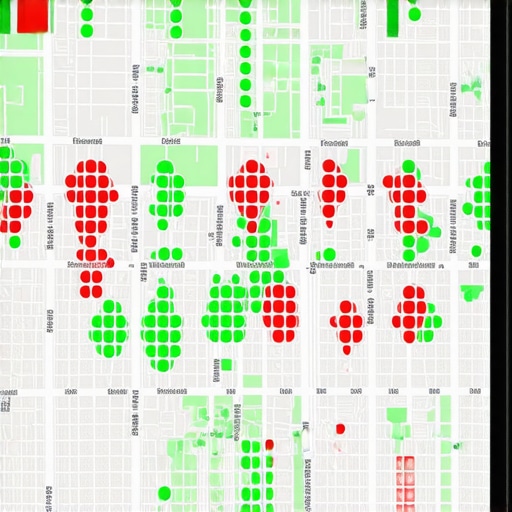
    You cannot manage what you do not measure. In 2026, ranking isn’t a single point on a map; it’s a grid. A massive competitor might rank #1 if you’re standing in their parking lot, but their visibility might drop off a cliff just two blocks away. To beat them, you need a google maps ranking service that provides grid-based tracking.

    By using local seo ranking tools, you can see exactly where your “proximity bubble” ends. This allows you to target your hyperlocal content and ad spend on the specific neighborhoods where you are currently ranking #4 or #5 – the “striking distance” keywords. This surgical approach is much more effective than the “spray and pray” method used by large agencies managing thousands of accounts. To truly dominate, you need a dedicated google business profile seo strategy that reacts to these micro-movements in the SERPs.

    Conclusion: Becoming a Trusted Entity

    Success in 2026 is not about “tricking” the algorithm; it is about becoming a “Trusted Entity.” Google wants to provide its users with the best, most reliable local experience. By focusing on engagement depth, rapid interaction, geo-fenced proof, and advanced technical alignment, you can prove to Google that your business is the most relevant choice, regardless of how many reviews your massive competitors have.

    If your ranking has plateaued or you feel the “big brands” are squeezing you out, it’s time for a professional google business profile seo audit. Don’t let your business be a ghost on the map. Take control of your local presence, implement these 2026-ready strategies, and start outperforming the competition today.

  • Why Most Business Owners Pick the Wrong Categories and Kill Their Local Map Rank

    Why Most Business Owners Pick the Wrong Categories and Kill Their Local Map Rank


    Why Most Business Owners Pick the Wrong Categories and Kill Their Local Map Rank

    Why Most Business Owners Pick the Wrong Categories and Kill Their Local Map Rank

    Section 1: The Invisible Filter

    In the world of local search, your Google Business Profile (GBP) isn’t just a digital business card – it is your business’s DNA. Most business owners I consult with spend thousands of dollars on high-end photography, aggressive review acquisition campaigns, and expensive backlinks. Yet, they remain stuck on page three of the local results. Why? Because they have fundamentally misunderstood the most critical technical setting in the entire dashboard: Categories.

    Categories act as the ultimate filter for Google’s algorithm. Think of it as a gatekeeper. If you are a high-end litigation firm but you have labeled yourself as a “Legal Service,” you are effectively telling Google to place you in a massive, diluted bucket where you compete with everyone from notary publics to divorce lawyers. You aren’t being “filtered in” for the high-value searches; you are being filtered out by your own hand.

    According to MapRanks 2026 data, the Google Business Profile serves as the primary data source for the Local Pack. If your category selection is off by even a fraction, the algorithm simply doesn’t “see” you as a relevant candidate for specific queries. This is a technical error, not a streak of bad luck. Many businesses fail to realize that The 3 Crucial Gaps Your Last Local SEO Audit Probably Missed often start with this foundational category mismatch. If you want to master google business profile seo, you must first master the taxonomy of your industry.

    Section 2: The 1,050-Location Study: Why More (Correct) Categories Matter

    I don’t expect you to take my word for it based on “intuition.” We look at the data. A 2023 study of 1,050 business locations by DAC Group proved that businesses utilizing more categories for their Google Business Profiles saw a significant boost in average map rankings. The correlation was undeniable: profiles that strategically maximized their secondary category slots consistently outperformed those that relied solely on a single primary category.

    However, there is a nuance here that most “gurus” miss. It isn’t just about quantity; it’s about the relevance of the cluster. The study showed that when a business added a relevant secondary category, their visibility for long-tail keywords exploded. For instance, a dental office that only used “Dentist” ranked moderately, but when they added “Cosmetic Dentist,” “Pediatric Dentist,” and “Dental Implants Provider,” their overall reach increased by over 40%.

    If you are unsure where you stand, using a google business profile audit tool like SEO Viper is essential for maintaining visibility and identifying if your current category count is below the industry average. Without empirical data, you are just guessing. Identifying these discrepancies is often Why Your Profile Ranking Stalled and the 5-Minute Fix That Restarts It.

    Section 3: The Primary Category Pitfall

    The hierarchy of categories is not a democratic system. The Primary Category is the king, carrying approximately 75% of the ranking weight. This is where most business owners commit “search engine suicide.” They choose a category based on their internal ego or what they *think* they are, rather than what the market is actually searching for.

    For example, I recently worked with a firm that insisted on being categorized as a “Consultant.” While technically true, “Consultant” is a graveyard of a keyword. After performing competitor research, we found that their highest-ranking competitors were all using “Marketing Agency” or “Advertising Agency.” By switching the primary category to match the high-volume search intent, their google business profile ranking jumped from position #14 to #2 in less than three weeks.

    To find the “Winning” primary category, you must look at the top three performers in the Map Pack for your most valuable keyword. What is their primary label? If 100% of the top-ranking businesses use “Personal Injury Attorney” and you are using “Law Firm,” you are fighting an uphill battle you will never win. If this technical deep-dive feels overwhelming, engaging a professional google maps ranking service can ensure your primary category is aligned with actual revenue-generating search volume.

    Section 4: Secondary Categories: Expansion vs. Dilution

    While the DAC Group study highlights the benefits of multiple categories, there is a dangerous trap known as “Category Dilution.” Some owners think, “If three categories are good, ten must be great!” This is a mistake. If a plumber adds “Electrician,” “Landscaper,” and “Roofing Contractor” just to “cast a wider net,” they confuse Google’s relevance signal. Google starts to wonder: *What is this business actually an expert in?*

    The result? You stop ranking for “Plumber” because your relevance is spread too thin, and you never rank for “Electrician” because you have no supporting signals. To rank higher on google maps, you must follow the “Rule of Relevance.”

    The Rule of Relevance: Only add a secondary category if you have a dedicated, high-quality service page on your website that corresponds to that category. If you select “Water Heater Repair” as a secondary category, but your website only mentions it in a bullet point on the homepage, you are failing to provide the “Proof of Expertise” Google requires. This is a common reason How Most Local Business Schema Fails to Tell Google Where You Are – the website and the GBP are telling two different stories.

    Section 5: 7 Costly Mistakes That Tank Rankings

    Through my years as a GBP Product Expert, I have identified seven recurring mistakes that act as an anchor on your local rankings. If you want to improve google maps ranking, you must audit these immediately.

    1. Ignoring the “Quiet Removal”: Google updates its category taxonomy frequently. Sometimes, a category you’ve used for years is retired or replaced with something more specific. If you don’t monitor this, you could be left with a “Legacy” category that no longer carries weight.
    2. Website-GBP Mismatch: As mentioned, your website’s H1 tags and Schema markup must mirror your GBP categories. If your GBP says “Italian Restaurant” but your website title is “Best Pizza in Chicago,” the conflict creates a lack of trust in the algorithm.
    3. Choosing “Niche” over “Broad”: While specificity is good, choosing a category so niche that it has zero search volume is a waste of a slot. Always start with the broadest relevant category that has the highest volume.
    4. Overlapping Categories: Don’t use “Pizza Restaurant,” “Pizza Takeout,” and “Pizza Delivery” all at once if “Pizza Restaurant” covers the intent. Pick the strongest one and use the others only if you have distinct operational differences.
    5. Ignoring Seasonal Shifts: HVAC businesses are the classic example. In July, your primary category should likely be “Air Conditioning Repair Service.” In January, “Heating Contractor” should take the lead. Failing to swap these can lead to a 50% drop in seasonal leads.
    6. Set and Forget: Local SEO is not a one-time setup. Using local seo software to track your category performance quarterly is the only way to stay ahead of competitors who are actively optimizing.
    7. Inconsistent NAP across Citations: If your Yelp profile says you are a “General Contractor” but your GBP says “Kitchen Remodeler,” Google sees a discrepancy in your business identity. Consistency across the web reinforces your category choice.

    To increase google business profile visibility, you must treat these categories as dynamic assets, not static labels.

    Section 6: The 2026 Outlook: AI Filters and Proximity

    As we move into 2026, Google’s AI filters – driven by advanced Large Language Models – are becoming frighteningly good at “semantic matching.” It is no longer enough to just select a category. Google is now scanning your customer reviews, your GBP posts, and your Q&A section to see if they support your category choice.

    If your category is “Personal Injury Attorney,” but 90% of your reviews mention “Divorce” or “Child Support,” the AI will eventually de-rank you for Personal Injury queries despite your category setting. The “relevance” signal is now holistic. You must ensure your entire digital footprint supports your chosen categories. I discuss this further in my guide on 5 Local Mapping Strategy Fixes for 2026 AI Filters.

    Section 7: Conclusion & Action Plan

    Stopping the “rank kill” starts with admitting that your current category strategy might be flawed. Categories act as the primary filter; if you aren’t in the right bucket, you don’t exist in the eyes of the Map Pack. To rank in google map pack, you need a precision-guided approach.

    Your 4-Step Action Plan:

    • Audit Competitors: Use a tool to see which primary categories the top 3 rankers are using.
    • Verify Primary Category: Ensure your primary choice has the highest search volume and matches your core revenue driver.
    • Add Supporting Secondary Categories: Choose 2-4 highly relevant categories that are backed by specific pages on your website.
    • Sync Your Schema: Update your website’s LocalBusiness Schema to reflect these exact categories.

    Don’t let a simple dropdown menu stand between you and your customers. Use a google maps rank tracker today to benchmark your current position, make these changes, and watch your visibility climb.


  • The Profile Audit Checklist for Turning Search Impressions Into Real Calls

    The Profile Audit Checklist for Turning Search Impressions Into Real Calls


    The Profile Audit Checklist for Turning Search Impressions Into Real Calls


    The Profile Audit Checklist for Turning Search Impressions Into Real Calls

    The “Impression-to-Call” Gap: Why Your Views Aren’t Cash

    In the world of local SEO, impressions are often the drug of choice for mediocre agencies. They show you a graph with a line going up and to the right, claiming victory because your business “showed up” 50,000 times last month. But here is the cold, hard truth from the front lines: Impressions are a vanity metric. If those 50,000 impressions only resulted in three phone calls, your profile isn’t a marketing asset – it’s a digital billboard in the middle of a desert.

    We call this the “Impression-to-Call” Gap. It is the disconnect between being seen and being chosen. In 2026, Google’s algorithm has evolved far beyond simple proximity. The search engine is now a conversion engine. Most businesses focus entirely on “showing up,” failing to realize that the Google Business Profile (GBP) is now a high-velocity sales funnel. If you aren’t converting, you are simply warming up the lead for your competitor who sits one spot below you.

    Data shows that a well-optimized, conversion-centric profile can outrank 99% of local businesses simply by closing this gap. To win in the 2026 landscape, you must audit your profile not for “rankings,” but for trust and action. If you find yourself asking, High Impressions But Zero Calls? How to Fix Your Broken Local CTR, then this audit is your roadmap to recovery.

    Phase 1: The Core Identity Audit

    The foundation of your profile is your “Core Identity.” This consists of your Business Name, Primary Category, and NAP (Name, Address, Phone) consistency. In 2026, Google’s “Neural Matching” is more aggressive than ever at detecting artificial signals. If your core identity is shaky, the rest of your SEO efforts are built on sand.

    First, let’s talk about the business name. The temptation to “keyword stuff” is at an all-time high. While adding “Best Plumber in Dallas” to your name might give you a temporary boost, it is the number one trigger for a hard suspension. Your name should reflect your legal brand. Google’s AI now cross-references your profile against state registries and utility bills in real-time. To ensure you stay online, check out The Single Document Required to Reinstate a Suspended Business Profile.

    Next is the Primary Category. This is the single most important ranking signal on your profile. Many businesses choose a category that is too broad. If you are a “Personal Injury Lawyer,” don’t just settle for “Lawyer.” The precision of your primary category dictates which “Search Intents” you qualify for. Use secondary categories to fill the gaps, but never let them dilute the focus of the primary one. For those looking for deep-dive google business profile optimization, ensuring category alignment is the first step toward the Map Pack.

    Phase 2: Visual Authority & Trust Signals

    By 2026, the way users interact with Google Maps has shifted from text-based browsing to “Spatial Search.” Users want to “feel” the business before they arrive. This is where your visual authority comes into play. Stock photos are no longer just “lazy” – they are a negative ranking signal. Google’s Vision AI can now distinguish between a stock image and a photo taken at your actual place of business via metadata and pixel patterns.

    Your audit must prioritize “Live Proof.” This includes:

    • Verified Visit Search: Photos uploaded by customers that Google can verify were taken at your coordinates.
    • Spatial Videos: Short, 15-second clips of your team in action or a walk-through of your office.
    • NFC-Tagged Images: Photos that correlate with mobile device dwell time in your shop.

    Searchers in 2026 rely on these visual cues to bridge the trust gap. If your profile is filled with generic “team shaking hands” stock photos, you are bleeding leads. You need to showcase 6 Offline Proof Cues to Win Local Map Domination to prove you are a legitimate, active entity. Utilizing professional google maps seo tools can help you track how these visual assets impact your click-through rate (CTR) and overall engagement.

    Phase 3: The Review Velocity & Sentiment Audit

    We have moved past the era where “having the most reviews” wins the day. In 2026, Google prioritizes Review Velocity (how often you get reviews) and Sentiment Depth (what people are actually saying). A business with 500 reviews from 2023 will lose to a business with 50 reviews gained in the last month.

    During your audit, look at your response strategy. Are you using “Review Automation” to post the same “Thanks for the feedback!” message to everyone? This is a mistake. Google’s NLP (Natural Language Processing) models look for local keywords and specific service mentions in both the review and the response to improve google maps rankings. If a customer mentions “emergency roof repair in Austin,” your response should acknowledge that specific service and location.

    However, beware of the Trap of Review Automation: Why More Stars Don’t Always Mean More Map Leads. If the sentiment feels manufactured or the velocity is too “perfect” (e.g., exactly 5 reviews every Tuesday), Google will shadow-ban those reviews, and your ranking will plummet. A genuine google maps ranking service focuses on natural acquisition and high-quality, keyword-rich responses that signal authority to the algorithm.

    Phase 4: Technical & Hyperlocal Signal Audit

    This phase is where we turn the “listing” into a “conversion engine.” You must audit your Services, Products, and Google Posts. These are not just decorative; they are indexed data points that expand your “Keyword Radius.”

    The Services Section: Do not just use the pre-populated suggestions. Add custom services with 300-character descriptions. These descriptions should include hyperlocal landmarks and specific neighborhood names. This helps Google associate your business with a wider geographic area.

    The Post Strategy: In 2026, Google Posts serve as “micro-blogs” that signal freshness. Audit your posts for “Offer” types versus “Update” types. Use local seo ranking tools to identify which keywords your competitors are ranking for and weave those into your weekly updates. Furthermore, ensure you are utilizing local seo software to manage local business schema and google business profile embeds on your main website. If your map embed isn’t optimized with the correct CID (Client ID) link, you are missing a massive authority signal. Learn more about this in Why Your Map Embed Strategy Isn’t Translating Into Local Rankings.

    Phase 5: The 2026 “Human Signal” Checklist

    The biggest shift in 2026 is the weighting of “Human Signals.” Google now prioritizes real-world movement over static citations. This means the algorithm is looking at how many people actually click “Directions,” how many people’s GPS coordinates end up at your storefront, and how long they stay (dwell time).

    To dominate, your audit must include a strategy for Human Interaction. This includes:

    • NFC Interactions: Encouraging customers to tap their phones on an NFC-enabled stand to leave a review or check-in.
    • Click-to-Call Consistency: Ensuring your phone lines are answered. Google tracks “call connectivity” as a trust signal.
    • Real-World Foot Traffic: Google’s google maps lead generation tools now factor in “Popular Times” data as a ranking boost. If your shop is busy in the real world, you will be “busy” in the search results.

    The “Proximity Paradox” states that being the closest business isn’t enough if your human signals are weak. Google would rather send a user two miles further to a business with high engagement and proven foot traffic. Read more on How Real Store Visits Overpower Every Other Local Mapping Strategy to understand this shift.

    Conclusion & Action Plan

    Success in 2026 isn’t about “tricking” the algorithm; it’s about providing the most verified, trusted, and engaging answer to a user’s local search. Stop obsessing over where you rank and start obsessing over how you convert. Audit your core identity, amplify your visual proof, and lean into human signals. If you want to automate this analysis, use a professional google business profile audit tool to identify your gaps instantly. For the most advanced local seo software and to finally get more calls from google maps, visit SEO Viper Tools today.


  • The Trap of Review Automation: Why More Stars Don’t Always Mean More Map Leads

    The Trap of Review Automation: Why More Stars Don’t Always Mean More Map Leads

    The Trap of Review Automation: Why More Stars Don’t Always Mean More Map Leads

    You’ve seen the profile. A local plumber or personal injury lawyer with 850 reviews, a glowing 4.9-star rating, and a steady stream of new feedback hitting their page every single day. On the surface, they look like the undisputed king of the hill. Yet, when you look at the actual call volume or lead data, the numbers are stagnant. Even worse, they are nowhere to be found in the top three positions of the local map pack for their most profitable keywords.

    How is this possible? In the early days of local search, review quantity was the ultimate lever. If you had more reviews than your competitor, you won. But as we move into 2026, the landscape has shifted. We are now living in the era of the “Review Trap” – a phenomenon where businesses over-invest in automated review acquisition at the expense of actual ranking signals. The hard truth is that while reviews are essential, a mountain of automated, generic stars can actually hinder your google business profile seo if they lack the substance Google’s modern algorithms demand.

    The “5-Star” Illusion: Why Your Google Business Profile SEO is Stalling

    The frustration is real: you’re doing everything the “gurus” told you to do. You bought the software, you automated the SMS requests, and your star count is climbing. But your phone isn’t ringing. This is the 5-star illusion. The belief that quantity and rating are the only metrics that matter is a relic of 2018.

    Google’s 2026 algorithm has evolved to prioritize “Real-World Proof” over sheer volume. According to the Whitespark 2026 Local Search Ranking Factors survey, while reviews remain a top-three signal, the weighting has shifted dramatically. Specifically, “Review Sentiment” and “Keywords in Reviews” now carry significantly more weight than the raw number of reviews. In fact, signals controlling approximately 32% of rankings – such as proximity, relevance, and behavioral signals – are often ignored by business owners who are hyper-focused on the ~7% signal of review quantity.

    If your reviews are coming in via an automated system that just asks for a “rating,” you are likely missing out on the semantic depth required to The Real Reason Your Map Impressions Never Become Local Customers. Google isn’t just counting stars anymore; it’s reading the story those stars tell. If the story is repetitive and lacks context, Google stops listening.

    Why Automation is Killing Your Relevance in Local Search

    Automation is a double-edged sword. While it’s efficient, it often produces “low-signal” feedback. When a customer receives an automated text and clicks a link, they are often prompted to leave a quick rating. This results in hundreds of reviews that say things like “Great service!”, “Highly recommend!”, or “Five stars!”

    From a google business profile seo perspective, these reviews are nearly worthless. Why? Because of Semantic SEO. To rank google business profile listings effectively, Google needs to see specific service keywords within the review text. It uses Natural Language Processing (NLP) to categorize your business. If a review for a HVAC company says, “They fixed my AC leak in the middle of a heatwave in Austin,” Google gains three data points: the service (AC leak repair), the urgency (heatwave/emergency), and the location (Austin).

    Contrast that with an automated review: “Great job, thanks!” This tells Google nothing. Without these high-signal manual reviews, your profile lacks the relevance needed to compete for high-intent searches. Google’s AI is looking for “entities” and “attributes.” If your automated reviews don’t mention your services, you aren’t building the topical authority required to dominate the map pack. If you want to see how your profile stacks up against competitors in terms of keyword density in reviews, using professional local seo tools is the only way to get an objective view of your semantic standing.

    The 2026 Radius Wall: Why You Can’t Rank Google Business Profile Profiles on Reviews Alone

    One of the most common misconceptions I see as a strategist is the idea that reviews can “out-rank” proximity. I call this the “Radius Wall.” You could have 5,000 reviews, but if your business is located five miles away from the searcher and you haven’t optimized for other local signals, you will likely lose to a competitor with 50 reviews who is only half a mile away.

    In 2026, Google has leaned heavily into “Spatial Search.” This means the algorithm uses more than just your stated address; it uses real-time GPS data and Wi-Fi triangulation to verify where your customers actually are when they interact with your brand. This creates a Proximity Paradox. The Proximity Paradox: Why Moving Your Store Location Won’t Always Help You Dominate Maps explains that simply being close isn’t enough; you need to prove your local relevance through human interaction.

    Reviews can help bridge the gap, but only if they are “Verified Visit” reviews. Google knows if a user was actually at your place of business before they left a review. If 90% of your reviews come from people who have never physically been near your shop – a common byproduct of poorly managed automation or incentivized remote reviews – Google will devalue those signals. They won’t help you break through the Radius Wall because they don’t provide the “Spatial Proof” the algorithm craves.

    Human Signals vs. Bot Patterns: The New Local Map Pack SEO

    Google’s ability to detect “Review Velocity” spikes and unnatural patterns has reached a point where automation can actually trigger a filter or a “ghost-ban” on your reviews. If you typically get two reviews a month and suddenly, after signing up for a new automation tool, you get 40 reviews in three days, Google’s fraud detection kicks in.

    To rank higher on google maps, you need to focus on Offline Proof Cues. These are signals that occur in the physical world and are mirrored in the digital world. These include:

    • Dwell Time: How long customers spend at your location.
    • Foot Traffic Patterns: The correlation between busy hours and review timestamps.
    • Photo Metadata: When customers upload photos with their reviews, Google checks the EXIF data (GPS coordinates and timestamp) to ensure the photo was taken at your business.
    • NFC Interaction Cues: The use of tap-to-pay or in-store Wi-Fi logins that signal a legitimate transaction.

    Automated review systems often ignore these cues. They send requests days or weeks later, losing the “spatial” connection to the visit. In 6 Offline Proof Cues to Win Local Map Domination [2026], I discuss how Google is moving toward a “Verified Visit Search” model. If you want to truly win at local map pack seo, your review strategy must mimic natural human behavior. This means a steady, consistent flow of reviews that are geographically and temporally linked to your business operations.

    The Conversion Gap: Why Your GMB Ranking Service Isn’t Generating Calls

    Let’s assume your automation strategy actually worked and you’ve managed to rank google business profile at the top of the pack. You’re seeing thousands of impressions in your dashboard. But the phone isn’t ringing. This is the “Conversion Gap.”

    Modern consumers are incredibly savvy. They have developed a “bot-radar” that allows them to sniff out fake or automated-looking reviews in seconds. When every review on your profile is a 5-star rating with no text or generic “Great!” comments, it creates a trust deficit. Paradoxically, a profile with a 4.7-star rating and a mix of detailed, descriptive reviews (including a few 4-star ones that offer constructive feedback) will often convert at a much higher rate than a “perfect” 5.0-star profile.

    Furthermore, owner responses play a massive role in conversion. Many local seo services focus only on getting the review, but they forget the response. If your responses are also automated – using the same “Thank you for your business!” template for everyone – you are signaling to potential customers that you don’t actually care. Why Your Profile Insights Are Lying to You About Real Phone Calls dives deep into how “ghost impressions” from bots can inflate your metrics while your actual human leads remain low because of a lack of authentic engagement.

    Engineering “High-Signal” Reviews for Better Local SEO Services

    So, how do you escape the automation trap without spending 40 hours a week chasing customers? The key is to engineer “High-Signal” reviews. Instead of a generic request, your prompts should encourage specific details.

    A high-signal review includes:
    1. The name of the service performed.
    2. The name of the technician or staff member.
    3. The specific problem that was solved.
    4. A photo of the completed work.

    One of the most effective ways to do this is through “Geo-Fenced” review requests. Instead of waiting until the customer gets home, send the request while they are still at your location or just as they are leaving. This ensures the review is tied to the physical location and increases the likelihood of them uploading a photo on the spot.

    I’ve found that This One Change to Your Review Request Text Doubles Local Leads: simply asking “Could you mention which service we provided today?” can increase your keyword relevance by over 400%. This is the kind of google business profile optimization that actually moves the needle. If you are looking for a professional google maps ranking service, ensure they focus on the quality and semantic depth of reviews, not just the quantity.

    Conclusion: Your Action Plan for Local Map Domination

    In the world of google business profile ranking, more stars do not always equal more leads. If you are relying on generic automation, you are building a house of cards that will eventually be toppled by Google’s preference for “Real-World Proof.”

    To dominate your local market in 2026, you must:

    • Audit your current reviews for semantic depth and keyword relevance.
    • Shift from generic automation to high-signal, descriptive review requests.
    • Prioritize “Verified Visit” reviews that correlate with physical foot traffic.
    • Engage authentically with every review to build consumer trust.

    Stop chasing the 5-star dragon and start building a profile that proves your relevance to both Google and your future customers. If you’re ready to see the truth about your rankings, perform a 10-minute local SEO audit or explore SEO Viper Tools to track your real-world map performance today.

  • The Ethical Shortcut to Five-Star Reviews Without Begging Customers

    The Ethical Shortcut to Five-Star Reviews Without Begging Customers

    The Ethical Shortcut to Five-Star Reviews Without Begging Customers

    For many small business owners, the “review game” feels like a rigged marathon. You’ve likely been in business for 15+ years, providing impeccable service and building a local reputation through word-of-mouth, yet your Google Business Profile (GBP) looks like a ghost town with only a handful of reviews. Meanwhile, a competitor who opened two years ago has 200 five-star ratings and dominates the local map pack. This “review fatigue” is a common crisis in 2025; business owners feel that “begging” for reviews is beneath their professional dignity, yet manual outreach is increasingly failing as customers become desensitized to generic requests.

    The reality is that google business profile seo has evolved. We are no longer in an era where you can simply hope for the best. Research indicates that Google Business Profile signals, including review velocity and sentiment, now account for approximately 27-32% of total ranking influence in the local pack. If you aren’t actively generating reviews, you aren’t just losing reputation; you are losing visibility. However, there is an “Ethical Shortcut” – a system of automation and “human signals” that generates reviews as a natural byproduct of your service, rather than a desperate afterthought. Before diving into the mechanics, it is worth performing The 10-Minute Local SEO Audit That Uncovers Why Your Rankings Stalled to see where your current profile stands.

    The 2025-2026 Algorithm: Why Quantity Isn’t Enough

    The local map pack algorithm has undergone a seismic shift as we move toward 2026. In previous years, a high volume of reviews was the primary lever to rank google business profile listings. Today, Google’s AI-driven filters prioritize “freshness, relevance, and owner response.” A business with 500 reviews from three years ago will often be outranked by a business with 50 reviews, ten of which were posted in the last month.

    One of the most critical developments is the “Proximity Paradox” and the “2026 Radius Wall.” Google has tightened the geographical area for which a business can rank, but it allows businesses to “break” through this wall if their reviews contain high relevance. When a customer leaves a review mentioning specific services – like “best root canal in North Dallas” or “emergency probate lawyer” – it helps Google understand the business’s relevance to specific local queries. This is why local seo ranking factors are now deeply tied to the semantic content within your reviews.

    Furthermore, google map pack ranking factors now include the “legitimacy of the reviewer’s journey.” Google tracks whether a reviewer was actually at your place of business (using location history) before they left the review. This makes the “Ethical Shortcut” even more important, as it relies on real-world interactions rather than fabricated outreach. If your rankings have dipped recently, you might want to investigate Why Your Google My Business Rank Tanked After the Latest Proximity Update.

    Strategy 1: The “Peak Satisfaction” Automation

    The biggest mistake most businesses make is asking for a review three days after the service is completed. By then, the “peak satisfaction” moment has passed, and the request becomes an annoyance. To rank higher on google maps, you must capture the sentiment at its zenith. This is where high-end local seo software becomes indispensable.

    Using platforms like GoHighLevel integrated with AI-driven SMS follow-ups allows you to trigger a review request the second a technician closes a job in your CRM or a patient checks out at the front desk. The “Ethical Shortcut” involves making the process “frictionless.” Instead of a long email, send a short SMS: “It was a pleasure serving you today! Could you share one thing you liked about our service?”

    NFC and QR Integration

    In 2026, the most successful local businesses are moving away from digital-only requests and toward physical “tap-to-review” triggers. By placing NFC (Near Field Communication) tags at checkout counters or on service vehicles, you allow customers to simply tap their phone and be taken directly to your review page. This removes the “search and click” friction that kills review conversion rates. If you find your physical triggers aren’t working, check out our guide on 5 NFC Interaction Fixes for Google My Business Rank [2026].

    Strategy 2: The “Human Signal” Hack

    Google’s algorithm is increasingly sophisticated at identifying “real” business interactions. They track “dwell time” – how long a customer stays at your physical location – and “interaction speed.” If a customer spends 45 minutes at your dental office and then leaves a review while still on-site or shortly after leaving, that review carries significantly more weight than one left by someone who has never been near your GPS coordinates.

    This is why a professional google maps ranking service focuses not just on the text of the review, but on the signals surrounding it. You can ethically “hack” these signals by encouraging in-store engagement. For example, offering free Wi-Fi that requires a quick check-in or providing a “digital gallery” of your work that customers can browse while waiting creates a digital footprint of their visit. These real-world foot traffic cues are the primary way to fix stalled rankings. For a deeper dive into this technical aspect, read How Real Foot Traffic Signals Fix a Stalled Google My Business Rank.

    Strategy 3: Ethical Review Mining for High-Stakes Industries

    For professionals in high-stakes industries – such as local seo for dentists, local seo for lawyers, and local seo for med spas – the challenge is privacy and ethics. You cannot “bribe” a client for a review, and many clients are hesitant to post publicly about sensitive legal or medical issues.

    The “Ethical Shortcut” here is “Stupidly Simple Accessibility.” Instead of asking for a general review, ask for a “testimonial of the process.” For a lawyer, this might be: “We value your privacy. If you felt our communication was clear, a quick star rating helps others find reliable counsel.” This approach reduces the emotional burden on the client. Utilizing google business profile optimization techniques specifically designed for sensitive niches ensures that you remain compliant with industry regulations while still building the “review moat” necessary to compete in the map pack.

    In these industries, the “gentle follow-up” is key. A single, well-timed SMS is 4x more likely to result in a review than a bulk email blast. It feels personal, professional, and respectful of the client’s time.

    Managing the Feedback Loop: AI Responses & Reputation

    Generating the review is only half the battle. To truly improve google maps ranking, you must respond to every single review. Google has explicitly stated that responding to reviews improves your local SEO because it signals that the business is active and cares about customer engagement.

    However, manually responding to 50 reviews a month is a chore. The modern “shortcut” involves using AI-assisted response tools. These tools can draft personalized responses that include your target local keywords naturally. For example, if a customer mentions your “emergency plumbing repair in Phoenix,” your AI-drafted response might say: “Thank you, Sarah! We take pride in being the go-to choice for emergency plumbing repair in Phoenix and are glad we could help.” This reinforces the keyword relevance to Google’s crawlers without sounding like a robot. Remember, How Customer Interaction Speed Directly Influences Your Google My Business Rank; the faster you respond, the better the signal.

    Conclusion: Building a “Review Moat”

    The “Ethical Shortcut” to five-star reviews isn’t about cutting corners or “gaming” the system with fake accounts. It is about removing the friction that prevents your happiest customers from speaking up. By implementing automation at “peak satisfaction,” leveraging NFC technology for physical signals, and using AI to maintain a perfect response rate, you build a “Review Moat” that competitors cannot easily cross.

    In the landscape of 2026, where “Spatial Search” and “AR-View Proximity” are becoming standard, your digital reputation is your most valuable asset. Stop begging for reviews and start building a system that generates them automatically. If you are ready to dominate the local map pack, I suggest you visit the website to explore advanced local seo tools and google maps seo tools that can automate this entire lifecycle for you. Audit your profile today and see how a few strategic changes can transform your local visibility.

    About the Author:
    Charlie Stanley is an expert in providing detailed SEO analysis for websites and site structures. With a focus on optimizing performance and building local inbound links, Charlie helps businesses dominate the 3-pack through advanced signal manipulation and data-driven strategies.

  • The Hidden Reason Your Google Business Profile Posts Get Zero Traction

    The Hidden Reason Your Google Business Profile Posts Get Zero Traction


    The Hidden Reason Your Google Business Profile Posts Get Zero Traction

    The Hidden Reason Your Google Business Profile Posts Get Zero Traction

    You’ve done everything the “gurus” told you to do. You’re posting three times a week. You’re using high-quality images. You’re adding a “Learn More” button to every single update. And yet, when you log into your dashboard, the numbers are soul-crushing: 0 views, 0 clicks, and absolutely zero impact on your phone call volume. It feels like you’re shouting into a void, or worse, managing a digital ghost town.

    The frustration is real. For most business owners and even many marketing agencies, the Google Business Profile (GBP) post feature has become a chore – a box to check that yields no measurable ROI. But here is the provocative truth: Google doesn’t care about your consistency if your content lacks signal strength. We are no longer living in the era where Google acts as a static yellow-pages directory. In 2026, Google has fully transitioned into an engagement engine.

    The rules of the game changed fundamentally following the massive 2024 Google API leak, which exposed 14,014 ranking attributes, and the subsequent March 2024 Core Update. These events confirmed what many of us in the high-level SEO community suspected: Google is prioritizing “trust, authenticity, and behavioral signals” over raw data volume. If your posts aren’t moving the needle, it’s not because you aren’t posting enough – it’s because your posts are failing to trigger the technical signals Google now requires to rank you in the local map pack. In this guide, I’m going to pull back the curtain on why your strategy is failing and how to leverage google business profile seo to finally dominate your local market.

    The Hidden Reason: It’s Not the Content, It’s the Signal

    To understand why your posts are getting zero traction, we have to look at how the algorithm actually processes a post. Most people think a post is just a way to show a customer a discount. In reality, a GBP post is a relevance injection. Every time you post, you are feeding the algorithm data about what you do and where you do it. However, if that data doesn’t result in a user action, Google views it as “noise.”

    The technical reason for your lack of traction is a failure in behavioral signals. In the post-leak SEO landscape, we know that Google tracks “dwell time” on your profile and the “click-through rate” (CTR) of your updates. If users consistently scroll past your posts without clicking, Google’s AI concludes that your business is either irrelevant to the search query or uninteresting to the local community. This results in a “dead signal.” When you have too many dead signals, your overall google business profile ranking begins to stagnate or drop.

    Furthermore, many businesses fail to understand the triad of local SEO: Relevance, Proximity, and Prominence. Your posts are the primary tool for building “Relevance.” But if you aren’t using local seo tools to analyze which keywords are actually driving impressions, you are likely optimizing for terms that don’t convert. Before you write another post, you need to understand the baseline of your profile. I highly recommend conducting The 10-Minute Local SEO Audit That Uncovers Why Your Rankings Stalled to see where your technical signals are leaking.

    The 2024 API Leak & The Death of “Stock” Posting

    The 2024 Google API leak was a watershed moment for those of us providing a google maps ranking service. The leak revealed that Google has 2,500 modules dedicated to tracking user engagement and “entity” validation. One of the most significant revelations was the depth to which Google tracks “successful sessions.” A successful session isn’t just someone seeing your profile; it’s someone interacting with it in a way that suggests their intent was met.

    This brings us to the death of “stock” posting. For years, agencies have used generic stock photos of “happy contractors” or “smiling dental patients.” In 2026, this is a death sentence for your rankings. Google’s Vision AI is now sophisticated enough to identify stock imagery instantly. When you use a stock photo, you are signaling to Google that your content is generic and potentially unauthentic. The March 2024 Core Update specifically targeted “scaled content abuse,” and while that mostly applied to websites, the logic carries over to GBP. If your profile is filled with “fake” imagery, your authenticity score plummets.

    To combat this, you must use local seo software that helps you track how real, geo-tagged photos impact your reach versus stock imagery. The data is clear: original photos taken on-site, even if they are slightly unpolished, generate up to 40% more engagement than high-resolution stock photos. Google wants to see the “real” business. They want to see your truck in the driveway, your team in the office, and the actual results of your work in the local neighborhood.

    5 Common “Traction Killers” You Must Fix

    If you want to rank google business profile assets effectively, you have to stop committing these five cardinal sins of local posting:

    1. The “Ad” Trap

    Many businesses treat GBP posts like digital flyers. They fill the image with text like “50% OFF” and “CALL NOW.” While a call-to-action is necessary, over-designing your images makes them look like advertisements. Users have developed “ad blindness.” They scroll right past anything that looks like a sponsored link. Instead, your posts should look like “updates.” They should feel like a peek behind the scenes of a local business.

    2. Missing Geo-Context

    Google needs to know exactly which areas you serve. If you are a plumber in Chicago, but your posts never mention Lincoln Park, Wicker Park, or Logan Square, you are missing out on geographic relevance. Failing to mention local landmarks or specific neighborhoods is a major reason why Why Your Local SEO Agency Fails to Move the Needle on Phone Calls. You need to anchor your business in the physical world through your text.

    3. The “Link to Nowhere”

    Where does your “Learn More” button go? If it goes to your homepage, you are wasting the user’s time and killing your conversion rate. If the post is about “Emergency Roof Repair,” the link should go directly to your roof repair service page – or even better, a dedicated service area business seo landing page. Sending traffic to a generic homepage creates friction, and friction leads to bounces. High bounce rates on your destination URLs can negatively impact your High Impressions But Zero Calls? How to Fix Your Broken Local CTR.

    4. Ignoring the “Dwell Time” Factor

    Google measures how long a user stays on your profile. If your posts are two sentences long, the user spends half a second reading them and moves on. This tells Google your content isn’t “helpful.” Write longer, more engaging captions. Tell a story about a problem you solved for a local client. Explain a complex process in simple terms. The longer you keep a user on your profile, the higher your “Prominence” score becomes.

    5. Lack of Keyword Synergy

    Every post should be strategically aligned with your primary and secondary google business profile categories. If your primary category is “Personal Injury Attorney,” but you are posting about your office’s holiday party, you aren’t reinforcing your primary ranking signal. While occasional culture posts are fine, 80% of your content should be tightly mapped to the keywords you want to rank for in the map pack.

    The “Shahid Anwar” Strategy for 2026 Domination

    To truly rank higher on google maps, you need a strategy that goes beyond the basics. My approach is built on the concept of “Behavioral Local SEO.” This means we don’t just post content; we engineer engagement. Here is the framework I use for my clients to ensure their GBP posts actually move the needle:

    Hyperlocal Content Clusters

    Instead of broad topics, we focus on hyperlocal clusters. If we are working with a real estate agent in Miami, we don’t just post about “how to buy a house.” We post about “The 3 best coffee shops in Brickell to meet your mortgage broker.” We mention specific zip codes and street names. This creates a dense web of local relevance that Google’s “Proximity” algorithms love. It signals that you aren’t just a business in a city; you are an active participant in a specific community.

    The Power of “User-Generated” Style

    We have moved away from professional photography for GBP posts. We now advocate for “User-Generated Content” (UGC) style photos. These are photos taken on an iPhone, showing the actual work being done. Why? Because they feel authentic. When a user sees a real photo of a finished kitchen remodel in their own neighborhood, the CTR skyrockets. This high CTR is the strongest signal you can send to Google to increase your gmb ranking service effectiveness.

    Leveraging Automation Without Losing Soul

    Consistency still matters, but it shouldn’t come at the cost of quality. I recommend using local seo automation tools to schedule your posts, but the content creation itself should be human-led or human-vetted. Use automation to handle the distribution, but ensure the “soul” of the post – the local insights and real photos – is authentic. This allows you to maintain a high “Signal Frequency” without triggering Google’s spam filters. For a deeper dive into this, check out my guide on Mastering Local Maps Domination: Proven Strategies for 2025 Success.

    The Feedback Loop

    Every 30 days, you must audit your post performance. Use a google business profile audit tool to see which posts triggered the most “Direction Requests” or “Calls.” Once you identify a winning post format, double down on it. If your “Before and After” photos are getting 5x the engagement of your “Tips and Tricks” posts, stop making “Tips and Tricks” posts. Listen to what the data – and the users – are telling you.

    Conclusion: The Path to the Top 3

    Your Google Business Profile is not a static billboard; it is a living, breathing micro-blog that represents your brand’s authority in the local space. If you are seeing zero traction, it is a clear sign that your signals are weak, your content is generic, or your geographic relevance is missing. By moving away from “Quantity” and focusing on “Behavioral Local SEO,” you can turn your profile into a lead-generation machine.

    The 2024 API leak proved that Google is watching how users interact with you. Every click, every second spent reading your post, and every zoom on your photo is a vote of confidence in your business. When you provide high-quality, hyperlocal, and authentic content, you aren’t just “posting” – you are building a fortress of relevance that competitors using stock photos and generic AI text simply cannot breach.

    If you want to increase your google maps visibility and finally secure a spot in the coveted Top 3, it’s time to audit your current strategy. Stop treating GBP as a secondary social media platform and start treating it as the core of your local search presence. The businesses that win in 2026 will be those that prioritize authenticity and user engagement over everything else. Are you ready to dominate your local maps?

    About the Author: I’m Shahid Anwar, a Local SEO & Google Business Profile specialist. I help local and multi-location businesses turn Google Maps and local search visibility into consistent revenue. Through data-driven strategies and a deep understanding of the Google algorithm, I help my clients move the needle where it matters most: phone calls and store visits.