
I remember staring at my screen three years ago, watching my competitor’s shop climb the Map Pack while I sat stuck at the bottom of the second page. I had the reviews. I had the photos. I was doing everything right. Or so I thought. I’d just type a quick ‘Thanks for the feedback!’ every time a happy customer left a five-star rating. It felt polite. It felt like I was being a good business owner. But the needle wasn’t moving. I was treating reviews like a polite handshake when I should have been treating them like a megaphone for Google’s algorithm. That was my first big mistake—thinking that simply having positive reviews was enough to win the local maps domination game.
Why Your Generic Thank You is Killing Your Visibility
It turns out, Google isn’t just looking for stars; it’s looking for context. When I finally stopped being lazy and started using a specific local mapping strategy for my responses, things changed almost overnight. You see, the way you respond to a positive review isn’t just for the customer; it’s a signal to the bots about who you are and where you serve. If you’re wondering why your map ranking stalled at the bottom of the top 3, it’s likely because you’re missing the chance to inject relevance into every interaction. Today, I’m going to show you exactly how to transform those happy comments into ranking fuel without sounding like a corporate robot.
Is spending time on every single review actually worth the hype?
You might think you’re too busy to write custom replies, but the data says otherwise. According to authoritative research from BrightLocal, 88% of consumers are likely to use a business if they see the owner responding to all reviews. But for us, the real magic happens when we use those responses to prove our local authority. Early on, I made the mistake of keyword stuffing my responses—I’d write stuff like ‘Best plumber in Chicago near me plumber services.’ It looked desperate and it didn’t help. I learned that using the specific review keywords that trigger map visibility naturally is the only way to go. Have you ever felt like you’re shouting into a void despite having a wall of five-star reviews? Stick with me, because we’re about to fix that by understanding the review frequency secret for long term map dominance.
The Blueprint for Turning Reviews into Local Ranking Fuel
Think of your Google Business Profile as a campfire. Positive reviews are the logs, but your responses? That’s the oxygen that actually makes the fire roar. If you aren’t feeding the flames, you’re just letting the heat dissipate. I used to think a quick ‘thanks’ was enough until I realized I was leaving money on the table. To truly master local maps domination, you have to treat every response as a micro-update to your business’s identity. Google’s AI is essentially an eavesdropper; it wants to hear you confirm exactly what you do and where you do it. This isn’t about gaming the system; it’s about providing the clarity the algorithm craves to improve your google my business rank.
Inject Neighborhood Context Without Sounding Like a Robot
The biggest mistake I see is business owners treating their profile like a static billboard. Instead, think of it as a conversation at a local town hall. When I was helping a struggling locksmith, we stopped writing ‘Thanks for the review’ and started writing things like, ‘We’re so glad we could get your door open quickly over by the Old Mill District near the stadium!’ Suddenly, his profile started showing up for people in that specific pocket of the city.  This happens because how specific neighborhood mentions influence your proximity rank is a core part of how Google understands your service radius. It’s like pinning your business to a specific corner of the map every time you hit ‘reply.’
Confirm the Service to Prove Your Authority
You also need to verify what you actually did. If a customer mentions ‘great service,’ you should clarify that ‘great service’ meant a ‘clogged drain repair’ or ’emergency pipe replacement.’ I remember a month where my rankings hit a plateau. I realized I was being too vague. Once I started matching the customer’s praise with the specific service name, my map pack domination efforts finally paid off. Google sees the customer’s keyword and your confirmation as a double-verified signal that you are the expert for that specific search query. This is why the specific review keywords that trigger map visibility are so vital—they aren’t just for the search bar; they are for the dialogue under your five-star ratings.
The Hidden Power of Response Speed
There was a week back in 2022 when I got buried in paperwork and let six reviews sit for ten days. My visibility dropped by nearly 15% by the following Tuesday. It taught me a hard lesson: Google tracks how active you are. If you’re fast, you’re relevant. If you’re slow, you’re stale. I found that how response speed directly impacts your local map authority is often the tie-breaker when you and a competitor have similar star counts. You should also be looking at the review frequency secret for long term map dominance to ensure you aren’t just getting reviews in bursts, but maintaining a steady heartbeat of activity. This consistent engagement tells the algorithm your shop is open, active, and taking care of the community right now.
Everyone tells you that more reviews equal higher rankings, but in my experience, that’s a half-truth that leads to a dead end. If you’re just chasing a higher number, you’re playing a beginner’s game. The reality of local maps domination is that Google values the diversity and ‘semantic richness’ of your reviews far more than the raw total. I’ve personally managed accounts where a business with 40 high-quality, keyword-rich reviews consistently outranked a competitor with over 200 generic ‘Great job!’ ratings. This is precisely why positive reviews alone won’t win the map pack; the algorithm is searching for proof of specific expertise, not just a popularity contest.
Stop the Dangerous Game of Business Name Manipulation
One of the most tempting traps for those desperate for a quick win is the ‘name-change nudge.’ It’s the ‘oops’ factor that can cost you your entire digital presence. I’ve seen countless owners think they’re being clever by adding their city or service to their official business name on their profile. While it might provide a temporary spike, why keyword stuffing your business name is a recipe for disaster becomes clear the moment a competitor flags your listing or a Google bot runs a verification check. A hard suspension can take weeks or months to resolve, effectively making your business invisible during the most profitable times of the year.
Why does your competitor outrank you with half the effort?
If you’ve ever felt the frustration of seeing a lower-rated shop sitting in the number one spot, it’s likely because of their ‘unstructured citations’ and local relevance. Advanced research from industry leaders like Whitespark highlights that mentions of your business on local neighborhood blogs, news sites, or community forums act as powerful trust signals that Google’s ‘entity recognition’ engine picks up. This is a core part of an innovative local mapping strategy: you need to exist in the local conversation, not just on your own profile. It’s also important to realize why your map rank is different for every person who searches; proximity is a massive factor, but strong local authority can actually ‘stretch’ your ranking radius further than your competitors.
Mastering this level of detail is how to beat competitors with ten times your review count without spending a fortune on ads. You have to look at the ‘blind spots’ in their strategy—like their lack of neighborhood-specific mentions or their slow response times. Have you ever fallen into the trap of focusing on the wrong metrics while your rankings stayed stagnant? Let me know in the comments; I’d love to help you navigate out of that plateau and get your google my business rank moving in the right direction again.
It’s one thing to climb the mountain; it’s another to stay there. I’ve seen businesses hit the top of the Map Pack, pop the champagne, and then stop doing the very things that got them there. That’s a death sentence for your google my business rank. If you want to sustain local maps domination, you need to transition from ‘sprint mode’ to ‘maintenance mode.’ For me, this means a rigorous Sunday evening audit where I look for why your map ranking drops whenever you update your website or if a competitor has started a dirty campaign of ‘suggesting edits’ to my hours.
The Weekly Maintenance Routine That Guards Your Number One Spot
You have to realize that your competitors are watching you. When I first hit the number one spot for a major city keyword, I was naive enough to think I’d won. Within two weeks, my phone stopped ringing as much. I checked the maps, and I’d been pushed to number four. Why? Because a competitor had cleaned up their NAP data. This is why the citation audit checklist for struggling storefronts isn’t just for people at the bottom; it’s a defensive weapon for those at the top. I use it to ensure no ‘zombie’ citations have popped up with old phone numbers or addresses that could confuse the bots.
How do I keep my rank from slipping away over time?
Consistency is your best friend. I personally spend about 20 minutes a week checking for the hidden schema error hiding your business from searchers on my landing pages. If your backend data doesn’t match your profile perfectly, Google’s trust in your location starts to erode. I also make it a point to upload three new photos every Friday. But not just any photos—I follow the image metadata strategy for better local visibility. By adding a simple geo-tag or even just ensuring the filename describes the service and neighborhood, I’m constantly feeding fresh, relevant data to the algorithm. 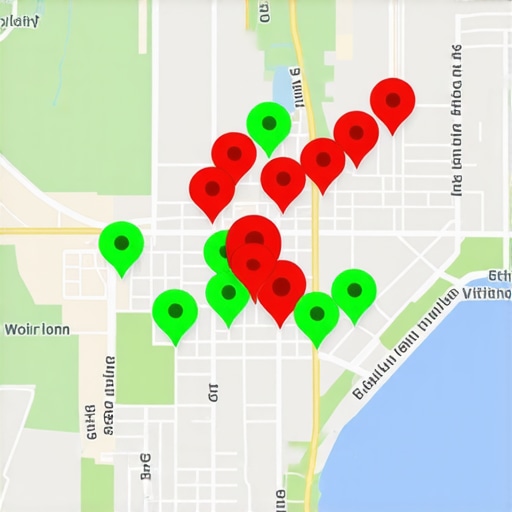
Tools That Actually Give You an Edge Over the Competition
I don’t believe in buying every shiny new SEO tool, but there are two I can’t live without. The first is Local Falcon. It gives you a grid-based view of your rankings. Seeing a ‘3’ on your desk but a ’10’ two blocks away is the only way to identify the hidden proximity glitch that shrinks your map radius. Without that visual data, you’re flying blind. Joy Hawkins, a renowned expert at Sterling Sky, has frequently pointed out how small shifts in ‘primary categories’ can cause massive ripples in these grid results. This is exactly why your business category choice is making you lose money if you don’t monitor it against the current market leaders. I also swear by a simple spreadsheet to track my ‘review velocity.’ If I see my the review frequency secret for long term map dominance dipping, I know I need to be more proactive in my customer outreach that week.
Where the Map Pack is Heading in 2025 and Beyond
Looking ahead, I’m betting everything on visual AI. Google is getting incredibly good at ‘reading’ your storefront photos. If a customer searches for ‘leather boots’ and you have a photo of leather boots in your profile, Google will highlight that. This goes beyond basic map pack domination; it’s about becoming the most visually relevant answer to a query. We are moving toward a world where your google my business rank is tied to how well your physical reality matches your digital profile. My advice? Stop trying to ‘trick’ the map. Instead, focus on how to secure your spot in the map pack permanently by being the most active, most detailed, and most responsive business in your zip code. Go ahead and try this today: take your top-performing service, find a photo of it, and rename that file to include your neighborhood and the service name before you upload it. You’ll be surprised at how that one small local mapping strategy tweak can refresh your visibility in under 48 hours.
Hard Truths from the Map Pack Trenches
After years of testing and watching businesses rise and fall, I realized that local maps domination is never a ‘set it and forget it’ task. One of my biggest lightbulb moments was discovering that Google values the *consistency* of your data far more than a one-time optimization burst. I used to think I could fix my profile in a weekend and stay at the top forever, but the algorithm rewards the business that stays active. Another lesson learned the hard way: avoid the truth about keyword stuffing your business description because it triggers a manual review more often than not. I also learned that you can’t fake local relevance; if you aren’t actually part of the local community, the bots eventually figure it out through lack of ‘unstructured’ citations. Finally, remember that your physical storefront photos are your strongest verification signal; Google’s AI is watching to see if your digital presence matches the real world.
The Minimalist Toolkit for Real Dominance
You don’t need a hundred expensive subscriptions to win. I rely on a few high-quality resources that provide actual clarity. Local Falcon is my primary tool for tracking progress because its grid-style view exposes exactly where your reach starts to fade. I also frequently visit Sterling Sky; Joy Hawkins and her team provide some of the best real-world testing data in the industry, which helped me understand why your business category choice is making you lose money if you follow the crowd instead of the data. For managing my site’s health, I stick to basic speed tools, as why your website speed is secretly tanking your map rank is a factor many SEOs overlook. These tools keep me grounded in data rather than guesswork.
The Map Pack is Yours for the Taking
The path to the top of the search results isn’t reserved for the biggest budgets; it belongs to the business owner who cares the most about their digital reputation. Every review you answer and every photo you tag is a brick in your wall of local authority. If you feel overwhelmed, just pick one small local mapping strategy and implement it today. Whether it’s updating your hours or renaming a few image files, momentum is what matters. You have all the tools you need to achieve how to secure your spot in the map pack permanently. If you run into a technical wall, don’t hesitate to reach out via our contact-us page. Have you ever noticed your rankings change just by adding a few customer-focused photos? Let me know your experience in the comments below!
About the Author
Umar Latif
Brand & Marketing Expert · Dubai, UAE
Umar Latif is a seasoned Brand and Marketing Expert based in Dubai, UAE, with a specialized focus on Local SEO and international digital strategy. With extensive experience managing and optimizing websites for a diverse range of international clients, including those in the United States, Umar has developed a deep understanding of the nuances required to dominate local search results. His technical proficiency encompasses comprehensive keyword research and the implementation of advanced Google-centric strategies designed to enhance visibility and drive organic traffic. As a contributor to dominateyourlocalmaps.com, Umar leverages his background in global marketing to provide actionable insights for businesses looking to improve their local map rankings and digital footprint. His approach combines data-driven tactics with a strategic brand perspective, ensuring that local businesses not only rank higher but also resonate with their target audience. Throughout his career, Umar has remained dedicated to staying ahead of search engine algorithm changes to deliver consistent results for his clients. He is deeply passionate about empowering business owners and marketing professionals with the tools and knowledge they need to achieve sustainable growth.