I remember sitting in my home office at 5:15 PM, staring at a silent phone, wondering why the leads had suddenly vanished. We had spent months perfecting our local maps domination strategy, and we were sitting pretty in the top three. Then, I pulled out my phone and did a search. I hit that little ‘Open Now’ filter button. My business—the one I had worked so hard to rank—instantly disappeared. It was a punch to the gut. It turns out, your google my business rank isn’t a static trophy; it is a moving target that shifts with every tick of the clock. If you aren’t visible when people are actually ready to buy, your ranking is essentially a ghost.
Stop Chasing Rankings That Disappear When the Sun Goes Down
The problem most of us face is that we obsess over where we stand at noon, but we ignore what happens at 5:01 PM. When a potential customer toggles that ‘Open Now’ filter, Google aggressively reshuffles the deck. It doesn’t matter if you have 500 five-star reviews or a perfect local mapping strategy; if your profile says ‘Closed,’ you are out of the game. I learned this the hard way after realizing that why your profile ranking stalled wasn’t always about backlinks or keywords—it was often just about the time of day. Google’s primary goal is to provide immediate solutions, and a closed business isn’t a solution for a customer with an urgent need. This is particularly true for service industries where emergency calls are the lifeblood of the business. I’ve seen the mistake local plumbers make constantly: they set standard hours and lose every late-night lead to a lower-ranked competitor who simply checked a different box.
Can a Simple Clock Setting Really Destroy Your Leads?
It sounds dramatic, but the data backs it up. A study by Sterling Sky found that the ‘Open Now’ filter is one of the most used features by mobile searchers looking for immediate service. I once thought that having a strong brand would carry me through, but search intent is a powerful beast. If you aren’t visible during those peak ‘decision’ hours, you are essentially handing your local market over to whoever happens to be awake. Have you ever actually checked your own ranking at 8:00 PM on a Tuesday? If you haven’t, you might be shocked at what you find. Today, we are going to dive into how you can outsmart competition in local map listings by mastering the temporal side of SEO. We’ll look at why your rank fluctuates and how to ensure you stay relevant even when your physical doors are locked.
Look at Your Business Through a Midnight Lens
To truly achieve local maps domination, you have to stop looking at your dashboard and start looking at the world from your customer’s perspective. I always tell my clients that a ranking at 10:00 AM is a vanity metric; a ranking at 7:00 PM is a revenue metric. If you want to see the truth, you need to learn how to audit your map rankings from a customers real location while they are actually searching. This means checking your visibility on a mobile device, using the ‘Open Now’ filter, and seeing which competitors remain standing when the clock strikes five. 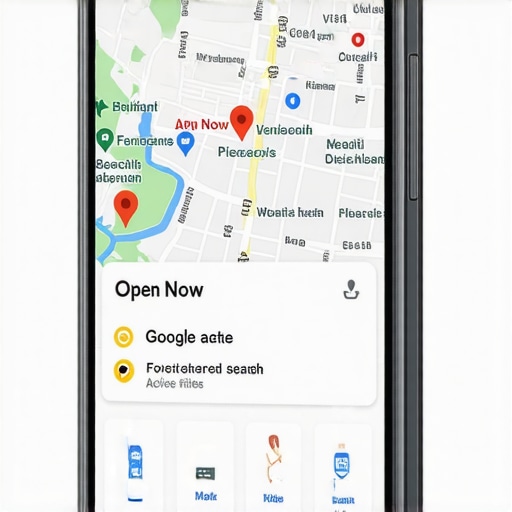
Turn on the Signals That Google Can’t Ignore
Most business owners think that filling out the name and address is enough, but they completely ignore the hidden power of store attributes in map pack selection. These attributes are like digital flares. When a user filters for ’24-hour service’ or ‘Emergency repairs,’ Google isn’t looking for who has the most reviews; it is looking for who has checked the specific attribute boxes that match that intent. I once worked with a locksmith who was struggling to break into the top three. He had a great google my business rank during bank hours, but his phone was dead at night. We realized he hadn’t selected the ‘Online Appointments’ or ’24/7 Service’ attributes. Within 48 hours of making that five-minute change, his late-night call volume tripled. It wasn’t magic; it was just alignment with how search intent changes your business visibility on maps.
The Interaction Data Hack That Beats Huge Competitors
You don’t need a massive budget to beat a national chain; you need better interaction signals. Google tracks everything—how long someone stays on your profile, if they click the ‘Call’ button, and if they actually follow through with a visit. This is why how customer dwell time actually impacts your google my business rank is the most underrated part of a map pack domination strategy. If a user clicks your profile and immediately hits the back button, Google marks you as a ‘bad’ result for that specific time and location.
Stop Letting Your Reviews Sit There and Rot
Engagement isn’t just about what customers say to you; it’s about what you say back. I’ve found that how specific review response patterns actually boost map engagement is a massive ranking factor. Don’t just say ‘Thanks for the review.’ Use that space to mention specific services or neighborhood names. I remember a messy situation where a client accidentally left twenty reviews unaddressed for six months. Their ranking tanked because the ‘freshness’ of interaction had died. We went back, responded to every single one with helpful, keyword-rich context, and the local mapping strategy roared back to life. Google sees those responses as a signal that the business is active and reliable, which is exactly what it wants to recommend to its users.Everyone tells you that building hundreds of directory listings is the secret sauce to a high google my business rank. I’m here to tell you that’s a relic of 2015. In my experience, you can have a perfect NAP (Name, Address, Phone) profile across the web and still watch your traffic bleed out to a competitor whose citations are a mess. Why? Because Google has moved from matching text to measuring behavior. The latest Whitespark Local Search Ranking Factors survey highlights that while citations still matter for foundational trust, they have plummeted in importance compared to on-page signals and behavioral data. This is exactly why perfect citations wont save your google my business rank anymore if you are neglecting the way people actually interact with your brand. 
The Keyword Stuffing Trap That Invites Suspensions
I’ve seen so many business owners get desperate and add Best City Plumber to their actual business name on the profile. It works—for about three weeks. Then, a competitor flags it, or Google’s AI catches the discrepancy, and your listing is gone. This is a classic mistake that kills more map pack domination efforts than any algorithm update. If you want to outsmart competition in local map listings, you need to play the long game rather than seeking a temporary sugar high. Another huge mistake is category bloat. When you select every category that is even slightly related to your work, you dilute your primary signal. I have analyzed dozens of cases where why most business owners pick the wrong categories was the sole reason they could not break the top three.
Why Does the Guy With Fewer Reviews Still Beat Me?
It’s a frustrating sight: you have 100 five-star reviews, and a competitor with 12 reviews is sitting at the top. This happens because Google prioritizes relevance and distance over raw volume. If that competitor has more mentions of specific services in their reviews or if they have higher dwell time on their profile, they win. I also warn my clients about the trap of review automation. If fifty reviews show up in two days and then nothing for three months, it looks suspicious to the algorithm. Consistency in your local mapping strategy beats intensity every single time. Have you ever fallen into this trap where you focused on one metric while ignoring the rest? Let me know in the comments. If you are feeling overwhelmed, it is always worth knowing the one question to ask a local seo expert to see if they actually understand these nuances. If you need a direct look at your strategy, you can always contact us for a deeper dive.Maintaining your local maps domination isn’t about one-off hacks; it’s about building a fortress around your listing. I see so many business owners hit the top three, celebrate, and then stop doing the very things that got them there. That is a recipe for disaster. If you aren’t checking your grid rankings weekly, you’re flying blind. I personally use specialized grid trackers to monitor progress across a 5-mile radius. It’s the only way to identify 7 maps keyword tracking flaws that hide your true store performance before they kill your lead flow. You need to see that red ’15’ ranking in the next town over so you can adjust your local mapping strategy before a competitor moves in on your turf.
How do I maintain my map position over the long haul?
The secret is keeping the ‘heartbeat’ of your profile alive. Google loves fresh data. If your last photo was uploaded in 2022, the algorithm assumes you’re stale. I’ve seen the power of regular profile updates on search frequency firsthand. We’ve managed profiles where simply adding three geo-tagged smartphone photos a week kept a service provider at the top for three straight years without a single new backlink. It’s about signaling that you are active, open, and relevant. This is exactly why the specific photo update that doubled local clicks for roofing contractors worked so well—it was about relevance, not just quantity. 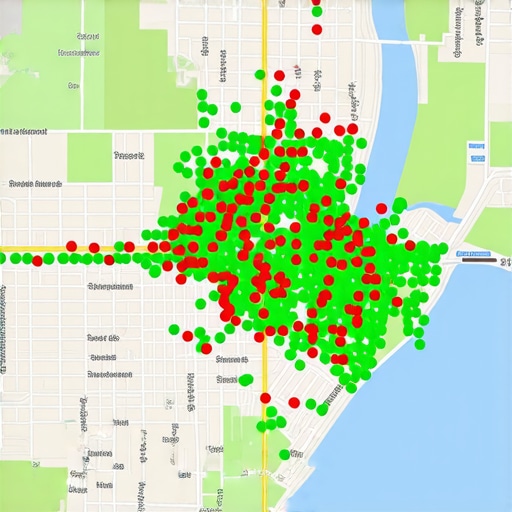 I also keep a close eye on the ‘People Also Search For’ and the local Q&A sections. Most people ignore these, but you can learn how to use local questions and answers to steal search traffic from competitors who are too lazy to answer their own customers. If you want to dominate maps, you have to be the most helpful resource in your zip code. Looking ahead, the game is shifting toward AI-generated summaries. Google’s Search Generative Experience is already pulling data directly from your reviews and ‘About’ section to answer queries. If you don’t have a strategy that includes specific service descriptions, the AI won’t even know you exist. As Joy Hawkins from Sterling Sky often notes, Google’s ability to parse ‘implicit’ data from your website and profile is growing. This means your google my business rank is increasingly tied to how well you answer specific user problems. If you find that why your google maps clicks are dropping and the 3 minute fix to reverse it doesn’t solve your issue, it’s time to look at your behavioral data. My challenge to you: Go into your profile right now and answer one unaddressed question in the Q&A section with a 50-word helpful response. That single interaction could be the ‘refresh’ signal that pushes you back to the top.
The Hard Truths I Learned While Fighting for the Top Spot
Over the years, I’ve realized that maintaining local maps domination isn’t about finding a magic button; it’s about endurance. One of my biggest lightbulb moments was discovering that a high google my business rank at noon is worthless if your profile goes dark the moment your office closes. I stopped worrying about perfect citation counts and started obsessing over how fast I could respond to a customer’s question. Another lesson? Don’t get comfortable. The moment you stop posting updates or new photos is the moment a hungrier competitor begins their map pack domination climb at your expense. It’s a game of signals, and silence is the deadliest signal of all.
#IMAGE_PLACEHOLDER_E#
The Toolbelt I Use to Keep My Edge
If you want to stay ahead of the curve, you need data that doesn’t lie. I personally rely on Whitespark for understanding citation growth and BrightLocal for deep-dive audits. For tracking, I avoid basic dashboards and use specialized tools to bypass the 7 maps keyword tracking flaws that hide your true store performance. I also highly recommend reading Joy Hawkins’ blog; it’s where I go when Google releases an update that shifts the landscape overnight. These resources provide the clarity needed to keep a local mapping strategy focused on what actually drives calls, not just clicks.
Build Your Own Fortress in the Local Pack
Success on Google Maps isn’t reserved for the biggest budgets; it’s reserved for the most active and helpful businesses. You have the blueprint to outsmart competition in local map listings by simply showing up when they don’t and answering the questions they ignore. It can feel overwhelming at first, but every review responded to and every photo uploaded is a brick in the wall protecting your leads. If you’re feeling stuck, don’t hesitate to contact us or prepare yourself by learning the one question to ask a local seo expert before spending a dime. Your path to dominate maps is waiting for you to take the first step. Have you noticed your ranking drop during specific times of the day, or do you stay consistent 24/7? Let me know in the comments below!
About the Author
Umar Latif
Brand & Marketing Expert · Dubai, UAE
Umar Latif is a seasoned Brand and Marketing Expert based in Dubai, UAE, with a specialized focus on Local SEO and international digital strategy. With extensive experience managing and optimizing websites for a diverse range of international clients, including those in the United States, Umar has developed a deep understanding of the nuances required to dominate local search results. His technical proficiency encompasses comprehensive keyword research and the implementation of advanced Google-centric strategies designed to enhance visibility and drive organic traffic. As a contributor to dominateyourlocalmaps.com, Umar leverages his background in global marketing to provide actionable insights for businesses looking to improve their local map rankings and digital footprint. His approach combines data-driven tactics with a strategic brand perspective, ensuring that local businesses not only rank higher but also resonate with their target audience. Throughout his career, Umar has remained dedicated to staying ahead of search engine algorithm changes to deliver consistent results for his clients. He is deeply passionate about empowering business owners and marketing professionals with the tools and knowledge they need to achieve sustainable growth.