I spent three weeks of my life hunched over a laptop, cross-referencing street suffixes and zip codes for a local client, convinced that 150 directory listings would be our ticket to the top. I was wrong. Dead wrong. Not only did our ranking stay stagnant, but Google started pulling data from a random, five-year-old Yelp page I’d forgotten existed. It was a wake-up call. I realized then that the old “spray and pray” method of local SEO wasn’t just outdated—it was actively hurting us. If you’ve been building links and seeing zero movement in your google my business rank, you’re likely falling into the same trap I did. We’re going to fix that today by looking at why Google is treating your hard-earned citations like background noise.
Google stopped rewarding the “more is better” mindset
In the early days of local SEO, we could practically force our way into the map pack with a high volume of directory submissions. Those days are gone. Today, Google’s algorithm is smarter and, frankly, a bit more cynical. It doesn’t just look for your name, address, and phone number; it looks for “trust signals” that confirm you are a real, thriving entity. If your information is scattered across low-quality sites that nobody visits, Google sees it as digital clutter. I’ve seen businesses stop wasting cash on local citations that google ignores and actually see their rankings climb just by cleaning up the mess they already made. It’s about quality over quantity.
Are these citations actually worth the headache?
It’s a fair question to ask when you’re staring at a “Pending” status for the tenth time this week. Here is the reality: Citations are still a foundational piece of local maps domination, but their role has shifted from a ranking “engine” to a “verification system.” According to industry research from Whitespark, citation consistency remains a top-tier foundational requirement for proximity-based searches, even as other factors like user engagement take center stage. If the data is messy, the foundation is weak. I once made the mistake of ignoring a slight variation in a suite number across ten different sites, and it cost us the #3 spot for months. You have to how to spot and fix nap inconsistencies without paying monthly fees if you want the algorithm to take you seriously. Have you ever felt like you’re doing everything right—getting reviews, posting photos—but your map pin just won’t budge from page two? [image_placeholder_1]
The hidden signals that drown out your data
Most people think a citation is just a link. It isn’t. It’s a vote of confidence. When you have conflicting information, those votes cancel each other out. This is why your near me visibility is worse than your actual location. Google is effectively confused about where you actually exist. This confusion leads to a “soft suspension” of your rankings, where you aren’t banned, but you’re certainly not being promoted either. We need to move beyond simple data entry and start thinking about how to dominate maps by sending the right signals to the right places.
Find the data leaks before they sink you
You can’t build a skyscraper on a swamp, and you certainly can’t achieve a high google my business rank if your digital footprint is a mess of conflicting data. The first step isn’t to buy more links; it’s to audit what already exists. Think of your Google Business Profile as the ‘North Star.’ Every other mention of your business on the web must align with it perfectly. I’ve found that even a minor discrepancy, like using ‘St.’ on one site and ‘Street’ on another, can sometimes be enough to give a more ‘consistent’ competitor the edge. You need to how to spot and fix nap inconsistencies without paying monthly fees before you try to scale. When I ignore the audit phase, I always end up paying for it later with ‘pending’ edits that never resolve because Google doesn’t trust the source data. This is often why your google business profile edits are always pending—the algorithm is cross-referencing your new info against a mountain of old, incorrect citations and finding a mismatch.
Pick one lane or get lost in the map pack
One of the most common ways businesses self-sabotage their local maps domination is by being greedy with categories. I see it all the time: a general contractor who also lists ‘plumbing,’ ‘roofing,’ and ‘kitchen remodeling’ as primary services. While you might do all those things, Google wants to see a specialist for specific searches. When you over-categorize, you dilute your relevance for your main keyword. You have to realize that why your business categories might be fighting each other and ultimately dragging down your overall visibility.
The Austin HVAC lesson in data standardizing
A few years back, I worked with an HVAC company in Austin that was stuck on the bottom of page two. They had 150 citations, but their name varied from ‘Austin AC Experts’ to ‘Austin Heating & Cooling Specialists’ depending on which directory you looked at. They thought they were being clever with keywords; Google thought they were five different businesses. We performed the specific citation move that rescues hvac map rankings by ruthlessly standardizing their name across the top 20 most authoritative sites and deleting the junk. Within 30 days, they didn’t just move up—they jumped into the top three for their most competitive keyword. It wasn’t about more data; it was about better data. 
Tie your digital properties together with specific schema
Your website and your map profile should be in a constant, high-speed conversation. If your website says one thing and your map listing says another, the map listing loses every time. This is where most people drop the ball on their local mapping strategy. You need to how to sync your website schema with your map profile so that when Google crawls your site, it finds a ‘LocalBusiness’ markup that matches your GBP perfectly. This isn’t just tech-heavy fluff; it’s the digital equivalent of showing your ID at a security desk. If the ID matches the guest list, you’re in. If you skip this, you’re likely to find why your google business profile embeds are failing to move the needle. To truly dominate maps, you must ensure that your website’s footer, contact page, and structured data are all echoing the exact same ‘NAP’ (Name, Address, Phone) data that your citations are broadcasting. When the signals are unified, the algorithm stops questioning your legitimacy and starts rewarding your proximity.
Most local SEO ‘gurus’ will tell you that the secret to a better google my business rank is simply a numbers game: more reviews, more citations, and more photos. I’m here to tell you that’s a dangerous oversimplification. In fact, blindly chasing volume is often the fastest way to trigger a filter you didn’t even know existed. I’ve watched business owners drive themselves crazy wondering why your competitor with fewer reviews is outranking you, only to realize they were victims of their own automation. If you are using software to blast out generic replies, you are falling into the trap of review automation where more stars don’t always mean more map leads. Google’s sentiment analysis has evolved; it doesn’t just count stars, it looks for specific keywords in the text and the speed at which you engage.
Stop obsessing over the five-star count
The common belief is that a 4.9 rating with 500 reviews beats a 4.5 rating with 50. In reality, Google’s proximity and relevance filters are far more nuanced. A study by Sterling Sky found that while the business name is a massive ranking factor, over-optimizing it with keywords can lead to a hard suspension if it doesn’t match your legal branding. Instead of keyword stuffing your name, you should focus on how specific review response patterns actually boost map engagement. When you respond to a review by mentioning a specific service or neighborhood, you’re providing the algorithm with high-intent data that a generic ‘Thanks for the review!’ simply can’t match. This is how you truly dominate maps—by being more ‘human’ than the algorithm expects.
Why do businesses with fewer reviews keep beating you?
It usually comes down to ‘Interaction Data.’ Google tracks how many people click your phone number, ask for directions, or spend time looking at your photos. If a competitor has 10 reviews but 50 people a day are clicking their ‘Call’ button, Google views them as more relevant than a business with 100 reviews and no activity. This is local maps domination in its purest form. You can’t fake real-world utility. Furthermore, many people waste hours on ‘geo-tagging’ photo EXIF data, thinking it’s a shortcut. The truth? Google’s ‘Cloud Vision’ AI ignores your metadata and looks at the actual pixels. It knows if a photo is a kitchen remodel or a plumbing repair without you telling it. You need to understand the hidden signals in customer photos that google tracks to see real movement.
The metadata myth that won’t die
I’ve seen dozens of agencies charge thousands for ‘advanced geo-tagging’ of images. It’s a waste of time. Google is smart enough to know where a photo was taken based on the surrounding landmarks it recognizes in the image itself. If you want a local mapping strategy that actually works, focus on user-generated content instead. A customer uploading a photo from their phone—which has a verified GPS ping—carries ten times the weight of a professional photo you uploaded from your desktop. This is often why hiring a google business profile consultant saves more money than diy management; they know which ‘hacks’ are actually just noise. If you’re still struggling to see a return on your effort, it might be time to look at map pack domination secrets to boost your local visibility today. Have you ever fallen into the trap of over-optimizing your profile only to see your rankings drop? Let me know in the comments.
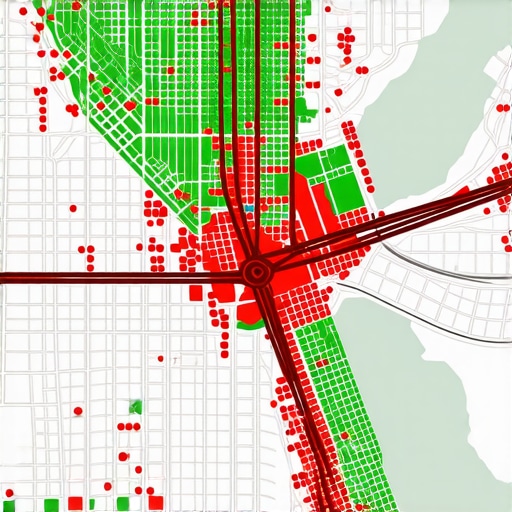
It is one thing to hit the top three; it is another thing entirely to stay there while your competitors are breathing down your neck with fresh budgets. After years of trial and error, I’ve stopped chasing every new ‘shiny object’ software and narrowed my kit down to what actually moves the needle. To maintain a dominant google my business rank, I rely heavily on local rank trackers that provide a grid-based view. Standard trackers that give you a single ranking for a whole city are lying to you. I use tools like BrightLocal or Local Falcon because they show you a heatmap of where your visibility drops off block by block. This is essential for knowing how to audit your map rankings from a customers real location rather than just your office chair. If you see your ‘green’ dots turning ‘red’ three miles out, you know exactly where your local mapping strategy needs more localized content or citations.
The tools that actually pay for themselves
I don’t just use software for the sake of data; I use it to automate the boring stuff so I can focus on ‘Interaction Data.’ For instance, I use specific dashboard integrations that alert me the second a review is posted, because the hidden impact of review response speed on map ranking is more significant than most realize. If you wait three days to reply, you’ve already lost the ‘recency’ signal that Google loves. Beyond tracking, you need a way to ensure your site is constantly talking to the map. This means checking your technical health regularly. I’ve seen the connection between page speed and local map presence break businesses that thought they were safe just because they had a lot of reviews. If your site takes five seconds to load on a mobile 4G connection, Google will eventually stop showing your map pin to users on the go.
How do I keep my map position once I have reached the top?
Maintenance isn’t about doing more; it’s about being consistent with the right signals. I treat my GBP like a social media feed. If you aren’t utilizing the power of regular profile updates on search frequency, you are leaving the door wide open for a hungrier competitor to slide in. I’ve found that posting a high-resolution photo of a finished project at least once a week—and tagging it with the correct service category—keeps the algorithm ‘crawling’ the profile. According to technical documentation from the Google Business Profile Help Center, providing ‘rich, up-to-date information’ is a direct recommendation for improving your local relevance. Don’t just post a ‘sale’ graphic; post a photo of your team actually working in the community. This builds the interaction data that proves you are a top local choice in the eyes of the AI. If you want to scale further, you should look into how to increase your map radius without opening a new office by leveraging neighborhood-specific landing pages that mirror your GBP data.
The future of the map pack is predictive
Looking ahead, I predict that local maps domination will move away from ‘keywords’ and toward ‘predictive intent.’ Google is already getting better at guessing what a user wants based on their past movement and search history. This means your local mapping strategy needs to be more robust than just a few backlinks. We are heading toward a 2026 landscape where 5-crucial-tweaks-for-google-maps-seo-in-2026-that-actually-stick will involve deep integration with AI search summaries. To prepare, stop trying to ‘game’ the system and start becoming the most documented business in your area. My best advice? Take one ‘advanced’ tip from today—like syncing your website schema perfectly—and implement it before the weekend. The map doesn’t reward the fastest learner; it rewards the most consistent executor.
The One Truth I Had to Accept About Map Visibility
After years of obsessing over every minor ranking shift, I realized that google my business rank isn’t something you ‘set and forget.’ The biggest lightbulb moment for me was realizing that Google cares more about how users interact with your business than how many keywords you stuffed into your description. I spent months chasing volume, only to find that relevance and proximity always win the long game. Another hard lesson? You cannot hide a bad website behind a great map profile; eventually, the lack of conversion signals will pull you down. I also learned that the audit mistake that makes your map listing effectively invisible is often just a simple toggle or a mismatched phone number that you’ve looked at a thousand times but never actually saw.
My Go-To Kit for Maintaining Domain Authority
If you want to stay ahead of the curve, you need a toolkit that prioritizes accuracy over vanity metrics. I personally swear by Local Falcon for grid tracking because it shows you exactly where your influence ends and your competitors begin. For those starting from scratch, I always recommend learning how to use local citations to build trust for new businesses without falling into the ‘more is better’ trap. Finally, I never start a new campaign without the profile audit checklist for turning search impressions into real calls. These tools don’t just provide data; they provide a roadmap for where to spend your energy next.
It is Time to Claim Your Spot at the Top
The landscape of local maps domination is always shifting, but the fundamentals of being a trusted, active local authority remain constant. Don’t let the technical jargon intimidate you—at its heart, Google just wants to recommend the best possible option to its users. If you focus on providing that value, the rankings will follow. Your journey toward map pack domination starts with one small, consistent action today. Whether it is fixing an old citation or replying to a customer review, every move counts. Which part of your current strategy feels the most stuck right now? Let me know in the comments below!
About the Author
Umar Latif
Brand & Marketing Expert · Dubai, UAE
Umar Latif is a seasoned Brand and Marketing Expert based in Dubai, UAE, with a specialized focus on Local SEO and international digital strategy. With extensive experience managing and optimizing websites for a diverse range of international clients, including those in the United States, Umar has developed a deep understanding of the nuances required to dominate local search results. His technical proficiency encompasses comprehensive keyword research and the implementation of advanced Google-centric strategies designed to enhance visibility and drive organic traffic. As a contributor to dominateyourlocalmaps.com, Umar leverages his background in global marketing to provide actionable insights for businesses looking to improve their local map rankings and digital footprint. His approach combines data-driven tactics with a strategic brand perspective, ensuring that local businesses not only rank higher but also resonate with their target audience. Throughout his career, Umar has remained dedicated to staying ahead of search engine algorithm changes to deliver consistent results for his clients. He is deeply passionate about empowering business owners and marketing professionals with the tools and knowledge they need to achieve sustainable growth.