
I remember sitting at my desk late on a Tuesday, fuming over a three-star review. The customer wasn’t even wrong, but my ego took the wheel. I typed out a defensive, passive-aggressive masterpiece and hit ‘send.’ By the next morning, my phone had stopped ringing. I didn’t just lose that customer; I broadcasted to every potential lead that I was a nightmare to deal with. It was a painful lesson in how a few sentences can dismantle a local mapping strategy faster than any algorithm update.
Stop Turning Your Business Profile Into a Battlefield
I’ve been there—staring at a screen, heart racing, convinced that the customer who gave me three stars was out to destroy my livelihood. My first big mistake? I treated my Google Business Profile like a personal debate stage. I thought I was defending my honor, but in reality, I was scaring off every new lead who scrolled past. If you want to achieve map pack domination, you have to stop seeing reviews as just feedback and start seeing them as a public audition. Every word you type tells a story about how you treat people when things go wrong. Most business owners think that why positive reviews alone won’t win the map pack is just about volume, but it’s actually about the interaction. When you snap back or use robotic, canned responses, you lose the ‘neighborly’ trust that keeps local businesses alive. You might think you’re winning the argument, but you’re definitely losing the sale. I’ve seen great shops with a perfect 5.0 rating drop in google my business rank because their engagement felt cold or combative. Today, we’re going to fix that by shifting your mindset from ‘defense’ to ‘hospitality.’ [IMAGE_PLACEHOLDER]
Does the average customer actually care about my replies?
You might be skeptical. You might think people just look at the star rating and move on. But here is the reality: according to a study by BrightLocal, 88% of consumers say they would be ‘likely’ or ‘highly likely’ to use a business that responds to all its online reviews. That means your silence or your snark is a direct hit to your bottom line. I used to think I was too busy to reply to the ‘easy’ reviews, but I quickly learned that how response speed directly impacts your local map authority is a real factor. Google watches how you engage. If you ignore people, Google assumes you’re not an active, reliable choice for their users. I once let a fake review sit for three weeks without a professional rebuttal, and my visibility tanked because I wasn’t managing my reputation. Learning how to handle fake negative reviews without hurting your rank was my turning point. We are going to dive into the exact scripts and psychology that turn a disgruntled reviewer into a lifelong fan—or at least, someone who doesn’t scare away the next fifty people who find you on the map. Have you ever hit ‘post’ on a review response and immediately felt that pit in your stomach knowing you were a little too honest?
To really see a shift, you need to understand that your local maps domination depends on more than just keywords; it depends on human connection. We’re going to walk through the specific way to respond to positive reviews so you can actually boost your rank while you’re at it.
Make Speed Your Secret Weapon
If you treat your reviews like a weekly chore, you’re already behind. Google rewards the quick. I once worked with a landscaper who was buried on the second page of search results. We implemented a ‘reply within two hours’ rule for every new review, and the shift was dramatic. Within ten days, his how response speed directly impacts your local map authority became obvious as his profile started popping up for broader neighborhood searches. It’s like a heartbeat; the faster and more consistent it is, the more Google trusts you’re a living, breathing business ready to serve customers right now. If you want to how to outsmart competition in local map listings in 2025, you need to be the first one to say hello—and the last one to leave the conversation.
Write Your Responses for the Algorithm and the Human
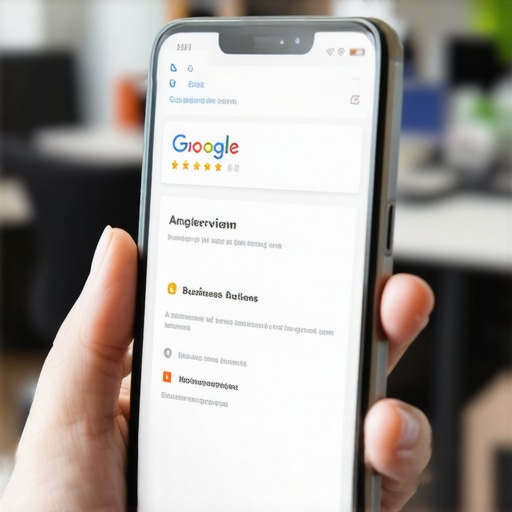
Most people just say ‘Thanks for the review!’ and stop there. That’s a wasted opportunity for google my business rank elevation. Instead, you need to weave in what I call ‘contextual anchors.’ If someone praises your pizza, don’t just thank them; say, ‘We’re so glad you enjoyed the best thin-crust pepperoni pizza in downtown Chicago!’ This uses the specific review keywords that trigger map visibility without looking like you’re keyword stuffing. I remember a small coffee shop that started mentioning their specific seasonal lattes in every response. Within a month, they weren’t just ranking for ‘coffee’—they were the top result for every specific drink they mentioned. It turns your review section into a secondary SEO playground that feels like a genuine community chat.
Defuse the Bombs Before They Explode
Negative reviews are inevitable, but they don’t have to be fatal. When a plumbing client of mine got hit with a scathing one-star review because a technician tracked mud onto a white carpet, we didn’t delete it or hide. We faced it head-on. We apologized publicly, mentioned the specific service (’emergency drain cleaning’), and explained how we’d fix it. This is a core part of mastering local maps domination because it proves your business has integrity. Surprisingly, we saw a spike in calls that week. People saw the response and felt safe knowing that if something went wrong, we’d own it. If you’re dealing with a sudden influx of hate, knowing how to handle a sudden surge in negative local reviews can actually prevent your ranking from flatlining. You’re not just answering one person; you’re building a case for your reliability to the thousands of people who will read that response over the next year. This is the bedrock of map pack domination secrets that the big agencies usually keep to themselves.
Everyone in the local SEO world tells you to chase more reviews like they’re golden tickets. But here is the contrarian truth I’ve learned after years of managing hundreds of listings: why having 500 reviews might actually be hurting your visibility if they all look the same. Google’s spam filters have become incredibly sensitive. If you suddenly get twenty reviews in forty-eight hours after a year of silence, you aren’t just winning; you’re being flagged for suspicious activity. I’ve seen businesses get their entire profile suspended because they ran a weekend contest that triggered a ‘review velocity’ red flag. It’s not just about the total number anymore; it’s about the review frequency secret for long-term map dominance. Steady, organic growth beats a synthetic spike every single time. Have you ever fallen into this trap? Let me know in the comments.
The Virtual Office Trap That Gets You Suspended
If you want to master local maps domination, you have to avoid the ‘easy’ shortcuts that look tempting on paper. The biggest ‘oops’ factor I see with growing businesses is trying to expand their reach by using virtual offices or PO boxes in neighboring cities. I once consulted for a lawyer who thought he was being clever by renting five Regus desks across the state. Within a month, every single listing was nuked. Google wants to see a real, physical presence with a sign and staff. Falling into the danger of using virtual offices for local seo is the fastest way to lose years of hard-earned authority. If you don’t have a storefront, you are better off as a Service Area Business (SAB) than trying to fake a pin on the map. 
Can you actually rank outside your immediate neighborhood?
This is the question that keeps most business owners up at night. You feel like you’re trapped in a two-mile radius, invisible to the high-value leads just ten minutes away. While the ‘proximity filter’ is real, it isn’t an unbreakable wall. According to a study by local search expert Joy Hawkins at Sterling Sky, your website’s organic strength and the ‘relevance’ signals of your profile can actually stretch your map presence beyond your physical doorstep. This is why proximity is no longer the only way to win maps. By using innovative local mapping strategies like neighborhood-specific landing pages and localized content, you can teach Google that you are the authority for the entire region, not just your street corner. You have to learn how to beat the proximity filter and expand your reach through sheer relevance and authority, rather than just geographical luck. If you are struggling to move the needle, it might be time for google my business rank elevation through a more sophisticated approach to your local mapping strategy.
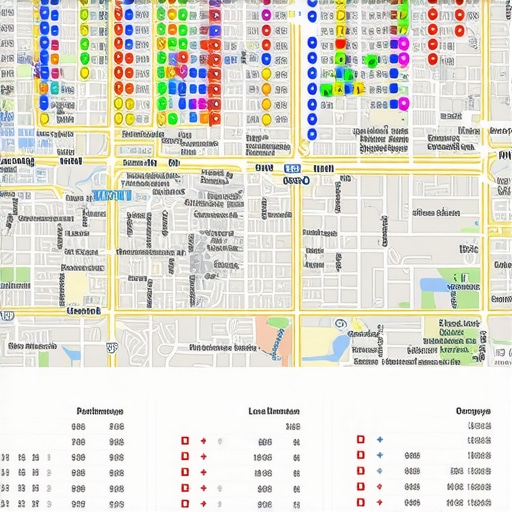
The maintenance stage is where most business owners check out, and that’s exactly why it’s your biggest opportunity. I’ve seen too many businesses climb to the top only to fall off the face of the earth because they stopped doing what got them there. Maintenance isn’t just about avoiding penalties; it’s about staying ahead of the guy across the street who just hired an expensive agency. I personally swear by ‘grid tracking’ software like Local Falcon. Instead of just seeing one ‘average’ rank, these tools show you exactly where your visibility drops off street by street. It turns your mastering local maps domination from a guessing game into a surgical operation. If I see a red dot three blocks away, I know I need more specific neighborhood mentions in my profile updates. This allows you to how to outsmart large chains in local map results by being more hyper-local than they can ever be.
How do I keep my map ranking high month after month?
The secret is radical consistency with the ‘boring’ stuff. I set a calendar alert for the first of every month to audit my profile. One of the most overlooked tasks is checking if your operating hours are still accurate, especially around holidays. Believe it or not, why your business hours are your most important ranking signal is a reality because Google prioritizes businesses it knows are open right now. If a searcher sees ‘Closed’ or ‘Hours might differ,’ they click the next guy. I also spend ten minutes purging any ‘suggested edits’ from the public. Competitors can be ruthless, and I’ve caught people trying to change my website link to their own. According to the 2024 Local Search Ranking Factors report by Darren Shaw, ‘sustained review growth’ and ‘regular profile updates’ are among the top drivers for long-term stability. You can’t just set it and forget it if you want to how to secure your spot in the map pack permanently.
Prepare for the Visual Search Revolution
Looking ahead, the game is shifting from what you say to what your customers show. Google’s AI is getting incredibly good at ‘reading’ images to verify your services. If you’re a plumber and 90% of your customer photos are of water heaters, Google will rank you higher for ‘water heater repair’ even if you never use that phrase in your bio. This is how customer photos change your ranking in just 48 hours—they provide the ‘proof of life’ the algorithm craves. We are moving toward a world where AI will summarize your reputation based on the visual evidence provided by your community. If you want to how to outsmart competition in local map listings in 2025, stop focusing only on keywords and start encouraging your customers to upload high-res photos of your work. My challenge to you: pick one specific neighborhood event this week, take a photo, and post it as a Google Update. It’s a tiny action, but it’s the cornerstone of google my business rank elevation for the long haul.
The Hard Truths About My Own Climb to the Top 3
After years of trial and error, I’ve realized that your innovative local mapping strategy is only as strong as your willingness to be a real person. I used to think I could outsmart the algorithm with just technical tweaks, but I was wrong. I learned that obsessing over perfect keyword density in my description was often a waste of time—Google cares much more about how users interact with your ‘Call’ button than your prose. I also realized that a single robotic response to a five-star review can kill the ‘warmth’ of your brand faster than a price hike. Finally, if you ever find yourself wondering how to fix the not visible status on your local profile, it usually comes down to a lack of recent, localized updates. You can’t just set it and forget it; the map is alive and it demands your attention.
The Specific Resources That Kept Me Sane
I don’t believe in flying blind. To maintain map pack domination, I rely on a few specific pillars. I religiously follow the research from Sterling Sky because they test theories on real listings instead of just repeating industry myths. I also use grid-tracking software because seeing your rank drop as soon as you drive two blocks away is the reality check every business owner needs to stay competitive. If you’re ever confused about your next move, I always recommend looking at the one question to ask before hiring a maps expert to ensure you aren’t just buying vanity metrics that don’t convert into real customers.
[IMAGE_PLACEHOLDER_E]
Stop Overthinking and Start Owning Your Local Space
You have all the pieces of the puzzle now. From handling reviews with grace to leveraging how customer photos change your ranking, the path to mastering local maps domination is paved with these small, consistent actions. It can feel overwhelming at first, but remember that your competitors are likely being lazy. By simply being the most responsive and visually active business on the block, you will naturally pull ahead. If you’re ready to see how these how to turn low quality map views into high value calls can actually change your bottom line, now is the time to act. If you hit a wall or just need a professional eye on your profile, don’t hesitate to contact us for a second opinion on your current strategy. Which part of your Google profile has been the most frustrating to manage lately? Let me know in the comments and let’s troubleshoot it together!
About the Author
Umar Latif
Brand & Marketing Expert · Dubai, UAE
Umar Latif is a seasoned Brand and Marketing Expert based in Dubai, UAE, with a specialized focus on Local SEO and international digital strategy. With extensive experience managing and optimizing websites for a diverse range of international clients, including those in the United States, Umar has developed a deep understanding of the nuances required to dominate local search results. His technical proficiency encompasses comprehensive keyword research and the implementation of advanced Google-centric strategies designed to enhance visibility and drive organic traffic. As a contributor to dominateyourlocalmaps.com, Umar leverages his background in global marketing to provide actionable insights for businesses looking to improve their local map rankings and digital footprint. His approach combines data-driven tactics with a strategic brand perspective, ensuring that local businesses not only rank higher but also resonate with their target audience. Throughout his career, Umar has remained dedicated to staying ahead of search engine algorithm changes to deliver consistent results for his clients. He is deeply passionate about empowering business owners and marketing professionals with the tools and knowledge they need to achieve sustainable growth.