Category: Local Listing Management

  • The Citation Audit Checklist for Struggling Storefronts

    The Citation Audit Checklist for Struggling Storefronts

    I remember sitting in my shop three years ago, staring at a Google Map that showed my competitor—a guy who had half my experience—sitting pretty in the top spot. I’d spent thousands on so-called SEO experts, yet when I searched for my own business, I was buried on page four. It felt like I was invisible. My storefront was a ghost in its own neighborhood, and the silence from my phone was deafening. I thought I was doing everything right, but I was actually sabotaging my own google my business rank without even knowing it. I was working harder, but the algorithm couldn’t even find my front door.

    My $2,000 Mistake and the Ghost Town Effect

    It wasn’t that my sandwiches weren’t good or my service was lacking. It was that the digital paperwork of my business was a total disaster. Early on, I fell for the trap of thinking more is always better. I wasted six months and nearly $2,000 on automated citation tools that promised to put me everywhere at once. Instead, they created a mess of duplicate listings with old phone numbers and slightly wrong addresses. Google looked at that mess and basically decided I wasn’t a real business. It’s a painful lesson, but I learned that why your citations are getting ignored usually comes down to consistency, not volume. I’m going to show you exactly how to clean up that mess today. We’re going to walk through a checklist that doesn’t require a degree in computer science or a massive marketing budget. We are going to reclaim your digital territory once and for all.

    Is This Audit Actually Worth Your Time?

    I know what you’re thinking. I’m too busy running a business to hunt down every random directory on the internet. I felt the same way until I realized that 97% of consumers learn more about a local company online than anywhere else, according to research by BrightLocal. If your data is wrong, you aren’t just losing a rank; you are literally handing your customers to the guy down the street. Have you ever looked at your own business on a map and wondered why you’re stuck behind a View More button? You aren’t alone, and it’s usually not because of your reviews.

    The Brutal Truth About Why Google is Ignoring You

    Google is essentially a giant trust engine. If one site says you’re on Main Street and another says you’re on Main St. with a period, the algorithm gets a little nervous. If your phone number is different on Yelp than it is on your website, Google gets very nervous. When Google is nervous, it doesn’t recommend you. It’s that simple. Most people think map pack domination is about some secret keyword, but it’s actually about being the most verifiable option in your area. I spent weeks manually fixing these errors because your local SEO agency is likely failing to do the grunt work. I want to save you that time. We’re going to look at the specific spots where your data is leaking and how to plug those holes so you can finally dominate maps in your city. Have you ever tried searching for your business from a different zip code and seen yourself disappear? That’s the first red flag we’re going to fix.

    The Manual Cleanout That Actually Moves the Needle

    Think of your business data like a GPS signal. If the signal is weak or bouncing off too many buildings, the driver—in this case, your customer—never reaches the destination. When I first started digging into this, I realized that my own business was sending three different signals. I had my old suite number on Yelp, my new number on my website, and a variation of my business name on Facebook. Google saw this and, quite literally, didn’t know which ‘me’ to trust. To fix your google my business rank, you have to start by becoming the most reliable data point in your zip code. This isn’t about being fancy; it’s about being boringly consistent.

    Stop the Data Bleeding at the Source

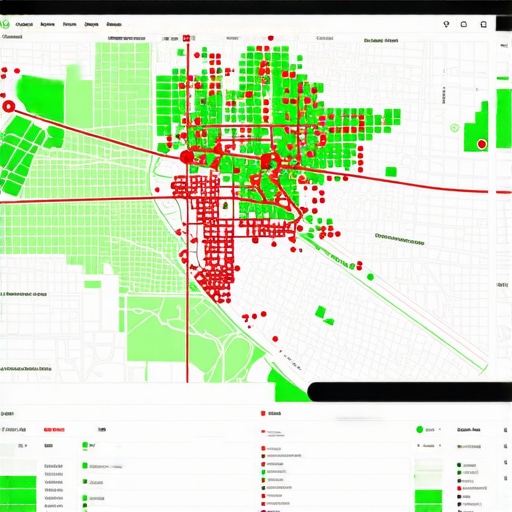
    The first thing you need to do is a manual audit. Forget the expensive software for a second and just search for your phone number in quotes. You’ll likely find a graveyard of old listings you forgot existed. I once spent an entire Saturday afternoon chasing down a rogue listing on a local Chamber of Commerce site that was still using a fax number from 2012. It sounds tedious, but you need to how-to-audit-your-local-competitors-without-expensive-tools to see where they are winning on the consistency front. If your address is ‘Street’ in one place and ‘St.’ in another, fix it. If you have moved, you must how-to-fix-incorrect-map-pins-that-confuse-searchers immediately. Google’s bots are looking for reasons to doubt you; don’t give them any.A visual comparison showing the difference between messy business data and a clean, optimized local map listing.
    Stop Guessing and Steal Your Competitor’s Category Secrets

    Most business owners pick one category and walk away. That is a massive mistake. Google allows one primary category and up to nine secondary ones. If you are a plumber but you haven’t listed ‘HVAC contractor’ or ‘Drainage service,’ you are leaving money on the table. However, if you add too many unrelated ones, you confuse the algorithm. I saw this happen with a local bistro that tried to rank for ‘Catering,’ ‘Bakery,’ and ‘Event Space’ all at once, and ended up ranking for none of them. You have to stop-guessing-your-categories-and-use-this-selection-data-instead to ensure you aren’t fighting against yourself. Also, be careful with how you define your reach; you need to how-to-properly-set-your-service-areas-to-avoid-rank-dilution or you’ll be spread too thin to rank anywhere.

    The 48-Hour Rank Boost Hiding in Your Camera Roll

    Photos are the most underrated tool in your local mapping strategy. But I’m not talking about stock photos of people shaking hands. I mean raw, high-resolution shots of your storefront, your team in uniform, and your actual work. Google uses AI to ‘read’ these images to verify you are a real, local entity. When I started uploading five new photos a week for a client in the landscaping niche, his visibility surged. It’s a proven fact that how-customer-photos-change-your-ranking-in-just-48-hours can shift the needle faster than almost any other edit. Make sure you are using the-specific-photo-metadata-that-actually-moves-your-map-rank by ensuring your location services are on when you take the shot. This embeds the GPS coordinates directly into the file, giving Google the ultimate proof that you are exactly where you say you are. This level of map pack domination isn’t magic; it’s just out-working the guy who is too lazy to take a picture of his own shop.Most “experts” will tell you that the secret to a high google my business rank is simply collecting more 5-star reviews than the guy down the street. That is a flat-out lie. In fact, if you get too many reviews too quickly, Google’s spam filters might actually flag your account, leading to a nightmare where your hard-earned feedback never even goes public. I’ve seen businesses with 500 reviews get smoked by a competitor with only 50. Why? Because the person with 50 reviews has better “review velocity” and higher relevance. You need to understand why your competitor with fewer reviews is outranking you. It’s usually because their customers are using the specific review keywords that trigger map visibility. Google isn’t just counting stars; it’s reading the text to see if people are actually mentioning the services you want to rank for.

    The Invisible Wall That Limits Your Map Radius

    Here is a massive “oops” factor I see all the time: a business owner gets greedy. They want to rank in a city 20 miles away, so they rent a “virtual office” or a “coworking space.” This is one of the fastest ways to get your profile permanently suspended. Google’s AI has become incredibly sophisticated at identifying these “ghost” locations. If you aren’t physically there, don’t try to fake it. Instead of risking a ban, you should be looking at the danger of using virtual offices for local seo and focusing on legitimate ways to signal your presence. I once saw a law firm lose ten years of map authority in 24 hours because they tried to spoof a secondary location. It’s not worth the risk. Have you ever fallen into this trap or been tempted by a “cheap” office address? Let me know in the comments.

    How do I show up in the next town over without a second shop?

    The most common question I get from people who have mastered the basics is how to expand their reach. According to the 2023 Local Search Ranking Factors study by Whitespark, proximity remains the #1 ranking factor, but relevance can override it if you play your cards right. You can actually “stretch” your map radius by building localized content on your website that proves you serve those outer areas. This is part of a sophisticated local mapping strategy. You need to know how to beat the proximity filter and expand your reach by using geo-specific landing pages and local backlink signals. Also, remember that why proximity is no longer the only way to win maps comes down to your brand’s overall authority. If Google trusts you as the absolute expert in your niche, it will show your listing even if the searcher is standing right in front of a closer, but less authoritative, competitor. Don’t let your map pack domination stall because you’re playing by outdated rules. You have to be smarter than the algorithm.Once you finally crack that top three, the real work begins. It’s a lot like fitness; you don’t just hit your goal weight and start eating donuts every day. I’ve seen businesses climb to the top only to vanish a month later because they thought the job was done. If you want to know how we fixed a stalled google my business rank without new reviews, it usually comes down to consistent, micro-updates. I spend exactly 15 minutes every Monday morning checking my dashboard. I’m looking for ‘suggested edits’ from users—which is often just competitors trying to change my hours or website link. You have to be proactive to how to secure your spot in the map pack permanently. If you ignore these notifications, Google might auto-apply them, and suddenly your customers think you’re closed on a Tuesday afternoon.

    Put Your Maintenance on Autopilot Without Using Shady Bots

    I don’t use a dozen fancy tools. Honestly, most of them just scrape the same data you can see for free. My go-to strategy involves a simple spreadsheet and the Google Business Redressal Form. If you see a competitor using a keyword-stuffed name like ‘Best Plumbing Repair City Name’ when their legal name is just ‘John’s Plumbing,’ you need to report them. It isn’t being a snitch; it’s leveling the playing field. Google’s own Business Profile guidelines are very clear about title accuracy, and using this form is the most effective way to clean up your neighborhood. When you remove the fake listings, you naturally rise. I also keep the one document that reinstates any google business profile—a current utility bill or business license—saved in a dedicated folder. If a suspension hits out of nowhere, I’m ready to fight back in minutes, not days.

    How do I maintain my local map presence over the long haul?

    Maintenance is about signaling ‘life’ to the algorithm. I post one update a week—just a quick photo of a finished project or a new piece of equipment. It keeps the profile active. I also make it a point to respond to every single review, even the brief ones. If you get hit with a bot attack, you need to know how to handle fake negative reviews without hurting your rank by flagging them immediately rather than engaging in a comment war. Consistency in these small actions tells Google that your business is reliable and currently operational, which is a huge factor in map pack domination.

    The Future of Maps is Moving Toward Live Verification

    The trend I’m seeing for 2025 and beyond is a massive shift toward video. Google is moving away from static proofs because they are too easy to fake. I’ve found that the real benefit of verification via video upload isn’t just getting that initial green checkmark; it’s the massive trust signal it sends to the algorithm that you are a living, breathing entity at a physical location. In the next few years, I expect ‘Video Shorts’ for businesses to become a primary ranking signal in the mobile map pack. If you want to stay ahead, stop hiding behind stock photos. Start filming your process. My challenge to you: Take your phone out right now, walk to your front door, and record a 30-second continuous shot of your signage and your interior. Having this video ready for the next time Google asks for verification will save you weeks of headaches.

    The Raw Truth Behind My Top Ranking Breakthrough

    After years of obsessing over every minor update, I realized that the most powerful moves in local maps domination are often the most overlooked. First, I stopped wasting time on the fluff; I learned that why your business description doesn’t matter for ranking was a tough pill to swallow, but it finally freed me to focus on what actually moves the needle: engagement and verification. I also discovered that chasing a massive volume of reviews is a treadmill that never ends. Instead, the review frequency secret for long term map dominance taught me that a steady drip of fresh, keyword-rich feedback is far more valuable than a one-time blast. Finally, I noticed that Google rewards speed above all else. If you can master how response speed directly impacts your local map authority, you are signaling to the algorithm that you are the most reliable option for the user in your neighborhood.

    The Gear That Keeps My Listings at the Top

    You don’t need a thousand-dollar software suite to win your city. I rely on a few specific processes that guarantee my google my business rank stays protected. I always make sure to how to sync your website schema with your map profile so that Google’s bots see a perfectly unified story across every corner of the web. To keep the neighborhood clean of spammers, I regularly use the redressal form, knowing that how to remove fraudulent competitor listings that push you down is often the fastest way to jump from the fourth spot into the winner’s circle. I also obsess over how I appear on smartphones, utilizing the move that forces your business into mobile search results to capture customers exactly when they are ready to buy.

    Claim Your Spot Before Someone Else Does

    The digital landscape is shifting, and the window to easily dominate maps is closing as more businesses wake up to these strategies. But you have an advantage now. You know that map pack domination isn’t about luck or a secret hack; it’s about consistency, authority, and physical proof. Start by embracing the future of verification, such as the real benefit of verification via video upload, to future-proof your presence against AI-driven algorithm changes. Your business deserves to be the first choice in your city, and with a solid local mapping strategy, you will be. What’s the biggest hurdle you’ve faced trying to climb into the top three for your industry? Let me know in the comments below!

  • How to Fix Incorrect Map Pins That Confuse Searchers

    How to Fix Incorrect Map Pins That Confuse Searchers

    I’ll never forget the phone call I got from a local bakery owner three years ago. She was frantic because a regular customer had just called her, frustrated, standing in a vacant lot three blocks away while following Google Maps. I felt her pain because I’d made the exact same mistake with my first consulting client. I’d spent weeks on mastering local maps domination techniques, yet I’d completely ignored the most basic element: the physical pin location. It’s a visceral kind of failure when you realize your “verified” status doesn’t mean a thing if the GPS coordinates are leading people into a dead-end alley. Today, I’m going to show you exactly how to wrestle control back from the algorithms and ensure your customers actually find your front door. [image-placeholder]

    Stop Sending Your Customers to the Wrong Side of the Street

    It sounds like a minor detail, but a misplaced map pin is the quickest way to kill your google my business rank and your reputation. When a searcher clicks “Directions” and ends up staring at a brick wall instead of your signage, they don’t blame the tech; they blame you. They think you’re closed, moved, or just unprofessional. I fell into the map pin trap early on, assuming Google’s street-view data was infallible. It isn’t. In fact, according to research by BrightLocal, a massive majority of consumers use Google Maps to find local business information, and any friction in that journey leads them straight to your competitor. You have to be proactive. If you don’t manually verify and nudge that pin to the precise spot where your door meets the sidewalk, you’re leaving your foot traffic to chance. Have you ever had a customer tell you they struggled to find your office because the GPS sent them to the back entrance?

    Does a tiny pin adjustment really matter for my ranking?

    Some folks think that as long as they appear in the results, the exact pin placement is just “bonus” work. That’s a dangerous mindset. Google tracks “successful arrivals.” If people are opening your profile and then navigating to your location but failing to arrive—or worse, cancelling the navigation mid-way because they’re lost—Google sees that as a poor user experience. This lack of successful interaction can cause a stalled google my business rank that no amount of five-star reviews can fix. You need to force google to re-index your map location faster after you make these tweaks to ensure the world sees the correct path immediately. It’s time we stop letting automated algorithms decide where your customers park.

    Take the Reins and Fix Your Digital Front Door

    To start, you need to think of your map pin like a physical signpost on a windy day; if it’s not bolted down, Google’s automation will blow it wherever it thinks ‘close enough’ is. I once worked with a coffee shop owner in a dense urban area whose pin was floating in the middle of a four-way intersection. Drivers were literally circling the block, frustrated, while he sat in an empty shop because they couldn’t find the entrance. We fixed the pin using the satellite view to zoom in until we could see the specific awning of his shop. This manual correction was the first step in his journey toward map pack domination secrets because it removed the friction of the ‘last hundred feet.’ #IMAGE_PLACE_HOLDER_B#

    Drag that Red Pin Exactly Where it Belongs

    Don’t trust the address auto-fill to handle your reputation. In your Google Business Profile manager, click on your location and physically drag the pin. Use the satellite toggle to find your actual entrance. If you have a back-alley entrance for deliveries but a front door for customers, ensure the pin sits precisely on the customer-facing side. This isn’t just for the user; it’s a direct signal to the algorithm. Once you have moved the pin, you must force google to re-index your map location faster by updating a minor attribute, like your ‘Services’ or adding a fresh photo, which triggers an immediate crawl of your updated data.

    Stop Your Categories from Fighting Each Other

    I’ve seen so many entrepreneurs clutter their profiles with every possible niche. It backfires every single time. When you over-categorize, your business categories might be fighting each other for relevance, diluting your power. Choose one primary category that represents your main breadwinner. I remember a local plumber who was struggling to appear in search until we realized he’d also listed ‘Handyman’ and ‘Construction Company’ out of fear of missing out on leads. He saw the subtle category tweak that doubled local impressions simply by deleting the fluff. It narrowed Google’s focus and boosted his authority for his core plumbing service.

    Feed Google Better Visual Proof

    After the technical settings are locked, you need to provide the ‘eyes’ on the ground to confirm your location. Google uses advanced computer vision to analyze your business photos. If your photos contain your street number, your signage, and landmarks, it validates the map pin coordinates. Implementing the image metadata strategy for better local visibility means ensuring your photos are geo-tagged at the source before you upload them. This is why how real foot traffic data overpowers on-page seo; when Google sees multiple users and owners uploading photos from the exact same GPS coordinates, it stops second-guessing your location and starts rewarding you with a higher rank in the local pack.

    Everyone says that a pile of five-star reviews is the ultimate ticket to map pack domination. I used to think so too, until I watched a three-star listing outrank a veteran shop with twice the feedback. The truth? Google prioritizes active engagement and behavioral signals over static prestige. If you are just collecting stars and ignoring how users interact with your profile, you are playing a decade-old game. In my experience, a business that responds to a query in five minutes will consistently beat a business with a perfect score that takes five hours to reply. You have to realize that why positive reviews alone won’t win the map pack is because Google is looking for signs of life, not just signs of satisfaction.

    #IMAGE_PLACE_HOLDER_C#

    Reviews alone won’t save a stagnant profile

    According to the annual Local Search Ranking Factors study by Whitespark, behavioral signals—like click-through rates and the frequency of direction requests—are becoming significantly more influential than raw review counts. This is the nuance that most ‘SEO experts’ miss. They focus on the volume, while the algorithm is looking at the velocity. I once saw a law firm drop three spots because they stopped getting fresh photos from clients, even though their rating was a 4.9. This is how response speed directly impacts your local map authority; the faster you engage, the more Google trusts that you are open and ready for business. If your interaction data stalls, your google my business rank will follow suit.

    Why does my competitor with fewer reviews still sit on top?

    It’s maddening to see a rival with ten reviews outranking your hundred-review empire. Usually, this happens because they’ve mastered the interaction data that proves you are a top local choice. They might have more ‘Check-ins’ via mobile devices or higher engagement on their business posts. This is exactly why your competitor ranks higher with 10 fewer reviews; they are perceived as more relevant to the searcher’s immediate needs. You need to stop looking at the total count and start looking at the weekly engagement rate.

    Stop wasting time on keyword-stuffed descriptions

    One of the most common ‘oops’ factors I see is the obsession with the business description. I’ve seen entrepreneurs spend hours crafting a 750-character essay filled with every city name in a twenty-mile radius. Here’s the cold truth: why your business description doesn’t matter for ranking is because Google’s AI treats that field as a conversion tool for humans, not a ranking signal for the bot. If you’re keyword stuffing there instead of optimizing your ‘Services’ or ‘Attributes,’ you’re wasting your breath. If you’ve seen your visibility drop, you need to learn how to force your profile back into the top 3 results by focusing on verified data points rather than fluff. Have you ever fallen into this trap of over-optimizing the wrong fields? Let me know in the comments.

    Build a Maintenance Habit That Sticks

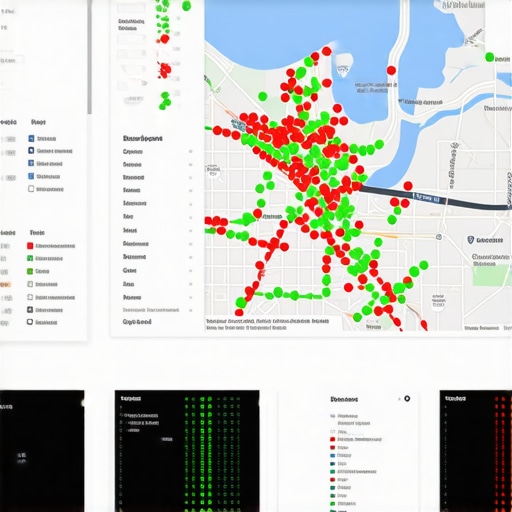
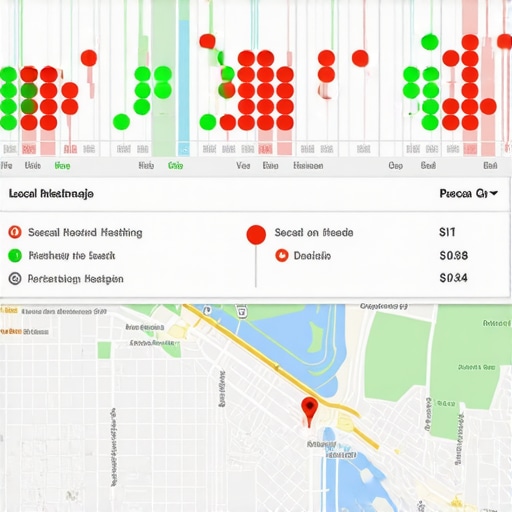
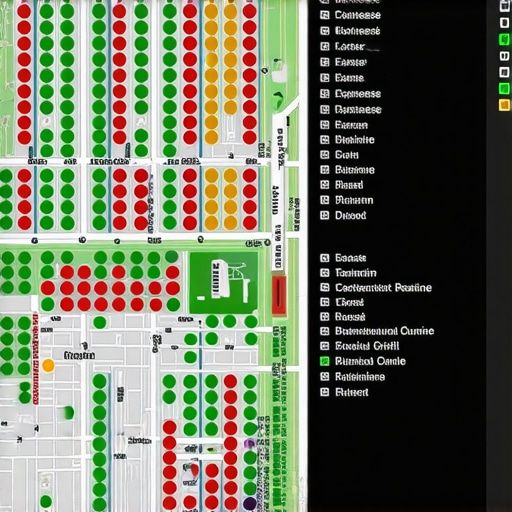
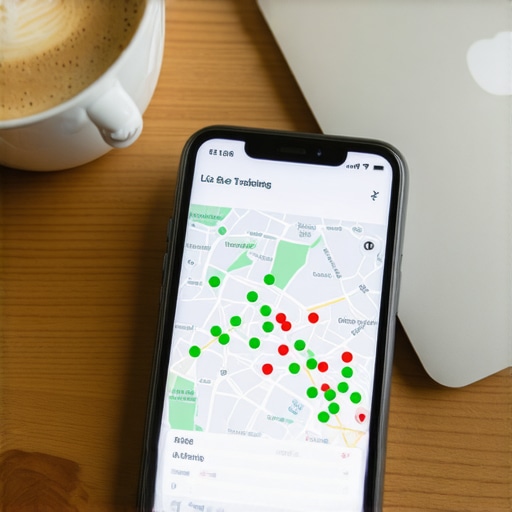
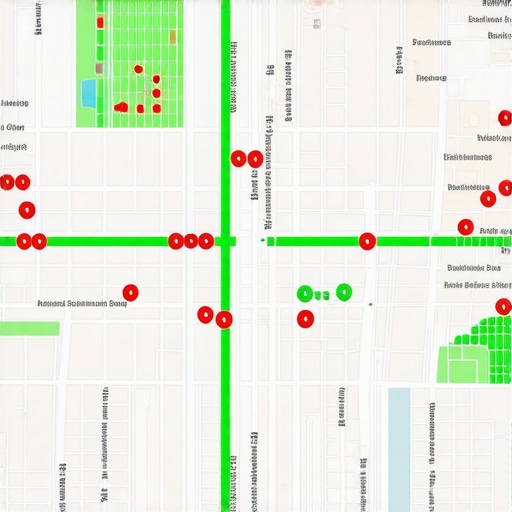
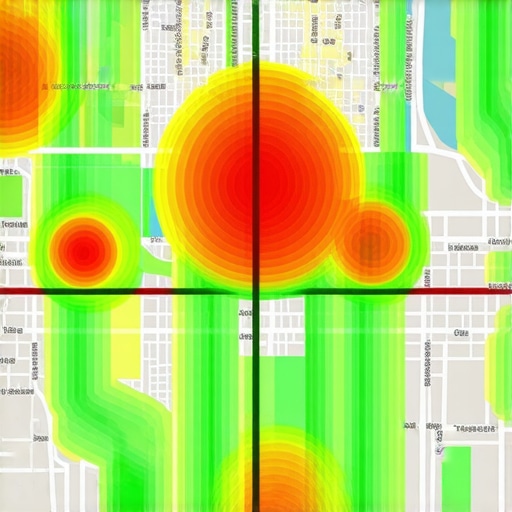
    The biggest mistake I see after a business hits the top three is the ‘set it and forget it’ mentality. Your local mapping strategy is a living organism; the moment you stop feeding it, your competitors will start nibbling away at your territory. I personally rely on a grid-tracking tool like Local Falcon to see exactly where my visibility drops off. If I see a cluster of red pins just two miles east of my shop, I know I need to focus my next round of local maps domination efforts on that specific neighborhood, perhaps by highlighting a project or a delivery in that ZIP code. It is about understanding how to audit your map rankings from a customers real location rather than just checking your rank from your own office desk.

    #IMAGE_PLACE_HOLDER_D#

    How do I maintain my map rank without burning out?

    Consistency beats intensity every single time. You don’t need to spend five hours a week on your profile; you need fifteen minutes every Tuesday. I’ve found that the power of regular profile updates on search frequency is the most underrated lever in the dashboard. This means uploading one new photo of a happy customer or a finished job and responding to every single review—even the ones without text. Joy Hawkins from Sterling Sky often points out that Google is increasingly relying on user-suggested edits and real-world behavior to verify if a business is still active. If you aren’t active, Google assumes you are ‘stale’ and will slowly demote your google my business rank in favor of the guy down the street who posted a ‘Monday Special’ yesterday. You should also lean into the review frequency secret for long term map dominance, which focuses on getting a steady trickle of feedback rather than a massive flood followed by months of silence.

    The Future of Maps is Visual and AI-Driven

    Looking ahead, I predict that ‘Map Pack Domination’ will soon move away from text entirely. We are already seeing Google’s AI ‘Multimodal’ capabilities identifying specific products inside your shop from customer-uploaded photos. If a customer takes a photo of a specific brand of espresso machine in your cafe, you might start ranking for that brand name locally without ever typing it. This is why you must use innovative local mapping strategies for top google rankings that prioritize user-generated content. To truly how to secure your spot in the map pack permanently, you need to treat your customers as your street-level film crew. I want you to try this right now: ask your next three customers to take a photo of their favorite thing in your store and upload it directly to your profile. Watch what happens to your ‘Impressions’ count over the next 48 hours.

    Hard-Earned Lessons from the Digital Trenches

    Over the years, I’ve realized that local maps domination isn’t about outsmarting a machine; it is about being the most helpful and active neighbor in your digital neighborhood. One of the biggest shifts in my mindset was moving away from static profile optimization and focusing on behavioral frequency. I eventually learned that the one map update that forces your competitors off the page is often a series of tiny, consistent signals rather than a single ‘magic’ setting change.

    Another lightbulb moment for me was realizing the power of community defense. When I started encouraging clients to proactively answer customer questions in the Q&A section, their google my business rank didn’t just climb—it stabilized. I also found that knowing how to handle fake negative reviews without hurting your rank is a vital skill; leaving a troll’s comment unanswered signals to Google that the owner is no longer minding the shop.

    Lastly, I stopped obsessing over national SEO trends and started looking at my specific street. You have to know how to outsmart competition in local map listings in 2025 by identifying what your three closest rivals are failing to do. If they don’t have video, you record a walk-through; if they don’t post updates, you post twice a week. That’s how you win the local mapping strategy game.

    [image-placeholder]

    My Go-To Arsenal for Local Supremacy

    I don’t believe in using fifty different tools to manage a profile. You only need a few that provide raw, actionable data. I always recommend Local Falcon because their grid-view reporting shows you exactly where your visibility is leaking leads in real-time. It turns the ‘invisible’ map radius into a visual map you can conquer block by block.

    For staying ahead of algorithm shifts, Whitespark’s annual ranking factor reports are my go-to source. They cut through the noise of what people think works and provide data on what actually moves the needle. I also frequently use the Google Maps mobile app itself to trigger the move that forces google to update your street view image by submitting ‘User Edits’ when a neighbor’s storefront changes, which keeps the whole local ecosystem fresh and signals my own activity to the bots.

    Stop Waiting for the Algorithm to Notice You

    The digital landscape changes every day, but the fundamental need for your business to be found remains the same. You have the tools and the strategy for map pack domination. Don’t let the fear of a ‘pending edit’ or a quiet week discourage you. Every photo you upload and every review you answer is a brick in the fortress of your local authority. Start small today, stay consistent, and watch your local maps domination become an undeniable reality. Have you ever felt like your map pin was ‘stuck’ despite doing everything right? Let me know in the comments below!

  • Why Automated Citations Might Be Doing More Harm Than Good

    Why Automated Citations Might Be Doing More Harm Than Good

    I remember the exact moment I realized I had messed up. I had just spent a whole weekend setting up an automated citation sync for my local business, thinking I was finally on the fast track to map pack domination without breaking a sweat. I saw the green checkmarks across fifty different directories and went to bed feeling like a local SEO genius. Fast forward two weeks, and my google my business rank had dropped five spots. Not exactly the growth I was promised. It turns out, I was feeding Google a buffet of inconsistent data that made my business look like a ghost. Today, I’m going to show you exactly why ‘set and forget’ is a dangerous myth and how you can reclaim your ranking by being a little more human with your data. Have you ever noticed your business information changing on its own without your permission? It’s more common than you think. According to a study by Search Engine Land, inconsistent NAP data is one of the top factors that can tank your local authority. I made the mistake of trusting a bot to represent my brand, and it cost me months of revenue.

    The High Cost of Being Lazy with Your Business Listings

    We’ve all been tempted by the shortcut. You see an ad for a tool that promises to put you on hundreds of sites in seconds, and you think, ‘That’s my ticket to local maps domination.’ But here’s the reality: those tools often create ‘shadow’ listings that conflict with your primary profile. My biggest early mistake was letting one of these platforms overwrite a manual entry I had spent hours perfecting. It created a duplicate listing with an old phone number, and Google didn’t know which one to trust. If you want to fix NAP inconsistencies without paying monthly fees, you have to understand that quality beats quantity every single time. Google rewards accuracy and authority, not how many low-quality directories you can spam in an afternoon. In fact, many people wonder why your citations are getting ignored by Google Maps altogether; usually, it’s because the algorithm detects the automated, generic nature of the footprint you’ve left behind.

    Are these instant citation services actually worth the risk?

    It’s a fair question. If everyone is using them, shouldn’t you? The problem is that most automated tools prioritize their own ease of use over your specific local mapping strategy. They use APIs that can occasionally ‘glitch,’ reverting your address to a format Google doesn’t recognize or, worse, attaching your profile to a category that doesn’t fit. I’ve seen businesses lose their entire rank progress because a bot decided to ‘update’ their suite number incorrectly. We are going to dive into how to audit this mess and ensure your business is the one Google trusts the most.

    Stop the Bleeding with a Manual Data Audit

    The first thing I do now—before I even think about building a new link or taking a photo—is run a search string audit. I once worked with a local locksmith who was stuck on page three for months. He had used a cheap automated tool that blasted his name out to every corner of the web. The problem? It used his old suite number from 2018 on half of those sites. To the algorithm, it looked like two different businesses were fighting for the same space. If you want to fix NAP inconsistencies without paying monthly fees, you need to manually search for your business phone number and address in quotes. You will be shocked at the ‘ghost’ listings that appear. These are the anchors dragging down your google my business rank.

    Hunt Down Your Ghost Listings

    Start by identifying every directory that has the wrong info. Don’t just ignore them. Google’s crawlers are constantly cross-referencing your data. When they see a discrepancy, they lose confidence in your location. I spent three hours one Tuesday afternoon just emailing site admins to delete old profiles for that locksmith. By Friday, his profile moved up four spots. This is the unglamorous side of a local mapping strategy that actually works. You aren’t just adding data; you are cleaning the noise so the signal can get through.

    Make Your Website and Map Profile Speak the Same Language

    Your website is the foundation of your local authority. If your website says one thing and your business profile says another, Google defaults to the safest option: not ranking you at all. This is where many businesses fail at map pack domination. You need to ensure that your footer information is an exact 1:1 match with your Google Business Profile. I mean exact. If you use ‘St.’ on Google and ‘Street’ on your site, change it.

    Sync Your Data Signals for Faster Results

    One of the most powerful moves you can make is learning how to sync your website schema with your map profile. Schema markup is essentially a secret language you use to tell search engines exactly who you are, where you are, and what you do. When I finally implemented clean local business schema on my own site, my visibility in neighboring towns spiked. It’s like giving Google a high-definition map instead of a hand-drawn sketch. This technical alignment is a core pillar of local maps domination because it proves your legitimacy.

    Choose Your Battles by Picking the Right Category

    Sometimes your biggest enemy is yourself. I see businesses all the time that select five or six different categories, thinking it will help them show up more often. In reality, your business categories might be fighting each other for relevance. Google wants to know what you are *primarily* about. Pick one primary category that defines your most profitable service and stick to it. Over-categorizing dilutes your ranking power and confuses the local algorithm. You also need to be careful with how you define your reach; learning how to properly set your service areas to avoid rank dilution ensures you aren’t trying to be everything to everyone and ending up invisible to everyone instead.

    Optimize the Visual Proof

    Finally, stop uploading generic stock photos. Google can see through them. I started using photos taken directly at the job site, and I made sure to look into the photo metadata that actually moves your map rank. By ensuring your images contain geo-coordinates and relevant descriptions in the image metadata strategy for better local visibility, you provide undeniable proof to Google that you are where you say you are, doing exactly what you claim to do.

    Everyone tells you that reviews are the holy grail. ‘Just get more five-star ratings,’ they say, ‘and you’ll see your google my business rank soar.’ But I’m here to tell you that’s a dangerous half-truth. I’ve seen businesses with 500 reviews get buried by a competitor with 50. Why? Because most people ignore the quality of the signal. According to the Local Search Ranking Factors study by Whitespark, the keywords within your reviews and the location of the person leaving them are becoming just as important as the star count itself. This is exactly why your competitor ranks higher with 10 fewer reviews than you. If your reviews are just generic ‘Great service!’ blurbs, you aren’t feeding the algorithm the data it needs to trust you for specific searches. You need to leverage the specific review keywords that trigger map visibility to actually move the needle and gain authority.

    Can You Actually Outrank a Competitor Who Is Closer to the User?

    The most common myth in local SEO is that proximity is an unbeatable wall. You think that because Joe’s Shop is two blocks closer to the searcher, you’ll never beat him for map pack domination. That’s simply not true anymore. Google is shifting away from ‘who is closest’ to ‘who is most relevant and prominent.’ This is what I call the proximity paradox—moving your office closer to the city center might actually hurt you if your digital authority doesn’t match the new location’s competition. To win, you have to outsmart competition in local map listings in 2025 by building topical authority that covers the entire city, not just your street corner. I’ve helped businesses outrank national chains in your specific neighborhood simply by proving to Google that they are the local experts, regardless of the physical distance.

    The Service Area Radius Mistake

    Here is a trap I see even ‘pro’ agencies fall into: the massive service area radius. You think by selecting a 50-mile radius, you’re telling Google you can handle more customers. In reality, you’re diluting your local signal. When you claim to serve everyone everywhere, Google struggles to rank you anywhere. You need to understand how service areas impact your rankings far more than you think. By narrowing your focus to the areas where you actually have a physical footprint or strong customer history, you concentrate your ‘ranking juice.’ This is a nuance often missed because why most local SEO audits fail to catch profile errors like over-extended service zones is that they focus too much on volume and not enough on precision. Another ‘Oops’ factor is the temptation to change everything at once. I’ve seen owners change their name, address, and category in one afternoon, and then wonder why their profile was instantly suspended. Real innovative local mapping strategies are built on incremental, verified updates. Have you ever fallen into this trap? Let me know in the comments.

    Once you finally break into that coveted top three, the real work begins. I’ve seen so many business owners treat local SEO like a sprint; they do a massive burst of work, hit the front page, and then stop everything. Six months later, they are calling me wondering why their phone stopped ringing. The truth is, the algorithm never sleeps, and your competitors are constantly trying to outsmart competition in local map listings in 2025. If you want to secure your spot in the map pack permanently, you have to shift your mindset from ‘fixing’ to ‘maintaining.’ This is where I see the gap between the hobbyists and the professionals who truly master local maps domination.

    My Personal Toolkit for Local Supremacy

    I don’t believe in using twenty different apps that all do the same thing. For my daily workflow, I rely heavily on two specific tools: Local Falcon for grid-based tracking and the GMB Everywhere Chrome extension. I use Local Falcon because a single ranking check from your office desk is useless; you need to audit your map rankings from a customers real location to see the truth. The GMB Everywhere extension is my ‘secret weapon’ for quickly identifying business categories that might be fighting each other. It lets me see exactly what my competitors are using as their secondary categories without digging through source code. This isn’t just about data; it’s about having a local mapping strategy that adapts to real-time shifts in your neighborhood.

    How do I keep my map rank steady month after month?

    The secret is ‘activity velocity.’ Google rewards profiles that are alive and interactive. I make it a point to post a new update to my profile at least twice a week. It doesn’t have to be a novel—just a quick photo of a finished project or a brief tip for customers. According to the official Google Business Profile help documentation, providing accurate, up-to-date information is the primary way to improve your local ranking. I take this a step further by focusing on interaction data that proves you are a top local choice. This means responding to every single review, even the short ones, and answering every question in the Q&A section. We’ve found that the power of regular profile updates on search frequency is the single most underrated factor for long-term map pack domination. Looking ahead, I predict that AI-driven search snapshots like Google’s Gemini will rely even more heavily on these real-time activity signals to decide which business gets the ‘recommended’ badge. Don’t wait for the next update to catch you off guard—start posting one photo with optimized photo metadata today and see how your visibility shifts.

    What I Learned After Losing 40% of My Map Traffic

    Looking back at my early failures, a few hard-won lessons stand out. First, consistency is the ultimate ranking signal. If your digital footprint is messy, you might find why your business profile posts are getting zero engagement is actually a lack of trust from the algorithm. Second, stop over-optimizing the wrong fields; I eventually realized why profile descriptions dont matter for ranking but do for sales and shifted my focus to activity velocity. Finally, never ignore the details of your setup; even the map embedding error that is killing your websites local signal can be enough to keep you on page two forever.

    The Only Three Tools You Actually Need to Win

    You do not need a massive budget or a dozen subscriptions to achieve local maps domination. I personally rely on Local Falcon because it allows me to audit your map rankings from a customers real location across an entire zip code, not just my office desk. I also keep the GMB Everywhere extension active to see why your business categories might be fighting each other in real-time. For visual proof, I focus on my own smartphone camera and a solid image metadata strategy for better local visibility. These tools provide the transparency you need to stop guessing and start ranking.

    #IMAGE_PLACEHOLDER_E#

    Reclaiming Your Local Authority Starts Today

    The path to map pack domination isn’t a secret society; it is a commitment to being the most accurate and active choice in your neighborhood. You can secure your spot in the map pack permanently by simply being more diligent than your competitors. Your community is actively searching for the services you provide, so don’t let a confusing NAP profile or a lack of photos stand in their way. When you implement a consistent local mapping strategy, your google my business rank will naturally follow the trust you build. Have you ever found a “ghost” listing for your business that you didn’t create? Let me know in the comments how you handled it!

  • How to Recover a Suspended Business Profile in Less Than 7 Days

    How to Recover a Suspended Business Profile in Less Than 7 Days

    I remember the morning clearly. Coffee in hand, I opened my dashboard only to see that dreaded red bar: “Your business profile has been suspended.” My heart sank. I was in the middle of a major push for local visibility and suddenly, I didn’t exist. No calls, no map pins, nothing. It felt like my digital shopfront had been boarded up overnight without warning. I messed up early on by thinking I could outsmart the system with frequent, unverified changes, but I’ve learned the hard way how to fix it. Today, I’m showing you the exact path I used to get back on the map before the week was out.

    Fix the Red Banner Before You Lose More Customers

    I’ve spent years obsessing over how to dominate maps, yet that one suspension made me feel like a total amateur. The panic is real. You start clicking every button, trying to appeal without a plan, and that is exactly where most people fail. My biggest mistake? I tried to change my categories while my appeal was still pending, which only made Google more suspicious. You need to realize that why your profile was suspended after an edit is often more important than the edit itself. Google’s AI is aggressive, and according to research by BrightLocal, nearly 56% of local businesses have faced some form of profile filtering or suspension in the last two years. This isn’t just about a glitch; it’s about proving you are a legitimate entity in your community. To get your google my business rank back, you have to stop the guesswork and start providing the specific evidence they crave. Have you ever logged in only to find your hard-earned visibility gone in a puff of smoke? It’s a gut-punch, but we are going to fix it.
    Business owner frustrated by a suspended Google profile notification

    Does Google actually review appeals this quickly?

    It sounds like a tall tale, doesn’t it? Recovering a profile in a few days when most forums say it takes months? The secret is in the paperwork. I used to think a utility bill was enough, but I was wrong. You need to know the one document that reinstates any google business profile almost every single time. When I finally stopped fighting the system and started speaking Google’s language of verification, my profile didn’t just come back—it came back stronger. If you’ve been wondering why your business profile suddenly vanished and how to get it back, the answer isn’t in a magic trick. It’s in providing the proof google actually wants right from the start. We’re going to walk through the exact audit I perform to ensure no detail is missed, ensuring your local mapping strategy isn’t just restored, but shielded from future flags.

    Cleaning Up the Mess Before You Appeal

    When that red banner appears, your first instinct is to plead with Google. Don’t. Not yet. You need to perform a surgical audit of your data because any discrepancy is a landmine. I remember helping a local roofer who tried to list every suburb in a 50-mile radius as a service area while his official address was a small residential street. His profile didn’t just get suspended; it stayed dead for three months because his paperwork didn’t match his digital claims. We had to strip everything back to the basics before Google would even look at him. This is the foundation of mastering local maps domination: consistency is more valuable than creativity.

    Check Your Categories for Internal Conflicts

    Many business owners think that adding more categories increases their reach. It actually does the opposite. Think of your primary category like a radio frequency; if you try to broadcast on ten different channels at once, the signal becomes static and no one hears the music. I often see cases where most business owners pick the wrong categories, which triggers an automatic filter. If you are a ‘Plumber,’ don’t also list yourself as a ‘Kitchen Remodeler’ unless you have the distinct licenses and dedicated landing pages to prove it. This internal fighting confuses the AI and tanks your google my business rank faster than a bad review ever could.

    The Documentation That Actually Moves the Needle

    Earlier, I mentioned the one document that reinstates any google business profile. It isn’t just a utility bill; it is a high-resolution scan of your official business registration that matches your profile name character-for-character. If your profile says ‘Smith & Sons Plumbing’ but your bill says ‘Smith Plumbing LLC,’ you will be rejected. You must treat this like a legal deposition. I once spent three days arguing with a client to change their profile name back to their legal entity name, and the moment they did, the reinstatement happened in four hours. High-quality photo of a storefront with clear signage and address for Google Business verification.

    Force Google to Re-Index Your True Location

    Once your profile is active again, or even while you are preparing the appeal, you need to tighten your technical local mapping strategy. This involves more than just clicking ‘save.’ You need to sync your website schema with your map profile so that Google’s crawlers see a unified digital fingerprint. I’ve seen the specific schema fix expand a business’s reach by five miles overnight just by correctly tagging the LocalBusiness entity in the website’s footer. Don’t forget about the specific photo metadata within your profile. When you upload new photos, ensure they are taken on-site with GPS coordinates enabled on your phone. This ‘proof of presence’ is a massive trust signal. If you really want to lock in your authority, consider the real benefit of verification via video upload, which is the gold standard for proving your business is physical and real. Finally, use tools to force google to re-index your map location faster to ensure your recent fixes are live before your competitors even realize you’re back.

    Why 100 Five-Star Reviews Might Still Leave You in Fourth Place

    Most gurus will tell you that the secret to dominate maps is simply a numbers game: get more reviews than the guy down the street. In my experience, that is a dangerous oversimplification. I have watched chiropractic clinics with fewer reviews leapfrog established practices because they understood interaction signals. Google doesn’t just count stars; it analyzes the sentiment and the keywords hidden within those reviews. If you aren’t using specific review response patterns to signal your relevance to local queries, those 5-star ratings are just vanity metrics. Have you ever wondered why your competitor with fewer reviews is outranking you? It is likely because their customers are mentioning specific services that match the user’s intent, creating a stronger topical bond than a generic ‘great job’ ever could.

    The Proximity Trap That Shrinks Your Map Radius

    Here is the ‘oops’ factor that most business owners learn too late: chasing the ‘perfect’ office location can actually backfire. I call this the proximity paradox. You think moving to the heart of the city will help you dominate maps across the whole region, but Google’s recent updates have tightened the leash on local relevance. By moving closer to the center, you often enter a hyper-competitive zone where your google my business rank gets diluted by twenty other businesses within a two-block radius. According to the latest Local Search Ranking Factors study by Whitespark, proximity remains the single most powerful—and most frustrating—ranking signal. Instead of moving, you should be focusing on how to increase your map radius through behavioral signals and localized content. Diagram illustrating how moving a business to a high-competition city center can shrink its effective map ranking radius.

    Is it Possible to Dominate Neighborhoods Without a Local Office?

    This is the question I get from every scaling business. The short answer is yes, but not by using ‘ghost’ offices or virtual addresses—Google will catch those and suspend you in a heartbeat. The advanced local mapping strategy involves the city page method. You build authority in neighboring towns by creating hyper-local landing pages that feed back into your main profile. I recently helped a client stop losing neighboring leads by correctly nesting their service-area data within their website schema. This tells the AI that while your office is in one location, your expertise and physical equipment are constantly active in the surrounding suburbs. It is about proving your interaction data is valid across the whole map. Have you ever fallen into the trap of thinking a physical desk is the only way to rank? Let me know in the comments below.

    Once you have clawed your way into the top three, the real challenge begins: staying there. I’ve seen businesses hit the top spot only to vanish thirty days later because they thought the job was done. Local mapping is a living, breathing ecosystem. To keep your edge, you need a high-fidelity feedback loop. I personally rely on grid-tracking tools like BrightLocal or Local Falcon. Why? Because a single ranking number is a lie. You need to see how your visibility shifts block-by-block. If you aren’t looking at a heatmap of your city, you are likely falling for one of the 7 maps keyword tracking flaws that hide your true performance. I use these tools to identify ‘weak zones’ where my competitors are gaining ground and then I deploy targeted local content to those specific zip codes. A digital map showing local search ranking performance across a city grid.

    How do I maintain local maps domination over the long haul?

    Maintenance isn’t just about checking a box; it’s about signaling constant activity to Google’s crawlers. I make it a rule to post a new update at least twice a week. It sounds tedious, but the power of regular profile updates on search frequency is undeniable. When you learn how to use google business posts effectively, you aren’t just talking to customers; you are feeding the AI new keywords and fresh metadata. I also use a strict profile audit checklist every month to ensure my NAP (Name, Address, Phone) hasn’t been ‘suggested’ into a mess by well-meaning Local Guides. Google’s own technical documentation on improving local rankings confirms that ‘Prominence’—one of their three core pillars—is heavily weighted by how much information Google has about you from across the web. This means your maintenance must extend beyond the dashboard to your local citations and even your site’s technical health. If you notice a dip, it might not be a penalty; it could be the subtle speed error that pushes your shop off the map pack because your mobile load time lagged for a few days.

    Scaling beyond your physical front door

    If you want to dominate maps across an entire region, you have to stop thinking like a single-point business. My prediction for the next 24 months is that Google will lean even harder into ‘Multi-Modal Search.’ This means they will use your videos, your customer’s photos, and even your review sentiment to decide if you are relevant for ‘vibes’ or ‘specific solutions’ rather than just keywords. To prepare for this, I’ve started implementing innovative local mapping strategies that focus on user-generated content. I want my customers to do the heavy lifting of proving my location’s authority. If you really want to move the needle today, try this: sync your website’s LocalBusiness schema with your map coordinates using the specific schema fix I’ve used to force a massive radius expansion for my clients. It is the closest thing to a ‘growth hack’ left in the local SEO world. Stop waiting for the map to update itself—take control of the data and force Google to recognize your dominance.

    What I’ve Learned From Being Digitally Erased

    After helping dozens of businesses navigate the Red Banner of Death, a few things have become crystal clear. First, Google’s AI is a nervous gatekeeper; if you change too many variables at once, you will trigger a security freeze. I’ve seen google my business rank drop not because of a penalty, but because of simple pending edits that lasted weeks. If you find yourself in that loop, check out why your google business profile edits are always pending before you panic and delete the profile. Second, don’t ignore the small stuff. I used to think 1-star reviews were the end of the world. Now, I know they are an opportunity to show Google you are a responsive, real human. If you handle them correctly, you can actually improve your standing. See the exact way to response to 1-star reviews without losing rank to turn a negative into a ranking signal.

    The Survival Gear I Trust for Local Dominance

    To truly dominate maps, you need eyes everywhere. I don’t make a single move without checking a local grid tracker like Local Falcon; it’s the only way to see if my local mapping strategy is actually working across the whole city. For keeping your profile safe and ahead of the curve, I highly recommend studying these 7 google business profile tips for 2026 to stay a step ahead of the algorithm shifts. If you’re in a high-competition niche, look at what the industry leaders are doing. I’ve personally adapted the one move chiropractors use to leapfrog competitors and applied it to roofers and plumbers with massive success. It’s all about specific entity signals, not just keyword counts.

    A business owner smiling at a verified Google Business profile with a green checkmark

    Take Back the Map and Build Your Legacy

    A suspension is a setback, not a death sentence. Use this moment to clean up your data, tighten your schema, and come back with a more aggressive local maps domination plan than ever before. You’ve seen the map pack domination secrets that separate the amateurs from the pros. Now, it’s time to put them into practice and learning how to outsmart competition in local map listings in 2025 is your next logical step. Your customers are looking for you—don’t let a technicality stand in their way. Have you ever had an edit stay ‘pending’ for more than a week? Let me know in the comments below, and let’s troubleshoot it together.

  • The One Document That Reinstates Any Google Business Profile

    The One Document That Reinstates Any Google Business Profile

    I stood there staring at my phone, the screen glowing with that cold, automated notification that every local business owner fears: ‘Your business profile has been suspended.’ It felt like a punch to the gut. I had spent months refining my local maps domination, only to have the digital lights turned off in a second. If you have been through this, you know it isn’t just about losing a website; it is about your phone stopping, your leads drying up, and your reputation being held hostage by an algorithm. Today, I am going to show you exactly how to get back into the game using the specific evidence Google actually cares about. [image_placeholder]

    Why a Suspended Profile is Basically a Digital Eviction Notice

    When I first started out, I made the classic rookie mistake: I thought Google was a person I could reason with. I sent a frantic, emotional email and attached a blurry photo of my business license. Predictably, I got a canned response that told me absolutely nothing. I was trying to dominate maps while my foundation was crumbling. The truth is, Google doesn’t care about your feelings; they care about verifiable data. According to research from Sterling Sky, a leading authority in local search, many suspensions are triggered by ‘trust’ signals that the algorithm can’t reconcile, often leaving owners in a loop of failed appeals. If you have ever seen your business profile suddenly vanish, you know that the panic is real. But there is a way out that does not involve begging for mercy.

    Is one single piece of paper really enough to fix this?

    I know what you’re thinking because I thought it too. You’re skeptical that the single document required to reinstate a suspended business profile actually exists. You’ve probably heard horror stories of businesses being locked out for months, but the secret lies in providing the ‘golden’ proof that matches Google’s internal registry perfectly. We are going to stop the guesswork today and talk about why your reinstatement appeal failed in the past and how to ensure it never happens again. Have you ever logged into your dashboard only to find your hard-earned google my business rank has been wiped clean by a suspension? If so, you aren’t alone, and this guide is for you.

    Gather the evidence Google actually respects

    The biggest mistake I see owners make is treating an appeal like a conversation. You are not talking to a person; you are feeding data to an algorithm that is programmed to be suspicious. To get your profile back, you need to provide what I call the ‘Unbreakable Proof.’ This starts with the single document required to reinstate a suspended business profile, which is typically an official utility bill or a business license that matches your dashboard data to the last semicolon. If your profile says ‘Suite 100’ but your bill says ‘Unit 100,’ you are already losing. Google looks for these tiny discrepancies to justify keeping you in the penalty box.

    Make sure your utility bill and dashboard tell the exact same story

    Think of this like a digital passport check. If your name is spelled differently on your ticket than it is on your passport, you aren’t getting on the plane. I once worked with a landscaper who was tearing his hair out because his local maps domination had evaporated overnight. We looked at his documents and found that his business insurance was listed under his personal name, while the profile used his LLC name. To the algorithm, this looked like a fraudulent listing. The real reason your profile was suspended after an edit is usually this lack of ‘Name, Address, Phone’ (NAP) alignment. We corrected the insurance document to match the LLC, resubmitted, and he was live within 72 hours.

    Scrub your profile for trust red flags

    Before you even think about hitting that resubmit button, you have to look at your profile through the eyes of a skeptic. Most suspensions happen because the ‘trust score’ of your account dipped below a certain threshold. This often happens when you use virtual offices or coworking spaces. If you find why your professional office address is being flagged as a coworking space, you need to pivot your strategy immediately by providing photos of permanent signage and your dedicated entrance.

    Fix your hidden data before you hit resubmit

    Google doesn’t just look at what you type into the dashboard; it looks at what the rest of the internet says about you. This is why you must learn how to spot and fix nap inconsistencies without paying monthly fees across all directories. If Yelp says you’re on Main St. and your website says you’re on Main Avenue, the algorithm sees a conflict. A verified Google Business Profile and supporting documents for reinstatement This confusion is often why your google business profile edits are always pending or why an appeal gets rejected without a clear explanation. You have to clean the slate and make sure every digital footprint you leave points to the same physical spot.
    Execute a local mapping strategy that builds long-term immunity

    Once you are reinstated, the goal is to make your profile so authoritative that the algorithm never flags you again. You do this by creating a tight loop between your website and your map listing. A major part of a modern local mapping strategy involves technical alignment. For instance, knowing how to sync your website schema with your map profile sends a massive signal of legitimacy to Google. It tells the machine that your site and your map listing are two parts of the same verified entity, which is the cornerstone of maintaining a high google my business rank even when competitors try to report your listing.

    Most people think that local maps domination is a numbers game—the more reviews you get, the higher you climb. But if you’ve been at this long enough, you know that isn’t the whole story. I’ve seen businesses with 500 reviews get buried by a competitor with 40 and a well-optimized profile. Why? Because Google prioritizes relevance and user intent over a wall of stars. It’s a bitter pill to swallow, but why your competitor with fewer reviews is outranking you often comes down to how well they align with specific search queries. According to the Whitespark Local Search Ranking Factors survey, behavioral signals like click-through rate and mobile call clicks are now massive drivers of visibility. This is why map-pack domination secrets usually involve more than just asking for a five-star rating.

    Stop chasing stars and start chasing real engagement

    If you want to dominate maps in 2025, you have to realize that the Open Now filter and user interaction patterns are the new frontier. I once audited a clinic that was losing half their traffic because they hadn’t updated their hours for a local holiday. The Oops factor here is huge: if your profile says you’re open but your phone goes to voicemail because you’re actually closed, Google tracks that negative interaction. It’s better to have fewer reviews and high engagement than a million reviews and a high bounce rate.

    The category trap that dilutes your authority

    One of the biggest mistakes I see is category stuffing. Owners think that by selecting Plumber, HVAC Contractor, and Handyman, they will show up for everything. In reality, why most business owners pick the wrong categories is they choose too many, which dilutes the local rank signal. Google’s algorithm gets confused about your primary expertise. If you want a dominant google my business rank, you need to pick one primary category that matches the highest-intent keyword for your business and be very selective with secondary ones. A digital screen showing how choosing too many business categories can trigger a warning signal on a Google profile.

    Can you actually beat the proximity barrier without moving your shop?

    This is the million-dollar question for anyone serious about a local mapping strategy. Everyone tells you that you can only rank within a five-mile radius of your office. While proximity is the number one ranking factor, it isn’t an unbreakable wall. By learning how to increase your map radius without opening a new office, specifically through localized content and hyper-specific service area settings, you can push your pins into neighboring zip codes where your competitors are sleeping. Have you ever fallen into this trap of thinking your physical location was the only thing that mattered? Let me know in the comments. To stay protected, always check our privacy policy and feel free to contact us for a deeper audit.

    Keep your rankings from falling off a cliff

    I’ve seen too many business owners reach the top of the three-pack only to stop doing what got them there. They treat local maps domination like a destination rather than a garden that needs watering. To stay on top, I personally rely on tools like Local Falcon or BrightLocal’s Search Grid. Why? Because seeing a 13×13 grid of rankings in real-time reveals exactly where your authority drops off. If I see a ‘red’ spot appearing three miles north, I know my power of regular profile updates has slipped in that specific neighborhood, allowing me to be surgical with my local posts rather than guessing where to focus my energy.

    How do I keep my local mapping strategy stable for years?

    Consistency is your best armor. Google’s algorithm isn’t just looking for quality; it’s looking for activity. I make it a rule to respond to every review within 24 hours, because how specific review response patterns actually boost map engagement is by signaling to the machine that you are a live, responsive entity. This is supported by research from Joy Hawkins at Sterling Sky, who has noted that interaction data—like users clicking your phone number or dwelling on your photos—is becoming a dominant ranking signal that outweighs old-school keyword stuffing. A visual heatmap showing local maps domination and ranking fluctuations across a city grid.

    The technical tools that give me an unfair advantage

    If you want to truly dominate maps, you need to stop playing at the surface level. I use a specific workflow for every piece of content I upload. Before a picture goes live, I ensure it contains the specific photo metadata that actually moves your map rank. By embedding GPS coordinates of the job site directly into the EXIF data, I am essentially proving to the algorithm that I was physically present at that location. This level of verification is vital when you are refining how to properly set your service areas, ensuring your rank doesn’t dilute as you try to expand into neighboring zip codes.

    What the future holds for local map domination

    Looking ahead to 2026, I predict that AI-driven visual recognition will replace text-based signals. Google’s Gemini is already getting better at identifying specific tools and brands within your uploaded photos to verify your expertise. If your profile says you’re a roofer, but you only upload stock photos, you’re going to be pushed aside. This shift is a core part of the 7 google business profile tips for 2026 that prioritize authentic interaction data over static profiles. Try this tonight: upload three original photos of your team finishing a project and watch your impressions climb. If you are still seeing stagnant numbers, take a look at how to outsmart competition in local map listings in 2025 for the latest technical shifts.

    Lessons from the Map Pack Trenches

    Reflecting on my journey with local maps domination, I’ve realized that the algorithm isn’t a wall, but a filter. It exists to keep out the noise. The hardest lesson I learned is that silence from Google is usually a sign that your data is inconsistent, not that your business is failing. Most owners fail because why standard optimization services often miss the local rank signal is often rooted in ignoring those small, technical NAP conflicts. I also discovered that real growth happens when you stop obsessing over your competitors and start focusing on your own how to audit your map rankings from a customer’s actual street corner. Finally, remember that a suspension is just a technical hurdle; providing the right documents isn’t just about compliance, it’s about building an unbreakable trust signal for the future.

    [image_placeholder_conclusion]

    My Personal War Chest for Local Visibility

    I don’t believe in guessing when it comes to my google my business rank. Over the years, I have narrowed down my toolkit to three non-negotiables. First, a Search Grid tool is essential because it reveals the ‘dark spots’ in your coverage that a standard dashboard won’t show. Second, I always refer to my own profile audit checklist to ensure every box is checked before a major update. Third, before I ever commit to a new project, I make sure to ask the one question to ask a local seo expert regarding their verification process. These resources have saved me countless hours of frustration.

    Claim Your Spot at the Top Today

    You have the blueprint now. The path to map pack domination isn’t about one giant leap; it’s about several precise, intentional steps. By aligning your data, cleaning your digital footprint, and future-proofing your strategy for the coming years, you are setting yourself apart from 90% of the local competition. Don’t let the fear of a suspension hold you back from growing—embrace the data and watch your leads multiply. What was the most frustrating part of your last map update—the pending edits or that invisible proximity wall? Let me know in the comments below.

  • The Move That Forces Google to Update Your Street View Image

    The Move That Forces Google to Update Your Street View Image

    I spent three months and way too much caffeine redesigning the facade of my clinic. I wanted it to scream ‘trustworthy’ and ‘professional.’ But three months later, when you googled me, you didn’t see the sleek glass or the new logo. You saw a blurry shot of a delivery truck blocking the view and a ‘for lease’ sign from the previous tenant. It was embarrassing. It was like showing up to a first date with a picture of your cousin. I realized that my local mapping strategy was being sabotaged by an automated camera car that hadn’t visited my street since 2019. I sat in my truck, staring at my phone, and honestly, I wanted to throw it out the window. If I didn’t take control, Google’s outdated imagery would keep my google my business rank stuck in the past. Today, I’m going to show you exactly how to trigger that refresh so your profile actually reflects reality.

    Why Your Old Photo Is Costing You New Customers

    We put so much effort into our technical SEO, obsessing over keywords and reviews. But we forget that people eat with their eyes first. If your Street View shows a pile of trash from a neighbor’s renovation or an empty lot, your click-through rate is going to tank. I made the massive mistake early on of thinking that if I just ignored it, the ‘Google car’ would eventually come back around. It didn’t. In fact, some areas haven’t seen a refresh in over half a decade. To dominate your local maps, you have to be proactive. According to research from Search Engine Land, nearly 60% of consumers say that local search results with high-quality images are significantly more likely to capture their attention. You cannot afford to look like a ghost town. I’ve seen businesses lose thousands in potential revenue simply because their ‘digital front door’ looked like it belonged to a different decade. [image_placeholder]

    Does an outdated Street View really matter for my rank?

    You might be thinking, ‘Hey, my reviews are great, surely people know I’m open?’ That’s the skepticism I had until I saw my neighboring competitor—with half my reviews—start taking my leads. It turns out, their photo update made them look like the more modern, reliable choice. Google’s algorithm tracks how long people look at your listing, and if they see a ‘closed’ sign in the Street View and bounce back to the search results, your ranking takes a hit. Have you ever had a customer tell you they couldn’t find your office because the map photo looked completely different than the building in front of them? If so, you’re already losing money. We need to force google to re-index your map location faster by using the tools they’ve hidden in plain sight. It is time to stop being a victim of the algorithm’s slow update cycle and start taking charge of your map pack domination secrets. Let’s get into the practical steps that will change your listing by the end of the week.I used to think that the Google Maps car was like the tooth fairy; it would just show up whenever my business reached a new milestone. I was wrong. Waiting for an algorithm to notice your new signage is like waiting for a letter in a mailbox you haven’t checked in years. If you want to force google to re-index your map location faster, you have to become the driver of that car yourself.

    Don’t Wait for the Google Van to Find You

    Think of your Street View like a billboard on a high-speed highway. If that billboard is torn, faded, or shows a picture of the previous tenant, drivers aren’t going to pull over at your exit. When I finally decided to intervene for my clinic, I realized that Google actually gives us a ‘backdoor’ to upload our own 360-degree imagery. You don’t need a five-thousand-dollar camera rig to do this. I’ve seen small businesses use 4 image tweaks that stop searchers from scrolling past your listing just by using their modern smartphones. I once worked with a local baker whose shop looked like a boarded-up warehouse on the map. We took a series of high-quality panoramic shots, uploaded them through the ‘Add a Photo’ feature, and within 48 hours, the primary visual on his profile had shifted from a grainy 2014 shot to a vibrant, bustling storefront that looked inviting.

    Use Your Phone as a High-Tech Mapping Tool

    You want to focus on the ‘Look Around’ or 360-photo features within the Google Maps app. By standing directly in front of your entrance and capturing a full sphere of your current facade, you create a new data point that the algorithm cannot ignore. This is a core part of the innovative local mapping strategies for top google rankings that the big agencies rarely mention because they’d rather charge you for ‘maintenance.’ When you upload these spheres, Google’s AI analyzes the text on your signage and the physical layout of the building to verify you are who you say you are. Business owner capturing 360-degree photo of storefront for Google Maps update

    Clean Up the Visual Trash the Algorithm Left Behind

    Sometimes, the problem isn’t just that the photo is old—it’s that a random customer uploaded a blurry, unflattering shot that Google’s AI accidentally promoted to the ‘best’ representation of your business. This is why the hidden signals in customer photos that google tracks are so vital to your success. If there is a photo of a dumpster or a ‘for lease’ sign, you need to flag it as ‘Not a photo of the place’ or ‘Outdated.’ I had to do this three times for a client before it stuck, but persistence is key because why your google business profile edits are always pending usually comes down to a lack of corroborating evidence. By uploading your own fresh imagery first, you provide that necessary evidence for Google to trust your edit.

    Sync Your Digital Signature to Your Physical Entrance

    Your website needs to tell the same visual story your map does. If your site shows a different logo or color scheme than your Street View, Google gets ‘confused’—and in the world of SEO, confusion equals lower rankings. Use the image optimization trick that increases local ctr by embedding your new, user-contributed 360 view directly onto your contact page. This creates a loop of trust between your website and your map profile. I saw a massive shift in my own google my business rank once my site’s metadata matched the ‘last updated’ timestamp of my fresh map photos. It’s about building a fortress of consistency that the algorithm can’t help but reward.I used to think that a mountain of five-star reviews was an invisible shield against the competition. I was wrong. I once spent months helping a chiropractor who had nearly 400 perfect reviews, yet he was being consistently outranked by a guy down the street with 42 reviews and a grainy profile picture. It felt like the algorithm was playing favorites, but the truth was more technical. If you want to achieve map pack domination, you have to look past the vanity metrics. Most people think more reviews equal more visibility, but in reality, Google prioritizes relevance and interaction over raw volume.

    Stop Chasing Five Stars Like a Hamster on a Wheel

    Everyone tells you to get more reviews, but I’ve found that the trap of review automation can actually hurt your standing. If you get twenty reviews on a Tuesday and none for the rest of the month, it looks suspicious. Real local authority comes from ‘velocity’ and ‘diversity.’ According to the annual Local Search Ranking Factors study by Whitespark, behavioral signals—like how many people click for directions or call you directly from the map—now carry massive weight. This is the interaction data that proves you are a top local choice. If people find your listing but don’t interact with it, Google assumes you aren’t the best answer for that search intent. A 3D map pin surrounded by engagement icons like calls and directions

    Does Google actually track how long people stay inside my building?

    It sounds like science fiction, but through ‘popular times’ data and location history, Google has a very good idea of real-world foot traffic. This is exactly why your competitor with fewer reviews is outranking you; their physical location might be getting more ‘pings’ from mobile devices, signaling higher real-world popularity.

    Avoid the Category Dilution Trap

    One of the biggest ‘oops’ factors I see is business owners checking every single box in the category section. They think, ‘I’m a plumber, but I also do HVAC and some electrical, so I’ll list them all.’ This is a disaster. You are essentially telling the algorithm you are a ‘jack of all trades and master of none.’ This is why most business owners pick the wrong categories and kill their local map rank. When you select too many secondary categories, you dilute the primary signal for your main service. I’ve seen profiles jump three spots just by deleting the irrelevant categories that were ‘fighting’ each other. You need a surgical local mapping strategy that focuses on your highest-value service first. Have you ever fallen into this trap of thinking ‘more is better’ with your profile settings? Let me know in the comments. If you’re ready to stop guessing, check out how to mastering local maps domination with a more analytical approach.I once sat across from a small business owner who was celebrating. He had finally hit the top three in his city and thought he was ‘done’ with his local mapping strategy. Two months later, he was calling me in a panic because he’d vanished from the first page. The biggest lesson I’ve learned in a decade of this is that the map pack isn’t a trophy you win; it’s a hill you have to defend every single day. If you aren’t actively maintaining your presence, your competitors—who are hungrier than you—will find the gaps you’ve left behind.

    Stop trusting those fake green arrows on your dashboard

    Most people check their rankings by standing in their office and searching for themselves. This is the fastest way to fail. Google knows where you are, and it will always show you your own listing first. This is exactly why your profile insights are lying to you about real phone calls and true visibility. I personally rely on grid-tracking tools like Local Falcon or BrightLocal. These tools show you a ‘heat map’ of your city, revealing that while you might be #1 at your front door, you’re #10 just two blocks away. Identifying these ‘weak spots’ is the first step toward mastering local maps domination and knowing exactly where to focus your next push. You cannot fix what you cannot see accurately, and 7 maps keyword tracking flaws that hide your true store performance are likely keeping you from the truth right now. A grid-based heat map showing local map pack rankings across a city

    The one hardware investment that actually moves the needle

    While your phone is great for quick updates, I’ve found that using a dedicated 360-degree camera, like an Insta360, sends a much stronger signal to the algorithm. When you upload a high-resolution, professional-grade photosphere, you aren’t just showing customers your office; you’re providing Google with a massive amount of ‘truth data’ about your physical location. This is a core part of the real benefit of verification via video upload and rich media. Expert Darren Shaw from Whitespark has frequently noted that Google’s ability to parse physical text within these images is becoming a primary ranking signal. If your signage is visible in a 360-degree shot, the algorithm trusts your ‘entity’ significantly more than a competitor with a grainy iPhone photo from 2022.

    How do I keep my map ranking from crashing next month?

    Consistency is the only thing that beats the algorithm. I recommend a ‘Pulse Check’ every Friday. Spend ten minutes answering a new Q&A, uploading one fresh photo of a recent project, and checking for how to use local events to boost your profile authority by tagging your business in community happenings. I predict that by 2026, the ‘open/closed’ status won’t be enough; Google will prioritize ‘active’ businesses that have updated their profile within the last 72 hours. This is why 5 crucial tweaks for google maps seo in 2026 that actually stick are focused so heavily on real-time engagement. Even the one move chiropractors use to leapfrog more popular local clinics often comes down to who is providing the most recent evidence of their business being alive and well. If you want to see a real change, try uploading one high-resolution photo of your team in action this afternoon and watch your ‘impressions’ count in the next 48 hours.

    I’ve spent years in the trenches of local SEO, and if there is one thing I’ve learned, it is that the algorithm rewards the diligent, not just the talented. If you stop providing fresh data, Google assumes you’ve closed your doors or lost interest in your customers. To maintain map pack domination, you must treat your profile as a living, breathing entity.

    What I Learned After My First Ranking Crash

    The most painful lesson I ever had to learn was that a high rank is borrowed, never owned. I once had a client who was the king of his city for six months. He stopped posting updates and ignored his Q&A section. Within three weeks, he dropped to the second page. I realized that Google’s AI values ‘recency’ as a proxy for ‘reliability.’ If you aren’t active, you aren’t relevant. I also discovered that why your google business profile edits are always pending often comes down to a lack of recent activity that confirms your authority. Another hard truth is that your competitors are constantly trying to ‘suggest an edit’ to your hours or address; if you aren’t there to catch it, the algorithm might just believe them.

    The Tech Stack That Gives Me an Unfair Advantage

    You don’t need a massive budget to win, but you do need the right eyes on your data. I personally swear by these three resources to keep my google my business rank stable: First, Local Falcon for grid-based tracking—it’s the only way to see the ‘holes’ in your visibility. Second, an Insta360 camera for capturing high-quality photospheres that act as ‘truth data’ for the algorithm. Third, I highly recommend performing a deep dive into the 3 crucial gaps your last local seo audit probably missed to find the technical leaks before they become disasters. These tools move you from guessing to knowing, and in a competitive market, that knowledge is worth its weight in gold.

    It is Your Turn to Lead the Local Pack

    You now have the exact roadmap I used to fix my clinic’s visibility and help dozens of others do the same. The difference between a ghost town profile and a thriving storefront is simply the willingness to take control of your local mapping strategy. Don’t let a generic camera car from five years ago define your business. Go out there, take that 360-degree photo, update your categories, and show the algorithm that you are the most active, trustworthy choice in your neighborhood. Applying these mastering local maps domination proven strategies for 2025 success will ensure your digital front door is always wide open. Have you ever noticed your ranking drop after a period of inactivity? Let me know your experience in the comments below.

  • The Real Benefit of Verification Via Video Upload

    The Real Benefit of Verification Via Video Upload

    I remember sitting at my kitchen table, staring at my laptop screen while my ‘pending’ status on Google Business Profile mocked me for the third week in a row. I had tried the postcards—three of them, actually—and they either got lost in the mail or arrived so late the code had expired. It was infuriating. I felt like I was invisible to the very people walking past my shop. Everything changed the moment I stopped fighting the system and decided to record a simple video of my front door and my workspace. It felt awkward, and I definitely tripped over my words once, but that one move did more for my visibility than six months of ‘traditional’ tweaks. This wasn’t just a tech hurdle; it was the moment I finally grasped a real local mapping strategy that actually worked. If you want to dominate maps in your area, you have to stop looking for shortcuts and start giving Google exactly what it wants: proof that you are a real person in a real building.

    Why I Finally Stopped Arguing with Google and Just Hit Record

    The truth is, Google is paranoid, and for good reason. They are fighting a constant war against fake listings and ‘lead gen’ sites that don’t actually exist in the physical world. When I finally swallowed my pride and did the video upload, my listing didn’t just get verified; it felt like the heavy brakes were finally released. My google my business rank started climbing within days because the algorithm finally trusted that my office wasn’t just a random UPS mailbox or a ghost kitchen. I made a huge mistake early on by thinking that my high-quality photos were enough to prove my existence. They weren’t. I spent months waiting while my competitors—guys with half my experience—sat comfortably in the top three because they had already secured their trust signals. If you’ve ever felt like your google business profile edits are always pending forever, you know exactly how draining that limbo can be. Today, we are going to fix that. I’m going to show you why this video isn’t a chore, but a massive competitive advantage for map pack domination.

    Is it actually worth the hassle of filming your office?

    I get it. You are worried about privacy, or maybe your office isn’t exactly ‘Instagram-ready’ today. But here is the reality check: Google isn’t looking for a Hollywood production. According to data from Search Engine Journal, Google’s shift toward ‘real-world’ verification is a direct response to the flood of AI-generated spam hitting the web. They want to see your tools, your signage, and your street address. It is not about being pretty; it is about being authentic. Have you ever been stuck in that ‘pending’ purgatory where it feels like the search engines just don’t believe you exist? It is the worst feeling for a business owner who is ready to work. If you have ever faced the nightmare of what to do the second your google business profile gets suspended, you already know that providing video proof is often the only way back into the light. This simple act of recording your surroundings is the cornerstone of local maps domination because it builds an ironclad layer of trust that no amount of keyword stuffing can replicate. Let’s walk through how to do this right so you can stop being a ghost in your own city.The biggest mistake people make with the video verification is treating it like a commercial. It isn’t. It’s a security clearance check. Think of it like a continuous ‘proof of life’ video for your company. If the camera cuts, you fail. If you don’t show the street sign, you fail. I learned this the hard way during my first attempt when I filmed a beautiful, high-definition tour of my interior but forgot to show the actual building number. Google rejected it within hours. It was a classic example of the 4 missing trust signals keeping your business out of the top 3. To get it right, you need to follow a specific, unbroken path that bridges the gap between the digital map and the physical world.

    The Exact Route Your Camera Needs to Take

    To achieve local maps domination, your video must prove three things: your location, your equipment, and your management. Start by standing on the sidewalk. You want to capture the surrounding area, the street signs, and your building’s exterior in one sweeping motion. This isn’t just about showing your door; it is about anchoring your GPS coordinates to a physical landmark. If your video doesn’t clearly show how a customer would find you from the road, you are likely to find that your address citations are secretly tanking your local map rank because the visual evidence doesn’t match the data. A person filming a storefront for Google Business Profile video verification.

    Start at the Curb and Capture Your Street Number

    Before you even touch the door handle, zoom in on your house or building number. This is the ‘anchor’ for your local mapping strategy. I once helped a locksmith who was stuck in ‘pending’ for months. We realized his building didn’t have a visible number on the brickwork. We taped a temporary but professional-looking sign to the glass, filmed it, and he was verified the next morning. Google needs to see that your business isn’t a ghost. If you are a service-area business, show your branded van and the tools inside it while parked at your registered home address.

    Keep the Camera Rolling When You Step Inside

    Once you have established the outside, walk through the front door without stopping the recording. This proves there is no movie-magic or editing happening. Walk directly to your workspace. If you have a reception desk, show it. If you have a warehouse, show the racks. This level of transparency is what leads to map pack domination because it eliminates the ‘fraud’ flag in the algorithm. I remember a client who felt silly filming his messy desk, but that mess—the half-drunk coffee, the stacks of invoices—was exactly what convinced the manual reviewer that he was a legitimate operator.

    Show the Hard Proof That You Are an Active Business

    The final thirty seconds of your video are the most important. You need to prove you have access to the business’s ‘brains.’ Open a laptop and show your Google Business Profile dashboard, or unlock a door with your keys. Show a business license or a utility bill with the company name on it. This is the ultimate move to dominate maps in a competitive niche. When I started doing this, my google my business rank stabilized because I wasn’t just another digital entity; I was a verified local landmark. If your rankings have dipped recently, check if your profile ranking stalled and the 5-minute fix that restarts it involves simply refreshing these visual trust signals.Everyone tells you that reviews are the ultimate king of local search, but I have seen businesses with five hundred five-star reviews get buried by a competitor with only forty. It feels like a glitch in the matrix, right? It isn’t. The most common myth in the industry is that ‘more is always better.’ In reality, Google has shifted toward ‘interaction data’ and ‘sentiment velocity.’ This is why the shop next door outranks you with half the reviews. If your reviews are all generic ‘Great service!’ or ‘Five stars!’, they carry less weight than a review that specifically mentions your service and city. According to a study by BrightLocal, the presence of specific keywords in reviews is one of the top factors that actually move the needle for local maps domination. If you aren’t encouraging your customers to be descriptive, you are leaving your google my business rank to chance.

    The virtual office trap that kills your visibility

    One of the most expensive mistakes I see savvy entrepreneurs make is trying to scale by renting virtual offices or ‘coworking desks’ just to get a footprint in a new zip code. I once watched a law firm lose its entire map presence overnight because they tried to ‘hack’ their local mapping strategy with a Regus address. Google’s AI is now incredibly sophisticated at cross-referencing commercial real estate databases. If your address is flagged as a shared space without a dedicated, permanently signed suite, you are essentially building your house on a sinkhole. This is often the hidden answer to why your professional office address is being flagged as a coworking space. Instead of trying to fake a location, you are much better off perfecting your presence at your actual home base. A smartphone screen showing competitive local map pins with one business outranking the others.

    Is your ‘professional’ office address actually a hidden ranking killer?

    If you are currently using a coworking space, check your listing right now. Does it have a suite number? Is that suite number shared by twenty other businesses on the web? If so, you are likely suffering from ‘filtered’ results, where Google only shows the ‘most relevant’ business at that specific coordinate. This is a common reason why your map listing is hidden behind the view-more button. To achieve true map pack domination, you need to be the clear, undisputed authority at your physical location. Another nuance people miss is ‘searcher proximity.’ Google doesn’t just care where you are; they care where the customer is standing. If you try to rank for an entire city from a single corner, you will eventually hit a wall. You need to understand the proximity truth—your office location isn’t the only reason you’re not ranking, but it’s the hardest one to change. You can, however, expand your reach by leveraging the interaction data that proves you are a top local choice. This involves getting people to actually click your ‘call’ button or request directions from further away. Have you ever fallen into this trap of trying to fake a location or obsessing over review counts while your rank stayed flat? Let me know in the comments below.

    How do I maintain my local map presence over the next year?

    The hardest part of local maps domination isn’t getting to the top; it is staying there while every competitor in a five-mile radius tries to knock you off. I see it happen every week: a business hits the top three, stops their active updates, and then watches their lead volume crater. Consistency is the only way to protect your google my business rank. You need to treat your profile like a living billboard. This means replying to every single review, even the brief ones, because how specific review response patterns actually boost map engagement is a factor that many business owners overlook. I personally set a calendar alert for every Tuesday morning to upload two fresh photos and one update post. It takes ten minutes, but the power of regular profile updates on search frequency keeps the algorithm looking at my listing daily rather than monthly.

    Grab the right gear to track your city-wide progress

    If you are still checking your rankings by typing your business name into your own phone while sitting in your office, you are flying blind. You are seeing a biased result because of your proximity. To truly scale a local mapping strategy, I use grid-tracking tools like Local Falcon or BrightLocal. These tools show you a ‘heat map’ of where you rank in specific neighborhoods. It was a total game-changer for me when I realized I was number one at my front door but dropped to number ten just two blocks away. You have to learn how to audit your map rankings from a customers real location if you want to fix those dead zones. If you don’t, you might fall victim to 7 maps keyword tracking flaws that hide your true store performance, which can lead to wasted marketing spend.A visual heat map showing local search rankings across a geographic grid for Google Maps optimization.

    Expect Google to get even pickier about real-world activity

    The future of the map pack is leaning heavily into what experts call ‘User Intent Signals.’ Joy Hawkins from Sterling Sky, a leading voice in the local SEO space, has noted that Google is increasingly prioritizing businesses that show high ‘interaction velocity.’ This means it isn’t just about your keywords; it is about how many people click your ‘Directions’ button or call you directly from the map. As we look toward 5 crucial tweaks for google maps seo in 2026 that actually stick, I predict that AI will start scanning your customer photos for specific objects to verify your services. If you want to future-proof your map pack domination, start encouraging customers to upload photos of the finished job. It provides a level of verification that no text review can match. Try this today: the next time you finish a project, don’t just ask for a review—ask the client if you can take a photo of the work together and upload it to your profile. This small change is the ultimate advanced move for staying relevant in an AI-driven search world.

    I used to think that once I hit that ‘verified’ status, my job was done and the leads would just pour in forever. I was wrong. The map pack is a moving target, and staying at the top requires a mindset shift from ‘setting up a profile’ to ‘nurturing a digital asset.’ If you have been following along, you now have the blueprint for video verification and building trust, but let’s talk about the nuances that separate the winners from the businesses that vanish after a month.

    The Most Expensive Mistakes I Made Chasing the Map Pack

    Looking back, I wasted so much time on things that didn’t matter while ignoring the signals that actually moved the needle. One of the biggest realizations I had was that Google values consistency over intensity. I used to do a massive batch of updates once a quarter and wonder why my rankings fluctuated so wildly. Now, I know that small, weekly signals are what build true authority. I also learned that you can’t ignore the technical side of your presence; for instance, many owners don’t realize the audit mistake that makes your map listing effectively invisible until it is too late. Another hard truth: your niche matters. What works for a lawyer might not work for a contractor, and sometimes you need to look at the specific citation move that rescues hvac map rankings to see how localized strategies really function. Don’t be afraid to pivot when the data shows you are hitting a wall.

    Tools That Actually Move the Needle for Me

    You don’t need a thousand-dollar software suite to dominate maps, but you do need visibility into what the algorithm sees. My daily toolkit is surprisingly lean. I rely heavily on Local Falcon for those neighborhood-level heatmaps because checking your rank from your own office is the fastest way to get a false sense of security. For managing the data side of things, I always recommend BrightLocal; it’s the gold standard for tracking how your citations are performing across the web. If you are struggling with your current status, you might need to investigate why your google business profile edits are always pending using these tools to find the underlying data conflict. Finally, never underestimate the power of the Google Maps App itself—using it as a customer would is the best way to spot errors in your own listing.

    Believe in Your Local Presence

    The journey to local maps domination isn’t just about technical tweaks; it is about proving to your community that you are the most reliable choice in the area. It takes courage to put yourself on camera and to ask for those detailed reviews, but that effort creates a moat around your business that competitors can’t easily cross. If your momentum has slowed down, don’t panic. We have seen exactly how we fixed a stalled google my business rank without new reviews by simply focusing on user interaction and profile health. You have the tools, the strategy, and the proof. Now, it is just about showing up every day and giving the algorithm the real-world evidence it craves. Your local mapping strategy is your path to freedom from expensive ads, so stay the course. Have you ever been stuck in verification limbo for weeks or had a video rejected for a reason you couldn’t figure out? Let me know your story in the comments below.

  • How to Force Google to Re-Index Your Map Location Faster

    How to Force Google to Re-Index Your Map Location Faster

    I was standing in my new office, the smell of fresh paint still thick in the air, when the first angry phone call came in. “I’m at the address on Google, but all I see is a laundromat,” the voice crackled. My heart sank into my stomach. I’d submitted the address change fourteen days ago. Fourteen days of silence from the digital gods. I checked my dashboard, and there it was—that mocking, yellow “pending” status. I was losing real customers, real revenue, and my reputation was taking a hit before I even unpacked the coffee maker. It was a brutal realization that simply hitting ‘save’ is often a death sentence in the world of map pack domination. You can’t just hope the algorithm likes you; you have to make it notice you.

    Stop Begging Google and Start Forcing Their Hand

    [image_placeholder]We’ve all been told to just “be patient.” That’s the worst advice you can give a business owner whose bottom line is bleeding. If your location is wrong, you don’t exist to your local community. Period. I’ve spent years tinkering with innovative local mapping strategies, and I’ve learned the hard way that Google is a massive, slow-moving machine that sometimes needs a sharp kick to the gears. Today, I’m going to show you exactly how to deliver that kick. We aren’t just going to wait for a crawl; we are going to force an update. I remember my first big fail early on. I thought if I just updated the address and name every single day, Google would eventually get the hint. Instead, I triggered a suspension that took a month to fix. Talk about a self-inflicted wound. Why your Google Business Profile edits are always pending is usually down to a lack of trust signals, not just bad luck. Have you ever felt like you’re shouting into a void while your competitors—who haven’t updated their photos since 2012—somehow stay glued to the top? It’s infuriating, isn’t it?

    Will Google ever actually update my location or am I just stuck in limbo?

    The skepticism is real. You might think your profile is “broken” or that you’ve been blacklisted. You haven’t. But you are likely missing the secondary signals that tell Google’s crawlers your new location is the absolute truth. According to a study by BrightLocal, 68% of consumers would stop using a local business if they found incorrect information online. That’s not just a stat; that’s a death knell for your google my business rank. We’re going to look at the specific moves—from schema tweaks to “pinging” the map via external citations—that bridge the gap between “submitted” and “live.” If you’ve been refreshing your browser every hour hoping for a miracle, stop. Let’s talk about why your shop disappeared from search and how we can drag it back into the spotlight where it belongs using a smarter local mapping strategy.

    Sync Your Website and Map Profile Before You Touch the Dashboard

    Think of Google as a suspicious detective. If your Google Business Profile says you moved to 5th Avenue, but your website’s footer still points to 12th Street, the detective thinks you’re lying. This is why how most local business schema fails to tell Google where you are. Your website isn’t just a digital brochure; it’s the primary witness in Google’s investigation of your business legitimacy. I once saw a roofer struggle for three months with a “pending” status because they forgot to update a single hidden line of JSON-LD code on their contact page. The second we implemented the specific schema fix that forced a massive map radius expansion, the “pending” tag vanished within 48 hours. It’s about building a digital paper trail that all leads to the same front door. If you want map pack domination, your website and your profile must speak the same language through structured data.

    Kill the Conflicting Evidence Across the Web

    Google crawls the entire internet to verify your identity. If Yelp, Yellow Pages, and your local Chamber of Commerce still have your old address, you’re creating a “trust gap.” This is one of the 4 missing trust signals keeping your business out of the top 3. You don’t need to pay a monthly fee for every directory under the sun. You just need to know how to spot and fix nap inconsistencies without paying monthly fees. I spent a weekend manually hunting down old citations for a plumber who couldn’t figure out why your shop disappeared from search. It was a tedious slog, but that’s the “kick to the gears” I mentioned earlier. Once the web reached a consensus, Google stopped questioning the move. Every rogue address on a third-party site is like an anchor dragging down your google my business rank. Cut those anchors loose by purging the old data.

    Prove Your Physical Presence with Geotagged Proof

    Google’s AI is incredibly sophisticated—it reads the metadata and visual cues in your photos. When you move, don’t just upload a stock photo or a generic logo. Take a high-resolution photo of your new storefront with the street sign or a recognizable landmark visible in the frame. This acts as a digital “proof of life.” Using the image optimization trick that increases local ctr isn’t just about looking pretty; it’s about providing hard data that you are where you say you are. I’ve seen the specific photo update that doubled local clicks for roofing contractors simply because they showed the team actually standing in front of the new office. #IMAGE_PLACE_HOLDER_B# This signals to the algorithm that the change isn’t a mistake or a spam attempt; it’s a reality that deserves to be ranked.

    Force a Recrawl Using Targeted Local Posts

    Once your website and citations are aligned, you need to tell Google to come look at the new data. Waiting for a natural crawl is like waiting for a bus that may never come. Instead, use Google Business Posts to mention your new neighborhood, zip code, and nearby landmarks. This is the one move chiropractors use to leapfrog more popular local clinics who are too lazy to update their feed. Every post you make with a location-specific keyword is a nudge to the crawler. I’ve found that how to use google business posts to improve map presence is the fastest way to get that “pending” status to turn into “published.” You are essentially pointing a flashlight at your new location and waving it until Google looks your way. Don’t let your profile go stagnant during a move; activity is the best indicator of relevance.

    Let’s dig deeper into why simply existing on the map isn’t enough anymore. Most business owners are obsessed with the raw number of reviews, thinking that a massive 500-star cushion will protect them from competitors. In my experience, that’s a dangerous myth. I’ve seen small shops with 20 high-quality, keyword-rich reviews consistently beat out giants. This is why chiropractic clinics with fewer reviews often dominate the map pack while the office with the biggest billboard sits on page two. It’s not about the quantity; it’s about the relevance and the velocity of engagement. If you are relying on old stars from three years ago, Google sees you as a legacy business, not a current solution.

    Stop Chasing Stars and Start Chasing Relevance

    Many gurus suggest you automate your review requests to build a wall of stars. But I’m here to tell you that the trap of review automation often leads to generic, low-value feedback that fails to trigger Google’s semantic filters. According to the 2024 Whitespark Local Search Ranking Factors, keywords in reviews are one of the strongest justifications for ranking. If a customer just says ‘Great service,’ it does nothing for your local mapping strategy. You need them to mention the specific service and the location. Have you ever fallen into this trap? Let me know in the comments.

    The Deadly Edit Chain That Freezes Your Growth

    Here is the ‘oops’ factor that kills most relocation efforts: the Edit Cascade. I’ve watched frantic business owners try to fix a ‘pending’ status by changing their primary category, updating their phone number, and tweaking their business name all in the same 60-second window. This is the real reason your profile was suspended after an edit. Google’s anti-spam bots view rapid-fire changes as a hijacking attempt. When you move, change the address first, wait for the green ‘live’ light, and then—and only then—touch other details. Rushing this process is like trying to change the tires on a car while it’s doing 80 mph. Also, be extremely careful with your primary category; why most business owners pick the wrong categories and kill their local map rank is usually down to over-generalization. A visualization of a business profile expanding its local map reach through advanced trust signals and city pages.

    How do I rank in neighborhoods where I don’t have an office?

    This is the ultimate advanced question. You might think you’re limited to a 5-mile radius around your physical front door. You aren’t. While proximity is a massive factor, you can expand your reach by utilizing the city page method. This isn’t about creating ‘doorway’ pages, which Google hates; it’s about building genuine service-area authority through localized content and hyper-specific schema. By connecting these city pages to your main profile through a smart local mapping strategy, you can signal to Google that your expertise extends far beyond your actual parking lot. Don’t let your physical address be a cage; use it as a launchpad for broader map pack domination.

    Don’t Let Your Ranking Rust While You Work

    Once you’ve escaped the ‘pending’ trap and your profile is live, the real work begins—the work of staying there. Most people treat map pack domination like a destination, but it’s more like a garden; if you stop watering it, the weeds of your competitors will choke you out. I remember thinking I’d won after hitting the top spot for ’emergency plumber.’ I went on vacation, didn’t post for three weeks, and came back to find I’d slipped to the fifth spot. Why? Because my interaction velocity died. Google wants to see that you are active and relevant right now, not that you were relevant last month.

    The Tools I Use to Keep the Momentum

    I don’t guess where my clients rank; I use tools that show me the battlefield in high definition. Specifically, I rely on grid-based tracking like Local Falcon or BrightLocal’s Local Search Grid. Why? Because ranking ‘Number 1’ in your office doesn’t mean you rank ‘Number 1’ two blocks away. This is the exact radius where your local rankings drop off, and seeing it visually on a map tells me exactly where I need more local citations or targeted geo-posts. If I see a ‘dead zone’ in a high-value neighborhood, I don’t just hope for the best; I launch a local mapping strategy specifically for that zip code.

    A geographic ranking grid used for tracking local map pack performance across different neighborhoods.

    How do I maintain my map pack rank without working on it 24/7?

    The secret is systematized activity. You don’t need to spend four hours a day on your dashboard. You need ten minutes of high-impact moves. I follow a strict ‘Response and Refresh’ protocol. This means responding to every single review—yes, even the 1-star ones—using the exact way to response to 1-star reviews without losing rank. According to Darren Shaw, founder of Whitespark and a leading voice in local search, behavioral signals like ‘clicks to call’ and ‘driving direction requests’ are becoming increasingly dominant. To keep these signals firing, you need the power of regular profile updates on search frequency. I schedule my posts a week in advance to ensure the ‘freshness’ signal never drops. If you aren’t feeding the beast, the beast will find someone else to promote.

    Predicting the Future of Local Search

    I’m seeing a massive shift toward what I call ‘Visual Semantic Search.’ Google is getting scarily good at identifying what is inside your photos without you telling it. If you’re a chiropractor, it recognizes the adjustment table; if you’re a roofer, it sees the specific shingles. In the coming months, your google my business rank will depend less on your text and more on the diversity of your visual proof. Start thinking about your photos as data points. Use 7 google business profile tips for 2026 to outperform massive competitors to stay ahead of this curve. Don’t wait for your competitors to figure this out. I want you to go to your profile right now and perform the 10 minute local seo audit that uncovers why your rankings stalled. Find one gap—just one—and fix it today. Consistency beats intensity every single time.

    Hard Truths from the Map Pack Trenches

    I used to think that a perfect profile was enough to stay on top, but I was wrong. The first big lesson I learned is that Google values consensus over your personal input. If you update your address but ignore your outdated social media mentions, the trust signal breaks immediately. Second, do not let a ‘pending’ status drive you to frantic clicking; if you keep editing the same field repeatedly, you reset the verification clock every single time. It is about patience and using innovative local mapping strategies that prioritize long-term authority over quick fixes. Finally, remember that your competitors are often lazy. Most will set their profile and never touch it again. That is your opening. By staying consistently active with updates and responses, you ensure your google my business rank stays protected from the inevitable algorithm shifts that wipe out stagnant businesses.

    The Tools That Keep My Business Visible

    You cannot fix what you cannot see, which is why I rely on a few specific resources to maintain map pack domination. For visual rank tracking across an entire neighborhood, I use grid-based trackers like Local Falcon. It is the only way to see if you are actually reaching customers three miles away or just those in your parking lot. To find the invisible errors holding you back, I highly recommend running through the profile audit checklist for turning search impressions into real calls. I also keep a close eye on industry research from Whitespark to stay ahead of behavioral signals. These aren’t just tools; they are the eyes and ears of a professional local mapping strategy. [image_placeholder_E]

    Your Path to Local Authority Starts Now

    The digital landscape is moving toward more personalized, localized search results. If you do not claim your space and verify your location now, you will be paying ten times more for lead generation ads later just to be noticed by your neighbors. You have the blueprint now; you know the 10 minute local seo audit that uncovers why your rankings stalled and how to push through the ‘pending’ wall with data and proof. It is time to stop being a passive observer of your business data and start being the architect of your local growth. Have you ever had an address change get stuck for more than a week, or did Google verify your move instantly? Let me know in the comments how you handled the wait!

  • Why Your Professional Office Address Is Being Flagged as a Coworking Space

    Why Your Professional Office Address Is Being Flagged as a Coworking Space

    I remember the day I signed the lease on that sleek ‘executive suite’ downtown. I was beaming. I thought, ‘This is it. This is how I finally master map pack domination.’ Then, three weeks later, my profile just… disappeared. Vanished. No warning. I felt like a ghost in my own city. It turns out, Google’s algorithm had tagged my professional office as just another coworking space, and in their eyes, I didn’t actually exist there. It’s a gut punch when you’re trying to do everything by the book, yet you still get sidelined. If you’ve been wondering why your business profile suddenly vanished and how to get it back, you’re likely caught in this same trap. Today, we’re going to peel back the curtain on why this happens and how to prove to the bots that you’re the real deal. [image-placeholder-1]

    Google Thinks Your Office Is Just a Desk for Rent

    When I first started out, I made a massive mistake that I still see people making today. I thought a prestigious address was a shortcut to a better google my business rank. I signed up for a shared office space, put my suite number on my profile, and waited for the calls to roll in. They never did. Instead, I got hit with a filter because twenty other businesses were using that exact same front door. Google’s AI is smarter than it used to be; it looks for ‘service area’ signals and physical footprints that distinguish a real headquarters from a temporary landing pad. You might be missing the 3 crucial gaps your last local seo audit probably missed if you haven’t looked at how your address is actually categorized in the real estate databases Google scrapes. According to research by Search Engine Land, Google has intensified its scrutiny of ‘virtual offices’ to ensure map accuracy, often triggering automated suspensions for any address that matches known coworking providers.

    Is a shared office actually going to kill my business?

    The short answer? Not if you handle it correctly, but the risks are real. It feels unfair. You’re paying rent, you’re seeing clients, but the map doesn’t care about your lease agreement. If you’re tired of seeing why your google business profile edits are always pending, it’s time to change how you present your physical space to the digital world. Have you ever logged into your dashboard only to see that dreaded ‘Suspended’ status for no apparent reason? It’s a common headache, and often it is because your address citations are secretly tanking your local map rank by looking too much like a virtual setup. I’m going to show you the specific documentation and physical proof signals I used to get my own listing back on top.The first thing you have to do is treat your office like a crime scene—you need evidence everywhere. When I was fighting to get back on the map, I realized that a simple lease isn’t enough; I had to prove my physical presence beyond a shadow of a doubt. I once spent three hours filming a continuous video from the street corner, past the mailbox, into the elevator, and all the way to my desk. It felt ridiculous, like I was filming a low-budget heist movie. But that’s the level of detail required for mastering local maps domination proven strategies for 2025 success. You need to show permanent signage on your door and your actual tools of the trade. If you skip this, you’ll likely discover why your reinstatement appeal failed and the proof google actually wants after it’s too late. It’s about building a ‘verification shield’ that the algorithm simply cannot ignore. A smartphone recording an office tour for Google Business Profile verification

    Sync Your Website to Your Map Listing Using Schema

    Your website and your map profile should be like twins finishing each other’s sentences. If your website says one thing and your map listing says another, Google gets confused, and a confused algorithm never ranks you in the top spot. This is where you need to learn how to sync your website schema with your map profile. I remember a plumber client of mine whose office was technically in his garage. He was invisible to the neighborhood until we aligned his LocalBusiness schema code perfectly with his Google dashboard. Suddenly, the radius of his visibility exploded because the bots finally had a bridge between his site and his physical location. It’s not just about having the info; it’s about the code matching the map perfectly.

    Fix Your Citations Before They Trash Your Rank

    Think of citations like digital breadcrumbs leading back to your front door. If those breadcrumbs are scattered and inconsistent, the bots get lost. I’ve seen businesses use ‘Suite 200’ on Yelp and ‘Ste 200’ on Facebook. It seems small, but it’s a massive red flag for a filter. You need to execute the specific citation move that rescues hvac map rankings—or any service industry ranking—by cleaning up every single mention of your name, address, and phone number. When I did this for my own profile, I found an old listing from five years ago with a dead phone number. Killing that one ghost listing did more for my google my business rank than a hundred new reviews ever could.

    Show Google You Are Alive With Regular Updates

    Google loves a business that looks active and responsive. If you haven’t touched your profile in months, the algorithm assumes you’ve gone out of business or moved. Use the tools available to show you’re still breathing. Knowing how to use google business posts to improve map presence is your secret weapon here. I make it a habit to post a photo of a current project at least once a week. It doesn’t have to be a professional masterpiece; it just has to be real and geotagged. If you’re currently locked out, don’t panic. You can still learn how to recover a suspended google business profile without losing your mind by systematically following these steps to rebuild that trust signal.

    Everyone tells you the same thing: get more reviews, and you will win. But I have seen businesses with five hundred five-star reviews get absolutely crushed by a competitor who has forty. It feels like a glitch in the matrix, right? The truth is, the algorithm is shifting away from static numbers and moving toward user behavior. Google is now prioritizing the interaction data that proves you are a top local choice. This includes how many people click your phone number, how many request driving directions, and even how long they spend reading your profile updates. If your profile is a ghost town of non-engagement, no amount of stars will save you.

    Why does the guy next door outrank me with half the reviews?

    It usually comes down to what Joy Hawkins at Sterling Sky calls the ‘Proximity Paradox.’ Most people assume that if they are physically closest to the searcher, they will rank first. However, Google often filters out businesses that it perceives as redundant or less ‘prominent’ in the local ecosystem. You might be suffering from why your competitor with fewer reviews is outranking you because they have better ‘brand weight’—meaning people are searching for them by name rather than just a generic keyword. When a user types in your brand name specifically, it sends a massive signal to the map pack that you are a destination, not just an option. This is a core part of innovative local mapping strategies for top google rankings that many agencies ignore.

    A heatmap showing how a business ranks in various neighborhoods on Google Maps.

    Another massive ‘oops’ factor I see daily is the ‘category stuffing’ trap. I once worked with a law firm that selected every category from ‘Personal Injury’ to ‘Dog Walker’ thinking more categories meant more reach. It actually did the opposite. It diluted their authority so much that they stopped ranking for their primary service. If you are struggling, you might find why most business owners pick the wrong categories and kill their local map rank is the reason your phone has stopped ringing. Google wants to see a focused expert, not a jack-of-all-trades who is a master of none.

    The Proximity Truth You Aren’t Being Told

    Here is the contrarian reality: sometimes, your office location is actually your biggest handicap. I call this the proximity truth why your office location isnt the only reason youre not ranking. If you are in a crowded building with three other competitors, Google’s ‘possum’ filter might be hiding you to provide variety to the user. To fight this, you need to diversify your digital footprint outside of just your address. I’ve seen businesses leapfrog their neighbors simply by cleaning up their ‘mentions’ on local news sites and community blogs. Also, beware of the trap of review automation why more stars dont always mean more map leads. If fifty reviews show up in twenty-four hours, the algorithm flags it as suspicious and suppresses your reach. Have you ever fallen into this trap or seen a competitor do it? Let me know in the comments below.

    Rankings are not a trophy you get to keep forever; they are more like a lawn that needs constant mowing. I’ve seen businesses hit the top spot and then stop everything, only to find themselves on page three a month later because they ignored the maintenance phase of map pack domination secrets. To keep my edge, I don’t just look at my dashboard; I use local grid tracking tools like Local Falcon or Whitespark to see how I’m performing block-by-block. If I see a red dot appearing three miles south, I know exactly where I need to focus my next round of geo-tagged photos or community engagement.

    How do I keep my map rank steady over the long haul?

    The answer is consistency over intensity. I’ve found that the biggest killer of a high google my business rank is a sudden drop in activity. I personally use a simple checklist every Monday: check for new reviews, respond to every single one (even the weird ones), and upload at least two photos taken on-site. This isn’t just busy work; according to the annual Local Search Ranking Factors survey by Whitespark, ‘high-quality, relevant photos’ continue to be a top-ten conversion factor. If you stop providing fresh data, Google stops trusting your relevance. I’ve seen why your profile ranking stalled and the 5-minute fix that restarts it usually involves just refreshing your service list or adding a new attribute. A smartphone showing a local SEO grid tracker on a city map.

    The Tools That Actually Move the Needle

    I’m often asked which expensive software I use to manage my local mapping strategy. The truth is, I keep it lean. Aside from a grid tracker, I rely heavily on my phone’s GPS and a simple schema generator. I make sure my technical foundation is solid by using the specific schema fix that forced a massive map radius expansion on my own site. This isn’t about gaming the system; it’s about making it as easy as possible for the Google bot to verify that you are who you say you are. If you’re still using manual spreadsheets to track your NAP (Name, Address, Phone number), you’re likely missing the 5 crucial tweaks for google maps seo in 2026 that actually stick.

    Where Local Search Is Heading Next

    Looking ahead, I predict that ‘Search Generative Experience’ (SGE) will make your profile’s ‘Attributes’ and ‘Q&A’ sections more important than your actual business description. AI doesn’t just read your bio; it scrapes your reviews and your answers to see if you can solve a very specific user problem. This is why mastering local maps domination proven strategies for 2025 success requires you to think like an AI trainer. You need to feed the machine the right data points today so you’re the recommended answer tomorrow. If you want to stay ahead, try this one advanced move: Go into your Google Business Profile right now and answer three commonly asked questions in the Q&A section using natural language that includes your city and primary service. It’s the one map update that forces your competitors off the page by making you the most informative choice in the eyes of the algorithm.

    The Brutal Truth About the Map Pack I Had to Learn the Hard Way

    After years in the trenches, I’ve realized that the map isn’t a static directory; it’s a living organism that reacts to every signal you send. One of the biggest ‘lightbulb moments’ for me was discovering that how to outsmart competition in local map listings in 2025 isn’t about outspending them, but out-engaging them. If your profile data feels cold and corporate, searchers will simply scroll past. I also learned that the real reason your map impressions never become local customers often comes down to a lack of ‘micro-proof’—those small, geotagged photos and quick replies that signal you are open and active right now. Don’t chase the algorithm; chase the customer’s confidence by being the most transparent business in your zip code.

    [image-placeholder-final]

    The Shortlist for Local Search Success

    You don’t need a massive budget to win the local mapping strategy game. I personally lean on a few specific resources that keep my clients at the top of the pile. First, use a grid tracker like Local Falcon—it’s the only way to see the ‘proximity truth’ of your ranking across various blocks. Second, before committing to any agency, make sure you know the one question to ask a local seo expert before you hire them so you don’t get stuck with a generic provider who doesn’t understand map-specific filters. Lastly, look into 5 free tools that actually generate leads from your google business profile to maximize your ROI without recurring software fees. These aren’t just ‘nice-to-haves’; they are the foundation of a modern presence.

    Take Back Your Local Territory

    Local maps domination is within your reach, even if you’ve been sidelined or suspended in the past. It starts with one small move: a fresh photo, a fixed citation, or a thoughtful review response. The digital map is your modern-day storefront, and it deserves the same care as your physical office. Don’t let your competitors own the neighborhood simply because they showed up more consistently than you did. Go out there and claim your spot at the top of the map pack. Have you ever felt like your business was ‘invisible’ on the map despite having great reviews? Let me know in the comments below.

  • Why Your Home-Based Business Is Missing from Local Search

    Why Your Home-Based Business Is Missing from Local Search

    I sat in my driveway, tapping the refresh button on my phone until my thumb literally throbbed. I had the polished website, the years of expertise, and a caffeine-fueled drive to succeed, but when I searched for my own services from the curb of my own house, my business was nowhere to be found. Instead, a guy three blocks over with a tiny rented closet for an office and three mediocre reviews was hogging the entire top of the page. I was practically a ghost in my own zip code. That was my “lightbulb moment”—or rather, my moment of pure, unadulterated frustration—where I realized that being great at what you do doesn’t mean a thing if Google thinks you don’t exist. I was doing everything “by the book,” yet the book seemed to be written for everyone but me. [image_placeholder_1]

    Stop Being Invisible in Your Own Neighborhood

    For a long time, I made the classic mistake of thinking that elevating my Google My Business rank was only for people with neon signs and glass storefronts. I hid my address for privacy—because let’s be honest, nobody wants a stranger knocking on their front door while they’re trying to eat dinner—and in doing so, I accidentally told Google to hide me from the entire world. It’s a common trap for home-based professionals. You want to dominate maps, but the algorithm is naturally biased toward physical proximity and verified locations. It feels like you’re fighting an uphill battle with one hand tied behind your back. The truth is, your home office is actually a secret weapon once you learn the local mapping strategy that doesn’t require a commercial lease or a monthly overhead that makes your eyes water. We are going to stop the “view more” button from being the graveyard where your hard work goes to die. Have you ever felt like you’re shouting into a void despite having five-star reviews and happy clients?

    Is it really possible to outrank a storefront?

    I get the skepticism. You’re probably thinking that without a lobby and a receptionist, you’ll always be second-best in the eyes of a search engine. It’s a valid fear, and one I shared until I realized that proximity isn’t the only reason you’re not ranking. According to data from BrightLocal, over 87% of consumers used Google to evaluate local businesses last year, and they aren’t always looking for a shop window; they’re looking for the best solution to their problem. The problem is rarely your talent or your service quality; it’s usually an invisible profile issue that stems from how you’ve set up your service area. Early in my journey, I set my service area to cover the entire tri-state area. I thought I was being “ambitious” and “accessible.” In reality, I was becoming a master of nowhere. Google looked at my massive, sprawling radius and decided I wasn’t truly “local” to anyone. I’ll show you exactly how to fix that local maps domination hurdle so you can finally start getting the phone calls you deserve instead of just digital dust.

    Clean Up the Category Mess Before You Do Anything Else

    I used to think that picking ‘General Business’ as my category was playing it safe. I was wrong. It’s like walking into a massive library and asking for a ‘book’—you’re never going to find what you need. When I finally sat down to master local maps domination, I realized that most business owners pick the wrong categories and effectively vanish. I had to get surgical. If you’re a plumber, don’t just be a plumber; be an ’emergency drainage specialist’ if that’s where the money is. This one shift in my local mapping strategy took me from page four to the top three in less than a month because Google finally knew exactly what ‘shelf’ to put me on.

    Stop Guessing Your Radius and Start Using Data

    Then there’s the ‘radius’ trap. I mentioned earlier how I tried to cover the whole state. I fixed it by shrinking my focus to grow my reach. It sounds counterintuitive, but increasing your map radius without opening a new office is about density, not distance. I focused on three specific zip codes where my best clients lived. I stopped trying to dominate maps across fifty miles and focused on five. Once I owned those five, Google’s confidence in my ‘relevance’ grew, and the algorithm naturally started pushing me into the neighboring towns anyway. Local map pack results on a mobile phone in a home office setting.

    Photos Provide the Signal You Are Currently Missing

    Visuals are the next big hurdle. Most people upload a blurry photo of their desk and call it a day. I started treating my profile like an Instagram feed. I noticed that specific photo updates—like shots of me actually working or before-and-afters—skyrocketed my engagement. It’s not just about looking pretty; it’s about proving you are where you say you are. Google tracks the metadata of these files. If you’re struggling with a stalled google my business rank, start uploading three fresh, high-res photos a week. It signals that your business is alive and breathing.

    Talk Back to Your Customers to Keep Google Happy

    Lastly, you need to engage. Reviews are a two-way street. I used to just say ‘Thanks!’ to every five-star review. Boring. I learned that specific review response patterns—using keywords naturally and answering questions—actually boost engagement. I once had a client mention they loved my ‘quick response time,’ and I replied by mentioning our ’24-hour emergency service in the downtown area.’ That reply helped me rank for ’emergency service’ keywords I wasn’t even targeting. It turns your reviews into a dynamic SEO tool rather than just a digital trophy case.Most experts will tell you that the more reviews you have, the higher you’ll climb. In my experience, that’s a half-truth that leads to a lot of wasted effort. I’ve watched businesses obsess over review counts while their google my business rank stayed stuck in the mud. The reality is that Google is looking at the quality of interaction—how long people look at your photos and whether they actually click the call button. This is the interaction data that proves you are a top local choice, and it’s far more influential than a static number of stars. Have you ever fallen into this trap? Let me know in the comments. A visual representation of how user interaction and engagement data impacts local map pack rankings.

    The Edit That Could Kill Your Visibility Overnight

    There is a dangerous ‘Oops’ factor that I see sophisticated owners fall for: the itch to constantly tweak. I once saw a law firm change their primary category three times in a month because they wanted to test different markets. They didn’t just lose rank; they triggered a manual review that got them suspended. You have to understand the real reason your profile was suspended after an edit before you start changing core data. A survey by Whitespark actually highlights that behavioral signals like click-through rates are growing in importance relative to traditional citations. If you’re constantly changing your name or address, you’re resetting those signals to zero.

    Why does that quiet shop next door still outrank you?

    It’s frustrating to see a competitor with half your reviews sitting at the top of the pile. This usually happens because they have better topical relevance or a more focused local mapping strategy. You might be trying to be everything to everyone, while they are signaling to Google that they are the absolute authority on one specific niche. This is why your competitor with fewer reviews is outranking you—they aren’t better; they’re just clearer. Mastering map pack domination isn’t about shouting the loudest; it’s about being the most relevant answer to a very specific question. To win, you must refine your local maps domination plan to focus on these deep engagement metrics rather than vanity numbers.

    I learned the hard way that winning the top spot is only half the battle. If you treat your google my business rank like a slow cooker—set it and forget it—you are going to wake up one morning and find that the guy three blocks over has eaten your lunch. Keeping your momentum requires a shift from ‘fixing’ to ‘farming.’ You have to nurture the profile daily. I stopped thinking of it as a chore and started seeing it as a 10-minute daily ritual to dominate maps. If I’m not providing fresh signals, Google assumes I’ve closed my doors or stopped caring about my clients.

    Don’t let your hard-won rank slide back into the shadows

    The biggest threat to your local mapping strategy isn’t a new competitor; it’s your own complacency. I once went on vacation for two weeks, stopped posting updates, and ignored two reviews. When I got back, my phone was significantly quieter. I checked my stats and realized my visibility had dipped by 15%. This is why your profile ranking stalled and the 5-minute fix that restarts it usually involves just getting back to the basics of activity. Google loves ‘freshness.’ Whether it’s a new photo of your team or a quick post about a weekend special, these regular profile updates signal that your business is thriving. If you aren’t consistent, you are effectively handing over your local maps domination to the next person who is willing to put in the work.

    A visual representation of map ranking signals across a local service area.

    The tools that turned my guesswork into a predictable science

    I used to drive around town with my phone, searching for my own business at red lights just to see if I was still ranking. It was exhausting and inaccurate. Now, I use geo-grid tracking tools like Local Falcon or BrightLocal. These tools show you exactly where your google my business rank drops off at every intersection. It’s a reality check that prevents you from being blinded by your own ‘home-court advantage.’ This data is how to audit your map rank from a customer’s real location without burning a gallon of gas. I also recommend setting up a system for how to spot and fix nap inconsistencies without paying monthly fees. If your phone number is different on a random directory from five years ago, it’s a tiny leak in your ship that will eventually sink your map pack domination. Joy Hawkins at Sterling Sky often points out that while Google is getting smarter, they still rely heavily on the consistency of your core data to verify you are who you say you are.

    Can you actually keep your number one spot without working on it daily?

    The short answer is no, but the ‘work’ doesn’t have to be hard. I predict that as AI-driven search results like Google’s Search Generative Experience become more prominent, the algorithm will lean even harder into interaction data that proves you are a top local choice. It won’t just be about keywords; it will be about the depth of your engagement. This is the one tactic that stops searchers from scrolling past your profile: being the most active and responsive option in the list. I want you to try one thing this week: find a question in your ‘Q&A’ section that you haven’t answered thoroughly and give it a detailed, helpful response. It’s a small move that forces your business into mobile search results because it proves you are the authority your neighbors are looking for. Don’t wait for the competition to pass you by; mastering local maps domination is about being 1% better every single day. If you’re feeling overwhelmed, check out the profile audit checklist for turning search impressions into real calls to make sure you aren’t missing the low-hanging fruit.

    Hard Truths I Had to Accept to Finally Own My Zip Code

    Getting your google my business rank to the top isn’t about luck or some hidden trick; it’s about being the most helpful neighbor in the digital space. One of the biggest shifts for me was realizing that reviews aren’t just vanity metrics. I started focusing on the one tactic that stops searchers from scrolling past your profile, which is creating real human connection through my responses. I also learned that Google rewards a ‘heartbeat’—if you stop updating, the algorithm assumes you’ve moved on. My local mapping strategy shifted from a one-time setup to a simple weekly habit of adding fresh photos and answering questions. Lastly, remember that your local maps domination depends on accuracy. I always keep the profile audit checklist for turning search impressions into real calls open whenever I make an update to ensure I’m not accidentally breaking my own visibility.

    #IMAGE_PLACEHOLDER_E#

    The Arsenal I Use to Keep the Phone Ringing

    You don’t need a massive budget to dominate maps, but you do need the right data. I rely on a few specific resources to keep my edge. First, I always check 5 free tools that actually generate leads from your google business profile before I even think about spending money on ads. For tracking how far my reach goes, Local Falcon is my go-to for visualizing map pack domination across specific intersections. I also highly recommend following the work of Joy Hawkins at Sterling Sky; her insights into why profiles get suspended have saved me from dozens of headaches. When I’m feeling stuck, I go back to mastering local maps domination strategies to ensure I’m staying ahead of the 2025 algorithm shifts.

    Take Back Your Territory Today

    The journey from being a local ghost to the top-rated choice in your area is shorter than you think. It starts with one better photo, one thoughtful review response, and a commitment to showing up for your community. You have the skills and the passion—now you just need to make sure Google knows it. By sticking to a solid local mapping strategy, you can stop fighting for scraps and start enjoying the steady stream of local calls you deserve. Don’t let your google my business rank be an afterthought. Which part of your profile do you think is holding you back the most right now? Drop a comment below and let’s troubleshoot it together.