
I remember sitting in my kitchen at 11 PM, staring at a post I’d spent an hour crafting for my local shop’s Google profile. High-res photo, clever caption, even a special discount code. I hit ‘Post,’ went to bed, and woke up to… absolute silence. Zero views. Zero clicks. It felt like I was shouting into a void in a town where everyone had their windows shut. That was the moment I realized that just ‘showing up’ isn’t enough to elevate your Google Business rank; you actually have to give the algorithm something it wants to chew on.
Why Your Posts Are Invisible to Your Neighbors
Most of us treat Google Business posts like Facebook updates from 2012. We throw up a generic ‘We are open!’ message and expect the phone to ring off the hook. But here is the hard truth: Google is looking for signals that you are relevant right now. When I first started, I made the classic mistake of posting the same stock photo three times a week. I thought I was being consistent, but I was actually just being boring. My interaction data was flatlining because I wasn’t providing real value or local context. If you want to stop being a ghost, you need to understand how to use posts to improve your map presence properly.
Data from local search studies indicates that the top three map results capture nearly 42% of all clicks, but those clicks are heavily influenced by the visual and textual content displayed within the profile. If your posts aren’t moving the needle, it is because Google doesn’t see a reason to prioritize them for active searchers. It’s not just about existence; it is about active local maps domination through fresh content.
Is This Posting Routine Just a Huge Waste of My Time?
I get it. You are busy running a business. You do not have time to be a social media manager for a platform that seems to ignore you. You might be wondering if you should just focus on reviews or maybe even outsmarting the competition through other technical SEO tweaks. But here is the thing: posts are the ‘handshake’ of your profile. They prove your business is alive and kicking. Have you ever looked at your dashboard and seen that ‘0 views’ badge of shame on a post you were actually proud of? Send me a message or reach out—I have been there, and I know exactly how frustrating it is to feel ignored by the very tool that is supposed to bring you customers.
We are going to stop that cycle today. I am going to show you how to turn those zeros into actual foot traffic and phone calls by changing the way you think about local content and map pack domination secrets that actually work.
Win the Local Search War by Becoming a Neighborhood Authority
To move the needle, you have to treat your Google Business Profile like a beacon, not a static billboard. Think of the map pack as a high-stakes auction where Google is the auctioneer, and your posts are the currency. If your currency is counterfeit—meaning it is generic, lacks local flavor, or feels automated—Google won’t buy it. The goal is to build an innovative local mapping strategy that emphasizes real-world activity. You want the algorithm to see that when someone in your zip code searches for your service, you are the most active, most relevant, and most trusted solution in their immediate vicinity.
Embed Local Identity into Every Single Upload
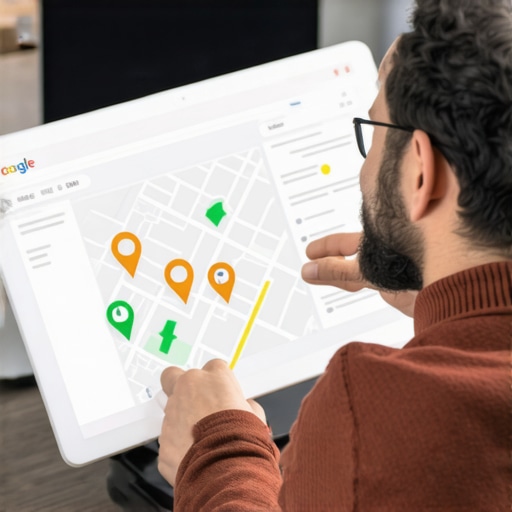
Google’s AI is incredibly good at reading the background of your photos. I once worked with a roofing contractor who was struggling to show up in a neighboring town only ten miles away. He was posting great photos of finished roofs, but they were all tight shots of shingles against a blue sky. There was zero local context. We changed one thing: we started including the street signs or recognizable local landmarks in the background of his ‘job site’ photos. Within three weeks, his profile started appearing for searches in those specific neighborhoods because we provided the specific photo metadata and visual cues that Google needs to verify location relevance. It is like leaving a trail of digital breadcrumbs that lead straight back to your front door.
Post with Purpose Instead of Just Posting for Attendance
Showing up is only half the battle; the other half is being useful. If you are just posting ‘Happy Friday!’ every week, you are wasting your breath. Every post should target a specific customer pain point. When you address a problem—like ‘how to fix a leaky faucet in 30 minutes’—you generate the interaction data that signals to Google you are a high-quality result. If users click your ‘Call Now’ button or ‘Learn More’ link, that engagement acts as a vote of confidence for your local maps domination. Stop talking at your customers and start solving their problems right there in the feed.
Correct the Keywords That Are Leading People to the Wrong Place
One of the biggest silent killers of your rank is when your business starts showing up for terms that don’t convert. You might think more traffic is better, but if you are a high-end steakhouse ranking for ‘cheap burgers,’ your bounce rate will skyrocket, and your map rank will plummet. You need to audit your search terms to ensure you aren’t ranking for the wrong local keywords. I remember a boutique gym that was accidentally ranking for ‘free public parks’ because they kept posting about их outdoor workouts in a nearby park. We had to pivot their content to focus on ‘private personal training’ to reclaim their rightful spot at the top of the map pack.
Force a Faster Indexing Cycle
Google doesn’t always crawl your profile immediately. If you’ve just made a major update or posted a limited-time offer, you want that live yesterday. You can actually trigger a faster update by linking your latest GMB post directly from your website’s high-traffic pages. This creates a bridge for the Googlebot to follow. Knowing how to force Google to re-index your map location faster gives you a tactical edge over competitors who are sitting around waiting for the search engine to ‘get around’ to seeing their changes. It’s about being proactive rather than reactive in your map pack domination secrets application.
Let’s dig deeper into a hard truth most ‘gurus’ won’t tell you: sometimes, having the most reviews is exactly what makes you look suspicious to the algorithm. I have seen businesses with 500 reviews get buried by a newcomer with 40. This happens because the newcomer likely has better interaction data and higher review velocity—the speed at which new feedback comes in. If your 5-star rating is a year old, it’s stale bread to Google. You might be suffering from the invisible profile why you’re not showing up even with 5 star reviews because your engagement has flatlined. It is not just about the count; it is about the current pulse of your business.
Why Does a Competitor Three Miles Away Beat You Locally?
Everyone says proximity is king, but in my experience, relevance and search intent can actually override the physical distance between you and the searcher. According to the annual Moz Local Search Ranking Factors study, while proximity remains a top signal, behavioral factors like click-through rates and mobile ‘Call’ button clicks are gaining massive ground. If a searcher in your neighborhood looks for ’emergency plumber,’ Google will prioritize the person who answers the phone fast, even if they are slightly further away. You need to understand how search intent changes your business visibility on maps if you want to stay competitive. It is about being the most likely ‘click’ for that specific person at that specific moment.
Stop Falling for the Category Overload Trap
Here is a specific ‘oops’ factor I see constantly: business owners think that adding 10 secondary categories will help them show up for more searches. In reality, this often dilutes your primary signal. I once audited a clinic that was ranking for nothing because they had ‘Physiotherapist,’ ‘Yoga Studio,’ and ‘Massage Spa’ all checked off. Google’s AI couldn’t decide what their core business was, so it ranked them for none of the above. This is exactly why your business categories might be fighting each other. You are better off being the undisputed master of one category than a confused participant in five. This is the audit mistake that makes your map listing effectively invisible, and it is remarkably easy to fix once you stop trying to be everything to everyone.
You also need to look at the proximity truth why your office location isn’t the only reason you’re not ranking. If you have moved your office or updated your NAP (Name, Address, Phone) data without cleaning up old citations, you are creating a digital ghost that haunts your rankings. Have you ever fallen into this trap where you changed your phone number or address and suddenly saw your traffic drop? Or maybe you added too many categories thinking it would help? Let me know in the comments—I have diagnosed hundreds of these ‘sudden’ ranking drops and most of the time, the fix is simpler than you think.
Ultimately, mastering local maps domination requires you to look beyond the surface level ‘best practices.’ You have to watch why your competitor with fewer reviews is outranking you and study their behavior. Are they posting more? Are their photos more locally relevant? Use these nuances to build an innovative local mapping strategy that doesn’t just copy the competition but actually outperforms them by giving Google the high-quality data it craves.
Stop Flying Blind with Proper Grid Tracking
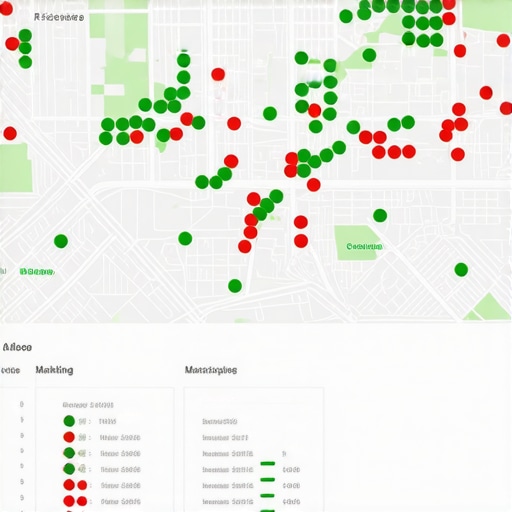
Once you’ve cleaned up your categories and optimized your posts, the biggest mistake you can make is assuming your rank is the same across the whole city. If you search for yourself while standing in your office, of course you look like a superstar. But three blocks away? You might be invisible. I personally use grid tracking tools like Local Falcon or BrightLocal because they show me exactly where my ‘influence’ drops off. This is the only way to audit your map rankings from a customers real location without physically driving around town. If I see a ‘red’ spot on the map just half a mile away, I know I need to double down on local content for that specific neighborhood. It turns guesswork into a surgical strike.
How do I maintain my map rank without spending five hours a day on it?
The secret isn’t more work; it’s better systems. I recommend a ‘Pulse Check’ every Tuesday morning. Check for new reviews, respond to them immediately, and look at your ‘Insights’ tab to see if your phone calls are trending up or down. If you’re feeling overwhelmed, this is usually why hiring a Google Business Profile consultant saves more money than DIY management—they have the high-end software to automate the boring stuff while you focus on the customers. I also rely on a handful of 5 free tools that actually generate leads from your Google Business Profile to keep the momentum going without ballooning the budget. Consistency beats intensity every single time in the local maps game.
The Future of Local Search is Visual and AI-Driven
Looking ahead, I predict that ‘Search Generative Experience’ (SGE) will soon prioritize businesses that have the most ‘conversational’ data in their profiles. According to Mike Blumenthal, a leading expert in the local search space, Google is increasingly looking at the ‘semantic’ relationship between what you say on your site and what people say in your reviews. This means that the hidden impact of review response speed on map ranking is going to become even more critical. Google’s AI wants to see that you are an active, responsive entity. By 2026, those 5 crucial tweaks for Google Maps SEO in 2026 that actually stick will likely revolve around how well your profile can answer a user’s question before they even click ‘call.’
Don’t Let Your Momentum Fade to Black
I’ve seen too many business owners reach the top of the map pack, get comfortable, and then vanish six months later because a competitor used the one move chiropractors use to leapfrog more popular local clinics against them. To stay on top, you have to treat your profile like a living garden. If you stop watering it, the weeds of competition will take over. My challenge for you today is simple: Go to your profile right now and find one review you haven’t responded to yet. Give it a thoughtful, keyword-rich reply that actually helps a future customer. That one small action tells Google you’re still in the game and ready to dominate.
The Reality Check Most Business Owners Miss
One of the most painful lessons I learned is that Google cares more about your interaction data than your ‘perfectly’ filled-out description. If customers do not click, you do not climb. Another breakthrough was realizing that syncing your website schema with your map profile is non-negotiable; it is the digital bridge that connects your two most important assets. I also discovered that the interaction data that proves you are a top local choice is not just about clicks—it is about the quality of the journey from search to sale. Finally, don’t ignore the ‘View More’ button; if you are there, you are losing money. You need to understand why your map listing is hidden behind the view more button before you can fix it. Authenticity beats automation every single time in the local maps game.
My Daily Toolkit for Staying Ahead
To stay competitive, you need more than just luck. I personally rely on 5 free tools that actually generate leads from your Google Business Profile to keep things running smoothly. When the technical side gets too heavy, I have found that why hiring a Google Business Profile consultant saves more money than DIY management is a truth many learn too late. I also suggest using grid tracking tools like Local Falcon to see exactly where your mastering local maps domination efforts are paying off and where they are falling short. These resources turn the ‘black box’ of local search into a clear, actionable roadmap for your business.
Your Future Starts on the Map
Do not let the technical jargon or constant algorithm shifts intimidate you. Every industry leader in your city started exactly where you are right now—staring at a dashboard and wondering why the phone was not ringing. The difference between those who dominate and those who disappear is simply the willingness to adapt. By implementing a solid innovative local mapping strategy, you are building a digital asset that works for you 24/7. It is time to take control of your local destiny and apply the map pack domination secrets that turn your business into a neighborhood landmark. Which part of your Google Business Profile do you find the most confusing to manage? Let me know in the comments below!
About the Author
Umar Latif
Brand & Marketing Expert · Dubai, UAE
Umar Latif is a seasoned Brand and Marketing Expert based in Dubai, UAE, with a specialized focus on Local SEO and international digital strategy. With extensive experience managing and optimizing websites for a diverse range of international clients, including those in the United States, Umar has developed a deep understanding of the nuances required to dominate local search results. His technical proficiency encompasses comprehensive keyword research and the implementation of advanced Google-centric strategies designed to enhance visibility and drive organic traffic. As a contributor to dominateyourlocalmaps.com, Umar leverages his background in global marketing to provide actionable insights for businesses looking to improve their local map rankings and digital footprint. His approach combines data-driven tactics with a strategic brand perspective, ensuring that local businesses not only rank higher but also resonate with their target audience. Throughout his career, Umar has remained dedicated to staying ahead of search engine algorithm changes to deliver consistent results for his clients. He is deeply passionate about empowering business owners and marketing professionals with the tools and knowledge they need to achieve sustainable growth.