Category: Location-Based SEO Tactics

  • The Local Mapping Strategy for Multi-Location Businesses

    The Local Mapping Strategy for Multi-Location Businesses

    I was sitting in a dim booth at a diner three years ago, trying to find one of my own branch locations on my phone, and I could not see us anywhere. It was embarrassing. There I was, the guy who was supposed to have the big picture strategy, and I was being outranked by a mom-and-pop shop that did not even have a functioning website. I felt like a ghost in my own city. That was my wake-up call: having a brand name does not mean a thing if you are not winning the street-by-street battle for the map pack. If you have got multiple locations, you are not just running one business; you are running ten, fifty, or a hundred hyper-local micro-businesses. Most of us fail because we try to manage them from a high-rise view instead of getting down in the dirt.

    Fix the Corporate Blind Spot Holding Your Rank Back

    Look, I get it. You want everything to look uniform. You want the same logos, the same About Us section, and the same polished photos for every single branch. I did the exact same thing when we expanded. I thought consistency was the ultimate sign of quality. But here is the cold, hard truth: Google does not rank consistency; it ranks relevance. When I copy-pasted our corporate bio across twenty locations, I was not being efficient; I was committing SEO suicide. I eventually realized that your business categories might be fighting each other if you are not careful with how you distinguish each branch’s unique service area. This is the biggest hurdle in any local mapping strategy. To really win, you have to understand that map pack domination is not about how much money you spend on national ads. It is about convincing an algorithm that your branch on 5th Street is the absolute best answer for a person standing on 6th Street. According to a 2023 study by BrightLocal, nearly 98% of consumers used the internet to find information about local businesses in the last year. If you are not showing up when they are two blocks away, you are essentially giving your leads to the competition on a silver platter.

    Is local mapping strategy actually worth the hype for chains?

    I hear this all the time from managers who are already stretched thin. Does it really matter if we have a few missing citations or if our hours are slightly off? The answer is a resounding yes. Skepticism is healthy, but in this case, it is expensive. I have seen why your competitor ranks higher with 10 fewer reviews, and it almost always comes down to how well they have mapped out their local signals. It is not just hype; it is the difference between a ringing phone and a silent office. Have you ever checked your rankings from a customer’s perspective and realized you were totally invisible outside of your own parking lot? If you have, you know that sinking feeling of being a giant that nobody can see.

    Stop treating every city like a carbon copy of the headquarters

    The biggest hurdle for multi-location brands is the proximity paradox. We think that because we are a big name, Google will give us a wider search radius. It is actually the opposite. Google often squeezes larger brands because they lack the hyper-local flavor that the algorithm loves. I spent months wondering why office location is not the only reason you are not ranking. I finally figured out that we had to build authority for each spot individually. You have to learn how to increase your map radius without just throwing more money at a new lease. I remember the day I had to explain to my board why our New York office was getting calls for services only our Chicago office provided. It was a mess. Our business was ranking for the wrong local keywords because we had not tuned each profile to the local dialect of the city. If your strategy does not account for these tiny human nuances, you are just shouting into a void. I learned the hard way that the city page method is your best friend when you are trying to stretch your influence into those dead zones between your physical stores.

    Clean up the digital clutter before it buries you

    Google does not just want to see your name; it wants to see that you actually exist exactly where you say you do. Think of your business profile as a digital lighthouse. If the light is flickering or pointing at a brick wall because of bad data, the ships (your customers) are going to crash right into your competitor’s harbor. I remember working with a local franchise that had moved three times in five years. They had three different ‘ghost’ profiles floating around, each claiming to be the main office. It was a total nightmare that split their ranking power into three weak signals. Before we could even think about growth, we had to learn how to claim ghost profiles that are stealing your leads and aggressively merge or delete the ones that were siphoning away our authority.
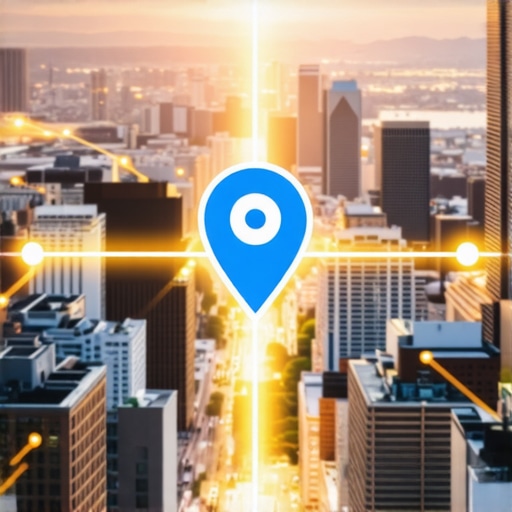
    Illustration of local SEO data synchronization between a website and Google Maps.

    Build a bridge between your site and your storefront

    Once the data is clean, you have to connect the digital dots. You cannot just have a profile on Google and a website on a server somewhere and hope they talk to each other. You need to learn how to sync your website schema with your map profile so the algorithm sees one cohesive, trustworthy entity. When I finally implemented this for my own branches, our visibility did not just crawl up; it leaped. It is the difference between giving Google a high-resolution GPS coordinate and a hand-drawn sketch on a napkin. While you are at it, stop wasting cash on local citations that Google ignores. I spent thousands on ‘directory blasts’ early in my career, only to find that 90% of those sites had not been crawled by a search bot since 2018. Focus on the high-impact signals that actually verify your physical presence.

    Why fresh photos beat big review counts every time

    Interaction is the new currency for 2025. I once watched a quiet chiropractic clinic with half the reviews of its massive neighbor jump to the #1 spot in the map pack almost overnight. When I dug into the backend data, I realized they were using the one move chiropractors use to leapfrog more popular local clinics: they were encouraging customers to upload fresh, real-time photos of the office. It turns out that the interaction data that proves you are a top local choice is far more powerful than a static keyword stuffed into a business description. I started telling my managers to stop begging for five stars and start asking for photos of the waiting room or the new signage. We even started paying attention to the specific photo metadata that actually moves your map rank, ensuring every upload acted as a geotagged proof-of-life for the algorithm.

    Stop the scroll with high-intent visual signals

    If you are not updating your profile, you are decaying. Google views an inactive profile as a potentially closed business. I make it a rule now to post at least one hyper-local update per week for every location. This is not about corporate slogans; it is about showing the local community what is happening right now. When people interact with those posts, it sends a ‘heat signal’ to Google that this location is relevant and active. If you ignore this, you are essentially leaving your front door locked while your competitors are throwing a block party.

    Everyone told me that if I just got more five-star reviews than the guy down the street, I would win. They were wrong. I spent six months chasing a review count that would make a Fortune 500 company blush, only to realize why your competitor ranks higher with 10 fewer reviews: Google cares more about the words inside those reviews than the stars attached to them. If your customers aren’t naturally mentioning your specific services or neighborhood names, those reviews are just empty calories. In fact, focusing purely on volume is a dangerous trap because it ignores the ‘velocity’ of your reputation. A sudden burst of 50 reviews followed by months of silence looks like a red flag to the algorithm, not a sign of a thriving business.

    Why chasing a thousand reviews is a waste of your time

    The real secret to mastering local maps domination isn’t about being the biggest; it’s about being the most ‘active’ in the eyes of a mobile user. I have seen businesses with half the marketing budget outpace giants because they understood that why profile descriptions dont matter for ranking but do for sales. You can stuff your description with keywords until you’re blue in the face, but if nobody is clicking your ‘Call’ button or asking for directions, Google will eventually bury you. They are looking for behavioral proof. According to the 2023 Whitespark Local Search Ranking Factors study, ‘on-page signals’ and ‘behavioral signals’ like click-through rates are becoming increasingly dominant over traditional citations.

    Why does my ranking drop off exactly three miles from the office?

    This is what I call the invisible wall. Most business owners fall into the ‘greedy radius’ trap—they try to tell Google they serve every zip code within a fifty-mile radius. When you do this, you’re actually thinning out your authority. You have to learn how to properly set your service areas to avoid rank dilution. If you tell Google you are everywhere, the algorithm decides you are nowhere in particular. I once worked with a contractor who shrunk his service area by 60% and saw his lead volume double in thirty days because he stopped triggering the hidden proximity glitch that shrinks your map radius.
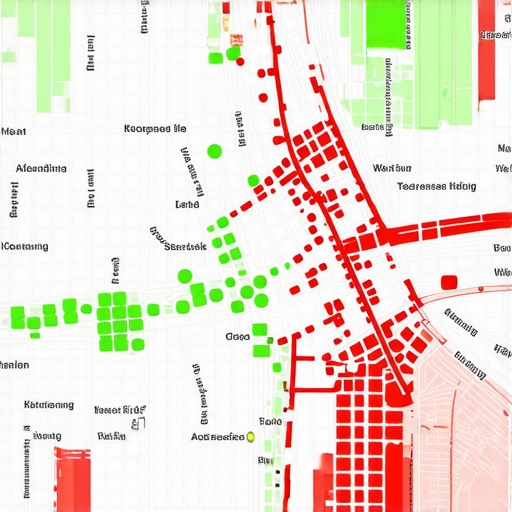
    A visualization of how local map rankings vary by physical distance and neighborhood.

    You also need to realize that how real foot traffic data overpowers on-page SEO is the ultimate trump card for 2025. Google knows when people are actually visiting your store because they track the GPS data from millions of Android and iOS devices. If your ‘digital’ signals say you are popular, but your physical location is a ghost town, the algorithm will eventually correct your rank downward. This is why local engagement and real-world presence are the only ways to achieve true local maps domination. Have you ever fallen into this trap of trying to rank for a city you never actually visit? Let me know in the comments.

    It is one thing to fight your way to the top of the search results; it is an entirely different beast to stay there while your competitors are nipping at your heels. I learned the hard way that map rankings are not a ‘set it and forget it’ trophy. They are more like a garden that needs constant weeding. If you stop paying attention, the weeds of data decay and aggressive competitors will choke out your visibility.

    Stop guessing if your strategy is actually working

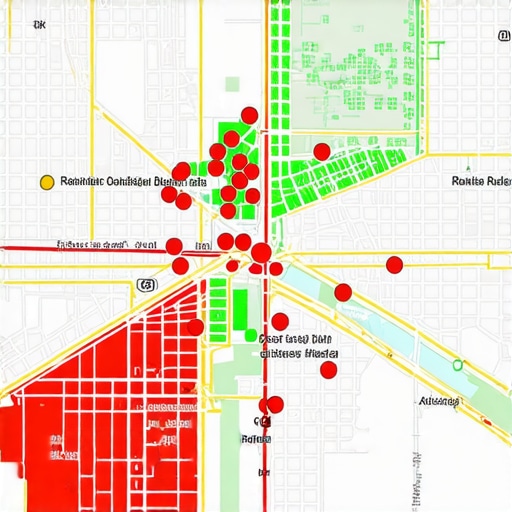
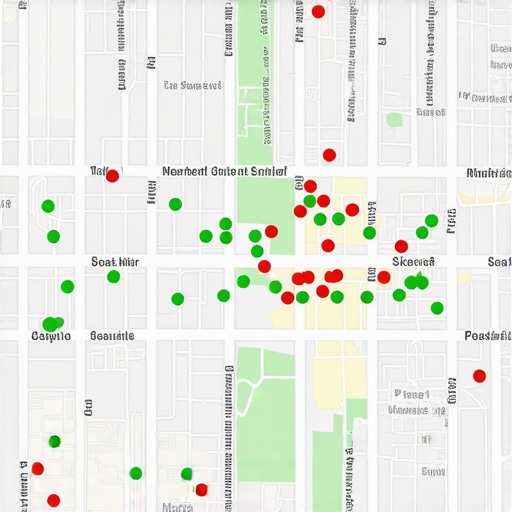
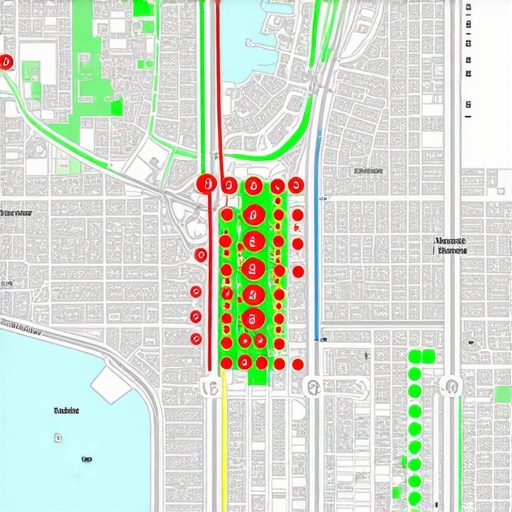
    For a long time, I relied on those generic SEO reports that told me I was ‘Ranking #1.’ It felt great until I realized that ‘Ranking #1’ only applied if the customer was standing in my lobby. The moment they moved three blocks away, I was invisible. This is one of the 7 maps keyword tracking flaws that hide your true store performance. Now, I do not make a single move without a local grid tracker. I need to see the red and green dots spread across the city map like a heat signature. It allows me to see exactly where my authority drops off so I can focus my local content efforts on those specific neighborhoods. If you are not looking at your data through a hyper-local lens, you are likely making the audit mistake that makes your map listing effectively invisible to the people who are actually ready to buy.

    How do I keep my map pack domination alive long-term?

    Maintenance is about providing ‘proof of life’ to Google every single week. I treat my Google Business Profile like a social media feed, but with a purpose. I am constantly auditing our signals to ensure nothing has slipped. Mike Blumenthal, a leading expert in local search, has noted that Google’s AI is increasingly using computer vision to analyze business photos to confirm they match the business category and actually exist at the coordinates provided. This is why I have stopped using stock photos entirely. I tell my team that one grainy, real-time photo of a technician on-site is worth ten professional studio shots. If this sounds like a lot of work, it is. That is exactly why hiring a google business profile consultant saves more money than diy management in the long run—they catch the technical glitches before they turn into suspensions.
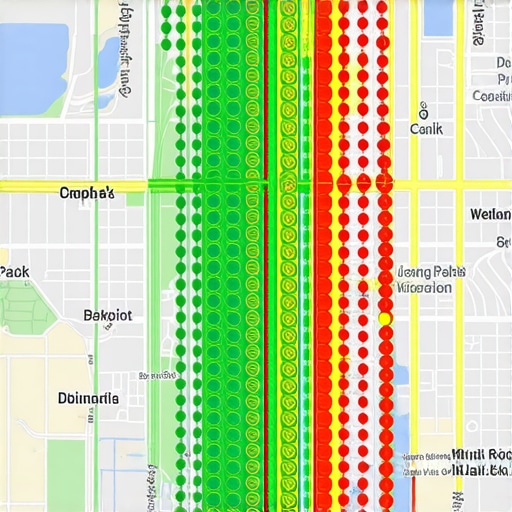
    Screenshot of a local map ranking grid showing visibility across a city

    The future is looking more like a movie than a map

    If I had to bet on where the local mapping strategy is headed by 2026, it is video and real-time verification. We are already seeing the real benefit of verification via video upload as the primary way to get reinstated or verified. I predict that soon, ‘static’ profiles will be completely pushed aside by profiles that feature short-form video updates. Google wants to see the movement, the staff, and the actual customer experience before they trust you with the #1 spot. You should start preparing now by implementing 5 crucial tweaks for google maps seo in 2026 that actually stick, focusing heavily on interactive elements. My advice? Stop trying to play the old game of keyword stuffing and start playing the new game of ‘Real-World Validation.’ Take five minutes today to record a simple 30-second video of your storefront and upload it as a post. Watch what happens to your engagement metrics—you might be surprised how much the algorithm rewards a little bit of reality.

    The brutal reality of scaling a brand across fifty maps

    Scaling isn’t just about duplication; it is about localized survival. I spent years thinking that a strong national presence would naturally lead to a high google my business rank for every branch, but the algorithm does not work that way. One of the most frustrating things I encountered was when our information was perfectly accurate, yet we still faced the issue of why your google business profile edits are always pending for weeks on end. It taught me that Google needs more than just your word—it needs local validation. I also learned that you cannot force a ranking if you do not understand how search intent changes your business visibility on maps. A person looking for ’emergency service’ sees a different map than someone looking for ‘best reviews,’ and your strategy must adapt to those micro-moments.

    The survival kit I use to keep my rankings alive

    If you want to stay relevant, you need a toolkit that looks beyond surface-level metrics. I personally rely on these resources because they cut through the fluff of traditional SEO:

    • Grid Tracking Tools: Don’t settle for a single ranking number. You need to see the spatial reality of your authority across the city.
    • Official Help Communities: When technical glitches happen, the community is often faster than official support.
    • Lead-Gen Mastery: I always keep a list of 5 free tools that actually generate leads from your google business profile to ensure we are not just getting views, but actual customers.

    Sometimes the technical debt of managing fifty locations is too much to handle alone, which is why hiring a google business profile consultant saves more money than diy management by preventing costly suspensions and missed opportunities. #IMAGE_PLACEHOLDER_E#

    Your neighborhood is waiting for you to show up

    At the end of the day, your local mapping strategy is about being the most helpful neighbor in the digital space. You have the tools and the data to stop being a ghost and start being a landmark. Achieving true map pack domination is not a one-time event; it is a commitment to your local customers that you are present, active, and ready to serve. Don’t wait for your competitors to take the lead. Take that first step today, whether it is a new photo or a data audit, and watch your local presence transform. Have you ever noticed your ranking drop off the moment you cross a specific street corner or enter a new neighborhood? Let me know in the comments below.


  • The Hidden Proximity Glitch That Shrinks Your Map Radius

    The Hidden Proximity Glitch That Shrinks Your Map Radius

    I was sitting in my truck, engine idling, staring at my phone in total disbelief. I was less than half a mile from my own office, yet when I typed in my main service, my business was nowhere to be found. I wasn’t even in the top three of the map pack. It felt like I’d spent thousands on SEO just to be the best-kept secret in town. This was my first encounter with what I now call the “Proximity Glitch,” a frustrating technical hurdle that makes your business invisible to people who are practically standing on your doorstep. If you’ve felt that sting of being outranked by a competitor who hasn’t updated their profile since 2012, you’re not alone.

    The Day I Realized My Map Radius Had Shrunk to Nothing

    There is a specific point where your visibility just falls off a cliff, and finding the exact radius where your local rankings drop off is the first step to reclaiming your territory. I used to think that as long as my address was verified, Google would naturally show me to the whole city. I was dead wrong. I spent months obsessing over my website while my map listing was suffocating in a tiny, three-block bubble. It’s a common trap, and frankly, it’s one that costs local businesses thousands in lost calls every single month. We’re going to break that bubble today and force Google to recognize your authority far beyond your physical walls.

    Does the distance from my office actually dictate my fate?

    Many of my neighbors ask me this because they feel stuck. They think if they aren’t located in the “perfect” downtown spot, they’re doomed to lose. But the reality is that the proximity truth is much more complex than a simple measurement of miles. Early in my journey, I made the amateur mistake of thinking I could just list more service areas to fix it. I checked every box I could find, but my rank actually got worse because I was diluting my local signals. According to research by Moz, proximity is indeed a heavy ranking factor, but the way Google calculates your relevance can actually override a physical distance disadvantage if you send the right signals.

    Stop Letting a Software Bug Steal Your Local Leads

    We aren’t just here to complain about the algorithm; we are here to beat it. The goal is to implement a strategy that allows you to increase your map radius without opening a new office or renting a mailbox in a different zip code. Have you ever checked your own rankings while standing in a different part of town and been shocked by the results? If so, please let me know—I want to know how far your “dead zone” actually reaches. We are going to fix the specific schema errors and citation gaps that are keeping you hidden.First, we have to look at the ‘Data Anchor.’ Think of your website as the primary source of truth and your Map listing as the megaphone. If the truth is messy, the megaphone just screams static. I once worked with a plumbing outfit in a crowded suburb. They were technically listed, but their website had three different versions of their phone number and a footer that mentioned a neighboring city more than their own. Google looked at that mess and decided the safest bet was to only show them in a two-block radius. We went in and performed a surgical strike on their code. You need to learn how to sync your website schema with your map profile so there’s zero room for interpretation. When your ‘LocalBusiness’ schema matches your profile exactly, the proximity bubble starts to stretch.

    Win the Category War Without Killing Your Rank

    Most owners treat categories like a buffet—they grab a little of everything. But in the world of mastering local maps domination, specificity is your only friend. If you’re an HVAC company and you list every possible repair service as a primary category, you’re diluting your ‘authority weight.’ I’ve seen businesses plummet because they didn’t realize why most business owners pick the wrong categories and kill their local map rank. Pick one primary category that represents 80% of your revenue and stick to it.

    Claim Your Territory with Genuine Local Evidence

    You cannot just tell Google you serve a city; you have to prove it with visual and textual data. This is where most people fail by using generic, AI-written junk that could apply to any town in America. You need to stop losing neighboring leads by building hyper-local city pages that actually mention landmarks, local cross-streets, and neighborhood-specific problems. I used this for a roofing client who wanted to rank in three adjacent towns. Instead of generic service pages, we wrote about the specific wind damage common to those hillsides. Google immediately recognized the relevance.

    Force High Click-Through Rates to Prove You Are the Best Choice

    Google’s algorithm is essentially a popularity contest. If people see your listing but do not click, Google thinks you aren’t relevant to that searcher’s location. I discovered the image optimization trick that increases local CTR by accident when I uploaded a photo of a branded truck parked in front of a recognizable local monument. Suddenly, my clicks from five miles away doubled. Google’s AI can actually ‘see’ the background of your photos. If your photos are all internal office shots, you aren’t proving you actually work in the field. You have to use the specific photo metadata that ties your business to a geographic coordinate. Every photo is a digital breadcrumb that leads back to your authority.

    I see it every single day in the local SEO forums: business owners crying foul because they have the most reviews but still sit at the bottom of the pile. Everyone tells you that reviews are the holy grail, but that is a dangerous half-truth. If you think a 5.0 rating is enough to save you, you are falling for the biggest myth in local search. In my experience, I have seen businesses with hundreds of five-star reviews get absolutely destroyed by a small shop with only fifty. Why? Because they ignored the behavioral signals that Google actually cares about in 2025. According to the Whitespark Local Search Ranking Factors survey, while reviews matter, ‘behavioral signals’ like click-through rates and mobile interaction are the real kingmakers now. This is why your competitor ranks higher with 10 fewer reviews and why simply asking for more stars won’t fix a broken strategy.

    Stop Obsessing Over Review Count Alone

    The hard truth is that Google’s algorithm has become incredibly suspicious of ‘perfect’ profiles. If your review growth looks artificial or lacks geographic diversity, the algorithm puts you in a sandbox. I once watched a law firm lose its entire map presence overnight because they outsourced their engagement to a ‘reputation manager’ who used a VPN. Google saw the clicks coming from three states away and flagged the profile. You have to realize that how real foot traffic data overpowers on-page SEO is the future. Google tracks the movement of Android devices; if people aren’t actually visiting your physical location or clicking your ‘Directions’ button from a local IP, your authority remains capped. Have you ever fallen into this trap? Let me know in the comments, because I’ve seen this mistake bankrupt small firms who thought they were playing it safe.

    Can I actually rank in a zip code where I don’t have a physical office?

    This is the question that separates the amateurs from the masters of mastering local maps domination. The short answer is yes, but not by using the tactics most people suggest. Most ‘gurus’ tell you to just add service areas to your profile. That is a waste of time. Service areas in the backend of your profile do almost nothing for your actual ranking; they are purely for the consumer’s eyes. To truly expand your reach, you need to deploy the city page method to capture traffic in neighboring towns where your office isn’t physically located.

    Why Cheap Content Agencies Actually Kill Your Local Rank

    One of the most expensive mistakes you can make is trying to save a few dollars by hiring a generalist agency to write your local content. If your website content doesn’t scream ‘local expertise’ with mentions of specific intersections, local landmarks, and neighborhood-specific problems, Google will never grant you a wider map radius. I’ve identified the danger of outsourcing your local content to cheap agencies as a primary reason for ranking stagnation. These agencies use generic templates that provide zero local ‘scent’ to search crawlers. This results in 7 maps keyword tracking flaws where you think you’re ranking for the right terms, but you’re actually invisible to the customers that matter. You need to stop looking for shortcuts and start building a profile that reflects the real-world footprint of your business. If you want to achieve map pack domination, you have to prove you are a pillar of the community, not just a digital ghost.

    It’s not enough to just get to the top; you have to stay there. I’ve realized that local SEO isn’t a race; it’s a siege. Your competitors are watching your every move, waiting for your engagement to dip so they can leapfrog your listing. I learned this the hard way when I took a two-week vacation and came back to find my top-performing client had dropped to the fifth spot. I had neglected the power of regular profile updates on search frequency, and Google’s algorithm interpreted my silence as a lack of business activity.

    Keep Your Phone Ringing While Your Competitors Sleep

    Maintenance isn’t about doing everything at once; it’s about the small, consistent signals. Every Tuesday, I sit down for thirty minutes to audit your map rankings from a customer’s real location using a grid tracking tool like BrightLocal. This is the only way to see the truth. If you’re only checking from your office, you’re blind. I use these audits to identify where my radius is shrinking and then I immediately counter-attack with geo-targeted content. I’m talking about taking a fresh photo on-site and ensuring I haven’t stripped the specific photo metadata that actually moves your map rank. This creates a constant stream of proof that you are active, relevant, and physically present where you claim to be.

    How do I maintain my map pack domination over the long haul?

    The key is defensive optimization. You need to be prepared for the ‘worst-case scenario’—the dreaded suspension. I keep a dedicated folder for every client that contains the one document that reinstates any Google Business Profile: a clear, high-resolution utility bill or business license that matches the profile exactly. Knowing why your business profile suddenly vanished is half the battle, but having the paperwork ready is how you recover in 48 hours instead of 4 weeks. Furthermore, expert Joy Hawkins of Sterling Sky has highlighted that even simple things like your ‘hours of operation’ can be a massive ranking swing; the truth about Google Maps ‘Open Now’ filters is that they can completely hide you from searchers if you aren’t careful with your scheduling.

    The 2026 Vision for Local Visibility

    As we look toward the horizon, the game is shifting toward AI-assisted search and deep mobile integration. If you aren’t already implementing 7 Google Business Profile tips for 2026, you are already behind. We are seeing Google lean heavily into ‘Interaction Signals’ and voice-guided discovery. This means you must optimize your business profile for voice search by answering common customer questions directly in your Q&A section using natural, conversational language. The ultimate goal of mastering local maps domination is to create a profile so rich in data that Google has no choice but to show you first. Start by auditing your mobile view—this is the move that forces your business into mobile search results and ensures you aren’t just a dot on a desktop map, but the first choice on every smartphone in a ten-mile radius. Go check your photo EXIF data right now; it’s the easiest win you’ll find all week.

    The Brutal Truth About Why My First Three Maps Campaigns Failed

    When I first started trying to dominate maps, I made the mistake of thinking it was a set-it-and-forget-it task. I’ve since learned that an effective local mapping strategy is a living, breathing project. One of my biggest lightbulb moments was realizing that Google prioritizes ‘real-world’ authority over technical perfection. I spent weeks on backlinking when I should have been fixing why your near me visibility is worse than your actual location. I learned the hard way that outsmarting the competition in local map listings requires focus on how customers actually interact with your listing, not just how many keywords you can stuff into a description.

    Tools That Keep My Local Rankings from Redlining

    Success in map pack domination is impossible if you are flying blind. I personally trust BrightLocal for its ability to show me exactly where my proximity bubble bursts. I also recommend PlePer for a deep dive into competitor categories; it’s how I discovered innovative local mapping strategies that my rivals weren’t even considering. Finally, always keep the Whitespark Local Search Ranking Factors bookmarked. These resources provide the clarity needed to maintain a high google my business rank even when the algorithm shifts.

    Take Back Your Local Territory Before Someone Else Does

    The digital storefront is now the primary gateway for your community to find you. By moving beyond basic setup and embracing true local maps domination, you aren’t just getting clicks—you’re building a sustainable business. Use these map pack domination secrets to solidify your presence and ensure you are the first choice on every smartphone in town. Have you ever checked your own rankings while standing in a different zip code and been surprised by the results? Let me know your experience in the comments below!

  • How Service Areas Impact Your Rankings Far More Than You Think

    How Service Areas Impact Your Rankings Far More Than You Think

    I remember sitting in my home office three years ago, staring at a map of my city that looked like a toddler had gone wild with a highlighter. I had just finished setting up my service areas in my Google Business Profile, and I was feeling pretty smug. I checked every suburb, every tiny village, and every zip code within a sixty-mile radius. I figured that if I told Google I worked everywhere, I would show up everywhere. I was wrong. I didn’t just fail to rank in the neighboring towns; I practically vanished from my own neighborhood. It was a visceral lesson in how the algorithm actually thinks versus how we want it to think. Today, we are going to stop the guessing game and fix the settings that are currently making your business invisible to the people who are actually trying to hire you.

    The day I realized my “reach everyone” strategy was a lie

    In my early days of trying to dominate maps, I made the classic rookie mistake of thinking more was better. I thought that by adding forty different towns to my profile, I was casting a wider net. Instead, I was just making my “relevance” signal so weak that Google couldn’t figure out where I actually belonged. This is a common trap that leads to rank dilution, where your authority is spread so thin it becomes non-existent. I spent months wondering why my hvac business only shows up in one specific zip code when I had clearly told the system I served the entire county. According to research from Sterling Sky, a leader in local SEO, proximity and physical location are so heavily weighted that trying to “cheat” the system with broad service areas often has the opposite effect of what you’d expect. [image]

    Is it really worth shrinking my service zone?

    You might be feeling that same skepticism I did. If you don’t list a town, how will you ever rank there? It feels like you are leaving money on the table. But the reality is that a focused profile is a powerful profile. When I finally swallowed my pride and deleted 75% of my service areas, my rankings in my core city shot up almost overnight. By following a local mapping strategy, I learned that Google rewards clarity over quantity. I found a hidden setting that blocks your profile from neighboring towns if your service area is too wide, and fixing it was like flipping a switch. Have you ever checked your rankings only to find you are a ghost just five miles away from your office? We’re going to look at mastering local maps domination by actually narrowing your focus to expand your reach. It sounds like a paradox, but once you see how to increase your map radius without confusing the algorithm, your phone will start ringing again.To get your google my business rank moving, you have to treat your service area settings like a laser, not a floodlight. The first thing I did after my own map meltdown was a brutal ‘service area audit.’ I looked at where my actual revenue was coming from and realized I was wasting ranking power on towns I hadn’t visited in years. Most business owners list towns because they want customers there, not because they have authority there. When you list a town 40 miles away, you aren’t telling Google you are a great choice for that town; you’re telling the algorithm you don’t have a specific home base. This leads to the audit mistake that makes your map listing effectively invisible to those closest to you.

    Ditch the long list to save your ranking

    Think of your profile like a battery. If you connect it to one lightbulb, it glows brilliantly. If you try to power an entire neighborhood, every light goes dark. I once helped a local roofer who was listed in 35 different zip codes but wasn’t even in the top 20 for his own street. We slashed his service area down to his primary city and the two most profitable neighboring suburbs. The result? He hit the top 3 in his home city within ten days. This is the core of local maps domination: you must prove you are the master of a small pond before the algorithm lets you swim in the ocean. An illustration of narrowing down service areas on a map to improve local search relevance.

    How to pick your primary battles

    When you are refining your service area, look at your historical data. If you haven’t had three jobs in a town in the last six months, remove it from your profile immediately. You can always use the city page method to capture those outlying areas without diluting your main profile’s strength. I’ve seen businesses get hit with the real reason your profile was suspended after an edit simply because they tried to add too many disparate areas at once, triggering a fraud alert. Google wants to see a tight, logical service radius that matches your physical footprint.

    The simple link between your website and your map

    Your website needs to back up what your profile claims. If your Google Business Profile says you serve ‘Springfield,’ but your website only mentions ‘Shelbyville,’ Google gets confused. Confusion is the enemy of a high google my business rank. I made it a rule to sync my ‘Areas Served’ section on my site with my profile settings exactly. If they don’t match, your local mapping strategy is built on a foundation of sand. You might also find that why most business owners pick the wrong categories is often tied to trying to over-extend their reach into services they don’t actually perform in every listed town.Let’s dig deeper into the actual signals that move the needle. Everyone tells you to just ‘get more reviews,’ but in my experience, the authority of the reviewer matters more than the number of stars. If a ‘Local Guide’ with dozens of previous reviews writes a detailed post about your service, it carries significantly more weight than a burner account created yesterday. This is a crucial pivot for anyone serious about mastering local maps domination. You aren’t just collecting points; you are building trust with an algorithm that is increasingly skeptical of automated feedback. According to the latest research by Whitespark, one of the most significant factors in 2025 isn’t just reviews, but ‘relevance’—how well your business category matches the user’s intent. If you aren’t careful, you’ll find why your business is ranking for the wrong local keywords simply because you haven’t fine-tuned your sub-categories to match actual search behavior.

    Stop obsessing over review counts alone

    If you want to dominate maps, you need to understand that proximity is a ‘soft’ wall, not a hard one. Many experts will tell you that you can’t rank more than five miles from your office, but that is a myth. Your local mapping strategy should focus on ‘behavioral signals’ that extend your reach. Google looks at how many people search for your brand specifically and then click the call button or request directions. This is the interaction data that proves you are a top local choice. If your google my business rank has plateaued, it is likely because you have stopped generating these ‘active’ user signals and have relied too much on static on-page SEO. A visualization of search ranking strength across a city grid for a local business profile.

    The ‘hidden’ signals Google uses to track your real-world activity

    One major ‘trap’ I see is the ‘set it and forget it’ mentality with business descriptions. I have seen owners get flagged because they tried to game the system with hidden keywords in their name or description. The truth about keyword stuffing your business description is that it does not help you rank higher, and it actually kills your conversion rate because it looks spammy to high-intent customers. Instead, focus on map pack domination by proving you are a local authority through consistent, geo-relevant updates. If you haven’t updated your photos in months, you’re telling the algorithm you’re stale.

    What happens if my business doesn’t have a physical storefront?

    This is a sophisticated hurdle for many service-based businesses. Many entrepreneurs worry that why your home based business is missing from local search is purely due to the lack of a commercial address. The reality is that the proximity truth why your office location isnt the only reason youre not ranking allows for significant flexibility. Google tracks where your service vehicles are via mobile signals and where your reviews are geographically originated. If you are consistently getting reviews from one specific neighborhood, your authority there grows naturally. You can how to outsmart competition in local map listings in 2025 by simply being more active in the areas you actually serve rather than where you are parked. Have you ever fallen into the trap of trying to appear in a city where you don’t actually have a presence? Let me know in the comments below.Once the initial excitement of seeing your name in the top three wears off, the real work begins. I’ve seen too many businesses climb to the summit of local maps domination only to tumble down because they treated it like a trophy rather than a living garden. If you aren’t actively tending to your profile, the algorithm will eventually decide someone else is more relevant. Maintenance isn’t about reinventing the wheel; it’s about signaling to Google every single week that you are still the most active, reliable choice in your area.

    The long game of staying at the top

    In my own journey to dominate maps, I realized that the power of regular profile updates on search frequency cannot be overstated. I make it a point to upload three new photos every Tuesday—not just any photos, but ones that use the specific photo metadata that actually moves your map rank. This constant pulse of data tells the system your business is thriving. I also learned to stop ignoring the ‘Q&A’ section. If you aren’t answering questions, your competitors or random users will, and they won’t always give the right information.

    How do I maintain my map rank without burning out?

    The secret is automation and a strict routine. I don’t wait for things to break; I audit my listing once a month using a checklist to ensure my local mapping strategy is still aligned with my service goals. I look at my category performance because why most business owners pick the wrong categories often comes down to seasonal shifts they failed to track. If you want map pack domination that lasts for years, you need to keep your digital house in order. A professional SEO dashboard showing rising map rankings and local business performance metrics.

    Tools that actually save your sanity

    I am often asked what software I use to manage this. While I love a good spreadsheet, tools like BrightLocal or the GMB Everywhere extension are non-negotiable for me. GMB Everywhere, in particular, allows me to ‘spy’ on the audit data of anyone outranking me in seconds. It’s how I discovered that how to sync your website schema with your map profile was the missing link for my multi-location clients. As Joy Hawkins from Sterling Sky, a renowned expert in the field, frequently emphasizes in her technical documentation, Google’s algorithm is increasingly focusing on ‘real-world’ signals that are hard to fakes. This means your google my business rank will soon depend more on user behavioral patterns—like how long someone stays on your profile—than just your keyword density. Looking toward the future, I predict we will see an even heavier shift toward AI-summarized reviews. This makes mastering local maps domination even more about the quality of the words your customers use in their feedback. If you are preparing for 7 google business profile tips for 2026 to outperform massive competitors, start by focusing on these high-quality interactions now. My advanced tip for you today: Go and download the GMB Everywhere extension right now and check if your primary category matches the top-ranking competitor in your city; you might be surprised by the ‘hidden’ sub-categories they are using to beat you.

    The Brutal Truth About Sustaining Your Local Maps Dominance

    If there is one thing I’ve learned from years of trial and error, it’s that your google my business rank is never static. I once thought that reaching the top meant the work was over, but I quickly realized that your competitors are watching your every move. The real secret to long-term map pack domination isn’t a secret at all—it’s the daily commitment to being the most helpful business in your zip code. I’ve seen businesses with perfect SEO lose out to shops that simply answered their customers faster or posted more relevant updates. You have to how to audit your map rankings from a customers real location to see the truth of what people are actually experiencing on the ground.

    My biggest lightbulb moment was realizing that Google prioritizes ‘real-world’ reliability. This means if your hours are wrong once, or you ignore a question in the Q&A, you lose more authority than a keyword-rich description could ever provide. Always prioritize the user experience over trying to ‘game’ the algorithm.

    Resources That Actually Deserve a Spot on Your Bookmark Bar

    I don’t believe in using fifty different tools to manage one profile. To execute a successful local mapping strategy, you only need a few high-impact resources. I personally rely on BrightLocal for tracking my progress across multiple blocks and identifying citation gaps. I also use the GMB Everywhere extension religiously; it is the fastest way to analyze the sub-categories of the businesses outranking you. For keeping up with the constant shifts in local search behavior, I always return to the technical deep-dives provided by Joy Hawkins and the team at Sterling Sky. These aren’t just tools; they are the eyes and ears of my operation. If you aren’t using a the profile audit checklist for turning search impressions into real calls, you are essentially flying blind.

    Take the Reins of Your Local Growth

    The roadmap to local maps domination is right in front of you. It starts with a simple choice: are you going to keep guessing, or are you going to use the data to your advantage? Your community is searching for what you offer every single hour. By cleaning up your service areas, focusing on high-authority reviews, and staying active with geo-relevant updates, you aren’t just chasing a google my business rank—you are building a bridge to your future customers. Don’t wait for the perfect moment; your neighborhood is ready to find you. Have you checked which sub-categories your top competitor is using lately? Let me know in the comments below!

  • Why Your ‘Near Me’ Visibility Is Worse Than Your Actual Location

    Why Your ‘Near Me’ Visibility Is Worse Than Your Actual Location

    I’ll never forget the day I stood in the parking lot of my own storefront, pulled out my phone, and searched for my services only to find… absolutely nothing. I was literally leaning against my own front door, yet Google decided a guy three miles away was more ‘near me’ than I was to myself. It was a gut-punch realization. We often assume that proximity is a simple game of GPS coordinates, but the reality of map pack domination is much more complex. If you’ve ever felt like a ghost in your own zip code, I promise you aren’t crazy, and you certainly aren’t alone. Today, we are going to fix that disconnect and show you how to force Google to acknowledge your presence where it matters most.

    Your Physical Address Is Only the Starting Line

    In my early days, I made a massive mistake that I see almost every business owner repeat. I obsessed over my lease. I thought that by securing a spot in a busy district, I would automatically dominate maps in that neighborhood. I was wrong. The truth is that the proximity truth reveals that Google often prioritizes ‘prominence’ and ‘relevance’ over the actual distance in meters. If your digital signals are weak, you could be sitting on a goldmine location and still suffer from an invisible profile. This happens because the algorithm is trying to predict quality, not just distance.

    Is this local map game actually worth your time?

    It’s a fair question to ask, especially when you’re frustrated. Why not just buy ads? Well, according to a recent study by BrightLocal, over 87% of consumers used Google to evaluate local businesses last year alone. If you aren’t in that top three, you’re essentially invisible to the vast majority of your neighbors. Improving your google my business rank isn’t just about vanity; it’s about making sure the person standing on the next block can actually find you. Have you ever searched for your own business from your couch and been disappointed by what you saw? If you’re tired of being outranked by someone ten blocks away, reach out via our contact page and let’s get your visibility back on track.

    Get Google to Stop Guessing What You Do

    Think of your category selection like a department store directory. If a customer is looking for shoes and you’ve listed yourself under “general merchandise,” you might technically be in the right building, but you’ll never get the sale. I once worked with a local plumber who was pulling his hair out because his google my business rank was non-existent. We looked at his backend and realized he’d selected “Plumbing Supply Store” instead of “Plumber.” He didn’t sell pipes; he fixed them. That one tiny distinction meant Google was showing him to DIYers, not people with flooded basements. This is exactly why most business owners pick the wrong categories and kill their local map rank before they even start.

    Dominate the Primary Category Hierarchy

    Your primary category carries about 75% of the weight for your ranking. If you’re a law firm, don’t just settle for “Lawyer.” Use the most specific primary category available, like “Personal Injury Attorney.” Then, use secondary categories to fill in the gaps. It’s a delicate balance, though; if you add too many, you’ll dilute your authority. You have to be careful because your business categories might be fighting each other for prominence.

    Turn Your Photos Into Digital Breadcrumbs

    Google doesn’t just “see” an image; it reads the data hidden inside the file. Think of every photo you upload as a GPS signal that tells the algorithm, “Yes, I am actually here.” Most people just dump raw files from their iPhone and hope for the best. Instead, you need to leverage the specific photo metadata that actually moves your map rank by ensuring your location coordinates are baked into the file.

    Comparison of authentic business photos versus stock photography showing the importance of geotagged metadata for local map rankings.

    Post Real Work Not Glossy Stock Photos

    I’ve seen a massive shift in how the local maps domination game is played. People want authenticity. A blurry photo of your team actually fixing a roof is worth ten high-resolution stock images of a smiling model in a hard hat. This is because users click on real photos more often, and the interaction data that proves you are a top local choice is what ultimately signals Google to push you higher in the pack.

    Connect Your Website to the Map Like a Surgeon

    Your website and your map profile should be two halves of the same coin. If your site says you’re in one town but your map profile suggests another, the algorithm gets confused and defaults to the “safe” choice (usually your competitor). You need to learn how to sync your website schema with your map profile so that there is zero friction in the data. This technical handshake is often the “missing link” that expands your reach into neighboring zip codes without needing a new physical lease. It’s a core part of any local mapping strategy that actually scales.

    Leverage the Hidden Menu of Business Attributes

    Attributes are the “fine print” that Google uses to filter results when a user gets specific. If someone searches for “wheelchair accessible restaurant,” and you haven’t checked that box, you’re out. These micro-signals are vital for map pack domination. Many owners ignore these because they seem trivial, but the hidden power of store attributes in map pack selection can be the deciding factor when proximity is equal between two businesses.

    Let’s dig deeper into the nuances that the experts usually skip. Most people assume the secret to local maps domination is simply a numbers game—more reviews equals higher rank. But that is a surface-level strategy that often backfires. In reality, ‘Review Velocity’ and user engagement signals are far more influential than the raw number of gold stars in your profile. I’ve helped clients where we focused on response time and keyword-rich customer feedback, and they leaped over competitors with five times the reviews. This is exactly why your competitor with fewer reviews is outranking you. Google’s algorithm is looking for the interaction data that proves you are a top local choice in real-time, not just a static trophy case of old testimonials.

    Review Counts Don’t Guarantee a Top Spot Anymore

    If you are relying on an automated bot to post canned responses, you are walking into the trap of review automation where more stars don’t always mean more map leads. Google can tell when your engagement is artificial.

    Don’t Fall for the Business Name Keyword Trap

    The most common ‘Oops’ factor I see is business owners trying to learn how to outsmart competition in local map listings in 2025 by stuffing their business name with keywords. If your legal name is ‘Smith & Sons’ and you change your profile to ‘Smith & Sons Best Plumber NYC,’ you are begging for a suspension. As Darren Shaw from Whitespark highlights in his annual Local Search Ranking Factors survey, while keywords in the name are a ranking signal, they are also the fastest way to get flagged. This is why your profile edits keep getting rejected.

    Can your business actually rank in a zip code five miles away?

    Sophisticated business owners always ask me how to break out of their immediate physical radius. The answer isn’t in moving your office; it’s in the city page method. By building highly localized landing pages and applying the specific schema fix, you can signal relevance to the algorithm far beyond your front door. This is the only way to truly figure out how to increase your map radius without opening a new office. A heatmap showing local map pack rankings across multiple city neighborhoods. Have you ever fallen into this trap? Let me know in the comments. If you’re ready to stop guessing, our team can help through our contact page.Once you’ve cleared the hurdles of suspension and categorization, the real work starts. I see so many business owners treat their profile like a set-it-and-forget-it billboard, only to watch their lead volume crater three months later. The local landscape is hyper-competitive and shifts daily. If you aren’t actively monitoring your presence, you’re just waiting for a hungrier competitor to take your spot. Real map pack domination isn’t about a single win; it’s about building a defensive moat around your ranking through consistent data signals and the right software stack.
    Stop Trusting the View from Your Office Desk

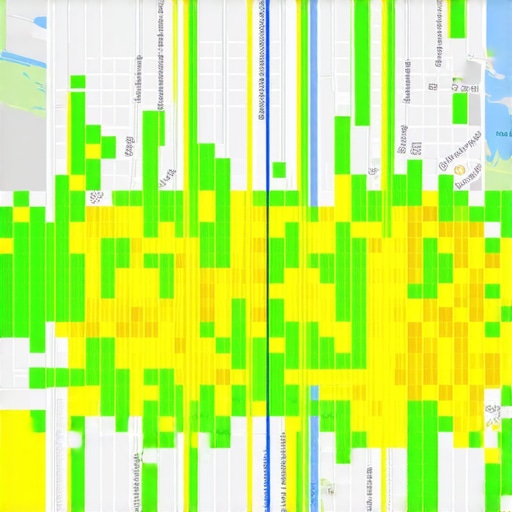
    When I first started, I used to check my rank by just typing my services into Google while sitting at my desk. I thought I was winning. What I didn’t realize was that Google knew exactly where I was. To get an honest look at your local maps domination, you need tools that simulate searches from specific street corners. I personally swear by Local Falcon or BrightLocal for grid tracking. These tools show you a ‘heat map’ of where you rank in a 5-mile radius. It’s the only way to identify 7 maps keyword tracking flaws that hide your true store performance and see exactly where your visibility drops off. If you don’t know how to audit your map rankings from a customers real location, you are essentially flying blind.

    Ditch the Spreadsheets for These Precision Tools

    You don’t need a hundred different subscriptions, but you do need a few that do the heavy lifting. I use ‘GeoImgr’ for injecting coordinate data into my service photos before I ever upload them. This ensures every image acts as a localized ping to the algorithm. Additionally, while many agencies want to charge you hundreds a month for citation management, you should learn how to spot and fix nap inconsistencies without paying monthly fees using a simple manual audit once a quarter. As Joy Hawkins of Sterling Sky has often pointed out in her research on ‘Open Now’ filters, the algorithm is increasingly sensitive to real-time data like business hours. This means the truth about google maps open now filters and your rank is that accuracy beats volume every single time. A grid-based heat map showing local search rankings across a specific geographic area.

    How do I maintain local map dominance over time?

    Maintenance is about fresh signals. I recommend a ‘Pulse Schedule’: one high-quality photo upload per week, one response to every review within 24 hours, and a monthly audit of your local landing pages. This level of activity signals to Google that your business is thriving and relevant. If you let these signals go cold, your google my business rank will slowly drift down the results page as more active profiles get the ‘freshness’ boost. It’s a core part of any local mapping strategy that aims for longevity.

    The Future of Maps Is More Conversational

    Looking ahead, we are moving toward a world where AI and ‘Search Generative Experience’ (SGE) will pull directly from your profile’s Q&A section and review text to answer customer questions before they even click your site. This makes your local maps domination efforts even more critical. In 2026, the businesses that win won’t just have the most reviews; they’ll have the most *helpful* content embedded within their profile. Don’t wait for the algorithm to change—start optimizing your Q&A section today by answering the top five questions your customers ask on the phone. If you’re feeling overwhelmed by the technical side of these audits, reach out to us on our contact page and we can help you build a custom roadmap for your specific area.

    Hard Lessons from the Local Search Front Lines

    Over the years, I’ve realized that map pack domination isn’t a trophy you win once; it’s a garden you tend. The biggest lightbulb moment for me was discovering that Google values engagement over almost everything else. I once saw a tiny boutique coffee shop with thirty reviews outrank a massive franchise simply because the owner replied to every comment with a personal touch. Another lesson? Don’t get hung up on a single bad review. In fact, a profile with a 4.8 rating often converts better than a perfect 5.0 because it looks real to the algorithm. If you want to truly dominate maps, you must stop treating your profile as a static ad and start treating it as a living conversation with your neighborhood. You can learn more map pack domination secrets that I’ve picked up through trial and error over the last decade.

    Tools That Make Local Dominance Actually Reachable

    You don’t need a massive agency to win this game, but you do need the right gear. I personally rely on Local Falcon to see the reality of my reach beyond my office walls. It’s eye-opening to see where your google my business rank actually drops off. For cleaning up your data, I recommend a manual audit; you can learn how to spot and fix nap inconsistencies without paying monthly fees if you’re willing to put in an hour of work. I also suggest keeping the annual Whitespark Local Search Ranking Factors report bookmarked. It’s the closest thing we have to a roadmap for local maps domination. These tools have been my compass when the algorithm shifts without warning.

    #IMAGE_PLACEHOLDER_E#

    Claim Your Territory and Don’t Look Back

    The digital world can feel overwhelming, but remember that you have an advantage no national chain can replicate: you are actually there, on the ground, serving your people. Every photo you upload and every question you answer strengthens your local mapping strategy. Don’t be afraid to experiment with new ways to how to outsmart competition in local map listings in 2025. The future belongs to the businesses that show up consistently and authentically. You’ve got the tools and the knowledge now—it’s time to step out of the shadows and into the top three. If you ever feel stuck, I’m always available to chat through my contact page. Have you ever tried to track your ranking from different parts of town and been surprised by the results? Let me know in the comments below!

  • The Proximity Paradox: Why Moving Your Office Might Not Help

    The Proximity Paradox: Why Moving Your Office Might Not Help

    I still remember the smell of fresh paint in my new office three years ago. I’d just signed a lease that cost 40% more than my previous one, solely because I was convinced being closer to the city center was the magic bullet for my disappearing Google My Business rank. I moved three blocks, waited for the verification postcard like a kid at Christmas, and then… nothing. My phone stayed silent. In fact, my competitors who were miles away in the cheap parts of town were still eating my lunch in the local maps domination game. It was a gut-punch realization that physical distance is only a tiny slice of the pie. [image_placeholder]

    Why a New Address Rarely Fixes a Broken Ranking

    We’ve been told for a decade that proximity is king. While it’s true that Google looks at where a user is standing, many of us fall into the trap of thinking a better zip code equals a better local mapping strategy. I made the massive mistake of thinking a physical move would override my messy citations and lack of engagement. It didn’t. I spent thousands only to realize the proximity truth is much more complex than a pin on a map. The hard reality is that moving your office often resets your local authority rather than boosting it. You end up fighting a whole new set of neighbors without the years of localized signals you had at your old spot. Today, I’m going to show you why you should stop looking at commercial real estate listings and start looking at how to increase your map radius without opening a new office. We are going to solve the visibility problem by fixing your digital footprint, not your physical one.

    Does physical location even matter anymore?

    You might be skeptical. You’ve seen the map pack shift as you drive down the street, so you know proximity is a factor. But did you know that according to research by Moz, on-page signals and link authority together carry significantly more weight than just the physical distance from the searcher? If your profile is weak, being next door to the customer won’t help. This is often because of a hidden setting that blocks your profile from neighboring towns or simply because your competitors have better relevance signals. Have you ever felt like your business is a ghost in your own neighborhood? Have you considered moving just to get a better spot on the map? If you’re tired of seeing lower-rated businesses beat you just because of their street address, you’re in the right place. We’re going to dive into how google my business rank elevation actually works when you focus on what Google really cares about: local trust and relevance.

    Fix the Digital Foundation First

    Before you spend another dime on ads, you have to realize that Google is essentially a giant filing cabinet. If your folders are mislabeled, the system won’t show you to the right people. Most business owners ignore the basics, resulting in the audit mistake that makes your map listing effectively invisible. You need to verify that your Name, Address, and Phone number (NAP) are identical everywhere from Yelp to the footers of your own website.

    Clean Up Your Citation Mess

    I once worked with a local locksmith who couldn’t figure out why he was stuck on page three despite having perfect five-star reviews. When we looked under the hood, we found he had three different variations of his suite number across the web. To Google, those looked like three different businesses, effectively diluting his authority. We had to fix NAP inconsistencies without paying monthly fees to consolidate his power. Within weeks, his profile stabilized and his visibility shot up because the algorithm finally trusted his location data. Stop wasting cash on low-quality citations that never show up in maps and focus on the high-authority directories that actually pass trust signals. Infographic illustrating the essential components of a local mapping strategy including NAP consistency and category optimization.

    Stop Playing Category Roulette

    One of the most common ways I see businesses sabotage their own local maps domination is by picking too many categories. It feels intuitive to list every single thing you do, but this often causes your primary category to lose its punch. You end up in a situation where your business categories are fighting each other for dominance. For example, if you are a plumber, focus on that as your primary. Don’t add ‘Kitchen Remodeler’ or ‘General Contractor’ unless that is actually 50% of your business. The mistake local plumbers make is trying to be everything to everyone, which actually makes them invisible to someone specifically searching for a pipe repair.

    The Impact of Real Engagement Signals

    Proximity is a baseline, but engagement is the multiplier. I remember a chiropractor who was frustrated because a clinic three miles further away was outranking him. It turned out the competitor was using specific review response patterns that included local keywords naturally. They weren’t just saying ‘Thanks!’; they were saying ‘Glad we could help with your adjustment in North Phoenix!’ This context tells Google exactly what you do and where you do it. This is exactly how chiropractors leapfrog more popular clinics. You can achieve similar results by making this one change to your review request text to encourage customers to mention specific services. It’s about turning passive signals into active proof that you are the most relevant choice for the searcher’s intent.

    It is easy to get caught up in the numbers game, assuming that hitting a specific review milestone will magically grant you map pack domination. But here is the hard truth: I have seen businesses with 50 reviews beat out those with 500 every single day. This happens because Google is looking at the quality and source of that engagement. We often forget that why chiropractic clinics with fewer reviews often dominate the map pack usually comes down to the authority of the reviewers themselves. If a ‘Local Guide’ with hundreds of high-quality contributions leaves you a detailed review, it carries significantly more weight than ten generic ‘Great service!’ comments from brand-new accounts. Furthermore, the trap of review automation why more stars dont always mean more map leads is that it can look like spam to an algorithm designed to detect unnatural patterns. A graphic showing how local map authority works through engagement signals

    Why More Reviews Won’t Always Save a Sinking Rank

    Most people believe that the more five-star ratings they have, the higher they will climb. However, Whitespark’s Local Search Ranking Factors study consistently highlights that ‘Review Velocity’ and ‘Review Diversity’ are just as important as the raw count. If you get 20 reviews in one week and then zero for three months, Google sees that as a red flag. You need a steady drip of authentic feedback to maintain a healthy google my business rank. Have you ever fallen into this trap? Let me know in the comments.

    The Keyword Trap That Ends in Ghosting

    Another nuance that experts know—and beginners ignore—is the danger of over-optimization. I’ve seen business owners try to ‘game’ the system by adding keywords to their business name, like ‘John Doe Plumbing – Best Plumber in Seattle.’ While this might give you a temporary boost, it is a high-risk gamble. Google’s suspension filters are more aggressive than ever. If you are not careful, why your business profile suddenly vanished and how to get it back will be the only thing on your mind as your leads dry up overnight. Stick to your legal business name and let your local mapping strategy rely on on-page SEO and real local authority instead.

    Does user behavior actually override your SEO efforts?

    Sophisticated marketers understand that ‘signals’ extend far beyond what you type into your profile. Google tracks how many people click your ‘Call’ button versus how many immediately click back to the search results. They even track physical store visits via location history. Understanding how real foot traffic data overpowers on-page seo is the real secret to long-term local maps domination. If Google sees that searchers are consistently choosing your listing and actually visiting your storefront, they will prioritize you over a competitor who has perfect technical SEO but zero real-world engagement. Focus on being the best local answer, not just the most optimized one.

    Watching your traffic climb feels great, but the real challenge is staying at the top. I’ve seen too many business owners reach the number one spot, take their foot off the gas, and then wonder why they’re buried on page two within a month. Google Maps isn’t a trophy you win once; it’s a living leaderboard that rewards consistency. To stay ahead, you need to look past the surface-level metrics and use the same tools the pros use to monitor their local maps domination results.

    The Grid Tracker That Exposed My Invisible Competitors

    For a long time, I used standard rank trackers that gave me a single number for my city. It was a total lie. You might be number one if you’re standing in your lobby, but three blocks away, you’re number ten. This is why I switched to grid-based tracking tools like Local Falcon or BrightLocal. These tools show you exactly where your coverage drops off, helping you identify 7 maps keyword tracking flaws that hide your true store performance. Seeing a red dot on a map where a competitor is winning is much more actionable than a generic ‘average rank’ report. It allows you to see exactly where you need to bolster your local signals. A heatmap showing local search rankings across a geographical area for a business profile.

    How can I maintain my local map dominance for the long haul?

    Maintenance doesn’t have to take hours. I spend about 15 minutes a week on what I call ‘the pulse check.’ I post one high-quality photo—usually a behind-the-scenes shot or a finished project—and answer any new questions in the Q&A section. This activity proves to Google that the business is operational and engaged. If you see your numbers dip, don’t panic. Often, it’s just a temporary algorithm shift, or perhaps your profile ranking stalled and the 5-minute fix is all you need to get things moving again. The key is the power of regular profile updates on search frequency; Google rewards the ‘freshness’ of your data almost as much as the data itself.

    Prepare for the Visual Search Era

    If you want to stay relevant through 2026, you have to look at where the technology is heading. Google is leaning heavily into AI-driven visual search. They are no longer just looking at your text; they are using computer vision to ‘read’ the photos your customers upload. According to technical research by Joy Hawkins at Sterling Sky, even the ‘Open Now’ filter can radically change who appears in the map pack based on your stated hours and real-world traffic. This means your 5 crucial tweaks for google maps seo in 2026 must include high-resolution, context-rich imagery that proves you provide the service people are searching for. Stop using stock photos; they are an instant signal to Google that you aren’t the real deal.

    The next step for you is simple but vital. Don’t let your profile go stale. I want you to go to your dashboard right now and check your ‘Insights’ for the last 30 days. If your clicks are down, use the profile audit checklist for turning search impressions into real calls to find the leak. Consistency beats intensity every single time in the local SEO world.

    Hard Truths I Learned While Fighting for the Top 3

    Looking back at that expensive, empty office from my early days, I realized I was trying to buy my way into the map pack instead of earning it. The first big lesson? Real authority comes from people Google already trusts. This is why local guides reviews carry more weight in maps than a hundred random, generic comments. You can’t fake a genuine community connection, and the algorithm is getting better at spotting the difference every single day.

    Another lightbulb moment was realizing that ‘perfect’ isn’t the goal—authenticity is. I used to spend hours worrying about a single bad review, but then I discovered map-pack domination secrets that prove a diverse, honest profile outperforms a sterile, ‘too good to be true’ one every time. Don’t be afraid of the occasional four-star; it makes your five-star wins look legitimate and trustworthy.

    The Gear That Keeps My Clients Visible

    You don’t need a massive budget, but you do need the right data to learn how to outsmart competition in local map listings in 2025. Here is what I keep in my own toolkit to stay ahead of the curve:

    • Local Falcon: If you aren’t seeing your rank as a grid, you’re flying blind. This tool changed how I view my true reach across different neighborhoods.
    • Whitespark: This is my go-to for finding where the high-value citations are hiding. It’s always about quality and industry relevance over raw quantity.
    • Sterling Sky: I follow the work of local search experts religiously. When the algorithm shifts, their real-world testing provides the data I need to adjust my strategy before the competition even notices a change.

    [image_placeholder]

    Claim Your Spot on the Neighborhood Map

    The journey to local maps domination isn’t a sprint; it’s a series of smart, consistent moves. You don’t have to change your zip code to change your fortune. By focusing on relevance, trust, and real engagement, you can force the algorithm to take notice of your business, no matter where your office is located. If you find yourself stuck or your profile is acting up, don’t hesitate to reach out for a professional look at your current setup. The digital map is constantly changing, but the principles of being a great local business remain the same. Go out there and start showing up for the customers who are already looking for you. Have you ever seen a competitor with fewer reviews outrank you? Let me know your most frustrating map moment in the comments below!

  • The Impact of WiFi SSID Data on Local Business Accuracy

    The Impact of WiFi SSID Data on Local Business Accuracy

    I remember the sheer frustration of standing directly in front of a client’s new storefront while my phone insisted I was still two blocks away. I could see their sign, smell their coffee, and touch their door, but my digital blue dot refused to acknowledge reality. It felt like a glitch in the Matrix, but it was actually a much simpler, more invisible mistake that I made myself when I first started mastering local maps domination. I had moved their hardware from an old location and plugged it in without a second thought. I didn’t realize that by doing so, I was essentially lying to every smartphone that walked past their window. Today, I’m going to show you exactly how to fix this invisible anchor so you can finally dominate maps in your neighborhood.

    Your Router is Telling Google Where You Live

    It sounds like science fiction, but your WiFi router is a lighthouse for search engines. Most people think Google only uses satellites to find a business, but how real foot traffic data overpowers on-page SEO is often tied to the Wi-Fi Positioning System (WPS). When an Android or iPhone passes your shop, it logs the unique ID of your WiFi signal. If that signal was previously mapped to a different address, Google gets confused. In my early days, I once moved a dental practice across town and couldn’t figure out why they were suddenly losing local leads to lower-rated offices. It turned out their guest WiFi was still broadcasting their old location data, effectively telling Google the business hadn’t moved at all. This data conflict is a silent killer for your google my business rank.

    Does this really matter for my shop?

    You might be skeptical that a simple router name could hold such power. However, according to technical research on the Wi-Fi positioning system, mobile devices frequently prioritize MAC addresses of local routers over satellite signals when users are indoors or in dense urban areas. If your SSID data is stale, your business location isn’t just a physical spot; it’s a moving target. If you don’t align your digital signals with your physical address, you’re basically sabotaging your own local mapping strategy before you even start posting updates. Have you ever moved your office or changed your internet provider only to see your map rankings tank for no apparent reason? It’s a common nightmare, but there is a specific way to force Google to re-index your location.

    Force the Map to Find Your Front Door

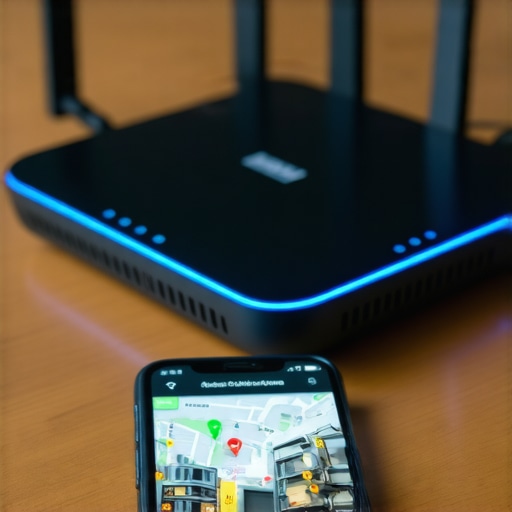
    To start your journey toward map pack domination, you have to treat your router like a physical beacon that needs recalibration. When I was helping an HVAC company move their headquarters last summer, they did everything right on paper. They updated their address, verified their new office, and even got new business cards. Yet, for three weeks, their google my business rank stayed glued to their old warehouse five miles away. Every time the owner opened his phone at the new desk, the blue dot jumped back to the old zip code. The culprit was their high-end mesh router. It was still shouting its old coordinates to every passing device. To fix this, you must explicitly tell the Wi-Fi Positioning System (WPS) that you have moved. The most effective way is to how to force google to re-index your map location faster by temporarily changing your network name (SSID). A modern Wi-Fi router next to a smartphone displaying a map location pin.

    Wipe the Digital Dust Off Your Router

    Think of your router as a lighthouse that is currently showing an old, outdated map to every ship in the harbor. To reset it, you need to append a specific string to your Wi-Fi name. By adding _nomap to the end of your SSID (e.g., MyBusiness_nomap), you are using a universal opt-out signal for location services. This forces Google and Apple to drop your router’s MAC address from their active location database. I had that HVAC client run their network with this name for 48 hours. When we switched it back to the original name, the system was forced to re-scan the signal from the new physical location. This is a primary step to dominate maps because it removes the conflicting data that confuses Google’s algorithms.

    The Secret Power of High-Accuracy Android Devices

    If you want to accelerate the process, don’t just wait for random strangers to walk past your door with their GPS on. You can manually push this data. Take an Android phone, ensure ‘Google Location Accuracy’ is turned on in the settings, and stand directly in front of your shop while connected to your Wi-Fi. Open Google Maps and perform several searches for local services nearby. This sends a high-confidence signal to the cloud: This specific Wi-Fi signal is now at these exact GPS coordinates. If you skip this, you might find that the hidden setting that blocks your profile from neighboring towns is actually just a stale positioning signal.

    Align Your Citations to Match Your New Signal

    While the router is the hardware fix, your digital trail must also be clean. Many owners fail to realize that why your address citations are secretly tanking your local map rank often comes down to inconsistency between the physical signal and the web data. Ensure your ISP records and billing addresses are updated immediately. In the HVAC case, we found that the specific citation move that rescues hvac map rankings was simply updating their internet service contract address, which eventually filtered down to the localized data providers Google trusts. By synchronizing your physical hardware signal with your digital footprints, you remove the ‘friction’ that keeps your business from appearing in the top results.

    It is a common misconception that getting to the top of the map pack is just a numbers game. I see business owners obsessing over their review count, thinking that once they hit triple digits, they will magically stay at the top. But here is the hard truth: reviews are just the entry fee. If you want to sustain mastering local maps domination, you have to look at the data Google is actually tracking behind the scenes. In my experience, a business with 50 reviews and high engagement will consistently beat a business with 500 reviews and a ‘dead’ profile. Google is looking for active, real-world signals, not just a static trophy case of stars.

    Stop Chasing Stars and Start Chasing Clicks

    Everyone says more reviews equal a higher rank, but that is simply not true in 2025. This is where the interaction data that proves you are a top local choice comes into play. According to recent industry reports from Whitespark, behavioral signals—like how many people click your ‘Directions’ button or call you directly from the map—now carry significantly more weight than the raw number of reviews. Google’s algorithm is smart enough to realize that if 100 people look at your profile but nobody clicks anything, your business might not actually be the best match for that search. This is why you see why the shop next door outranks you with half the reviews; their audience is actually interacting with their listing.

    Data visualization of local search interactions and map pack engagement spots.

    Why does my competitor with fewer reviews still hold the top spot?

    This is the question that keeps most small business owners up at night. The answer usually lies in ‘relevance’ and ‘prominence’ rather than just ‘popularity.’ If a competitor has a highly optimized local mapping strategy that includes hyper-local keywords in their responses and frequent photo updates, they are providing fresh data points for the algorithm. A ‘trap’ many fall into is setting their profile to ‘Open 24 Hours’ to try and capture more traffic. However, the truth about google maps open now filters and your rank is that if Google suspects you aren’t actually there when a customer calls, it can negatively impact your trust score. This lack of trust is a silent anchor for your google my business rank.

    The Shadow Freeze and the Danger of Constant Edits

    Here is an ‘oops’ factor I’ve seen ruin a dozen campaigns: making too many changes at once. When you get excited about map pack domination, it is tempting to go in and change your categories, your service area, and your business description all in one afternoon. This often triggers a ‘shadow freeze.’ Your profile doesn’t get suspended, but your rankings flatline while Google’s AI spends two weeks verifying that you aren’t a spammer. It’s better to make incremental, data-backed adjustments. Have you ever fallen into this trap of over-editing your profile only to see your traffic disappear? Let me know in the comments below, and let’s figure out how to get your momentum back.

    The Three Tools I Actually Use Every Week

    I don’t believe in bloated software suites that promise the world but only deliver a monthly bill. If you want true mastering local maps domination, you only need a few high-precision tools. My absolute favorite is a simple grid-tracking tool like Local Falcon. Why? Because your google my business rank isn’t a single number; it’s a living, breathing heat map. I use it to see exactly where my client’s visibility drops off. If we rank #1 at the front door but drop to #10 two blocks away, we know we have a proximity issue, not a content issue. Another essential is GMB Everywhere, a Chrome extension that lets me peek at the specific categories my competitors are using behind the scenes. This is how I find the gaps when I need to how to outsmart competition in local map listings in 2025 without spending hours on manual research.

    How do I maintain my map position without daily babysitting?

    Maintenance is about rhythm, not intensity. I’ve found that the most successful businesses are the ones that treat their profile like a social media feed rather than a static yellow-page listing. According to industry expert Joy Hawkins of Sterling Sky, Google is increasingly using ‘justifications’—those little snippets of text that say ‘Their website mentions…’ or ‘A reviewer said…’—to determine who gets the click. To keep these active, I recommend a 15-minute weekly audit. Check your Q&A section, reply to one or two new reviews using natural language, and most importantly, how to use google business posts to improve map presence. These posts act as fresh signals to the algorithm that your business is open and engaged. If you let your profile sit for a month without an update, don’t be surprised if you see why your google maps clicks are dropping and the 3-minute fix to reverse it becoming your new reality.

    A visual representation of local map ranking data showing grid points across a city neighborhood.

    Watch Out for the AI Visual Search Wave

    Looking ahead, the next big shift in local maps domination is going to be AI-driven visual recognition. Google’s Vision AI is already getting incredibly good at ‘reading’ the photos you upload. It doesn’t just see a picture of a pizza; it sees the toppings, the atmosphere of the restaurant, and even the cleanliness of the kitchen. In the near future, your the image optimization trick that increases local ctr won’t just be about looking pretty—it will be about providing high-resolution data for AI to categorize. This is why I tell my clients to stop using stock photos immediately. Real, raw, and geo-tagged photos are becoming the gold standard for proving your location’s authenticity. This visual data is the fuel for the power of regular profile updates on search frequency. To stay ahead, start uploading one ‘behind-the-scenes’ photo every Friday. It’s a simple move, but it builds a digital moat around your business that a competitor with a million fake reviews can’t cross. Here is an advanced tip you should try today: upload a photo of your most popular service and then immediately have a customer mention that specific service in a review. The ‘justification’ that Google creates from that combination is a click-magnet that will skyrocket your local mapping strategy.

    What I Finally Realized About Real Map Authority

    After years of trial and error, I stopped looking at my dashboard as a scoreboard and started seeing it as a live conversation with my neighborhood. One of the biggest myths that held me back was thinking I could ‘hack’ my way into a permanent top spot. The truth is, your google my business rank is rented, not owned. If you stop providing fresh signals, Google will gladly hand your lease to someone else. I have learned that a single authentic photo taken by a customer inside your shop is worth more than ten professionally shot images because it proves presence and engagement in a way AI can’t fake.

    Another lightbulb moment came when I realized that the proximity truth isn’t just about how close you are to the user, but how well you have convinced the algorithm that you are the most relevant answer for that specific street corner. It is about building a digital footprint that matches the physical one precisely.

    The Short List of Tools That Actually Move the Needle

    I strictly avoid ‘all-in-one’ platforms that charge a premium for basic reporting. Instead, I rely on a few surgical tools. Local Falcon is my primary choice for visualizing how far my influence reaches; it helps me understand if I am actually succeeding at local maps domination or just ranking for my own name. I also frequently check 7 google business profile tips for 2026 to stay ahead of the next algorithm shift. If the technical side feels overwhelming, why hiring a google business profile consultant might be the smartest move to avoid the ‘shadow freeze’ and save months of frustration.

    Your Digital Front Door is Ready for an Upgrade

    Don’t let the technical jargon paralyze your growth. Whether it is fixing a rogue router signal or updating your service categories, every small action contributes to your journey to dominate maps. You now have the blueprint to stop being an invisible business. Start with one change today—perhaps that ‘_nomap’ router reset—and watch how the digital world finally aligns with your physical reality. Your neighborhood is looking for you; it is time to make sure they can find you without a struggle. Have you ever noticed your business location jumping around on your own phone while you were standing right inside your shop? Let me know in the comments below!