Category: Location-Based SEO Tactics

  • Stop Losing Neighboring Leads: A Smarter Way to Build Local City Pages

    Stop Losing Neighboring Leads: A Smarter Way to Build Local City Pages


    Stop Losing Neighboring Leads: A Smarter Way to Build Local City Pages (2026 Guide)

    Stop Losing Neighboring Leads: A Smarter Way to Build Local City Pages (2026 Guide)

    Imagine this: You are a top-tier HVAC contractor or a high-end personal injury lawyer. Your office is located in the heart of the city, and when someone searches for your services within a two-mile radius, you dominate. You see your business in the “Three Pack,” and the phone rings consistently. However, just five miles away, in a wealthy neighboring suburb with thousands of potential clients, you are a ghost. You don’t exist on the map, and your website is buried on page four. This is the “Proximity Trap,” a frustrating reality where Google’s algorithm prioritizes the physical distance of your office over the quality of your service.

    As a specialist in google business profile seo, I see this daily. Business owners often feel handcuffed by their physical address, believing that unless they open a dozen satellite offices, they can never rank higher on google maps in the high-value towns next door. But in 2026, the landscape has shifted. While proximity remains a pillar of local search, it is no longer an insurmountable wall. The bridge over this gap is the strategically engineered City Page (or Service Area Page). By building these pages with technical precision, you can signal to Google’s AI-driven crawlers that your relevance extends far beyond your front door, allowing you to capture those “lost” neighboring leads that your competitors are currently vacuuming up.

    The Technical Difference: City Pages vs. Service Area Pages (SAPs)

    To master google business profile seo, you must first understand the nomenclature of local architecture. Many practitioners use “City Page” and “Service Area Page” interchangeably, but in the eyes of a 2026 search algorithm, there is a nuanced difference. A City Page is typically a landing page on your website designed to target a specific geographic location where you may or may not have a physical office. A Service Area Page (SAP) is often the broader term used by Service Area Businesses (SABs) – like plumbers or roofers – who go to the customer rather than having the customer come to them.

    Data research consistently shows that over 60% of mobile searches now have local intent. When a user types “emergency plumber” into their phone, they aren’t looking for a directory; they are looking for a solution nearby. For Google to satisfy this user, it relies on three pillars: Proximity, Relevance, and Prominence. While you cannot easily change your physical proximity, you can exponentially increase your Relevance and Prominence through localized content. If your website provides deep, specific value for a neighboring city, Google’s AI crawlers – which now visit high-authority sites every few days – will begin to associate your brand with that secondary location. This is the core of rank google business profile strategies: proving to the algorithm that your service footprint is wider than your property line.

    Why Your Current “Location Pages” are Failing

    If you already have location pages and they aren’t generating leads, you are likely a victim of the “Duplicate Content Death Sentence.” In the early days of SEO, you could get away with creating 50 pages, copy-pasting the same 500 words, and simply swapping “[City A]” for “[City B].” In 2026, this is a fast track to being de-indexed. Google’s AI Overviews and sophisticated filters easily identify “thin content.” When the algorithm sees identical structure and phrasing across multiple pages, it triggers “keyword cannibalization” and treats the pages as spam. This is a primary reason why your business only shows up in one zip code.

    Furthermore, these thin pages fail to provide “Local Signal.” If your page for “Arlington” looks exactly like your page for “Springfield,” you aren’t telling Google anything about Arlington. You aren’t mentioning the local climate, the specific housing styles in that area, or the local regulations that might affect your service. Without these micro-signals, the AI crawlers have no “hooks” to build confidence in your local authority. You aren’t just competing with other businesses; you are competing for the trust of an algorithm that demands unique, high-value data for every URL it indexes. If your location pages are essentially “ghost pages” with no unique value, they will never help you rank google business profile in a competitive neighboring market.

    The Anatomy of a High-Ranking City Page in 2026

    To break the Proximity Trap, your City Pages must be more than just marketing fluff; they must be hyperlocal resources. Here is the blueprint for a page that actually converts and ranks:

    1. Hyperlocal Content: You must mention local landmarks, neighborhood names, and specific local issues. For an HVAC company, this might mean discussing how the humid summers near the local lakefront affect AC units. For a lawyer, it might mean mentioning the specific county courthouse where you frequently represent clients. This level of detail is what signals “Relevance” to the search engine.
    2. Local Testimonials: Do not use a generic “Reviews” widget that pulls in every review from your main office. Manually curate or filter reviews specifically from clients in that city. Seeing a neighbor’s name and a familiar street mentioned in a testimonial increases user trust and reinforces the local signal for SEO.
    3. Google Maps Embeds: Avoid the “Map Embedding Mistake” of just dropping a pin on your main office. Instead, embed a map that shows your service area within that specific city or a map that provides directions from a local landmark to your service zone. This creates a technical link between your website and the Google Maps ecosystem.
    4. Unique Service Descriptions: Instead of a generic “Plumbing” heading, use “Emergency pipe burst repair near [Local High School].” This long-tail approach targets specific search queries that your competitors are likely ignoring.

    Utilizing local seo tools can help you audit these pages to ensure they meet the technical requirements for 2026. You need to ensure your page load speeds are optimized for mobile and that your internal linking structure directs authority from your high-ranking homepage down to these secondary city pages. This is how you systematically build a “Local Map Pack” presence where you don’t have a physical desk.

    Advanced Optimization: Schema and Internal Linking

    While the visible content on the page is for the user, the “hidden” code is for the AI. To truly dominate, you must implement advanced Schema Markup. Specifically, you should be using LocalBusiness and ServiceArea schema. This structured data tells Google exactly which geographic boundaries you cover. Many businesses fail here by using generic schema that only points back to their primary address. This is one of the most common local business schema failures I encounter.

    Your internal linking strategy is the “The City Page Method” in action. You shouldn’t just hide these pages in a footer menu. Link to them from your main service pages. For example, on your “Roofing Services” page, include a section that says “Proudly Serving [City A], [City B], and [City C],” with each city name linking to its respective high-quality City Page. This passes “link juice” and authority throughout your site, signaling to Google that these pages are important parts of your business entity, not just peripheral landing pages. This interconnectedness is vital for google business profile optimization, as it creates a cohesive web of local relevance.

    Furthermore, you should link your Google Business Profile (GBP) directly to these pages in specific posts. When you share a “Recently Completed Project” post on your GBP, link it to the City Page of the town where the work was done. This creates a direct feedback loop between your map listing and your localized website content, which is a key factor in The Proximity Truth.

    Scaling Without Losing Quality: Using Local SEO Software

    The challenge for many agencies and growing businesses is scaling. Building one perfect City Page is easy; building fifty is a monumental task. This is where local seo software and automation become essential. You cannot automate the *writing* (AI-generated text still needs a human “Local Expert” polish to ensure accuracy), but you can automate the *tracking* and *auditing*.

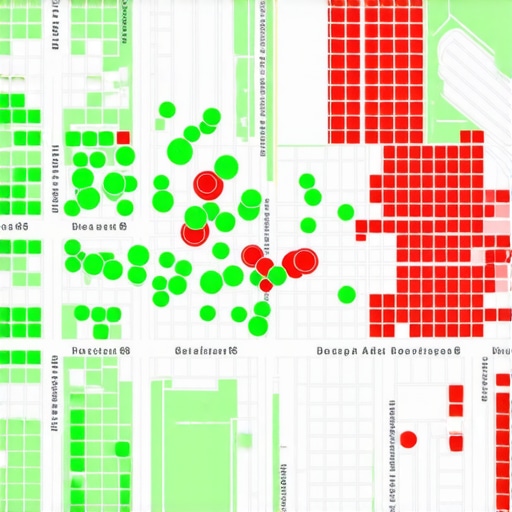
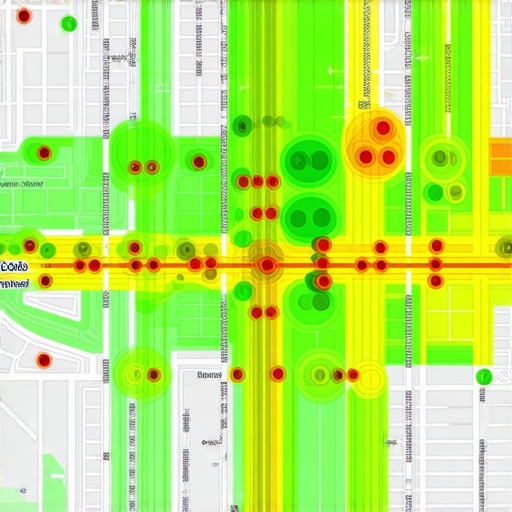
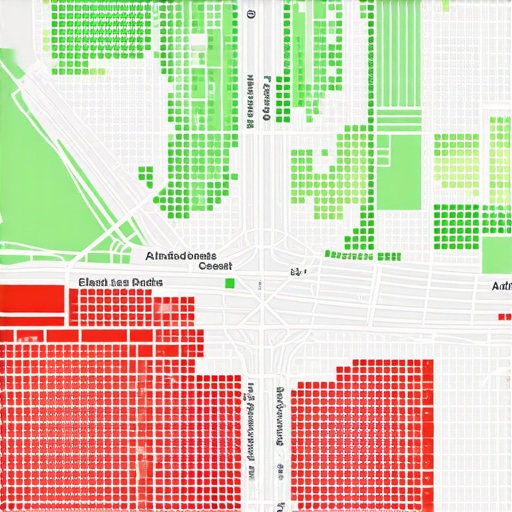
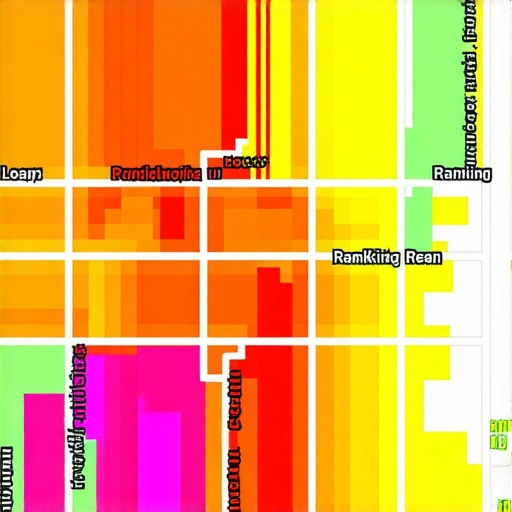
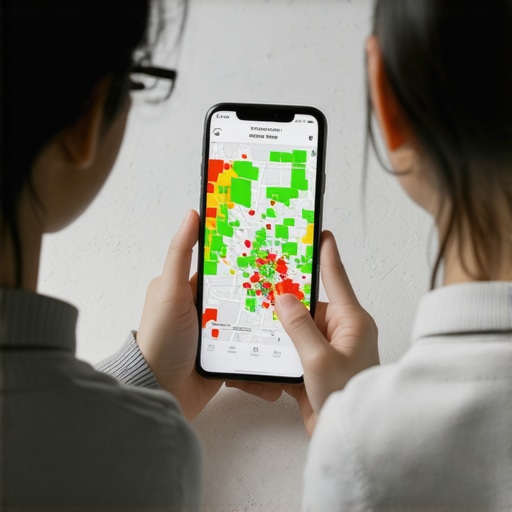
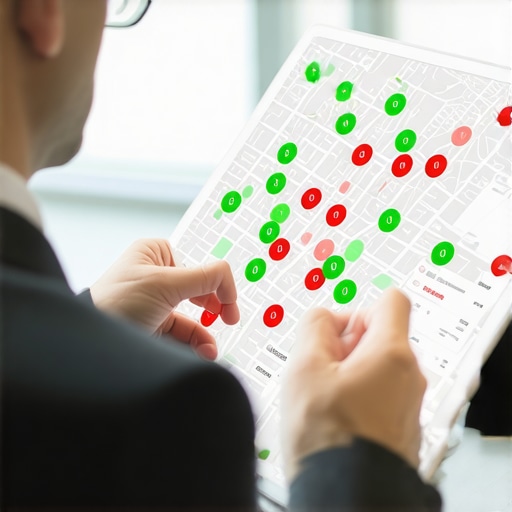
    Using a google maps rank tracker allows you to see exactly where your “ranking radius” ends. In 2026, we use heatmaps to visualize our visibility. If you see a “dead zone” in a high-value neighboring town, that is your signal to deploy a new, hyper-optimized City Page. Monitoring these changes in real-time allows you to adjust your strategy before a competitor moves in. Tools like SEO Viper Tools provide the data-driven insights needed to manage a multi-city expansion without losing the “local touch” that both users and Google demand. Remember, the goal is to expand your footprint without diluting your brand’s authority.

    Scaling also involves managing citations and local directories. Each City Page should, ideally, have some level of local citation support. If there is a “Chamber of Commerce” or a local “Business Association” in your target neighboring city, getting a link from their directory to your specific City Page is worth more than a dozen generic backlinks. This level of “Micro SEO” is what differentiates the leaders from the followers in today’s local search market.

    Conclusion & The 2026 Local Dominance Roadmap

    The days of relying solely on your office’s physical address to drive leads are over. In 2026, “local” is a matter of relevance, not just miles. By implementing The City Page Method, you are taking control of your geographic destiny. You are telling the search engines – and your potential customers – that you are the local authority, regardless of where your mail is delivered.

    Stop letting the “Proximity Trap” dictate your revenue. If you provide a superior service, you deserve the lead, whether it’s across the street or across the county line. The roadmap to dominance requires a commitment to unique, hyperlocal content, technical schema precision, and a data-driven approach to scaling. Audit your current location pages today. Are they providing value, or are they just placeholders? If you’re ready to expand your reach and truly rank higher on google maps, it’s time to build a smarter bridge to your neighboring cities. Use a professional google maps ranking service to fast-track your growth and ensure that when your neighbors search for help, your business is the first one they see.


  • The City Page Method: How to Rank in Neighborhoods Where You Don’t Have an Office

    The City Page Method: How to Rank in Neighborhoods Where You Don’t Have an Office


    The City Page Method: How to Rank in Neighborhoods Where You Don’t Have an Office

    The City Page Method: How to Rank in Neighborhoods Where You Don’t Have an Office

    As an expert in google business profile seo, I frequently encounter a common frustration among service-based business owners. You have a physical office in one part of town, but your most lucrative leads are 15 miles away. You’ve optimized your profile, you’re getting reviews, and yet, when you check the local map pack in that target neighborhood, your business is nowhere to be found. This is what I call the “Proximity Trap,” and if you don’t solve it, your growth will always be capped by your zip code.

    Section 1: The Proximity Trap, Why Your Office Location is Holding You Back

    Google’s primary goal in local search is to provide users with the most relevant and convenient results. In the world of local search, “convenience” is almost always defined by physical distance. According to industry data, proximity remains the single most important ranking factor in the local map pack. This creates a significant hurdle for Service Area Businesses (SABs) – like plumbers, roofers, and HVAC contractors – who travel to their customers rather than having customers visit them.

    Typically, Google’s algorithm prioritizes businesses within a tight 3-5 mile radius of the searcher’s location. If your office is in the suburbs but you want to rank google business profile listings in the downtown core, you are fighting an uphill battle against the “proximity filter.” This filter acts as an invisible barrier, often hiding your business from potential clients simply because you aren’t physically “there.”

    However, location isn’t everything. I’ve spent years proving that while you can’t move your office every week, you can expand your digital footprint. This is where the “City Page Method” comes into play. It is the definitive local seo strategy for businesses that want to dominate entire metropolitan areas without paying for dozens of expensive physical office leases. By leveraging high-authority landing pages, you can signal to Google that your “relevance” and “prominence” in a distant neighborhood outweigh the lack of immediate proximity.

    To understand more about the nuances of distance, check out my deep dive on The Proximity Truth: Why Your Office Location Isn’t the Only Reason You’re Not Ranking. If you are serious about breaking these barriers, you need to use professional google business profile seo tools to track your reach beyond your front door.

    Section 2: What is the City Page Method?

    The City Page Method (often referred to as Service Area Page SEO) is a strategic approach to website architecture where you create dedicated, high-value landing pages for every major city or neighborhood you serve. These aren’t just “Contact Us” pages with a different header; they are comprehensive resources designed to rank for “[Service] in [City]” or “[Service] [City]” keywords.

    Think of each city page as a virtual storefront. While your Google Business Profile (GBP) is anchored to your physical address, your city pages are anchored to your service intent. For example, if you are an electrician based in Austin but want to work in Round Rock, a well-optimized “Electrician in Round Rock” page acts as the hook that catches Google’s attention. When implemented correctly, city page seo creates a web of local relevance that feeds back into your main brand authority.

    A major mistake many SEOs make is treating these as “doorway pages.” A doorway page is a thin, low-quality page designed solely to trick search engines. The City Page Method is different because it provides genuine value to the user in that specific location. It answers localized questions, showcases local work, and provides local social proof. This distinction is vital for long-term service area business seo success.

    To build these pages effectively, you should utilize advanced local seo software to identify which neighborhoods have the highest search volume and the lowest competition. By targeting the right areas first, you can see a much faster return on your SEO investment.

    Section 3: Anatomy of a High-Ranking City Page

    To rank higher on google maps and in organic local search, your city pages must be “hyperlocal.” Google’s bots are increasingly sophisticated; they can tell the difference between a page that just mentions a city name and a page that truly understands the local area. Here is the blueprint for a high-ranking city page:

    1. Unique Localized Content

    Never copy and paste the content from your main service page onto your city pages. Each page needs unique descriptions of how you serve that specific community. Mention specific challenges residents in that city face (e.g., “We specialize in the hard-water plumbing issues common in [City Name]”). This builds hyperlocal seo relevance that generic pages lack.

    2. Local Landmarks and Geography

    Incorporate mentions of local landmarks, parks, and major intersections. For example: “Our teams are frequently seen near [Local High School] and the [Famous Shopping Center] off [Major Highway].” This helps Google’s Knowledge Graph associate your business with the specific coordinates of that neighborhood.

    3. Embedded Google Maps

    Don’t just link to a map; embed a customized Google Map that highlights your service area within that specific city. However, be careful – simply dropping a pin isn’t enough. You need a strategy. Read more on Why Your Map Embed Strategy Isn’t Translating Into Local Rankings to avoid common technical errors.

    4. Local Reviews and Testimonials

    Social proof is localized. If a customer in “City A” sees a testimonial from their neighbor in “City A,” the conversion rate skyrockets. Use schema markup to highlight these reviews, signaling to Google that you have a history of successful transactions in that specific area. This is a core component of google business profile optimization.

    By following this anatomy, you ensure your page isn’t just a placeholder, but a high-converting asset. For those looking for an edge, using a google business profile optimization service can help align your website content with your profile’s categories and attributes perfectly.

    Section 4: Technical SEO & Schema for Non-Physical Locations

    The technical “under the hood” work is what separates a page that looks good from a page that actually ranks. When you don’t have a physical office in a city, you must use Schema.org markup to explain your relationship to that area. This is the “secret sauce” of geo targeted seo.

    The primary tool here is the LocalBusiness schema, but specifically the serviceArea property. Most businesses mistakenly use the postalAddress property for cities where they don’t have an office. This is a red flag for Google. Instead, you should define your areaServed using GeoShape (circles or polygons) or City types. This explicitly tells Google: “I am not located here, but I provide professional services to this exact boundary.”

    According to BrightLocal, improper schema implementation is one of the top reasons local businesses fail to rank in the local map pack seo. You must ensure that your NAP (Name, Address, Phone) on the city page remains consistent with your main office, but your service area definitions are customized for that specific landing page.

    Furthermore, ensure your city pages are mobile-friendly and load in under 2.5 seconds. Mobile-friendliness is a non-negotiable ranking factor for local search because most “near me” searches happen on smartphones. If you’re struggling with the technical setup, explore google maps seo tools to audit your current schema health. For more details on common mistakes, see How Most Local Business Schema Fails to Tell Google Where You Are.

    Section 5: Connecting City Pages to Your Google Business Profile

    Your website and your Google Business Profile are not two separate entities; they are a symbiotic system. To rank google business profile listings in a city where you aren’t located, your website must provide the “relevance” that your physical location lacks. This is the heart of a winning local seo strategy.

    When Google determines which 3 businesses to show in the Map Pack, it looks for “Relevance, Distance, and Prominence.” Since you are losing on “Distance,” you must over-deliver on “Relevance.” By linking your GBP “Website” field to a well-optimized city page (or having a strong internal link structure from your home page to these city pages), you pass authority from the website to the map listing.

    I recommend a “Reverse Silo” approach. Link your City Page to your GBP’s “Share” URL and embed your most recent GBP posts on that city page. This creates a loop of local signals. When Google sees that your website is an authority on “[Service] in [Target City],” it becomes much more confident in showing your map listing for searches in that area. This synergy is essential for any google maps ranking service to be effective.

    For a step-by-step framework on this connection, refer to The Ultimate Guide to Google My Business Rank Elevation. If you want to see how you stack up against competitors in these distant cities, use a tool to rank higher on google maps and visualize your geo-grid coverage.

    Section 6: Common Pitfalls: Why Most City Pages Fail

    Despite the effectiveness of the City Page Method, many businesses fail because they take shortcuts. The most dangerous shortcut is the “Doorway Page” approach – using “find and replace” to swap city names on 50 identical pages. Google is incredibly good at detecting thin, duplicate content. If your pages are 90% identical, Google will likely de-index them or, worse, penalize your entire site.

    Another pitfall is ignoring the “Prominence” factor. A city page needs its own backlinks. You should aim to get local mentions or directory listings that point specifically to your city pages, not just your homepage. This builds localized authority that tells Google your business is a pillar of that specific community.

    Finally, many businesses fail to track their results. They build the pages and wait. Local SEO is a moving target. If you don’t monitor your rankings across a geo-grid, you won’t know if a competitor has moved into your target neighborhood or if an algorithm update has changed the weight of proximity. If your rankings have suddenly dropped, check out Why Your Profile Ranking Stalled and the 5-Minute Fix That Restarts It.

    To avoid these traps, I always suggest using a professional google maps ranking service that focuses on unique content and white-hat link building. Quality over quantity is the rule of thumb in 2025 and beyond.

    Section 7: Conclusion & Action Plan

    The City Page Method is the most powerful way to expand your business’s reach without the overhead of multiple offices. By combining hyperlocal content, technical schema, and a strong connection to your Google Business Profile, you can effectively “teleport” your rankings into the most profitable neighborhoods in your region.

    Your Action Plan:

    • Identify the top 3 cities outside your office radius where your ideal customers live.
    • Create 100% unique, 1,000+ word landing pages for each of these cities.
    • Implement `ServiceArea` schema to define your reach.
    • Link these pages strategically to your Google Business Profile.

    Start today by auditing your current map coverage. For more advanced tactics, read Mastering Local Maps Domination: Proven Strategies for 2025 Success or visit the website to explore the latest tools in local search optimization.


  • The Proximity Truth: Why Your Office Location Isn’t the Only Reason You’re Not Ranking

    The Proximity Truth: Why Your Office Location Isn’t the Only Reason You’re Not Ranking

    The Proximity Truth: Why Your Office Location Isn’t the Only Reason You’re Not Ranking

    You’ve done everything by the book. You claimed your listing, uploaded high-resolution photos, and gathered a handful of five-star reviews. Your office is located right in the heart of the city, yet when you search for your services from a coffee shop just three blocks away, your business is nowhere to be found. Instead, a competitor located two miles further out is sitting comfortably in the top spot of the local Map Pack. This is the “Proximity Paradox,” and it’s the primary source of frustration for thousands of local service providers and small business owners today. If you want to fix this, you need a sophisticated google business profile seo strategy that looks beyond the physical pin on the map.

    Section 1: The Frustration of the “Invisible” Office

    The common misconception in local search is that distance is the ultimate king. Many business owners believe that if they are physically closer to the searcher, Google will naturally prioritize them. However, as a Senior SEO Specialist, I see the reality every day: proximity is merely one-third of the ranking equation. While Google’s official documentation confirms that distance is a factor, it is often the most rigid and the least “optimizable” part of the algorithm. If you are struggling to rank google business profile assets, you are likely over-relying on your physical location while neglecting the other two pillars: Relevance and Prominence.

    The Proximity Paradox occurs when Google decides that a business further away is a “better” match for the user’s intent than the one right next door. This happens because Google’s primary goal is to provide the most helpful result, not necessarily the closest one. If your digital presence is weak, you become “invisible” despite your physical presence. To bridge this gap, savvy marketers use advanced google business profile seo techniques to signal to Google that their business is the most authoritative choice in the region, regardless of the precise mileage. Understanding that distance is not a ceiling, but a starting point, is the first step toward dominating your local market.

    Section 2: The Three Pillars – Beyond the Map Pin

    To understand why your office location isn’t the only reason you’re not ranking, we must dissect the three pillars of the local algorithm: Proximity, Relevance, and Prominence. These three forces work in a constant tug-of-war, and your goal is to make Relevance and Prominence so strong that they “stretch” your Proximity radius.

    • Proximity: This is the distance between the searcher (or the search location specified) and your business. Since the “Vicinity” update, Google has tightened this radius to prevent “office-squatting,” but it remains the only factor you cannot change without moving your physical headquarters.
    • Relevance: This measures how well your google business profile optimization matches what someone is searching for. If someone searches for “emergency water damage repair” and your profile only mentions “general contracting,” Google will look further away for a specialist.
    • Prominence: This is your business’s “digital weight.” It is determined by how well-known your business is across the web. This includes your position in organic search results, the number and quality of backlinks to your site, and your overall review ecosystem.

    Google will often “reach” further across a city to show a highly relevant and prominent business to a user. If your business has 500 high-quality reviews and a website packed with authoritative content, Google trusts you more than a nearby business with three reviews and no website. Effectively, prominence acts as a trust signal that overrides the convenience of distance. For a deeper dive into balancing these factors, check out our guide on Mastering Local Maps Domination: Proven Strategies for 2025 Success.

    Section 3: Why Relevance is the “Proximity Killer” (and how to use google business profile seo)

    If Proximity is the wall, Relevance is the sledgehammer. You can significantly expand your ranking radius by perfecting your google business profile optimization. The most common mistake I see is a business choosing a primary category that is too broad or, worse, incorrect. If you are a “Personal Injury Attorney,” but your primary category is set to “Lawyer,” you are competing in a much larger, more diluted pool. Selecting the most specific primary category is the foundation of any google maps seo strategy.

    To build “Hyperlocal Relevance,” you must go beyond the profile itself. This involves creating “Service Area Pages” on your website that target specific neighborhoods and suburbs. By using the “Core 30 Method” – creating thirty pieces of unique, localized content centered around your core services and specific geographic landmarks – you tell Google’s crawlers exactly where you operate and what you do. This content bridges the gap between your office and the surrounding areas you serve.

    Data shows that businesses using specialized local seo tools to identify “unmet” search intent in their area can often outrank closer competitors within 90 days. When Google sees that your website and your GBP are perfectly aligned with specific long-tail keywords (like “best residential roof replacement in [Neighborhood Name]”), it increases your relevance score. This allows you to rank in the Map Pack for users who are miles away from your actual office. Remember, moving your office is rarely the answer; the real solution is often found in the Proximity Paradox: Why Moving Your Store Location Won’t Always Help You Dominate Maps.

    Section 4: Prominence – Building the “Digital Authority”

    As I often tell my clients, “Prominence is Google’s way of measuring trust.” In the world of local map pack seo, prominence is what keeps you in the top three when a new competitor opens up next door. Building prominence requires a multi-faceted approach to local seo services that extends far beyond the Google dashboard. It starts with your “Review Velocity” – the speed and consistency at which you acquire new reviews – and the “Review Diversity” – the variety of keywords used within those reviews.

    Google’s AI-driven sentiment analysis now reads the text of your reviews to understand your business better. If your customers frequently mention “best 24-hour plumber” in their feedback, your prominence for that specific service skyrockets. Furthermore, local citations (mentions of your Name, Address, and Phone number) on authoritative sites like the Chamber of Commerce, local news outlets, and industry-specific directories act as “votes of confidence” for your business. These signals are vital if you want to rank higher on google maps.

    Local backlinks are another critical component. A link from a local high school sports team or a neighborhood blog is often more valuable for local SEO than a link from a national site. This “local link juice” anchors your business to the community. If you’ve noticed a drop in your visibility recently, it might be due to a lack of authority compared to rising competitors; see our analysis on Why Your Google My Business Rank Tanked After the Latest Proximity Update. To maintain your edge, stay ahead of the curve by implementing these 7 Google Business Profile Tips for 2026 to Outperform Massive Competitors.

    Section 5: The 2026 Shift – New Signals for a New Era of google business profile seo

    The local SEO landscape is shifting rapidly as we head toward 2026. Google is moving away from purely text-based signals and toward “Real-World Signals.” One of the most significant emerging factors is Verified Visits. Through location history on mobile devices, Google knows if people who search for your business actually end up visiting your physical location. This “Foot Traffic Signal” is becoming a massive weight in the prominence pillar. If your office has high “Dwell Time” (customers staying for an hour versus five minutes), Google interprets this as a high-quality user experience.

    We are also seeing the rise of Visual SEO and AI-driven image recognition. In 2026, the photos you upload to your GBP won’t just be for show; Google’s “Camera Search” (Google Lens integration) will analyze the products, tools, and signage in your photos to confirm your relevance for specific searches. If you’re a dentist and you have photos of advanced whitening equipment, you will rank higher for “teeth whitening” searches because Google has “seen” the proof. This is why a consistent google maps seo strategy must include weekly high-quality photo updates.

    The 2025 core updates have already begun targeting “ghost offices” and spammy “virtual” locations. Google is prioritizing “Helpful Content” and “Verified Local Entities.” To ensure you are actually moving the needle, you need a reliable google maps rank tracker to see how these algorithm shifts are impacting your visibility in real-time. The era of “set it and forget it” local SEO is over; the future belongs to those who treat their digital profile as a living, breathing extension of their physical storefront.

    Section 6: The Proximity Audit Checklist

    If you want to break out of your current proximity bubble, you need a systematic approach. Use this checklist to audit your google business profile seo health and ensure you are maximizing every available signal:

    • Audit Primary & Secondary Categories: Ensure your primary category is your most profitable service, and use secondary categories to capture related searches.
    • Verify NAP Consistency: Your Name, Address, and Phone number must be identical across your website, GBP, and all third-party directories.
    • Optimize for “Near Me” Keywords: Integrate geographic descriptors into your GBP services and website meta descriptions.
    • Implement a Review Strategy: Don’t just ask for stars; ask customers to mention the specific service they received and the neighborhood they live in.
    • Weekly Photo & Post Updates: Use GBP Posts to talk about local events or recent projects to strengthen your local relevance.
    • Monitor Your Competitors: Use a google maps ranking service to identify which competitors are “stretching” their radius and analyze their backlink profiles.

    For a more detailed breakdown of how to convert these technical optimizations into actual revenue, refer to The Profile Audit Checklist for Turning Search Impressions Into Real Calls. Actionable data is the only way to overcome the limitations of your physical address.

    Section 7: Conclusion & CTA

    Proximity is a starting point, not a ceiling. While you can’t move your building every time the algorithm shifts, you can absolutely control your relevance and prominence. By focusing on deep google business profile seo, you can outrank competitors who are physically closer to your customers but digitally further away. Ready to break your proximity boundaries? Start by using SEO Viper Tools to audit your current standing and dominate your local market today.

  • The Specific Schema Fix That Forced a Massive Map Radius Expansion

    The Specific Schema Fix That Forced a Massive Map Radius Expansion

    The Specific Schema Fix That Forced a Massive Map Radius Expansion

    I was standing on a sun-baked sidewalk in Phoenix last summer, the smell of wet concrete and ozone hanging in the air after a monsoon, watching a Google Street View car roll slowly down the block. I was there with a client – a plumbing contractor whose shop was less than five miles away. He had 400 five-star reviews, a pristine office, and a fleet of twelve trucks. Yet, when we pulled out his phone and searched for “emergency plumber near me,” he was nowhere to be found. He wasn’t even in the top 20. But the guy across the street? A one-man operation with a laptop and a residential address? He was sitting pretty at #1.

    My client turned to me, frustrated. “Clint, I’m standing right here. My shop is right there. Why does Google think I don’t exist?”

    The answer wasn’t about his reviews or his backlinks. It was about the “cage.” In 2026, the local search landscape has become more restrictive than ever. We are living in the era of the 3-mile hard filter. If your technical signals aren’t screaming authority, Google treats your business like it’s tethered to a very short leash. To break out, you don’t need more “citations” – you need a surgical strike on your schema markup.

    Why Your Google Business Profile is Trapped in a 3-Mile Cage

    The reality of google business profile seo in 2026 is brutal. According to TextBuilder research, the 92% Rule is now absolute: 92% of people searching for a local business never scroll past the first page of results. If you aren’t in that Map Pack – the “Holy Trinity” of local search – you are effectively invisible to the vast majority of your market.

    For years, proximity was a “soft” factor. If you were the best lawyer or dentist in town, Google would stretch the map to show you to someone ten miles away. That era is over. Today, hyper-local proximity acts as a hard filter, especially for urgent service calls. Data from LocalMapRankingHub shows that for categories like plumbing, HVAC, or locksmiths, the visibility radius often collapses to a mere 3 miles. This is the “Proximity Penalty” – a mechanism where Google penalizes traditional proximity signals that lack real-world interaction or “live proof.”

    If you’ve ever wondered Why Your HVAC Business Only Shows Up in One Specific Zip Code, it’s because the algorithm is playing it safe. Without specific technical instructions, Google’s AI defaults to the smallest possible radius to ensure “relevance.” To the algorithm, “relevant” means “closest,” unless you can prove your authority extends further. Most business owners are fighting a 2026 algorithm with 2018 tactics, and they’re losing.

    Why Google “Finding” Your Website Isn’t Enough for Map Rankings

    There is a massive difference between Google “finding” your website and Google “understanding” your business’s physical footprint. Most SEOs think that if they put their address in the footer, the job is done. But Google’s AI brains – the systems that power the Map Pack – need structured data to move beyond simple “blue links.”

    If you want to rank google business profile listings effectively, you have to speak the language of the machine: JSON-LD. This isn’t just “extra code”; it’s the technical handshake between your website and the Google Maps ecosystem. When this handshake is weak, you end up with a ranking that stalls out just as it hits the edge of your neighborhood.

    I’ve seen it dozens of times: a business has a beautiful website, but their schema is a mess of outdated tags or, worse, generic “LocalBusiness” templates that tell Google absolutely nothing. This is How Most Local Business Schema Fails to Tell Google Where You Are. If the algorithm has to guess where you serve customers, it will always guess conservatively. To force a map radius expansion, we have to remove the guesswork.

    The Specific Schema Fix: Using areaServed to Force Expansion

    If you want to break the 3-mile barrier, you need to master the areaServed property. This is the single most undervalued piece of real estate in the LocalBusiness schema. Most businesses either leave it out entirely or provide a single, generic city name. In the 2026 Map Ranking Formula, that’s a death sentence for your reach.

    The areaServed property allows you to define a specific array of geographic locations where you provide services. Instead of just saying “Los Angeles,” you should be defining an array of neighborhoods, zip codes, and satellite cities. By using local seo tools to identify high-value search areas, you can hard-code your service boundaries directly into your site’s DNA.

    Here is why this works: When Google’s crawler sees a defined list of zip codes in your JSON-LD, it reconciles that data with your Google Business Profile. It creates a “relevance bridge” that signals to the algorithm: “This business is authorized and active in these specific zones.” This is the most intuitive way to signal service boundaries and is a core component of any serious google business profile optimization strategy.

    When we implemented this for the Phoenix plumber I mentioned earlier, we didn’t just list “Phoenix.” We listed 15 specific neighborhoods and 8 zip codes where he had historical job data. We were essentially giving the algorithm a map and saying, “We belong here.” Within weeks, his “ranking bubble” began to expand, pushing past the 3-mile filter into the lucrative suburbs he had been locked out of for years.

    Anchoring Your Authority with GeoCoordinates

    While areaServed tells Google where you go, GeoCoordinates tell Google exactly where you are. It sounds redundant – after all, your address is right there on the page – but in the world of 2026 proximity filters, latitude and longitude are the “GPS for the algorithm.”

    Including GeoCoordinates (latitude and longitude) within your schema helps Google verify the “physicality” of your business against your digital claims. It’s a verification layer that prevents “ghost” businesses from spoofing locations. When your website schema perfectly matches the coordinates of your Google Business Profile, it creates a high-trust signal. This is a key part of Mastering Local Maps Domination: Proven Strategies for 2025 Success.

    Think of it as a digital anchor. If your anchor is weak, your business “drifts” in the search results. If you’ve noticed Why Your Profile Ranking Stalled and the 5-Minute Fix That Restarts It, the culprit is often a lack of coordinate-level precision. By anchoring your authority with exact coordinates, you provide the stability the algorithm needs to confidently rank you higher in the Map Pack for users who aren’t standing right next to your front door.

    Future-Proofing: Integrating Natural Language Processing (NLP) into Schema

    As we move deeper into 2026, the way people search is changing. Haptic search, voice search, and AI-driven personal assistants are the new norm. This means your schema needs to do more than just list an address; it needs to use Natural Language Processing (NLP) to describe your services in a way that matches human intent.

    Modern schema should now include the knowsAbout or description fields, optimized with NLP-friendly terminology. Don’t just say “Plumber.” Use phrases that your customers actually say: “emergency pipe repair for historic homes” or “tankless water heater installation specialist.” This helps Google’s “semantic engine” understand the nuance of your business. If you aren’t using a google maps rank tracker to monitor how these semantic changes affect your position, you’re flying blind.

    By integrating NLP into your JSON-LD, you are future-proofing your business. You aren’t just ranking for keywords; you are ranking for entities and intents. This is how you stay relevant as Google moves away from simple string matching and toward deep learning models that prioritize businesses with the most comprehensive technical “profiles.”

    How to Audit and Deploy Your New Schema

    You cannot rely on a basic WordPress plugin to handle this level of technical SEO. Most plugins generate “thin” schema that lacks the specific areaServed and GeoCoordinates arrays necessary for a true radius expansion. To get results, you need a more manual, precise approach.

    First, you need to perform a deep dive into your current setup. I recommend using a professional google business profile audit tool to identify the gaps. You’ll likely find that your current schema is missing at least three of the five critical location signals. This is often one of The 3 Crucial Gaps Your Last Local SEO Audit Probably Missed.

    Once you’ve identified the holes, you need to deploy custom JSON-LD. This code should be placed in the header of your site (or specific location pages) and should be validated using Google’s Rich Results Test. Remember: one syntax error can invalidate the entire block, so precision is everything. If you aren’t comfortable with code, this is where a professional local seo software suite or a specialized consultant becomes invaluable. The goal is a clean, error-free “instruction manual” that Google can read in milliseconds.

    Conclusion: Breaking the 3-Mile Barrier

    The “3-mile cage” isn’t a life sentence. It’s a technical hurdle. In the hyper-competitive landscape of 2026, the businesses that dominate the Map Pack aren’t necessarily the ones with the biggest budgets – they’re the ones with the best data. Schema isn’t just “extra code” anymore; it is the fundamental instruction manual for Google’s Map algorithm.

    By fixing your areaServed properties, anchoring your business with GeoCoordinates, and layering in NLP-driven descriptions, you are giving Google the permission it needs to expand your visibility. You are proving that your business is the most relevant authority for miles around, not just for the person standing in your parking lot.

    Don’t let your business stay trapped. Audit your schema today, verify your coordinates, and start forcing that map radius to expand. If you’re ready to take your visibility to the next level, check out SEO Viper Tools for the most advanced google maps ranking service capabilities on the market. The map is waiting – go claim your territory.

  • 5 Hidden Gaps in Your Law Firm Profile Keeping Clients From Finding You

    5 Hidden Gaps in Your Law Firm Profile Keeping Clients From Finding You

    5 Hidden Gaps in Your Law Firm Profile Keeping Clients From Finding You

    You have a physical office. You have a handful of five-star reviews. You’ve even filled out your business hours. So why is your firm still buried on page two of the local results while your competitor – with fewer reviews and a smaller office – sits comfortably in the top three? This is the “Invisible Law Firm” problem, and it is the most common frustration I hear from attorneys today.

    In 4 years of legal SEO, I’ve seen that the difference between #1 and #10 isn’t just reviews – it’s the data gaps Google uses to filter out ‘untrustworthy’ firms. Most law firm owners treat their google business profile seo as a one-time setup task. In reality, Google’s local algorithm has evolved into a sophisticated verification engine that prioritizes technical precision over simple keyword stuffing. If your profile isn’t communicating the right signals, you aren’t just losing rankings; you are being filtered out of the conversation entirely.

    My name is Ali Hamza (Drew Ali), and I specialize in helping law firms navigate these technical minefields. To rank higher on google maps, you must stop looking at your profile as a digital yellow page and start looking at it as a dynamic trust asset. Below, we will dissect the five hidden gaps currently sabotaging your local visibility and how to close them before 2026.

    Gap #1: The Re-Verification Trap & Proximity Radius

    The first gap is often the most catastrophic because it can result in your profile disappearing overnight. Google has significantly tightened its verification protocols, influenced by recent TSEG (Technical SEO Expert Group) research. Many law firms fall into the “Re-Verification Trap” by making seemingly innocent updates to their NAP (Name, Address, Phone number) data. A small change – like adding a suite number or updating a tracking phone number – can trigger a mandatory video re-verification that takes your profile offline for weeks.

    The Proximity Paradox

    There is a persistent myth in Why Your Profile Ranking Stalled and the 5-Minute Fix That Restarts It that moving your office closer to the city center or the courthouse will automatically boost your rankings. This is the “Proximity Paradox.” While physical distance to the searcher is a primary ranking factor, Google now prioritizes the “Service Area” definition and the consistency of your geocoded data.

    If your firm is located in a suburb but you’ve set your service area to cover the entire metropolitan area without providing localized signals (like city-specific landing pages), Google views your profile as a “thin” entity. To combat this, you must ensure your physical location is verified with high-resolution evidence and that your service area doesn’t overreach your actual operational capacity. Failure to align your physical footprint with your digital service area creates a trust gap that no amount of local seo for lawyers can bridge.

    Gap #2: The “Service” Ghost Town (Pre-defined vs. Custom)

    When you edit your Google Business Profile, you are given the option to add “Services.” Most lawyers treat this as a creative writing exercise, adding custom service names like “Aggressive Criminal Defense” or “Compassionate Divorce Representation.” This is a major mistake that stalls your google business profile seo.

    The YouTube Secret Ranking Factor

    Recent leaks and algorithmic testing (often referred to as the YouTube Secret Ranking Factor due to how Google cross-references video data) suggest that Google’s AI prioritizes Pre-defined Services. These are the specific service categories that Google suggests in a drop-down menu. When you use a pre-defined service, you are connecting your firm to a known “entity” in Google’s Knowledge Graph. When you use a custom service, you are just adding a text string that carries significantly less weight.

    • The Audit: Open your services tab. If more than 50% of your services are “custom,” you are invisible for the high-intent keywords Google uses to categorize firms.
    • The Fix: Use a google business profile audit tool to identify which pre-defined categories your top-ranking competitors are utilizing.
    • Strategic Selection: Always select the pre-defined option first. If you must add custom services, ensure they are secondary to the primary Google-recognized categories.

    Optimizing this section is a core part of any google maps ranking service. By aligning your services with Google’s internal taxonomy, you close the gap between what you *think* you do and what Google *knows* you do. For more on this, see The 3 Crucial Gaps Your Last Local SEO Audit Probably Missed.

    Gap #3: Brand Search Volume as a Ranking Signal

    In 2025 and looking toward 2026, “Prominence” has taken a back seat to “Brand Equity.” SEO strategist KBrencans recently highlighted that Brand Search Volume is now a make-or-break factor for Map Pack rankings. If people are only finding you by searching for “personal injury lawyer near me” and never by searching for “[Your Firm Name],” Google assumes your business lacks authority.

    Google wants to show the most “famous” and reliable results. If your brand has zero search volume, you are a risk to the user experience. This is why google business profile optimization must extend beyond the dashboard. You need to drive “branded” searches through offline signals, social proof, and community involvement.

    How to Drive Branded Search

    To rank google business profile higher, you need a multi-channel approach. This includes:

    • Running localized awareness ads that mention your firm name specifically.
    • Encouraging clients to search for your firm name on Google before leaving a review.
    • Ensuring your firm’s name is mentioned on high-authority local news sites and legal directories.

    When Google sees a spike in people searching specifically for your firm, it validates your “Prominence” signal, often resulting in a dramatic jump in the Map Pack. This is a critical component of google maps lead generation strategies that actually convert.

    Gap #4: The Virtual Office & Physical Presence Paradox

    If you are running your firm out of a co-working space or a virtual office, you are on borrowed time. The “Reddit” community of SEOs and legal marketers has been buzzing about Google’s aggressive crackdown on “non-physical” locations. To rank higher on google maps, you must prove you have a dedicated, exclusive physical presence.

    Live-Verification and Biometric Proof

    Google is moving toward a future – likely by 2026 – where “Live-Verification” will be the standard. This involves video calls where you must show permanent signage, your staff working, and even the suite entrance. If your “office” is just a mailbox at a Regus or WeWork, you will likely face a suspension that is nearly impossible to overturn.

    If you are currently using a virtual office, you need to transition to a physical lease or, at the very least, a dedicated office within a co-working space that has permanent, non-removable signage. This is one of the Map Pack Domination Secrets: Boost Your Local Visibility Today that most agencies won’t tell you because it requires the client to change their business operations, not just their website.

    Furthermore, Google’s algorithm now uses “Verified Visits” (tracking mobile device location data) to see if people actually go to your office. If 100 people click “Directions” but zero phones actually arrive at the destination, Google knows your location is a ghost office. Using local seo tools can help you track these behavioral trends before they lead to a ranking drop.

    Gap #5: Behavioral Signals & The “Dwell Time” Factor

    The final gap is the most subtle: Profile Dwell Time. Google tracks how long a user interacts with your profile. If a user clicks your profile and immediately bounces back to the search results, it signals that your profile was a “dead end.” To maintain a high local map pack seo position, your profile must be engaging.

    The “Dead End” Profile

    Many law firm profiles are static. They have the same five photos from 2019 and no recent posts. To fix this, you must treat your GBP like a social media feed.

    • Post Regularly: Aim for at least two posts per week. These shouldn’t just be “Hire us” ads; they should be helpful tips, recent wins, or community news.
    • Update Photos: High-quality, recent photos of the interior, exterior, and team are vital. Google’s Vision AI analyzes these images to confirm the nature of your business.
    • Q&A Section: Don’t wait for clients to ask questions. Populating your own Q&A section with common legal queries creates more “dwell time” and keyword relevance.

    If your profile is engaging, users will spend more time clicking through your photos and reading your posts. This “dwell time” is a massive behavioral signal that tells Google your firm is the best answer for the user’s query. For a deeper dive into why your content might be failing, read The Hidden Reason Your Google Business Profile Posts Get Zero Traction.

    Conclusion: Closing the Gaps for 2026 Dominance

    Closing these five gaps – re-verification risks, service categorization, brand search volume, physical presence, and behavioral signals – is the only way to secure a long-term spot in the Map Pack. Google business profile optimization is no longer a “set it and forget it” task; it is a technical discipline that requires constant monitoring and adjustment.

    As we move into 2026, Google will continue to prioritize “Human Signals” and “Verified Visits” over traditional backlink counting. Law firms that invest in a professional google business profile audit tool and a comprehensive strategy will dominate their local markets, while those relying on old tactics will continue to wonder why the phone isn’t ringing.

    In my 4+ years of experience, I’ve found that the firms that win are those that treat their local presence with the same level of detail as their legal briefs. Don’t let a “hidden gap” be the reason a client chooses your competitor over you. Start your audit today, or reach out to a specialist who can help you elevate your rank and claim your place at the top of the Map Pack.


    About the Author: I’m Ali Hamza (Drew Ali), an SEO Specialist with 4+ years of hands-on experience helping local businesses and law firms improve Google visibility, rankings, and lead generation. I specialize in identifying the technical nuances that keep businesses out of the Top 3 Map Pack.

  • Why Random Brand Mentions Drive More Map Clicks Than Traditional Directories

    Why Random Brand Mentions Drive More Map Clicks Than Traditional Directories

    Why Random Brand Mentions Drive More Map Clicks Than Traditional Directories

    For over a decade, the local SEO playbook was simple: get your business listed on as many directories as possible. We obsessed over NAP (Name, Address, Phone) consistency, ensuring that every comma and abbreviation on Yelp matched our Google Business Profile exactly. But as we move into the 2026 search landscape, that strategy isn’t just outdated – it’s becoming a liability. I’m Marco Herrera, and I’ve spent years analyzing how Google’s algorithm evolves. Today, the “old guard” of structured citations is crumbling, replaced by something far more powerful: unlinked brand mentions and “random” local references.

    The shift is driven by Google’s move toward AI-driven search. As highlighted in the Whitespark 2026 report, the algorithm now prioritizes “Prominence” over “Proximity.” In this new era, google business profile seo is no longer about filling out forms on obscure directory sites that no human ever visits. Instead, it is about creating a digital footprint that reflects real-world authority. When a local neighborhood blog, a community news site, or a social media thread mentions your business, Google interprets that “buzz” as a signal of genuine relevance. These unstructured mentions are harder to fake and carry significantly more weight than a paid listing on a generic directory. If you want to dominate the Map Pack, you must understand why the “random” mention is the new gold standard for local search.

    The Death of the Directory: Why Structured Citations Are Fading

    The traditional directory model is dying because it has become too easy to manipulate. For years, businesses used automated local seo tools to blast their information across hundreds of low-tier citation sites. Google’s engineers aren’t blind to this. They recognize that a listing on a site like YellowPages or a “Best Businesses” directory that requires a $50 entry fee is a pay-to-play signal, not a trust signal. These are what we call “Structured Citations.” While they still provide a foundational layer of data, their impact on your actual ranking has plummeted.

    The reason for this decline is simple: Google’s AI now values “Unstructured Citations” far more. An unstructured citation is a brand mention that occurs naturally within the flow of content – a news article, a blog post, or a forum discussion. These mentions are organic and reflect real human interest. If you’ve noticed your rankings slipping despite having a perfect NAP profile, you aren’t alone. In fact, many business owners are asking Why Your Google My Business Rank Tanked Despite Perfect Citations. The answer usually lies in a lack of brand prominence. Google is looking for evidence that your business exists in the “real world,” not just in a database. When you rely solely on directories, you are telling Google you know how to fill out forms; when you earn random brand mentions, you are telling Google you are a local authority.

    Furthermore, directories are increasingly ignored by users. When was the last time you searched for a plumber on a generic business directory instead of going straight to Google Maps? Because users don’t use them, Google doesn’t value them. The algorithm is designed to mirror human behavior. If humans aren’t clicking on your Yelp profile, Google won’t give it much weight. This is why many find that Why Perfect Citations Won’t Save Your Google My Business Rank Anymore is the hard truth of the modern SEO environment. To truly rank google business profile assets, you need to shift your focus from quantity of listings to the quality of mentions.

    The Science of Prominence: How Google’s 2026 Algorithm Interprets “Buzz”

    To understand why random mentions work, we have to look at the three pillars of local SEO: Relevance, Distance, and Prominence. While Distance was once the king of the Map Pack, the 2026 algorithm has seen a “Proximity Shift.” AI-filtered results now prioritize businesses that are prominent, even if they are slightly further away from the user. Prominence is Google’s way of measuring how well-known a business is in the offline world. This is where local seo software becomes essential for tracking how your brand is perceived across the web.

    Google uses brand mentions as direct indicators of influence. Every time your business name is mentioned on a local news site or a high-traffic blog, Google’s Knowledge Graph updates its understanding of your entity. It’s not just about the link; it’s about the association. If your business is frequently mentioned alongside keywords related to your industry and your city, your Prominence score skyrockets. This is a core component of google business profile optimization in the modern era. The algorithm isn’t just looking for your address; it’s looking for your reputation.

    This “buzz” creates a feedback loop. When Google sees your brand mentioned in various “random” places, it assumes you are a leader in your field. It then tests this theory by showing you in the Map Pack. If users click on your listing – a metric influenced by your brand recognition – Google confirms your prominence and locks you into those top spots. This is why sophisticated GBP ranking tools now focus on sentiment analysis and mention volume rather than just counting backlink numbers. Prominence is the bridge between digital signals and real-world success, and it is built through the accumulation of organic mentions across the local web ecosystem.

    Why “Random” Mentions Outperform the YellowPages

    The term “random” is a bit of a misnomer; these mentions are actually highly contextual. A mention on a local neighborhood blog or a “Best Coffee in [City]” list is a high-intent signal that carries massive weight. Unlike a directory, which is a static list, these mentions are often surrounded by descriptive text and sentiment. When a local influencer or a neighborhood news outlet mentions your brand, they are providing a testimonial that Google’s AI can parse and understand. This is a far more robust signal than a simple NAP entry.

    Consider the case of “Desert Dune Adventures,” a tour company that struggled to break into the top three of the Map Pack despite having hundreds of directory listings. After shifting their strategy to focus on local PR and getting mentioned in regional travel blogs and community event calendars, they saw a massive shift. They didn’t just see a rank increase; they saw a 52% jump in their Click-Through Rate (CTR). This is known as the “52% Rule” in modern SEO: companies that focus on brand recognition and organic mentions see a 52% increase in CTR from their Google Business Profile compared to those who focus solely on technical optimization. This happens because users recognize the name from the “random” mentions they’ve seen elsewhere, making them more likely to click when they see the business in the search results.

    These mentions also help you bypass the “Proximity Paradox.” We’ve seen that The Proximity Paradox: Why Moving Your Store Location Won’t Always Help You Dominate Maps is a real phenomenon. You can be the closest business to a user, but if a competitor has significantly more local “buzz” and prominence, Google will show them first. Random mentions act as the tie-breaker. They provide the “social proof” that the algorithm needs to justify showing a business that might be two miles further away but is clearly the superior choice based on community discussion and digital prominence.

    Measuring the Impact: CTR and Behavioral Signals

    One of the most overlooked aspects of brand mentions is how they influence behavioral signals. When people see your business mentioned on a local site, they might not click a link immediately. Instead, they often perform a “Branded Search” later on. They go to Google and type in your business name directly. This is the ultimate signal to Google that your business is important. When branded search volume increases, your Map Pack ranking for competitive, non-branded keywords (like “plumber near me”) almost always follows suit.

    To truly understand this impact, you need to use a google maps rank tracker that can correlate rank shifts with brand mention events. If you get a shout-out in a local digital magazine and see your rankings for “dentist” jump three spots the following week, you’ve just witnessed the power of prominence in action. These behavioral signals – clicks, branded searches, and even “direction requests” – are the primary drivers of the Map Pack in 2026. Google is moving away from static signals and toward dynamic, user-driven data. This is why achieving improve google maps ranking results requires a holistic approach to brand building.

    It’s also important to track how these mentions affect your overall digital presence. We discuss this in-depth in our guide on 6 Offline Proof Cues to Win Local Map Domination [2026]. Google is increasingly looking for offline signals that manifest online. For example, if a local charity thanks you on their website for a sponsorship, that “random” mention confirms your physical presence and community involvement. These are the types of local seo ranking factors that a directory listing simply cannot replicate. They prove you are a legitimate, active member of the local economy, which is exactly what Google wants to show its users.

    How to Cultivate High-Value Brand Mentions (The 2026 Strategy)

    Now that we understand the “why,” we need to focus on the “how.” Cultivating these mentions requires a shift in mindset. You are no longer an SEO technician; you are a local PR agent. The goal is to get your business name into the conversations that are already happening in your city. This doesn’t mean spamming local groups; it means providing value that earns a mention. Start by identifying the “nodes” of influence in your area – the local bloggers, the neighborhood news sites, and the active community forums.

    Leveraging Local Influencers and Micro-Blogs

    In 2026, the local influencer is a powerful ally for google maps ranking service providers. These aren’t the mega-influencers with millions of followers; they are the local foodies, the “neighborhood moms,” and the local business enthusiasts who have a dedicated following in your specific city. A single mention from one of these accounts can trigger a wave of branded searches and local engagement. When they mention your brand, even without a link, Google’s AI associates your entity with their established local authority. This is a massive boost for your local seo tools strategy, as it builds prominence in a way that directories never could.

    Turning Unlinked Mentions into SEO Gold

    Often, your business will be mentioned online without a link back to your website. In the old days of SEO, we would reach out and beg for a link. Today, while a link is nice, the mention itself is often enough. Google is incredibly proficient at “Entity Matching.” It knows that a mention of “Marco’s Pizza on 5th Street” refers to your specific Google Business Profile. Instead of stressing over the link, focus on the context. Ensure the mention is positive and associated with your primary services. This is a key part of Mastering Local Maps Domination: Proven Strategies for 2025 Success. By embracing unlinked mentions, you can scale your prominence much faster than by chasing traditional backlinks.

    Other strategies include:

    • Community Sponsorships: Sponsoring a local Little League team or a charity 5k often results in a mention on their “Sponsors” page and in local news coverage.
    • Local PR Stunts: Doing something noteworthy in the community – like a massive toy drive or a free workshop – naturally generates “random” mentions in local media.
    • Expert Quotes: Position yourself as the local expert. If a local journalist needs a quote about plumbing or real estate, make sure you are the one they call. That mention of your name and business is a massive prominence signal.

    Conclusion: Shifting Your Budget from Directories to Authority

    The era of buying 200-directory “citation packages” and expecting to rank #1 is over. If you want to rank higher on google maps, you must stop thinking like a bot and start thinking like a brand. Google’s algorithm has evolved to reward businesses that have real-world prominence and genuine community “buzz.” Those “random” mentions on local blogs, news sites, and social media are the signals that tell Google you are a trusted leader in your area. They drive branded searches, improve your CTR by 52%, and ultimately lead to more map clicks and phone calls.

    As you plan your 2026 strategy, I encourage you to audit your current digital footprint. Are you buried in low-quality directories, or is your brand being discussed in the places where your customers actually hang out? Shifting your budget from static citations to local authority building is the most effective way to ensure long-term success in the Map Pack. To get started, you can use our google business profile seo tools to see where you currently stand and identify the gaps in your prominence. The future of local SEO isn’t found in a directory; it’s found in the organic, “random” mentions that prove your business is the heart of your community.