I sat there staring at my dashboard, genuinely confused. My reviews were glowing, my photos were professional, and yet, the guy down the street with a blurry thumbnail and zero recent activity was getting all the calls. I felt like I was shouting into a void. It wasn’t until I dug deep into the map results that I realized I wasn’t just competing against other businesses; I was competing against ‘ghosts’—unclaimed profiles, duplicates, and old listings that Google still thinks are relevant. These spectral listings were eating my lunch, and they might be eating yours too.
Stop Letting Empty Listings Steal Your Best Customers
I am going to show you exactly how to find these phantoms and claim them or kill them off so your actual business can finally shine. This isn’t just about cleaning up the map; it is about mastering local maps domination by removing the clutter that confuses Google’s algorithm. Early in my journey, I made the massive mistake of ignoring a duplicate listing because I thought it didn’t matter. That one error split my review power in half and basically made me invisible in the local pack. According to research from BrightLocal, almost 90% of consumers used Google to evaluate local businesses recently, which means if they find a ghost profile with no info instead of your active one, they are just moving to the next competitor.
Can you actually take over a listing you didn’t create?
Most people think they are stuck with whatever Google displays, but that is simply not true. Whether it is an old version of your shop or a ‘shadow’ profile created by a data aggregator, you have the power to remove fraudulent competitor listings or merge duplicates to protect your brand. It is a bit of a process, sure, but it is the single most effective way to fix a stalled google my business rank without spending a dime on ads. Have you ever noticed a business on the map that you know for a fact is closed, but it is still ranking higher than you? If so, you are losing money every single day. Today, we are putting an end to that frustration and building a local mapping strategy that actually converts.
Find Every Duplicate Before They Tank Your Rank
To start your journey toward local maps domination, you need to see the map exactly how your customers do. Most owners just search from their office desk, which is a massive mistake because Google knows you are there. You need to know how to audit your map rankings from a customers real location to see the phantoms. Open an incognito window and search for your primary services. If you see a listing with your old address, a slightly different name, or a phone number you haven’t used in three years, you’ve found a ghost. These duplicates are like anchor weights; they drag down your main profile because Google doesn’t know which one to trust. This confusion is a primary reason why many find their google my business rank stuck on the second page.
Combine Your Review Power Through a Smart Merge
I once worked with an HVAC contractor in Chicago who was pulling his hair out. He had 50 great reviews on his main profile, but there was an old, unclaimed ‘ghost’ listing from a previous owner that had 12 reviews and a 3-star rating. He was essentially competing against his own bad history. We didn’t just try to delete the old one; we initiated a merge. By proving to Google that both locations were the same entity, we combined the authority. Within eight days, his ‘stalled’ profile jumped into the top three. This is a core part of a winning local mapping strategy. When you merge, you don’t just kill the competition; you absorb their strength. 
Get Your Edits Approved the First Time
The biggest hurdle to achieving map pack domination is the ‘Pending’ status. You try to fix a name or mark a ghost as a duplicate, and Google just ignores you. This happens because you haven’t provided enough external ‘noise’ to verify the change. Before you suggest an edit, make sure you spot and fix nap inconsistencies without paying monthly fees on other major directories like Yelp or Bing. If those sites still have the old info, Google will keep your edit in limbo. You also need to understand why your profile edits keep getting rejected and the proof google wants, which often involves photos of your signage or legal documents. If the ghost is a straight-up fake competitor, you can’t be passive. You must remove fraudulent competitor listings by reporting them as ‘Does not exist’ or ‘Spam’ using a high-authority Local Guide account.
Prove You Are the Real Deal with Video
Google is moving away from postcards and toward digital proof. If you are trying to claim a listing that someone else ‘ghosted,’ you should look into the real benefit of verification via video upload. Showing the street sign, your front door, and your workspace in one continuous shot is the fastest way to force a manual review. This level of transparency is exactly how you dominate maps in 2025. It bypasses the automated filters that protect those old, spectral listings and puts the power back in your hands. To keep this momentum, you must ensure your technical foundations are solid, including knowing how to force google to re-index your map location faster once the ghosts are finally gone.Most people assume that if they just keep stacking up five-star reviews, they will eventually own the top spot. It sounds logical, but it is one of the biggest myths in the industry. In my years of testing, I’ve found that why chiropractic clinics with fewer reviews often dominate the map pack usually comes down to engagement and relevance, not just volume. Google cares much more about how you interact with your customers than the sheer number of stars on your profile. For instance, how specific review response patterns actually boost map engagement is a nuance that most ‘gurus’ overlook. If you aren’t responding with intent and speed, you are leaving ranking power on the table. Have you ever fallen into the trap of thinking volume is everything? Let me know in the comments.
More Reviews Won’t Save a Bad Strategy
Beyond reviews, the ‘Oops’ factor that kills most profiles is category dilution. I’ve seen business owners select every possible service category thinking it makes them more visible. In reality, why your business categories might be fighting each other is a very real technical conflict. When you tell Google you are a plumber, an HVAC tech, a general contractor, and a landscaper, you confuse the local intent signal. This is exactly the mistake local plumbers make with service categories that keeps them stuck in the ‘view more’ section. To achieve true map pack domination, you have to be the surgical expert in one primary niche before trying to expand. Many owners also ignore the power of behavioral signals. Many believe on-page SEO is king, but how real foot traffic data overpowers on-page seo is the real secret sauce for 2025. Google knows when people actually visit your store because of their phone’s location history. If 50 people walk into your shop but nobody visits your competitor, Google will rank you higher even if your SEO is technically inferior. 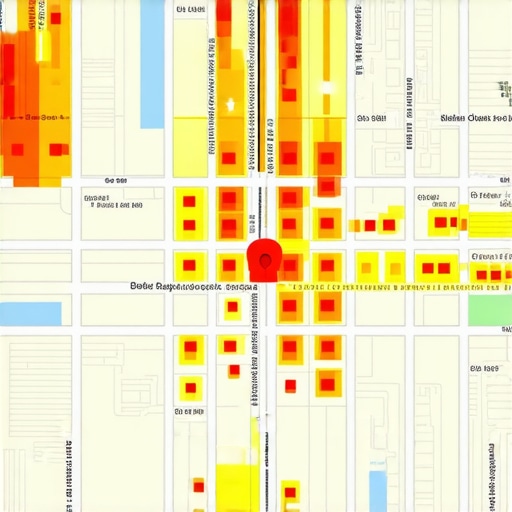
Stop Fighting Against Your Own Categories
Another advanced nuance is the ‘proximity paradox.’ Most owners believe they are limited by their physical office walls. While distance is a factor, the proximity truth why your office location isnt the only reason youre not ranking is that your digital footprint—specifically your schema and entity connections—can override physical distance. According to the Moz Local Search Ranking Factors study, on-page signals and behavioral data like click-through rates are becoming increasingly weighted over raw distance. If your website doesn’t clearly define your service area, you are essentially invisible to anyone three blocks away. This is how most local business schema fails to tell google where you are and why your competitors are eating your local market share. Even the technical infrastructure of your location matters; for example, the impact of wifi ssid data on local business accuracy is a growing signal Google uses to verify you are exactly where you say you are.
Why does your ranking drop off just a few miles away?
If you’ve noticed your business vanishes the moment you cross a certain intersection, you’re hitting a ‘radius wall.’ You can actually break this wall by understanding the exact radius where your local rankings drop off and then using hyper-local content to signal relevance. Sometimes, the specific schema fix that forced a massive map radius expansion is as simple as adding precise GPS coordinates to your organization data. To really dominate maps, you need to stop thinking about your profile as a static listing and start treating it as a living entity that proves its location every single day through posts and updates. If you are still struggling, it might be time to look at why standard optimization services often miss the local rank signal and pivot your local mapping strategy toward data-backed signals rather than generic guesses.
Why your ranking will rot if you stop today
I see it happen every single month. A business owner hits that coveted top-three spot, pops the champagne, and then completely stops doing the work that got them there. Two months later, they are back on page two wondering why the phone stopped ringing. You have to understand that local maps domination is not a destination; it is a defensive game. Your competitors are watching you. They see you at the top, and they are currently using the same strategies to outsmart the competition that I’ve been teaching you. If you go silent, Google’s algorithm assumes your business is less relevant than the guy who is posting updates twice a week. I personally set aside thirty minutes every Tuesday morning just to audit my activity because even a small dip in engagement can trigger a downward trend.
Tools I actually use to stay at number one
I don’t rely on the basic Google Business Profile dashboard because, frankly, the data is often too vague to be useful. I need to see the ground-level truth. I use a grid-based rank tracker (like Local Falcon or BrightLocal) because it shows me exactly where my ‘radius wall’ is. If you aren’t using one, you are likely falling for maps keyword tracking flaws that hide your true performance. These tools show you a heat map of your city, and seeing a sea of green ‘1s’ is the only way to know you are truly winning. 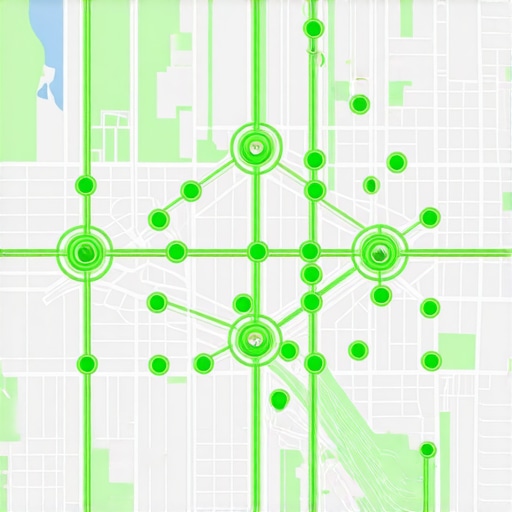 I also use a simple GPS-tagging app for every photo I upload. Even though some SEOs argue that Google strips EXIF data, I’ve found that specific photo metadata still plays a role in establishing entity ‘place-ness’ in more competitive markets. It’s about creating a mountain of evidence that Google cannot ignore. To keep the clicks coming, I also lean heavily into the image optimization trick that involves overlaying helpful text on my photos, which stops the scroll and forces a click.
How do I maintain my map position over time?
Consistency beats intensity every single time. You don’t need to spend five hours a day on this. You need to leverage the power of regular profile updates to show Google you are active. I recommend a ‘Pulse Check’ once a month using a profile audit checklist to ensure your attributes, hours, and service areas haven’t been ‘suggested’ into a mess by users or competitors. According to local SEO expert Joy Hawkins from Sterling Sky, monitoring for ‘suggested edits’ is critical because competitors can often change your business category or phone number without you getting a clear notification. As we look toward 2026, I predict that ‘Visual Intent’ will be the next big shift. Google’s AI will likely start ‘scanning’ your uploaded videos and photos to verify you actually provide the services you claim, moving beyond just text-based signals. My challenge to you: go take one real, high-quality photo of your team working today, tag the location, and post it as a GMB update right now. Don’t wait for the rank to drop before you start caring again.
The Brutal Truth I Had to Accept to Scale My Rank
After years of tweaking profiles, the biggest ‘lightbulb moment’ I had was realizing that Google doesn’t reward the best business; it rewards the business that provides the clearest, most consistent data. I spent months frustrated because my google my business rank was fluctuating wildly until I stopped looking for hacks and started looking for inconsistencies. One of the most common traps is falling for the audit mistake that makes your map listing effectively invisible, which usually involves ignoring those tiny, conflicting data points across the web. I learned that you cannot outsource your reputation; you have to own the narrative of your local entity every single day. Local maps domination is a game of millimeters, where the winner is simply the one who left the fewest questions for the algorithm to answer.
The Gear That Keeps My Business on the Map
To maintain map pack domination, you need more than just a standard dashboard. I personally swear by grid-tracking tools that show exactly where your influence ends, as it allows you to visualize your ‘radius’ in real-time. If you find yourself hitting a wall, it is often worth looking into map pack domination secrets that focus on behavioral signals like click-to-call rates. I also recommend keeping a physical log of your profile edits; Google’s memory is long, and knowing exactly when you changed a category or an attribute helps you diagnose rank shifts weeks later. If you ever feel overwhelmed and decide to get outside help, make sure you know the one question to ask a local seo expert before you hire them so you don’t end up paying for generic services that ignore your specific local signals.
Your Map Advantage Starts the Moment You Take Control
The journey to the top of the map isn’t about competing with everyone at once; it’s about cleaning up your own backyard and then methodically expanding your territory. Your local mapping strategy should be a living, breathing part of your weekly routine, not a ‘set it and forget it’ task. You have the tools, the strategy, and the proof needed to clear the ghosts out of your way and claim the visibility your business deserves. I know it can feel like a mountain to climb, but once you see that first surge of local calls coming in, you’ll realize every minute of cleanup was worth it. Have you ever discovered a ‘ghost’ listing for your business that was secretly stealing your traffic? Let me know in the comments below.
About the Author
Umar Latif
Brand & Marketing Expert · Dubai, UAE
Umar Latif is a seasoned Brand and Marketing Expert based in Dubai, UAE, with a specialized focus on Local SEO and international digital strategy. With extensive experience managing and optimizing websites for a diverse range of international clients, including those in the United States, Umar has developed a deep understanding of the nuances required to dominate local search results. His technical proficiency encompasses comprehensive keyword research and the implementation of advanced Google-centric strategies designed to enhance visibility and drive organic traffic. As a contributor to dominateyourlocalmaps.com, Umar leverages his background in global marketing to provide actionable insights for businesses looking to improve their local map rankings and digital footprint. His approach combines data-driven tactics with a strategic brand perspective, ensuring that local businesses not only rank higher but also resonate with their target audience. Throughout his career, Umar has remained dedicated to staying ahead of search engine algorithm changes to deliver consistent results for his clients. He is deeply passionate about empowering business owners and marketing professionals with the tools and knowledge they need to achieve sustainable growth.