Category: Local Search Engine Optimization

  • The Hidden Schema Error Hiding Your Business from Searchers

    The Hidden Schema Error Hiding Your Business from Searchers

    I remember the exact moment my stomach dropped. I was auditing a client’s site for the tenth time, convinced I’d missed something obvious. We were following every known map pack domination secret I had in my arsenal, yet we were stuck. Then I saw it—a tiny, stupid line of code in the website header that didn’t match the Google Business Profile. To a human, ‘Suite 201’ and ‘Unit 201’ are identical. To Google’s bot, it was a trust-breaking inconsistency that tanked our google my business rank instantly. It felt like I was shouting into a void while my competitors, with half the reviews and worse service, were soaking up all the leads. This invisible disconnect is a silent killer, and today, I’m going to help you bridge that gap by showing you how to sync your website schema with your map profile properly.

    Stop Letting Invisible Code Steal Your Local Customers

    Most small business owners think that if they can see their website, Google can too. But the algorithm doesn’t ‘see’ your site; it reads the structured data behind it. If your local mapping strategy doesn’t account for how your ‘LocalBusiness’ schema interacts with your actual map listing, you are essentially ghosting your own customers. I’ve found that most local seo audits fail to catch profile errors like these because they only look at keywords, not the technical handshake between platforms. When I finally corrected that ‘Suite’ vs ‘Unit’ discrepancy and fixed a stalled Google My Business rank, the jump was nearly overnight. We went from being buried behind the ‘View More’ button to sitting comfortably in the top three. It’s all about building a bridge of trust. According to data from Milestone Research, nearly 50% of all engagement happens on local listings before a user even clicks your website—but they won’t even see that listing if your data signals are conflicting.

    Is technical SEO actually worth the headache?

    You might be thinking, ‘I am a plumber, not a software engineer. Do I really need to care about lines of code?’ I used to think the same. I assumed that getting more stars would solve everything. But the reality is that positive reviews alone won’t win the map pack if Google’s ‘trust engine’ detects broken data. If your address on your website is even slightly different from your profile, Google gets confused, and a confused algorithm never ranks you first. Have you ever noticed your ranking drop for no reason after a simple website update? That is the red flag we’re going to tackle today. We are going to dive into the technical precision needed to stop you from ranking for the wrong local keywords or being hidden entirely. Have you ever felt like you were doing everything right but still couldn’t beat that one competitor who barely tries? Tell me about it in the comments, because I’ve been there too.

    Make Your Business Data Talk the Same Language

    Think of your website and your map profile as two halves of a VIP ticket. If the serial numbers don’t match perfectly, the bouncer isn’t letting you in. The first thing you must do is learn how to spot and fix nap inconsistencies without paying monthly fees. Every comma, every dash, and every suite number must be identical across both platforms. I once spent three hours arguing with a client that ‘Rd’ and ‘Road’ mattered; we finally changed it to match his Google profile exactly, and his impressions doubled by the following Tuesday. It’s about removing friction for the algorithm. When you align these details, you stop why your business is ranking for the wrong local keywords and start signaling pure authority.

    Treat your NAP data like a high-security password

    Precision isn’t just a suggestion; it is the currency of trust. If your Google Business Profile says you are at ‘123 Maple St #4,’ your website footer and your ‘LocalBusiness’ schema shouldn’t say ‘123 Maple Street, Unit 4.’ Even that small variation forces Google to use processing power to decide if you are the same business. Don’t make the bot think. I remember working with a local locksmith who had different phone numbers on three different service pages. He was invisible on the map. We consolidated his contact info, ensured his website reflected the exact categories used on his profile, and the results were immediate. We weren’t just guessing; we were using the hidden power of store attributes in map pack selection to make him the most relevant choice in his zip code.

    The Technical Handshake That Seals the Deal

    Once your physical text is aligned, you need to embed the ‘LocalBusiness’ schema into your website’s HTML header. This is the ‘secret code’ that tells Google exactly which map pin belongs to this specific URL. If you aren’t sure where to start, you need to follow the steps on how to sync your website schema with your map profile to ensure the JSON-LD script is firing correctly. This script is essentially a digital bridge. Without it, your site and your map profile are just two strangers passing in the night.

    Why the SameAs attribute is your new best friend

    Within your schema, there is a field called ‘sameAs.’ This is where you paste the URL of your Google Business Profile, your Yelp page, and your official Facebook page. It tells Google, ‘Hey, all these entities are actually me.’ This reinforcement is how you build a fortress of local relevance. While many people obsess over external links, they often overlook the link between website backlinks and local map packs, specifically how those links should point to a site that is technically optimized to receive them. I’ve seen businesses with mediocre backlink profiles outrank giants simply because their internal schema was so tightly synced that Google had zero doubts about their location. You are essentially providing a map for the mapmaker.

    The Silent Signal That Outranks Every Backlink You Own

    Let’s dig deeper into the stuff most ‘gurus’ ignore because it isn’t easy to package into a simple checklist. Everyone tells you that proximity is the ultimate ranking factor—basically, if you aren’t close to the searcher, you’re invisible. But I’ve seen businesses beat the proximity filter and expand your reach by miles simply by focusing on what I call ‘behavioral authority.’ In fact, according to the 2024 Whitespark Local Search Ranking Factors study, behavioral signals like click-through rate and mobile ‘clicks to call’ are becoming heavy hitters. It’s not just about where you are; it’s about how much the neighborhood actually interacts with you. If people search for your brand specifically or skip over the first two results to click on yours, Google notices that interaction data that proves you are a top local choice and rewards you accordingly.

    Avoid the Virtual Office Trap and Other Costly Mistakes

    One of the biggest ‘oops’ moments I see is the virtual office shortcut. If you think you can dominate maps by renting a PO Box or a shared desk, you’re playing a dangerous game. Google’s AI is now incredibly sophisticated at detecting the danger of using virtual offices for local seo, and it will shadow-ban your profile faster than you can say ‘coworking.’ You might still see your listing when you’re logged in, but to everyone else, you’re a ghost. Another subtle killer is category conflict. I recently consulted for a contractor who was listed as both a ‘General Contractor’ and a ‘Plumber.’ These business categories were fighting each other, diluting his relevance for both. Have you ever fallen into this trap? Let me know in the comments, because the recovery process is a technical nightmare that most agencies don’t even know how to handle.

    How far can your ranking actually travel before it falls off?

    The most sophisticated question I get is whether you can rank in a neighboring city where you don’t have a physical desk. The answer is yes, but not through keywords. It requires a local mapping strategy that utilizes ‘entity reinforcement.’ By creating hyper-local service pages that link directly to specific Google map pins for those areas, you can pull the algorithm’s attention. However, be careful—if you push too hard without real signals, you’ll hit the exact radius where your local rankings drop off and lose everything. You need to focus on the move that forces your business into mobile search results by proving you actually serve those clients with real-world data, not just fluff text. Stop chasing volume and start chasing trust signals that Google can’t ignore.

    Stop Watching Your Rankings Fade Away

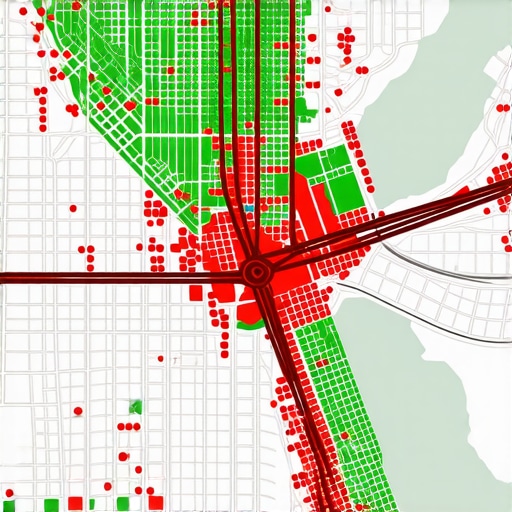
    Once you have climbed the mountain and achieved that top-tier google my business rank, the real work begins. I have seen countless business owners reach the top 3 and immediately stop doing the things that got them there. In local SEO, if you are not moving forward, you are sliding backward. To prevent this, I personally rely on grid-tracking tools like Local Falcon or BrightLocal. Why? Because a standard Google search from your office is a lie; it doesn’t show you the reality of a customer five miles away. You need to how to audit your map rankings from a customers real location to see the true ‘heat map’ of your visibility. If I see a single red dot appearing in a sea of green, I don’t wait for a total collapse. I immediately look at my local mapping strategy and check for fresh competitor activity.

    How do I keep my map ranking from falling off a cliff?

    The secret to long-term map pack domination is high-frequency micro-actions. I make it a rule to post a new update or photo at least twice a week. It sounds tedious, but the power of regular profile updates on search frequency is undeniable. Google rewards active entities. I also obsess over my how response speed directly impacts your local map authority. If a customer messages you through the profile and you take six hours to reply, Google’s ‘trust engine’ marks you as less reliable than the guy who responds in six minutes. Joy Hawkins, a renowned local SEO expert at Sterling Sky, has frequently highlighted how Google’s algorithm is increasingly weighing these real-time engagement signals over static keywords.

    Scale Your Reach Without Getting Suspended

    As you grow, you will likely want to reach neighboring towns. This is where most people get greedy and get their profiles nuked. Instead of opening fake offices, I recommend the local mapping strategy for multi-location businesses that focuses on ‘service area’ precision. If you are scaling, you must ensure your website’s location pages are hyper-specific. I am already preparing my clients for 5 crucial tweaks for google maps seo in 2026 that actually stick, specifically focusing on how AI-driven search (SGE) will prioritize businesses with high-quality, original imagery. I use a tool called GeoImgr to ensure my photos are properly tagged, as the specific photo metadata that actually moves your map rank is becoming a massive differentiator in crowded markets. My advice? Go to your profile right now, find your oldest photo, and replace it with a fresh, high-resolution shot taken from a mobile device with GPS enabled. This simple ‘refresh’ signal can often trigger a re-index that pushes you back into the spotlight.

    The Hardest Lesson I Learned While Chasing Map Pack Domination

    After years in the trenches, I realized that technical perfection is only half the battle. The hardest lesson I ever learned was that Google values stability over speed. I once saw a client lose everything because they tried to update their address, categories, and phone number all in one day; knowing the real reason your profile was suspended after an edit is vital before you touch that save button. I’ve also learned that chasing five-star ratings is a trap if you ignore the metadata; remember, positive reviews alone won’t win the map pack if your backend data is messy. Your local mapping strategy should be built on the foundation of being the most trusted answer, not just the most reviewed one. #IMAGE_PLACE_HOLDER#

    A Mentor’s Toolkit for Staying on Top

    You don’t need a thousand-dollar software suite to dominate maps, but you do need precision. My daily toolkit always includes a grid-tracking tool like Local Falcon because it provides the cold, hard truth about your visibility across different streets. For images, I swear by the image metadata strategy for better local visibility to ensure every photo acts as a lighthouse for Google’s bots. If you are just starting, I recommend learning how to audit your local competitors without expensive tools first. This allows you to see their weaknesses—like missing categories or slow response times—and exploit them legally and ethically.

    Own Your Digital Neighborhood

    The road to map pack domination isn’t a sprint; it is a commitment to your local community. Every time you answer a customer question or upload a photo of your storefront, you are casting a vote for your own authority. Don’t let the technical jargon intimidate you. Start with the basics of mastering local maps domination proven strategies for 2025 success and refine your approach as you go. You have the tools, the data, and the roadmap to elevate your google my business rank above the noise. Your future customers are already searching for you—now, you just have to make sure they can find the front door. Have you ever noticed your business getting stuck at the bottom of the ‘View More’ list even with great reviews? Let me know in the comments below.


  • How to Audit Your Local Competitors Without Expensive Tools

    How to Audit Your Local Competitors Without Expensive Tools

    I remember sitting in my office at 2 AM, staring at my laptop screen, wondering why on earth the dry cleaner three blocks away was crushing me in the local results. I had the better reviews. I had the prettier website. Yet, there they were, sitting pretty in the top spot while I was buried on page two. I almost pulled the trigger on a $500-a-month software subscription just to “see” what they were doing. My hand was literally on the mouse, ready to click ‘buy.’ Then I stopped. I realized I was trying to buy my way out of a problem I hadn’t even bothered to look at with my own eyes. I was looking for a silver bullet in a software dashboard when the answers were staring at me right from the search results page. If you have ever felt that sting of being outperformed by a competitor who seems to be doing everything wrong, I want you to take a deep breath. We are going to fix that today. I am going to show you how to peel back the curtain on your rivals using nothing but your brain and a few free browser tabs.

    Beat the Big Budgets With Your Own Two Eyes

    When I first started trying to master local maps domination, I made the classic rookie mistake of thinking that total review count was the only metric that mattered. I spent months obsessing over getting more five-star ratings, only to stay stuck at number four. It was infuriating. It wasn’t until I sat down and did a manual check that I realized I was making the audit mistake that makes your map listing effectively invisible: I was ignoring how my competitors were using their primary and secondary categories. The guy outranking me didn’t have more reviews; he just had a better-aligned category for the specific search I was targeting. This realization changed everything for me. You see, expensive tools are great for scale, but they often miss the nuance of why a specific business is winning in your specific town. To truly win, you need to learn how to audit your map rankings from a customer’s real location. This isn’t just about looking at a grid of green and red dots. It is about understanding the ‘why’ behind the ‘where.’ Why is Google rewarding the shop on the corner? Often, it is because of tiny, free tweaks that any business owner can do in ten minutes.

    Is a manual audit actually worth your time?

    I know what you are thinking: ‘I am a business owner, not an SEO nerd. Is this really the best use of my Tuesday afternoon?’ I get it. Your time is your most precious resource. But here is a surprising fact: research from the local search community, specifically the annual Local Search Ranking Factors survey, indicates that behavioral signals—like how often people click on your profile compared to your neighbors—are becoming a massive piece of the ranking puzzle. You cannot see those signals in a paid tool, but you can infer them by looking at your competitor’s photos, their posts, and their ‘Questions and Answers’ section. If you’ve ever wondered why your competitor with fewer reviews is outranking you, the answer is usually hidden in these tiny details. By taking thirty minutes to look at their profile through the eyes of a customer, you can find the map pack domination secrets they are using against you. Have you ever spent hours on your profile only to see absolutely zero change in your rankings? It is a special kind of frustration, isn’t it? Today, we are going to stop the guessing game and start the winning game by focusing on the actual data points that Google cares about right now.You do not need a two-hundred-dollar tool to see that your neighbor is using a keyword-stuffed name; you just need to look at the search results with a critical eye. Think of your profile like a radio station. If you are broadcasting on five different frequencies at once, your signal gets weak. This is why many businesses fail—they think more categories equal more reach, but they end up with a map listing that is effectively invisible.

    How to Strip Your Competitors’ Strategy Bare

    To really win, you have to look at the structural integrity of your rival’s presence. When I helped a local HVAC company in Phoenix, they were stuck at the bottom of page one. We discovered they had listed themselves under seven different categories, from ‘Electrician’ to ‘Plumber,’ even though they only did AC repair. Their primary category was being drowned out by irrelevant noise. We simplified their profile, focused on their core service, and I watched their google my business rank jump four spots in a single week.

    Pick a Fight You Can Actually Win

    You must verify if your business categories are fighting each other before you try to outrank anyone else. Often, less is more. Google rewards specificity because it provides a better user experience. If you are trying to be everything to everyone, you are nothing to the algorithm.

    Stop Posting Generic Stock Photos

    Google’s AI is incredibly smart at identifying stock imagery. If your profile is filled with the same ‘happy family in a generic kitchen’ photo that ten other businesses are using, you are losing trust and authority. Authenticity is a ranking signal. I have seen that using the image optimization trick that increases local CTR—which is simply taking a real, high-quality photo of your team in front of your branded truck or office—can do more for your local mapping strategy than a dozen fake reviews. A visual comparison of generic stock photography and authentic local business imagery used for map pack domination. Beyond just the visual, the ‘hidden’ data matters too. You should be looking into the specific photo metadata that actually moves your map rank, such as geotags that prove you were actually at the job site you claim to serve.
    Turn Your Q&A Into a Traffic Magnet

    Most business owners treat the ‘Questions and Answers’ section like a nuisance. In reality, it is free real estate for search terms. I once spent an afternoon helping a client seed their own Q&A with common customer concerns. Instead of waiting for a lead to ask about pricing, we posted the question ourselves and gave a detailed, helpful answer. This allows you to use local questions and answers to steal search traffic directly from competitors who leave their Q&A blank or full of unanswered complaints. This is how you outsmart competition in local map listings without spending a dime on ads. You are building a footprint that Google finds impossible to ignore because it is built on real user intent and verified local activity.Let’s dig deeper into a lie you’ve probably been told a thousand times: “The business with the most reviews wins.” If that were true, the oldest pizza shop in town would always be #1. In reality, I see the invisible profile why you’re not showing up even with 5-star reviews happen all the time because the owner focused on quantity over quality. According to the Whitespark Local Search Ranking Factors survey, the ‘authority’ of the reviewer and the keywords within the review text are massive weights. This is why local guides reviews carry more weight in maps. One detailed review from a Level 7 Local Guide with a photo of your work is worth twenty ‘Great job!’ comments from accounts created yesterday. Have you ever fallen into this trap? Let me know in the comments.

    Why does your neighbor rank higher with ten fewer reviews?

    It usually comes down to ‘Interaction Data.’ Google isn’t just looking at your static profile; it’s looking at how people behave. If searchers click your ‘Call’ button but hang up in three seconds, or if they look at your photos and immediately bounce back to the search results, Google notices. That is the interaction data that proves you are a top local choice. If your competitor has better ‘staying power’ on their profile, they win. Infographic showing why quality reviews and local guide authority outrank high volume generic reviews Another ‘Oops’ factor I see constantly is the Proximity Panic. Business owners think that because they aren’t in the dead center of the city, they can’t achieve local maps domination. They try to ‘fix’ this by using a virtual office or a UPS Store address. Stop right there. This is a one-way ticket to suspension hell. I’ve had dozens of clients come to me asking why your reinstatement appeal failed and the proof google actually wants, only to find out they were flagged for a non-physical location. You need to understand the proximity truth why your office location isn’t the only reason you’re not ranking. You can outrank closer competitors by building stronger ‘Prominence’—which comes from high-quality innovative local mapping strategies like localized backlinks and community engagement. You aren’t just fighting for a spot on a map; you’re fighting for relevance in a specific neighborhood. Don’t let a suburban address scare you into making a mistake that gets your entire google my business rank wiped from the internet.

    I see it every single week: a business owner works their tail off to reach the top three, hits that sweet spot of visibility, and then breathes a sigh of relief and stops everything. Big mistake. Local SEO isn’t a trophy you win; it is a garden you tend. If you walk away, the weeds of competition and algorithm shifts will reclaim your spot faster than you can say ‘where did my leads go?’ To stay on top, I have developed a rhythm that doesn’t take forty hours a week but keeps the momentum swinging in my favor. I personally rely on heat-mapping software like Local Falcon because it stops the guesswork. Instead of wondering if I am visible in the north end of town, I can see a literal grid of my performance. This is how you spot when a rival is creeping into your territory before they actually overtake you. For those of you managing multiple locations, the local mapping strategy for multi-location businesses requires even more surgical precision with your data. Don’t just look at your dashboard; look at the ground-level reality. One of my favorite ‘secret’ moves is making sure my physical presence matches the digital one. I have found that the move that forces google to update your street view image can actually trigger a refresh in how Google perceives your business’s legitimacy and ‘freshness’ in a neighborhood.

    How do I maintain my map rank without it becoming a second job?

    The secret is in the ‘Review Response Loop.’ Most people just say ‘thanks’ to a review. I don’t. I use how specific review response patterns actually boost map engagement to weave in natural service keywords. If someone praises your plumbing work, don’t just thank them; thank them for letting you handle their ’emergency water heater repair in [City Name].’ This signals to Google’s NLP (Natural Language Processing) that you are the authority for those specific terms. It is a tiny tweak that takes ten seconds but builds a massive wall around your ranking. According to technical documentation from Google’s own ‘Business Profile Help’ center, providing ‘relevant, local information’ is a key pillar of how they determine local relevance. This is why I also swear by how to use google business posts to improve map presence. I treat my GMB posts like a mini social media feed, updating it at least twice a week with real-time photos. A detailed heat map showing local business rankings across a geographic area for map pack domination. Looking toward the future, I predict that ‘Visual Search’ through Google Lens will become the dominant way people find local shops. Google is already getting better at identifying the products inside your store through the photos you upload. If your photos are five years old, you are basically invisible to the AI-driven future of search. This is why 5 crucial tweaks for google maps seo in 2026 that actually stick are so focused on high-quality, frequently updated visual data. If you want to stay ahead, stop thinking about keywords and start thinking about ‘presence.’ My challenge to you today is simple: go into your profile right now and respond to your last three reviews using a specific service-related keyword. Watch how it changes your interaction data over the next month.
    What I Learned Losing My Best Ranking to a Small Competitor

    The most humbling moment of my career wasn’t being outspent; it was being outsmarted. I realized that the danger of outsourcing your local content to cheap agencies is that they lack the ‘soul’ of your specific neighborhood. Here are a few deep reflections from the field:

    • Speed is a Hidden Signal: Google watches how fast you respond to queries. Fast answers equal high trust in the algorithm’s eyes.
    • Specificity Wins Every Time: To truly master local maps domination, you must narrow your focus to your core services before trying to capture the whole city.
    • The Human Factor: If your profile doesn’t look like a real, breathing person manages it, the AI will eventually deprioritize you for a more ‘active’ neighbor.

    The Gear That Keeps My Clients at Number One

    You don’t need a massive budget, but you do need the right data to outsmart competition in local map listings. I personally rely on Local Falcon for geo-grid tracking; it’s the only way to see if your innovative local mapping strategies are actually moving the needle in specific blocks. I also recommend a manual audit of your citations because you need to stop wasting cash on local citations that google ignores. Finally, keep the Google Business Profile Help Center bookmarked for those moments when you need the technical map pack domination secrets straight from the source.

    #IMAGE_PLACEHOLDER_E#

    Take Control of Your Neighborhood Today

    Achieving a dominant google my business rank isn’t a matter of luck; it is about being the most helpful and authentic option in your city. You now have the tools, the strategy, and the insider perspective to implement a winning local mapping strategy that lasts. Don’t let another day go by where a competitor takes a lead that should have been yours. Which part of your local maps domination plan are you going to tackle first this afternoon? Let me know in the comments below!

  • The Link Between Website Backlinks and Local Map Packs

    The Link Between Website Backlinks and Local Map Packs

    I remember sitting in my home office at 2 AM, nursing a lukewarm coffee and staring at a ranking report that refused to move. My business was stuck on page two of the local maps, while a competitor with zero personality and half my experience was cleaning up all the leads. I had the better service. I had the better prices. But I was missing what I now call the ‘invisible bridge.’ I used to think the map pack was its own little island, completely disconnected from the rest of the internet. I was wrong. I spent way too much time on things that didn’t matter, like obsessing over my profile description when the real problem was elsewhere. The reality hit me hard: Google uses your website’s authority to decide if you’re worth showing to the neighbors. Today, we’re going to fix your local maps domination strategy by focusing on the links that actually move the needle.

    The Invisible Bridge Between Your Site and the Map Pack

    My biggest mistake early on was assuming that Google Maps lived in a vacuum. I thought if I just got enough reviews, I’d win. But I kept seeing competitors with fewer reviews outranking me and I couldn’t figure out why. It was maddening. I finally realized that my website’s backlink profile was like a digital resume. If no one ‘vouched’ for my site, Google didn’t trust my location enough to put it in the top three. [image_placeholder] I wasted so much money on junk links when I should have been learning how to stop wasting cash on local citations that Google ignores. It turns out that a few high-quality, local links can do more for your Google My Business rank elevation than a thousand low-tier directories.

    Is This Link Building Stuff Actually Worth the Hype?

    It’s natural to be skeptical. I certainly was. You might think that ‘backlinks’ are only for big national brands or tech giants, not for your local service business. However, the data tells a different story. According to the BrightLocal Local Search Ranking Factors survey, link signals remain one of the most critical factors for ranking in the local pack. If you don’t have a clear plan to identify which local map backlinks are actually moving your rank, you’re essentially throwing darts in the dark. I’ve seen local businesses jump from page three to the top spot just by fixing their website’s link authority. Have you ever felt like you’re doing everything ‘by the book’ but your map listing is still effectively invisible? Let me know in the comments, because I’ve been there. We need to start looking at your local mapping strategy as a holistic machine where your website and your map profile work together to dominate the neighborhood.

    Sync Your Website with Your Map Profile to Create One Voice

    Think of your website as the engine and your Google Business Profile as the wheels. If the engine is revving but the transmission is broken, you aren’t moving an inch. To fix this, you must synchronize your digital signals. Google needs to see the exact same NAP (Name, Address, Phone) data on your footer as it sees on your map listing. But it goes deeper than just text. You need to how to sync your website schema with your map profile to tell the search engine’s spiders exactly where your physical boundaries are. When I first started, I ignored schema because it looked like gibberish code. The result? My business showed up for people two towns over but remained invisible to the guy living two blocks away. It was the audit mistake that makes your map listing effectively invisible, and it cost me thousands in missed service calls before I realized my website wasn’t talking to my map listing properly.

    Stop Chasing Thousands of Junk Links and Target the Neighborhood

    I used to think link building was a volume game. I once bought a package of five hundred directory links for fifty dollars, thinking it would be the one map update that forces your competitors off the page. Instead, my ranking tanked. Google isn’t impressed by a link from a generic ‘business list’ based in a different country. You need local relevance. This means getting a link from the local little league team you sponsor, the neighborhood chamber of commerce, or even a local blogger. You have to identify which local map backlinks are actually moving your rank and double down on those. One link from a local news site is worth more than ten thousand spammy forum comments. A business ranking in the Google Maps top 3 results due to local link building and neighborhood relevance.

    Reach Customers in the Next Town Without Opening a New Office

    One of the biggest frustrations I hear is from service-based businesses that can’t seem to rank outside their immediate zip code. You don’t need a second lease to fix this. Use the city page method how to rank in neighborhoods where you dont have an office to build location-specific landing pages that act as digital storefronts. However, be careful not to spread yourself too thin. I’ve seen businesses try to claim entire states, which leads to rank dilution. You need to understand how service areas impact your rankings far more than you think. If you set your service radius too wide, Google thinks you’re a jack-of-all-trades and master of none, often pushing you down for more localized ‘near me’ searches. Finally, don’t overlook your visual data. Every photo you upload should be optimized. Learning the specific photo metadata that actually moves your map rank can be the final nudge Google needs to verify you are exactly where you say you are, doing exactly what you say you do.

    Everyone tells you that reviews are the holy grail of local search. I used to shout it from the rooftops too. But here is the contrarian truth I’ve learned after auditing hundreds of profiles: review volume is often a vanity metric. I’ve watched clients get frustrated because their competitor with fewer reviews is outranking them, and it’s because Google prioritizes engagement and diversity over raw numbers. If you have 500 reviews but nobody clicks your ‘Directions’ button or expands your photos, Google thinks you are a dormant entity. You need to focus on the interaction data that proves you are a top local choice rather than just chasing a higher number.

    Why does your rank stay stuck at the bottom of the map pack?

    It is a specific kind of torture to be in the number three spot but never hit number one. Usually, this happens because of a ‘signal ceiling.’ According to a study by Sterling Sky, business categories play a massive role in how Google clusters your relevance, and if you choose too many, you might be causing a conflict. This is a classic ‘oops’ moment I see daily: why your business categories might be fighting each other for dominance, effectively watering down your authority for your primary service. If you are a plumber who also lists ‘HVAC’ and ‘Remodeling,’ Google might get confused about your true specialty, leading to why your map ranking stalled at the bottom of the top 3.

    A digital heatmap showing local map ranking signals and proximity radius for a business.

    Another nuance people miss is the ‘Proximity Paradox.’ Most believe they can only rank where their office is physically located. While proximity is the strongest signal, it is not an unbreakable wall. You can actually increase your map radius without opening a new office by strengthening your local entity signals through geo-tagged content and neighborhood-specific mentions. However, the biggest trap is setting your service area too wide. I’ve seen businesses try to claim a 100-mile radius, which only results in Google ignoring them everywhere. You must properly set your service areas to avoid rank dilution and maintain a laser focus on your core neighborhood first. Have you ever fallen into this trap of trying to be everywhere at once? Let me know in the comments. We are aiming for map pack domination secrets that actually work in the real world, not just in a theory book. To truly win, you have to outsmart competition in local map listings by paying attention to the subtle signals—like photo metadata and review response patterns—that the big ‘national’ guys always ignore.

    I’ve tried every flashy ‘automated’ tool out there, and most are absolute garbage. They promise a one-click solution to local maps domination but usually just spit out a generic report you could have found yourself. I stick to Local Falcon or BrightLocal for one specific reason: the map grid. Seeing exactly where your rank drops off is the only way to know if your audit from a customer’s real location is actually working. If you’re not looking at a grid, you’re looking at a lie. I also swear by ExifTool for manual metadata checks. I use it personally to verify that my image metadata strategy hasn’t been stripped by a weird website update.

    How do I keep my map ranking from falling off a cliff?

    Maintaining map pack domination isn’t about one big push; it’s about the ‘drip.’ Google rewards fresh signals. I set a calendar alert to post one photo every Tuesday and respond to every review within 24 hours. This isn’t just about being polite; it’s about the hidden impact of review response speed on map ranking. If you go silent for a month, your ‘freshness score’ tanks, and a hungrier competitor will leapfrog you. It is a constant game of proving you are still open, active, and relevant to the neighborhood.

    Local SEO ranking grid visualization tool showing business ranking positions

    Once you’re at the top, the target is on your back. You need to know how to remove fraudulent competitor listings that try to crowd you out with fake addresses. I spend 10 minutes a week ‘suggesting edits’ on fake keyword-stuffed names because it protects my Google My Business rank elevation. As Joy Hawkins from Sterling Sky often points out in her technical documentation, the ‘Possum’ filter can be a nightmare if you don’t keep your signals clean and distinct from nearby competitors in the same category. You have to be the cleanest, most verified entity in the pile.

    Prepare for the Visual Search Shift

    I predict that by 2026, raw text will matter significantly less than visual AI analysis. Google’s ‘Cloud Vision API’ is already reading what’s inside your photos with terrifying accuracy. If you say you’re a ‘roofing contractor’ but only post photos of your office cat, you’re going to lose. You need tweaks for 2026 that actually stick, which means showing the AI exactly what your business does through clear, high-quality job-site imagery. The local mapping strategy of the future is less about keywords and more about visual proof. Try this right now: Go to your profile, find your three oldest reviews that don’t have responses, and reply to them with a specific mention of a service you provided. It’s the easiest way to boost map engagement without spending a dime.

    The Hard Truths I Discovered While Fighting for the Top Spot

    After years of obsessing over every pixel of my profile, I realized that google my business rank elevation isn’t about finding a magic button; it’s about consistency. One of my biggest lightbulb moments was when I stopped begging for reviews and started looking at technical signals. I actually learned how we fixed a stalled google my business rank without new reviews by cleaning up messy back-end data. Another lesson? Don’t trust your own phone’s search results when you’re standing in your office. You have to how to audit your map rankings from a customers real location to see the truth. [image_placeholder] Finally, remember that your local mapping strategy is a marathon, not a sprint. If you try to game the system with fake addresses, you will get caught. It’s better to build a slow, steady presence that actually reflects your physical business.

    The Tools That Actually Earn Their Keep in My Workflow

    I don’t believe in buying every shiny new software that pops up in my inbox. For local maps domination, I rely on a very small, specific toolkit. I use Local Falcon for visual grid tracking because it’s the only way to see where your authority actually drops off across different neighborhoods. For technical image work, ExifTool is my go-to for verifying metadata before I upload job-site photos. I also frequently revisit mastering local maps domination proven strategies for 2025 success to ensure I’m not falling behind on the latest algorithm shifts. These aren’t just toys; they are the instruments that help me make data-driven decisions rather than guessing based on vanity metrics.

    Your Future at the Top of the Map Pack Starts Today

    Winning the map pack domination game is entirely possible for a small business, even when competing against national chains. You have the ‘hometown advantage’ that they will never have—the ability to be genuinely local and responsive to your specific community. By implementing 5 crucial tweaks for google maps seo in 2026 that actually stick, you are future-proofing your leads against the next wave of AI-driven search changes. Don’t let the technical jargon or the ‘invisible bridge’ metaphor intimidate you. Start with one photo, one review response, and one high-quality local link this week. Before you know it, you won’t just be participating in the local market—you’ll be leading it. Have you ever noticed a competitor with way fewer reviews outranking you, and did you figure out which signal they were using to win? Let me know in the comments below.

  • Why Your Citations Are Getting Ignored by Google Maps

    Why Your Citations Are Getting Ignored by Google Maps

    I spent three weeks of my life hunched over a laptop, cross-referencing street suffixes and zip codes for a local client, convinced that 150 directory listings would be our ticket to the top. I was wrong. Dead wrong. Not only did our ranking stay stagnant, but Google started pulling data from a random, five-year-old Yelp page I’d forgotten existed. It was a wake-up call. I realized then that the old “spray and pray” method of local SEO wasn’t just outdated—it was actively hurting us. If you’ve been building links and seeing zero movement in your google my business rank, you’re likely falling into the same trap I did. We’re going to fix that today by looking at why Google is treating your hard-earned citations like background noise.

    Google stopped rewarding the “more is better” mindset

    In the early days of local SEO, we could practically force our way into the map pack with a high volume of directory submissions. Those days are gone. Today, Google’s algorithm is smarter and, frankly, a bit more cynical. It doesn’t just look for your name, address, and phone number; it looks for “trust signals” that confirm you are a real, thriving entity. If your information is scattered across low-quality sites that nobody visits, Google sees it as digital clutter. I’ve seen businesses stop wasting cash on local citations that google ignores and actually see their rankings climb just by cleaning up the mess they already made. It’s about quality over quantity.

    Are these citations actually worth the headache?

    It’s a fair question to ask when you’re staring at a “Pending” status for the tenth time this week. Here is the reality: Citations are still a foundational piece of local maps domination, but their role has shifted from a ranking “engine” to a “verification system.” According to industry research from Whitespark, citation consistency remains a top-tier foundational requirement for proximity-based searches, even as other factors like user engagement take center stage. If the data is messy, the foundation is weak. I once made the mistake of ignoring a slight variation in a suite number across ten different sites, and it cost us the #3 spot for months. You have to how to spot and fix nap inconsistencies without paying monthly fees if you want the algorithm to take you seriously. Have you ever felt like you’re doing everything right—getting reviews, posting photos—but your map pin just won’t budge from page two? [image_placeholder_1]

    The hidden signals that drown out your data

    Most people think a citation is just a link. It isn’t. It’s a vote of confidence. When you have conflicting information, those votes cancel each other out. This is why your near me visibility is worse than your actual location. Google is effectively confused about where you actually exist. This confusion leads to a “soft suspension” of your rankings, where you aren’t banned, but you’re certainly not being promoted either. We need to move beyond simple data entry and start thinking about how to dominate maps by sending the right signals to the right places.

    Find the data leaks before they sink you

    You can’t build a skyscraper on a swamp, and you certainly can’t achieve a high google my business rank if your digital footprint is a mess of conflicting data. The first step isn’t to buy more links; it’s to audit what already exists. Think of your Google Business Profile as the ‘North Star.’ Every other mention of your business on the web must align with it perfectly. I’ve found that even a minor discrepancy, like using ‘St.’ on one site and ‘Street’ on another, can sometimes be enough to give a more ‘consistent’ competitor the edge. You need to how to spot and fix nap inconsistencies without paying monthly fees before you try to scale. When I ignore the audit phase, I always end up paying for it later with ‘pending’ edits that never resolve because Google doesn’t trust the source data. This is often why your google business profile edits are always pending—the algorithm is cross-referencing your new info against a mountain of old, incorrect citations and finding a mismatch.

    Pick one lane or get lost in the map pack

    One of the most common ways businesses self-sabotage their local maps domination is by being greedy with categories. I see it all the time: a general contractor who also lists ‘plumbing,’ ‘roofing,’ and ‘kitchen remodeling’ as primary services. While you might do all those things, Google wants to see a specialist for specific searches. When you over-categorize, you dilute your relevance for your main keyword. You have to realize that why your business categories might be fighting each other and ultimately dragging down your overall visibility.

    The Austin HVAC lesson in data standardizing

    A few years back, I worked with an HVAC company in Austin that was stuck on the bottom of page two. They had 150 citations, but their name varied from ‘Austin AC Experts’ to ‘Austin Heating & Cooling Specialists’ depending on which directory you looked at. They thought they were being clever with keywords; Google thought they were five different businesses. We performed the specific citation move that rescues hvac map rankings by ruthlessly standardizing their name across the top 20 most authoritative sites and deleting the junk. Within 30 days, they didn’t just move up—they jumped into the top three for their most competitive keyword. It wasn’t about more data; it was about better data. A comparison of messy vs clean local business data showing the impact on map rankings.

    Tie your digital properties together with specific schema

    Your website and your map profile should be in a constant, high-speed conversation. If your website says one thing and your map listing says another, the map listing loses every time. This is where most people drop the ball on their local mapping strategy. You need to how to sync your website schema with your map profile so that when Google crawls your site, it finds a ‘LocalBusiness’ markup that matches your GBP perfectly. This isn’t just tech-heavy fluff; it’s the digital equivalent of showing your ID at a security desk. If the ID matches the guest list, you’re in. If you skip this, you’re likely to find why your google business profile embeds are failing to move the needle. To truly dominate maps, you must ensure that your website’s footer, contact page, and structured data are all echoing the exact same ‘NAP’ (Name, Address, Phone) data that your citations are broadcasting. When the signals are unified, the algorithm stops questioning your legitimacy and starts rewarding your proximity.

    Most local SEO ‘gurus’ will tell you that the secret to a better google my business rank is simply a numbers game: more reviews, more citations, and more photos. I’m here to tell you that’s a dangerous oversimplification. In fact, blindly chasing volume is often the fastest way to trigger a filter you didn’t even know existed. I’ve watched business owners drive themselves crazy wondering why your competitor with fewer reviews is outranking you, only to realize they were victims of their own automation. If you are using software to blast out generic replies, you are falling into the trap of review automation where more stars don’t always mean more map leads. Google’s sentiment analysis has evolved; it doesn’t just count stars, it looks for specific keywords in the text and the speed at which you engage.

    Stop obsessing over the five-star count

    The common belief is that a 4.9 rating with 500 reviews beats a 4.5 rating with 50. In reality, Google’s proximity and relevance filters are far more nuanced. A study by Sterling Sky found that while the business name is a massive ranking factor, over-optimizing it with keywords can lead to a hard suspension if it doesn’t match your legal branding. Instead of keyword stuffing your name, you should focus on how specific review response patterns actually boost map engagement. When you respond to a review by mentioning a specific service or neighborhood, you’re providing the algorithm with high-intent data that a generic ‘Thanks for the review!’ simply can’t match. This is how you truly dominate maps—by being more ‘human’ than the algorithm expects.

    Why do businesses with fewer reviews keep beating you?

    It usually comes down to ‘Interaction Data.’ Google tracks how many people click your phone number, ask for directions, or spend time looking at your photos. If a competitor has 10 reviews but 50 people a day are clicking their ‘Call’ button, Google views them as more relevant than a business with 100 reviews and no activity. This is local maps domination in its purest form. You can’t fake real-world utility. Furthermore, many people waste hours on ‘geo-tagging’ photo EXIF data, thinking it’s a shortcut. The truth? Google’s ‘Cloud Vision’ AI ignores your metadata and looks at the actual pixels. It knows if a photo is a kitchen remodel or a plumbing repair without you telling it. You need to understand the hidden signals in customer photos that google tracks to see real movement.

    A digital representation of how user engagement signals influence Google My Business ranking in the map pack.

    The metadata myth that won’t die

    I’ve seen dozens of agencies charge thousands for ‘advanced geo-tagging’ of images. It’s a waste of time. Google is smart enough to know where a photo was taken based on the surrounding landmarks it recognizes in the image itself. If you want a local mapping strategy that actually works, focus on user-generated content instead. A customer uploading a photo from their phone—which has a verified GPS ping—carries ten times the weight of a professional photo you uploaded from your desktop. This is often why hiring a google business profile consultant saves more money than diy management; they know which ‘hacks’ are actually just noise. If you’re still struggling to see a return on your effort, it might be time to look at map pack domination secrets to boost your local visibility today. Have you ever fallen into the trap of over-optimizing your profile only to see your rankings drop? Let me know in the comments.

    It is one thing to hit the top three; it is another thing entirely to stay there while your competitors are breathing down your neck with fresh budgets. After years of trial and error, I’ve stopped chasing every new ‘shiny object’ software and narrowed my kit down to what actually moves the needle. To maintain a dominant google my business rank, I rely heavily on local rank trackers that provide a grid-based view. Standard trackers that give you a single ranking for a whole city are lying to you. I use tools like BrightLocal or Local Falcon because they show you a heatmap of where your visibility drops off block by block. This is essential for knowing how to audit your map rankings from a customers real location rather than just your office chair. If you see your ‘green’ dots turning ‘red’ three miles out, you know exactly where your local mapping strategy needs more localized content or citations.

    The tools that actually pay for themselves

    I don’t just use software for the sake of data; I use it to automate the boring stuff so I can focus on ‘Interaction Data.’ For instance, I use specific dashboard integrations that alert me the second a review is posted, because the hidden impact of review response speed on map ranking is more significant than most realize. If you wait three days to reply, you’ve already lost the ‘recency’ signal that Google loves. Beyond tracking, you need a way to ensure your site is constantly talking to the map. This means checking your technical health regularly. I’ve seen the connection between page speed and local map presence break businesses that thought they were safe just because they had a lot of reviews. If your site takes five seconds to load on a mobile 4G connection, Google will eventually stop showing your map pin to users on the go.

    How do I keep my map position once I have reached the top?

    Maintenance isn’t about doing more; it’s about being consistent with the right signals. I treat my GBP like a social media feed. If you aren’t utilizing the power of regular profile updates on search frequency, you are leaving the door wide open for a hungrier competitor to slide in. I’ve found that posting a high-resolution photo of a finished project at least once a week—and tagging it with the correct service category—keeps the algorithm ‘crawling’ the profile. According to technical documentation from the Google Business Profile Help Center, providing ‘rich, up-to-date information’ is a direct recommendation for improving your local relevance. Don’t just post a ‘sale’ graphic; post a photo of your team actually working in the community. This builds the interaction data that proves you are a top local choice in the eyes of the AI. If you want to scale further, you should look into how to increase your map radius without opening a new office by leveraging neighborhood-specific landing pages that mirror your GBP data.

    A visual representation of local map pack ranking strength across a geographic area using a grid-based heatmap tool.

    The future of the map pack is predictive

    Looking ahead, I predict that local maps domination will move away from ‘keywords’ and toward ‘predictive intent.’ Google is already getting better at guessing what a user wants based on their past movement and search history. This means your local mapping strategy needs to be more robust than just a few backlinks. We are heading toward a 2026 landscape where 5-crucial-tweaks-for-google-maps-seo-in-2026-that-actually-stick will involve deep integration with AI search summaries. To prepare, stop trying to ‘game’ the system and start becoming the most documented business in your area. My best advice? Take one ‘advanced’ tip from today—like syncing your website schema perfectly—and implement it before the weekend. The map doesn’t reward the fastest learner; it rewards the most consistent executor.

    The One Truth I Had to Accept About Map Visibility

    After years of obsessing over every minor ranking shift, I realized that google my business rank isn’t something you ‘set and forget.’ The biggest lightbulb moment for me was realizing that Google cares more about how users interact with your business than how many keywords you stuffed into your description. I spent months chasing volume, only to find that relevance and proximity always win the long game. Another hard lesson? You cannot hide a bad website behind a great map profile; eventually, the lack of conversion signals will pull you down. I also learned that the audit mistake that makes your map listing effectively invisible is often just a simple toggle or a mismatched phone number that you’ve looked at a thousand times but never actually saw.

    My Go-To Kit for Maintaining Domain Authority

    If you want to stay ahead of the curve, you need a toolkit that prioritizes accuracy over vanity metrics. I personally swear by Local Falcon for grid tracking because it shows you exactly where your influence ends and your competitors begin. For those starting from scratch, I always recommend learning how to use local citations to build trust for new businesses without falling into the ‘more is better’ trap. Finally, I never start a new campaign without the profile audit checklist for turning search impressions into real calls. These tools don’t just provide data; they provide a roadmap for where to spend your energy next.

    It is Time to Claim Your Spot at the Top

    The landscape of local maps domination is always shifting, but the fundamentals of being a trusted, active local authority remain constant. Don’t let the technical jargon intimidate you—at its heart, Google just wants to recommend the best possible option to its users. If you focus on providing that value, the rankings will follow. Your journey toward map pack domination starts with one small, consistent action today. Whether it is fixing an old citation or replying to a customer review, every move counts. Which part of your current strategy feels the most stuck right now? Let me know in the comments below!

  • The Danger of Outsourcing Your Local Content to Cheap Agencies

    I still remember the day I thought I’d outsmarted the system. I found this agency online that promised unlimited local content for less than the price of a decent steak dinner. I was thrilled. I thought I could just set it and forget it while I focused on running my business. Boy, was I wrong. Within six weeks, my phone stopped ringing. My pins on the map started drifting to page two, then page five, until I was buried so deep I might as well have been on the dark web. I made the classic audit mistake that makes your map listing effectively invisible: I valued volume over relevance and price over performance. [image_placeholder_1]

    Why My Bargain Content Actually Cost Me Thousands

    It’s tempting to look at a ninety-nine dollar monthly package and think you’re getting a steal. But here is the cold, hard truth I learned the hard way: Google isn’t just looking for words; it’s looking for local authority. When you hire these content mills, they use templates. They use writers who have never even stepped foot in your zip code. The result? Dry, generic fluff that tells Google absolutely nothing about your actual neighborhood. This is exactly why standard optimization services often miss the local rank signal entirely. They check boxes, but they don’t build trust. According to the Google Search Essentials, content must be created for people first, providing a satisfying experience. Cheap agencies do the opposite—they write for robots, and ironically, the robots are now smart enough to hate it. My mistake wasn’t just being cheap; it was forgetting that my map impressions never become local customers if the content they read feels like a robotic brochure.

    Is hiring a cheap agency really that bad for my ranking?

    You might be thinking, “Surely some content is better than no content, right?” I used to say the same thing. But low-quality content acts like a lead weight on your Google My Business rank elevation. It creates a massive disconnect. If your site says you’re a local expert but your blog posts are generic tips that could apply to anyone from Maine to Miami, you lose your local edge. It’s a fast track to getting pushed off the map pack by a competitor who actually takes the time to mention local landmarks, community events, and specific neighborhood needs. Have you ever felt like you were shouting into a void despite posting every single day? Before you sign another contract, you need to know the one question to ask a local SEO expert before you hire them. Today, I’m going to show you how to spot these traps before they drain your bank account and how to pivot to a strategy that actually brings people through your front door.

    Fix Your Foundations Before Chasing the Map Pack

    Once I stopped chasing ‘cheaper’ solutions, I realized that mastering local maps domination isn’t about volume; it’s about clarity. Think of Google like a local librarian. If a customer asks for a plumber and the librarian suggests a guy three towns over who only talks in generic riddles, she loses credibility. Google feels the same way. If your website and profile aren’t screaming your specific location, you are a liability to the search engine. I spent weeks cleaning up a mess for a client who couldn’t figure out why your business categories might be fighting each other. They had selected ‘Contractor,’ ‘Handyman,’ and ‘Roofing’ all at once. By narrowing their focus, we saw a massive surge in relevance because we stopped confusing the algorithm.

    Don’t Let Your Business Categories Fight Each Other

    You might think more categories mean more leads, but it actually dilutes your power. When I helped a local HVAC company last year, they were struggling because they were trying to rank for everything from plumbing to electrical work. We trimmed the fat and focused solely on HVAC. Within thirty days, we fixed a stalled google my business rank without new reviews simply by aligning their primary category with what people were actually searching for in their specific neighborhood. This is a critical part of a successful local mapping strategy. Comparison between optimized and unoptimized local map listings

    Sync Your Website to Your Map Profile

    Your website acts as the ‘proof’ for your Google Business Profile. If your profile says you serve downtown but your website only mentions the county, you’ve got a problem. You need to learn how to sync your website schema with your map profile. I once worked with a boutique coffee shop that was getting buried by national chains. We updated their schema to include their exact coordinates and local neighborhood mentions. The result? They started popping up in the local pack for anyone within a two-mile radius, outranking the giants because their ‘local signal’ was tighter and more authentic.

    Use High-Impact Visuals to Prove You Are Local

    Most cheap agencies use stock photos. Don’t do that. Google uses AI to scan your images for objects, text, and even landmarks. When you upload a photo of your truck in front of a recognizable local monument, you are feeding Google geographical data it can trust. This is part of the specific photo metadata that actually moves your map rank. I remember a roofer who doubled his leads just by switching from stock images to ‘before and after’ shots that showed local street signs in the background. It was a simple shift that made him the obvious local choice.

    Change Your Review Language to Drive Leads

    Finally, stop asking for generic reviews. You want your customers to mention the service and the location. I found that this one change to your review request text doubles local leads because it forces ‘keywords’ into your profile naturally. Instead of ‘leave us a review,’ try asking ‘can you tell us what neighborhood we visited and what we fixed?’ When a customer writes, ‘They fixed my heater in West End,’ Google now has 100% certainty that you are the expert for HVAC in West End. That is how you achieve a lasting google my business rank elevation without spending a fortune on useless fluff.Let’s dig deeper into what’s actually happening behind the curtain of the local algorithm. Most ‘experts’ will tell you that the secret to a high google my business rank elevation is a massive blast of directory listings. I’m here to tell you that advice is five years out of date. In my experience, focusing on volume over authority is the quickest way to stay stuck. You need to stop wasting cash on local citations that google ignores because the algorithm now prioritizes quality and niche relevance over a raw tally of links. If your business is listed on 500 low-tier sites but has no presence on your local chamber of commerce or a neighborhood news blog, Google sees right through the fluff.

    Why Hundreds of Citations Are Often a Waste of Time

    The reality of mastering local maps domination isn’t about being everywhere; it’s about being in the right places. A single mention from a local authority site carries more weight than 100 generic ‘yellow pages’ clones. This is a common trap for those trying to scale too fast. When you chase quantity, you end up with messy data that actually confuses the search engine.

    Why does my competitor with fewer reviews outrank me?

    This is the sophisticated question I get asked every single week. You’ve spent years building up a hundred five-star reviews, yet a newcomer with a dozen reviews is sitting above you. It feels unfair, but there is a logic to it. According to the Whitespark Local Search Ranking Factors survey, behavioral signals like ‘click-to-call’ and ‘request directions’ are becoming massive drivers. This is precisely why your competitor with fewer reviews is outranking you: they are likely converting a higher percentage of their impressions into actual interactions. Google sees this as a sign of high relevance. A comparison showing why high-authority local citations outrank high-volume generic directories in Google Maps.

    Stop Playing Games with Your Business Hours

    One of the most dangerous ‘oops’ factors I see is business owners manipulating their operating hours to capture late-night searches. They think they’re being clever by setting themselves to ‘Open 24 Hours’ when they actually go home at five. This backfires spectacularly. Google is onto this and the truth about google maps open now filters and your rank is that it can lead to immediate suspensions or a permanent loss of trust. Furthermore, Google uses anonymized data to see how real foot traffic data overpowers on-page seo. If their GPS data shows no one is visiting your storefront at midnight, they know you’re lying. To truly outsmart competition in local map listings in 2025, you have to be authentic. Have you ever fallen into this trap of chasing ‘shortcuts’ instead of building a real local signal? Let me know in the comments. We’re moving toward a world where innovative local mapping strategies are the only way to survive the next algorithm shift.Once you’ve cleared the noise, you need a way to verify that your efforts are actually moving the needle. I’ve seen too many business owners celebrate a ‘win’ only to lose it a month later because they weren’t watching the right metrics. The biggest mistake you can make right now is checking your rankings by searching on your own phone while sitting at your desk. Of course you’re number one—you are standing right inside your own shop! To get the truth, you need to learn how to audit your map rankings from a customers real location. I personally use grid tracking tools like Local Falcon or BrightLocal. These tools don’t just give you a single number; they show you a visual heat map of your city.

    Don’t Trust the View from Your Office Desk

    When I started using grid trackers for my clients, I realized that many were ‘ranking’ in a tiny circle around their front door but were totally invisible three blocks away. This visual data is the only way to find the exact radius where your local rankings drop off. If you see your pins turning from green to red at the edge of a specific neighborhood, that is where your local content strategy needs to pivot. You aren’t just fighting for keywords; you are fighting for territory. Visual representation of a local business map ranking radius using a grid tracker

    Map Grids Are the Only Truth Left in SEO

    The real secret to staying on top is consistent activity. Google’s algorithm rewards businesses that prove they are still ‘alive’ and active in the community. I tell my clients to spend five minutes every Monday morning uploading one fresh photo of a recent job or a team meeting. This simple habit taps into the power of regular profile updates on search frequency. It keeps the algorithm crawling your profile and signals that your data is current. Over time, this consistency builds a moat around your ranking that is incredibly hard for lazy competitors to cross.

    How can I maintain my map rank without spending hours every week?

    The answer lies in focusing on the signals that actually move the needle. While others are obsessing over tiny tweaks to their description, you should be looking at the interaction data that proves you are a top local choice. If people are clicking your ‘Call’ button and asking for directions, Google will keep you at the top regardless of your review count. This is all about how search intent changes your business visibility on maps; if you answer the user’s intent better than the guy next door, you win. Looking ahead, I predict that Google will soon integrate even more real-time verification, likely requiring regular video updates to maintain a ‘verified’ status. If you want to stay ahead of the curve, you need to check out these 7 google business profile tips for 2026 to outperform massive competitors. Google explicitly states in their official local ranking documentation that ‘relevance, distance, and prominence’ are the core pillars, but they are increasingly using AI to judge ‘prominence’ based on how much the local community actually interacts with your digital presence. To ensure you aren’t leaving money on the table, start applying these map pack domination secrets to boost your local visibility today. Use the grid tracker, identify your weak spots, and post one photo this week—it’s the fastest way to start seeing real results.

    The Reality Check That Finally Saved My Ranking

    After years of trial and error, the biggest lightbulb moment I had was realizing that Google does not care about my business as much as it cares about its own reputation. If Google recommends you and the customer has a bad experience, Google loses credibility. That is why local maps domination is not about technical tricks; it is about being the most reliable neighbor in the search results. I stopped trying to outsmart the algorithm and started trying to win the trust of the person behind the screen. I learned that a single authentic photo of my team helping a client was worth more than a thousand backlinked directory listings. When I finally embraced map pack domination secrets to boost your local visibility today, I focused on accuracy over hype. I also realized that you have to outsmart competition in local map listings in 2025 by being faster and more responsive than everyone else. It is the quiet, consistent work that builds a permanent lead.

    A Practical Toolkit for Staying Visible

    You do not need a massive budget to maintain a high google my business rank, but you do need the right lens to view your progress. Here are the few resources I trust implicitly. First, grid tracking tools like Local Falcon are non-negotiable for seeing your real footprint across the city. Second, I always keep a tab open for the interaction data that proves you are a top local choice because clicks and calls are the new currency for the algorithm. Third, I highly recommend keeping a local diary—a simple folder on your phone where you snap one work-related photo every week. This simple habit fuels a sustainable local mapping strategy without the risk of burnout. [image_placeholder_e]

    Your New Chapter in Local Success

    The local search landscape is shifting faster than ever, but that change creates a massive opportunity for small businesses that actually care about their community. While the big national brands are trying to automate their entire presence, you can win by being human, being local, and being present. Your path to google my business rank elevation is a marathon, not a sprint, but the rewards are a steady stream of customers who already trust you before they even pick up the phone. Start today by looking ahead and prepping your profile with these 7 google business profile tips for 2026 to outperform massive competitors. You have the tools, the data, and the strategy—now it is time to take your place at the top of the map. Have you noticed your local reach dropping off in specific neighborhoods recently? Let me know in the comments below!

  • Stop Wasting Cash on Local Citations That Google Ignores

    Stop Wasting Cash on Local Citations That Google Ignores

    I remember sitting at my desk at 2 AM back in 2021, staring at a massive spreadsheet of 300 business directory links I’d just paid a ‘specialist’ five hundred dollars to build. I felt like a local SEO genius. Two months later, my client’s ranking hadn’t moved a single pixel. In fact, they were actually losing ground to a competitor who only had about twenty citations. It was a punch to the gut and a wake-up call that the old way of doing things is dead. I had fallen for the quantity trap, and I don’t want you to make that same expensive mistake. Today, we are going to strip away the fluff and focus on how to actually dominate maps without throwing money at junk links that Google’s algorithm stopped respecting years ago. [IMAGE_PLACEHOLDER]

    Why Most of Your Citations are Just Digital Clutter

    I used to think that more was always better, but Google has gotten incredibly picky. If a citation is on a site that hasn’t been updated since 2012 or is filled with spammy gambling links, it’s not helping you; it’s likely a weight around your neck. I learned the hard way that when you stop wasting cash on low-quality citations, you suddenly have the budget to focus on the signals that actually move the needle for your google my business rank. A single mention on a local chamber of commerce site or a neighborhood-specific blog is worth a thousand ‘free business directory’ submissions. It’s about relevance and local proximity now, not just having your name, address, and phone number scattered across the dark corners of the internet. Have you ever looked at your backlink profile and realized you didn’t recognize 90% of the sites listed there?

    Are these citation packages actually worth the hype?

    The short answer is usually no. Most of these bulk packages rely on automated scripts to blast your info into databases that Google rarely crawls. According to data from industry leaders like Moz, the weight of traditional citations as a primary ranking factor has declined significantly as Google prioritizes user engagement and real-world signals. If your data is inconsistent, you might even find that your address citations are secretly tanking your local map rank by confusing the algorithm. I spent months cleaning up a mess for a local plumber because a ‘bulk package’ had listed three different versions of his suite number across the web. It was a nightmare. Before you spend another dime, you need a profile audit checklist to see what’s actually broken. We’re going to look at the specific moves that force Google to pay attention to your business for all the right reasons.

    Fix Your Digital Foundation to Stop Confusing the Algorithm

    Think of your business information as GPS coordinates for a rescue plane. If you provide three different sets of coordinates, the pilot is never going to find you. This is exactly what happens when your Name, Address, and Phone number (NAP) are inconsistent. I once worked with a law firm in downtown Chicago that was stuck on page three for months. When we dug into their profile, we found they had listed their suite number in three different formats across fifteen sites. It seems trivial, but once we implemented a system to how to spot and fix nap inconsistencies without paying monthly fees, their profile finally snapped into focus for Google. Within twenty days, they were sitting comfortably in the top three. You need to treat your address like a rigid mathematical formula; any deviation creates friction that slows down your google my business rank. A magnifying glass highlighting a mismatched map pin to show NAP issues.

    Pick the Right Lane Before You Hit the Gas

    Most business owners treat the ‘Category’ section of their profile like a broad suggestions box. It’s not. It’s a filing cabinet. If you file your plumbing business under ‘Handyman,’ you are competing with every local kid with a wrench instead of the high-intent emergency plumbing searches you actually want. I’ve seen cases where why your business categories might be fighting each other because the owner selected five overlapping services that confused the AI about their primary expertise. You want one primary category that matches the most profitable search term for your business, and only two or three secondary categories that directly support it. When we narrowed down a local roofer’s categories from ten to three, his visibility for ‘roof repair’ spiked because he wasn’t diluting his authority anymore.

    Get People to Click Instead of Just Scrolling

    Ranking is only half the battle; if people see your listing but click on your competitor, Google will eventually demote you. You have to win the ‘click battle’ every single day. This is where high impressions but zero calls how to fix your broken local ctr becomes your most important metric. Think of your map listing as a storefront window. Is it dusty and cluttered, or does it show exactly what the customer needs?

    Turn Your Reviews into a Two-Way Conversation

    Most people think reviews are a one-way street where customers leave stars and the owner says ‘thanks.’ That’s a wasted opportunity. Google tracks the speed and substance of your responses to gauge how active and reliable you are. I started testing a theory with a small coffee shop where we used how specific review response patterns actually boost map engagement by mentioning specific services and local landmarks in the replies. The result? Their ranking radius expanded by nearly two miles without a single new backlink. This isn’t about gaming the system; it’s about providing signals of real-world activity. When you combine this with the one map update that forces your competitors off the page—which is often as simple as updating your hours for holidays before they do—you create a ‘freshness’ signal that the algorithm loves.People often tell you that the secret to a perfect google my business rank is a mountain of five-star reviews. It sounds logical, right? But if that were true, the oldest business in town would always sit at the top. I’ve seen countless frustrated owners wondering why the shop next door outranks you with half the reviews. The reality is that Google cares more about velocity and diversity than just the raw number. If you get 50 reviews in one week and then nothing for three months, the algorithm smells a rat. It looks like a ‘review blast’ rather than organic growth. This brings us to a major trap: review automation. I see agencies sell these ‘set and forget’ systems all the time. But here is the ‘oops’ factor: the trap of review automation is that it often strips away the local signals Google is looking for. When every response is a canned ‘Thanks for the review!’, you lose the chance to prove you are a living, breathing local entity. According to a study by BrightLocal, 87% of consumers read online reviews for local businesses, but Google is now sophisticated enough to prioritize quality and relevance over volume.

    Why does your map radius suddenly collapse at three miles?

    It’s not just about your address. It’s about the digital tether between your website and your map profile. Most people think they can just embed a map on their contact page and call it a day. That is a massive mistake. If you don’t how to sync your website schema with your map profile, you are leaving Google to guess where your service area ends. I’ve seen businesses lose massive ground because the map embedding mistake that actually hurts your search presence created a technical conflict that essentially ‘blinded’ the algorithm to their real-world location. Comparison between spammy business directories and high-authority local citations. Another nuance that most experts miss is the power of real-world activity. You can have perfect SEO, but how real foot-traffic data overpowers on-page seo is the real secret sauce of 2025. Google knows where people’s phones are going. If your shop is empty but your profile is ‘perfectly optimized,’ you’re going to struggle. This is why mastering local maps domination requires a holistic approach that connects your physical presence with your digital one. Have you ever fallen into this trap of focusing only on the numbers while ignoring the actual user behavior? Let me know in the comments.
    Stop Trusting the Native Insights Dashboard

    If you’re only looking at the metrics Google gives you in the Business Profile manager, you’re flying blind. I’ve seen profiles that claim ‘1,000 views’ while the phone hasn’t rung once. This is because why your profile insights are lying to you about real phone calls—they often count every time someone scrolls past you to find a competitor. I personally use a ‘grid tracking’ tool like Local Falcon because it shows me exactly where my authority drops off block-by-block. If you don’t how to audit your map rankings from a customers real location, you won’t see the ‘dead zones’ where your competition is eating your lunch. Understanding these 7 maps keyword tracking flaws that hide your true store performance changed how I report results to my clients. Instead of vague ‘views,’ we track actual map-pack visibility across a 5-mile radius.A visual comparison of standard business insights and local search grid ranking maps showing rank variations across a city.

    How can I keep my profile fresh without spending hours every day?

    Maintenance isn’t about massive overhauls; it’s about micro-signals. I spend exactly ten minutes every Tuesday doing three things: responding to any new reviews, uploading one ‘behind the scenes’ photo, and checking if any competitors have changed their primary category. This ‘low-friction’ habit is the core of a sustainable local mapping strategy. According to Darren Shaw’s Local Search Ranking Factors survey—one of the most respected annual studies in the industry—proximity and physical address are huge, but ‘behavioral signals’ like click-through rates are skyrocketing in importance. When you realize the interaction data that proves you are a top local choice is what keeps you anchored at the top, you stop obsessing over links and start focusing on the customer experience. Even using 5 free tools that actually generate leads from your google business profile can automate the boring stuff so you can focus on the high-impact updates that move the needle for your google my business rank.

    Visual AI Will Soon Define Local Search Success

    I’m predicting that by 2026, the text in your profile will matter less than the objects in your photos. Google’s Vision AI is already scanning your images to see if you actually have the equipment you claim to have. If you’re a plumber and all your photos are stock images of sinks, you’re in trouble. But if you have photos of your actual branded truck at a local landmark, you’re creating a location-service bond that is incredibly hard for competitors to fake. This is why the power of regular profile updates on search frequency is so potent—it provides constant, fresh visual proof of your business’s existence. If you want to master local maps domination, you need to start thinking like a local news station, not just a static directory. My challenge for you this week: pick one neighborhood you want to win and upload a photo of your team working in that specific area. You’ll be surprised how quickly Google connects the dots.

    What No One Tells You About Staying in the Top Three

    After years in the trenches, I’ve realized that map pack domination isn’t a trophy you win once and put on a shelf; it’s a garden that needs constant watering. The hardest lesson I learned was that Google prioritizes the feeling of a business over technical perfection. If your profile is technically perfect but has zero recent photos or engagement, a messy, active competitor will eventually leapfrog you. I used to obsess over every single backlink, but now I know that relevance beats volume every single time. My biggest lightbulb moment was when I stopped trying to ‘rank’ and started trying to ‘convert’—ironically, that’s when my rankings stayed permanent. If you’re feeling stuck, it might be time to ask the one question to ask a local seo expert before you double down on a failing strategy.

    Tools That Actually Change Your Ranking Geometry

    You don’t need a hundred tools; you need three that tell the truth. I personally swear by Local Falcon for ‘grid tracking’ because it reveals the ‘dead zones’ in your city that standard dashboards hide. For high-level strategy, I always keep the mastering local maps domination guide bookmarked—it’s my North Star for algorithm shifts. And if you’re overwhelmed, remember that why hiring a google business profile consultant can often save you more in lost leads than the cost of the service itself. These resources keep me grounded when the ‘next big thing’ turns out to be just more digital noise.

    [IMAGE_PLACE_HOLDER]

    Your Road Map to the Top of the Pack

    The landscape of local search is shifting faster than ever, with Visual AI and behavioral data leading the charge. But don’t let the tech intimidate you. The future of local maps domination belongs to those who show up consistently and authentically. Take that one photo, reply to that one review, and fix that one address error today. You’ve got the blueprint; now it’s time to build your local authority. Have you ever noticed your rankings drop off suddenly at a specific street corner or neighborhood boundary? Let me know in the comments below!

  • How Search Intent Changes Your Business Visibility on Maps

    How Search Intent Changes Your Business Visibility on Maps

    I stood there, right in front of my own storefront, sweating in the midday sun. I pulled out my phone and typed in a phrase I thought was pure gold for my business. Nothing. My shop wasn’t in the top three. It wasn’t even in the top ten. I felt like a ghost in my own neighborhood. I had spent months obsessing over my google my business rank, stuffing my description with every keyword imaginable, but I was missing the point entirely. I was optimizing for a machine, not for a person looking for a specific solution. That day changed everything for my local mapping strategy. Today, I am going to show you how to stop guessing and start showing up exactly when your customers need you most. [IMAGE_PLACEHOLDER]

    Your shop is invisible because you are answering the wrong question

    Most people think map pack domination is about having the most reviews or the longest description. I used to think that too. In fact, I once spent a whole weekend tweaking my business name to include ‘best’ and ‘cheap,’ only to see my rankings drop because I messed up my business categories. It was a rookie mistake. Google does not just look at what you say you are; it looks at what the user actually wants at that exact moment. According to Think with Google, 76% of people who search for something nearby on their smartphone visit a related business within a day. If you are not matching their intent—whether they want to buy right now or just compare prices—you are losing the race before it even starts. You have to stop worrying about keywords and start thinking about the journey your customer is on.

    Is search intent really worth all this marketing fuss?

    You might be skeptical. I get it. You have probably been told that backlinks or citations are the only things that matter. But here is the truth: you can have perfect citations and still fail to dominate maps if your profile doesn’t signal the right intent. I am going to show you how to flip the script. We are going to move past the generic SEO advice and look at how specific search behaviors dictate who gets the prime real estate on the screen. Have you ever noticed a competitor with half your reviews outranking you for a specific term? It is not luck; it is intent alignment. Tell me, have you ever felt like you are doing everything ‘right’ but still seeing your local competitors keep winning? It is time to fix that by understanding what Google really wants to see.

    Stop guessing and start auditing like a pro

    The first thing I do whenever a business feels stuck is a deep dive into the actual search results—not what a third-party tool tells me, but what I see on my own smartphone. Most owners skip this manual check and wonder why their google my business rank never budges. You need to perform the 10-minute local SEO audit to see if your profile even matches the visual and textual language of your top competitors. When I was struggling with my own shop, I realized my competitors weren’t just ‘better’ at SEO; they were answering the specific micro-needs of the customers in that zip code. You also need to look for digital ghosts—duplicate listings or old addresses that haven’t been scrubbed. Learning how to spot and fix NAP inconsistencies without paying monthly fees is the first essential step to clearing the technical path for your local mapping strategy.

    Fix your categories before Google fixes them for you

    I learned this lesson the hard way with a client in the plumbing niche. He was listed under ‘General Contractor’ because he thought it made his business look bigger and more capable. His local mapping strategy was failing because Google had no idea he specialized in emergency repairs. We saw that most business owners pick the wrong categories, effectively killing their visibility by confusing the algorithm. Once we switched him to ‘Plumber’ and added ‘Emergency Service’ as a primary sub-category, the phone started ringing within 48 hours. It wasn’t magic; it was alignment. If you want to dominate maps, you have to be precise and specific, not broad and vague.

    Interaction speed and dwell time are the new backlinks

    Forget the old-school obsession with just getting more links from random directories. Today, Google prioritizes the interaction data that proves you are a top local choice. If a user clicks your profile, stays there for thirty seconds reading a post, and then clicks the call button, Google sees that as a massive quality signal. I recently experimented with how customer dwell time actually impacts your google my business rank by adding high-quality, relevant images and detailed ‘Updates’ every Tuesday. The result was clear: our average session time on the profile doubled, and our map pack domination became much more stable, even when competitors tried to outrank us with sheer review volume. Google loves it when a user finds the answer without ever leaving the search page, so ensure your profile is a destination, not just a signpost.

    Visual proof that forces a click

    You can have the best service in the world, but if your photos look like they were taken in a dark basement with a 2005-era camera, people will scroll right past you. I’ve personally tracked the specific photo update that doubled local clicks for roofing contractors, and it usually involves moving away from stock images to real, authentic shots of the team in action on a job site. This is one of those 5 fast signal tweaks that actually improve your google my business rank without requiring a massive monthly budget. Every photo you upload is a trust signal that either pulls a customer in or pushes them toward a competitor.

    Stop ignoring your specific profile attributes

    Attributes are those small, often overlooked tags like ‘Veteran-owned’ or ‘Wheelchair accessible.’ Most owners ignore them, but they are crucial for innovative local mapping strategies. I once saw a tiny boutique cafe jump to the top spot for ‘quiet workspace’ simply because they checked the right attribute boxes that their national-chain competitors ignored. This is exactly how to outsmart competition in local map listings. It’s not about being the biggest brand in the city; it’s about being the most relevant answer to the user’s specific query at that exact moment. By bridging the call button gap with clear attributes and call-to-actions, you turn passive viewers into active leads.

    Stop drowning in review requests that don’t move the needle

    Most gurus tell you that more reviews are the absolute key to local maps domination. I am here to tell you that’s a dangerous half-truth. In fact, if you’re using review automation to pump out dozens of generic 5-star ratings without any real substance, you might be triggering a spam filter. I’ve seen businesses with 500 reviews get buried by a shop with only 50 because the smaller shop has a higher review velocity and more ‘Local Guide’ interaction. This is the trap of review automation: Google values quality and steady growth over a sudden, suspicious spike. According to the Whitespark Local Search Ranking Factors study, while reviews are a top factor, the keywords inside those reviews and the steadiness of their arrival weigh much heavier than the total number. If you are just chasing a number, you are missing the signal. Have you ever fallen into this trap of thinking more was always better? Let me know in the comments.

    The proximity trap that keeps your reach small

    One of the most frustrating nuances of a local mapping strategy is what I call the invisible fence. You might rank #1 while standing in your lobby, but walk three blocks away, and you’re gone. This happens because most owners focus on the business name and category but ignore their brand entity authority across the wider web. I’ve found that the proximity truth is that Google uses your physical location as a ‘tie-breaker’ only when your authority signals are weak. To dominate maps beyond your street corner, you need to prove you are the relevant authority for the entire city, not just the guy closest to the person searching. This is why why your profile ranking stalled; you stopped building local relevance and focused only on the pin on the map.

    Why does your competitor with half the reviews still win?

    This is the advanced question I get asked every single week. The answer usually lies in ‘Real World Signals.’ Google isn’t just a search engine anymore; it’s a data layer for the physical world. If Google sees (via Android and iOS location history) that more people actually visit your competitor’s shop, even if they don’t leave reviews, that competitor gains a massive ‘foot traffic’ signal. This is how real foot traffic signals fix a stalled google my business rank. You can’t fake this with SEO magic. It comes from being a genuinely popular destination. Another hidden factor is your interaction rate—if people search for you by name rather than just ‘plumber near me,’ it tells Google you are a trusted brand. To achieve true map pack domination, you have to look for the 4 missing trust signals that most agencies never even mention. It’s about building a digital footprint so loud that Google cannot ignore your presence in that specific zip code. If you want to outsmart competition in local map listings, you have to stop playing the game of 2018 and start optimizing for the behavioral AI of 2025.

    Stop tracking your rank from your office chair

    I learned a hard lesson early on: your dashboard is a liar. If you are checking your rankings while sitting at your desk, you are seeing a version of the truth that is heavily biased by your own router. To truly dominate maps, you have to see what the customer sees. I personally use Local Falcon to run geo-grid reports because it shows me exactly where my visibility drops off, street by street. This prevents the common 7 maps keyword tracking flaws that hide your true store performance. If you aren’t looking at a grid, you are flying blind. I recommend running these audits monthly to audit your map rankings from a customers real location. This granular data is what allowed me to expand my reach from a two-block radius to an entire zip code without spending a dime on ads.

    The tools I trust to keep the phone ringing

    People always ask me what the ‘secret’ software is. Honestly, fancy tools won’t save a bad strategy, but they do make the heavy lifting easier. Beyond grid trackers, I rely on GMB Everywhere for a quick ‘spy’ on competitor categories. It is one of those 5 free tools that actually generate leads from your google business profile by showing you the specific sub-categories the winners are using. I also swear by a simple, high-quality camera—even just a modern iPhone—to document daily ‘proof of work.’ I found that the power of regular profile updates on search frequency is often underestimated. As Joy Hawkins from Sterling Sky has frequently noted in her research, consistent activity on the profile signals to Google that the business is active and reliable, which directly impacts your google my business rank over the long haul.

    How do I keep my map spot through algorithm updates?

    Maintenance isn’t about doing one big thing; it’s about doing ten small things every week. I keep a strict ‘Tuesday Update’ schedule. Every Tuesday, I post one new photo and one update about a recent job. This keeps the ‘dwell time’ high and ensures my local mapping strategy remains fresh. If you stop posting, you’re essentially telling Google you might be closed. This is exactly why most businesses fail to hold a top spot in the map pack after three months. They get to the top, get comfortable, and stop the very habits that got them there. To keep your edge, you must continue mastering local maps domination by treating your profile like a social media feed that actually pays you.

    Where local search is heading in 2026

    Looking ahead, the shift toward visual and behavioral AI is only accelerating. By 2026, I predict that Google will rely almost entirely on ‘Real-World Evidence’—meaning video walk-throughs and live inventory—rather than just text-based reviews. I am already preparing my clients by implementing 7 google business profile tips for 2026, which focus heavily on short-form video content within the updates section. If you want to outsmart competition in local map listings in 2025 and beyond, you need to start thinking about your profile as a video-first platform. Try this right now: take a 10-second video of your most popular product or a quick ‘behind the scenes’ of a service call and upload it as a ‘Video’ update. It is one of the innovative local mapping strategies that virtually no one else in your niche is doing yet, giving you a massive head start on map pack domination.

    Hard lessons I learned while fighting for visibility

    After years of obsessing over every minor update, the most important thing I realized is that your google my business rank is never static. I used to think that a one-time optimization was enough, but I quickly discovered that Google rewards consistency and real-world relevance above all else. Here are a few lightbulb moments that changed my entire approach to a local mapping strategy:

    • The physical world is the ultimate signal: I spent too much time on keywords and not enough time encouraging the actual foot traffic that Google’s behavioral AI loves to see.
    • Speed of response matters: It isn’t just about getting the lead; it’s about how fast you engage. High interaction speed signals to Google that you are an active, reliable local choice.
    • Content freshess is a ranking factor: A profile that hasn’t posted an update in three months looks like a business that might be closed.

    [IMAGE_PLACEHOLDER]

    My essential toolkit for local search success

    I don’t believe in keeping secrets when it comes to the tools that actually move the needle. To achieve true local maps domination, you need data that goes beyond a standard search. I personally trust Local Falcon for its geo-grid visualization, which helps me avoid the 7 maps keyword tracking flaws that most owners overlook. For category research, I rely on GMB Everywhere, which is one of the 5 free tools that actually generate leads by revealing the sub-categories my competitors are using. I also frequently visit the Sterling Sky blog by Joy Hawkins, as her team’s data-driven approach is the only way to stay ahead of the curve.

    Claiming your future in the local pack

    It is easy to get lost in the technical weeds, but your goal remains the same: being the most helpful answer in your neighborhood. By moving away from generic SEO and embracing innovative local mapping strategies, you stop chasing the algorithm and start attracting real customers. If you are feeling stuck, start with the 10-minute local SEO audit to identify the immediate gaps in your presence. Consistency is your greatest weapon. Keep showing up, keep updating, and you will eventually dominate maps in a way your competitors can’t ignore. Which ranking factor do you find the most frustrating to manage in your city? Let me know in the comments below!

  • How to Spot and Fix NAP Inconsistencies Without Paying Monthly Fees

    How to Spot and Fix NAP Inconsistencies Without Paying Monthly Fees

    I was staring at my phone, refreshing the page, wondering where the heck my business went. One week I was sitting pretty in the top three, and the next, I was buried on page four like I never existed. My first thought? It must be the algorithm. My second thought? I’m doing something wrong. It turns out, moving my office across the hall and only updating my website was the ‘kiss of death’ for my local presence. I didn’t realize that Suite B and #B were two different worlds to a search engine.

    Stop Letting Inconsistent Addresses Kill Your Business Growth

    If you’ve ever felt like your business is playing hide-and-seek with potential customers, you aren’t alone. I spent months paying for a fancy automated service that promised to ‘sync’ everything, but my map pack domination never returned. It was only when I rolled up my sleeves and did a manual audit that I saw the truth: old listings from three years ago were confusing the hell out of Google. According to data from Whitespark, citation signals like NAP consistency remain a foundational piece of the local search puzzle. Today, I’m going to show you how to hunt down these errors yourself. No monthly fees, no middleman, and no more ghosting your customers. Have you ever checked your old Yelp or YellowPages listings only to find a phone number from a decade ago?

    Is manual cleaning really worth all that time?

    I get it. You’re busy. You’ve got a business to run and a life to live. Early in my journey, I made the huge mistake of thinking these tiny details didn’t matter. I figured Google was ‘smart enough’ to know it was still me. I was wrong. When your data is messy, you are essentially telling the search engine you aren’t trustworthy. This often leads to a 10-minute local SEO audit that reveals why your progress stopped dead in its tracks. We’re going to fix the fact that your address citations are secretly tanking your local map rank. Let’s get your name back where it belongs.

    Hunt Down the Ghost Listings Haunting Your Rankings

    Google is essentially a consensus machine; it gathers data from across the web and votes on whether your business is trustworthy enough to show to a searcher. If one site says you are at 123 Main St and another says 123 Main Street Suite B, Google sees a conflict. This confusion is often the primary reason for the audit mistake that makes your map listing effectively invisible. To fix this, you must perform a ‘Negative Search.’ Open a private browser and search for your business phone number in quotes: ‘(555) 555-5555’. This forces the search engine to show you every single directory, social profile, and random blog post that mentions that specific number.

    Start with the Search Query That Reveals Everything

    I remember working with a local plumber who couldn’t break into the top three no matter how many reviews he got. When we ran this phone number search, we found an old listing from a defunct hardware store that used his current mobile number eight years ago. Google was still associating his number with a totally different industry. We had to manually reach out to those old directory admins to delete the records. This is a core part of any successful local mapping strategy because it removes the noise that prevents Google from verifying your current location. Don’t assume the big sites are the only ones that matter; the small, niche directories often carry significant weight in local clusters.

    Why Manual Cleaning Beats Automated Syncing Every Time

    Many business owners try to take the shortcut by paying for automated syncing services. The problem? These tools only talk to sites that have an active API. They completely ignore the ‘static’ web—the local news mentions, the old chamber of commerce pages, and the niche industry blogs. If you want true map pack domination, you have to do the legwork yourself. You need to stop wasting cash on low-quality citations that never show up in maps and start focusing on the specific outliers that your automated tools are missing.

    A professional conducting a manual business citation audit on a laptop.

    Fix the Hidden Signals Google Actually Cares About

    Once your address and phone number are consistent across the web, you need to prove to Google that people actually interact with your physical location. Modern algorithms have shifted from just looking at ‘mentions’ to looking at ‘movement.’ This is how real foot traffic signals fix a stalled google my business rank. Google tracks the ‘blue dot’ on mobile devices; if they see people frequently traveling to your coordinates, your authority skyrockets.

    Turn Foot Traffic into Your Strongest Ranking Asset

    I started a small experiment last year where I asked every client to use the ‘Directions’ button in their Google Maps app while they were still half a mile away from the shop. Even though they knew how to get there, that digital signal of ‘intent to visit’ was like rocket fuel for our local maps domination efforts. We saw a noticeable lift in our google my business rank within just three weeks. It’s about creating a pattern of human behavior that proves your business is a popular, real-world destination. You should also ensure you follow the profile audit checklist for turning search impressions into real calls to make sure that once people find you, they actually take action. This interaction data is what separates the winners from the businesses that are stuck on page two.

    Let’s dig deeper into what’s actually happening behind the scenes of local search. Everyone says you need 100% citation accuracy, and while that’s a good start, why perfect citations won’t save your google my business rank anymore is a hard pill for most to swallow. In my experience, I’ve seen ‘messy’ profiles outrank ‘clean’ ones simply because they have a higher interaction velocity. Google’s current ranking logic is prioritizing active businesses over static ones. If your data is perfect but nobody is calling you or clicking ‘Get Directions,’ you’re just a ghost in a well-organized cemetery. This brings us to a major mistake I see all the time: the ‘set it and forget it’ review strategy. I call it the automation trap. We often think more stars equal better rank, but the trap of review automation is that it creates an unnatural pattern. If Google sees a massive spike followed by months of silence, it stops trusting the signal. Real local maps domination requires a steady pulse, not an erratic heartbeat. A visual representation showing that user interaction signals are more important than just citation accuracy for local map rankings.

    Avoid the automation trap that flags your reviews as spam

    When you use tools that blast your customer list for reviews all at once, you’re creating a digital footprint of manipulation. Google’s AI is trained to recognize ‘velocity spikes’ that don’t match the typical foot traffic of your industry. If you’re a roofer and you get 50 reviews in three days but zero the rest of the year, you’re asking for a manual review or a quiet demotion. This is a common why local plumbers fail to break into the top 3 despite great reviews. Consistency is king and human-like patterns are what keep you visible.

    Does your response time satisfy the latest ranking algorithm?

    One of the most nuanced factors today is ‘response time.’ Joy Hawkins, a leading voice in the local SEO community and founder of Sterling Sky, has highlighted how user engagement signals are becoming more granular. It’s not just about getting the lead; it’s about how fast you acknowledge it. This is how customer interaction speed directly influences your google my business rank. If a potential client messages you through the profile and you wait six hours to reply, Google notes that delay. They want to recommend businesses that provide the best user experience, and ‘fast’ is a huge part of that algorithm’s trust score.

    Stop diluting your authority with category stuffing

    Another trap is ‘category stuffing.’ Most owners think that checking every box will help them show up for everything. But why most business owners pick the wrong categories and kill their local map rank is because it dilutes your primary authority. You also have to watch out for the proximity shift. After the latest updates, Google has tightened the ‘radius’ of who they show. This is often why your google my business rank tanked after the latest proximity update. If you aren’t providing the interaction data that proves you are a top local choice, Google will favor the guy across the street even if his profile is weaker. It’s a ruthless game of real-world relevance. Have you ever fallen into this trap? Let me know in the comments.

    I used to spend every Monday morning manually searching for my business from different parts of town just to see if I was still ranking. It was exhausting and, frankly, inaccurate. If you want to keep your sanity while scaling your local presence, you have to move past basic searches. I eventually discovered that my biggest blind spot was the ‘ranking radius.’ I might have been number one at my front door, but two blocks away, I didn’t exist. This realization is what led me to build a more robust local mapping strategy that doesn’t require me to drive around in my truck all day with a laptop.

    Stop Guessing and Start Using Geogrid Tracking

    The single most important tool in my arsenal is a geogrid rank tracker. Tools like LocalFalcon or BrightLocal don’t just give you a single number; they provide a visual map of dots over your city. If you see green dots near your office and red ones everywhere else, you’ve discovered the exact radius where your local rankings drop off. I use these maps to identify ‘weak zones’ where I need to focus my localized content. Often, those red dots are simply because of 7-maps-keyword-tracking-flaws-that-hide-your-true-store-performance that standard SEO tools miss. Seeing the data visually changed everything for me because I could finally prove to myself that my work was actually expanding my reach.

    How can I keep my map rankings stable for the long haul?

    Maintenance is where most people drop the ball. They hit the top three and think the job is done, but that’s exactly why most businesses fail to hold a top spot in the map pack after three months. To stay there, you need a ‘maintenance pulse.’ This means updating your GMB photos at least once a week—even if it’s just a shot of your morning coffee at the desk—and responding to every single review within 24 hours. I also recommend a monthly audit of your schema markup. In fact, a recent technical deep-dive by local search expert Mike Blumenthal suggests that as Google moves closer to an AI-driven ‘Search Generative Experience’ (SGE), the clarity of your backend data will be the only thing keeping you relevant.

    A map showing local search ranking performance across a geographic area using colored grid points.

    The Future of Local Search Is Interaction-Heavy

    Looking ahead to 2025 and 2026, the trend is moving away from static citations and toward live, real-time proof of life. Google wants to see that you are an active part of the community. I’m already seeing that businesses implementing 7-signal tweaks to save your google my business rank in 2026—specifically those focusing on mobile user dwell time—are the ones winning the long game. The ‘set it and forget it’ era is officially dead. If you want map pack domination, you have to treat your profile like a social media feed that actually pays you. My advanced tip for you today? Go into your ‘Attributes’ section and check every new box Google has added in the last 30 days; those tiny tags are often the tie-breakers in a crowded market. If you haven’t yet, try to outsmart competition in local map listings in 2025 by being the most responsive business in your zip code.

    The Hard Truth About Why My First Map Ranking Failed

    I used to think quantity was everything. I chased hundreds of citations from generic directories and wondered why my rank stayed stuck. Eventually, I realized that perfect citations won’t save your google my business rank anymore if there is zero human movement behind them. Quality beats quantity every single time.

    Another lightbulb moment happened when I looked at my interaction data. I was obsessed with the technical backend but ignored the user experience. You have to realize that customer interaction speed directly influences your google my business rank, meaning that being the first to respond to a query is often better than having the most keywords on your page.

    The biggest myth I had to debunk was the ‘set it and forget it’ mindset. To achieve true map pack domination, you need a steady pulse of activity. A single week of silence can be enough for a more active competitor to leapfrog you in the rankings.

    My Go-To Toolkit for Crushing Local Search

    LocalFalcon is my secret weapon for visualizing the ‘invisible’ borders of local search. It shows you the exact radius where your local rankings drop off, which allows you to stop guessing and start targeting specific neighborhoods with your content.

    Whitespark remains my favorite source for finding high-authority, niche-specific citations. It helps you find the local gems that automated syncing tools completely ignore, which is essential for any innovative local mapping strategy.

    PlePer is a fantastic extension for competitive analysis. I use it to audit what my competitors are doing so I don’t fall into the trap of picking the wrong categories and killing my local map rank. It gives you a clear look at their primary and secondary categories in seconds.

    Take the Wheel and Drive Your Local Success

    Local search isn’t a dark art; it is a reflection of how you treat your customers in the real world. By focusing on speed, accuracy, and consistent human signals, you can ensure your business doesn’t just appear on the map but thrives there. Staying on top of local maps domination requires patience, but the payoff is a steady stream of local leads that your competitors simply can’t touch. Don’t be afraid to dig into the data and make those small, incremental tweaks that lead to massive visibility. Have you ever noticed your rankings drop the moment you move just a few blocks away from your office? Let me know your experience in the comments!

  • How to Use Local Citations to Build Trust for New Businesses

    How to Use Local Citations to Build Trust for New Businesses

    I remember sitting in my empty office three years ago, staring at a phone that refused to ring. I had the shiny logo, the fast website, and the premium coffee machine, yet when I searched for my own services nearby, I was a ghost. I wasn’t just on page two; I was nowhere. It was a gut-punch realization that being the best at what you do doesn’t mean a lick if the digital map can’t find your front door. I spent weeks obsessing over high-level SEO tactics, yet I completely ignored the foundational digital handshakes that tell Google, “Hey, I’m a real business, and you can trust me.”

    The Day I Realized Being Great Wasn’t Enough to Get Found

    The hard truth I learned the hard way is that Google is a skeptic. It doesn’t know you’re a local legend; it only knows what the internet says about you in aggregate. When I finally looked at my local mapping strategy, I found a mess of conflicting addresses and missing phone numbers. This confusion is a total trust-killer. If you want to see your google my business rank elevation happen in real-time, you have to stop treating your business info like an afterthought. I made the massive mistake of thinking one or two listings would do the trick, but consistency across the board is what actually creates that map pack domination we all crave. You can’t just wish your way onto the map; you have to prove your physical existence through a web of verified data points.

    Are these boring directory listings actually worth the hype?

    I hear this all the time from new owners: “Does a listing on a random yellow-pages clone really matter in 2025?” The answer is a resounding yes, but not for the reason you think. It’s not about the traffic those sites send you; it’s about the breadcrumbs you’re leaving for search engines. According to a study by BrightLocal, citation signals remain a foundational pillar for local search visibility. Early in my journey, I fell into a nasty trap where I tried to take an expensive shortcut with low-quality citations that actually ended up making my profile look like spam. It took me months to undo that damage. True local maps domination comes from quality and accuracy, not just volume. Have you ever checked your own business across five different directories and found five different versions of your name or phone number? It’s more common than you’d think, and it’s likely the very thing keeping your phone silent.

    Today, we are going to bridge that gap. I’m going to show you how to audit your current footprint and build a citation profile that forces Google to take notice. We aren’t just aiming to be listed; we are aiming to outsmart the competition in local map listings by being the most reliable source of information in your niche. By the time we’re done, you’ll understand how to turn these dry data entries into a powerful engine for growth and trust. Let’s dive into the nuts and bolts of making your business the obvious choice for the local map pack.

    To start, you have to realize that Google acts like a detective cross-referencing witness statements. If one directory says you are on Main St. and another says Main Street, that tiny discrepancy is enough to sow seeds of doubt in the algorithm. To fix this, you need a ruthless audit. I remember working with a local plumber in Phoenix who couldn’t figure out why he was stuck on page three. We ran a search and found three different variations of his business name across twenty sites. By the time we finished the profile audit checklist for turning search impressions into real calls, we realized his old office address was still haunting him like a digital ghost.

    Scrub Your Data Until It Shines

    You cannot build a skyscraper on a swamp. Before you even think about advanced tactics, you must ensure your Name, Address, and Phone number (NAP) are identical everywhere. I mean identical down to the punctuation. If you use an ampersand in your Google profile, don’t use the word ‘and’ on Yelp. This level of precision is why many people stop wasting cash on low-quality citations that never show up in maps and focus on the heavy hitters first. Consistency is the language of trust for search engines. When you align your data, you stop the leak that is secretly tanking your local map rank without you even knowing it.

    Visualizing the difference between messy and clean local business citations for SEO audit.

    Why One Wrong Suite Number Can Ghost Your Business

    In my Phoenix example, that plumber had a ‘Suite B’ on his website but just ‘B’ on his Google Business Profile. To a human, it’s obvious. To a machine, it’s a red flag. We spent forty-eight hours straight updating every obscure directory we could find. Within a week of that data cleanup, his visibility radius expanded by three miles. If you want to see 7 signal tweaks to save your google my business rank in 2026, start with the ‘Suite Number’ test. It is the most boring work you will ever do, but it is the most profitable. This isn’t just about data entry; it’s about signaling to Google that you are a stable, reliable entity worth recommending to their users.

    Wake Up Your Map Presence With Real Human Interaction

    Once your foundation is solid, you need to prove there’s a pulse behind the profile. Google tracks how fast you respond to messages and how many people click your ‘directions’ button versus your competitors. Think of your listing like a storefront window; if the glass is dusty and the ‘Open’ sign is flickering, people keep walking. I’ve seen businesses jump five spots just by tightening their response times. In fact, how customer interaction speed directly influences your google my business rank is one of the most overlooked factors in 2025. You want to create a feedback loop where Google sees users engaging with your business in the real world.

    Speed Is The Ultimate Trust Signal

    I once challenged a client to reply to every Google message within five minutes for a month. They thought I was crazy, but the results were undeniable. Their profile began appearing for broader, more competitive keywords because Google recognized them as a high-intent, high-service business. This is how real foot traffic signals fix a stalled google my business rank. It tells the algorithm that people don’t just find you; they actually want to talk to you. Stop obsessing over backlink counts for a second and start obsessing over the human beings trying to reach you through that little blue button. By prioritizing these ‘living’ signals, you transform a static directory entry into a dynamic lead-generation machine that outpaces every stagnant competitor in your zip code.

    I used to think that the secret to local maps domination was simply a numbers game. I believed that if I could just stack more reviews than the guy down the street, I’d eventually win. But here is the contrarian truth that most SEO agencies won’t tell you: review volume is a secondary signal compared to what Google calls ‘behavioral relevance.’ I have seen shops with half the review count absolutely crush their competitors because they mastered the art of localized engagement. In fact, why the shop next door outranks you with half the reviews often comes down to the frequency of new content and the geographical spread of their reviewers.

    The dangerous myth that more reviews always equals more leads

    Everyone is chasing that 5-star average, but did you know that having a ‘perfect’ profile can actually look suspicious to the algorithm? According to the latest Local Search Ranking Factors study from Whitespark, while reviews are important, they are only one piece of a complex puzzle that includes proximity, search history, and real-world behavior. I once worked with a client who fell into the trap of review automation, thinking that a sudden spike in five-star ratings would propel them to the top. Instead, their profile was flagged for ‘unnatural patterns,’ and their visibility plummeted. Have you ever fallen into this trap? Let me know in the comments, because it’s a harder hole to climb out of than most people realize.

    Why does your ranking drop off just a few blocks from your office?

    This is what I call the proximity paradox. Many owners assume that if they are number one while standing in their lobby, they are number one across the whole city. But if you walk three blocks away and check again, you might find you’ve vanished. This is exactly why your office location isn’t the only reason you’re not ranking. To fight this, you need to prove your relevance to specific neighborhoods through localized content and what we call ‘unstructured’ citations. This means getting mentioned on local blogs, community news sites, and neighborhood forums, rather than just the standard directories. When you do this correctly, you see a massive map radius expansion that makes your business visible to people miles away, not just your next-door neighbors.

    A 3D map showing how a business's local ranking changes based on the user's distance from the office.

    Why your category selection might be your biggest invisible bottleneck

    One of the most common ‘oops’ factors I see during an audit is the ‘Category Clutter’ mistake. Business owners often think that by selecting ten different categories, they are casting a wider net. In reality, you are diluting your primary signal. I’ve watched why most business owners pick the wrong categories first-hand; they try to be everything to everyone and end up being nothing to Google. If you are a plumber who also does HVAC, choosing both can sometimes confuse the engine regarding your ‘core’ expertise. The goal for mastering local maps domination is to pick one primary category that matches 90% of your revenue and use secondary categories sparingly. This focuses your authority and ensures you aren’t fighting ten uphill battles at once.

    The hidden power of real-world movement data

    Finally, we have to talk about the signal that is quickly becoming the king of innovative local mapping strategies: dwell time and foot traffic. Google knows when a phone that just searched for your business actually enters your physical store. This is the ultimate proof of a successful match. This is how real store visits overpower every other local mapping strategy. If people find your listing, click the call button, but never actually show up or stay on your site, Google assumes you weren’t the right answer. You can’t fake this with software or backlink packages. It requires a genuine connection between your digital presence and your physical reality. By aligning your online promises with the real-world experience you provide, you create a feedback loop that forces Google to keep you at the top of the pack.

    I’ve spent thousands of dollars on shiny software that promised to automate my way to the top of the search results. Most of it was a complete waste of money. When you are serious about mastering local maps domination, you realize that the best tools don’t do the work for you; they simply show you where the work needs to be done. I don’t care about ‘overall SEO health’ scores that some generic plugin gives me. I care about where I am winning and where I am losing on a block-by-block basis. If you aren’t looking at your business through the lens of a proximity grid, you are flying blind.

    Stop flying blind with your map data

    The single most important tool in my arsenal is a local grid tracker. I personally use Local Falcon because it allows me to see exactly where my ranking drops off. You might be number one at your front door, but three miles away, you’re invisible. This is the only way to truly visualize map pack domination secrets in action. By seeing the ‘red zones’ on your map, you can stop guessing and start creating content or gathering reviews from those specific neighborhoods. It turns a vague goal into a tactical mission. I also rely heavily on BrightLocal for citation clean-up because, as we discussed, even a minor suite number error can sink your ship. These aren’t just ‘nice-to-haves’; they are the dashboard for your digital storefront.

    A heatmap showing how a business ranks in Google Maps across different neighborhood coordinates.

    Beyond software, you need a process. Every Monday morning, I spend ten minutes looking at my ‘Insights’—but not the vanity metrics. I ignore total impressions and look specifically at ‘Direction Requests’ and ‘Website Clicks.’ If impressions are up but clicks are down, I know my photos or my review snippets are failing me. This is the core of the 10-minute local seo audit that uncovers why your rankings stalled. You have to be your own toughest critic. I’ve found that 4 image tweaks that stop searchers from scrolling past your listing can do more for your bottom line than a hundred low-quality backlinks ever could.

    How do I maintain my local map presence as the algorithm shifts?

    Consistency is more important than intensity. You cannot ‘set and forget’ your profile. Google’s algorithm is increasingly weighted toward recent activity. According to local search expert Joy Hawkins from Sterling Sky, even small updates to your business hours or adding a single new photo can signal to Google that your business is active and reliable. I make it a habit to post one high-quality ‘Update’ to my profile every week—not a sales pitch, but a real look at a project we finished or a customer we helped. This prevents why most businesses fail to hold a top spot in the map pack after three months. They get to the top, get comfortable, and then stop doing the very things that got them there.

    Why the future of maps belongs to the hyper-local experts

    Looking ahead, I see Google moving toward an even deeper integration of AI and real-world behavior. We are entering an era where ‘Search Generative Experience’ (SGE) will pull facts directly from your reviews and your website to answer complex queries. If you want to outsmart the competition in local map listings in 2025, you need to start thinking about ‘semantic’ relevance. This means using natural language in your review responses and posts that describes exactly what you do and where you do it. The days of keyword stuffing are dead; the era of ‘Experience’ is here. My advice? Go run a 5×5 grid search for your primary keyword right now. Find your first ‘red’ circle on that map and make it your mission to get a review or a mention from a business in that specific zip code this week. That is how you scale.

    What Most People Miss About True Local Maps Domination

    The single biggest mistake I made was thinking a Google Business Profile was a ‘set it and forget it’ trophy. In reality, it is a living entity that thrives on interaction. I have realized that the interaction data that proves you are a top local choice is often more powerful than a hundred backlinks from some generic site across the country. Google wants to see that you are active, responsive, and actually present in your community. If I could go back, I would stop stressing about the ‘perfect’ keywords and focus entirely on making my profile the most helpful resource for a neighbor in need. That shift in mindset is what really leads to mastering local maps domination without burning out.

    My Private Arsenal for Tracking Every Local Move

    You cannot fix what you cannot see, which is why I live and breathe by a few specific resources. First, the 10-minute local seo audit should be your weekly ritual. For the data-heavy lifting, I rely on tools like Local Falcon to see my grid rankings and BrightLocal to handle the tedious citation cleaning. I also frequently check the Sterling Sky blog because their team is always the first to spot when Google changes the rules. These tools do not just give you numbers; they give you a roadmap to beat the brutal truth about why local competitors keep winning the map pack and how you can reclaim that territory. If you are ever feeling lost, our team at the contact page is always ready to help you navigate the mess.

    Ready to Claim Your Spot in the Top Three?

    This journey is not about being the biggest company; it is about being the most relevant one. Your google my business rank elevation starts the moment you decide to stop treating your profile like a static billboard and start treating it like a community hub. The map pack is not some secret club—it is an earned position of trust. Take that first step today by auditing one single neighborhood where you should be ranking but are currently absent. What is the one specific neighborhood or zip code where your business is currently a ghost on the map? Let me know in the comments and let’s figure out why!