I remember sitting in my empty office three years ago, staring at a phone that refused to ring. I had the shiny logo, the fast website, and the premium coffee machine, yet when I searched for my own services nearby, I was a ghost. I wasn’t just on page two; I was nowhere. It was a gut-punch realization that being the best at what you do doesn’t mean a lick if the digital map can’t find your front door. I spent weeks obsessing over high-level SEO tactics, yet I completely ignored the foundational digital handshakes that tell Google, “Hey, I’m a real business, and you can trust me.”
The Day I Realized Being Great Wasn’t Enough to Get Found
The hard truth I learned the hard way is that Google is a skeptic. It doesn’t know you’re a local legend; it only knows what the internet says about you in aggregate. When I finally looked at my local mapping strategy, I found a mess of conflicting addresses and missing phone numbers. This confusion is a total trust-killer. If you want to see your google my business rank elevation happen in real-time, you have to stop treating your business info like an afterthought. I made the massive mistake of thinking one or two listings would do the trick, but consistency across the board is what actually creates that map pack domination we all crave. You can’t just wish your way onto the map; you have to prove your physical existence through a web of verified data points.
Are these boring directory listings actually worth the hype?
I hear this all the time from new owners: “Does a listing on a random yellow-pages clone really matter in 2025?” The answer is a resounding yes, but not for the reason you think. It’s not about the traffic those sites send you; it’s about the breadcrumbs you’re leaving for search engines. According to a study by BrightLocal, citation signals remain a foundational pillar for local search visibility. Early in my journey, I fell into a nasty trap where I tried to take an expensive shortcut with low-quality citations that actually ended up making my profile look like spam. It took me months to undo that damage. True local maps domination comes from quality and accuracy, not just volume. Have you ever checked your own business across five different directories and found five different versions of your name or phone number? It’s more common than you’d think, and it’s likely the very thing keeping your phone silent.
Today, we are going to bridge that gap. I’m going to show you how to audit your current footprint and build a citation profile that forces Google to take notice. We aren’t just aiming to be listed; we are aiming to outsmart the competition in local map listings by being the most reliable source of information in your niche. By the time we’re done, you’ll understand how to turn these dry data entries into a powerful engine for growth and trust. Let’s dive into the nuts and bolts of making your business the obvious choice for the local map pack.
To start, you have to realize that Google acts like a detective cross-referencing witness statements. If one directory says you are on Main St. and another says Main Street, that tiny discrepancy is enough to sow seeds of doubt in the algorithm. To fix this, you need a ruthless audit. I remember working with a local plumber in Phoenix who couldn’t figure out why he was stuck on page three. We ran a search and found three different variations of his business name across twenty sites. By the time we finished the profile audit checklist for turning search impressions into real calls, we realized his old office address was still haunting him like a digital ghost.
Scrub Your Data Until It Shines
You cannot build a skyscraper on a swamp. Before you even think about advanced tactics, you must ensure your Name, Address, and Phone number (NAP) are identical everywhere. I mean identical down to the punctuation. If you use an ampersand in your Google profile, don’t use the word ‘and’ on Yelp. This level of precision is why many people stop wasting cash on low-quality citations that never show up in maps and focus on the heavy hitters first. Consistency is the language of trust for search engines. When you align your data, you stop the leak that is secretly tanking your local map rank without you even knowing it.

Why One Wrong Suite Number Can Ghost Your Business
In my Phoenix example, that plumber had a ‘Suite B’ on his website but just ‘B’ on his Google Business Profile. To a human, it’s obvious. To a machine, it’s a red flag. We spent forty-eight hours straight updating every obscure directory we could find. Within a week of that data cleanup, his visibility radius expanded by three miles. If you want to see 7 signal tweaks to save your google my business rank in 2026, start with the ‘Suite Number’ test. It is the most boring work you will ever do, but it is the most profitable. This isn’t just about data entry; it’s about signaling to Google that you are a stable, reliable entity worth recommending to their users.
Wake Up Your Map Presence With Real Human Interaction
Once your foundation is solid, you need to prove there’s a pulse behind the profile. Google tracks how fast you respond to messages and how many people click your ‘directions’ button versus your competitors. Think of your listing like a storefront window; if the glass is dusty and the ‘Open’ sign is flickering, people keep walking. I’ve seen businesses jump five spots just by tightening their response times. In fact, how customer interaction speed directly influences your google my business rank is one of the most overlooked factors in 2025. You want to create a feedback loop where Google sees users engaging with your business in the real world.
Speed Is The Ultimate Trust Signal
I once challenged a client to reply to every Google message within five minutes for a month. They thought I was crazy, but the results were undeniable. Their profile began appearing for broader, more competitive keywords because Google recognized them as a high-intent, high-service business. This is how real foot traffic signals fix a stalled google my business rank. It tells the algorithm that people don’t just find you; they actually want to talk to you. Stop obsessing over backlink counts for a second and start obsessing over the human beings trying to reach you through that little blue button. By prioritizing these ‘living’ signals, you transform a static directory entry into a dynamic lead-generation machine that outpaces every stagnant competitor in your zip code.
I used to think that the secret to local maps domination was simply a numbers game. I believed that if I could just stack more reviews than the guy down the street, I’d eventually win. But here is the contrarian truth that most SEO agencies won’t tell you: review volume is a secondary signal compared to what Google calls ‘behavioral relevance.’ I have seen shops with half the review count absolutely crush their competitors because they mastered the art of localized engagement. In fact, why the shop next door outranks you with half the reviews often comes down to the frequency of new content and the geographical spread of their reviewers.
The dangerous myth that more reviews always equals more leads
Everyone is chasing that 5-star average, but did you know that having a ‘perfect’ profile can actually look suspicious to the algorithm? According to the latest Local Search Ranking Factors study from Whitespark, while reviews are important, they are only one piece of a complex puzzle that includes proximity, search history, and real-world behavior. I once worked with a client who fell into the trap of review automation, thinking that a sudden spike in five-star ratings would propel them to the top. Instead, their profile was flagged for ‘unnatural patterns,’ and their visibility plummeted. Have you ever fallen into this trap? Let me know in the comments, because it’s a harder hole to climb out of than most people realize.
Why does your ranking drop off just a few blocks from your office?
This is what I call the proximity paradox. Many owners assume that if they are number one while standing in their lobby, they are number one across the whole city. But if you walk three blocks away and check again, you might find you’ve vanished. This is exactly why your office location isn’t the only reason you’re not ranking. To fight this, you need to prove your relevance to specific neighborhoods through localized content and what we call ‘unstructured’ citations. This means getting mentioned on local blogs, community news sites, and neighborhood forums, rather than just the standard directories. When you do this correctly, you see a massive map radius expansion that makes your business visible to people miles away, not just your next-door neighbors.

Why your category selection might be your biggest invisible bottleneck
One of the most common ‘oops’ factors I see during an audit is the ‘Category Clutter’ mistake. Business owners often think that by selecting ten different categories, they are casting a wider net. In reality, you are diluting your primary signal. I’ve watched why most business owners pick the wrong categories first-hand; they try to be everything to everyone and end up being nothing to Google. If you are a plumber who also does HVAC, choosing both can sometimes confuse the engine regarding your ‘core’ expertise. The goal for mastering local maps domination is to pick one primary category that matches 90% of your revenue and use secondary categories sparingly. This focuses your authority and ensures you aren’t fighting ten uphill battles at once.
The hidden power of real-world movement data
Finally, we have to talk about the signal that is quickly becoming the king of innovative local mapping strategies: dwell time and foot traffic. Google knows when a phone that just searched for your business actually enters your physical store. This is the ultimate proof of a successful match. This is how real store visits overpower every other local mapping strategy. If people find your listing, click the call button, but never actually show up or stay on your site, Google assumes you weren’t the right answer. You can’t fake this with software or backlink packages. It requires a genuine connection between your digital presence and your physical reality. By aligning your online promises with the real-world experience you provide, you create a feedback loop that forces Google to keep you at the top of the pack.
I’ve spent thousands of dollars on shiny software that promised to automate my way to the top of the search results. Most of it was a complete waste of money. When you are serious about mastering local maps domination, you realize that the best tools don’t do the work for you; they simply show you where the work needs to be done. I don’t care about ‘overall SEO health’ scores that some generic plugin gives me. I care about where I am winning and where I am losing on a block-by-block basis. If you aren’t looking at your business through the lens of a proximity grid, you are flying blind.
Stop flying blind with your map data
The single most important tool in my arsenal is a local grid tracker. I personally use Local Falcon because it allows me to see exactly where my ranking drops off. You might be number one at your front door, but three miles away, you’re invisible. This is the only way to truly visualize map pack domination secrets in action. By seeing the ‘red zones’ on your map, you can stop guessing and start creating content or gathering reviews from those specific neighborhoods. It turns a vague goal into a tactical mission. I also rely heavily on BrightLocal for citation clean-up because, as we discussed, even a minor suite number error can sink your ship. These aren’t just ‘nice-to-haves’; they are the dashboard for your digital storefront.
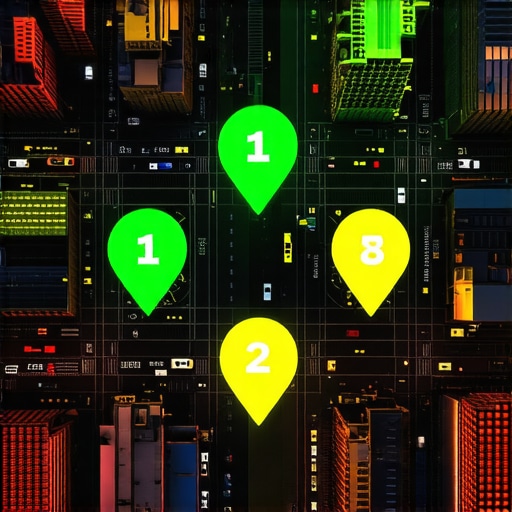
Beyond software, you need a process. Every Monday morning, I spend ten minutes looking at my ‘Insights’—but not the vanity metrics. I ignore total impressions and look specifically at ‘Direction Requests’ and ‘Website Clicks.’ If impressions are up but clicks are down, I know my photos or my review snippets are failing me. This is the core of the 10-minute local seo audit that uncovers why your rankings stalled. You have to be your own toughest critic. I’ve found that 4 image tweaks that stop searchers from scrolling past your listing can do more for your bottom line than a hundred low-quality backlinks ever could.
How do I maintain my local map presence as the algorithm shifts?
Consistency is more important than intensity. You cannot ‘set and forget’ your profile. Google’s algorithm is increasingly weighted toward recent activity. According to local search expert Joy Hawkins from Sterling Sky, even small updates to your business hours or adding a single new photo can signal to Google that your business is active and reliable. I make it a habit to post one high-quality ‘Update’ to my profile every week—not a sales pitch, but a real look at a project we finished or a customer we helped. This prevents why most businesses fail to hold a top spot in the map pack after three months. They get to the top, get comfortable, and then stop doing the very things that got them there.
Why the future of maps belongs to the hyper-local experts
Looking ahead, I see Google moving toward an even deeper integration of AI and real-world behavior. We are entering an era where ‘Search Generative Experience’ (SGE) will pull facts directly from your reviews and your website to answer complex queries. If you want to outsmart the competition in local map listings in 2025, you need to start thinking about ‘semantic’ relevance. This means using natural language in your review responses and posts that describes exactly what you do and where you do it. The days of keyword stuffing are dead; the era of ‘Experience’ is here. My advice? Go run a 5×5 grid search for your primary keyword right now. Find your first ‘red’ circle on that map and make it your mission to get a review or a mention from a business in that specific zip code this week. That is how you scale.
What Most People Miss About True Local Maps Domination
The single biggest mistake I made was thinking a Google Business Profile was a ‘set it and forget it’ trophy. In reality, it is a living entity that thrives on interaction. I have realized that the interaction data that proves you are a top local choice is often more powerful than a hundred backlinks from some generic site across the country. Google wants to see that you are active, responsive, and actually present in your community. If I could go back, I would stop stressing about the ‘perfect’ keywords and focus entirely on making my profile the most helpful resource for a neighbor in need. That shift in mindset is what really leads to mastering local maps domination without burning out.
My Private Arsenal for Tracking Every Local Move
You cannot fix what you cannot see, which is why I live and breathe by a few specific resources. First, the 10-minute local seo audit should be your weekly ritual. For the data-heavy lifting, I rely on tools like Local Falcon to see my grid rankings and BrightLocal to handle the tedious citation cleaning. I also frequently check the Sterling Sky blog because their team is always the first to spot when Google changes the rules. These tools do not just give you numbers; they give you a roadmap to beat the brutal truth about why local competitors keep winning the map pack and how you can reclaim that territory. If you are ever feeling lost, our team at the contact page is always ready to help you navigate the mess.
Ready to Claim Your Spot in the Top Three?
This journey is not about being the biggest company; it is about being the most relevant one. Your google my business rank elevation starts the moment you decide to stop treating your profile like a static billboard and start treating it like a community hub. The map pack is not some secret club—it is an earned position of trust. Take that first step today by auditing one single neighborhood where you should be ranking but are currently absent. What is the one specific neighborhood or zip code where your business is currently a ghost on the map? Let me know in the comments and let’s figure out why!
About the Author
Umar Latif
Brand & Marketing Expert · Dubai, UAE
Umar Latif is a seasoned Brand and Marketing Expert based in Dubai, UAE, with a specialized focus on Local SEO and international digital strategy. With extensive experience managing and optimizing websites for a diverse range of international clients, including those in the United States, Umar has developed a deep understanding of the nuances required to dominate local search results. His technical proficiency encompasses comprehensive keyword research and the implementation of advanced Google-centric strategies designed to enhance visibility and drive organic traffic. As a contributor to dominateyourlocalmaps.com, Umar leverages his background in global marketing to provide actionable insights for businesses looking to improve their local map rankings and digital footprint. His approach combines data-driven tactics with a strategic brand perspective, ensuring that local businesses not only rank higher but also resonate with their target audience. Throughout his career, Umar has remained dedicated to staying ahead of search engine algorithm changes to deliver consistent results for his clients. He is deeply passionate about empowering business owners and marketing professionals with the tools and knowledge they need to achieve sustainable growth.