
I’ll never forget the Tuesday morning I almost threw my laptop out the window. I had just spent three months—and a small fortune—building what I thought was a bulletproof SEO plan. I had social shares coming out of my ears and backlinks from fancy sites I could barely pronounce. Yet, when I checked my google my business rank, I was still buried on page three. Meanwhile, a plumber down the street who barely knows how to use Instagram was sitting comfortably in the top spot. Why? Because he had been featured in a local Best of the City article by our community newspaper. That was my lightbulb moment. I realized that while social links are nice for vanity, they are whisper-thin compared to the heavy-duty weight of a local news mention when you want to truly dominate maps in your own backyard.
Local News Outranks the Global Giants Every Time
When I first started, I made a classic mistake that still makes me cringe. I thought more was better, so I fell for the truth about paying for local citations in bulk and ended up with a mess of low-quality data that did nothing but confuse search engines. What I didn’t get back then is that Google isn’t just looking for popularity; it’s looking for proof of physical presence. A local news story is like a digital GPS coordinate that confirms you are exactly who you say you are. It’s a level of verification that a tweet or a Facebook share simply cannot provide. It provides the kind of geo-relevance that tells the algorithm your business is the heart of the neighborhood.
Are these local mentions actually worth the effort?
I get it. Pitching a story to a local reporter feels a lot more intimidating than just posting a photo on a business page. You might even feel like your daily operations aren’t newsworthy enough to catch anyone’s eye. But here is the secret: local journalists are always hungry for community stories. When you secure that mention, you aren’t just getting traffic; you’re gaining a location signal that is pure gold for your map pack domination efforts. According to a study by Search Engine Journal, local relevance and proximity remain the most crucial pillars for showing up when a customer nearby searches for your services. It’s about being the big fish in a specific pond rather than a minnow in the ocean.
Stop Chasing Likes and Start Chasing Neighborhood Cred
Social media links are almost always no-follow and transient. They disappear into the feed faster than you can say algorithm update. On the flip side, a mention from a local news outlet acts as a permanent cornerstone for your local mapping strategy. It tells Google that you are a pillar of the community, which is exactly how you outsmart large chains that have massive budgets but zero local soul. I’ve seen businesses with ten reviews jump over those with hundreds just because they had the right local press backing them up. Have you ever felt like you were shouting into the social media void while your competitors somehow stayed glued to the top of the map? It’s time to stop chasing likes and start building real neighborhood authority. We’re going to look at exactly how to make that happen without needing a PR firm.
Find the Local Hook That Gets Reporters Talking
Getting featured in the local news isn’t about having a massive budget; it is about providing a story that serves the community. Think of a local news mention as a high-powered signal flare. While a national backlink is like a general endorsement, a local news story is a hyper-focused laser that points directly to your storefront. To start, you need to identify what makes your business a neighbor, not just a vendor. Are you hosting a charity drive? Are you the oldest business on the block celebrating an anniversary? These are the hooks that journalists crave. When they write about you, they include your business name and often your neighborhood, which are the exact signals needed for google my business rank elevation. 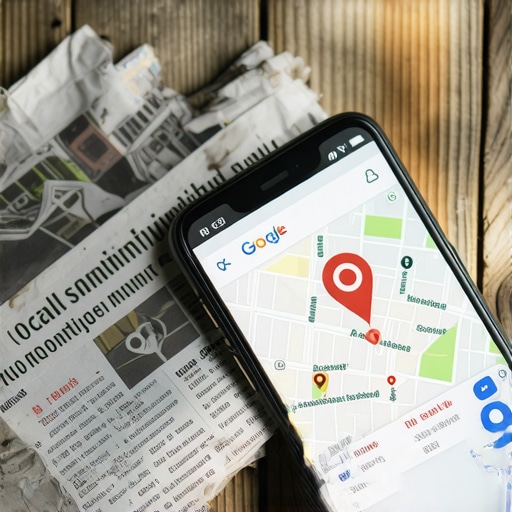
The Small-Town Baker Strategy That Toppled the Chains
I remember working with a small artisan bakery that was struggling to show up for ‘fresh bread near me’ because a massive grocery chain dominated the radius. We stopped trying to out-blog the corporate giant and instead partnered with a local youth shelter for a ‘Sourdough for Students’ weekend. I personally drafted a three-paragraph pitch to the local community editor. The result? A four-paragraph feature in the Saturday edition. Within ten days, that bakery didn’t just move up; it secured its place in the top three. This worked because we used local events to signal relevance to google in a way that an algorithm cannot ignore. It turned a cold business entity into a warm community pillar.
Why Every Neighborhood Mention Acts Like a Digital Map Pin
When a local news site mentions your business alongside specific street names or landmarks, it clears up any confusion the search engine might have about your physical footprint. This is especially vital if you have had trouble in the past figuring out how to prove your location to google when you dont have a sign. The news article acts as a third-party verification of your existence. In the world of mastering local maps domination, these mentions are more valuable than a hundred generic directory listings. They create a ‘geographical cluster’ of data that surrounds your business, making it the most logical choice for Google to show to nearby searchers.
Connect Your Website Authority to Your Physical Location
Many people forget that the link between website backlinks and local map packs is inseparable. A link from a .gov or a local .com news outlet carries a specific type of ‘geo-authority.’ It is like having a local resident vouch for you at a town hall meeting. By focusing on these high-quality local sources, you directly influence how specific neighborhood mentions influence your proximity rank. You aren’t just telling Google you are a plumber; you are telling them you are the plumber that the ‘Eastside Gazette’ trusts. This builds a moat around your map pack domination strategy that competitors will find nearly impossible to bridge with simple social media posts.Most SEO experts will tell you that more is always better. They will tell you to collect reviews like they are baseball cards and to blast your business name into every generic directory on the planet. I am here to tell you they are wrong. In fact, following that advice is a one-way ticket to a ranking plateau. The most sophisticated mistake I see is ignoring semantic distance in favor of raw volume. This is why having 500 reviews might actually be hurting your visibility if those reviews are generic and lack the specific keywords your customers actually use. Google’s AI has evolved; it does not just count stars anymore; it reads the sentiment and context of every word your customers write. Then there is the ‘Oops’ factor that kills local dreams: the virtual office trap. I have talked to dozens of business owners who thought they could outsmart the algorithm by renting a mailbox in a high-traffic zip code to improve their google my business rank. This is the danger of using virtual offices for local seo—Google is far more perceptive than most realize. They use street-view data, mail delivery records, and even user-contributed photos to verify your physical presence. If they catch a whiff of a fake address, your profile won’t just drop; it might be scrubbed from existence. Have you ever fallen into this trap? Let me know in the comments. 
Why does my business vanish the moment I drive three miles away?
This is the proximity filter in action, and it is the most misunderstood part of a local mapping strategy. Many believe proximity is a fixed radius, but it is actually a fluid boundary based on competition and relevance. According to research by Whitespark, proximity remains a top ranking factor, but its grip loosens if your prominence signals are strong enough. This is exactly how to beat the proximity filter and expand your reach. You have to prove to Google that you are so relevant to the searcher’s intent that it is worth showing your business even if you are not the absolute closest option. Without this, you will find why your store is invisible to customers two blocks away even when you have perfect ratings. To dominate maps, you must stop treating your location as a static point and start treating it as a center of community influence. The nuance most people miss is that your rank is a living, breathing thing. If you are not optimizing for micro-signals like behavioral data and hyper-local authority, you are just throwing darts in the dark. It is time to move past basic citations and start map pack domination through real authority.Once you’ve hit that coveted top three, the real work begins. I’ve seen too many business owners celebrate for a week only to wonder about the real reason your profile ranking stalled last month as they slowly drift toward page two. To stay relevant, you need a feedback loop. I don’t rely on generic SEO dashboards that only give me a single data point from one zip code. I use a specific grid-tracking tool like Local Falcon. Why? Because it visualizes your rank across every city block. It’s the difference between seeing a blurry photo and a 4K video of your performance. If I see my rank dropping in a specific neighborhood, I know exactly where to focus my local mentions and community outreach. 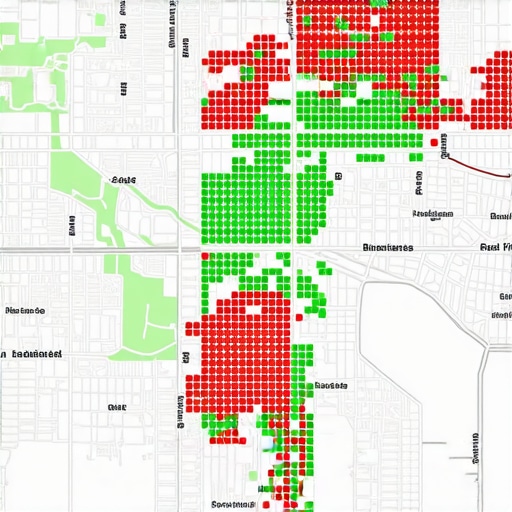
Track Your Progress with a Real Heatmap
Beyond tracking, the way you interact with your customers is your strongest defensive wall. Most people just say ‘Thanks!’ to a five-star review, but that’s a wasted opportunity. I always use the specific way to respond to positive reviews for a rank boost by naturally weaving in service names and local landmarks. This keeps the geo-signals fresh and tells the algorithm you are still active in those specific areas. If you hit a wall, don’t panic. You can learn how to handle a sudden map ranking plateau without buying links by digging into your ‘Share of Voice’ data rather than just blindly chasing more generic citations.
How do I maintain my map pack domination over the long haul?
The secret to how to secure your spot in the map pack permanently isn’t about one big push; it’s about consistent micro-signals. You should be performing the audit step that finds why your business is hidden at least once a quarter. This involves checking for duplicate profiles or ‘ghost’ listings that might have cropped up to siphon off your traffic. As Joy Hawkins from Sterling Sky often points out in her research on the ‘Vicinity Update,’ Google is constantly tightening the relationship between business relevance and user location. If you aren’t active, Google assumes you’re less relevant than the competitor who just updated his holiday hours or posted a fresh photo.
Prepare for the AI-First Future of Local Search
The trend for 2025 and beyond is clearly shifting toward AI-summarized reviews and video verification. I predict that static photos will soon play second fiddle to short-form video clips of your storefront and staff. Google wants to see the ‘live’ version of your business to fight against the surge of AI-generated spam profiles. This is a core part of mastering local maps domination in an era where digital trust is harder to earn. My advanced tip for you today: Open your Google Maps app right now, record a 30-second ‘behind the scenes’ clip of your team at work, and upload it as a direct update to your profile. It provides a level of verification that no written review can match and signals to Google that your business is the real deal.
Three Hard Truths About Local Authority That Most Agencies Ignore
I’ve learned the hard way that chasing volume is a fool’s errand. First, understand that the map pin trap is real; being exactly where you say you are matters less than being trusted where you are. Second, you can actually outrank national chains in your specific neighborhood simply by being more human. They have the corporate budget, but you have the local soul. Finally, your google my business rank isn’t a trophy you win once; it is a reputation you maintain every single day through real community engagement.
My Personal Strategy Stack for Local Success
If you want to stop guessing, you need the right tools in your belt. I always start with a the citation audit checklist for struggling storefronts to ensure my data is clean. Then, I use heatmapping tools to see the actual grid of my influence. You should also learn how to audit your local competitors without expensive tools by manually checking their ‘Share of Voice’ in different zip codes. This data-driven approach turns a vague local mapping strategy into a precise surgical strike.
#IMAGE_PLACEHOLDER_E#
Take Your Neighborhood Back One Pin at a Time
The digital landscape is getting noisier, but the physical world remains constant. By focusing on hyper-local signals and real-world news mentions, you are building a business that is algorithm-proof. Your journey toward mastering local maps domination starts with a single local connection. Don’t wait for the perfect PR moment—create it today by being the most helpful business on your block. Have you ever tried pitching a story to a local reporter, or does the idea of PR feel too intimidating for your current setup? Let me know in the comments below!
About the Author
Umar Latif
Brand & Marketing Expert · Dubai, UAE
Umar Latif is a seasoned Brand and Marketing Expert based in Dubai, UAE, with a specialized focus on Local SEO and international digital strategy. With extensive experience managing and optimizing websites for a diverse range of international clients, including those in the United States, Umar has developed a deep understanding of the nuances required to dominate local search results. His technical proficiency encompasses comprehensive keyword research and the implementation of advanced Google-centric strategies designed to enhance visibility and drive organic traffic. As a contributor to dominateyourlocalmaps.com, Umar leverages his background in global marketing to provide actionable insights for businesses looking to improve their local map rankings and digital footprint. His approach combines data-driven tactics with a strategic brand perspective, ensuring that local businesses not only rank higher but also resonate with their target audience. Throughout his career, Umar has remained dedicated to staying ahead of search engine algorithm changes to deliver consistent results for his clients. He is deeply passionate about empowering business owners and marketing professionals with the tools and knowledge they need to achieve sustainable growth.