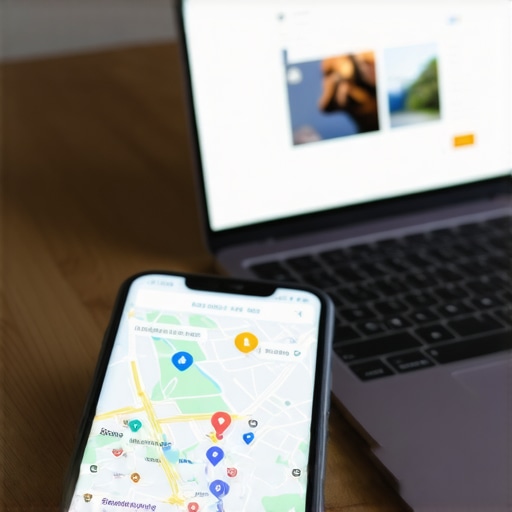
I remember staring at my Google Search Console dashboard three years ago, feeling absolutely defeated. I had just paid a developer a small fortune to make my website look like a million bucks. It was sleek, it was fast, and it was—to be perfectly honest—doing absolutely nothing for my bottom line. Meanwhile, my phone wouldn’t stop ringing from people who found my boring Google Business Profile. I felt like I’d bought a Ferrari just to leave it in the garage while I rode a bicycle to work every day. It was a massive wake-up call about how map pack domination actually works in the real world.
Google has effectively become your new homepage
The hard truth is that Google isn’t just a search engine anymore; it’s an answer engine. They don’t want people to leave their ecosystem if they don’t have to. I spent months obsessing over my meta descriptions and H1 tags on my service pages, only to realize that customers were getting everything they needed—my phone number, my hours, and my reviews—right from the search results page. If you’ve noticed that your local maps traffic isn’t converting into real sales on your site, it might be because the sale is happening before they even click your URL. According to research from SparkToro, nearly two-thirds of all Google searches now result in a ‘zero-click’ experience, meaning the user finds what they need without ever visiting a website. That’s a staggering reality for those of us who grew up believing the website was king.
Is a traditional website actually worth the hype?
I get this question all the time from neighbors and local business owners who are tired of throwing money at SEO agencies. You might be feeling like the website is a sinking ship. I certainly did when I realized my business description didn’t matter for ranking as much as I thought it did. But the secret isn’t to delete your site; it’s to change how it talks to your map profile. Early in my journey, I made the mistake of treating them as two separate islands. I didn’t realize that my site’s job was to provide the proof Google needs to rank me higher in the local results. Have you ever felt like you’re shouting into a void with your website while your Google profile does all the heavy lifting? Let me know, because you are definitely not alone.
Stop fighting the zero-click trend and start winning it
Instead of mourning the loss of website sessions, we need to lean into the elevation of your Google My Business rank. When I stopped trying to force people to my site and started making my Google profile the most helpful resource in my neighborhood, everything changed. I stopped worrying about bounce rates and started worrying about call clicks and direction requests. We are going to dive into how you can make sure that even if they never see your fancy homepage, they still choose you over the guy down the street by using a smarter local mapping strategy.
Talk to Google in its own language
If your website and your map profile aren’t saying the exact same thing, Google gets nervous. Think of it like a first date: if you say you’re a professional chef but can’t boil an egg, the trust is gone. This is where most people fail at map pack domination. You need to use Schema markup to bridge the gap. I remember a local HVAC contractor I worked with who was stuck on page two for months. We found a hidden schema error that was feeding Google an old address from three years ago. Once we learned how to sync your website schema with your map profile, he jumped to the number two spot in forty-eight hours. It wasn’t magic; it was just clarity.
Stop uploading boring stock photos
Google’s AI is incredibly good at identifying what is in a photo. If you are a plumber and you’re uploading generic pictures of wrenches from a stock site, you are wasting your time. You need to show the ‘proof’ of your work in your specific neighborhood. When I started taking photos of my actual job sites—ugly, grit-and-grime photos—and using a specific photo metadata strategy, my google my business rank finally started moving. This isn’t just about the image itself; it’s about the image metadata strategy for better local visibility that tells Google exactly where that photo was taken. 
Is your service area smothering your growth?
One of the biggest mistakes I see is business owners checking every single county and city in a 50-mile radius. They think more is better. In reality, you are just diluting your authority. If you tell Google you serve everywhere, you often end up ranking nowhere. I learned this the hard way with a carpet cleaner who wanted to ‘own the state.’ We had to sit down and figure out how to properly set your service areas to avoid rank dilution. By shrinking his service area on paper, we actually expanded his reach on the map because Google finally viewed him as a local authority rather than a wandering generalist. This is a core part of any successful local mapping strategy.
The review frequency secret
Most people think getting 50 reviews in a weekend is a win. It’s actually a red flag. Google loves consistency over intensity. I’ve seen businesses lose their local maps domination status because they ran a ‘review contest’ that triggered a spam filter. Instead, focus on the review frequency secret. It’s about the steady heartbeat of feedback. When you respond, don’t just say ‘thanks.’ Use specific review keywords that naturally describe your service and city. If you find yourself stuck, looking at how to audit your local competitors without expensive tools can show you exactly what frequency your market expects. It feels small, but these tiny signals are what build the mountain of authority you need to stay at the top.
I see people obsessing over review counts like they’re high school popularity contests. But here’s the contrarian truth: having the most reviews doesn’t guarantee the top spot. In fact, why having 500 reviews might actually be hurting your visibility is a real phenomenon if those reviews lack context. If your competitor has 50 reviews that all mention “emergency pipe repair in [City Name]” and you have 500 reviews that just say “great job,” they will beat you for the keywords that matter. This is why positive reviews alone won’t win the map pack; Google is looking for topical authority, not just a high star rating. I’ve seen business owners get terrified when a competitor with 10 reviews outranks them. It’s not a glitch. It’s usually because that competitor has mastered the elevation of their Google My Business rank through localized content. They aren’t just “a plumber”; they are “the plumber who fixed the fountain at Memorial Park.” That level of specificity is what wins in 2025. There’s a huge misconception that proximity is an unbreakable wall. People think, “If I’m not in the city center, I’m invisible.” That’s the proximity lie. According to a study by Sterling Sky, while proximity remains a heavy hitter, “relevance”—specifically how well your website content mirrors your map profile—can actually override physical distance in many high-value niches. If you’ve hit a wall, understanding how to handle a sudden map ranking plateau without buying links often comes down to fixing these relevance signals. But here’s the trap most people fall into: the virtual office shortcut. I once worked with a lawyer who tried to achieve local maps domination by renting four Regus virtual addresses in neighboring towns. Within three weeks, his entire profile was nuked. Google’s AI is now scanning for “high-density” business addresses, and the danger of using virtual offices for local SEO is that it’s a one-way ticket to a permanent suspension. Have you ever fallen into this trap of trying to game the system with a fake address? Let me know in the comments.
How do you break the proximity filter without moving your office?
The secret lies in how you treat your neighborhood data. Most businesses ignore how specific neighborhood mentions influence your proximity rank. If your site doesn’t mention local landmarks, the park down the street, or the specific zip codes you serve, Google won’t trust you’re actually “local” there. This is a core part of an innovative local mapping strategy. We’ve even seen evidence suggesting the impact of wifi ssid data on local business accuracy—Google knows where you are because of the signals your hardware sends, not just what you type into a form. Finally, ensure your site and map are perfectly in sync. If you don’t know how to sync your website schema with your map profile, you’re essentially giving Google two different puzzles to solve. When you match them, you’re giving them the solution, and that’s when you start to beat the proximity filter and expand your reach.
Once you’ve finally cracked the top three, the real work begins. I’ve seen so many business owners treat local SEO like a marathon where they stop running the second they cross the finish line. The truth is, the map pack is more like a king-of-the-hill game; your competitors are watching you, and they are coming for your spot. To ensure you secure your spot in the map pack permanently, you need to transition from a ‘setup’ mindset to a ‘maintenance’ mindset. I personally use a ‘Sunday Check-in’ where I look for any new competitors who might have popped up with keyword-stuffed names. It sounds tedious, but it’s the difference between staying at the top for years or falling off in a month.
Don’t let your ranking rot on the second page
If you aren’t monitoring your progress with more than just a manual search from your office chair, you are flying blind. I recommend using a grid-tracking tool like Local Falcon or BrightLocal. Why? Because your Google My Business rank looks different from the coffee shop three blocks away than it does from your front desk. These tools create a heatmap of your city, showing you exactly where your ‘authority’ drops off. If I see a sea of green dots around my office but red dots just a mile north, I know I need to double down on specific neighborhood mentions for that specific northern district. It’s about surgical precision, not spray-and-pray marketing.
How do I maintain my map pack dominance over time?
Maintenance isn’t about massive changes; it’s about the ‘one percent’ tweaks. According to Joy Hawkins of Sterling Sky, even small, inconsistent data points can trigger a filter that suppresses your profile. You have to be the hawk. This means checking your Q&A section for weird questions and ensuring your ‘Open Now’ status is actually accurate during holidays. If you hit a wall, you need to know how to handle a sudden map ranking plateau without buying links. Usually, it’s a sign that your ‘freshness’ score has dipped. I’ve found that a single, high-quality customer photo uploaded every week does more for a plateau than fifty low-quality backlinks ever could. It’s a signal to Google that the lights are on and somebody is home. 
The future of local search is visual and AI-driven
I’m predicting that by late 2025, the way we think about local maps domination will shift toward ‘Visual Search Optimization.’ Google is already using AI to scan the inside of your store via user photos to verify if you actually sell what you claim to sell. If you want to stay ahead, stop guessing your categories and start looking at what Google’s Vision AI sees in your storefront photos. If you are a boutique but your photos look like a warehouse, Google’s AI will struggle to rank you for high-end keywords. This is the new frontier of an innovative local mapping strategy.
Sync your technical health with your map presence
Finally, never ignore the ‘boring’ technical side of your website. There is a hidden link between website speed and map pack success that most people overlook. If your site takes five seconds to load on a mobile device, Google will be hesitant to push your map profile to a user on a 5G connection who wants an answer ‘now.’ Everything is connected. My challenge to you today: go into your profile and find one secondary category that doesn’t quite fit and swap it for a more specific one based on your actual data. It’s a small move, but it’s often the one that triggers a ranking jump.
The Brutal Truths I Learned While Fighting for the Top Spot
Looking back at my years in the trenches, I’ve realized that true map pack domination isn’t a trophy you win once; it’s a reputation you maintain daily. I used to think I could outsmart the algorithm with a single weekend of intense optimization, but I quickly learned that Google rewards the ‘steady heartbeat’ of a real, active business over artificial spikes. One of the biggest shifts for me was realizing why your local SEO agency is failing to move the needle—it is often because they focus on generic monthly reports rather than the granular, neighborhood-specific engagement that Google actually tracks. I also discovered that you cannot simply follow the crowd; you have to know how to outsmart competition in local map listings in 2025 by looking at the hyper-local data your competitors are too lazy to audit, like how your actual service area overlaps with high-intent search pockets.
My Daily Toolkit for Staying in the Top Three
If you want to stop guessing and start winning, you need a reliable set of eyes on the market. I never make a strategic move without a grid-tracking tool like Local Falcon; it provides a visual heatmap of my google my business rank across every street corner, which is far more accurate than searching from my own desk. I also swear by BrightLocal for auditing citations—manual entry is a recipe for burnout and human error. However, tools are only as good as the person wielding them. Before you outsource this work, make sure you know the one question to ask before hiring a maps expert to ensure they actually understand the nuance of proximity filters and aren’t just selling you a template.
The Future of Your Local Business is on the Map
It’s easy to feel overwhelmed by the technicalities of local SEO, but remember that at the end of every search is a neighbor looking for a reliable solution to a real-world problem. You now have the tools, the strategy, and the insider knowledge to show up exactly when those neighbors need you most. If you have recently been pushed down by newer, aggressive competitors, do not panic. Knowing how to force your profile back into the top 3 results is simply a matter of re-aligning your signals and proving to Google that you remain the most relevant choice in your district. Your local mapping strategy is the most important bridge between your hard work and your future customers. Take it one step at a time, stay consistent, and watch the calls start coming in. Which of these map strategies are you going to implement first this week? Let me know in the comments below!
About the Author
Umar Latif
Brand & Marketing Expert · Dubai, UAE
Umar Latif is a seasoned Brand and Marketing Expert based in Dubai, UAE, with a specialized focus on Local SEO and international digital strategy. With extensive experience managing and optimizing websites for a diverse range of international clients, including those in the United States, Umar has developed a deep understanding of the nuances required to dominate local search results. His technical proficiency encompasses comprehensive keyword research and the implementation of advanced Google-centric strategies designed to enhance visibility and drive organic traffic. As a contributor to dominateyourlocalmaps.com, Umar leverages his background in global marketing to provide actionable insights for businesses looking to improve their local map rankings and digital footprint. His approach combines data-driven tactics with a strategic brand perspective, ensuring that local businesses not only rank higher but also resonate with their target audience. Throughout his career, Umar has remained dedicated to staying ahead of search engine algorithm changes to deliver consistent results for his clients. He is deeply passionate about empowering business owners and marketing professionals with the tools and knowledge they need to achieve sustainable growth.