
I stood on the sidewalk, the cold wind whipping through my jacket, staring at my iPhone screen in utter disbelief. I was exactly twenty feet from my own front door, yet when I searched for my main service, my business was nowhere to be found. A competitor from two towns over—someone who lived at least fifteen minutes away—was sitting comfortably in the top spot of the Map Pack. I felt like I was being pranked by an algorithm. That was my lightbulb moment. I realized that the proximity rule we all obsess over is a bit of a lie. Google isn’t just looking at who is closest; it’s looking at who it trusts the most. [image_placeholder_1] Today, I’m going to show you exactly how to stop being a victim of your zip code and explain why proximity is no longer the only way to win maps. We are going to dive into the signals that actually move the needle, so you can stop worrying about your physical coordinates and start focusing on what truly converts.
Stop Chasing the Closest Street Corner
In my early days, I made the classic mistake of thinking location was the only variable that mattered. I actually wasted thousands of dollars on a tiny satellite office in a basement downtown just to try and trick the system into thinking I was more central. It was a disaster. I learned the hard way that the proximity paradox means that moving your office might not actually help if your other digital signals are weak. Google’s algorithm is far more sophisticated than a simple tape measure. According to industry data from Search Engine Journal, while proximity remains a primary factor, the weight of prominence—how well-known your business is online—has skyrocketed. If you find that your near me visibility is worse than your actual location, it is usually a sign that your relevance signals are mismatched. You might be suffering from the hidden proximity glitch that effectively shrinks your reach because Google doesn’t have enough data to trust you further out. I once spent months trying to figure out why I wasn’t ranking in the neighborhood next door, only to realize I hadn’t even mentioned it on my website. It was a humbling lesson in local authority.
Is it even possible to beat a neighbor for the top spot?
It’s the question I get asked more than any other: Why would Google show a business five miles away when I am right here? The answer is simple but often painful to hear—that distant competitor is more relevant to the searcher’s intent than you are. But here is the good news: you can fix this. You can actually increase your map radius without opening a new office by strengthening your local signals. Have you ever faced this yourself? Have you searched for your own services only to see a distant competitor taking your leads right under your nose? It’s frustrating, I know, but it’s a problem with a clear solution. We are going to break down the exact steps to ensure Google sees you as the authority, regardless of where the customer happens to be standing.
I remember working with a local locksmith in a saturated city center who couldn’t understand why he was invisible three blocks away. He had the tools, the van, and the skills, but digitally, he was a ghost. We didn’t just need to tweak a setting; we needed to overhaul his entire local mapping strategy. The first thing we did was look at how his website communicated with Google. If your site and your profile aren’t speaking the same language, you’re essentially giving Google a reason to doubt you.
Bridge the Gap Between Your Website and Your Map Pin
Your website is the foundation that supports your google my business rank. I see so many business owners treat their Map profile like a separate island, but Google uses your site to verify what you actually do. You need to how to sync your website schema with your map profile to ensure there is zero friction in the data. Think of schema as a digital business card that tells Google’s robots exactly where you are and what you offer. When I helped that locksmith, we realized his website listed services he hadn’t even checked off in his GMB categories. It’s a common trap, and it’s why the subtle category tweak that doubled local impressions is often the first thing I check for struggling profiles.
Stop Feeding Google Inconsistent Data
Consistency is more than just having the same phone number. It is about proving your geographic relevance. One of the most effective moves I ever made for a client was showing them how specific neighborhood mentions influence your proximity rank. We started adding content to his service pages that talked about local landmarks and specific intersections where he had recently completed jobs. This isn’t about keyword stuffing; it’s about providing context that a robot can understand as ‘this business is active in this specific area.’ 
Make Your Photos Work Harder Than Your Competition
Most people just snap a blurry photo of their office and call it a day. That is a massive wasted opportunity for map pack domination. Every image you upload carries data. You need to understand the specific photo metadata that actually moves your map rank. Google’s AI can actually ‘see’ what is in your photos, identifying tools, uniforms, and even street signs. I once saw a plumber’s ranking jump three spots just by replacing his stock photos with high-resolution shots of his branded truck parked in front of recognizable local buildings. It provides visual proof of your local presence that a proximity algorithm cannot ignore.
The Secret to Stretching Your Service Area Visibility
If you want to dominate maps beyond your immediate neighborhood, you have to stop thinking like a stationary shop and start thinking like a service provider. You can how to beat the proximity filter and expand your reach by focusing on what your customers say about you. It is a little-known fact that the words your customers use in their reviews carry more weight than your own business description. I always tell my clients to look for the specific review keywords that trigger map visibility. If a customer mentions your city and the specific service you provided, Google treats that like a giant green checkmark for relevance. I once had a client who was stuck at rank #7; we coached him on how to ask customers to mention the neighborhood they lived in during the review. Within two months, his ‘near me’ reach expanded by nearly three miles, proving that relevance can indeed trump physical distance.
One of the biggest myths in local mapping strategy is that the quantity of reviews is the ultimate king. I’ve seen businesses with 1,000 reviews lose to those with 50. Why? Because Google prizes review velocity and the authority of the reviewer. According to research by BrightLocal, the recency and frequency of reviews often outweigh the sheer volume. This is why the review frequency secret for long-term map dominance is something I talk about constantly. If you get a burst of 100 reviews in December and then nothing until June, you look suspicious to the algorithm. Furthermore, why local guides reviews carry more weight in maps is a nuance most ignore. A 5-star rating from a Level 8 Local Guide is like a gold stamp of approval compared to a review from a brand-new account with no history. 
Why do I keep losing to competitors with half my review count?
Often, it comes down to a fundamental misunderstanding of how the google my business rank is calculated. Many owners obsess over their business description, packing it with every keyword imaginable. But the cold hard truth is why your business description doesn’t matter for ranking but does for sales. Google’s AI is smart enough to know what you do from your categories and website; that description is for the human who needs to be convinced to click. If you are stuffing keywords there, you are wasting space. Another common ‘oops’ factor is the data you feed Google through third-party tools. I see so many people mess up their NAP consistency by using dynamic tracking numbers incorrectly. You have to understand the truth about using tracking numbers on your maps profile before you accidentally sabotage your own authority. Then there is the ‘Open Now’ filter trap. It’s tempting to list your business as open 24/7 to catch late-night searches, but the truth about google maps open now filters and your rank is that if you aren’t actually there to answer the phone, your bounce rate and negative feedback will eventually sink you. Have you ever fallen into the trap of setting unrealistic hours just to get more views? Let me know in the comments. To truly dominate maps, you need to stop gaming the system and start building real-world signals. For example, how you handle negativity matters more than you think. There is an the exact way to response to 1-star reviews without losing rank that turns a PR disaster into a trust-building moment for future customers. Another sophisticated mistake involves your category selection. Most people think more categories mean more visibility, but why your business categories might be fighting each other is a real phenomenon called category dilution. When you pick too many unrelated categories, you weaken your authority for your primary service. You have to stop guessing your categories and use this selection data instead to ensure your profile is laser-focused. Success in local maps domination isn’t about one big change; it’s about avoiding these sophisticated traps while consistently feeding the algorithm the high-quality, high-velocity data it craves.
The Tech Stack That Keeps My Clients at the Top
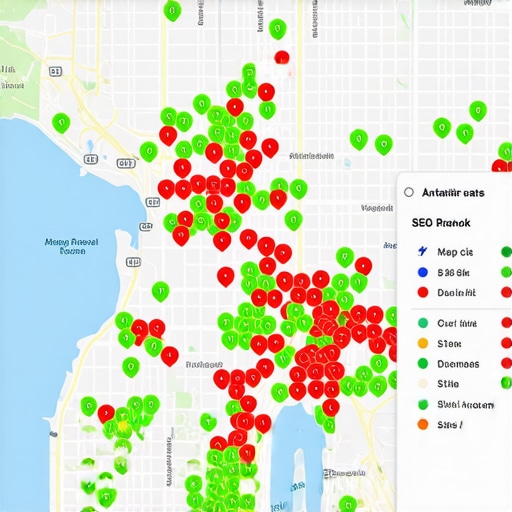
I’ve seen too many business owners reach the top spot, pop the champagne, and then fall off the face of the earth two months later. Google is a ‘what have you done for me lately’ platform. To stay on top, I rely on a very specific stack of tools. I personally use grid-tracking software like Local Falcon or BrightLocal to visualize my reach. If you aren’t using a grid tracker, you are flying blind. You might rank #1 at your front door but #10 two blocks away. This visual data is the only way to know if you are truly achieving local maps domination or just getting lucky on your own street. When I see a dip in a specific neighborhood, I immediately look at the citation audit checklist for struggling storefronts to see if a competitor has popped up with cleaner data.
How do I keep dominating the maps for the long haul?
Maintenance is where the real money is made. You can’t just set it and forget it. I set a weekly recurring task to check my google my business rank and respond to every single review, even the ones without text. According to Darren Shaw’s latest Local Search Ranking Factors survey from Whitespark, behavioral signals like the ‘click-to-call’ rate and ‘request a quote’ interactions are carrying more weight than ever. This means your profile needs to look better than the guy next to you, not just rank higher. If you find your progress has slowed, you need to learn how to handle a sudden map ranking plateau without buying links. I often find that a plateau is just Google waiting for you to prove you are still active. I combat this by uploading at least three geotagged photos a week. It sounds tedious, but the ultimate guide to google my business rank elevation proves that consistency beats intensity every time.
AI is Changing the Local Game Faster Than You Think
Looking ahead, the future of map pack domination is going to be heavily influenced by AI-driven search summaries. Google is already starting to scrape your website’s deeper pages to answer questions directly in the Map Pack interface. This is why you need to know how to outsmart competition in local map listings in 2025 by focusing on topical authority. Your local mapping strategy must include answering hyper-local questions on your site. If someone searches for ‘who is the best 24-hour plumber near the stadium?’, Google wants to find that exact context on your site and your profile. It’s no longer just about keywords; it’s about being the most helpful resource in your zip code. If you want to start today, I challenge you to look at your service area settings. Most people set them too wide and dilute their power. Go and read how to properly set your service areas to avoid rank dilution and tighten your radius. It’s the fastest way to see a jump in your core neighborhoods.
The Truth About the Map Pack I Learned the Hard Way
After years of obsessing over every pixel of my profile, I realized that a successful local mapping strategy is less about tricking a computer and more about proving you are a pillar of the community. I spent far too long chasing technical hacks instead of building real authority. One of my biggest lightbulb moments was realizing that you can actually secure your spot in the map pack permanently by focusing on user behavior rather than just citation quantity. If people click your profile and immediately call, Google notices. If they search for you by name, Google notices. Another harsh reality? You might be invisible because you’re targeting the wrong terms. I’ve seen businesses fail simply because they didn’t realize why your business is ranking for the wrong local keywords and were competing for phrases no one actually types in. It’s about being seen for what you actually do, where you actually do it.
Tools That Actually Move the Needle for Me
I don’t believe in buying every shiny new software, but there are a few non-negotiables if you want to achieve local maps domination. First, you need a high-quality grid tracker like Local Falcon to see your true reach beyond your own driveway. Second, I always recommend digging into map pack domination secrets that focus on CTR manipulation through better, more engaging imagery. Finally, before you spend a dime on an agency, you must know the one question to ask before hiring a maps expert to ensure they aren’t just selling you useless citations that Google ignores. These are the foundations of my daily workflow and what keeps my clients ahead of the curve.
Take Back Your Local Neighborhood Today
The digital landscape is shifting, but the reward for showing up is higher than ever. You don’t need a massive marketing team to win; you just need to be more consistent than the guy down the street. By refining your google my business rank through honest, high-velocity data and real customer interactions, you are building an asset that pays dividends for years. Don’t let a competitor from the next town over take the leads that belong to you. Start small, optimize one photo, reply to one review with genuine care, and watch your radius expand. #IMAGE_PLACEHOLDER_E# Have you ever noticed your rankings drop after a holiday or a long break from posting? Let me know your experience in the comments below!
About the Author
Umar Latif
Brand & Marketing Expert · Dubai, UAE
Umar Latif is a seasoned Brand and Marketing Expert based in Dubai, UAE, with a specialized focus on Local SEO and international digital strategy. With extensive experience managing and optimizing websites for a diverse range of international clients, including those in the United States, Umar has developed a deep understanding of the nuances required to dominate local search results. His technical proficiency encompasses comprehensive keyword research and the implementation of advanced Google-centric strategies designed to enhance visibility and drive organic traffic. As a contributor to dominateyourlocalmaps.com, Umar leverages his background in global marketing to provide actionable insights for businesses looking to improve their local map rankings and digital footprint. His approach combines data-driven tactics with a strategic brand perspective, ensuring that local businesses not only rank higher but also resonate with their target audience. Throughout his career, Umar has remained dedicated to staying ahead of search engine algorithm changes to deliver consistent results for his clients. He is deeply passionate about empowering business owners and marketing professionals with the tools and knowledge they need to achieve sustainable growth.