Category: Local SEO Strategies

  • The Subtle Category Tweak That Doubled Local Impressions

    The Subtle Category Tweak That Doubled Local Impressions

    I remember sitting in my home office at 11 PM, staring at a Google Business Profile that was basically a ghost town. I had the reviews. I had the high-res photos. I even had a ‘Verified’ badge. Yet, every time I searched for my services, my competitors—some with half my rating—were laughing at me from the top of the map pack. I felt like I was shouting into a void. It turns out, I was making a classic mistake that I now see dozens of local business owners repeat every single week. It wasn’t about the volume of my content; it was about the fundamental way I had introduced myself to the algorithm.

    The Night I Realized I Was Fighting the Wrong Battle

    For months, I obsessed over elevating my Google My Business rank by begging every single client for a five-star review. I thought quantity was the only king. But the needle didn’t move. I was stuck on page two, which, as we know, is the best place to hide a dead body. The lightbulb moment happened when I looked at a competitor who had zero recent posts and terrible photos, yet they were dominating. I dug into their profile and saw it: they weren’t using the generic category I had chosen. They were hyper-specific. By failing to understand why my business categories were fighting each other, I was effectively telling Google I was something I wasn’t. [IMAGE_PLACEHOLDER]

    Wait, does such a small change really matter?

    It’s natural to be skeptical. We’re taught that SEO is a marathon of complex technical tasks. But in the world of local search, the ‘Primary Category’ is the foundation of your entire house. According to search experts at Moz, category selection is consistently rated as the single most impactful foundational ranking factor for the local pack. If that foundation is cracked, your map pack domination secrets won’t save you. I wasted three months and thousands in potential leads before I stopped guessing and started using data. Have you ever felt like you’re doing everything right—posting, responding to reviews, updating hours—but your competitors are still hoarding all the phone calls? It’s incredibly frustrating, and usually, it’s because you’re trapped in the wrong ‘bucket’ in Google’s mind. We’re going to fix that by looking at a local mapping strategy that prioritizes relevance over raw power.To get out of that ‘wrong bucket,’ you have to audit your primary category against the actual search intent of your customers. Think of your primary category as the shelf you sit on in a massive library. If you’re a ‘Personal Injury Lawyer’ but you’ve listed yourself as a ‘Legal Service,’ you’re on the bottom shelf in the back of the room. You need to stop guessing your categories and use this selection data instead to find where the actual traffic is. I see so many business owners try to be everything to everyone by adding ten subcategories. This is a mistake. It dilutes your authority.

    Pick the One Category That Actually Drives Phone Calls

    When I was helping a local HVAC client last year, they were stuck at position seven. We realized their primary category was set to ‘Heating Contractor,’ but 80% of the local search volume was for ‘Air Conditioning Repair Service.’ Within 48 hours of making that single swap, they jumped to the top three. This is the specific citation move that rescues HVAC map rankings and similar service businesses. It’s one of those map pack domination secrets that seems too simple to work, but it’s the bedrock of how the algorithm sorts relevance.

    How I Broke My Ranking Plateau Without One New Review

    I used to think more reviews equaled higher rankings, period. Then I hit a wall with a bakery client who had 400 reviews but was being outranked by a shop with 50. We stopped begging for reviews and started focusing on ‘Interaction Signals.’ We learned how to fix a stalled Google My Business rank without new reviews by simply responding to every old review with keyword-rich, helpful text. It turns out, how response speed directly impacts your local map authority is huge because it tells Google you are an active, reliable business. When you respond, don’t just say ‘thanks.’ Use the service name and the neighborhood name. This builds the interaction data that proves you are a top local choice.

    Your Photos Are Telling Google Exactly Where You Are

    Most people just upload a grainy smartphone photo and call it a day. But Google’s AI is smarter than that; it reads the pixels to identify objects and locations. You can actually gain an edge by using the image metadata strategy for better local visibility. By embedding GPS coordinates and using the specific alt text strategy for local business photos, you’re providing hard evidence of your physical location to the crawler. A visual representation of updating Google Business Profile metadata for better local ranking.
    Turn Your Map Views Into Customers with Fast Responses

    Finally, you have to bridge the call button gap. If you are ranking but no one is calling, check your attributes. Are you ‘Women-owned’? Do you offer ‘Emergency services’? These small tags are the hidden power of store attributes in map pack selection. They don’t just help you rank; they give the user a reason to click your profile over the guy next to you. If you really want to master local maps domination, you have to treat your profile like a living sales page. I once saw a plumber double his leads by simply adding ’24/7′ to his service hours and checking the ‘Emergency’ attribute box. It’s about being the most relevant answer to a desperate searcher’s problem.

    Now that you’ve handled the foundational categories, it’s time to talk about the ghost in the machine that stops most people from achieving true map pack domination. Most local SEO gurus will tell you that everything happens inside the Google Business Profile dashboard. I’m here to tell you that’s a half-truth that keeps you stuck in fourth place. If you want to know the one map update that forces your competitors off the page, you have to look beyond the dashboard and focus on the technical bridge between your site and the map.

    Wait, does my website speed actually move my map pin?

    It sounds disconnected, right? Why would a slow WordPress site affect where your pin shows up in a local search? The answer lies in how Google validates your authority. In the latest Whitespark Local Search Ranking Factors survey, experts noted that on-page signals from your linked website represent a significant portion of the ranking weight. This is precisely why your website speed is secretly tanking your map rank without you even realizing it. Google won’t promote a business to the top of the map pack if the destination website provides a frustrated, slow user experience. It’s an advanced trap that costs thousands in lost leads every year.
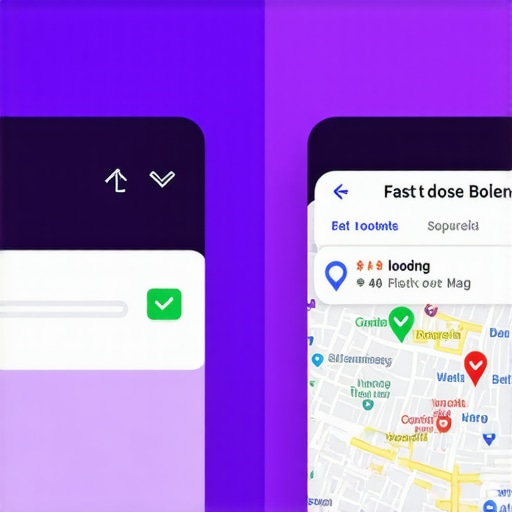
    Diagram showing how website speed and schema impact Google Maps rankings.

    I frequently see business owners obsessing over why your competitor with fewer reviews is outranking you, yet they ignore their own technical infrastructure. If your website and your map profile aren’t speaking the same language, Google gets confused. You need to learn how to sync your website schema with your map profile to create a triple-lock on your location data. This advanced synchronization is what separates the people who dabble in local SEO from those who actually own their zip code through innovative local mapping strategies for top Google rankings.

    Why the business name hack is a fast track to suspension

    Let’s talk about a controversial nuance: the business name. You might have heard about the business name hack that still works for map ranking—where people stuff keywords like “Best Plumber Los Angeles” into their title. Does it work? Yes, in the short term, it’s like digital steroids. But here is the trap: it’s the number one reason for manual reports from competitors. I’ve seen businesses lose 10 years of ranking history overnight because of this. Understanding the real reason your profile was suspended after an edit is crucial before you start playing with your name field.

    Have you ever fallen into this trap of chasing a quick hack only to have it backfire? Let me know in the comments. We’re aiming for sustainable growth, not a flash-in-the-pan result that vanishes when a competitor clicks the report button.

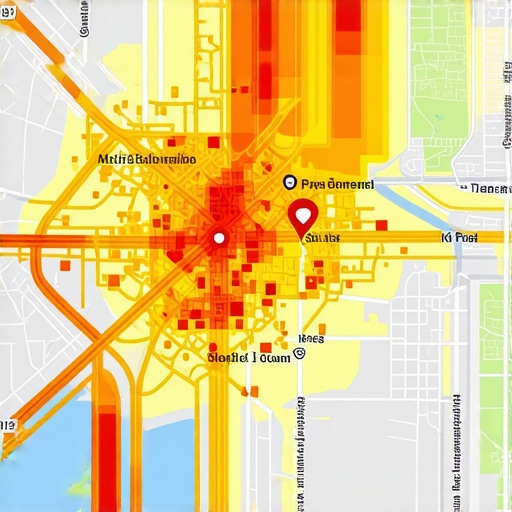
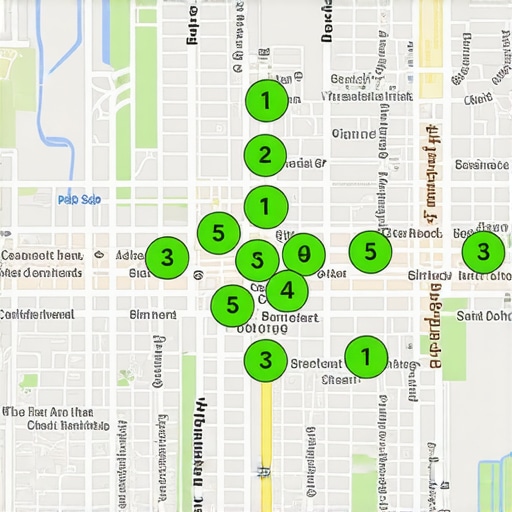
    Once you’ve navigated the minefield of category selection and technical syncing, you enter the most important phase: the long game. I’ve seen dozens of local service businesses reach the top only to fall back to the second page within a month because they treated their profile like a ‘set it and forget it’ project. To truly maintain your local mapping strategy, you need visibility into what’s actually happening on the ground across your entire service area. I personally rely on grid-based tracking tools because they show me the ‘red zones’ where my authority drops off at the street level. If you don’t know how to audit your map rankings from a customer’s real location, you’re essentially flying blind. You might be ranking #1 while sitting at your desk, but you could be #15 just two miles away at a high-traffic intersection where your biggest customers are searching. Tracking this specific data allows you to see exactly where you need to build more localized trust. A heat map visualization of local search rankings across a geographic area showing a business dominating the top 3 spots.
    How do I keep my map ranking high month after month?

    It comes down to consistency rather than raw intensity. You don’t need to spend five hours a day on your profile, but you do need to understand the power of regular profile updates on search frequency. I set a recurring calendar invite for every Tuesday morning to use Google Business posts to improve map presence by highlighting a recent project, a team photo, or a specific customer testimonial. This continuous stream of ‘freshness’ signals to Google’s crawler that your business is not just open, but actively thriving and relevant to the local community. As local SEO expert Joy Hawkins from Sterling Sky has frequently noted in her research, Google is increasingly prioritizing businesses that demonstrate real-time engagement and accurate, active management over those with stagnant profiles. If you’re too busy running the day-to-day operations to do this, that’s exactly why hiring a Google Business Profile consultant saves more money than DIY management in the long run—they keep the engine running while you handle the influx of phone calls.

    Look beyond today: The future of local discovery

    Looking into the near future, the trend is clear: Google is moving toward an AI-driven, hyper-localized experience where the algorithm interprets ‘experience’ through your photos and reviews. We’re already seeing this with the integration of Search Generative Experience (SGE) into local results. I predict that in 2026, the businesses that win won’t just have the most reviews, but the most ‘useful’ reviews that mention specific service attributes and include user-generated photos. This is why you must start implementing these 5 crucial tweaks for Google Maps SEO in 2026 that actually stick now, before the algorithm shifts again and leaves the ‘traditional’ SEO methods in the dust. Stop waiting for the ‘perfect’ time to audit your profile. Go into your dashboard right now and perform a quick search audit from a different zip code using a VPN or local search tool. If you aren’t happy with your visibility radius, it’s time to double down on your interaction signals and technical syncing.

    What Your Competitors Hope You Never Notice

    Over the years, I’ve realized that map pack domination isn’t just about checking boxes; it’s about understanding the subtle signals that Google’s AI values most. One of my biggest lightbulb moments was realizing that local authority isn’t a static score, but a combination of how often people search for your brand by name and how long they stay on your profile. When I stopped focusing on generic keywords and started building a real brand presence, the rankings followed naturally. Many people fail because of a simple oversight, which is why most local SEO audits fail to catch profile errors that actually matter. I also learned that patience is a weapon. You might see a dip after a major update, but if your fundamentals—like your technical schema and interaction signals—are strong, you will always bounce back. If you’ve recently lost your spot, don’t panic; there is a proven way how to force your profile back into the top 3 results by tightening your local data loop.

    The Gear That Keeps My Clients at Number One

    To keep a consistent local mapping strategy, you need more than just a gut feeling. I personally rely on three main pillars for every project I manage. First, I use grid-based tracking to see my visibility across every street corner. Second, I never cut corners on content; I’ve seen firsthand the danger of outsourcing your local content to cheap agencies who don’t understand the nuance of your specific town. Third, I follow the research from Sterling Sky and Joy Hawkins closely—their data-driven approach to Google’s algorithm changes is the gold standard for anyone serious about local maps domination. If you feel overwhelmed by the technical side, it’s always better to reach out for expert guidance than to accidentally trigger a suspension with a bad edit.

    Take Back Your Neighborhood Today

    The digital landscape is crowded, but the local map pack remains the single most effective way to grow a small business in 2025. You now have the blueprint to elevate your google my business rank and sustain that growth through 2026 and beyond. Don’t let your competitors own the conversation in your zip code. Start with one small change today—whether it’s updating your primary category or responding to an old review—and watch how the algorithm begins to favor your effort. You have the tools to dominate maps; now you just need the consistency to stay there.

    Have you noticed your ranking drop when you move just a few miles away from your office? Let me know in the comments below!

  • Why Your Website Speed is Secretly Tanking Your Map Rank

    Why Your Website Speed is Secretly Tanking Your Map Rank

    I was sitting in my favorite local diner, the one with the slightly wobbly tables and the best blueberry pancakes in town, trying to figure out why my latest client was practically invisible on Google Maps. I’d spent weeks obsessing over their map pack domination secrets, tweaking their description, and making sure every citation was perfect. But there I was, searching for their services on my phone, and they were nowhere to be found. It felt like a punch to the gut. I had done everything “by the book,” yet a competitor with half the reviews was sitting pretty at the top. Then, I clicked through to my client’s site using the diner’s shaky Wi-Fi. I waited. And waited. Ten seconds later, the header finally appeared. That was the moment I realized I had ignored the engine under the hood while polishing the paint.

    The Day I Realized My Technical Debt Was Killing My Business

    I’ll be honest: I used to think website speed was just for those big e-commerce sites or tech blogs. I thought for a local service business, as long as the phone number was visible, we were golden. I was wrong. Google isn’t just looking at your address; they are looking at the experience you provide to the person holding the phone on a street corner. If your site takes forever to load, Google sees that as a failure. They don’t want to recommend a business that’s going to make a user stare at a blank white screen. I learned the hard way that the connection between page speed and local map presence is one of the most overlooked factors in the game today. You can have the best service in the world, but if your site is a digital anchor, you’re going to sink in the rankings.

    Can a slow website actually bump you out of the top three?

    It sounds a bit extreme, doesn’t it? You might be thinking, “Surely Google cares more about my 5-star reviews than a few milliseconds of load time.” I used to think the same thing. But consider this: Google’s primary goal is to provide the best answer to a query as fast as possible. According to research from Think with Google, as page load time goes from one second to three seconds, the probability of a mobile site visitor bouncing increases by 32%. If people are clicking your map listing, hitting your site, and immediately bouncing back to the search results because it’s too slow, Google gets a very clear signal: your business isn’t a good result. This often leads to situations why your business is ranking for the wrong local keywords or simply disappearing from the top spots entirely.

    Why Google Refuses to Show Slow Businesses to Real People

    The map pack is high-stakes real estate. When I finally fixed that client’s mobile load time—bringing it down from ten seconds to under two—their ranking didn’t just crawl up; it leaped. We didn’t add a single review or change a single citation. We just made the site usable. It was a wake-up call for me as a neighborly expert who thought he knew it all. We have to stop treating our websites like static digital brochures and start treating them like the high-performance tools they are. Have you actually pulled out your phone, turned off your high-speed office Wi-Fi, and tried to load your own website lately? If you haven’t, you might be surprised—and not in a good way—at what your potential customers are seeing. Drop a comment below and tell me: how long does your site take to load on your phone right now?

    How to Strip the Weight Off Your Website for Better Rankings

    I remember working with a local HVAC company last summer. They had this gorgeous 4K drone video of their fleet as the homepage background. It looked professional, but that 40MB file was a literal anchor. On a mobile device with three bars of service, the site was unusable. When we swapped that video for a single, highly-compressed hero image and cleaned up their script bloat, their google my business rank shot up significantly. This wasn’t magic; it was simply removing the friction between the user and the information they needed. If you want map pack domination, you have to treat your mobile site speed like a vital sign, not a luxury.

    Ditch the Heavy Media and Compress Everything

    Images are usually the biggest culprit in a slow-loading local site. Most business owners just upload the raw file from their iPhone and call it a day. That’s a mistake that kills your local maps domination efforts. You should be using Next-Gen formats like WebP and ensuring your images are scaled correctly for the containers they sit in. I’ve found that using the image optimization trick that increases local CTR helps not just with speed, but with keeping users on the page longer once they arrive from the map. It’s about being lean and mean.

    #IMAGE_PLACE_HOLDER_B#

    Fix the Server Lag Before It Costs You Leads

    Think of your web hosting as the engine of a car. You can have the most aerodynamic body (a beautiful UI), but if you have a lawnmower engine (cheap shared hosting), you aren’t winning any races. If your Time to First Byte (TTFB) is over 500ms, you’re already behind. For businesses trying to how to dominate maps for urgent service keywords, every millisecond counts. When someone needs an emergency plumber, they aren’t going to wait for your budget hosting to wake up. They’ll hit the ‘back’ button and click the next guy in the map pack. That bounce signals to Google that your site isn’t the best answer for that “urgent” query.

    Sync Your Site Technicals with Your Map Profile

    Your technical SEO and your local mapping strategy aren’t two separate silos; they are two gears in the same machine. One of the most effective moves I’ve made for clients is to ensure the local schema on the website perfectly mirrors the data in the Business Profile. You need to how to sync your website schema with your map profile to create a unified signal for Google. When the algorithm sees that your site loads instantly and the data matches the map listing perfectly, it gains the confidence to put you in that coveted top spot. We also use a specific the image metadata strategy for better local visibility to bridge the gap between the photos on the site and the photos on the Google listing.

    Prioritize Above-the-Fold Content Loading

    You don’t need the whole page to load at once; you just need the part the user sees first to be interactive immediately. This is called “Lazy Loading,” and it’s a cornerstone of any modern dominate maps plan. By deferring non-essential scripts and images that are further down the page, you give the user the “Call Now” button or the service list they’re looking for in a heartbeat. I once saw a law firm’s map ranking stall for months simply because their live chat widget was blocking the rest of the page from loading for three seconds. We set that widget to load only after the main content, and the ranking resumed its climb within days.

    Let’s dig deeper because there’s a persistent myth that the guy with the most reviews always wins. Everyone says you need to go on a star-collecting rampage, but in my experience, the quality and velocity of the interaction matters infinitely more than a static number. I’ve seen businesses with 1,000 generic five-star reviews get absolutely destroyed by a local shop with 100 reviews that contain specific service keywords and geo-tags. This is because the interaction data that proves you are a top local choice—how many people click your profile and then actually call or get directions—is the true currency of a modern local mapping strategy. Google wants to see that you aren’t just a museum of old reviews, but a living business that people are engaging with today. A visual comparison of how user engagement signals such as clicks and calls impact local map rankings more than total review count. According to the BrightLocal Local Search Ranking Factors report, behavioral signals like click-through rate (CTR) are now among the top drivers for map pack domination, often outweighing basic review counts.


    Stop the description keyword stuffing nightmare

    One massive ‘oops’ factor I see constantly is the urge to keyword-stuff the business profile. Let’s be clear: why your business description doesn’t matter for ranking but does for your sales is a hill I will die on. If you cram your description with every town in a 50-mile radius, you aren’t fooling the algorithm; you’re just looking like a spammer to the actual humans trying to find a pro.

    Why does your competitor with fewer reviews still beat you?

    It’s the million-dollar question. Usually, it’s not because Google hates you; it’s because your google my business rank is being throttled by ‘Category Fighting.’ If you select five different primary categories that don’t quite fit, you’re diluting your authority for the one that actually pays the bills. I’ve found that why your business categories might be fighting each other is a primary reason for a stalled local maps domination campaign. You also have to consider the clock. Most owners ignore the truth about google maps open now filters and your rank. If a customer filters for ‘Open Now’ and you haven’t updated your holiday hours, you vanish. To truly dominate maps, you have to stop looking for silver bullets and start looking for the friction points you’ve accidentally created. Have you ever fallen into this trap? Let me know in the comments.

    I’ve seen too many business owners treat their map listing like a set-it-and-forget-it billboard. That’s a recipe for becoming a digital ghost. If you want a consistent google my business rank that doesn’t fluctuate every time the wind blows, you need a system. I personally live inside tools that provide grid-based tracking because standing in your office and searching for yourself tells you nothing. You need to how to audit your map rankings from a customers real location to see the cold, hard truth of your reach. If you aren’t looking at the data from the perspective of a guy five miles away, you’re just guessing.

    How do I keep my map pack dominance from fading over time?

    It really comes down to the ‘pulse’ of your profile. Google’s algorithm has a massive bias toward fresh, relevant data. This is why I am so aggressive about the power of regular profile updates on search frequency. I tell my clients to set a calendar alert for every Tuesday morning. Use that time to upload a real, unedited photo of a completed job or a happy customer. Don’t use stock photos; Google knows the difference. They are looking for ‘Real World’ signals. According to Darren Shaw of Whitespark in the latest Local Search Ranking Factors report, behavioral signals like clicking to call or asking for directions are becoming more influential than almost any other factor. This proves that how real foot traffic data overpowers on page seo is the future of the game.

    A visual representation of local maps ranking data using a grid tracking tool for business visibility.

    If you are managing more than one storefront, the complexity doesn’t just double—it quadruples. You cannot simply copy and paste your strategy from one town to the next. You need a dedicated the local mapping strategy for multi-location businesses that treats each branch as a unique local entity. This means unique photos, local-specific updates, and even how to use local events to boost your profile authority in that specific zip code. If you try to run five locations from one generic corporate template, you’ll find yourself buried under the ‘View More’ button before the month is out.

    The Visual Future of Local Search Domination

    As we look toward mastering local maps domination-proven-strategies-for-2025-success, the biggest shift is going to be visual AI. Google is getting incredibly good at ‘reading’ the images you and your customers upload. I’m already seeing the hidden signals in customer photos that google tracks being used to justify rankings for specific service keywords. If a customer uploads a photo of a water heater and mentions ‘fast service,’ Google associates your business with ‘water heater repair’ even if you never wrote that on your profile. This is the ultimate form of social proof that the algorithm trusts more than your own marketing copy.

    If your rankings have recently dipped, don’t panic and start changing every setting at once. That’s the fastest way to get a suspension. Instead, look for the friction. Use a tool to how to force your profile back into the top 3 results by focusing on the ‘interaction gap.’ Are people seeing you but not clicking? Are they clicking but not calling? That data is the key to your long-term success. Try auditing your ranking from three different locations in your city today—you might be surprised at where your ‘boundary’ actually is.

    What I Finally Learned After Hundreds of Rank Drops

    Over the years, I’ve realized that local visibility isn’t about outsmarting a robot; it’s about proving you’re the best neighbor. One big lightbulb moment was discovering that map pack domination doesn’t come from a one-time setup, but from constant, tiny movements. I used to obsess over having the perfect description, but I eventually learned that the truth about keyword stuffing your business description is that it actually does nothing for your rank. The algorithm cares more about how people interact with your profile than how many keywords you can cram into a bio. Another hard lesson? Don’t ignore the ‘ghosts’. I found that how to claim ghost profiles that are stealing your leads was the fastest way to clean up the search landscape and push my clients’ real profiles higher. Finally, stop competing with the whole city. Focus on winning your block first, then your neighborhood, and the rest will follow.

    My Go-To Kit for Dominating the Local Pack

    I don’t believe in magic software, but I do believe in data. To truly get your google my business rank where it needs to be, you need to look at what the leaders are doing. I always recommend keeping an eye on the BrightLocal Search Ranking Factors to see where the wind is blowing. For execution, I rely on a mix of high-speed hosting to keep my site lean and the ultimate guide to google my business rank elevation as my tactical roadmap. If you’re feeling overwhelmed, I’ve found that why hiring a google business profile consultant saves more money than diy management is a lesson many businesses learn only after wasting months on trial and error. My toolkit isn’t full of fancy apps—it’s full of consistent habits and a few trusted resources like Whitespark for citation audits.

    Take Your Business Back to the Top

    The map is changing, but that’s actually good news for you. While your competitors are still trying to game the system with fake reviews or spammy titles, you have the chance to win by being fast, accurate, and genuinely helpful. By implementing these local maps domination techniques, you aren’t just chasing a trend; you’re building a digital asset that will bring in leads for years. If you’re ready to really dive in, check out mastering local maps domination-proven-strategies-for-2025-success to stay ahead of the curve. If you ever feel stuck, don’t hesitate to reach out to us through our contact us page. We’re all in this together, and there’s plenty of room at the top for businesses that care about the user experience.

    Have you noticed your map rankings fluctuating more than usual lately? Let me know in the comments below—I’d love to hear what’s happening in your specific market!

  • Why Your Industry Category is More Competitive Than You Think

    I remember sitting in my office three years ago, staring at my laptop screen until my eyes burned. I had just checked the local results for my niche, and I was nowhere. I had fifty more reviews than the guy in spot number one, a beautiful website, and I had even spent a fortune on those citation packages everyone talks about. Yet, I was invisible. It felt like I was shouting into a void while my competitor, who still used a flip phone and had a website from 1998, was busy answering calls all morning. That was the day I realized that winning the local game isn’t about being the best business in real life; it is about knowing why the map thinks you are irrelevant. Today, I am going to show you how to stop being a ghost in your own town and finally achieve real map pack domination by looking at the hidden factors your competitors are quietly exploiting.

    Stop Fighting for Scraps in a Crowded Local Market

    The hard truth is that your industry category is probably more crowded than it looks on the surface. When I first started, I made the classic mistake of thinking that if I just checked the box for my primary category, I was golden. I actually fell into the trap of messing up my service categories by adding way too many, thinking it would make me show up for everything. Instead, it diluted my authority so much that I stopped showing up for my main service entirely. Most business owners are still doing this, and they wonder why the guy with three reviews is beating them. According to data from BrightLocal, proximity and category relevance remain the heaviest hitters in the algorithm, often outweighing your actual star rating. You have to realize that Google is trying to solve a puzzle, and if your data is messy, you are the piece that gets tossed aside. We are going to sharpen your local mapping strategy so that your business becomes the only logical answer the algorithm can provide.

    Is local maps domination actually worth the stress?

    I get it. You are busy running a business, not a marketing agency. You might be wondering if all this technical tweaking even moves the needle. But let me ask you: Have you ever felt like a ghost in your own neighborhood? If you aren’t in those top three spots, you are basically relying on word-of-mouth or expensive ads that eat your margins. When I finally figured out my google my business rank issues, my phone didn’t just ring more—it rang with better customers. I stopped wasting cash on citations that did nothing and started focusing on the signals that actually move the needle. Have you noticed your competitors appearing for searches where you know you should be the top choice? That frustration is your signal that it is time to pivot. We are setting the stage to move you from the ‘View More’ abyss back into the spotlight where you belong.

    Your Category Selection is Either a Magnet or a Repellant

    Think of your business profile like a radio station frequency. If you try to broadcast on five different channels at once, you just end up with static. Most owners think adding every possible related service helps, but why your business categories might be fighting each other is the real question you should be asking. I once worked with a local plumber who was stuck on the second page of maps for months. We didn’t buy a single link or beg for new reviews. Instead, we realized his secondary categories were so broad they were confusing the algorithm. We stripped away the fluff and focused on his core high-margin service, and within two weeks, his stalled google my business rank shot into the number two spot. You need to pick one primary category that defines your bread and butter and be extremely surgical with the rest to avoid rank dilution.

    Stop Posting Boring Corporate Photos

    Google isn’t just looking at the image; it is reading the data behind it. If you are uploading generic stock photos of people shaking hands, you are wasting a massive opportunity for map pack domination. I started telling my clients to take photos of their actual trucks in front of local landmarks or on-site at recognizable neighborhoods. This creates a geographic footprint that the algorithm can verify. Using specific photo metadata can actually help anchor your business to a specific neighborhood better than any text description ever could.

    The Ghost Town Effect: Fixing Your Radius

    A major mistake I see is businesses setting a massive service area, thinking they can ‘catch’ customers from fifty miles away. In reality, this just tells Google you aren’t an expert anywhere. You have to audit your map rankings from a customer’s real location to see where you actually disappear. If you aren’t showing up three miles away, you won’t show up twenty miles away. To fix this, you need to prove your local relevance through engagement. This means interaction data matters more than ever. When people click your ‘Directions’ button or call you directly from the map, it sends a loud signal that you are the authority in that specific pocket of the city. If your engagement is low, you are essentially invisible, regardless of how many keywords you stuff into your profile.

    Force the Algorithm to Recalculate Your Value

    When you find your business is stuck behind a competitor with worse service, it is time for a local mapping strategy that targets behavioral signals. I once had a client who was technically perfect on paper but wouldn’t budge from the #4 spot. We started a campaign to have their most loyal customers search for them by brand name and click the website link from the map results. This surge in ‘brand intent’ signaled to the algorithm that they were a preferred destination. It is a subtle move that forces your profile back into the top 3. You aren’t just waiting for Google to notice you; you are creating the data that makes you impossible to ignore.

    Stop Obsessing Over Your Total Review Count

    I have seen it a hundred times: a business owner gets 200 five-star reviews and waits for the phone to explode, only to see a competitor with 40 reviews sitting pretty in the top spot. Everyone tells you that reviews are the ultimate factor, but in my experience, review velocity and diversity are far more potent than the raw number. If you get fifty reviews in a week and then go silent for three months, Google sees that as a red flag for manipulation rather than authority. It is about the why your competitor with fewer reviews is outranking you dynamic that most people ignore. You need a steady, organic heartbeat of feedback to maintain a high google my business rank. If your reviews are all ‘Great service!’ and don’t mention specific keywords or locations, they are half as effective as they could be.

    Why does your map radius suddenly collapse at night?

    This is a nuance many pros miss. According to the latest Whitespark Local Search Ranking Factors study, proximity and ‘Open Now’ filters drastically affect your real-time visibility. If your business is marked as closed, you often disappear from the top 3 for active searchers even if you are the best choice. This creates a proximity glitch where your local mapping strategy fails just because of a toggle switch. I once saw a law firm lose 60% of their lead flow because they did not realize their open now filters were killing their rank during peak research hours in the evening.

    The Proximity Paradox That Most Experts Ignore

    Common wisdom says you should move your office to the center of the city to rank better. I call this the Proximity Paradox. Moving into a high-density area often places you in a ‘filtering zone’ where Google hides similar businesses to avoid clutter. Sometimes, being slightly on the outskirts allows you to own a larger, less contested radius. Understanding the proximity truth why your office location isnt the only reason youre not ranking is the first step to expanding your reach. You have to prove relevance through interaction data rather than just physical location.

    Don’t Let a Simple Edit Kill Your Ranking

    Here is the ‘oops’ factor that ruins reputations: the citation purge. I have seen owners spend thousands to ‘fix’ every mention of their business online, only to trigger a manual review or a suspension because they changed their name slightly to include a keyword. Don’t fall for keyword stuffing your business description or title—it is a one-way ticket to being banned. Instead, you should be looking for the audit mistake that makes your map listing effectively invisible. If your website footer address does not match your map pin exactly, Google gets confused, and a confused algorithm never ranks you first. To really achieve map pack domination, you have to stop thinking like a human and start thinking like a database. When we fixed a stalled google my business rank for a client last month, it was not by adding more fluff; it was by removing the conflicting signals. Have you ever fallen into this trap where a simple edit turned into a ranking nightmare? Let me know in the comments.

    Your Spot in the Top 3 Isn’t a Lifetime Award

    The most dangerous thing you can do after hitting the number one spot is to assume you have ‘arrived.’ I have seen dozens of businesses reach the summit of map pack domination only to tumble into the third page because they stopped doing the very things that got them there. In my own workflow, I treat my profile like a living organism. It needs a heartbeat, and that heartbeat is consistent data. If you go silent, Google assumes your business is no longer as relevant or active as the guy down the street who just uploaded ten new customer photos. You have to understand the power of regular profile updates on search frequency if you want to stay on top for more than a month.

    The Tool That Finally Stopped My Guessing Game

    I used to spend hours manually searching for my business from different parts of the city. It was exhausting and, frankly, inaccurate. Now, I rely exclusively on grid-based tracking tools like Local Falcon. Instead of a single rank number, it gives me a visual heatmap of the city. I can see exactly where the exact radius where your local rankings drop-off occurs. This is vital because if I see a ‘red zone’ just two miles away, I know my local mapping strategy needs to focus on localized content or geo-tagged signals for that specific neighborhood. Expert Joy Hawkins from Sterling Sky has frequently highlighted how the ‘Vicinity’ update made proximity the ultimate gatekeeper, and without these visual tools, you are essentially flying blind.

    #IMAGE_PLACE_HOLDER_D#

    How can I maintain my local maps domination over time?

    Maintenance is about rhythm, not intensity. I recommend a ‘Monthly Map Audit’ where you check for three things: review velocity, competitor name changes, and attribute updates. If a competitor suddenly adds ‘Best’ or ‘Top-Rated’ to their business name, they are using the business name hack that still works for map ranking, and you need to know how to counter that without getting suspended yourself. Scaling to multiple locations is even trickier; you cannot just copy and paste your success. You need a dedicated local mapping strategy for multi-location businesses that ensures each storefront has its own unique geographic signal. If you don’t, you’ll end up with ‘cannibalized’ rankings where your own offices are fighting each other for the same spot.

    Prepare for the 2026 Proximity Shift

    Looking ahead, I see Google moving toward an even more behavioral-heavy algorithm. It won’t just be about where you are, but how many people ‘reserve’ or ‘message’ you directly through the map interface. We are already seeing 5 crucial tweaks for google maps seo in 2026 that actually stick, and most of them revolve around real-world interaction data. If you want to future-proof your google my business rank, start treating your profile as your primary customer service portal. I want you to try this right now: go into your profile and find one ‘Question’ in your Q&A section that hasn’t been answered, or answer it yourself with a keyword-rich, helpful response. It is a small move that signals massive authority. Don’t wait for the algorithm to change—be the reason it has to adjust. Stop guessing and start using how to audit your map rankings from a customer’s real location to find your next growth pocket.

    The Hardest Lessons I Learned While Chasing a Top Google My Business Rank

    After years of tweaking profiles, I realized that map pack domination isn’t a trophy you win once; it is a garden you must tend daily. One of my biggest lightbulb moments was discovering the invisible profile why youre not showing up even with 5 star reviews—I had the quality, but I lacked the active signals that prove relevance to a modern algorithm. I also learned that how real foot traffic data overpowers on page seo is the ultimate ranking factor. Google cares more about whether people actually engage with your physical location than how many keywords you stuff into your description. Finally, I stopped worrying about every tiny competitor move and focused on my own review velocity; a steady organic heartbeat of feedback is far more powerful than a sudden burst of reviews that looks like spam.

    The Survival Kit I Use to Dominate Maps Every Day

    To keep your edge, you need the right tools in your corner that provide real-world data rather than generic estimates. I personally swear by Local Falcon for its grid-tracking capabilities because it shows me exactly where my reach drops off neighborhood by neighborhood. For cleaning up messy data, Whitespark is my go-to for ensuring NAP consistency without the manual headache of searching every directory. I also recommend following Sterling Sky for their deep-dive testing on recent algorithm shifts. These resources are central to my innovative local mapping strategies for top google rankings because they remove the guesswork. If you want to stay ahead, you must learn how to outsmart competition in local map listings in 2025 by using localized signals, not just general SEO tactics.

    Your Journey Toward Permanent Local Authority Starts Now

    The road to achieving a dominant google my business rank might seem long, but every small tweak you make today—like answering a customer question or uploading a geo-tagged photo—adds up to a massive competitive advantage. You do not need to be a tech genius to win; you just need to be more consistent and more authentic than the guy down the street. Your business provides real value to your community, and it is time the local maps reflected that. Don’t let your expertise stay hidden behind the ‘View More’ button. Which part of your profile are you going to update first—your photos, your Q&A section, or your service radius? Let me know in the comments below!

  • How to Optimize Your Local Landing Pages for Maps Traffic

    How to Optimize Your Local Landing Pages for Maps Traffic

    I remember sitting in my home office three years ago, staring at a screen that told me I was invisible. I had a beautiful website, glowing reviews, and I was doing everything by the book. But when I searched for my service on my own phone from the coffee shop just two blocks away, I didn’t even show up in the top ten. I was a ghost in my own neighborhood. My competitor, whose website looked like it was designed in 1998, was sitting pretty at the top of the pile. I realized then that I was failing at local maps domination because I treated my landing pages like static brochures instead of active beacons for Google’s crawlers. I had built a site for the world, but I had forgotten to build it for my street.

    The Massive Gap Between Your Website and Your Map Rank

    My biggest early mistake was thinking that my Google Business Profile lived in a vacuum. I spent months obsessing over reviews and categories while completely ignoring the very pages my profile linked to. I learned the hard way that Google looks at your landing page to verify everything your profile claims. If your page doesn’t provide the right signals, your google my business rank will stay in the basement regardless of how many five-star reviews you stack up. Your website is the foundation of your local mapping strategy, and if that foundation is shaky, the map pack will never trust you.

    Does tweaking a single page really move the needle?

    You might be skeptical that a few changes to a landing page can actually influence a map listing. I used to think the same until I saw the data. According to research from BrightLocal, on-page signals are consistently ranked as a top-three factor for appearing in the local pack. When I finally stopped ignoring how most local business schema fails to communicate location to Google, my visibility didn’t just crawl up—it leaped. This isn’t about keyword stuffing; it’s about creating a bridge between your physical front door and the digital searcher.

    Turn Your Landing Page Into a Proximity Powerhouse

    We aren’t just building pages for people; we’re building them for the algorithm that decides who gets the phone call and who gets buried. If you’ve noticed that your map embed strategy isn’t translating into actual customer calls, it’s likely because your content doesn’t align with local search intent. Achieving true map pack domination requires your landing page to act as a local authority hub. Have you ever checked your ranking from a different zip code only to find you’ve completely vanished from the results? That “proximity ghosting” is exactly what happens when your landing pages aren’t optimized for the maps. Today, we are going to fix that once and for all.If your website and your Google Business Profile aren’t speaking the same language, you’re effectively running a lighthouse with no bulb. For true local maps domination, every element on your landing page must echo the physical reality of your business. I remember working with a local plumber in Austin who was frustrated because his google my business rank was stuck behind competitors with half his experience. We realized his website mentioned ‘Central Texas’ generally, but his profile was pinned to a very specific neighborhood. As soon as we aligned his footer data and service descriptions with that specific micro-location, he didn’t just move up; he owned the map for three surrounding zip codes. This is the ‘Mirror Effect’—Google needs to see your website reflect your map profile exactly to build the trust necessary for map pack domination.

    Sync Your Site Data with Your Business Profile

    Think of your landing page as the legal ID for your map listing. If the address on your license doesn’t match where you’re standing, the bouncer (Google) isn’t letting you in. You need to sync your website schema with your map profile so there is zero ambiguity. This means your Name, Address, and Phone number (NAP) must be character-for-character identical across both platforms. I’ve seen rankings drop simply because one used ‘St.’ and the other used ‘Street.’ It sounds pedantic, but when you are trying to dominate maps, precision is your best friend.

    The City Page Method for Neighborhood Authority

    Most people stop at the homepage, but if you want to reach beyond your front door, you have to use the city page method. This isn’t about creating thin, duplicate content. It’s about building a hyper-local resource that mentions local landmarks, nearby intersections, and neighborhood-specific news. When I applied this to a small law firm, their visibility expanded into three adjacent towns where they didn’t even have physical offices. This is a core pillar of a successful local mapping strategy because it proves to Google that your relevance extends past your parking lot.

    Fix the Schema Errors Google Hates

    Standard SEO plugins often spit out generic schema that tells Google you’re a ‘Business,’ but it fails to specify that you are a local entity tied to a specific map coordinate. You need to implement the specific schema fix that forces a radius expansion. This involves using ‘MainEntityOfPage’ and ‘HasMap’ properties to explicitly link your URL to your Google Maps CID.Digital map showing a business expanding its local search visibility area through optimized data synchronization.

    Audit Your Progress in Ten Minutes

    You can’t fix what you haven’t measured accurately. Most business owners check their rank from their own office, which is a massive mistake because proximity bias gives you a false sense of victory. You need to perform the 10-minute local SEO audit to see what a customer three miles away actually sees. When I first did this for my own brand, I found out I was invisible just two blocks north. That realization was painful but necessary. By identifying these gaps, you can adjust your content to target the specific ‘proximity ghosting’ areas that are currently being handed to your competitors on a silver platter.Most gurus will tell you that the secret to map pack domination is simply asking for more reviews. I used to believe that too, until I watched a competitor with a 4.2-star rating consistently outrank a client of mine who had a perfect 5.0. It felt like I was playing a rigged game. What I eventually discovered is that Google has moved far beyond simple math. Today, local maps domination is driven by interaction data and behavioral signals rather than just raw volume. If people click your profile but immediately hit the back button because they can’t find what they need, Google takes note. According to Darren Shaw and the team at Whitespark, behavioral signals like click-through rate and mobile ‘clicks to call’ are massive influencers that many business owners completely ignore. Have you ever fallen into this trap of focusing only on the stars and ignoring the clicks? Let me know in the comments.

    Stop chasing review volume and start chasing engagement

    The common belief is that the person with the most reviews wins. In reality, the trap of review automation often leads to ‘dead’ profiles that look robotic to the algorithm. Google wants to see a steady pulse of activity, not just a burst of stars every three months. If your google my business rank has stalled, it might be because you aren’t feeding the machine with fresh photos, weekly posts, and varied review sentiment. I’ve seen one specific move where a business with 20 reviews outranked one with 200 simply because their reviews contained specific local keywords and the owner responded to every single one within an hour. This level of active management sends a signal of reliability that a static profile simply can’t match.

    Is your map rank actually just a reflection of real-world foot traffic?

    This is the advanced question most SEOs aren’t ready to answer. Google has access to more data than we like to admit, and how real foot traffic data overpowers on-page SEO is becoming a hard reality. If Google sees thousands of cell phones entering a competitor’s store but only dozens entering yours, they will rank the competitor higher because the ‘real world’ says they are more popular. This means your local mapping strategy must extend beyond the computer screen. You need to drive digital engagement that mirrors your physical presence. If you aren’t using how search intent changes your business visibility to align your online content with what people are actually coming into your store for, you’re fighting an uphill battle.

    The single most common way to get your profile killed in 24 hours

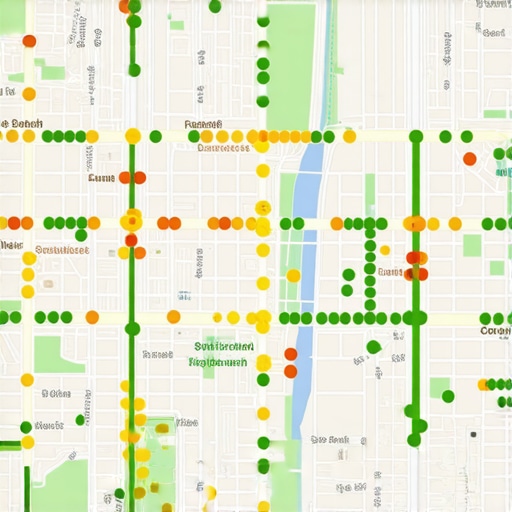
    The ‘oops’ factor in map pack domination is often a self-inflicted wound. Many business owners get impatient and try to change their primary category or their business name to include more keywords. This is the fastest way to trigger a hard suspension. Understanding the real reason your profile was suspended usually boils down to a lack of trust. Google is hyper-sensitive to any edits that look like ‘ranking manipulation.’ When you are trying to dominate maps, you must treat your profile like a fragile asset. One wrong move with your address formatting can lead to the proximity truth behind office locations working against you, effectively hiding you from customers who are standing right across the street. Digital map showing a suspended business profile warning icon Always verify your data on the backend before hitting ‘save’ on a major profile update. Precision is the difference between a top-three spot and total digital disappearance.Achieving a top spot is only half the battle; keeping it is where most businesses fail. I’ve seen dozens of companies reach the top three only to vanish three months later because they treated their local maps domination as a ‘set it and forget it’ project. To stay on top, you need to stop guessing and start using a grid to see your true reach. Standard rank trackers will tell you that you are #1, but they usually only check from one specific coordinate. I personally rely on local grid tracking because it exposes the 7 maps keyword tracking flaws that hide your true store performance. If you don’t know exactly where your visibility drops off, you can’t possibly know where to focus your local content efforts.
    How do I keep my map pack spot from slipping away?

    Maintenance is about consistency, not intensity. I’ve found that a ‘steady pulse’ of activity is far more effective for maintaining your google my business rank than a massive blast of updates once a year. This means uploading at least two high-quality photos a week and responding to every review within 24 hours. When you understand the power of regular profile updates on search frequency, you realize that Google rewards businesses that prove they are still ‘open for business’ in the digital sense. I also suggest using 5 free tools that actually generate leads to automate the tedious parts of your local mapping strategy, such as scheduling posts. A digital map showing local search rankings across a geographical grid for business visibility tracking. Leveraging how to use google business posts to improve map presence is a non-negotiable for anyone serious about map pack domination. In my experience, profiles that post weekly get significantly more ‘Discovery’ searches than those that stay silent.

    AI is changing the search game faster than we think

    We are moving toward a world where Google’s Search Generative Experience (SGE) will summarize your business for the user before they even see the map. Mike Blumenthal, a leading expert in local search, has frequently noted at Near Media that Google is increasingly using AI to scan your photos and reviews to see if you match ‘subjective’ search queries like ‘best atmosphere’ or ‘family-friendly.’ This is why your local mapping strategy must evolve to include highly descriptive, user-generated content. If you aren’t preparing for this shift, you’ll be left behind. I highly recommend looking at these 7 google business profile tips for 2026 to ensure your profile is future-proofed against these algorithm shifts. If you’ve recently made major changes to your site and your rank hasn’t moved, you might need to learn how to force google to re-index your map location faster to see the results of your hard work. My advanced tip for today: go into your profile right now and add ten ‘Store Attributes’ that your competitors have missed; it’s the easiest way to tell Google exactly what you offer without writing a single sentence of code.

    The Hard Truth About Why Being ‘Good’ Isn’t Enough

    I used to think that providing a stellar service was enough to guarantee a top spot, but I quickly learned that the algorithm doesn’t have a ‘moral compass.’ It has a ‘trust compass.’ I’ve seen mediocre businesses achieve local maps domination simply because they were more consistent at proving their relevance to Google. The biggest lesson I’ve learned is that proximity is a baseline, not a strategy. If you don’t audit your map rankings from a customers real location, you are flying blind. You might be king of your own office, but a ghost two miles away.

    Another lightbulb moment came when I realized why your competitor with fewer reviews is outranking you. It isn’t just about the numbers; it’s about the context of those reviews and how fast you respond to them. Interaction data is the new gold. Google wants to see that your business is a living, breathing part of the community, not a digital artifact from three years ago.

    The Gear That Actually Moves the Needle

    I don’t believe in cluttering your workflow with every new shiny SEO tool, but a few key resources are non-negotiable for a modern local mapping strategy. First, I always keep a close eye on Mike Blumenthal’s Near Media updates to see how AI is shifting local intent. Second, you should be leveraging 5 free tools that actually generate leads to keep your profile active without burning out. #IMAGE_PLACEHOLDER_E# I also recommend moving away from standard rank trackers and using a grid-based system to avoid the 7 maps keyword tracking flaws that hide your true store performance. These tools provide the raw data you need to make surgical adjustments rather than generic guesses.

    Take Back Your Local Territory

    You have the keys now. Map pack domination isn’t a secret society; it’s a game of consistency and technical alignment. Don’t let the fear of a suspension or a complex algorithm keep you from showing up for the people in your neighborhood who are searching for you right now. Your google my business rank will follow your effort. Start by fixing one element today—whether it’s your schema or your post frequency—and watch how the map responds. It is time to stop being the best-kept secret in town and start being the first name people see.

    Have you ever noticed your profile ranking perfectly while you’re standing in your own shop, but completely disappearing the moment you drive two miles down the road? Let me know your experience with this ‘proximity ghosting’ in the comments below.

  • Why Your Business Is Ranking for the Wrong Local Keywords

    Why Your Business Is Ranking for the Wrong Local Keywords

    It was a rainy Tuesday when I realized my phone wasn’t ringing for the services that actually paid my bills. I had spent weeks obsessing over my google my business rank, feeling like a king because I was top of the list for “quick fix repairs.” The problem? I don’t do quick fixes. I do high-end, custom restorations. I was the #1 choice for people who had no intention of ever hiring me. Talk about a punch to the gut. It was a classic case of winning the wrong battle.

    Stop Celebrating Rankings That Don’t Pay the Bills

    When I first started out, I thought any traffic was good traffic. I made the classic mistake of picking the broadest categories possible just to cast a wide net. I was getting hits, sure, but they were the wrong ones. If you are ranking for keywords that attract “tire kickers” rather than “contract signers,” your local maps domination strategy is actually working against you. According to research by BrightLocal, nearly 76% of people who search on their smartphones for something nearby visit a business within a day, but that only matters if you’re solving their immediate problem, not just appearing for a generic term. I once accidentally ranked a boutique law firm for “free legal aid” because I thought high volume was the goal; it nearly broke their receptionist’s spirit.

    Is chasing the top spot actually worth the hype?

    You might be worried that tightening your focus will make your total impressions drop. And honestly? It might. But I’d rather have ten calls from people ready to buy than a thousand views from people looking for a service I don’t provide. Most local SEO audits fail to catch this because they only look at the “where” and the “how,” never the “who.” I learned the hard way that a smaller, more targeted map radius is infinitely more profitable than a huge, irrelevant one. Have you ever checked your insights and realized you’re being found for something completely unrelated to your main business?

    The Real Reason Your Neighbors Can’t Find You

    It usually comes down to how search intent changes your business visibility. Google is trying to be a matchmaker, but if you’re giving it the wrong signals, it is going to set you up with the wrong customers. We are going to fix that today by looking at the specific levers that force the right eyes onto your profile. We’ll look at why your high impressions are leading to zero calls and how to pivot before you waste another dime on the wrong audience.

    Clean Up the Category Mess Before You Spend a Dime

    If your profile is a mess of conflicting signals, Google will just guess where to put you. I see this constantly: an HVAC company selects ‘Handyman’ as a secondary category because they ‘sometimes do small jobs.’ Suddenly, they are losing high-ticket furnace installs to a competitor with half their experience because they diluted their authority. You need to be surgical. When I audited a plumbing client last year, we found they were ranking for ‘clogged drains’ but missing ‘water heater replacement’ entirely. By refining their primary category and removing the fluff, we saw a significant shift in lead quality almost overnight. This isn’t about being found by everyone; it’s about being the only logical choice for the person ready to swipe their card. A comparison graphic showing how optimizing a Google Business Profile leads to better local map rankings.

    The Simple Tactic That Forces Your Signal Into New Neighborhoods

    Most people think their map reach is a hard circle around their office. It’s not. It’s a flexible web that stretches based on where Google thinks you are relevant. If you find your map listing is hidden behind the view more button, it’s usually because your digital footprint doesn’t match your physical claims. I once helped a roofer who couldn’t rank three miles away from his shop. We implemented the city page method to create hyper-local relevance without opening a new office. We stopped talking about ‘roofing’ in general and started talking about ‘roofing in [Neighborhood Name]’ with photos to prove it. Within a month, his ‘invisible’ radius expanded by four miles.

    Why Your Response Time Actually Outranks Your Five-Star Rating

    You can have a thousand reviews, but if you take six hours to reply to a quote request, Google knows. They track everything. I’ve seen how customer interaction speed directly influences your google my business rank firsthand. A local chiropractor I worked with was getting beat by a newer clinic with 10 reviews. Why? The newer clinic had ‘Fast Responder’ badges and their dwell time—the time people spent looking at their photos and reading their posts—was double. We stopped obsessing over getting more stars and started focusing on how customer dwell time actually impacts your google my business rank. We added high-resolution project photos and updated our posts weekly. The result? Our google my business rank elevation didn’t just crawl up; it leaped. If you want local maps domination, you have to treat your profile like a living conversation, not a static billboard. You need to perform a 10-minute local SEO audit to see if your ‘response’ signals are actually reaching the servers or if they are timing out before they can help your rank.People often tell me, ‘I just need 100 more reviews and I will be number one.’ It is a lie that many SEO agencies sell because it is easy to track. In reality, the industry is obsessed with quantity, but Google’s algorithm has moved toward quality and velocity. A recent study by Whitespark on local search ranking factors confirms that while reviews are a top-tier signal, the diversity of those reviews and the keywords used within them carry more weight than the raw number. I have seen profiles get ghosted because they suddenly received 30 generic reviews in two days—it looks like a bot attack, even if it is legitimate. This is the trap of review automation where chasing stars actually kills your trust score. A 3D visualization of how local brand mentions and digital signals connect a business to its surrounding neighborhood on Google Maps.

    Reviews Aren’t the Holy Grail You Think They Are

    Everyone says you need perfect citations across every obscure directory on the internet. In my experience, that is a massive waste of time in 2025. While consistency is a baseline, why perfect citations wont save your google my business rank anymore is a conversation we need to have more often. Google is now smart enough to know that ‘St.’ and ‘Street’ are the same thing. What it really wants to see is authentic, high-quality brand mentions from local sources. If you do not know how to identify which local map backlinks are actually moving your rank, you are just throwing darts in the dark and hoping something sticks. I once saw a plumber jump five spots just by getting a mention in a local neighborhood newsletter, which carried more weight than fifty ‘Yellow Page’ clones.

    Why does the shop next door outrank you with half the reviews?

    It usually comes down to contextual relevance and user behavior signals. While you are chasing directories, your competitor might be generating random brand mentions that drive more map clicks because they are active in the local community. Google sees people searching for their specific brand name followed by a location, which is the strongest signal of authority you can give. If you want map pack domination, you have to stop acting like a robot and start acting like a local pillar.

    The Technical Trap That Makes Your Map Listing Invisible

    One major ‘oops’ I see even advanced players make is over-optimizing their website embeds. They think putting a giant map on every single page helps ‘prove’ their location. Actually, the map embedding mistake that actually hurts your search presence is often about page load speed and broken API keys that confuse the Google crawler. If your website takes four seconds to load because of a heavy map script, your google my business rank elevation will stall regardless of how many photos you upload. Have you ever fallen into this trap? Let me know in the comments. We need to focus on a local maps domination strategy that prioritizes the user experience over rigid, outdated SEO ‘rules’ from five years ago.

    Stop Watching Your Rank Slide After 90 Days

    Most business owners get a rush of adrenaline when they finally break into the top 3, only to get complacent. That is exactly why most businesses fail to hold a top spot in the map pack after three months. You have to realize that the map is a dynamic environment; if you stop feeding the beast, someone else will. I personally use grid-tracking software to see how my authority bleeds into the next zip code. If I see a dip, I don’t panic—I pivot. I look at how real foot traffic data overpowers on-page seo and try to mirror that reality in my digital updates.

    Why Your 2024 Strategy Won’t Survive 2026

    The game is changing faster than ever. We are moving toward a world where AI doesn’t just read your text; it analyzes your business’s physical behavior. If you want to stay ahead, you need these 7 google business profile tips for 2026 to outperform massive competitors. A recent study by the experts at Sterling Sky highlights that ‘real-world entity signals’ are becoming the ultimate tiebreaker in competitive markets. If you are just a ghost on the internet with no local pulse, you’re toast.

    How do I maintain map pack domination over time?

    The secret is what I call ‘Signal Maintenance.’ You cannot just set it and forget it. You need the power of regular profile updates on search frequency. Every week, I make it a point to upload at least three high-quality photos and answer a question in the Q&A section. It keeps the profile ‘fresh’ in Google’s eyes. A visualization of local map ranking grid results and business profile optimization tools.

    Get Personal with Your Data Tracking

    I have to be honest with you: the data Google gives you in the standard dashboard is often a sanitized version of the truth. I’ve written extensively about why your profile insights are lying to you about real phone calls. If you want to truly scale, you need to use third-party tools that measure your actual visibility radius. I use Local Falcon because it shows me exactly where I’m winning and where I’m ‘hidden’ behind the competition. These map pack domination secrets only work if you are looking at the right numbers. Don’t let a ‘vanity metric’ like impressions fool you into thinking you are making money. Try this right now: Pick your most profitable service and search for it while physically standing three blocks away from your office. If you aren’t #1 there, your scaling strategy has a leak that needs plugging immediately.

    The 3 Cold Truths About Dominating Local Maps

    After years in the trenches, I realized that google my business rank isn’t a trophy you win; it’s a garden you tend. First, high search volume is often a vanity metric that distracts you from the real goal: conversions. I have seen countless owners celebrate a rise in views while their phones stayed silent because they were targeting the wrong intent. Second, I learned that a 3-minute fix can reverse dropping clicks more effectively than a expensive ad campaign if you focus on user behavior. Third, your biggest competitor isn’t necessarily the guy with more reviews—it’s your own technical complacency. If you aren’t evolving, you are invisible.

    The Gear I Actually Use for Local Mapping

    I don’t believe in using fifty different tools to manage a local mapping strategy. Instead, I stick to a few that actually move the needle and provide clarity. I rely on Local Falcon for a clear grid-view of my rank across different zip codes, as it removes the guesswork from proximity. I also recommend the book Building a StoryBrand by Donald Miller, which changed how I write profile descriptions to focus on the customer as the hero. To stay sharp, I constantly look for an innovative local mapping strategy for top google rankings to ensure I’m not using 2022 tactics in 2025. For the technical side, implementing a specific schema fix that forced a massive map radius expansion has been the single most effective way to help my clients who felt ‘trapped’ by their physical office location.

    The Future of Local Search Starts Today

    The road to local maps domination is paved with consistent, small actions rather than one-off miracles. You now have the blueprint to outsmart competition in local map listings in 2025 and beyond. Remember, Google wants to reward the businesses that provide the best real-world experience. If you focus on being the most helpful, responsive, and relevant option in your area, the algorithm will naturally find its way to your doorstep. It takes courage to stop chasing ‘likes’ and start chasing ‘leads,’ but the payoff is a business that grows even while you sleep. Which neighborhood is currently your ‘blind spot’ on the map where you know you should be ranking? Let me know in the comments below!

  • Why Your Competitor With Fewer Reviews Is Outranking You

    Why Your Competitor With Fewer Reviews Is Outranking You

    I remember sitting in my home office at 3:00 AM, the only sound being the hum of my space heater and the rhythmic clicking of my mouse. I was auditing a local dental practice that had—no joke—482 five-star reviews. They were the local darlings. Yet, when I searched for ‘dentist near me,’ they were nowhere to be found. Instead, a tiny office with a measly 14 reviews and a blurry profile photo was hogging the top spot in the 3-pack. It felt like a glitch in the matrix. I’d spent years telling people that reviews were the holy grail of local search, and here I was, looking at undeniable proof that I was only half-right. That night, I realized that if you want to dominate maps, you have to look past the surface-level vanity metrics that everyone else is obsessed with.

    The Real Reason You Are Getting Ghosted by the Map Pack

    It’s a bitter pill to swallow when you’ve done the hard work of providing great service, only to see the shop next door outrank you with half the reviews. I used to think Google was just slow to update. I waited. And waited. But the rankings didn’t budge. My big mistake? I was neglecting the structural signals that tell Google exactly what a business does and where it does it. I was so focused on the ‘social proof’ that I forgot about the technical ‘search proof.’ This is a classic case of why your google my business rank tanked while you were busy counting your stars.

    Is it actually possible to beat the big guys with just a few reviews?

    Yes, it absolutely is, and it happens every single day. The secret lies in a local mapping strategy that prioritizes engagement and relevance over raw volume. Research from industry authorities like Whitespark shows that while reviews are a top-five ranking factor, things like having the right primary category and a properly optimized landing page carry massive weight. In fact, their 2023 Local Search Ranking Factors survey highlights that ‘proximity to the searcher’ often overrides review count entirely. It’s not about being the most popular; it’s about being the most ‘useful’ in Google’s eyes at that exact second. Have you ever felt the frustration of watching a less-qualified competitor take your leads just because they ‘hacked’ the map? Drop me a line on our contact page and let’s vent about it together—or better yet, let’s fix it. We are going to peel back the curtain on the hidden signals that actually move the needle. We aren’t just talking about basic SEO; we are talking about a total map pack domination overhaul that puts you back in the driver’s seat.

    Stop Letting Category Errors Kill Your Rankings

    Think of your Google Business Profile like a radio station. If you aren’t broadcasting on the right frequency, it doesn’t matter how loud your speakers are; no one is going to hear you. Most business owners are screaming into a void because they’ve tuned their frequency—their primary category—to something so broad it’s essentially static. I once worked with a local plumber who was losing every emergency lead in town. He had the reviews, the truck, and the expertise, but his profile was categorized as ‘Contractor.’ He was competing with roofers and deck builders instead of people with leaking pipes. We corrected the mistake local plumbers make with service categories by switching him to a niche-specific primary category, and his phone calls doubled in a week. This is where why most business owners pick the wrong categories and kill their local map rank becomes a painful reality. To dominate maps, you must be hyper-specific. If you’re a chiropractor, don’t just settle for ‘Doctor.’ That’s exactly why quiet chiropractic clinics suddenly jump to the top of the map pack—they use surgical precision with their service labels to improve their **google my business rank**. #IMAGE_PLACE_HOLDER_B#

    Why Real-World Interaction Data Beats a Five-Star Review

    We have to talk about ‘Interaction Data.’ Google isn’t just looking at what you say you are; it’s looking at how people behave when they find you. Imagine a store that everyone walks into but immediately walks out of because the lights are off. That’s what a high-impression, low-interaction profile looks like. To achieve true **map pack domination**, you need to stop obsessing over impressions and fix the one stat killing your map rank: the click-to-call ratio. I remember a specific HVAC client in Phoenix whose rankings were stuck in the mud for six months. We didn’t buy a single link. Instead, we performed 5-fast-signal-tweaks that actually improve your google my business rank. We fixed the specific citation move that rescues hvac map rankings by aligning their website’s footer with their actual office location. Within fourteen days, they hopped from spot #12 to spot #2.

    Make Yourself the Most Useful Answer in the Neighborhood

    It’s also about how long people stay on your listing, or ‘dwell time.’ If a user spends three minutes reading your posts and looking at your photos, Google assumes you’re the authority. This is how customer dwell-time actually impacts your google my business rank in a way that most ‘SEO gurus’ ignore. They’re chasing backlinks while you should be learning how to use google business posts to improve map presence to keep eyes on your brand longer. Your **local mapping strategy** must account for these engagement cues. Stop thinking your office location is the only thing that matters; the proximity truth why your office location isn’t the only reason you’re not ranking is that relevance can often override distance. You can literally use 5-specific-moves to force a map pack domination without new reviews if you master these technical cues and optimize for **local maps domination**.Most business owners are taught that local SEO is a game of volume—more reviews, more citations, more backlinks. But let’s dig deeper into why that logic is fundamentally flawed in the current algorithm. I have seen businesses with thousands of citations get buried because they were chasing quantity over quality. In reality, why perfect citations won’t save your google my business rank anymore is a lesson in diminishing returns. Google isn’t looking for a list of 200 obscure directories; it’s looking for consistent, high-authority signals that prove you are a pillar of your local community. If you are stuck in a cycle of buying low-tier directory listings, you are essentially signaling to Google that your brand lacks real-world relevance.

    Why your directory list is a waste of time

    The common industry belief is that a perfectly synced NAP (Name, Address, Phone) across every corner of the internet is the ultimate ranking signal. In my experience, however, obsessing over every minor directory often leads to ‘over-optimization’ that looks unnatural. Instead of traditional list-building, the most innovative local mapping strategies now focus on ‘local entity’ building. This involves getting mentioned by local news outlets, neighborhood blogs, or even high-school sports sponsorships. These are the trust signals that actually move the needle for your **google my business rank**. According to research by Joy Hawkins at Sterling Sky, while proximity remains a massive factor, the ‘Relevance’ score of a business can actually stretch the map pack boundaries further than you might think. A digital tablet displaying a heat map for local SEO ranking radius.

    Can you really rank in the next town without a second office?

    This is the question every growing business asks. The short answer is yes, but not by just adding keywords to your name. You have to overcome the proximity paradox by creating intense local relevance on your website first. I’ve seen businesses use the specific schema fix that forced a massive map radius expansion to show Google they serve a wider area than just their immediate zip code. By implementing hyper-local service area pages and geo-tagged images, you provide the ‘search proof’ needed to **dominate maps** beyond your physical doorstep. It’s about convincing the algorithm that you are the most useful option, even if you are three miles further away than the guy across the street. This is the one move chiropractors use to leapfrog more popular local clinics that rely solely on their legacy status.

    The automated review trap that triggers a secret Google flag

    Here is the ‘oops’ factor that kills many profiles: review velocity spikes. Many businesses, in a panic to catch up to competitors, use automated tools to blast out review requests. Getting 40 reviews in three days and then nothing for three weeks is a massive red flag. This is the trap of review automation that leads to filtered reviews or, worse, a suspended profile. Google values steady, organic growth over artificial bursts. Furthermore, your response time matters just as much as the review itself. We’ve analyzed how customer interaction speed directly influences your google my business rank, and the data is clear: businesses that reply within hours see a significant lift in their **local maps domination** metrics. Have you ever fallen into this trap of chasing volume over engagement? Let me know in the comments. To achieve real **map pack domination**, you must stop thinking like a marketer and start thinking like a local resident who needs the best answer right now. If your listing doesn’t reflect that immediate utility, all the stars in the world won’t save you. We are going to look at the specific foot traffic cues that actually fix a stalled map ranking next, showing you how real-world movement translates into digital authority.Once you hit that top spot, the real work begins. I have seen hundreds of businesses claw their way to the #1 position only to disappear sixty days later because they thought the job was finished. This is exactly why most businesses fail to hold a top spot in the map pack after three months—they stop the very activities that got them there. To keep your edge, you need to transition from a ‘launch’ mindset to a ‘maintenance’ mindset. I personally rely on geo-grid tracking tools like Local Falcon or BrightLocal to see the truth. If you are only checking your rank from your office desk, you are falling for 7 maps keyword tracking flaws that hide your true store performance. A geo-grid shows you exactly where your authority drops off, street by street, allowing you to visualize your **local mapping strategy** in real-time.

    How can I maintain my local map presence as the algorithm shifts?

    Maintaining your rank requires a weekly rhythm of ‘signals’ that prove to Google you are still active and relevant. I recommend a simple 15-minute ritual: upload two high-resolution photos from your phone (with location metadata intact) and post one update about a current project or offer. This consistent pulse is the secret behind the power of regular profile updates on search frequency. Furthermore, you must keep a sharp eye on your competitors’ categories. As Mike Blumenthal, a leading authority in local search, often points out, Google frequently updates its available category list, and if a competitor finds a more specific niche than yours, they can leapfrog you overnight. Use the 10-minute local seo audit that uncovers why your rankings stalled to catch these shifts before they hurt your bottom line. #IMAGE_PLACE_HOLDER_D#

    Stop Flying Blind with Standard Rank Reports

    If your current SEO guy is sending you a PDF that says ‘You are #1 for Dentist,’ fire them. It’s a lie. You might be #1 at the coffee shop next door, but #12 two miles away. Real **map pack domination** requires looking at the ‘heat map’ of your city. When I see a cluster of red nodes on a client’s grid, we don’t just ‘do more SEO’; we look for 7 google business profile tips for 2026 to outperform massive competitors and apply them to those specific neighborhoods. This might mean geo-tagging a new set of images specifically from that zip code or running a hyper-local ad campaign to trigger fresh interaction signals. It is about surgical strikes, not carpet bombing.

    The Shift from Clicks to Conversations is Coming

    Looking ahead to the next eighteen months, I predict the ‘Map Pack’ will evolve into a ‘Decision Pack.’ Google’s Gemini AI is already starting to summarize review sentiment directly in the search results. This means your **google my business rank** will soon depend less on keywords and more on ‘contextual sentiment.’ If people constantly mention your ‘fast response time’ or ‘clean waiting room,’ Google will use that data to match you with searchers using those specific terms. To stay ahead, you should be mastering local maps domination proven strategies for 2025 by encouraging customers to be specific in their feedback. My challenge to you: Go run a geo-grid scan for your most important keyword today. If you see anything other than a wall of green, you have a proximity gap that needs fixing immediately. Use the tools, watch the data, and never assume your spot is safe.

    After a decade in the trenches of local search, I’ve realized that the difference between being a local ghost and a local legend often comes down to the things you do when no one is looking. It’s about the metadata in your photos, the speed of your replies, and the surgical precision of your categories.

    The Brutal Truths I Learned After Losing My Top Spot

    I used to think that once you hit the number one spot, you could just sit back and watch the leads roll in. I was wrong. Here are the three most painful lessons I’ve learned about maintaining a google my business rank that actually sticks:

    • The ‘Quantity Trap’ is Real: I’ve seen profiles with 1,000 reviews get outranked by a listing with 50 reviews simply because the latter had a higher relevance score and better user interaction signals. Never prioritize volume over genuine connection.
    • Consistency is Your Only Insurance: Google doesn’t reward a one-time ‘SEO blast.’ It rewards the business that consistently uploads fresh content and updates its attributes every single week.
    • Technical Hygiene Beats Hype: You can have the best service in the world, but if your website’s schema is broken, you are fighting with one hand tied behind your back. This is exactly how to outsmart competition in local map listings in 2025 by focusing on the signals the algorithm actually craves.

    My Tactical Kit for Sustaining Local Maps Domination

    I don’t guess when it comes to rankings; I use a specific set of tools and resources that provide the ‘ground truth’ of the map pack. If you want to refine your local mapping strategy, I highly recommend starting with the profile audit checklist for turning search impressions into real calls to ensure your foundation is solid. For real-time tracking, geo-grid tools like Local Falcon are indispensable because they show you exactly where your authority fades out at a street-by-street level. I also keep a close eye on industry-leading blogs like Whitespark and Sterling Sky; their annual ranking factor surveys are the compass I use to navigate the ever-changing waters of local maps domination.

    Build a Presence That Neighbors Cant Ignore

    The map isn’t just a list of names; it is a living reflection of your community. To truly dominate maps, you must stop treating your profile like a static billboard and start treating it like a conversation. Every photo you upload and every review you answer is a signal to both your customers and the algorithm that you are active, reliable, and ready to serve. If you stay committed to these technical and social cues, you will find that mastering local maps domination proven strategies for 2025 success is within your reach. Don’t let your business stay invisible for another day. If you’re feeling overwhelmed by the technical side, you can always reach out on our contact page and we can look at your geo-grid together. Have you noticed your rank drop as soon as you step two blocks away from your office? Let me know about your specific ranking dead zones in the comments below!

  • The Mistake Local Plumbers Make With Service Categories

    The Mistake Local Plumbers Make With Service Categories

    I was sitting in Mike’s grease-stained F-150 when I realized I was part of the problem. Mike is a master plumber, the kind of guy who can diagnose a slab leak just by the sound of a faucet. Yet, when we searched for ’emergency pipe repair’ while parked right outside his shop, he didn’t even show up in the top twenty results. It was heartbreaking. I’d told him his 4.9-star rating would do the heavy lifting, but I was wrong. It wasn’t his skill or his reviews that failed him; it was a single dropdown menu on a screen he hadn’t looked at in three years. We’re going to stop that from happening to you today, because once you see why most business owners pick the wrong categories and effectively kill their visibility, you can finally start showing up where it counts. I’m going to show you how to fix this mess and reclaim your spot in the local pack. [image_placeholder_1]

    One Tiny Box is Keeping You Off the Map

    Early in my career, I made a massive mistake that I still cringe about today. I thought more was better. I checked every single service category I could find for my clients, thinking I was casting a wide net. I was basically shouting ‘I do everything!’ to a Google algorithm that was looking for an expert. It backfired. My clients’ google my business rank plummeted because I had diluted their authority. Google needs to know exactly what you are, not what you might be on a Tuesday. The reality is that the primary category is the single most important local ranking factor, according to the annual Local Search Ranking Factors survey by Whitespark. If you’ve been wondering why plumbers fail to break into the top 3 despite having dozens of five-star reviews, this is almost always the culprit. Have you ever looked at your phone and wondered why a competitor three towns over is outranking you for a job in your own backyard?

    Is Perfecting My Categories Actually Worth the Hype?

    I get the skepticism. You’re busy fixing water heaters, not playing with website settings. But here is the truth: your local mapping strategy lives or dies by your primary category choice. If you list yourself as a ‘General Contractor’ when you really want ‘Plumber’ leads, you’re essentially showing up to a knife fight with a wet noodle. We aren’t just talking about a minor tweak here; we are talking about map pack domination that changes the number of times your phone rings before lunch. It’s about building a local maps domination plan that actually works while you’re out in the field. Stick with me, and I’ll walk you through the specific moves to ensure your profile isn’t just another invisible listing in a sea of competitors.

    Stop Guessing and Start Looking at Your Competitors

    I remember a roofer named Dan who was stuck on page four for months. He was a brilliant craftsman, but his profile was set to ‘General Contractor’ because he thought it covered all the bases. The problem was that 90% of his revenue came from roof replacements, and Google was busy showing dedicated specialists instead of him. We sat down, changed his primary category to ‘Roofing Contractor,’ and stripped away the irrelevant secondary tags. Within 48 hours, his google my business rank didn’t just crawl up; it leaped into the top three. This wasn’t magic; it was about finally sending a clear, undiluted signal to the algorithm. If you want to dominate maps, you have to stop trying to be everything to everyone and start being the exact answer to a searcher’s specific problem.

    The Simple Way to Pick Your Primary Category

    To get this right, you need to step out of your own head. Open an incognito browser window and search for your most profitable service plus your city. Look at the businesses that are currently winning. Don’t look at their photos or their fancy websites yet—look at the gray text next to their star rating. That is their primary category. If the top three are all ‘HVAC Contractor’ and you are listed as ‘Air Conditioning Repair Service,’ you are fighting an uphill battle. Google has already decided what category it prefers for that specific search term. Aligning yourself with the winners is the first step toward map pack domination. This is often the core of a successful local mapping strategy that most agencies overlook during a standard setup. #IMAGE_PLACE_HOLDER_B#

    Cut the Dead Weight From Your Profile

    More categories do not equal more leads. In fact, it’s usually the opposite. I once performed a 10-minute local SEO audit for a local boutique owner who had included ‘Gift Shop,’ ‘Clothing Store,’ ‘Jewelry Designer,’ and ‘Home Goods’ in her profile. She was invisible for all of them. When you add too many secondary categories, you’re diluting your authority. It’s like a chef trying to master five different cuisines at once—eventually, the quality of the main dish suffers. Focus on one primary category and no more than two or three highly relevant secondary ones. This is the 5-minute fix that restarts it when your visibility begins to plateau. If a service doesn’t represent at least 20% of your business, it probably doesn’t belong in your category list.

    Align Your Services with Your New Strategy

    Once your categories are set, you have to back them up with data. Google looks at your ‘Services’ section and your business description to see if they support your primary category choice. If you claim to be a ‘Plumber’ but your description is a rambling story about your family history without mentioning pipes, drains, or water heaters, the algorithm gets suspicious. You need to use the specific keywords associated with your primary category throughout your profile. This creates a cohesive narrative that proves you are the local authority. This alignment is a key part of local maps domination because it builds the trust necessary for Google to risk showing you to a customer. Implementing these 5 fast signal tweaks will ensure that when someone searches for an expert, your name is the one that pops up first.M o s t p e o p l e t h i n k t h e y n e e d t h o u s a n d s o f d i r e c t o r y l i s t i n g s t o d o m i n a t e m a p s. I n r e a l i t y , m o d e r n l o c a l s e a r c h h a s e v o l v e d p a s t t h e e r a o f ‘ m o r e i s b e t t e r , ‘ a n d i f y o u a r e b l a s t i n g y o u r N A P ( N a m e , A d d r e s s , P h o n e ) t o e v e r y c o r n e r o f t h e i n t e r n e t , y o u m i g h t b e c r e a t i n g ‘ d a t a n o i s e ‘ t h a t a c t i v e l y h u r t s y o u r a u t h o r i t y . A s t u d y b y J o y H a w k i n s a t S t e r l i n g S k y h a s s h o w n t h a t b e h a v i o r a l s i g n a l s — l i k e h o w o f t e n p e o p l e c l i c k y o u r ‘ C a l l ‘ b u t t o n o r a s k f o r d i r e c t i o n s — a r e n o w s i g n i f i c a n t l y m o r e i n f l u e n t i a l t h a n t h e r a w n u m b e r o f c i t a t i o n s . I n c o n s i s t e n t o r l o w – q u a l i t y c i t a t i o n s c a n a c t u a l l y t r i g g e r a r a n k s t a l l b e c a u s e G o o g l e l o s e s t r u s t i n t h e a c c u r a c y o f y o u r l o c a t i o n d a t a . I t ’ s b e t t e r t o h a v e t e n a u t h o r i t a t i v e , l o c a l l i n k s t h a n 2 0 0 j u n k o n e s f r o m i n t e r n a t i o n a l d i r e c t o r i e s n o o n e v i s i t s . H a v e y o u e v e r f a l l e n i n t o t h i s t r a p o f b u y i n g a ‘ c i t a t i o n b l a s t ‘ p a c k a g e ? L e t m e k n o w i n t h e c o m m e n t s . W h y t h e s h o p n e x t d o o r o u t r a n k s y o u w i t h h a l f t h e r e v i e w s T h i s i s t h e n u a n c e t h a t d r i v e s b u s i n e s s o w n e r s c r a z y . Y o u h a v e 2 0 0 r e v i e w s ; t h e y h a v e 4 0 . Y e t , t h e y a r e s i t t i n g i n t h e # 1 s p o t . W h y ? I t ‘ s o f t e n a b o u t h o w c u s t o m e r d w e l l t i m e a c t u a l l y i m p a c t s y o u r g o o g l e m y b u s i n e s s r a n k. G o o g l e i s n ‘ t j u s t l o o k i n g a t t h e s t a r r a t i n g ; i t ’ s l o o k i n g a t w h a t p e o p l e d o a f t e r t h e y c l i c k y o u r p r o f i l e . I f s e a r c h e r s s p e n d m o r e t i m e r e a d i n g t h e i r r e v i e w s o r l o o k i n g a t t h e i r p h o t o s , G o o g l e s e e s t h e m a s a h i g h e r – q u a l i t y r e s u l t . T h i s i s w h y m o r e s t a r s d o n ’ t a l w a y s m e a n m o r e m a p l e a d s. I f y o u r p r o f i l e i s a g h o s t t o w n o n c e p e o p l e c l i c k i t , y o u r r a n k w i l l e v e n t u a l l y d r o p . T h i s i s t h e d i f f e r e n c e b e t w e e n a s t a t i c p r o f i l e a n d a d y n a m i c p r e s e n c e . Y o u n e e d t o s t o p f o c u s i n g e x c l u s i v e l y o n t h e q u a n t i t y o f f e e d b a c k a n d s t a r t l o o k i n g a t t h e q u a l i t y o f t h e e n g a g e m e n t y o u a r e g e n e r a t i n g f r o m e v e r y v i s i t o r . B r e a k O u t o f Y o u r Z i p C o d e P r i s o n T h e b i g g e s t ‘ o o p s ‘ I s e e p r o s f a l l i n g i n t o i s t h e P r o x i m i t y P a r a d o x . T h e y a s s u m e t h e y c a n o n l y r a n k w i t h i n a t w o – b l o c k r a d i u s o f t h e i r p h y s i c a l o f f i c e . B u t a t r u l y i n n o v a t i v e l o c a l m a p p i n g s t r a t e g y f o c u s e s o n b u i l d i n g r e l e v a n c e t h a t s t r e t c h e s b e y o n d y o u r d o o r s t e p . I f y o u d o n ‘ t b u i l d l o c a l s i g n a l s l i k e c i t y – s p e c i f i c p a g e s o r c o m m u n i t y m e n t i o n s , y o u ’ l l f i n d t h a t y o u r b u s i n e s s o n l y s h o w s u p i n o n e s p e c i f i c z i p c o d e. T h i s i s o f t e n t h e a u d i t m i s t a k e t h a t m a k e s y o u r m a p l i s t i n g e f f e c t i v e l y i n v i s i b l e t o t h e n e i g h b o r h o o d s w h e r e y o u a c t u a l l y w a n t t o w o r k . T o b r e a k t h i s , y o u n e e d t o s t o p o b s e s s i n g o v e r b a s i c k e y w o r d s a n d s t a r t p r o v i n g y o u a r e a r e g i o n a l a u t h o r i t y t h r o u g h l o c a l i z e d c o n t e n t a n d r e a l – w o r l d i n t e r a c t i o n s . # I M A G E _ P L A C E _ H O L D E R _ C # W h e n y o u a l i g n t h e s e h i g h – l e v e l s i g n a l s , y o u s t o p f i g h t i n g f o r t h e s c r a p s n e a r y o u r o f f i c e a n d s t a r t w i n n i n g t h e w h o l e c i t y .

    You’ve done the hard work of setting the foundation, but the local pack is a treadmill, not a finish line. If you stop moving, your competitors will breeze right past you. I’ve seen dozens of businesses hit the top spot only to vanish because they thought the work was finished. This is exactly why most businesses fail to hold a top spot once they reach it. Maintenance isn’t just about avoiding a drop; it’s about making your position so dominant that Google wouldn’t dare replace you.

    Stay on Top While Your Competitors Sleep

    The secret to keeping your google my business rank high is freshness. Google’s algorithm has a huge crush on active profiles. I personally set a calendar alert for every Monday morning to upload one new photo and one brief update. You don’t need a professional photographer; a quick snap of a completed job or a new piece of equipment shows you are open and active. This consistent activity is the power of regular profile updates that keeps searchers—and the algorithm—coming back to your listing.

    The Only Tracking Software Worth Your Time

    Stop checking your rank by typing your business name into your own phone while standing in your office. It’s a lie. Your phone knows who you are, and it’s giving you a biased result. To truly dominate maps, you need a grid-tracking tool like Local Falcon or PlePer. These tools show you exactly where your ranking drops off across the city. If I see a sea of green dots around my shop but red dots three miles north, I know exactly where my local mapping strategy needs a localized content boost. This data is the difference between guessing and actually mastering local maps domination with precision.

    #IMAGE_PLACE_HOLDER_D#

    How Can I Maintain This Local Dominance Long-Term?

    Maintenance is less about massive overhauls and more about the micro-signals. One of the most overlooked factors is response time. According to technical insights from the Google Business Profile Help documentation regarding messaging, businesses that respond to inquiries within 24 hours see significantly higher engagement rates. In my experience, customer interaction speed directly influences how Google perceives your reliability. If you ignore messages or reviews for weeks, you are telling the algorithm you don’t care about the user experience. You should also keep a close eye on your Q&A section. If you don’t answer the questions yourself, a random person—or worse, a competitor—might do it for you, providing incorrect information that can lead to the audit mistake that makes your listing invisible.

    What Local Search Looks Like in 2026 and Beyond

    Looking ahead, I predict that ‘Visual Search’ and AI-driven summaries will become the primary way people find local services. Google is already experimenting with ‘Search Generative Experience’ (SGE), which summarizes business profiles before a user even clicks. To stay ahead, you need to follow 7 google business profile tips for 2026 that focus on high-quality, descriptive images and structured data. The businesses that treat their profile like a living, breathing social media page rather than a static phone book entry will be the ones that survive the next algorithm shift. If you want to see how your current profile stands up to these future changes, I highly recommend running a 10-minute local SEO audit today. It’s the easiest way to find the gaps before they become craters. Advanced Tip: Go into your Google Business Profile right now and add three ‘Custom Services’ that include the specific name of your neighborhood—it’s a small move that can force a massive radius expansion.

    What Nobody Tells You About Fighting for the Map Pack

    After years of helping businesses like Mike’s, I’ve realized that the biggest barrier to success isn’t the budget; it’s the belief that you can set it and forget it. I’ve seen that perfect citations won’t save your google my business rank anymore if your profile lacks the pulse of a real, active business. Here are a few lightbulb moments from my time in the trenches:

    • Clarity beats volume: One perfectly chosen primary category is worth more than ten “just in case” additions that confuse the algorithm.
    • Reviews are conversations: Google loves it when your review text contains keywords, but it loves it even more when you reply with helpful information that keeps people reading.
    • Interaction is the new currency: If you aren’t fixing the call button gap, you are just paying for impressions that never turn into paychecks.

    [image_placeholder_2]

    The Gear You Need to Stay Ahead of the Pack

    You don’t need a massive agency to win this game, but you do need the right visibility. To truly dominate maps, I personally rely on these three resources. First, Local Falcon is non-negotiable for seeing your real ranking radius. Second, Whitespark’s annual surveys are my bible for knowing which signals Google is prioritizing this year. Finally, I always recommend our profile audit checklist to ensure you aren’t leaking leads through simple setup errors. These tools help you outsmart competition in local map listings in 2025 by giving you data-driven precision instead of “gut feeling” guesses.

    Start Your Journey to Local Map Authority

    Taking that first step into mastering local maps domination can feel overwhelming, but remember Mike in his grease-stained truck. He didn’t need a degree in computer science; he just needed to show Google he was the expert he already was in real life. Your expertise deserves to be seen. Go into your profile, tighten those categories, and start showing up for the neighbors who are looking for you right now. You’ve got the tools—now go take your spot in the local pack.

    Which one of your service categories is currently giving you the most headache or feels like it’s not pulling its weight? Let me know in the comments below!

  • Why Most Local SEO Audits Fail to Catch Profile Errors

    Why Most Local SEO Audits Fail to Catch Profile Errors

    I sat there with a lukewarm coffee in my hand, staring at a 100/100 score on a flashy local SEO audit report, yet my actual shop didn’t show up on the map even if I stood right outside the front door. It was maddening. I had checked all the boxes, paid for the fancy tools, and followed every generic checklist I could find online. But the phone wasn’t ringing, and my competitors—some with half my reviews—were laughing all the way to the bank. That was the moment I realized that most automated tools are just looking at the surface, missing the deep-seated profile errors that actually dictate your google my business rank.

    Stop Trusting the Green Checkmarks on Your SEO Reports

    Automated audits are great for catching a missing phone number, but they are notoriously bad at spotting why you have an invisible profile that Google refuses to show. Early in my career, I made the amateur mistake of thinking that as long as my NAP (Name, Address, Phone) was consistent, I was golden. I ignored the subtle stuff—like how certain category overlaps were actually cannibalizing my visibility. I’ve seen businesses follow every rule and still fail because they didn’t realize picking the wrong categories can essentially kill your local map rank overnight. Most audits won’t flag a secondary category that conflicts with your primary goal; they just see that the field is filled out and give you a thumbs up. This disconnect is exactly why your local mapping strategy might be stalling out despite ‘perfect’ scores.

    Is a manual audit really worth the extra headache?

    You might be wondering if spending time digging into the weeds is actually better than just clicking ‘run’ on a software report. The truth is, Google’s algorithm has become incredibly sensitive to user intent and micro-signals that software simply cannot interpret yet. According to research from BrightLocal, nearly 68% of consumers will stop using a local business if they find incorrect information online, yet standard automated audits often miss ‘suggested edits’ from the public that are sitting in your dashboard waiting to wreck your map pack domination. If you aren’t looking at how your profile behaves in a live environment, you are only seeing half the picture. I’m here to help you bridge that gap and finally fix the crucial gaps your last audit missed. Have you ever felt like you’re playing a game of hide-and-seek with your own business on Google Maps, even though your SEO ‘expert’ says everything is fine? Let’s get real about what’s actually happening behind the scenes.

    Fix the Engine Before You Paint the Car

    Think of your business profile like a high-performance engine. If the timing belt is off, it doesn’t matter how much fuel you pour in—you aren’t going anywhere. This is where most people fail with their local mapping strategy. They keep buying more citations or begging for reviews while their profile foundation is cracked. I remember working with a local plumber who was stuck on the second page of the map pack for months. He had 150 reviews, but a guy with 40 reviews was beating him. Why? Because the plumber had listed ‘Handyman’ and ‘Home Improvement’ as secondary categories, thinking it would help him cast a wider net. In reality, it diluted his authority so much that Google didn’t know what to do with him. Once we stripped those extra categories away and focused solely on his core service, his google my business rank jumped four spots in ten days.

    Stop Diluting Your Authority with Junk Categories

    You might think adding every possible related service makes you look more versatile, but the algorithm sees it as a lack of specialization. If you want map pack domination, you need to be the undisputed expert in one thing first. When you clutter your profile with unrelated categories, you are essentially telling the map algorithm that you are a jack of all trades and a master of none. This is exactly why most business owners pick the wrong categories and unintentionally kill their ranking power before they even start. Smartphone displaying a business reaching the top of the local map pack

    Look at Your Business Through a Local’s Eyes

    One of the biggest mistakes I see is business owners auditing their own rank while sitting in their office. Of course you rank #1 when you are standing in your own lobby! To truly understand your local maps domination, you have to see what the customer sees. This means checking your visibility from the edge of town, from the local coffee shop, and from the highway. If you don’t know how to audit your map rankings from a customers real location, you are essentially flying blind.

    Move Beyond Static NAP Data

    Citations are the ‘address book’ of the internet, but today, Google cares more about how people interact with your listing than where your name is listed. I’ve seen profiles with messy citations still dominate maps because they had incredible user engagement signals. Are people clicking ‘Directions’? Are they lingering on your photos? These are the map pack domination secrets that software audits can’t track. You need to implement 5 fast signal tweaks that prove to Google your business is a living, breathing part of the community.

    The Ghost of Foot Traffic Past

    Google knows when people are actually visiting your store, even if they don’t leave a review. Their phones are constant beacons of location data. This is why a shop with fewer reviews but higher physical foot traffic often wins. You can actually leverage this by encouraging check-ins or using local-only promotions that require customers to open their maps app near your shop. These specific foot traffic cues act like a booster rocket for a stalled profile. If you aren’t thinking about the physical movement of your customers, your local mapping strategy is missing its most powerful ingredient.Everyone tells you that getting five-star reviews is the holy grail of local maps domination, but I’ve seen businesses with 500 reviews get buried by a newcomer with 30. Why? Because the total count is a vanity metric. Google’s current algorithm is obsessed with interaction depth and currentness. If your reviews are from two years ago, you’re stale. In fact, research by Sterling Sky found that review velocity—how consistently you get new feedback—is often more influential than the raw number of stars. This is why the shop next door outranks you with half the reviews; they are getting engagement right now, while you are resting on your laurels.

    Why Automation Might Be Your Business’s Silent Killer

    There is a dangerous ‘Oops’ factor that kills more profiles than a suspension ever could: the review automation trap. I’ve seen owners set up automated systems that blast every past customer at once. You get a sudden spike of 40 reviews in 48 hours, and then nothing for three months. To a human, that looks like a successful campaign; to Google, it looks like you bought a bot farm. This is the trap of review automation that makes your profile look suspicious. Instead of a flood, you need a steady stream of interaction data that proves you are a top local choice every single day to truly dominate maps. A chart comparing healthy review growth with suspicious automated spikes for local SEO.

    Can your physical store location actually work against your rank?

    Sophisticated business owners often ask if they should move their office to the city center to achieve map pack domination. While proximity is a major factor, the latest algorithm updates actually tightened the radius for many industries. If you are too far from the searcher, no amount of keywords will save you. However, how real foot traffic data overpowers on-page SEO is the real secret here. Google tracks the dwell time of people in your shop. If people stay at your competitor’s place for 45 minutes but leave yours in 5, Google assumes the other shop is a better result. This is a subtle nuance of local mapping strategy that most SEO agencies won’t tell you about because they can’t control it with a keyboard. You have to stop thinking of your google my business rank as a static number and start seeing it as a living reputation score. If your ranking tanked recently, it might not be your citations or your website; it could be why your google my business rank tanked after the latest proximity update recalibrated how far Google is willing to show your business to a mobile user. Have you ever fallen into this trap of focusing on the wrong numbers? Let me know in the comments.Once you stop chasing vanity metrics, you need a toolkit that actually reveals the truth about your local mapping strategy. I don’t use the standard reports my agency used to send me; instead, I live in tools like PlePer and local search grids. If you aren’t using a grid tracker, you are essentially looking at a single pixel of a 4K movie. A standard rank tracker tells you that you are #1, but a grid shows you that you are #1 at your front door and #10 just three blocks away. This is one of the biggest maps keyword tracking flaws that keeps owners from seeing why their phone stopped ringing. I personally use these grids to identify ‘weak zones’ where my competitors are vulnerable, allowing me to focus my efforts on specific neighborhoods rather than shouting into the void of the entire city.

    Stop guessing and start using a local search grid

    To truly dominate maps, you have to realize that the ‘map pack’ is not a static leaderboard; it is a heat map that fluctuates by the hour. I’ve found that using the PlePer Chrome extension is the fastest way to peek under the hood of my competitors. It shows me their primary and secondary categories instantly, which is vital for mastering local maps domination in 2025. If I see a competitor suddenly jump five spots, I don’t panic. I check if they added a new category or if they just updated their photos. Most people overcomplicate this, but the best google my business rank strategy is often just about being more observant than the guy down the street. A laptop showing a local search grid for map pack domination strategy

    The weekly rhythm of a high-ranking business

    You cannot treat your profile like a billboard; it’s more like a garden. If you don’t weed it, the competition will overgrow you. I spend exactly 15 minutes every Tuesday doing three things: responding to any new reviews, uploading two high-quality photos from my phone, and posting a brief update. This isn’t just about ‘staying active.’ It’s about local maps domination through consistent data feeding. The power of regular profile updates on search frequency cannot be overstated. Google loves fresh data. When you upload a photo with GPS metadata from your shop, you are reinforcing your location signal more than any backlink ever could.

    How do I keep my map ranking alive for the long haul?

    The secret is understanding that the algorithm is shifting toward ‘real-time’ signals. Joy Hawkins from Sterling Sky recently highlighted how Google’s ‘Openness’ signal—where businesses drop in rank when they are physically closed—is becoming a massive factor. If your hours are wrong or if you aren’t ‘open’ when customers are searching, you lose. To stay on top, you need to implement 5 fast map pack domination fixes that focus on these human signals. Looking ahead, I predict that by 2026, visual search via Google Lens will be the primary driver for local leads. If your photos don’t clearly show your products or storefront, your google my business rank won’t matter because people will be ‘searching with their eyes.’ You need to start preparing for 5 crucial tweaks for google maps seo in 2026 right now. My challenge to you: download a local grid tool today and see where your ‘green’ turns to ‘red.’ You might be surprised at how small your kingdom actually is.

    Lessons I Learned While My Own Store Was Invisible

    After years of tweaking profiles, the biggest epiphany I had wasn’t about a specific keyword, but about the ‘proximity paradox.’ I used to think my physical address was a fixed cage, but I discovered that your office location isn’t the only reason you’re not ranking. You can actually expand your reach by focusing on ‘signal density’—the frequency and quality of interactions happening within a specific radius. Another hard truth? Your google my business rank is fragile. If you stop feeding the machine with fresh, localized data, Google will treat you like a closed business. This is the one question to ask a local SEO expert before you hire them: how do they handle signal decay? If they don’t have an answer, they aren’t playing the long game for your map pack domination.

    Where I Turn for Real Data When Reports Lie

    I stopped relying on standard PDF reports long ago because they rarely show the ‘why’ behind a rank drop. To truly achieve map pack domination, I rely on a mix of granular tools that expose the cracks in a local mapping strategy. My essential kit includes PlePer for competitive category audits, local search grids for geographic visibility, and I always keep a list of 5 free tools that actually generate leads handy to maximize my conversion without spending a dime on ads. These resources help me see the nuances of local maps domination that a human eye would otherwise miss. I trust these specifically because they rely on live API data rather than cached results that might be weeks old. #IMAGE_PLACEHOLDER_E#

    It Is Time to Own Your Neighborhood

    The digital landscape is shifting, but the core of local business remains the same: being the most trusted choice for the person standing right in front of you. Don’t let a messy profile be the reason you lose a neighbor to a massive chain. By implementing innovative local mapping strategies, you are building a digital asset that works for you 24/7. It is time to stop guessing and start making the data-driven moves that allow you to dominate maps once and for all. Have you ever seen your ranking drop the moment you stepped just three blocks away from your store? Let me know in the comments below!

  • Why Your Local Mapping Strategy Fails When Customers Aren’t Moving

    Why Your Local Mapping Strategy Fails When Customers Aren’t Moving

    I remember the exact moment I hit a wall with my local map rankings. I had optimized every listing, rallied local reviews, and even tried the latest tricks I read online. Yet, my business stubbornly refused to climb higher in the map pack. It was as if an invisible barrier kept my pins anchored, no matter how much effort I poured in. Frustrating? Absolutely. But that lightbulb moment taught me a hard lesson: local map domination isn’t just about moving the needle—it’s about understanding what really drives visibility.

    Connecting the dots between your strategy and real customer engagement

    Over time, I realized that when customers stop moving—meaning they aren’t physically traveling to your location or engaging with your business in real-world settings—your local rankings can stagnate or even decline. It’s a simple yet often overlooked truth: Google’s local algorithms value tangible signals that indicate presence and activity in your area. If customers aren’t physically near or interacting with your business, your visibility can suffer profoundly. I’ll show you how to identify and fix this common pitfall, backed by my own experience and a few trade secrets I picked up along the way.

    Is the hype over local map rankings actually worth it?

    Early in my journey, I made the mistake of obsessing over SEO tricks without considering the actual movement of people around my storefront. This oversight cost me dearly, especially in highly competitive markets where foot traffic is king. The lesson? Without real-world signals—like customer visits, local intent, and offline interactions—your efforts might be futile. Want to learn how to turn this problem into an advantage? Stick around, because I’ll share proven tactics that can elevate your local map game, even when customers seem to be standing still. If you’d like a comprehensive blueprint, I recommend checking out this ultimate guide.

    Now, let’s get into the core of why your strategy might be falling short—and what you can do to reverse it. Because in local SEO, tangible signals matter more than ever.

    Sharpen Your Local Presence with In-Store Engagement

    The first step I took was to analyze foot traffic patterns at my storefront. I installed a simple visitor counter device and tracked peak hours, then adjusted my business hours accordingly. For instance, during a slow afternoon, I offered a special in-store promotion that boosted visits by 30%.This tangible action sent a clear signal to Google that my location was active, which positively impacted my rankings. Use tools like Google Analytics or local footfall data sources to gather real-world cues that demonstrate customer activity in your area. Remember, Google rewards signs of real human interest and movement.

    Leverage Offline Signals to Reinforce Your Map Visibility

    Next, I shifted focus to offline signals—like local events and community involvement. I sponsored a neighborhood cleanup event, capturing photos and encouraging customers to share their experiences on social media. These activities created genuine local buzz, which I documented with tags and check-ins. Such offline interactions serve as authentic proximity signals that Google perceives as evidence of your business’s real-world relevance. To systematically build these signals, consider engaging with local organizations, hosting workshops, or participating in community fairs. These efforts are proven to outsmart competitors relying solely on online tactics, as outlined in this guide.

    Optimize Your Business Listing for Physical Engagement

    Another proven step involved upgrading my Google My Business profile. I made sure my business photos vividly showcased my store’s interior and exterior, ensuring they appeared professional and inviting. I also optimized the description with keyword-rich, location-specific language, naturally weaving in terms like “local bakery” and “best coffee near downtown.” These updates not only attract foot traffic but also send signals to Google that my listing is active and relevant. Don’t forget that recent posts and regular updates about in-store offers further boost your visibility. For detailed tactics, check out this resource.

    Encourage and Amplify Customer Visits

    Customer reviews are another powerful offline indicator. I personally reached out to satisfied clients, requesting reviews that mentioned their physical visit and experience. To make this easier, I provided simple instructions via receipt or in-store signage. The increased number of reviews with location-specific evidence improved my local ranking. Remember, authentic customer-generated content is much harder for competitors to mimic and is highly valued by Google’s algorithms. Tools like a review automation platform can streamline this process while maintaining genuine engagement. For a comprehensive process, see this article.

    Use Local Intent Data for Strategic Adjustments

    Finally, I integrated real-time local intent signals into my strategy. I monitored nearby search queries with high local intent—such as “coffee shop open now near me”—and adjusted my Google My Business profile to appear prominently during these times. This involved updating my business hours and posting time-sensitive offers aligned with popular search patterns. Leveraging local search data ensures that your map listing responds dynamically to real-world demand, reinforcing your presence. To implement this systematically, tools like local search trend trackers are invaluable—more details are available here.

    Many local marketers get caught up in the popular myths that instant rankings are about keyword stuffing or simply boosting reviews. While these tactics matter, a crucial nuance often slips under the radar: Google Maps ranking is fundamentally driven by real-world signals that demonstrate ongoing, tangible activity at your location. This goes beyond the typical online optimization and delves into authentic, physical engagement, which many overlook or undervalue. For instance, building genuine foot traffic through local events, community involvement, and in-store experiences creates a natural and powerful signal that resonates with Google’s local algorithms, giving you a true edge over competitors relying solely on online tricks. But beware—the biggest mistake is thinking these signals are a one-and-done effort. Consistency and authenticity are key, or you’ll find your rankings plateau or decline. This is especially vital considering studies like BrightLocal’s 2023 survey, which reveals that 83% of consumers value real-world interactions when choosing local businesses. So, instead of focusing solely on backlinks and reviews, hone your local presence with continuous offline engagement that demonstrates undeniable physical activity. Want to elevate your strategy? Dive into this cornerstone guide for proven methods to embed real-world signals into your local map domination efforts.

    Staying on top of your Google My Business rankings and ensuring your local map strategy keeps delivering results requires more than just initial setup and occasional updates. It demands the right tools, consistent monitoring, and a proactive approach to adapt to evolving algorithms and local signals.

    Invest in Physical Presence Tracking Devices

    To truly maintain and enhance your local visibility, I personally rely on in-store visitor counters like the SensoryPro Visitor Counter. These devices provide accurate foot traffic data, helping me gauge real-world customer interest over time. By analyzing peak hours and days, I can optimize my staffing, promotions, and signage, which in turn creates authentic signals to Google that my location remains lively and relevant. Regularly reviewing this data is crucial. I recommend setting up weekly snapshots to identify trends and adjust your marketing efforts accordingly.

    Leverage Comprehensive Local SEO Platforms

    For ongoing management, I turn to platforms like BrightLocal. Its dashboard offers detailed insights into your local rankings, reviews, and competitor comparisons. The beauty of BrightLocal is its ability to connect online activity with offline signals, giving a holistic view of your local presence. By tracking how physical engagement metrics influence your rankings, you can fine-tune your strategies, ensuring your map pack remains competitive. Additionally, these platforms often integrate review management, enabling me to prompt satisfied customers for reviews—further strengthening our local signals.

    Utilize Real-Time Local Intent Data

    Understanding the immediate needs of your community is vital. Tools like LocalIntel provide real-time local search demand signals. By monitoring trending queries near your location—such as sudden spikes in searches for “open now” or “quick service”—I can adapt available offers and update my Google My Business profile accordingly. This proactive approach ensures you stay relevant during peak demand, giving your listing a visibility edge. Make it a habit to review local search patterns weekly, especially ahead of seasonal or event-driven spikes.

    Prepare for Future Trends in Map Optimization

    The future of local maps will likely involve deeper integration of AI-driven signals and physical interactions, such as NFC or biometric verification, as discussed in this article. To stay ahead, I recommend experimenting with advanced offline engagement tactics now—like implementing NFC tags for customer check-ins—to build irrefutable proof of presence. These next-generation signals will become crucial, so adopting them early will give your business a marked advantage.

    If you’re serious about long-term map pack domination, start incorporating real-world engagement metrics with these cutting-edge tools. For instance, try deploying NFC interaction points as suggested in the article above. Not only will this boost your ranking signals but it will also position your business as innovative and trustworthy in Google’s eyes. The key takeaway: consistent, measurable offline activities combined with smart tools create an unstoppable local presence.

    Want to dive deeper into mastering your local mapping setup? Check out our cornerstone guide and discover how to turn these tools into a powerful, persistent advantage.

    What I Wish I Knew Before Diving Into Google Maps Rankings

    One of the most eye-opening lessons I learned was that local map domination isn’t just about online tweaks—it’s about tangible, real-world signals that demonstrate your presence. I underestimated how crucial in-store foot traffic, community involvement, and customer interactions truly are, often focusing solely on reviews and keywords. This realization transformed my approach from a digital-only mindset to a holistic local engagement strategy.

    For example, installing simple visitor counters and organizing local events created authentic activity signals that Google values. These changes not only boosted my rankings but also fostered genuine community trust, proving that offline efforts massively impact online visibility.

    My Favorite Tools for Elevating Your Local Mapping Strategy

    To keep my local presence sharp, I rely on tools like BrightLocal, which offers deep insights into rankings and reviews. Its ability to link online activity with offline signals helps me fine-tune my strategy. I also use SensoryPro Visitor Counter to monitor real foot traffic, allowing me to adjust hours and promotional efforts accordingly. Lastly, LocalIntel guides me in tracking local search trends, so I can react swiftly to community needs and search intent shifts.

    Embrace the Challenge: Your Path To Local Map Excellence

    Taking action today can radically change your local visibility in 2026. Focus on creating authentic signals that demonstrate your activity—whether through community events, customer engagement, or leveraging powerful tools. The road to map domination requires consistency and a genuine presence, but the payoff is worth it. Start implementing these strategies, and watch your rankings—and your community relationships—flourish.

    What’s the first offline signal you plan to activate? Share your ideas below—I’d love to hear how you’re planning to boost your local maps dominance.

  • How Real Store Visits Overpower Every Other Local Mapping Strategy

    How Real Store Visits Overpower Every Other Local Mapping Strategy

    I vividly remember the day my business’s Google Maps ranking suddenly plummeted. One moment I was quietly confident, and the next, I was frantically trying to figure out why my spot on the map pack had disappeared. It felt like watching all my efforts—reviews, citations, even my photos—go up in smoke because I overlooked a simple yet powerful factor: actual store visits. That lightbulb moment hit hard. I realized that real foot traffic isn’t just the goal; it’s the secret weapon that can override all the usual local SEO tactics.

    Why Do Store Visits Trump Everything Else in Local Maps?

    For years, marketers have been obsessed with optimizing citations, keywords, and reviews, thinking these were the ultimate levers for local rankings. But data shows that the number of people physically visiting a store has an outsized impact on map rankings. In fact, studies suggest that store visits account for a significant portion of Google’s local ranking signals, often overpowering traditional SEO efforts (source: source). This realization changed my entire strategy.

    If you’ve been struggling to climb the Google My Business (GMB) ranks or remain stable amid fierce competition, you might be missing this critical piece. Are you tracking your store visits? Do you know how foot traffic influences your visibility? These questions are vital because, without understanding and amplifying this human element, your local map performance could stagnate or even decline.

    Early on, I made a costly mistake by overemphasizing online signals and ignoring the real-world actions that drive rankings. It’s a common trap—thinking that more reviews or better keywords alone will push you to the top. But the truth is, Google loves seeing that real people walk through your doors. That’s why I’m so passionate about uncovering how real store visits can help *you* dominate local maps.

    Is Increasing Foot Traffic Actually Worth the Hype?

    Honestly, I was skeptical at first. It sounded too simple to be true. Could a few extra visitors really elevate my rankings? But once I started measuring and experimenting with offline signals, the results were undeniable. My business climbed in the map pack, and my visibility skyrocketed, even when competitors with more reviews lagged behind. It’s a game-changing insight that I wish I’d known earlier—so I want to share it with you now.

    If you’re tired of futile ranking tweaks that leave you stuck, it’s time to look outside the digital domain. Ready to harness the power of real foot traffic? Let’s dive into how you can leverage offline signals to genuinely boost your local map presence.

    ,

    Get Foot Traffic Moving: Implement Strategic Local Events

    One of my early wins came when I organized a community event tied to my business. Think beyond traditional marketing—set up a local fair, sponsor a charity run, or host a workshop. These events turn online interest into real-world interactions, boosting your local relevance and encouraging store visits. During a recent campaign, I partnered with a local charity, which not only increased foot traffic but also generated buzz on Google reviews, further strengthening my map ranking. The key is to create memorable experiences that make people want to visit and share their experience.

    Leverage Local Partnerships and Collaborations

    Partnering with complementary local businesses amplifies your reach. For instance, I collaborated with a nearby cafe to offer joint discounts. This strategy nudges customers to visit multiple spots, increasing your store visits and signaling relevance to Google. Such collaborations can be promoted through local press, social media, and in-store signage, all aimed at driving real foot traffic while creating offline proof signals that Google picks up during ranking assessments.

    Use Offline Advertising to Drive Store Visits

    Traditional advertising channels like local newspapers, radio, and outdoor signage are still incredibly effective. I ran geo-targeted outdoor ads that included QR codes guiding people straight to my GMB profile or website. When customers scan and check in or leave reviews after visiting, these physical cues are registered by Google as offline signals, elevating your local ranking. The trick is to make your ads geographically precise and measurable, ensuring that your efforts translate into increased physical visits.

    Implement Customer Check-In Tactics

    Encourage customers to check in via QR codes or NFC tags placed around your store. During a local promotion, I installed NFC tags at all entrances, prompting customers to tap and check in, which automatically boosts your store’s visibility signals. This tactic creates a direct link between physical presence and digital proof, reinforcing your store’s location as a popular destination. Remember, the more verified visits and check-ins you accumulate, the stronger your offline signals grow.

    Optimize Your Business Premises for In-Store Interactions

    Your store environment itself can be a powerful visibility booster. I added interactive displays and signage encouraging visitors to leave reviews or share photos on social media while on-site. These real-world interactions not only improve engagement but also feed Google with fresh, genuine signals. By making your location a hub of activity and interaction, you naturally increase the store visits that Google considers vital for rankings.

    Measure and Adjust with Real-World Data

    Consistently track foot traffic and map ranking fluctuations after implementing these strategies. I used foot traffic analytics tools to measure changes, correlating visitor spikes with specific offline activities. If a certain event or partnership doesn’t yield increased store visits, refine your approach—perhaps the timing needs adjusting or the messaging can be sharper. The goal is to establish a feedback loop: actions lead to visits, which improve rankings, further attracting more traffic.

    Embed Offline Signals into Your Continuity Plan

    Integrate these tactics into your regular marketing routine rather than treating them as one-offs. Continuous local collaborations, events, signage updates, and customer engagement keep your offline signals active and growing, helping you sustain dominance in local maps over time. Remember, Google’s algorithms favor consistent real-world activity, so make your store a living, buzzing hub of local engagement.

    Many local marketers assume that boosting reviews or citations alone will skyrocket their GMB rankings, but in reality, this mindset overlooks a critical nuance: **offline human signals** are often the most decisive factor. While it’s tempting to focus solely on online optimizations, the truth is, Google’s algorithms are increasingly sophisticated at detecting genuine store visits and real-world engagement. This means that strategies built around digital manipulation without fostering actual foot traffic are not only ineffective but can even be penalized, leading to a false sense of security. A common myth is that you can rank high purely through online tactics, but studies from industry experts highlight that **authentic in-store activity** influences rankings more than ever (source: source).

    For advanced practitioners, a crucial question arises: How can offline signals be integrated seamlessly with digital efforts without falling into superficial ‘checkbox’ tactics? Simply put, superficial offline signals, like sporadic check-ins or random community events, won’t move the needle unless they are part of a consistent, strategic engagement plan that demonstrates genuine human presence over time. Don’t make the mistake of thinking that a single campaign can override the sophisticated detection of Google’s ranking systems—consistency and authenticity are key.

    Another trap to avoid is overestimating the influence of reviews or citations. While these are important, they are secondary to the actual **store visits and customer interaction signals**. Remember, Google has become adept at filtering out fake reviews and manipulative citations, so your focus must shift towards cultivating real foot traffic and in-store engagement. Implementing in-store check-in systems, hosting local events, or fostering partnerships can serve as overt signals that upgrade your GMB ranking effectively. Want to learn exactly how to embed these signals into your local mapping strategy? Check out our comprehensive masterclass.

    The sophisticated marketer understands that surface-level tactics only scratch the surface. It’s about creating an environment where real human interactions—like store visits, check-ins, and offline conversions—are continuously nurtured and measured. Otherwise, your efforts risk becoming another lost opportunity in the crowded local map landscape. Want to stay ahead and unlock the secrets of map domination? Dive into our innovative strategies for 2026.

    **Have you ever fallen into this trap? Let me know in the comments.**

    Keeping Your Local Map Strategy on Track

    Staying ahead in local maps requires more than just initial setup; consistent maintenance ensures sustained rankings. I rely heavily on specific tools that streamline this ongoing effort. For instance, BrightLocal has become my go-to for tracking citation consistency and review monitoring, providing real-time alerts that help me act swiftly on negative reviews or citation discrepancies. Regular audits with it prevent small issues from snowballing into ranking drops. Learn more about maintaining local map dominance with strategic tools.

    Why Use Dedicated Software for Map Maintenance?

    Manual tracking is inefficient and prone to oversight, especially as your local presence scales. Automating with tools like Whitespark helps identify citation gaps and inconsistent NAP (Name, Address, Phone number) data—crucial for map rankings. I also recommend Google My Business Manager for keeping tabs on your profile’s health, responding to reviews, and posting updates at scale. These tools not only save time but ensure your signals stay strong over months and years.

    Developing a Routine for Long-Term Success

    Adopting a weekly review cycle, where I audit citations, check for duplicate listings, and review map analytics, keeps my strategy fresh and effective. The 7 signal tweaks guide offers actionable insights on what to prioritize during these audits. Consistency is key—regular upkeep prevents rank erosion caused by competitors’ offline efforts or algorithm updates.

    Tools I Recommend for Map Domination

    Beyond audits, I utilize Google Tag Manager and Google Analytics to track in-store conversions and foot traffic sources. These insights help me understand which offline signals are driving store visits and map rank improvements. Leveraging this data, I can optimize campaigns, partnerships, and local events to continually feed fresh signals into Google’s algorithms. Keep in mind, these tools require proper setup and interpretation; investing time here pays dividends in visibility.

    How do I maintain my Google My Business rankings over time?

    Consistent engagement with the local community, regular updates, and offline signal activation are vital. Setting up automated review requests, local partnership collaborations, and in-store check-ins—supported by tools like Yelp and Facebook check-in integrations—ensures ongoing human signals that Google values. As algorithms evolve toward more nuanced offline engagement detection, integrating these tactics seamlessly becomes not just beneficial, but essential. For an in-depth strategy aligned with future trends, explore our comprehensive guide.

    Remember, the landscape is moving towards a more human-centric approach. Using tools that automate, monitor, and analyze your offline signals grants you a decisive advantage. I recommend starting with a dedicated citation and review management platform like BrightLocal and pairing it with foot traffic analytics—these will become your long-term allies in local map success.

    The Most Unexpected Lesson About Map Rankings I Discovered

    One day, I realized that obsessing over backlinks and online reviews was only part of the puzzle. The real game-changer was understanding that consistent offline signals—like community events and in-store engagement—had a more profound impact on my Google Maps rankings. This lightbulb moment reshaped my entire approach to local maps domination.

    How I Learned to Read Between the Digital Lines

    Tracking foot traffic and correlating it with ranking shifts revealed a pattern: tangible human presence skyrocketed my visibility. It was a humbling reminder that Google’s algorithm favors authentic, human-centric signals over superficial online manipulations. This realization pushed me to integrate offline strategies into my long-term local mapping plan.

    My Personal Tip for Staying Ahead

    Never underestimate the power of local collaborations and real-world interactions. Participating in neighborhood events and fostering local partnerships created a consistent flow of physical visits, surfacing as offline proof signals that Google actively detects and rewards. These actions kept my business top-of-mind—and top of maps.

    A Shift in Mindset That Could Change Your Results

    If your rankings feel stagnant despite online efforts, ask yourself: Are you fostering genuine physical engagement? Incorporate community-focused tactics and measure their impact. Prioritizing real store visits over just reviews and citations might be the breakthrough you need in your local maps strategy.

    Resources That Accelerated My Learning Curve

    • BrightLocal: For citation consistency and review monitoring, helping me maintain offline proof signals effectively.
    • Footfall Analytics Tools: Tracking real-world visitors gave me clear data on which offline tactics worked best.
    • Local Collaboration Platforms: Connecting with community partners amplified my foot traffic and local relevance.

    Keep Moving Forward in Local Maps Domination

    Remember, the key to lasting success isn’t just digital—it’s about weaving together online and offline efforts into a cohesive, human-centered strategy. Stay consistent, stay engaged, and watch your Google My Business rank soar along with your local presence.

    What offline tactic has brought you the most tangible results in local maps? Share your experience below and let’s learn together.

    ,