I remember sitting in my home office last July, staring at my Google Business dashboard with a mix of confusion and pure annoyance. It felt like I was shouting into a void. I had done everything right—or so I thought. I’d spent weeks perfecting my local mapping strategy, obsessing over keywords and categories. But the results were flat. My shop was basically a ghost town on the map while my competitor—whose business name was barely visible on his rusted truck—was consistently grabbing the top spot. Then, I made a mistake that turned into my biggest breakthrough. I accidentally uploaded a raw, unedited photo of a customer’s delivery being unloaded. I didn’t crop it. I didn’t filter it. I didn’t even check the lighting. By the next morning, my engagement metrics hadn’t just ticked up; they had exploded. That’s when I realized that Google’s algorithm is looking for something much more human than a polished marketing campaign.
Stop Over-Polishing and Start Showing Proof
In the early days, I was convinced that professional, high-end photography was the ticket to mastering local maps domination. I spent a small fortune hiring a pro to take “hero shots” of my building. They looked great, but they looked too perfect. They looked like stock photos. And that was my mistake. Customers (and Google) crave authenticity. They want to see what it actually looks like to stand in your lobby or see your truck in their driveway. When you provide that “real” view, you aren’t just showing a picture; you’re providing a trust signal. In fact, a study by BrightLocal revealed that businesses with more than 100 images receive 520% more calls and 2,717% more direction requests than those with just a handful. It’s not just about quantity, though; it’s about the type of visual data you’re feeding the machine. When you focus on quality *context* rather than quality *pixels*, your map pack domination becomes an inevitable result of transparency.
Does one quick snapshot really make a difference?
I get it. You’re skeptical. You’ve probably been told that your google my business rank depends entirely on your review count or how many times you mention your city in your description. While those matter, the photo trick works because it bridges the gap between a digital listing and a physical reality. When you understand the one thing Google looks for in your storefront photos, you stop guessing and start providing the exact evidence the algorithm needs to verify you’re actually there. Have you ever felt like your high-resolution, expensive photos are just being ignored while your competitors’ messy phone pics are getting all the clicks? It’s a common frustration, but it’s one you can use to your advantage starting today.
The Secret Geometry of Map Engagement
It’s not just about looking “real”—there is a bit of science behind how how customer photos change your ranking almost instantly. Every time a new image hits your profile, Google scans it for landmarks, logos, and even the text on your walls. Trying to dominate maps isn’t about being fancy; it’s about being consistent and clear. I learned the hard way that a single photo with the right context can do more for your visibility than ten “perfect” updates. By focusing on the specific photo metadata that actually moves your map rank, you can essentially tell Google exactly where you are and what you do without saying a single word. [IMAGE_PLACEHOLDER]
That silent communication happens through a process I call the Contextual Loop. It’s where you combine real-world activity with the digital signals Google is already hungry for. Once you stop worrying about being pretty and start focusing on being present, the technical side of a local mapping strategy gets a lot simpler. You do not need a DSLR; you just need a routine that turns your daily operations into ranking fuel.
Upload Your Unfiltered Reality Every Single Week
The biggest mistake I see is the set it and forget it mentality. You upload ten great photos in January and then wonder why your google my business rank starts to dip by March. Google interprets freshness as proof of life. When you consistently add new visuals, you are telling the algorithm that you are open, active, and serving customers right now. I once worked with a local plumber who was terrified of showing his messy tool bench. We took a ten-second video of him organizing his wrenches for the day’s first call anyway. That one post, uploaded directly from his phone, generated more Request a Quote clicks in twenty-four hours than his polished corporate video ever did. If you want to see similar results, you need to learn how to optimize photos for local search without being a pro. It is about the story the image tells, not the camera that took it.

The Invisible Data Inside Your Phone Camera
Every time you snap a photo on your smartphone, it’s packing a suitcase full of data. This includes the timestamp, the device used, and—most importantly—the GPS coordinates. When you upload these images directly to your profile without stripping that data, you are providing the most honest local maps domination signal possible. Google compares that GPS tag to your listed address. It’s a verification layer that a desktop-uploaded stock photo can’t replicate. To take this a step further, make sure you are using the specific alt text strategy for local business photos to describe the service and the neighborhood shown. This creates a triple-threat of proof: visual, geographical, and textual.
Stop Fighting the Proximity Filter and Start Using It
One of the most frustrating parts of map pack domination is seeing your rank drop the moment you drive two miles away from your shop. This happens because Google is trying to show the most relevant, closest result. However, you can widen this circle by proving your activity in surrounding areas. I spent months trying to figure out why a client in a suburb wasn’t showing up in the city center. The fix wasn’t more keywords; it was check-ins. We started having his team take a photo of their truck parked in the city and uploading it as a profile update. Suddenly, the algorithm saw the business wasn’t just tethered to one desk. If you’re struggling with this, you need to understand how to beat the proximity filter and expand your reach through localized content. It’s like leaving digital breadcrumbs all over the map.
Why Your Review Frequency is a Better Signal Than Your Rating
We all want five stars, but a profile with 500 five-star reviews from three years ago is less valuable than a profile with 50 reviews where five came in this week. Velocity is a major ranking factor because it signals current popularity. When I realized this, I stopped asking for reviews in bulk and started asking for them as a steady stream. This is the review frequency secret for long term map dominance that most agencies forget to mention. Instead of a monthly blast, try to get one or two mentions every few days. This keeps the maps engine warm and proves to Google that you are a consistent player in the local market. By focusing on these high-impact, low-effort actions, you move from guessing how to dominate maps to actually owning the space.
Most people assume that if you have 500 reviews, you’ve basically won the war for map pack domination. It feels logical, right? But I’ve seen businesses with a fraction of that social proof leapfrog over industry giants. This happens because Google’s algorithm is looking for something deeper than just volume. A recent industry report by Whitespark highlighted that ‘review sentiment’ and ‘keyword-rich reviews’ are now massive drivers of relevance. If your 500 reviews are all generic and your competitor’s 10 reviews specifically mention ’emergency drain cleaning in downtown Seattle,’ guess who wins the urgent service keyword battle? You need to understand why your competitor ranks higher with 10 fewer reviews to stop wasting energy on the wrong numbers.
Are your service categories secretly fighting for dominance?
Here is a nuance that most ‘gurus’ overlook: category dilution. When you select your primary and secondary categories, you might think adding every possible related service covers all your bases. In reality, your business categories might be fighting each other for priority. If the algorithm gets confused about your main specialty, it might just stop showing you for everything. I recently helped a client who saw a massive jump just by removing three irrelevant secondary categories. Making the subtle category tweak that doubled local impressions is often more effective than any complex local mapping strategy you could buy. 
Avoid the silent errors hiding your shop
The biggest ‘oops’ I see is when a business has flawless on-page content but a broken technical foundation. There is often a hidden schema error hiding your business from searchers deep within your website code. If your website tells Google you’re in one zip code while your map pin says another, the algorithm will default to the safer option, often demoting your google my business rank entirely. This isn’t just about marketing; it’s about technical integrity. Have you ever fallen into this trap? Let me know in the comments. I’ve found that mastering local maps domination requires a ruthless audit of these digital contradictions.Once you have cleared those technical hurdles, the real challenge begins: staying on top. I used to think I could just eye-ball my performance by searching from my own phone, but that is the fastest way to fail at mastering local maps domination. Your results are skewed by your own GPS and search history. To get a real grip on my google my business rank, I started using grid-tracking tools like Local Falcon. It was a wake-up call. I saw that while I was number one at my front door, I was invisible three blocks away. This is where you learn how to audit your local competitors without expensive tools by simply changing your search parameters to see what the algorithm sees. If you do not know where your ‘red zones’ are, you cannot fix them.
Stop Guessing Where Your Customers Actually See You
In my experience, the moment you stop looking at data is the moment your map pack domination starts to crumble. I keep a simple weekly log of my ‘Share of Voice’ in specific neighborhoods. If I see a dip, I do not panic and change everything; I look for the real reason your profile ranking stalled last month. Usually, it is a competitor who just got a fresh batch of specific review keywords that triggered a boost in their visibility. As Joy Hawkins from Sterling Sky often points out in her research on the ‘Vicinity’ update, proximity is a heavy hitter, but relevance through recent activity can often stretch your reach further than you’d expect. This is the heart of a winning local mapping strategy: being the most active and relevant answer for the user’s specific intent. 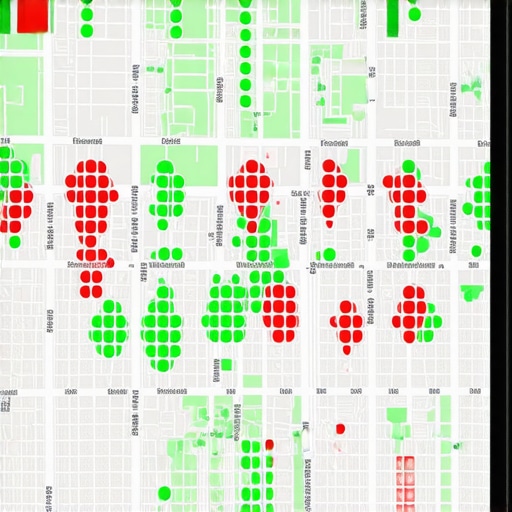
How do I maintain my spot on the map over the long haul?
Maintenance is not about doing one big thing; it is about doing ten small things every single week. I set a recurring calendar invite for Tuesday mornings to respond to every new review, upload two ‘behind-the-scenes’ photos, and check my service area settings. If you are managing multiple storefronts, you need the local mapping strategy for multi-location businesses to keep your brand voice consistent without looking like a generic franchise. I predict that as Google integrates more AI-driven visual search, the ‘proof’ of your business—like those raw photos we talked about—will become the primary way the algorithm filters out ‘ghost’ businesses. You are essentially building a moat of authenticity around your rank. If you hit a wall, do not buy fake links. Instead, learn how to handle a sudden map ranking plateau without buying links by focusing on local engagement. My biggest piece of advice? Go into your dashboard right now, find your most popular service, and find a customer who will let you take a photo of that service in action. Upload it with a caption that mentions the neighborhood name. It sounds simple, but it is the exact move that helps you secure your spot in the map pack permanently.
What Decades in the Local SEO Trenches Taught Me
The biggest shift in my mindset happened when I realized that consistency is the ultimate ranking signal. You cannot just ‘set and forget’ your profile. If you want to know how to outsmart competition in local map listings in 2025, you have to realize that the algorithm values ‘proof of life’—meaning constant, small updates—over one large optimization push. Another lightbulb moment was discovering that the way users find you is changing. Many people miss the mobile search trick for dominating local results, which involves optimizing for on-the-go queries rather than desktop research. Finally, never underestimate the power of your community. Encouraging customers to upload their own images is far more powerful than any pro shoot because the hidden map signal in your customers photo uploads tells Google that real people actually visit your physical location and trust your brand.
My Battle-Tested Arsenal for Mapping Success
I do not believe in using every tool on the market. Instead, I stick to a few that provide raw, actionable data. I rely on Whitespark for their deep-dive sentiment analysis because why your business category choice is making you lose money often comes down to how your customers’ reviews align with your selected services. For technical sanity checks, I always perform the audit step that finds why your business is hidden using tools like Screaming Frog to ensure my website schema and map profile are speaking the same language. I also trust the Google Business Profile Help Community; it is often the first place where major players discuss algorithm bugs before they are officially acknowledged by the search engine itself.
It is Time to Claim Your Spot in the Top Three
Mastering local maps domination is not about being a tech genius; it is about being the most helpful and authentic business in your neighborhood. When you stop hiding behind polished marketing and start showing the real work you do every day, the algorithm naturally follows the human lead. You have the tools, the strategy, and the blueprint to improve your google my business rank starting today. All that is left is to take that first photo, answer that next review, and show your community that you are the expert they have been searching for.
Have you ever seen a competitor with fewer reviews jump ahead of you in the results? Let me know your experience in the comments below!
About the Author
Umar Latif
Brand & Marketing Expert · Dubai, UAE
Umar Latif is a seasoned Brand and Marketing Expert based in Dubai, UAE, with a specialized focus on Local SEO and international digital strategy. With extensive experience managing and optimizing websites for a diverse range of international clients, including those in the United States, Umar has developed a deep understanding of the nuances required to dominate local search results. His technical proficiency encompasses comprehensive keyword research and the implementation of advanced Google-centric strategies designed to enhance visibility and drive organic traffic. As a contributor to dominateyourlocalmaps.com, Umar leverages his background in global marketing to provide actionable insights for businesses looking to improve their local map rankings and digital footprint. His approach combines data-driven tactics with a strategic brand perspective, ensuring that local businesses not only rank higher but also resonate with their target audience. Throughout his career, Umar has remained dedicated to staying ahead of search engine algorithm changes to deliver consistent results for his clients. He is deeply passionate about empowering business owners and marketing professionals with the tools and knowledge they need to achieve sustainable growth.