
I remember the exact moment my stomach dropped. It was a Tuesday morning, coffee in hand, and I opened my dashboard only to see that dreaded red text: Suspended. Just like that, my phone stopped ringing. My local presence, which I had spent months building, was gone. I felt like I’d been evicted from my own neighborhood overnight. It’s a visceral, frantic kind of panic that makes you want to click every button in sight. But take a breath. I’ve been in those trenches, and I’m telling you right now, we are going to get you back on the grid without the usual migraine. Today, I’m pulling back the curtain on how to navigate this mess and secure your map pack domination once again.
That Sinking Feeling When Your Business Suddenly Disappears
I’ll be honest with you: I made a massive mistake when I first started out. I thought I could outsmart the system by slightly tweaking my business name to include a few extra keywords. I thought it was a clever business name hack, but Google saw it as a violation of their terms. My profile didn’t just drop in rank; it vanished. This is why I’m so passionate about helping you avoid the same trap. According to data from Search Engine Journal, nearly 40% of business profile suspensions are triggered by minor address or name discrepancies that owners think are harmless. It’s not that you’re a bad business owner; it’s that the algorithm is a sensitive beast. We’re going to look at the hidden proof Google wants before they even think about restoring your status. It’s about being more prepared than they expect you to be.
Is the Reinstatement Process Actually Rigged Against Us?
I hear this all the time from folks in my community. It feels like you’re shouting into a void and getting automated rejections in return. But it’s not rigged; it’s just incredibly bureaucratic. If you follow the right trail of breadcrumbs, you can actually recover a suspended business profile in less than 7 days if you have your paperwork in order. The skepticism is real, and I felt it too, but once I stopped guessing and started providing the specific utility bills and licenses they crave, the red warning disappeared. Have you ever felt like your business was being unfairly targeted by the algorithm while your competitors seemingly break every rule? It’s frustrating, but we’re going to fix it by being smarter, not louder. We’ll start by identifying the audit step that finds why your business is hidden so you aren’t just throwing spaghetti at the wall.
The First 24 Hours of Your Recovery Mission
The moment you see that suspension notice, your first instinct is to submit an appeal immediately. Stop. Doing that without an audit is like going to court without a lawyer; you only get one real shot at a first impression. You need to perform a digital deep clean. Start by comparing your Google Business Profile (GBP) data against your official tax documents and utility bills. Even a missing ‘Suite’ number or a misplaced hyphen in your phone number can trigger the algorithm to stay suspicious. I once helped a local locksmith who was suspended for months simply because his website footer had an old address while his GBP had the new one. This mismatch is a huge red flag. By implementing innovative local mapping strategies for top google rankings, we aligned his entire digital footprint, which is the foundation of any recovery.
Scrub Your Data Before Google Scrutinizes It
Check your service areas. One of the biggest mistakes I see is business owners claiming a 100-mile radius when they only realistically serve three towns. This is the service area error that hides your business from local customers because Google views it as an attempt to game the system. If you aren’t physically there, don’t claim you are. Limit your service area to where you actually do the work. While you’re at it, look at your categories. Are you listed as a ‘Contractor’ when ‘Kitchen Remodeler’ is more accurate? You need to stop guessing your categories and use this selection data instead to ensure you aren’t competing for irrelevant terms that dilute your authority.
Gather the Paperwork That Silences the Skeptics
Google’s support team isn’t interested in your excuses; they want hard evidence. You need a folder ready with a scanned copy of your business license, a recent utility bill (gas, water, or electric) showing your business name and address, and photos of your branded vehicle or storefront. If you operate from home, you’ll need to be even more meticulous. I remember a consultant who couldn’t get reinstated until she filmed a video showing her opening her home office, showing her computer, and then walking outside to show the street sign. This is the real benefit of verification via video upload; it provides undeniable proof that you exist. 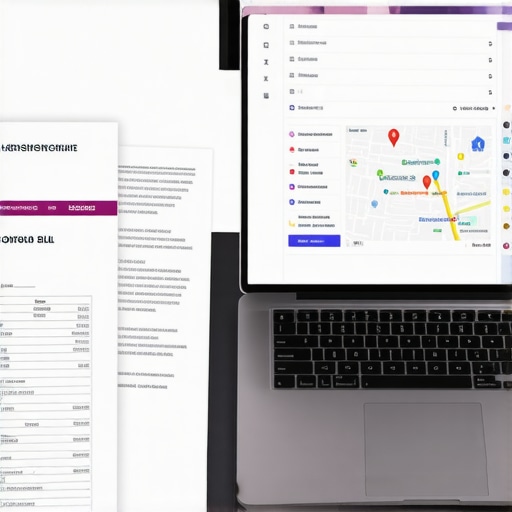
Narrow Your Focus to Expand Your Map Reach
Once the technical errors are fixed, you have to prove to the algorithm that you are the most relevant choice in your immediate vicinity. This is where mastering local maps domination becomes an art form. I worked with a boutique coffee shop that was losing to a chain three blocks away. We stopped trying to rank for the whole city and focused on ‘artisan coffee [neighborhood name].’ By narrowing the geographic focus, their google my business rank shot up because their local relevance was higher than the generic chain. Don’t be afraid to submit the one document that reinstates any google business profile—usually a formal business registration—as the final piece of your appeal. This level of preparation turns a ‘maybe’ from Google into an ‘absolutely.’Now, let’s dig deeper into the nuances that most agencies won’t tell you because it complicates their simple sales pitch. Everyone shouts about review counts, but let me throw you a curveball: your business description is almost entirely irrelevant for your ranking position. I’ve seen business owners spend hours keyword-stuffing their ‘About’ section, thinking it’s the secret sauce. The reality is that why your business description doesn’t matter for ranking is one of the best-kept secrets in the industry; it affects your conversion rate, not your spot in the top three. If you want a real google my business rank boost, stop editing your bio and start looking at your site’s technical health. A study by BrightLocal suggests that while reviews are vital, the quality and recency of those reviews carry far more weight than a stagnant pile of five-star ratings from three years ago. In fact, why having 500 reviews might actually be hurting your visibility becomes clear when the algorithm detects a sudden, inorganic spike that looks like a bot attack. 
The Proximity Trap That Shrinks Your Revenue
One of the most dangerous ‘oops’ factors I see is the desperate move to a virtual office. You want to capture a neighboring city, so you rent a mailbox at a fancy downtown address. This is a massive trap. Google’s AI is incredibly sophisticated at identifying coworking spaces and virtual suites that don’t have a physical, branded presence. Getting caught doing this doesn’t just lower your rank; it can lead to a permanent blacklisting of your business entity. Instead of trying to fake a physical location, you need to understand the proximity lie why distance isnt the only thing google tracks. You can actually expand your reach by building localized authority through your website’s content, which is far safer than trying to trick the map pin. I’ve found that why your website speed is secretly tanking your map rank is often the culprit for local businesses that feel ‘stuck’ in their immediate block.
Why Do Competitors Rank Further Away Than You?
It’s incredibly frustrating to see a competitor from two towns over appearing in the map pack for your own neighborhood. You might think the system is broken, but they are likely using the mobile search trick for dominating local results. This involves generating real-world ‘signals’—like customers opening their app and clicking for directions from various locations. This organic engagement tells Google that the business is a destination worth traveling for, effectively overriding the standard proximity filter. To fight back, you need to focus on how to beat the proximity filter and expand your reach by optimizing for those same intent-based signals. Remember, the danger of using virtual offices for local seo is that it provides no real signal other than a fake address. Have you ever fallen into this trap or tried to rank in a city where you don’t have a physical office? Let me know in the comments.It’s one thing to claw your way back from a suspension, but it’s another thing entirely to stay at the summit. I’ve seen too many business owners get their profile restored, celebrate for a week, and then go right back to the same lazy habits that got them flagged. To achieve true map pack domination, you need a maintenance schedule that looks less like a chore and more like a tactical ritual. I personally use grid-tracking software to visualize exactly where my visibility drops off. If I see a ‘4’ or a ‘5’ on the edge of my service area, I don’t just hope it gets better; I look for local backlinks that actually move your rank in that specific zip code. This isn’t about general SEO; it’s about surgical strikes on the map.
Stop Guessing and Start Measuring with the Right Tech
I don’t care how many years you’ve been in business; your gut feeling isn’t as accurate as hard data. Every Monday morning, I pull a 13×13 grid report. It shows me exactly how my google my business rank fluctuates block by block. According to the Whitespark 2024 Local Search Ranking Factors, ‘Review Velocity’—the speed at which you gain new reviews—has become a top-tier signal that Google uses to determine if a business is still active and relevant. If you stop getting reviews for two weeks, the algorithm assumes you’ve gone cold. This is why I obsess over how response speed directly impacts your local map authority. You should be replying to every single customer within two hours, not two days. It shows the algorithm—and potential customers—that the lights are on and someone is home. 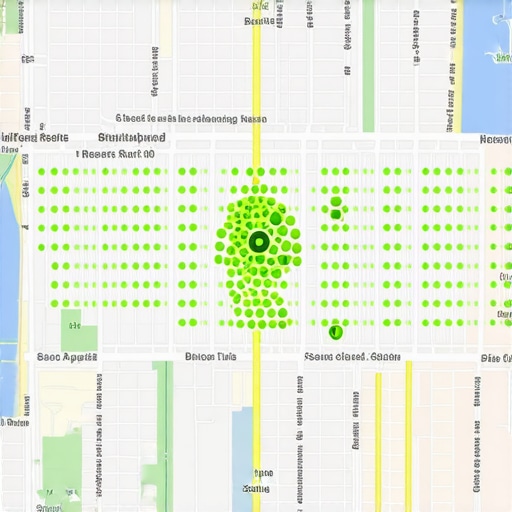
How can I keep my map listing fresh month after month?
The secret isn’t in massive monthly overhauls; it’s in the micro-edits. I tell my clients to upload at least three new photos a week, specifically from a mobile device with location services turned on. This creates a trail of photo metadata that actually moves your map rank because it proves your physical presence at different job sites. Also, don’t ignore your GMB posts. While they might not directly boost your position, they prevent the ‘stale profile’ flag. If you’re struggling to stay consistent, you need to learn how to force your profile back into the top 3 results by focusing on user engagement signals like ‘Request a Quote’ clicks.
The Future of Maps is More Visual and Less Textual
We are moving toward a world where the search bar matters less than the camera lens. I predict that within the next 24 months, Google will leverage its Gemini AI to analyze your storefront’s ‘curb appeal’ through user-submitted videos more than your written description. We are already seeing voice search map results prioritize businesses that have high-quality, recent video content. If you want to dominate maps in the long run, you need to stop thinking like a writer and start thinking like a content creator. My challenge to you today is simple: take your phone, walk outside your business, and film a 30-second ‘behind the scenes’ clip. Upload it as a video update right now. That single piece of raw, authentic content is worth more than a thousand keyword-stuffed sentences.
What No One Tells You About Keeping Your Spot in the Top Three
Reflecting on years of battling for visibility, I’ve realized that map pack domination isn’t a one-time trophy; it’s a living, breathing ecosystem. Here are the lightbulb moments that changed everything for me:
- The Speed Trap: I used to think my website was separate from my map profile. I was wrong. I discovered the hidden link between website speed and map pack success and realized that a slow site makes Google think you’re a poor recommendation for mobile users.
- Review Velocity Matters More than Totals: Having 500 reviews is great, but if they all happened two years ago, you’re invisible. Google prioritizes businesses that are actively getting feedback right now.
- Video Is the Ultimate Verification: Don’t fear the camera. The real benefit of verification via video upload is that it builds a wall of trust that automated bots can’t knock down.
- Response Speed Is a Ranking Signal: It’s not just about politeness. I’ve seen how response speed directly impacts your local map authority by signaling to the algorithm that you are a high-functioning, responsive business.
Tools and Resources That Actually Help You Dominate Maps
I don’t believe in guessing when there is data available. Here is the toolkit I trust to keep my google my business rank at the summit:
- Whitespark’s Local Search Ranking Factors: This is the bible for anyone serious about local maps domination. It breaks down what actually moves the needle versus what is just industry noise.
- Google PageSpeed Insights: Since why your website speed is secretly tanking your map rank is a real threat, this free tool is non-negotiable for auditing your technical health.
- Schema.org: Implementing how to sync your website schema with your map profile ensures that Google’s crawlers see the exact same data on your site that they see on your map pin, removing any friction in the verification process.
Take Control of Your Neighborhood Search Presence Today
The digital landscape is constantly shifting, but the fundamentals of local mapping strategy remain rooted in transparency and activity. You don’t need a massive agency budget to master local maps domination; you just need the discipline to be consistent and the courage to provide better evidence than your competitors. Your business deserves to be seen by the people standing right outside your door. It’s time to stop hiding and start ranking. Have you ever had a competitor try to push you out of the map pack with fake listings or questionable tactics? Let me know in the comments below!
About the Author
Umar Latif
Brand & Marketing Expert · Dubai, UAE
Umar Latif is a seasoned Brand and Marketing Expert based in Dubai, UAE, with a specialized focus on Local SEO and international digital strategy. With extensive experience managing and optimizing websites for a diverse range of international clients, including those in the United States, Umar has developed a deep understanding of the nuances required to dominate local search results. His technical proficiency encompasses comprehensive keyword research and the implementation of advanced Google-centric strategies designed to enhance visibility and drive organic traffic. As a contributor to dominateyourlocalmaps.com, Umar leverages his background in global marketing to provide actionable insights for businesses looking to improve their local map rankings and digital footprint. His approach combines data-driven tactics with a strategic brand perspective, ensuring that local businesses not only rank higher but also resonate with their target audience. Throughout his career, Umar has remained dedicated to staying ahead of search engine algorithm changes to deliver consistent results for his clients. He is deeply passionate about empowering business owners and marketing professionals with the tools and knowledge they need to achieve sustainable growth.