
I’ll never forget the sinking feeling in my gut when I realized my ‘clever’ shortcut had basically made me invisible. I was sitting in my home office, staring at a ‘Suspended’ badge on my screen, wondering why on earth my local competitors—who had half my experience—were gobbling up every lead in town. I thought I was being professional by renting a PO Box at the local post office. I didn’t want my home address out there, right? It felt like the safe, smart move for a new entrepreneur. But in reality, I had just handed my competition a massive advantage on a silver platter. I spent three months shouting into the void, wondering why my google my business rank wouldn’t budge. I was trying everything, but the foundation was cracked. Today, I’m going to show you exactly why that mailbox is your biggest liability and how you can fix it without compromising your privacy.
The Day Google Decided My Business Didn’t Exist
I wasted $300 on a year-long PO Box lease thinking it would give me a professional edge, but it actually became the anchor that dragged my local mapping strategy into the abyss. Google’s algorithms are smarter than we give them credit for, and they have a very specific set of rules for what constitutes a real business. When you use a PO Box, you aren’t just hiding your address; you’re telling Google that you don’t have a physical presence in the community. This is one of the most common reasons businesses find themselves dealing with the danger of using virtual offices for local SEO. You want map pack domination, but you’re starting the race with your shoelaces tied together. The truth is, Google’s own documentation explicitly states that PO boxes or mailboxes at remote locations are not acceptable for a Business Profile. If you can’t receive a customer at that location, Google doesn’t want to show it to searchers. Have you ever wondered why your profile seems to have a permanent ‘Not Visible’ tag? It might be because you’re trying to outsmart a system designed for transparency.
Is a virtual mailbox actually worth the risk?
Many people ask me if they can just use a ‘suite’ number at a UPS store to bypass the system. I tried that too. It worked for about two weeks before the automated sweep caught up with me and nuked my listing. If you are serious about local maps domination, you have to play by the rules or find the legitimate workarounds that don’t result in a permanent ban. I’ve had to help dozens of people learn how to fix the not visible status on your local profile because they were lured in by the convenience of a mailbox service. It’s a temporary fix that leads to a long-term headache. We need to look at why proximity is no longer the only way to win maps and how your actual physical footprint—or lack thereof—is the primary signal Google uses to verify you are a real neighbor. If you’ve been struggling with a suspension, you might even need the one document that reinstates any Google Business Profile to get back in their good graces. Have you felt the frustration of a listing that just won’t rank no matter how many reviews you get?
Switch to a Service Area Model to Save Your Profile
If you are running a business from home and don’t want your address public, the solution isn’t a fake office—it’s the Service Area Business (SAB) designation. I’ve seen so many owners panic and think they have to display their home address to achieve local maps domination. You don’t. When you set up your profile, you can leave the address field blank and instead define the specific cities or zip codes you serve. I remember working with a mobile detailer in Austin who was using a ‘suite’ address at a pack-and-ship store. His listing was suspended for months. We cleared that address, set his service areas properly, and within 72 hours his status changed from ‘Suspended’ to ‘Verified.’ This shift is crucial because how service areas impact your rankings far more than you think often boils down to Google finally trusting that you aren’t a ghost entity. By removing the physical address, you stop trying to trick the system and start working with it.
Stop Hiding Behind Virtual Office Suites
If you’ve already been flagged, the first step is to clean the slate. You need to go into your dashboard and remove the PO Box or Virtual Office address immediately. This is the only way to begin how to fix the not visible status on your local profile. Google looks for consistency across the web. If your website says one thing and your GMB profile says another, you’ll never dominate maps in your area. Think of your business address like a digital fingerprint; if it’s smudged with a fake suite number, Google won’t recognize it. You might need to learn how to keep your map rank after changing your business address if you are moving from a mailbox to a legitimate space or an SAB model. 
Show Google the Real Evidence They Crave
Once you’ve cleared the bad data, you have to prove you are a real human with a real business. This is where the real benefit of verification via video upload comes into play. I once had to film a three-minute video for a client where we showed his branded truck, his specialized tools, and even him unlocking his home office door. It felt tedious, but it was the secret signal google uses to verify your storefront or service legitimacy. Google wants to see that you have the equipment and the capability to actually serve the people you claim to. This transparency is what actually fuels your google my business rank. If you can provide the hidden proof google wants before restoring your profile, you’ll find that the ‘proximity filter’ becomes much easier to manage. You can then focus on how to beat the proximity filter and expand your reach without the constant fear of a sudden ban. Stop looking for shortcuts and start building a profile based on verifiable facts.
Everyone told me to just get as many five-star reviews as possible. I spent months chasing every customer for a rating, only to see a competitor with half my reviews sit comfortably above me in the results. It’s infuriating, right? The truth is, why your competitor ranks higher with 10 fewer reviews often comes down to the quality, velocity, and specific keywords within those reviews, not just the raw number. If you get 50 reviews in a week and then go silent for three months, Google’s algorithm often treats that as an inorganic spike rather than genuine community growth. I’ve seen businesses plummet because they prioritized volume over the review frequency secret for long term map dominance.
The Proximity Lie That Keeps You Small
Most small business owners believe they are trapped in a two-mile radius around their office. They think proximity is the ultimate judge, but that’s actually a narrow way to view a local mapping strategy. According to the latest Local Search Ranking Factors study by Whitespark, ‘on-page signals’ from your linked website are now more critical than ever for expanding your reach beyond your front door. This is the proximity lie why distance isnt the only thing google tracks. If your website has high authority and clear geographic relevance, Google will happily show you to a searcher five miles away even if there’s a closer, weaker competitor. You have to stop thinking like a local shop and start thinking like a local authority if you want map pack domination.
Does your website speed actually change where you show up on the map?
I used to think my website was just a brochure, but it’s actually the engine behind your google my business rank. If your site takes five seconds to load on a mobile device, Google is less likely to feature you in the ‘Snack Pack’ because they know the user experience will be poor. I’ve helped clients see a massive jump in visibility simply by cleaning up their mobile code. This is the hidden link between website speed and map pack success. If your rank has stalled at the bottom of the top three, or worse, on page two, look at your site performance before you buy another citation. 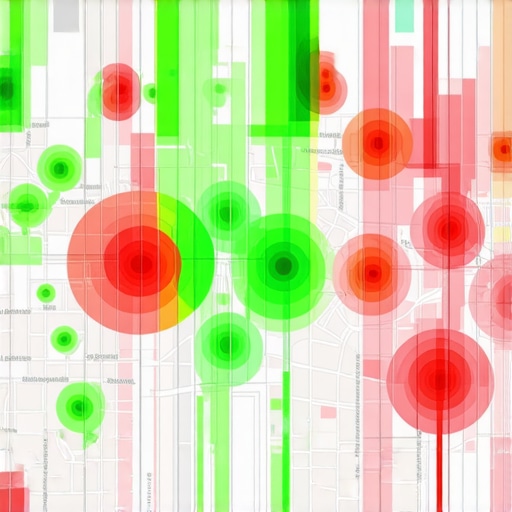
The Dangerous Category Trap That Kills Visibility
Here is the ‘oops’ factor I see every single week: category dilution. I once worked with a plumber who selected ‘Water Heater Repair,’ ‘HVAC Contractor,’ and ‘General Contractor’ all at once. He thought he was casting a wide net, but he was actually ensuring why your business categories might be fighting each other. By trying to be everything, he became ‘nothing’ in Google’s eyes for his primary service. When you select too many unrelated categories, you dilute the relevance signal. You are much better off picking one primary category and two highly related sub-categories to maintain your local maps domination. Have you ever fallen into this trap of over-optimizing your categories? Let me know in the comments. I’m curious if you’ve seen your rank drop after adding ‘just one more’ service to your profile.
Ultimately, to outsmart competition in local map listings, you have to look at the data Google provides but doesn’t shout about. For instance, did you know that the specific labels on the photos your customers upload can trigger a rank increase? It’s true. Every piece of data—from your website’s footer to the metadata in your store photos—is a puzzle piece. Stop looking for the one ‘magic’ button and start fixing these nuanced errors. If you’ve been struggling with a plateau, it might be time for a deep dive into the real reason your profile ranking stalled last month.
Scaling a business is one thing, but keeping your position at the top is an entirely different beast. I used to think that once I cracked the code and saw my business in the top three, I could just sit back and watch the leads roll in. I was wrong. I woke up one Tuesday morning to find I’d dropped to the fifth spot, buried behind a competitor who hadn’t even been in business as long as I had. If you want to how to secure your spot in the map pack permanently, you have to realize that local SEO is a living, breathing ecosystem. You can’t just set it and forget it.
Your map position will rot without these weekly habits
Maintenance is the unsexy part of map pack domination. Every Monday, I spend exactly twenty minutes auditing my profile. I check for ‘suggested edits’ from the public—sometimes competitors try to change your phone number or website link just to mess with your traffic. I also make it a point to respond to every single review within 24 hours. People underestimate the hidden impact of review response speed on map ranking. Google notices how active you are. If you’re ghosting your customers, Google will eventually ghost you in the search results. I’ve found that high engagement signals to the algorithm that your business is operational and reliable.
How do I keep my map rank steady year-round?
Consistency is your best friend. I personally use a simple checklist that includes uploading three new photos every week. These aren’t just random stock photos; they are real, behind-the-scenes shots of my work. I use a specific image metadata strategy for better local visibility, ensuring the files are named correctly before they even hit the server. If you stop feeding the beast, your reach will shrink. As Joy Hawkins of Sterling Sky has often documented, Google’s local algorithm is increasingly sensitive to ‘freshness’ signals. If your last photo was from 2021, you’re telling the world you might not even be open anymore.
Tools I actually pay for every single month
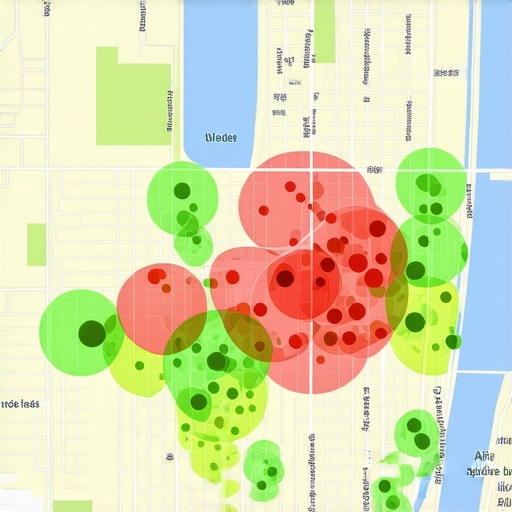
I’m not a fan of bloated software, but there are two tools I swear by for a local mapping strategy that actually scales. First is the PlePer Chrome extension. It’s a game-changer for seeing the ‘hidden’ categories your competitors are using. I use it to how to audit your local competitors without expensive tools by looking at their category weight. Second, I use a local rank tracker to see my ‘heatmap’—not just where I rank at my office, but where I rank three miles away. If I see my ‘bubbles’ turning red in a specific neighborhood, I know it’s time to start how to beat the proximity filter and expand your reach through localized website content. Looking ahead, I predict Google will lean even harder into AI-driven photo recognition. Soon, the algorithm won’t just see a picture; it will identify the specific tools and brand logos within that image to verify your niche. If you want to how to outsmart competition in local map listings in 2025, start taking high-quality, branded photos now. My big tip for you today: go into your dashboard and check your ‘Insights’ for the specific queries that triggered your listing this month. You’ll likely find a keyword you didn’t even know you were ranking for—create a post about it immediately.
Lessons From My Most Expensive Ranking Mistake
I used to think that simply having a verified address was enough to keep the phone ringing, but I learned the hard way that Google values activity over mere existence. If you aren’t engaging with your profile, your visibility starts to decay. One lightbulb moment for me was realizing how much damage choosing the wrong categories can do to your search presence; it’s better to be a master of one niche than a ghost in five. I also discovered that technical accuracy is non-negotiable, as incorrect map pins can literally drive your customers into the arms of a competitor located across the street. Finally, don’t ignore the data living in your dashboard—if people are finding you via ‘near me’ searches but not clicking, your photos are likely the culprit.
Where I Turn When the Algorithm Shifts
I don’t believe in guessing when it comes to my livelihood. I rely heavily on the PlePer Chrome Extension because it peels back the curtain on what categories my competitors are actually using to win. I also keep a close eye on the Sterling Sky Local Search Forum, as it is the first place experts discuss real-time changes in Google’s behavior. When I need to see the bigger picture, I use local heatmap tools to see exactly where my ranking ‘bubbles’ are bursting. Using these resources allows me to outsmart competition in local map listings without wasting thousands on agencies that don’t deliver. I trust these tools because they provide objective data that overrides my own assumptions.
#IMAGE_PLACEHOLDER_E#
Reclaim Your Spot in the Top Three
The map pack isn’t a trophy that stays on your shelf forever; it’s a living garden that requires consistent watering. You don’t need to spend hours a day on this, but you do need to be intentional about showing Google you are the most relevant and active neighbor in town. Start by paying attention to the hidden map signal in your customers photo uploads and keep your profile fresh with real, local interactions. Your business deserves to be seen, and with these steps, you’re no longer just hoping for leads—you’re inviting them in. Have you ever seen your business drop in the rankings for no apparent reason, or have you struggled with a sudden suspension? Let me know your experience below.
About the Author
Umar Latif
Brand & Marketing Expert · Dubai, UAE
Umar Latif is a seasoned Brand and Marketing Expert based in Dubai, UAE, with a specialized focus on Local SEO and international digital strategy. With extensive experience managing and optimizing websites for a diverse range of international clients, including those in the United States, Umar has developed a deep understanding of the nuances required to dominate local search results. His technical proficiency encompasses comprehensive keyword research and the implementation of advanced Google-centric strategies designed to enhance visibility and drive organic traffic. As a contributor to dominateyourlocalmaps.com, Umar leverages his background in global marketing to provide actionable insights for businesses looking to improve their local map rankings and digital footprint. His approach combines data-driven tactics with a strategic brand perspective, ensuring that local businesses not only rank higher but also resonate with their target audience. Throughout his career, Umar has remained dedicated to staying ahead of search engine algorithm changes to deliver consistent results for his clients. He is deeply passionate about empowering business owners and marketing professionals with the tools and knowledge they need to achieve sustainable growth.