
I will never forget the Tuesday afternoon I realized I was essentially invisible in my own backyard. I had spent months churning out city pages for every suburb within a twenty-mile radius of my office. I thought I was being clever. I had the headers and the stock photos all lined up. But when I pulled up my phone to check my google my business rank, I wasn’t even in the top twenty. I was being outranked by a guy who didn’t even have a functioning website. It was an ego-bruising realization that forced me to admit my local mapping strategy was fundamentally broken. I was shouting into a void, and the void wasn’t just ignoring me—it was penalizing me. Today, we are going to stop the bleeding. I am going to show you exactly why those cookie-cutter city pages are actually sabotaging your efforts to dominate maps and how you can flip the script to finally see some movement in the rankings.
The Real Reason Your City Pages Are Collecting Digital Dust
Early in my career, I made the classic mistake of thinking Google was easily fooled by simple “find and replace” content. I would take one landing page, swap the city name, and hit publish. I thought I was scaling. In reality, I was just building a house of cards. If your page looks like every other page on your site, Google sees zero unique value. You are likely ranking for the wrong local keywords because your content is too generic to anchor you to a specific neighborhood. We have to move past the idea that a city page is just an SEO bucket; it has to be a localized resource that proves you actually exist in that community. Have you ever felt that burning frustration of seeing a competitor from three towns over ranking in your neighborhood while your dedicated page sits on page five?
Are these location pages even worth the effort anymore?
It is a fair question to ask, especially when you feel like you are fighting an uphill battle against the algorithm. You might even suspect that the hidden proximity glitch has made it impossible to rank outside your immediate street. But the problem isn’t the strategy itself; it’s the lazy execution that most of us were taught years ago. According to research from BrightLocal, on-page signals remain a top-three factor for map pack domination, yet most businesses still ignore the local-intent signals that Google craves. If you don’t properly set your service areas to match your on-page content, you are essentially telling the search engine to ignore you. We are going to change that by focusing on authentic, localized data that forces Google to take notice.
Build Pages That Actually Prove You Are There
To win this game, you have to think of your location page as a digital lighthouse. If the light is too dim or generic, the ships—or in this case, Google’s crawlers—will just sail right past. I once worked with a small HVAC company that was desperate to break into a wealthy suburb ten miles away. We had a page for it, but it was a ghost town. The breakthrough came when we stopped writing about ‘expert repairs’ and started detailing a specific project we did at the local community center. We mentioned the cross-streets, the specific permit office we dealt with, and even the quirky parking situation at that location. This is how you optimize your local landing pages for maps traffic. You aren’t just selling a service; you are documenting your physical presence in that specific ecosystem.
Stop Guessing and Start Using Street-Level Details
Your content needs to be so specific that a local resident would nod in agreement while reading it. This isn’t just for the humans; it’s for the algorithm that is looking for ‘geo-relevancy’ signals. Think of it like this: if you tell a friend you’re at ‘the park,’ they might not find you. If you say you’re ‘at the north pavilion of Miller Park next to the duck pond,’ they’ll be there in five minutes. Google works the same way. When you sync your website schema with your map profile, you are providing that specific pavilion address. This alignment acts as a trust signal that tells Google your google my business rank should be higher because you are an authority in that exact micro-neighborhood.
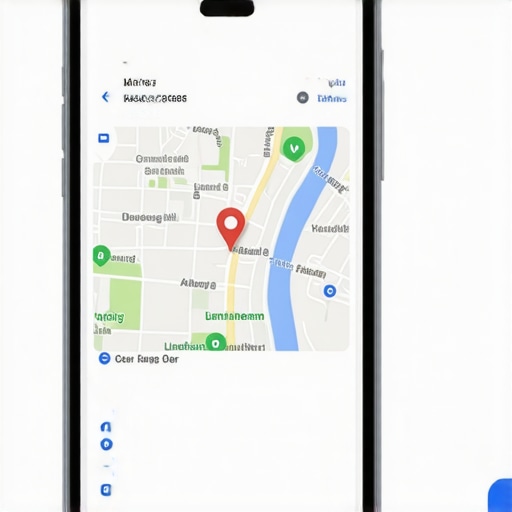
The Sneaky Way Photos Bridge the Proximity Gap
Most people upload a generic photo of their truck and call it a day. That is a massive missed opportunity. Every photo you take on-site is a data goldmine. I remember a month where my rankings completely stalled. I realized I was using the same five stock-ish photos across every city page. I spent a Saturday driving to three different service areas, taking fresh photos of my team working near recognizable local landmarks. Before uploading, I made sure to implement the specific photo metadata that actually moves your map rank. Within two weeks, my local mapping strategy finally paid off as those pages started pulling in traffic from those specific zip codes. It wasn’t magic; it was just providing the evidence Google needed to stop worrying about the hidden setting that blocks your profile from neighboring towns.
Why Your Reviews Need a Local Vocabulary
Reviews are the lifeblood of map pack domination, but not all reviews are created equal. If a customer just says ‘Great job!’, it helps your star rating but does nothing for your geo-relevancy. You need to encourage customers to mention the city and the specific service. There are specific review keywords that trigger map visibility. I once coached a client to ask customers, ‘Could you mention which neighborhood we helped you in today?’ That one small tweak changed their profile from a general service provider to the go-to expert for that specific suburb. It’s about creating a cluster of local signals that makes it impossible for Google to ignore your relevance, helping you dominate maps in areas where you don’t even have a physical front door.
Common wisdom tells you that if you aren’t located right in the city center, you’re doomed to stay in the shadows. I’m here to tell you that’s a lie. While many experts scream that ‘proximity is everything,’ I’ve consistently seen that proximity is no longer the only way to win maps. In fact, if you rely solely on your physical address, you’re vulnerable to the hidden proximity glitch that shrinks your map radius. Google’s algorithm is increasingly prioritizing ‘relevance’ and ‘prominence’ over mere distance. According to the Whitespark Local Search Ranking Factors survey, behavioral signals like click-through rates and driving direction requests are skyrocketing in importance. This means a business three miles further away can jump over you if people are actually interacting with their listing more than yours.
How Can You Beat the Proximity Filter Without Moving?
The secret lies in what I call ‘engagement clusters.’ If you can prove to Google that people are willing to bypass your closer competitors to find you, the algorithm expands your ‘authority’ zone. This is a huge part of a sophisticated local mapping strategy. However, there is a massive trap here: the ‘virtual office’ shortcut. I’ve watched dozens of businesses get their entire presence wiped out because they fell for the danger of using virtual offices for local SEO. Google’s AI is now incredibly good at spotting shared workspaces that don’t have permanent staff. Instead of fake addresses, you should be focusing on the interaction data that proves you are a top local choice. #IMAGE_PLACE_HOLDER_C# This brings us to the ‘Review Paradox.’ You might be wondering why your competitor ranks higher with 10 fewer reviews than you. It’s usually because their reviews contain those localized keywords we talked about, or they have a higher frequency of ‘Local Guide’ contributors leaving feedback. If you want to dominate maps, you have to stop obsessing over the quantity of stars and start looking at the quality of the ‘entity’ signals you’re sending. Have you ever fallen into this trap of thinking more reviews equals an automatic win? Let me know in the comments. We also need to talk about why your google my business rank might be high for one keyword but non-existent for another. Often, it’s because your map pack domination efforts are being undercut by a lack of ‘off-site’ local signals. You need to understand the link between website backlinks and local map packs. Without that digital authority, your map pin is just a lonely dot in a sea of competitors. Start thinking of your local mapping strategy as a holistic ecosystem, not a set of isolated tasks.I’ve seen too many business owners treat their map listing like a ‘set it and forget it’ crockpot. That is the quickest way to find yourself buried under more aggressive competitors. To truly master local maps domination, you need a maintenance rhythm that keeps the algorithm fed with fresh, relevant data. I personally spend fifteen minutes every Tuesday morning checking for ‘suggested edits’ on my profile. If you don’t stay on top of these user-suggested changes, you will eventually wonder why your Google Business Profile edits are always pending or why your phone number was suddenly swapped for a competitor’s. I also live by the power of regular profile updates on search frequency. It is not just about posting for the sake of it; I use the Google Maps mobile app to snap a photo of a new piece of equipment or a happy client and upload it instantly. This tells Google that the business is active, alive, and physically present in real-time.
How do I maintain my ranking through algorithm shifts?
Consistency beats intensity every single time. You do not need a massive quarterly campaign; you need a weekly workflow. I recommend using a tool like Local Falcon or BrightLocal to audit your map rankings from a customer’s real location. If you only check your rank from your office desk, you are seeing a distorted reality. You need to see the grid—how you perform two blocks away versus two miles away. This data reveals the exact radius where your local rankings drop off, which tells you exactly where you need more localized content or better backlinks to shore up your defenses. One advanced move I swear by is watching the subtle category tweak that doubled local impressions for one of my service-based clients. Categories are not static. If it is tax season and you are an accountant, your primary category might need to shift to reflect high-intent seasonal searches. This is where most local plumbers make mistakes—they leave ‘Emergency Plumber’ as a secondary category when that is exactly what people are typing into their phones at 2 AM.
AI and the Death of the Static Profile
Looking ahead, I predict that Google will rely even less on what you say you do and significantly more on what your customers show you do. As noted by industry veteran Joy Hawkins, the proximity and vicinity updates were just the beginning. We are moving toward a ‘Visual Relevance’ era. Google’s AI is already scanning your uploaded photos for specific objects and context. If you are a landscaper but your photos only show your office, you are not going to outsmart competition in local map listings in 2025. Stop over-complicating your local mapping strategy. Pick one city page today, go to that neighborhood, take a photo of a local landmark near your job site, and upload it with the image metadata strategy for better local visibility. That one five-minute task does more for your google my business rank than a hundred generic citations ever will.
The Hardest Lesson I Learned While Chasing Map Pack Domination
For years, I believed that if I just built enough citations, I would eventually win. I was wrong. I wasted time on low-quality directories before realizing that interaction data is the real king of the algorithm. I had to pivot my entire local mapping strategy to focus on how people actually engage with my profile. Another major ‘lightbulb moment’ was discovering why your competitor ranks higher with 10 fewer reviews than you—it is almost always because their reviews are packed with localized intent and neighborhood-specific keywords. Finally, I learned that you cannot ignore the technical side; without a solid foundation, your google my business rank will always hit a glass ceiling.
The Exact Tools That Keep Me in the Top Three
I do not believe in guessing when it comes to SEO. To stay ahead, I rely on a few specific resources that provide the ‘ground-truth’ data Google craves. First, I use Local Falcon to audit your map rankings from a customer’s real location, which prevents the ‘office-desk bias’ that ruins most campaigns. I also trust Whitespark for tracking local citation health and BrightLocal for competitive analysis. For anyone just starting, I highly recommend reading the latest ‘Local Search Ranking Factors’ report—it is the closest thing we have to a roadmap for map pack domination secrets. These tools aren’t just luxuries; they are the eyes and ears of a successful local campaign. #IMAGE_PLACEHOLDER_E#
Your Future as a Local Authority Starts Now
The digital landscape is shifting, but the core principle remains the same: relevance is the only currency that matters. You don’t need a massive marketing budget to win; you just need to be more helpful and more present in your community than the guy down the street. By consistently applying these lessons, you are well on your way to mastering local maps domination and securing a future where your phone never stops ringing. The algorithm may change, but your commitment to localized quality will always be rewarded. Have you ever struggled with the proximity filter hiding your business? Let me know below.
About the Author
Umar Latif
Brand & Marketing Expert · Dubai, UAE
Umar Latif is a seasoned Brand and Marketing Expert based in Dubai, UAE, with a specialized focus on Local SEO and international digital strategy. With extensive experience managing and optimizing websites for a diverse range of international clients, including those in the United States, Umar has developed a deep understanding of the nuances required to dominate local search results. His technical proficiency encompasses comprehensive keyword research and the implementation of advanced Google-centric strategies designed to enhance visibility and drive organic traffic. As a contributor to dominateyourlocalmaps.com, Umar leverages his background in global marketing to provide actionable insights for businesses looking to improve their local map rankings and digital footprint. His approach combines data-driven tactics with a strategic brand perspective, ensuring that local businesses not only rank higher but also resonate with their target audience. Throughout his career, Umar has remained dedicated to staying ahead of search engine algorithm changes to deliver consistent results for his clients. He is deeply passionate about empowering business owners and marketing professionals with the tools and knowledge they need to achieve sustainable growth.