I remember sitting at my desk at 2 AM, staring at a blinking cursor in the Google Business Profile dashboard. I was convinced that if I could just squeeze in one more mention of my city and my main service into those 750 characters, I would finally see that needle move. I spent hours crafting what I thought was a masterpiece of SEO prose. The result? Absolutely nothing. My ranking stayed stuck on page two, buried behind competitors who had descriptions that looked like they were written by a toddler. It was a frustrating, eye-opening moment that changed my entire local mapping strategy forever. Today, I want to save you from that same late-night headache. We are going to look at why your business description has zero weight in the eyes of the ranking algorithm and where you should actually be spending your precious energy to dominate maps. Have you ever spent way too long editing your profile only to see your visibility stay flat?
Stop Wasting Your Time on These 750 Characters
When I first started out, I treated the description field like a mini-blog post. I thought more keywords equaled more relevance. But here is the cold, hard truth: Google explicitly states that the business description is for the user, not for ranking. A famous study by the experts at Sterling Sky confirmed that keywords in the description do not affect your local ranking. It was a massive blow to my ego, but a huge win for my productivity. Instead of stuffing keywords, you should be focusing on map pack domination secrets that actually move the needle, like categories and proximity. My early mistake was thinking the algorithm cared about my ‘about us’ story. It doesn’t. It cares about data signals. If you want a Google My Business rank that actually brings in leads, you need to understand that the description is your sales pitch, not your SEO fuel. We should be using that space to explain why customers should pick you once they’ve already found you.
Is the description box actually worth the hype?
It is worth the hype for conversion, but it is a total dud for local maps domination. Think of it this way: the other parts of your profile get you to the party, but the description is what gets someone to dance with you. If you spend all your time worrying about the dance before you even get invited to the party, you are doing it wrong. I learned the hard way that a perfectly optimized description won’t fix a broken category choice or a lack of reviews. We need to shift our focus to the invisible signals that Google actually tracks. In the next section, I am going to show you exactly which parts of your profile are actually doing the heavy lifting while your description just sits there looking pretty.
Nailing the Invisible Signals That Actually Move the Needle
To win at local maps domination, you have to stop thinking like a writer and start thinking like a database manager. Google is looking for specific data points that prove you are the most relevant answer to a user’s query. The very first thing you need to audit is your primary category. If your category is off by even a fraction, you are effectively invisible. I remember working with a local plumber who was listed under ‘General Contractor.’ He was frustrated because his google my business rank was nowhere to be found for ‘clogged drain repair.’ We switched him to ‘Plumber’ as the primary and moved ‘Heating Contractor’ to secondary. Within three days, his phone started ringing again. It was a classic case of categories fighting each other.
Pick the Category That Matches Search Intent
Don’t just guess what you do. Look at what the top three guys in your city are using. If they all use ‘Personal Injury Attorney’ and you are using ‘Law Firm,’ you are bringing a knife to a gunfight. You need to stop guessing your categories and use the actual data Google provides. This is the foundation of any successful local mapping strategy.
Sync Your Website and Map Profile for Maximum Trust
Google doesn’t just trust what you type into the dashboard; it cross-references that data with your website. If your website says you serve one area, but your profile says another, you create a trust gap. I always tell my clients that their website is the ‘anchor’ for their map listing. You should sync your website schema with your profile to ensure the bots see one consistent story. #IMAGE_PLACE_HOLDER_B#
The Secret Power of Interaction Signals
Beyond the technical settings, Google tracks how people interact with your listing. If people click your ‘Call’ button or ask for directions, that is a massive ‘vote’ for your relevance. This is why you need to optimize for map pack domination by making your profile high-friction—not in a bad way, but in a way that encourages clicks. We call this interaction data, and it is the fuel that keeps you in the top three long after the initial ‘new profile’ boost wears off.
Photos Are More Than Just Eye Candy
Most people just upload a grainy photo of their office and call it a day. That is a huge mistake. Google uses AI to ‘read’ your photos to see if they match your services. If you are a landscaper, your photos should show lawns, mowers, and mulch—not just your truck. Use a specific image metadata strategy to help the algorithm connect the dots between your location and your expertise. By feeding the machine the right visual data, you dominate maps by proving you are exactly who you say you are.Let’s dig deeper. Most people think they have finished the job once their profile is verified and they have a few 5-star reviews, but that is exactly where the amateurs stop and the experts begin. I see business owners constantly falling into the trap of thinking review volume is the ultimate king. They see a competitor with 300 reviews and think they need 301 to win. The truth? Local maps domination isn’t a numbers game; it is a quality and velocity game. According to the Whitespark Local Search Ranking Factors study, while reviews are critical, the keywords used within those reviews and the consistency of new feedback carry immense weight. You could have 1,000 reviews from 2019 and still lose to a guy with 50 fresh, keyword-rich reviews from last month. This is why you need to understand why your competitor with fewer reviews is outranking you—it is often because their ‘review velocity’ is signaling current relevance to the algorithm.
Stop Chasing the Review Total Like It’s a High Score
Another massive ‘oops’ factor I see is the ‘Proximity Trap.’ Business owners often assume that if they just move their office closer to the city center, they will automatically dominate maps. In reality, Google has become incredibly sophisticated at filtering out businesses that try to game the system with virtual offices or shared workspaces that lack a true local footprint. I have seen companies move locations only to find their rankings actually dropped because they disconnected themselves from their established local ‘data neighborhood.’ This is what I call the proximity paradox, and it can be a death sentence for your google my business rank if you aren’t careful. 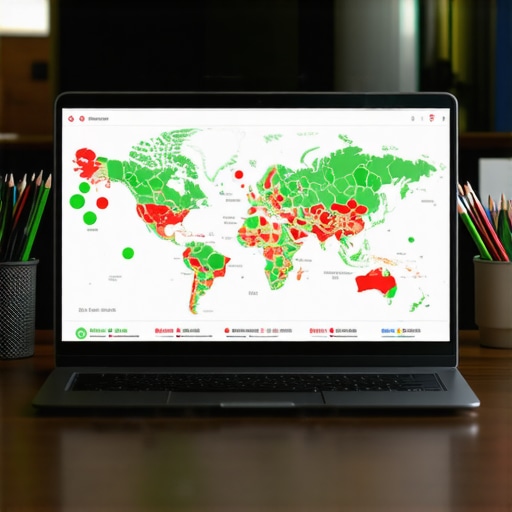
Can Your Website Actually Force Google to Expand Your Map Radius?
Yes, but not in the way you might think. Many advanced users ask if they can rank in a town fifteen miles away. The answer lies in your organic ‘authority’ signals. If your website has strong local backlinks from reputable sources in those neighboring towns, Google starts to view your business as a regional authority rather than just a corner shop. You need to learn how to identify which local map backlinks are actually moving your rank to effectively ‘stretch’ your map pin. If you rely solely on your physical address, you are effectively putting a ceiling on your growth. To truly dominate maps in a competitive market, you must look at 5 crucial tweaks for Google Maps SEO that focus on these external authority signals. Have you ever fallen into this trap of focusing on the wrong metrics? Let me know in the comments. We need to shift our mindset from ‘filling out a profile’ to ‘building a local digital fortress’ that Google can’t ignore.Building your digital fortress is only half the battle; the real challenge is keeping the walls from crumbling while your competitors are constantly hammering at the gates. I have seen so many business owners reach the top three, pop the champagne, and then completely stop doing the work that got them there. Within three months, they are back on page two, wondering where it all went wrong. To dominate maps long-term, you need to transition from a ‘building’ mindset to a ‘maintenance’ mindset. I personally rely on a few specific tools and a very strict monthly audit routine to ensure my google my business rank doesn’t slide.
Stop the Ranking Decay Before It Starts
The most dangerous thing in local SEO is complacency. I use a tool called Local Falcon to run grid-based scans of my clients’ service areas. It doesn’t just tell me I am #1; it shows me exactly where I am #1 and where I am #8. This level of granularity is essential because it allows you to audit your map rankings from a customer’s real location. If I notice a specific neighborhood is starting to ‘go red’ on my heat map, I don’t just hope it fixes itself. I lean into map pack domination tactics like gathering fresh reviews from that specific zip code or posting location-specific updates. You have to realize that the power of regular profile updates on search frequency is a real algorithmic signal. Google rewards active businesses that consistently provide fresh data to their users.
How do I maintain my map rank without checking it every hour?
The secret is setting up automated alerts and focusing on high-impact signals rather than obsessing over daily fluctuations. I set alerts for any changes to my business hours or categories, as these are often the first things that ‘break’ when Google runs an update or a competitor tries to suggest a malicious edit. You should also be aware of how external factors affect your visibility. For instance, expert Joy Hawkins from Sterling Sky has documented how the ‘Open Now’ filter can drastically change who appears in the map pack based on the time of day the search is performed. If your hours are incorrect or outdated, you are essentially deleting yourself from the map during peak search times. 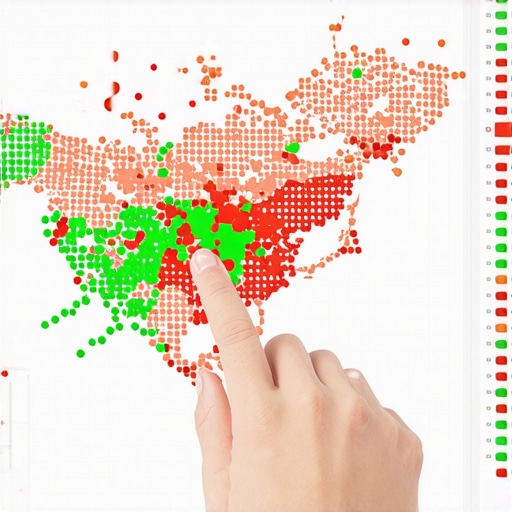
Where Google Maps is Heading in 2026
Looking ahead, I predict that local maps domination will become even more heavily reliant on real-world interaction signals—things like how long a user stays on your profile or if they actually navigate to your physical location after searching. We are already seeing Google use AI to scan user-uploaded photos for specific objects. This is why you need to understand image metadata strategies and visual cues that prove you are an authority in your niche. If you aren’t feeding the AI the visual proof it wants, you are leaving the door open for someone else to outsmart the competition. My local mapping strategy for the next year is focused on high-quality, user-generated content and hyper-local consistency. If you want to stay in the game, you need to force your profile back into the top 3 results by being the most active and accurate choice in your market. Don’t wait for your rankings to drop before you take action; go run a neighborhood-level heat map audit this afternoon and see where your gaps are.
What I Learned the Hard Way About Map Pack Domination
Looking back at those sleepless nights, I realize my biggest mistake was treating Google like a human reader rather than an algorithmic engine. I learned that local maps domination isn’t about being the most poetic writer in the description box; it’s about being the most consistent data provider. One major lightbulb moment was discovering how interaction data signals—like clicks and direction requests—outperform keywords every single time. I also realized that my google my business rank was more sensitive to recent activity than total review counts. If you’ve been stuck, remember that fixing a stalled rank often requires looking at the technical invisible signals rather than just asking for more stars. Finally, never underestimate the power of your primary category; it is the single most important lever you have to pull.
The Tools That Actually Keep My Rankings Alive
I don’t navigate the world of local SEO blindly anymore. I rely heavily on the Whitespark Local Search Ranking Factors study to keep my local mapping strategy grounded in data rather than rumors. For tactical execution, I use Local Falcon to visualize my reach and identify ‘blind spots’ in the city. I also highly recommend diving into this ultimate guide to rank elevation if you want a step-by-step roadmap. These resources are my North Star because they focus on what actually works today, helping me outsmart the competition without spending a fortune on expensive agencies.
Take the First Step Toward Your Own Local Maps Domination
You now have the insights and the blueprint to stop wasting time on the minor details and start focusing on the major signals. Achieving local maps domination is a marathon, not a sprint, but the rewards—more calls, more customers, and more revenue—are worth every minute of effort. Using innovative mapping strategies will set you apart from the crowd who are still keyword-stuffing their ‘About’ sections. It is your turn to take control of your visibility and dominate maps in your local area. Have you ever noticed your ranking drop after making a small change to your profile? Let me know your experience in the comments below!
About the Author
Umar Latif
Brand & Marketing Expert · Dubai, UAE
Umar Latif is a seasoned Brand and Marketing Expert based in Dubai, UAE, with a specialized focus on Local SEO and international digital strategy. With extensive experience managing and optimizing websites for a diverse range of international clients, including those in the United States, Umar has developed a deep understanding of the nuances required to dominate local search results. His technical proficiency encompasses comprehensive keyword research and the implementation of advanced Google-centric strategies designed to enhance visibility and drive organic traffic. As a contributor to dominateyourlocalmaps.com, Umar leverages his background in global marketing to provide actionable insights for businesses looking to improve their local map rankings and digital footprint. His approach combines data-driven tactics with a strategic brand perspective, ensuring that local businesses not only rank higher but also resonate with their target audience. Throughout his career, Umar has remained dedicated to staying ahead of search engine algorithm changes to deliver consistent results for his clients. He is deeply passionate about empowering business owners and marketing professionals with the tools and knowledge they need to achieve sustainable growth.