
I was sitting in a dim booth at a diner three years ago, trying to find one of my own branch locations on my phone, and I could not see us anywhere. It was embarrassing. There I was, the guy who was supposed to have the big picture strategy, and I was being outranked by a mom-and-pop shop that did not even have a functioning website. I felt like a ghost in my own city. That was my wake-up call: having a brand name does not mean a thing if you are not winning the street-by-street battle for the map pack. If you have got multiple locations, you are not just running one business; you are running ten, fifty, or a hundred hyper-local micro-businesses. Most of us fail because we try to manage them from a high-rise view instead of getting down in the dirt.
Fix the Corporate Blind Spot Holding Your Rank Back
Look, I get it. You want everything to look uniform. You want the same logos, the same About Us section, and the same polished photos for every single branch. I did the exact same thing when we expanded. I thought consistency was the ultimate sign of quality. But here is the cold, hard truth: Google does not rank consistency; it ranks relevance. When I copy-pasted our corporate bio across twenty locations, I was not being efficient; I was committing SEO suicide. I eventually realized that your business categories might be fighting each other if you are not careful with how you distinguish each branch’s unique service area. This is the biggest hurdle in any local mapping strategy. To really win, you have to understand that map pack domination is not about how much money you spend on national ads. It is about convincing an algorithm that your branch on 5th Street is the absolute best answer for a person standing on 6th Street. According to a 2023 study by BrightLocal, nearly 98% of consumers used the internet to find information about local businesses in the last year. If you are not showing up when they are two blocks away, you are essentially giving your leads to the competition on a silver platter.
Is local mapping strategy actually worth the hype for chains?
I hear this all the time from managers who are already stretched thin. Does it really matter if we have a few missing citations or if our hours are slightly off? The answer is a resounding yes. Skepticism is healthy, but in this case, it is expensive. I have seen why your competitor ranks higher with 10 fewer reviews, and it almost always comes down to how well they have mapped out their local signals. It is not just hype; it is the difference between a ringing phone and a silent office. Have you ever checked your rankings from a customer’s perspective and realized you were totally invisible outside of your own parking lot? If you have, you know that sinking feeling of being a giant that nobody can see.
Stop treating every city like a carbon copy of the headquarters
The biggest hurdle for multi-location brands is the proximity paradox. We think that because we are a big name, Google will give us a wider search radius. It is actually the opposite. Google often squeezes larger brands because they lack the hyper-local flavor that the algorithm loves. I spent months wondering why office location is not the only reason you are not ranking. I finally figured out that we had to build authority for each spot individually. You have to learn how to increase your map radius without just throwing more money at a new lease. I remember the day I had to explain to my board why our New York office was getting calls for services only our Chicago office provided. It was a mess. Our business was ranking for the wrong local keywords because we had not tuned each profile to the local dialect of the city. If your strategy does not account for these tiny human nuances, you are just shouting into a void. I learned the hard way that the city page method is your best friend when you are trying to stretch your influence into those dead zones between your physical stores.
Clean up the digital clutter before it buries you
Google does not just want to see your name; it wants to see that you actually exist exactly where you say you do. Think of your business profile as a digital lighthouse. If the light is flickering or pointing at a brick wall because of bad data, the ships (your customers) are going to crash right into your competitor’s harbor. I remember working with a local franchise that had moved three times in five years. They had three different ‘ghost’ profiles floating around, each claiming to be the main office. It was a total nightmare that split their ranking power into three weak signals. Before we could even think about growth, we had to learn how to claim ghost profiles that are stealing your leads and aggressively merge or delete the ones that were siphoning away our authority.
Build a bridge between your site and your storefront
Once the data is clean, you have to connect the digital dots. You cannot just have a profile on Google and a website on a server somewhere and hope they talk to each other. You need to learn how to sync your website schema with your map profile so the algorithm sees one cohesive, trustworthy entity. When I finally implemented this for my own branches, our visibility did not just crawl up; it leaped. It is the difference between giving Google a high-resolution GPS coordinate and a hand-drawn sketch on a napkin. While you are at it, stop wasting cash on local citations that Google ignores. I spent thousands on ‘directory blasts’ early in my career, only to find that 90% of those sites had not been crawled by a search bot since 2018. Focus on the high-impact signals that actually verify your physical presence.
Why fresh photos beat big review counts every time
Interaction is the new currency for 2025. I once watched a quiet chiropractic clinic with half the reviews of its massive neighbor jump to the #1 spot in the map pack almost overnight. When I dug into the backend data, I realized they were using the one move chiropractors use to leapfrog more popular local clinics: they were encouraging customers to upload fresh, real-time photos of the office. It turns out that the interaction data that proves you are a top local choice is far more powerful than a static keyword stuffed into a business description. I started telling my managers to stop begging for five stars and start asking for photos of the waiting room or the new signage. We even started paying attention to the specific photo metadata that actually moves your map rank, ensuring every upload acted as a geotagged proof-of-life for the algorithm.
Stop the scroll with high-intent visual signals
If you are not updating your profile, you are decaying. Google views an inactive profile as a potentially closed business. I make it a rule now to post at least one hyper-local update per week for every location. This is not about corporate slogans; it is about showing the local community what is happening right now. When people interact with those posts, it sends a ‘heat signal’ to Google that this location is relevant and active. If you ignore this, you are essentially leaving your front door locked while your competitors are throwing a block party.
Everyone told me that if I just got more five-star reviews than the guy down the street, I would win. They were wrong. I spent six months chasing a review count that would make a Fortune 500 company blush, only to realize why your competitor ranks higher with 10 fewer reviews: Google cares more about the words inside those reviews than the stars attached to them. If your customers aren’t naturally mentioning your specific services or neighborhood names, those reviews are just empty calories. In fact, focusing purely on volume is a dangerous trap because it ignores the ‘velocity’ of your reputation. A sudden burst of 50 reviews followed by months of silence looks like a red flag to the algorithm, not a sign of a thriving business.
Why chasing a thousand reviews is a waste of your time
The real secret to mastering local maps domination isn’t about being the biggest; it’s about being the most ‘active’ in the eyes of a mobile user. I have seen businesses with half the marketing budget outpace giants because they understood that why profile descriptions dont matter for ranking but do for sales. You can stuff your description with keywords until you’re blue in the face, but if nobody is clicking your ‘Call’ button or asking for directions, Google will eventually bury you. They are looking for behavioral proof. According to the 2023 Whitespark Local Search Ranking Factors study, ‘on-page signals’ and ‘behavioral signals’ like click-through rates are becoming increasingly dominant over traditional citations.
Why does my ranking drop off exactly three miles from the office?
This is what I call the invisible wall. Most business owners fall into the ‘greedy radius’ trap—they try to tell Google they serve every zip code within a fifty-mile radius. When you do this, you’re actually thinning out your authority. You have to learn how to properly set your service areas to avoid rank dilution. If you tell Google you are everywhere, the algorithm decides you are nowhere in particular. I once worked with a contractor who shrunk his service area by 60% and saw his lead volume double in thirty days because he stopped triggering the hidden proximity glitch that shrinks your map radius.
You also need to realize that how real foot traffic data overpowers on-page SEO is the ultimate trump card for 2025. Google knows when people are actually visiting your store because they track the GPS data from millions of Android and iOS devices. If your ‘digital’ signals say you are popular, but your physical location is a ghost town, the algorithm will eventually correct your rank downward. This is why local engagement and real-world presence are the only ways to achieve true local maps domination. Have you ever fallen into this trap of trying to rank for a city you never actually visit? Let me know in the comments.
It is one thing to fight your way to the top of the search results; it is an entirely different beast to stay there while your competitors are nipping at your heels. I learned the hard way that map rankings are not a ‘set it and forget it’ trophy. They are more like a garden that needs constant weeding. If you stop paying attention, the weeds of data decay and aggressive competitors will choke out your visibility.
Stop guessing if your strategy is actually working
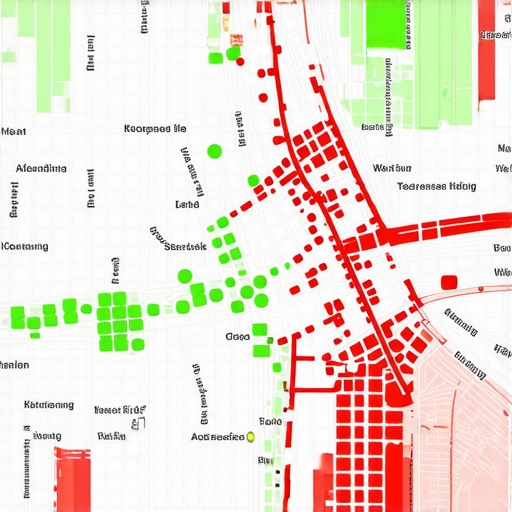
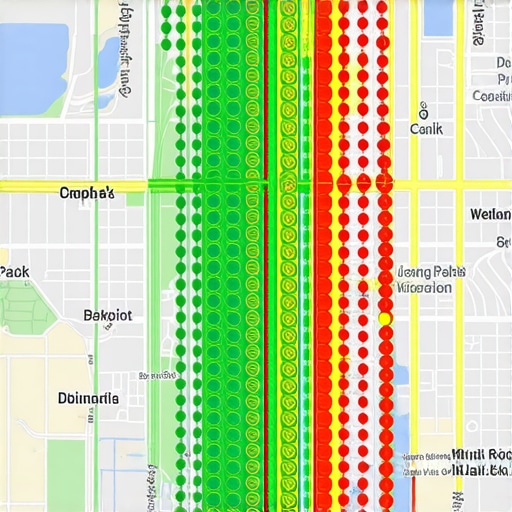
For a long time, I relied on those generic SEO reports that told me I was ‘Ranking #1.’ It felt great until I realized that ‘Ranking #1’ only applied if the customer was standing in my lobby. The moment they moved three blocks away, I was invisible. This is one of the 7 maps keyword tracking flaws that hide your true store performance. Now, I do not make a single move without a local grid tracker. I need to see the red and green dots spread across the city map like a heat signature. It allows me to see exactly where my authority drops off so I can focus my local content efforts on those specific neighborhoods. If you are not looking at your data through a hyper-local lens, you are likely making the audit mistake that makes your map listing effectively invisible to the people who are actually ready to buy.
How do I keep my map pack domination alive long-term?
Maintenance is about providing ‘proof of life’ to Google every single week. I treat my Google Business Profile like a social media feed, but with a purpose. I am constantly auditing our signals to ensure nothing has slipped. Mike Blumenthal, a leading expert in local search, has noted that Google’s AI is increasingly using computer vision to analyze business photos to confirm they match the business category and actually exist at the coordinates provided. This is why I have stopped using stock photos entirely. I tell my team that one grainy, real-time photo of a technician on-site is worth ten professional studio shots. If this sounds like a lot of work, it is. That is exactly why hiring a google business profile consultant saves more money than diy management in the long run—they catch the technical glitches before they turn into suspensions.
The future is looking more like a movie than a map
If I had to bet on where the local mapping strategy is headed by 2026, it is video and real-time verification. We are already seeing the real benefit of verification via video upload as the primary way to get reinstated or verified. I predict that soon, ‘static’ profiles will be completely pushed aside by profiles that feature short-form video updates. Google wants to see the movement, the staff, and the actual customer experience before they trust you with the #1 spot. You should start preparing now by implementing 5 crucial tweaks for google maps seo in 2026 that actually stick, focusing heavily on interactive elements. My advice? Stop trying to play the old game of keyword stuffing and start playing the new game of ‘Real-World Validation.’ Take five minutes today to record a simple 30-second video of your storefront and upload it as a post. Watch what happens to your engagement metrics—you might be surprised how much the algorithm rewards a little bit of reality.
The brutal reality of scaling a brand across fifty maps
Scaling isn’t just about duplication; it is about localized survival. I spent years thinking that a strong national presence would naturally lead to a high google my business rank for every branch, but the algorithm does not work that way. One of the most frustrating things I encountered was when our information was perfectly accurate, yet we still faced the issue of why your google business profile edits are always pending for weeks on end. It taught me that Google needs more than just your word—it needs local validation. I also learned that you cannot force a ranking if you do not understand how search intent changes your business visibility on maps. A person looking for ’emergency service’ sees a different map than someone looking for ‘best reviews,’ and your strategy must adapt to those micro-moments.
The survival kit I use to keep my rankings alive
If you want to stay relevant, you need a toolkit that looks beyond surface-level metrics. I personally rely on these resources because they cut through the fluff of traditional SEO:
- Grid Tracking Tools: Don’t settle for a single ranking number. You need to see the spatial reality of your authority across the city.
- Official Help Communities: When technical glitches happen, the community is often faster than official support.
- Lead-Gen Mastery: I always keep a list of 5 free tools that actually generate leads from your google business profile to ensure we are not just getting views, but actual customers.
Sometimes the technical debt of managing fifty locations is too much to handle alone, which is why hiring a google business profile consultant saves more money than diy management by preventing costly suspensions and missed opportunities. #IMAGE_PLACEHOLDER_E#
Your neighborhood is waiting for you to show up
At the end of the day, your local mapping strategy is about being the most helpful neighbor in the digital space. You have the tools and the data to stop being a ghost and start being a landmark. Achieving true map pack domination is not a one-time event; it is a commitment to your local customers that you are present, active, and ready to serve. Don’t wait for your competitors to take the lead. Take that first step today, whether it is a new photo or a data audit, and watch your local presence transform. Have you ever noticed your ranking drop off the moment you cross a specific street corner or enter a new neighborhood? Let me know in the comments below.
About the Author
Umar Latif
Brand & Marketing Expert · Dubai, UAE
Umar Latif is a seasoned Brand and Marketing Expert based in Dubai, UAE, with a specialized focus on Local SEO and international digital strategy. With extensive experience managing and optimizing websites for a diverse range of international clients, including those in the United States, Umar has developed a deep understanding of the nuances required to dominate local search results. His technical proficiency encompasses comprehensive keyword research and the implementation of advanced Google-centric strategies designed to enhance visibility and drive organic traffic. As a contributor to dominateyourlocalmaps.com, Umar leverages his background in global marketing to provide actionable insights for businesses looking to improve their local map rankings and digital footprint. His approach combines data-driven tactics with a strategic brand perspective, ensuring that local businesses not only rank higher but also resonate with their target audience. Throughout his career, Umar has remained dedicated to staying ahead of search engine algorithm changes to deliver consistent results for his clients. He is deeply passionate about empowering business owners and marketing professionals with the tools and knowledge they need to achieve sustainable growth.