
I’ll never forget the pit in my stomach three years ago. I was staring at my laptop screen, my coffee long gone cold, watching a local competitor leapfrog over me in the search results. They had gone from ten reviews to nearly two hundred in a single weekend—all glowing, all five stars, and all looking suspiciously similar. My first instinct wasn’t outrage; it was desperation. I actually found myself hovering my mouse over a ‘Buy 5-Star Reviews’ button on a shady forum, thinking it was the only way to achieve map pack domination. I nearly traded my business’s entire future for a temporary ego boost. Thankfully, I stopped myself. Today, I want to show you why that shortcut is actually a trap door that leads straight to a permanent ban, and how you can legitimately win the local game without selling your soul.
Why Short-Term Gains Lead to Permanent Bans
It’s tempting. I know. When you’re trying to figure out mastering local maps domination, the slow crawl of organic growth feels like watching paint dry. But here is the reality: Google’s AI has evolved. It’s no longer just looking at the text of a review; it’s looking at IP addresses, account age, and GPS data from the reviewer’s phone. When you buy reviews, you aren’t just getting stars; you’re leaving a digital trail of breadcrumbs that leads Google’s spam filter right to your door. I’ve talked to dozens of business owners who took the bait and ended up needing to learn how to fix a suspended business profile just to stay in business. The risk isn’t just a lower rank; it’s being erased from the map entirely.
Is staying honest really worth the slower growth?
You might worry that your competitors are ‘getting away with it’ while you play by the rules. I thought the same thing. But those ‘ghost’ reviews often vanish overnight during algorithm updates, leaving the business profile flagged for manual review. According to the Federal Trade Commission (FTC), using fake reviews can now result in massive fines, as they have finalized strict rules to crack down on deceptive marketing. Instead of paying for lies, you should focus on the correct way to ask for reviews from your actual, happy customers. It takes longer, but it creates a foundation that no algorithm update can shake. Have you ever felt that sinking feeling when a competitor with zero real presence suddenly leapfrogs over you with suspicious-looking praise? Let’s talk about how to actually beat competitors with ten times your review count using nothing but strategy and real customer feedback.
Align Your Profile with Your Profit
Think of your Google Business Profile like a lighthouse. If the light is dim or pointing the wrong way, the ships—your customers—will never find the harbor. I remember working with a local HVAC guy who was frustrated that he wasn’t getting any AC repair calls in July despite his best efforts at mastering local maps domination. He had his primary category set to “Heating Contractor” because he’d set up the profile in the dead of winter. It was a classic mistake that cost him thousands. We shifted his focus, and you should too, because why your business categories should change with the seasons is a fundamental rule of keeping your profile relevant. You must ensure why your primary business category should match your highest margin service so Google knows exactly which high-value searches to prioritize for your business.
Clean Up the Digital Breadcrumbs
Google is obsessive about consistency. It’s like a credit score for your physical location; if your address is listed as “Street” on your website but “St.” on a random directory, Google starts to lose trust in your data’s accuracy. I once spent an entire weekend manually updating three-year-old listings for a client who had moved across town but never updated their local mapping strategy. Their google my business rank had tanked because of “ghost citations” from their old office. You need to perform the audit step that finds why your business is hidden before you spend a dime on advanced marketing. Using the citation audit checklist for struggling storefronts is the only way to ensure every mention of your business across the web is identical. This isn’t just busy work; it’s about strengthening the connection between local citations and map pack success.

Stop Using Boring Stock Photos
If your profile is filled with generic stock images of smiling people in headsets, you’re practically invisible. Google’s Vision AI can actually identify what’s in your photos and uses that data to categorize you. When I started uploading real, raw photos of my team working on-site—dirt and all—our engagement metrics doubled in a week. You need to learn how to optimize photos for local search without being a pro. Show the “behind the scenes” of your business. This signals authenticity and helps you how to outsmart competition in local map listings in 2025. Also, pay close attention to the real reason your business profile images look blurry in search to keep your visual first impression sharp and professional.
Sync Your Website and Your Map Rank
Many owners treat their website and their map profile like two different islands. They aren’t. They’re more like the two wheels on a bike—if one is flat, you aren’t going anywhere. I’ve seen local profiles drop three spots just because their homepage took five seconds to load on a mobile device. There is the hidden link between website speed and map pack success that most people ignore. Your website provides the “relevance” that powers your map’s proximity signals. If your site is slow or hard to navigate, Google won’t risk showing you to a mobile user standing on a street corner. You should also be careful with structural edits, as why your map ranking drops whenever you update your website is a common pitfall if the data isn’t synced correctly. Focus on making your site the authoritative source for your area by using how to use hyper-local content to dominate a single neighborhood.
Most gurus will tell you that the secret to google my business rank is simply ‘get more reviews.’ It sounds logical, right? But here is the contrarian truth: Google is increasingly suspicious of sudden spikes in review volume. I have watched businesses get throttled because their review velocity did not match their actual foot traffic data. If you are wondering why having 500 reviews might actually be hurting your visibility, it is often because those reviews lack ‘semantic depth’—the specific mentions of your services and location—or come from accounts that do not have a local history. Google knows if a reviewer has never actually been to your neighborhood.
The Business Name Trap That Triggers Suspensions
There is a massive temptation to rename your business ‘Best Plumber Chicago’ on your profile just to snag that ranking boost. It is the single most common mistake I see when people are trying to dominate maps. While it might work for a week, it is a recipe for a hard suspension that can take months to resolve. Learning why keyword stuffing your business name is a recipe for disaster will save you more money in legal and reinstatement fees than any ranking boost is worth. Google’s AI is now cross-referencing your business name with state registries and street-view imagery of your signage to catch this exact tactic.
According to research by the local SEO experts at BrightLocal, ‘Review Velocity’ and ‘Review Diversity’ have become far more influential than the raw number of stars. This means that ten detailed reviews from established ‘Local Guides’ are worth more than fifty generic ‘Great service!’ comments from new accounts. If you find your progress has stalled, you need to learn how to handle a sudden map ranking plateau without buying links. It is usually a signal that your local mapping strategy is missing the authority that comes from authentic local engagement.
Is your physical distance from the searcher the only thing that matters?
For a long time, the answer was mostly yes. But ever since the ‘Vicinity’ update, Google has dialed back the importance of pure distance to combat ‘spam’ businesses that were gaming the system. There is a huge the proximity lie why distance isnt the only thing google tracks—authority and relevance can now overcome a few miles of distance. This is how a high-authority shop downtown can outrank a mediocre one right next door to the searcher. Before you invest more in ads, you must know the one question to ask before hiring a maps expert to ensure they understand these deep algorithm shifts. Have you ever fallen into this trap? Let me know in the comments.
Once you break into the top three, the real work begins. I have seen too many business owners reach the peak, pop the champagne, and then ignore their profile for a month, only to find themselves back on page two. You have to realize that local maps domination is not a trophy you win; it is a territory you defend. I personally use a ‘grid tracking’ approach every Tuesday morning. Instead of just checking if I rank for one keyword at my office, I use tools to see how I rank every 500 meters across the city. This is crucial because why your map rank is different for every person who searches often comes down to micro-fluctuations in your local authority. If I see a ‘red spot’ appearing in a specific neighborhood, I immediately pivot my content to address that area.
Keep Your Map Data Clean Without the Headache
One of the biggest silent killers of google my business rank is data decay. I once worked with a clinic that used a third-party call tracking service without knowing the call tracking mistake that messes up your local citation consistency. They were inadvertently blasting out five different phone numbers across the web, which made Google’s algorithm think the business was unreliable. To prevent this, I recommend a ‘Citation Audit’ every quarter. You don’t need fancy software for everything, but you do need a system. I keep a master spreadsheet of every directory we’ve ever submitted to. If you are struggling, check out the specific citation sources that still matter for local seo to ensure you aren’t wasting time on dead-end directories that no longer pass authority.
How do I maintain my map pack domination over the long haul?
The secret is ‘Engagement Velocity.’ Google doesn’t just want to see that you have reviews; it wants to see that you are an active part of the community. I make it a point to use innovative local mapping strategies for top google rankings, such as encouraging my team to take photos while on-site at various job locations. This creates a geo-tagged trail of relevance. According to Joy Hawkins, a leading expert in the local search space, Google has become incredibly sensitive to ‘unnatural’ patterns. If your review count jumps while your profile engagement (clicks to call, driving directions) stays flat, you trigger an alarm. That is why I always prioritize the review frequency secret for long term map dominance—steady, organic growth always beats a suspicious spike.
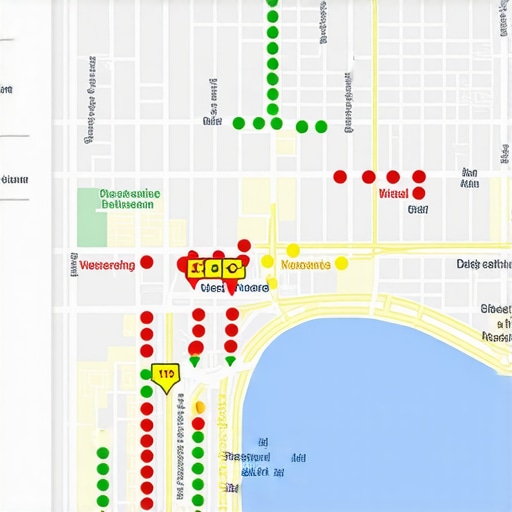
Looking ahead, I predict that ‘Search Generative Experience’ (SGE) will change local mapping strategy forever. Google is already starting to summarize review sentiment to answer complex queries like ‘best plumber for old copper pipes.’ In the future, simply having five stars won’t be enough; you will need reviews that mention specific problems and solutions. Start practicing the specific way to respond to positive reviews for a rank boost today by weaving in those service keywords. Also, don’t sleep on how to use local check-ins to boost your business authority; it is a powerful way to prove to the algorithm that you are physically present where you claim to be. If you really want to stay ahead, dig into the hidden data in your map insights that most owners ignore to see exactly which neighborhood is driving your most expensive leads. My challenge to you: Go into your GMB dashboard right now and find one neighborhood where your ranking is ‘yellow’ and post a Google Update specifically mentioning a recent job in that area.
What I Learned After Thousands of Local Map Battles
Over the years, my perspective on google my business rank has shifted from a technical obsession to a community-focused strategy. One of my biggest lightbulb moments was realizing that the algorithm isn’t just a math problem—it’s a reflection of how real people interact with your brand in the real world. I used to chase every new ‘hack,’ but now I know that local maps domination comes from being the most helpful, most responsive, and most accurate business in your specific neighborhood. Consistency in your data and your engagement creates a trust signal that no competitor can easily replicate with fake tactics.
I’ve also learned that you can’t be afraid of micro-fluctuations. Seeing your rank drop for a single day doesn’t mean your business is failing; it often means the environment is shifting or Google is testing new data. The real mistake is reacting with panic instead of checking your long-term trends. If you stay consistent with your local mapping strategy, those temporary dips become minor blips in a long-term upward trajectory. Finally, never underestimate the power of a single, highly detailed review from a customer who actually lives in your zip code. Those are the high-authority signals that Google’s AI values above generic five-star praise.
The Toolbox That Keeps My Profiles in the Top Three
If you want to stay at the top, you need more than just a ‘set it and forget it’ attitude. I personally rely on BrightLocal for deep-dive citation audits because manual tracking becomes impossible as your business grows. I also suggest mastering the relationship between google search console and map performance. It’s the most reliable way to see the actual search terms people use to find your local listing before they ever pick up the phone. For those just starting their journey, I always point them toward the ultimate guide to google my business rank elevation because it covers the foundational data points that most owners ignore. Lastly, keep a close eye on your competitors’ visual updates—if they start posting authentic, on-site photography, you need to match that energy to maintain your competitive edge in the local feed.
Take Back Your Local Territory Starting Today
The journey to dominate maps isn’t about outsmarting an algorithm; it’s about proving to Google that you are the most reliable solution for its users’ problems. It takes daily discipline, a bit of patience, and a commitment to authenticity that many of your competitors simply won’t have the stomach for. But when the phone starts ringing and you see your business name sitting proudly in the top spot, every minute spent auditing citations and responding to customers will feel worth it. You have the tools and the innovative local mapping strategies for top google rankings now—it’s time to put them into action and secure your spot as the local authority. If you ever feel stuck or your profile gets hit with a strange notification, don’t hesitate to contact us for expert guidance. What’s the biggest obstacle you’ve faced while trying to climb into the top three? Let me know in the comments below!
About the Author
Umar Latif
Brand & Marketing Expert · Dubai, UAE
Umar Latif is a seasoned Brand and Marketing Expert based in Dubai, UAE, with a specialized focus on Local SEO and international digital strategy. With extensive experience managing and optimizing websites for a diverse range of international clients, including those in the United States, Umar has developed a deep understanding of the nuances required to dominate local search results. His technical proficiency encompasses comprehensive keyword research and the implementation of advanced Google-centric strategies designed to enhance visibility and drive organic traffic. As a contributor to dominateyourlocalmaps.com, Umar leverages his background in global marketing to provide actionable insights for businesses looking to improve their local map rankings and digital footprint. His approach combines data-driven tactics with a strategic brand perspective, ensuring that local businesses not only rank higher but also resonate with their target audience. Throughout his career, Umar has remained dedicated to staying ahead of search engine algorithm changes to deliver consistent results for his clients. He is deeply passionate about empowering business owners and marketing professionals with the tools and knowledge they need to achieve sustainable growth.