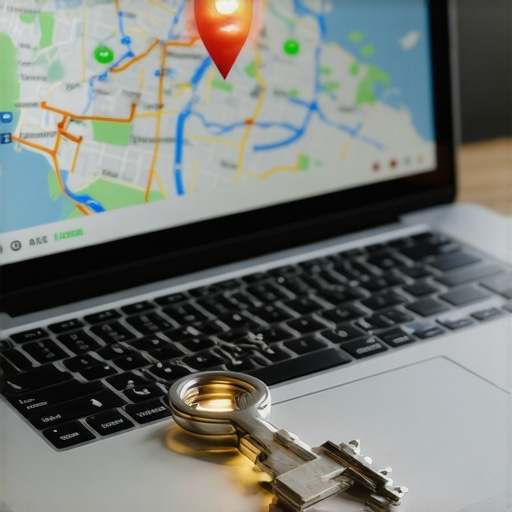
I remember it like it was yesterday. I sat down with a fresh cup of coffee, ready to check my daily lead count, and there it was—that gut-wrenching yellow status bar. “Suspended.” My heart skipped a beat. I had spent months meticulously building my presence, and in a single click of an algorithm, my business vanished from the local map pack. It felt personal. It felt like I’d been kicked out of my own shop. But here’s the thing: a soft suspension isn’t a death sentence, even if it feels like one. I’ve been in those trenches, and I’ve learned exactly how to navigate back to the light.
Your Business Just Vanished from the Map
The first time this happened to me, I panicked. I did exactly what you’re probably tempted to do right now—I started changing everything at once. I edited my hours, I tweaked my description, and I even considered keyword stuffing my business name just to see if it would “reset” something. Spoiler alert: it didn’t. In fact, it made things worse. This matters because, according to Search Engine Land, nearly 46% of all Google searches are looking for local information. If you’re suspended, you’re essentially invisible to half the internet. Today, I’m going to show you how to fix a suspended business profile without the headache I went through. We are going to get your google my business rank back to where it belongs.
Does Google actually want small businesses to succeed?
It’s easy to feel like the platform is rigged against small business owners. I used to think that if I followed all the rules, I’d be safe. But I made a classic mistake early on: I used a shared office address that Google eventually flagged as a “virtual office.” That one oversight cost me weeks of visibility. It was a hard lesson in map pack domination—you have to be cleaner than clean. Have you ever logged in only to find your hard-earned reputation suddenly under a “soft” lock? It’s frustrating, but it’s fixable. The “soft” part of this suspension means your listing is still visible to the public, but you’ve lost control of it. You can’t respond to reviews or update your info. We need to get that control back before it turns into a “hard” suspension where you disappear entirely. Let’s dig into why Google flagged you and how to prove you’re the real deal.
Step away from the dashboard and stop editing
When that suspension hit, my first instinct was to frantically change my business hours, swap my phone number, and rewrite my description. Stop right there. Think of your Google Business Profile like a crime scene; every time you change something while suspended, you are essentially tampering with the evidence Google is using to judge your case. Before you do anything else, you need to conduct a thorough audit step that finds why your business is hidden. In my case, the trigger was a slight mismatch between my profile and a utility bill. Google’s algorithm is like a hyper-strict librarian; if one character is out of place, the whole book gets pulled from the shelf. You need to ensure your consistent business hours are a massive ranking signal and match every other public record of your company.
Show Google the real deal with your storefront
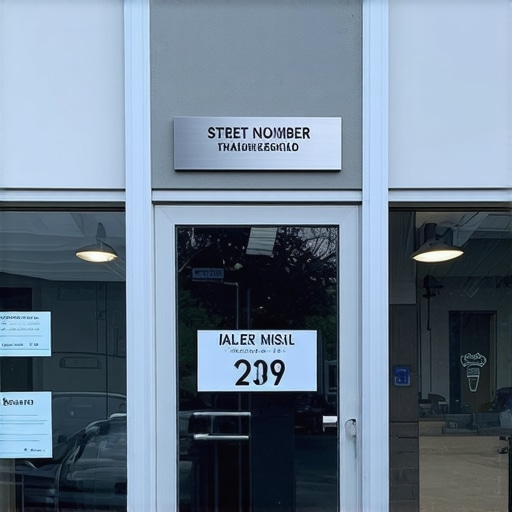
If you’re facing a soft suspension, Google likely doubts your physical existence at the stated address. I remember working with a local locksmith who had been suspended for weeks. We tried everything until I realized he didn’t have any photos of his permanent signage. We took a high-resolution shot of his van parked in front of the building with the suite number clearly visible. That single photo was the skeleton key. You need to provide the one thing Google looks for in your storefront photos: undeniable proof of residency. Avoid using stock photos or heavily edited images. Google’s AI can sniff out a Photoshop job from a mile away, and that will turn a soft suspension into a permanent ban faster than you can say “local SEO.”
Clean up the digital paper trail before you hit submit
Before you file that reinstatement request, you must look at your citations. Think of citations as character witnesses in a courtroom. If your website says one thing, but a random directory says another, the judge (Google) is going to find you unreliable. I once spent three days hunting down ghost citations that confuse search engines for a client who couldn’t get reinstated. We found an old Yelp listing from a previous owner that was still active. Once we killed that ghost, the reinstatement was approved in 24 hours. This is why the connection between local citations and map pack success is so vital; it’s about building a wall of consistency that the algorithm can’t knock down.
Win the reinstatement battle with a surgical approach
When you finally fill out the reinstatement form, don’t treat it like a customer support ticket. Treat it like a legal filing. Be concise, attach your evidence (utility bills, business licenses, and those storefront photos), and explain exactly what you corrected. Do not beg or get emotional. I’ve seen owners lose their cool in these forms, and it never ends well. Focus on how to fix the not visible status on your local profile by proving you follow every single guideline. Once you submit, wait. Don’t submit multiple requests, as this resets your place in the queue and makes you look like a spammer. While you wait, check the relationship between google search console and map performance to see if your website is still signaling health to the local algorithm.
Now that you’ve hopefully navigated the stress of a suspension, we need to talk about what actually keeps you at the top. Most ‘experts’ will tell you that getting the most reviews is the only way to achieve map pack domination. In my experience, that’s a half-truth that leads to a lot of wasted effort. I have seen clients with 50 high-quality, keyword-rich reviews absolutely crush competitors who have 500 generic ‘great service’ blurbs. This happens because Google’s sentiment analysis has become incredibly sophisticated. Why having 500 reviews might actually be hurting your visibility often comes down to a lack of specific service keywords within those reviews. If your customers aren’t mentioning the specific ’emergency pipe repair’ or ‘commercial HVAC’ services you provide, your google my business rank for those high-value terms will remain stagnant regardless of your star rating.
Can you actually outrank a 20-year-old business with zero new reviews?
The short answer is yes, and it’s all about ‘freshness’ and behavioral signals. According to the latest Local Search Ranking Factors survey by Whitespark, proximity to the searcher remains the heaviest weighted factor, but ‘Google Business Profile signals’—like the frequency of your updates and the relevance of your categories—are catching up fast. A common trap I see business owners fall into is the ‘set it and forget it’ mentality. They optimize their profile once and then wonder the real reason your profile ranking stalled last month. If you aren’t regularly using how to use google posts to promote limited time local offers, Google perceives your business as less ‘active’ than the competitor who posts a new photo every Tuesday.
The proximity lie and why your service area is killing you
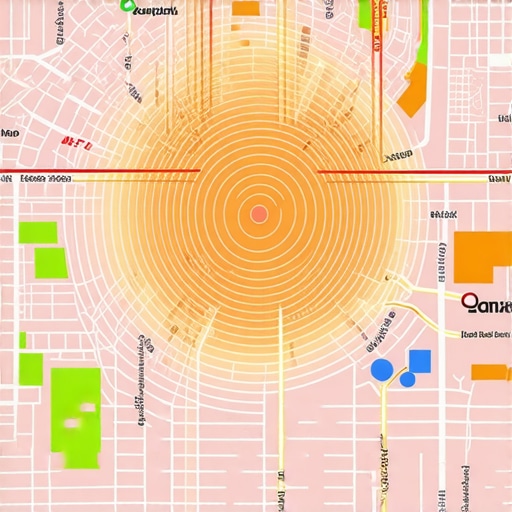
Everyone thinks they need to set a massive 50-mile service radius to capture more leads. This is a massive mistake. When you tell Google you serve a massive area without having the local signals (like city-specific landing pages or local backlinks) to back it up, you effectively dilute your authority everywhere. I’ve found that tightening your service area to your actual core neighborhood can ironically help you dominate maps in the areas that actually matter. This is because of the proximity lie—why distance isn’t the only thing Google tracks. If your digital footprint doesn’t show you’re active in a specific suburb, your service area settings are just wishful thinking. Furthermore, ensure you aren’t making the service area error that hides your business from local customers by overlapping areas in a way that looks like spam to the algorithm. Have you ever fallen into this trap of trying to be everywhere at once? Let me know in the comments. We need to look at innovative local mapping strategies for top google rankings that focus on depth rather than just width.
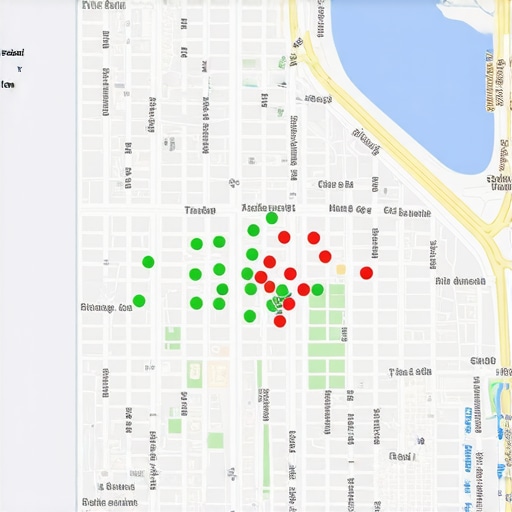
Scaling your local presence requires moving past the ‘set it and forget it’ mindset that plagues most small businesses. I’ve seen countless owners reach the top of the mountain only to slide back down because they didn’t have a system to stay there. To truly achieve mastering local maps domination, you need to transition from manual tinkering to data-driven maintenance. For me, that meant moving away from checking my phone once a day to see if I was still #1. Instead, I started using tools like LocalFalcon to visualize my ‘authority bubble’ through grid tracking. This is a game-changer because it stops you from being blind to why your map ranking disappears when you cross city lines. If you only check your rank from your office chair, you are seeing a distorted reality. You need to see exactly where your ranking ‘falls off the cliff’ in the surrounding neighborhoods.
Ditch the desk and look at the actual grid
I personally swear by a weekly ‘Signal Audit.’ This isn’t just checking reviews; it’s looking at the hidden data in your map insights that most owners ignore, such as how many people are clicking for directions from outside your primary zip code. This data tells you where you need to push your next hyper-local content piece. I also recommend automating your review monitoring. I use specialized alerts because why your map rank drops every time you edit your business hours often relates to how fast you react to customer engagement. If you are slow to respond, Google’s algorithm interprets it as a lack of business activity. This is where you can how to outsmart large chains in local map results—they are slow and corporate; you are fast, nimble, and local.
How do I maintain my map presence without losing my mind?
The secret is ‘Micro-Updating.’ Instead of a massive overhaul every six months, spend 15 minutes every Tuesday morning uploading one real-world photo of a completed job and responding to any new reviews. This creates a digital ‘heartbeat’ for your profile. As Joy Hawkins from Sterling Sky often points out, Google rewards profiles that show consistent, legitimate ‘life’ over those that are static. You should also be leveraging backend technicals; for instance, understanding the role of structured data in your local SEO strategy helps the algorithm connect your website’s authority directly to your map pin. This creates a feedback loop that protects you from competitors who try how to outsmart competition in local map listings in 2025 by using cheap, temporary spam tactics.
The shift toward visual and predictive intent
Looking ahead, I predict that ‘Social Search’ and ‘Visual Intent’ will become the primary drivers for google my business rank elevation. We are already seeing Google prioritize ‘short-form video’ snippets in local results. In the next 18 months, I expect the algorithm to favor businesses that have a high volume of user-uploaded video content over those with just static photos. To stay ahead, start encouraging your customers to film a 5-second clip of their finished project and upload it directly to their review. This is one of the most innovative local mapping strategies for top google rankings you can implement today. My challenge to you: Go into your dashboard right now, find your weakest neighborhood on a grid map, and post a Google Update specifically mentioning that street or landmark. Don’t wait for the algorithm to find you—tell it exactly where you are and what you do.
Hard Truths from the Map Pack Trenches
If there’s one thing a decade of local SEO has taught me, it’s that patience is your strongest asset. I used to think I could outsmart the system with rapid-fire edits, but that just led to red flags and frustration. I’ve learned that the truth about using tracking numbers on your maps profile is often the difference between clean data and a ranking nightmare. Another lightbulb moment? Realizing that why your business categories might be working against you often stems from over-complicating things. Keep it simple, keep it honest, and let the data guide your local mapping strategy rather than just following trends.
My Go-To Toolbox for Sustained Dominance
I don’t make a move without checking my data. I personally rely on LocalFalcon for grid tracking because it’s the only way to see why your map ranking disappears when you cross city lines. I also spend time analyzing the relationship between google search console and map performance to ensure my website signals are backing up my profile. These tools remove the emotion from the equation and let you focus on mastering local maps domination with surgical precision.
#IMAGE_PLACEHOLDER_E#
The First Step Toward Your Permanent Map Pin
Don’t let a temporary dip or a suspension steal your momentum. The local map is living, breathing real estate, and it requires a steady hand to manage. By focusing on the importance of geo-specific keywords in your business description and maintaining a consistent ‘heartbeat’ of updates, you will see your google my business rank rise and, more importantly, stay there. You have the tools and the roadmap now—it’s time to take action and secure your spot at the top. Have you ever seen your ranking vanish after a simple edit? Let me know in the comments below.
About the Author
Umar Latif
Brand & Marketing Expert · Dubai, UAE
Umar Latif is a seasoned Brand and Marketing Expert based in Dubai, UAE, with a specialized focus on Local SEO and international digital strategy. With extensive experience managing and optimizing websites for a diverse range of international clients, including those in the United States, Umar has developed a deep understanding of the nuances required to dominate local search results. His technical proficiency encompasses comprehensive keyword research and the implementation of advanced Google-centric strategies designed to enhance visibility and drive organic traffic. As a contributor to dominateyourlocalmaps.com, Umar leverages his background in global marketing to provide actionable insights for businesses looking to improve their local map rankings and digital footprint. His approach combines data-driven tactics with a strategic brand perspective, ensuring that local businesses not only rank higher but also resonate with their target audience. Throughout his career, Umar has remained dedicated to staying ahead of search engine algorithm changes to deliver consistent results for his clients. He is deeply passionate about empowering business owners and marketing professionals with the tools and knowledge they need to achieve sustainable growth.