
I remember the exact moment the steam stopped coming off my morning coffee. I was staring at my laptop, refreshing the local search results for the tenth time, and my heart hit the floor. Yesterday, I was sitting pretty in the top three. Today? My business didn’t even exist on the map. It’s one thing to lose a spot because someone is outworking you, but it’s another thing entirely when a rival decides to play dirty and ‘suggests an edit’ that wipes you out. If you’ve ever felt that sudden, sickening drop in leads, you know exactly what I’m talking about. I’ve been there, and the rage is real. But getting angry doesn’t pay the bills—getting back on the map does. Today, I am going to show you the exact path to recover a suspended business profile without losing your mind or your customers. [IMAGE_PLACEHOLDER]
Your Hard-Earned Ranking Didn’t Just Vanish by Accident
Look, I’ll be honest with you. Google’s automated systems are amazing, but they are also incredibly easy to manipulate if you know which buttons to push. I learned this the hard way years ago. In my early days, I thought my google my business rank was untouchable because I followed every rule. Then, a competitor reported my physical office as a ‘residential address.’ Within 24 hours, I was gone. My mistake? I panicked. I started changing my business name, my phone number, and my categories all at once, trying to ‘fix’ the profile. That frantic behavior actually made Google flag me as even more suspicious. It took me weeks to untangle that mess. Between you and me, the key is staying calm and providing the hidden proof Google wants before they even ask for it.
Is It Actually Possible to Overturn a Malicious Report?
You might be feeling skeptical right now, thinking that once Google’s algorithm decides you’re ‘against the rules,’ you’re doomed. I get it. It feels like shouting into a void. However, you have more power than you think. According to a report by Search Engine Journal, Google has become increasingly aggressive with automated suspensions, often triggered by user-suggested edits that aren’t even verified. This means the system is designed to act first and ask questions later. Have you ever refreshed your dashboard only to find your ranking has been knee-capped by a rival? If so, you aren’t alone, and you aren’t stuck. We’re going to look at how to combat these tactics, including how to handle fake negative reviews that often accompany these malicious reports. It’s about being more systematic than the person trying to take you down.
Stop the Frantic Editing and Stabilize Your Profile
The moment you see that ‘Suspended’ badge, your instinct is to change everything. Don’t. Think of your profile like a crime scene; the more you touch, the more evidence you smudge. When my own profile was hit, I spent three hours changing my service areas because I thought I was ‘too broad.’ It did nothing but confuse the bot. Instead of guessing, you need to perform a systematic audit to find why your business is hidden. You have to prove to Google that you are a living, breathing entity, not a ghost created by a lead-gen farm. I once helped a local locksmith whose google my business rank dropped to zero after a competitor reported his home-based business. He tried to rent a virtual office to fix it—big mistake. I had to tell him that using virtual offices for local SEO is like putting a target on your back. We fixed it by providing the correct paperwork and a video walk-through.
Gather the Evidence Google Actually Cares About
Google doesn’t care about your feelings; they care about utility bills and official registrations. I’ve found that a simple photo of your business license or a redacted tax document carries more weight than a thousand ‘appeals’ written in all caps. If you don’t have a physical sign, you need to know how to prove your location to Google without one. This usually involves a video walkthrough that starts from the street, shows the house number or building number, and walks all the way into your workspace. It’s annoying, but it’s the golden ticket to recover a suspended business profile. 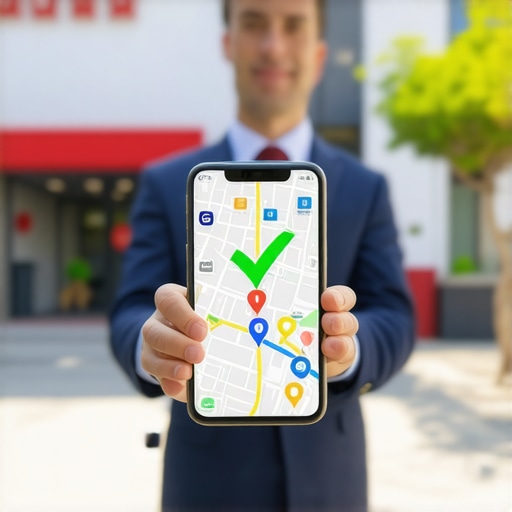
Fix the Category Mismatch Before You Re-Apply
A common reason a ‘suggested edit’ sticks is because your category is slightly off. I once worked with a landscaper who was ranked as a ‘Tree Service.’ A rival reported him for not having the right equipment for tree removal, and Google nuked him. We realized your business category choice could be making you lose money and your profile. We switched him to ‘Landscape Designer,’ which matched his website better, and he was back within 72 hours. This is part of a broader local mapping strategy that prioritizes accuracy over search volume.
Win Back Your Turf Using Data They Can’t Ignore
Once the suspension is lifted, the battle isn’t over. You’re now at the bottom of the pile. To climb back, you need to flood the system with fresh, local signals. I call this the ‘Beacon Strategy.’ You want to signal to Google that you are the most relevant result for that specific block. This isn’t about keywords; it’s about proximity and user proof. Start by using the simple photo trick to get people clicking again. I realized why your store might be invisible to customers two blocks away—it was my service area settings. By tightening the radius and focusing on specific neighborhood mentions in my posts, I forced the algorithm to recognize my local authority.
The Citation Cleanup That Actually Moves the Needle
Most people think they need 500 citations. You don’t. You need the ten that actually matter. If your address is ‘Street’ on Google but ‘St.’ on Yelp, you’re creating friction. You need to fix messy citations without overspending on automated tools that often create more duplicates. When I cleaned up a local plumber’s NAP (Name, Address, Phone) data, his visibility jumped significantly. It was like untying a knot that had been holding his map reach hostage.Getting those citations cleaned up is just the baseline. If you really want to stay at the top, we have to talk about the authority illusion. Most business owners spend all their time begging for five-star ratings, but we need to Stop Obsessing Over Your Total Review Count and start looking at the data. Everyone tells you to chase a massive review count, but in my experience, having 500 reviews might actually be hurting your visibility if they lack velocity or specific context. Google’s AI is smart enough to detect a stale profile, and a sudden surge followed by months of silence is a massive red flag. A study by BrightLocal highlights that review recency and keywords in the text—what customers actually say—are becoming heavier weights than the raw number itself. This is why positive reviews alone won’t win the map pack if they don’t contain the specific service terms you’re trying to rank for. 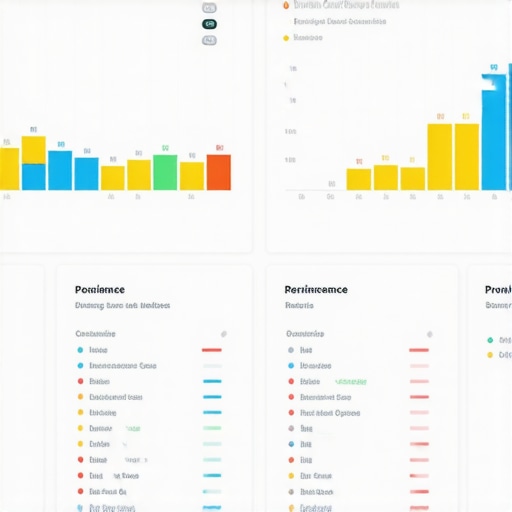
Distance Is Not the Only Thing Google Tracks
Don’t fall for the trap of thinking your physical location is the final word. The proximity lie is one of the most persistent myths in the industry. Yes, distance matters, but prominence and relevance can actually override it. I’ve seen businesses located five miles away outrank someone right next door because their profile signals were stronger. However, there is a dangerous ‘oops’ factor here: the service area error that hides your business from local customers involves over-extending your reach. If you tell Google you serve a 50-mile radius but you have zero mentions or photos from those outer towns, Google will pull the plug on your visibility.
Why does your competitor rank higher with 10 fewer reviews?
It drives people crazy, right? You have 100 reviews, they have 10, yet they are sitting at the #1 spot. Usually, it comes down to a subtle category tweak or better yet, how to use secondary categories to double your map reach. If they have ‘Emergency Plumber’ as a secondary category and you only have ‘Plumber,’ they’ll win the high-intent searches every time. You have to stop guessing your categories and use selection data instead. They aren’t cheating; they’re just being more precise.
Your Website Is Your Map Rank’s Secret Foundation
I’ve seen the hidden link between website speed and map pack success firsthand. When a site takes four seconds to load on mobile, Google stops pushing that business in the Snack Pack. It doesn’t matter how good your photos are if the landing page is a disaster. You might even find why your google profile is getting more clicks than your website is because Google is trying to keep users away from your slow site! Have you ever fallen into this trap of focusing on the profile but ignoring the site behind it? Let me know in the comments.
Stay in the Game When Everyone Else Gets Lazy
I see it happen all the time. A business owner hits the top three, cracks a beer, and thinks the work is done. They assume that their map pack domination is a permanent trophy. But the local algorithm is hungry, and it feeds on fresh data. If you stop providing it, Google will look for someone else who will. I personally spend about fifteen minutes every Tuesday morning doing what I call the ‘Local Pulse Check.’ It isn’t about overhaul; it’s about securing your spot in the map pack permanently through micro-actions that signal your business is still active and thriving. If you aren’t posting a fresh photo at least once a week, you’re basically telling Google your store is closed.
The Tech Stack That Actually Moves the Needle
You don’t need a thousand-dollar software suite to dominate maps. I rely heavily on ‘Local Falcon’ for one specific reason: the grid search. Most people check their rank from their office and think they’re #1 everywhere. They aren’t. A grid search shows you exactly where your google my business rank drops off, often just two blocks away. When I see a ‘red zone’ on my map grid, I don’t panic. I use that data to drive my next innovative local mapping strategies, like targeting a specific neighborhood mention in my next post. It’s also vital to audit your local competitors to see if they’ve added new service categories or updated their hours for holidays. 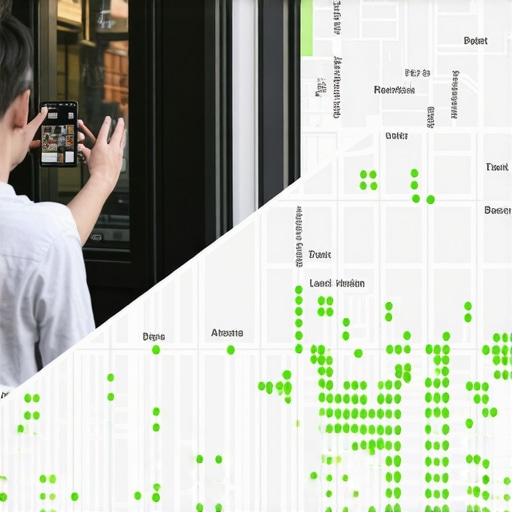
How do I maintain my map visibility for the long haul?
Maintenance is less about massive changes and more about response time and engagement. According to Joy Hawkins, a renowned expert at Sterling Sky, Google’s ‘Vicinity’ update made it clear that proximity is huge, but ‘prominence’ is what keeps you there when you’re outside the immediate radius. This prominence is built by how fast you interact with your customers. I’ve found that response speed directly impacts your local map authority more than almost any other ‘soft’ signal. If someone asks a question on your profile and it sits for three days, you’re bleeding rank. I use the Google Business app with push notifications turned to ‘Maximum’ so I can respond in under five minutes. It’s a simple habit, but it’s the difference between a lead calling you or calling the guy underneath you.
The Future of Local Search Is Visual and AI-Driven
Looking ahead, I predict that ‘Search by Photo’ is going to replace standard keyword searches for local services. Google’s AI is getting incredibly good at identifying what is inside your images without you needing to tell it. This is why you must optimize photos for local search by showing the actual work being done, not just a logo or a stock image. If you’re a contractor, take a photo of the specific tools and the finished project. The algorithm will eventually ‘see’ those tools and rank you for related services automatically. This isn’t science fiction; it’s the current local mapping strategy for anyone who wants to stay relevant into 2026 and beyond. I challenge you to pick one competitor today and perform a quick audit of their last five photos. If they’re stock images, you’ve just found your first easy win.
The Hardest Lesson I Learned While Chasing a Higher Google My Business Rank
When I first started, I thought the algorithm was out to get me. I eventually realized it is just a massive, cold sorting machine that rewards clarity. The biggest lightbulb moment was understanding that google my business rank isn’t a prize you win once; it is a reputation you maintain every single morning. I learned that trying to trick the system with keyword-stuffed names is a fast track to another suspension, whereas focusing on how to recover a suspended business profile correctly built a foundation that no competitor could shake. You have to stop viewing Google as the enemy and start viewing them as a landlord who just wants to see your lease and your ID.
The Only Resources I Use to Keep My Map Pins Stuck at the Top
I do not believe in cluttering my desktop with twenty different SEO tools. I stick to what actually moves the needle for local maps domination. I always recommend Local Falcon for its unbeatable grid tracking, which shows me exactly why your store is invisible to customers two blocks away. For keeping up with the rapid changes in the algorithm, I religiously follow Joy Hawkins and the Sterling Sky blog because they are the gold standard for testing what actually works. Finally, use the Google Business App as your primary communication tool; how response speed directly impacts your local map authority cannot be overstated. These are the weapons you use to defend your territory.
[IMAGE_PLACEHOLDER_E]
Take Back Your Turf and Build Your Local Legacy
The road back from a suspension is frustrating, but it is also an opportunity to rebuild your profile stronger than it ever was before. You now have the blueprints for map pack domination and the knowledge to outsmart competition in local map listings in 2025. Don’t let a single setback or a dirty tactic from a rival stop you from owning your neighborhood. The digital front door of your business is now wide open—it is time to make sure every local customer sees you standing there. Local maps domination is not about luck; it is about being the most helpful, most responsive, and most verified option in town.
Have you ever had a competitor try to suggest an edit or report your business profile for no reason? Let me know your story in the comments below!
About the Author
Umar Latif
Brand & Marketing Expert · Dubai, UAE
Umar Latif is a seasoned Brand and Marketing Expert based in Dubai, UAE, with a specialized focus on Local SEO and international digital strategy. With extensive experience managing and optimizing websites for a diverse range of international clients, including those in the United States, Umar has developed a deep understanding of the nuances required to dominate local search results. His technical proficiency encompasses comprehensive keyword research and the implementation of advanced Google-centric strategies designed to enhance visibility and drive organic traffic. As a contributor to dominateyourlocalmaps.com, Umar leverages his background in global marketing to provide actionable insights for businesses looking to improve their local map rankings and digital footprint. His approach combines data-driven tactics with a strategic brand perspective, ensuring that local businesses not only rank higher but also resonate with their target audience. Throughout his career, Umar has remained dedicated to staying ahead of search engine algorithm changes to deliver consistent results for his clients. He is deeply passionate about empowering business owners and marketing professionals with the tools and knowledge they need to achieve sustainable growth.